
A patio can feel bare even after the furniture is in place, especially when there is little room for traditional garden beds.
These patio garden ideas show how containers, vertical planting, raised beds, pergolas, and compact seating arrangements can bring greenery into outdoor spaces of different sizes.
Whether you are planning a small patio garden, an apartment setup, or a planted entertaining area, the examples will help you choose a layout that suits your available space, sunlight, budget, and maintenance routine.
1. Layered Container Garden Around a Small Patio
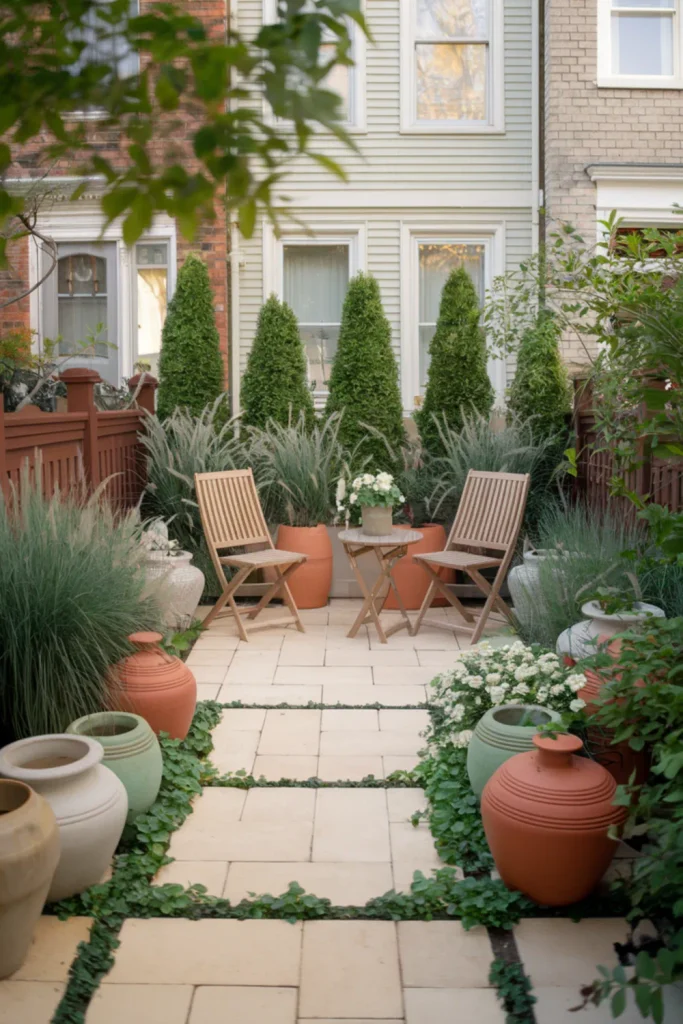
Limited floor space feels greener when containers rise in layers rather than spreading across the patio.
Place tall grasses and dwarf shrubs at the back, flowering plants in the middle, and trailing foliage along the front.
This small patio garden arrangement creates depth while leaving the center open for chairs and foot traffic.
Choose pots with drainage holes, and group plants with similar sunlight and watering needs.
2. Cedar Planter Bench With Built-In Greenery
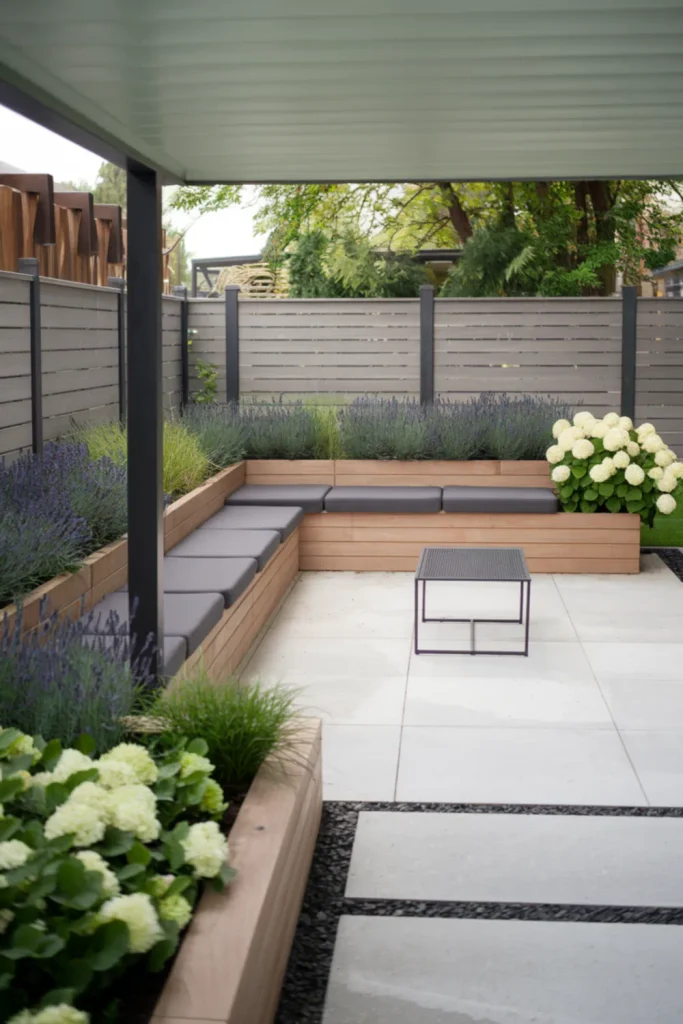
Combining seating and planting in one structure makes better use of a compact outdoor footprint.
An L-shaped cedar bench framed by lavender, ornamental grasses, and compact hydrangeas gives the patio garden design a clean, integrated appearance.
Use rot-resistant wood and line the planter sections without trapping moisture against the bench.
Leave enough soil depth for the mature root systems of your chosen plants.
3. Vertical Herb Wall for a Narrow Patio
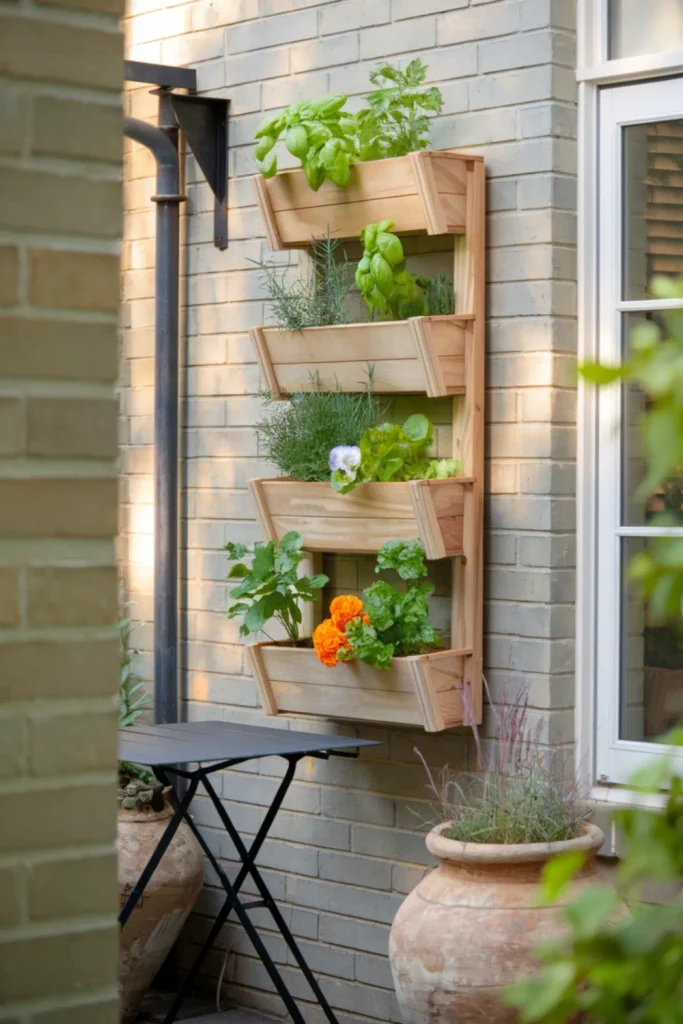
When a narrow patio cannot hold more floor planters, move the garden onto an unused wall.
Slim cedar boxes planted with basil, rosemary, thyme, parsley, and edible flowers keep herbs visible and easy to harvest.
Position thirsty plants below drought-tolerant varieties so runoff is used efficiently.
Secure the vertical planting system to a load-bearing surface and check that each section drains away from the wall.
4. Mediterranean Patio Garden With Terracotta Pots
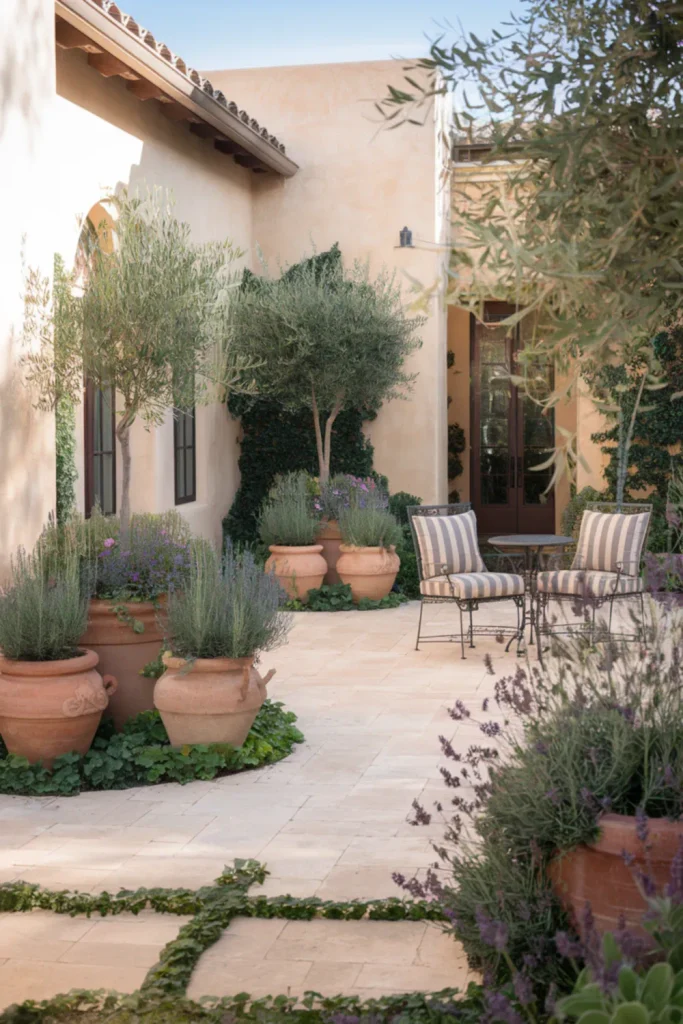
Weathered terracotta, silvery foliage, and fragrant herbs give a sunny patio the relaxed character of a Mediterranean courtyard.
Cluster olive trees, lavender, rosemary, geraniums, and trailing ivy around a small café set, repeating the same pot material for consistency.
Terracotta dries faster quickly than glazed containers, so check soil moisture during hot weather.
Raising large pots on feet also keeps drainage holes open and reduces staining on the pavers.
5. Modern Patio With Black Planter Boxes
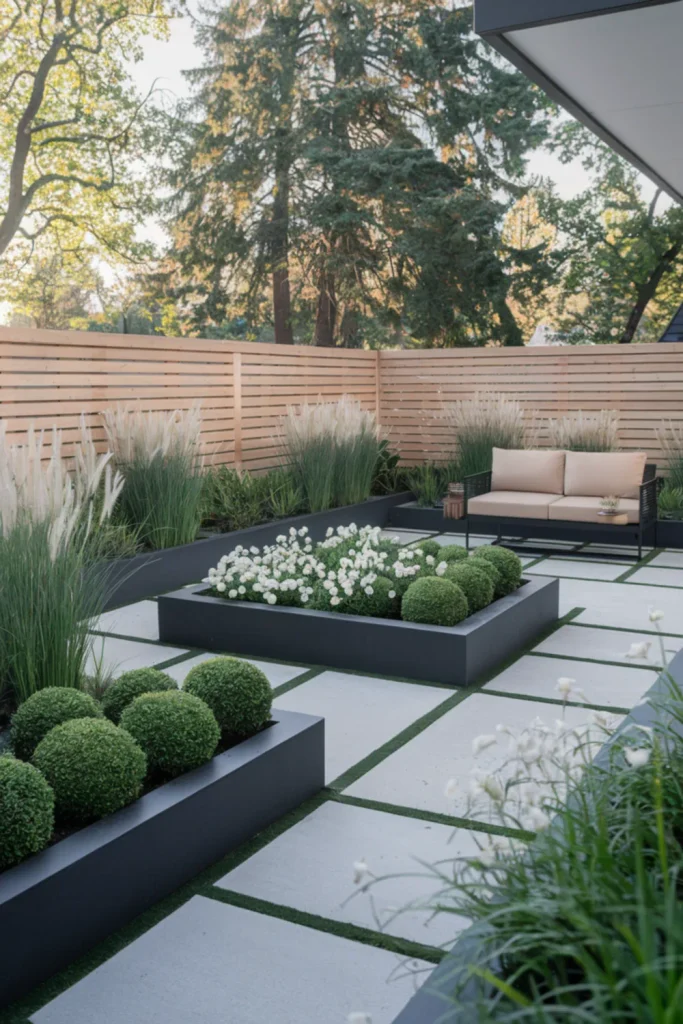
Long black planter boxes can define the edge of an open patio without adding a permanent wall.
Fill them with a restrained mix of upright grasses, clipped evergreens, white flowers, and trailing foliage for a modern patio garden design.
Keep the containers aligned with the paving joints to reinforce the geometric layout.
Lightweight fiberglass offers the look of metal or concrete while making seasonal repositioning much easier.
6. Budget Patio Garden With Repurposed Containers
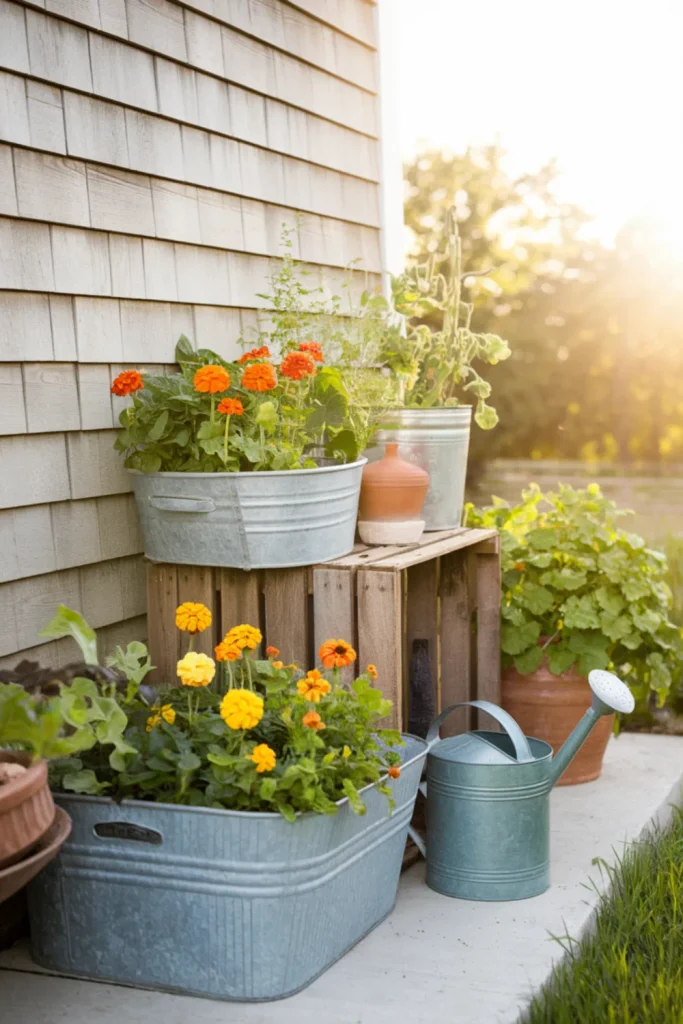
Secondhand galvanized tubs, wooden crates, and inexpensive clay pots can build a colorful patio garden on a limited budget.
Repeating marigolds, nasturtiums, herbs, and compact vegetables across the containers helps the mismatched pieces feel intentional.
Before planting, confirm that every vessel is clean, weather-resistant, and fitted with drainage holes.
Apply a safe protective liner where damp soil might cause untreated wood to deteriorate quickly.
7. Pergola Patio Garden With Climbing Vines
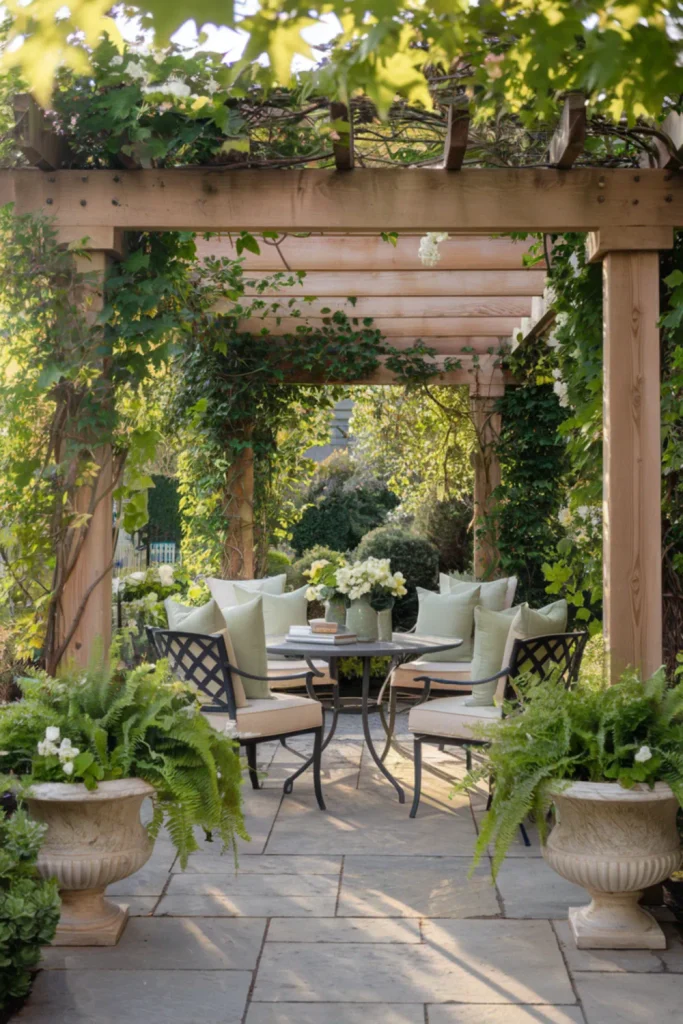
Dappled shade becomes part of the garden when vines are trained across a pergola above the seating area.
Star jasmine, grapevine, or another climate-suitable climber softens the posts while containers of ferns and flowering plants fill the corners below.
Match the vine’s mature weight to the strength of the structure.
Regular pruning is also important, since vigorous growth can block light, trap moisture, or overwhelm a small pergola.
8. Renter-Friendly Apartment Balcony Garden
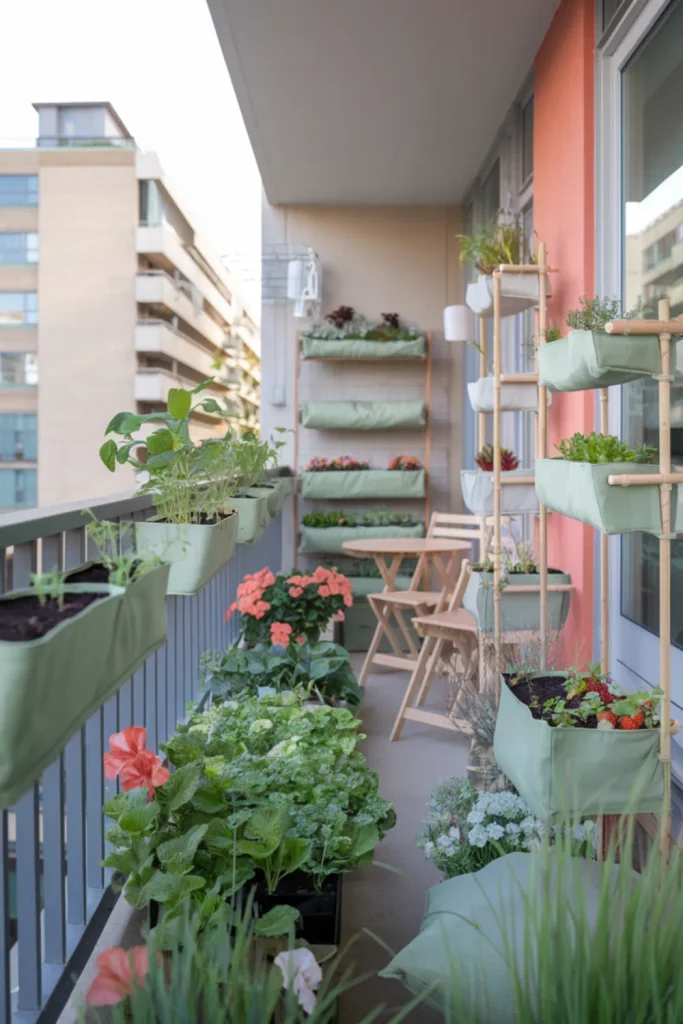
Nothing in an apartment garden needs to be permanently attached to feel lush and useful.
Freestanding bamboo shelves, fabric grow bags, folding furniture, and railing planters secured inside the balcony create several planting levels without drilling.
Keep heavier containers close to the building wall and preserve a clear route to the door.
Before adding railing planters, confirm the building rules and the balcony’s weight restrictions.
9. Raised Garden Beds Framing a Paved Patio
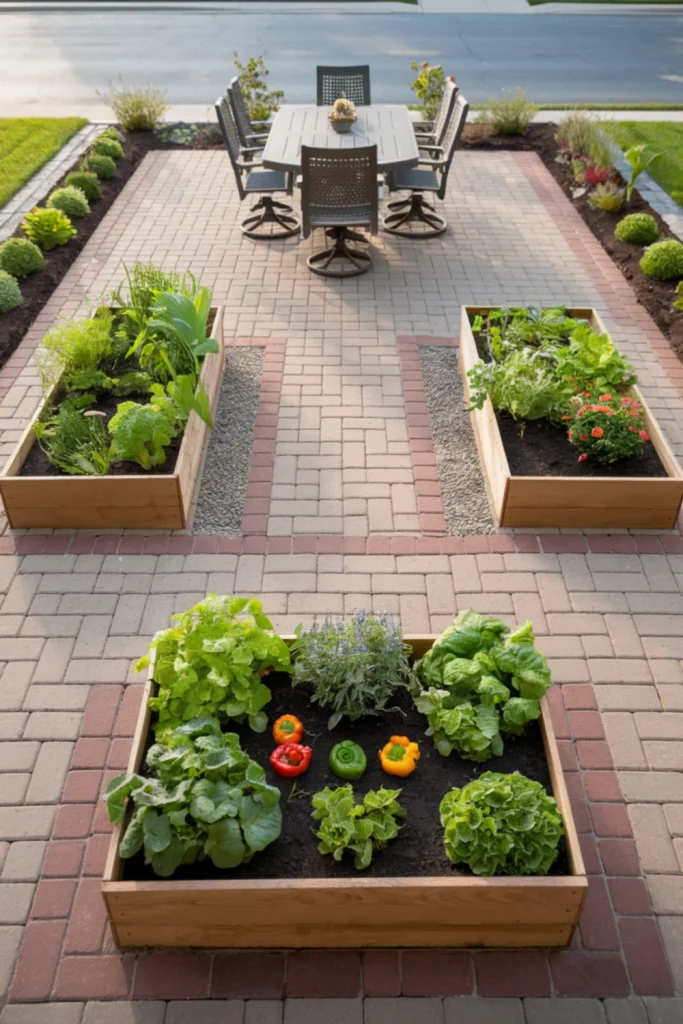
Waist-high cedar beds can turn the perimeter of a paved patio into a productive kitchen garden.
Leafy greens, herbs, edible flowers, and compact peppers provide color while keeping harvests close to the dining area.
Leave access along the back of each bed rather than pushing it tightly against a fence.
Untreated cedar handles outdoor conditions well, but lining only the sides can slow decay without interfering with bottom drainage.
10. Tall Planter Screen for Patio Privacy
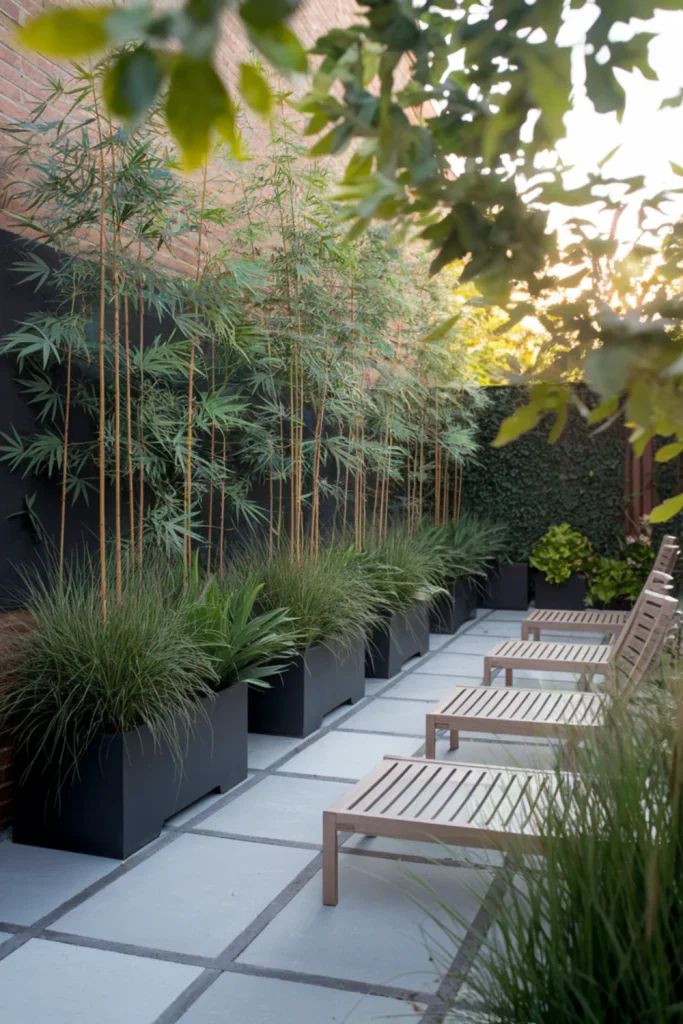
Privacy does not always require building another fence.
A row of tall charcoal planters filled with clumping bamboo or upright ornamental grasses can screen neighboring views while preserving a flexible patio layout.
Select containers with enough width and weight to resist tipping in strong wind.
Avoid running bamboo varieties, and check mature plant height so the screen does not become difficult to prune or shade the entire seating area.
11. Cottage Patio Surrounded by Flowering Borders
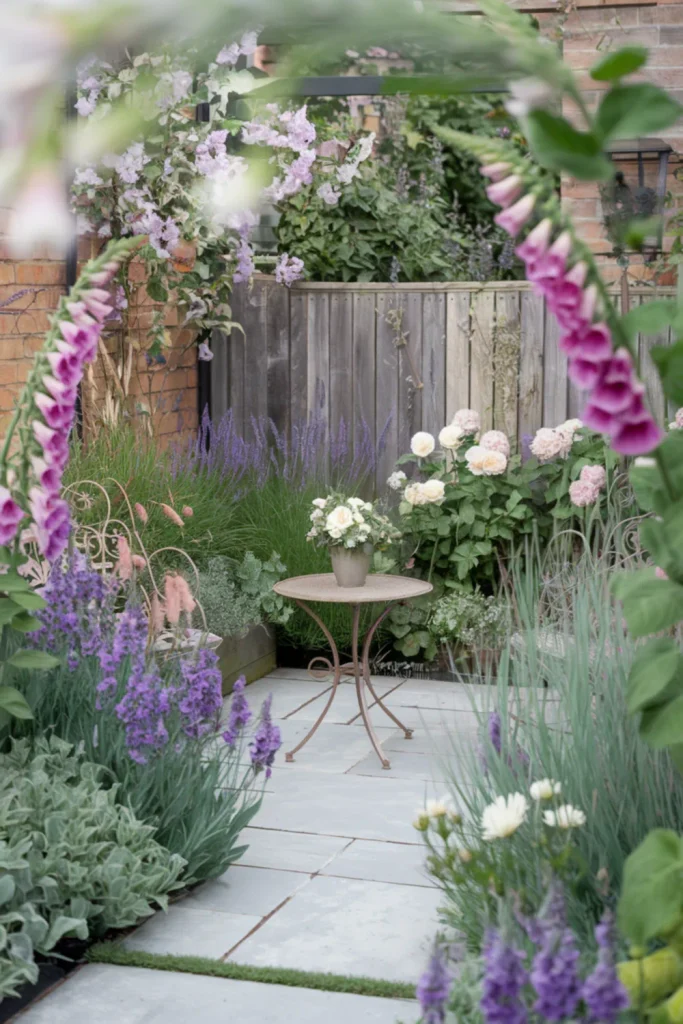
Soft planting along the edges makes a brick patio feel connected to the surrounding garden rather than placed on top of it.
Combine foxgloves, salvia, catmint, coneflowers, roses, and airy grasses in loose groups around a small iron table.
Keep taller plants away from the main approach so they do not spill across the path.
Repeating two or three varieties throughout the border will prevent the cottage-style mixture from looking scattered.
12. Front Patio Garden With Symmetrical Planters
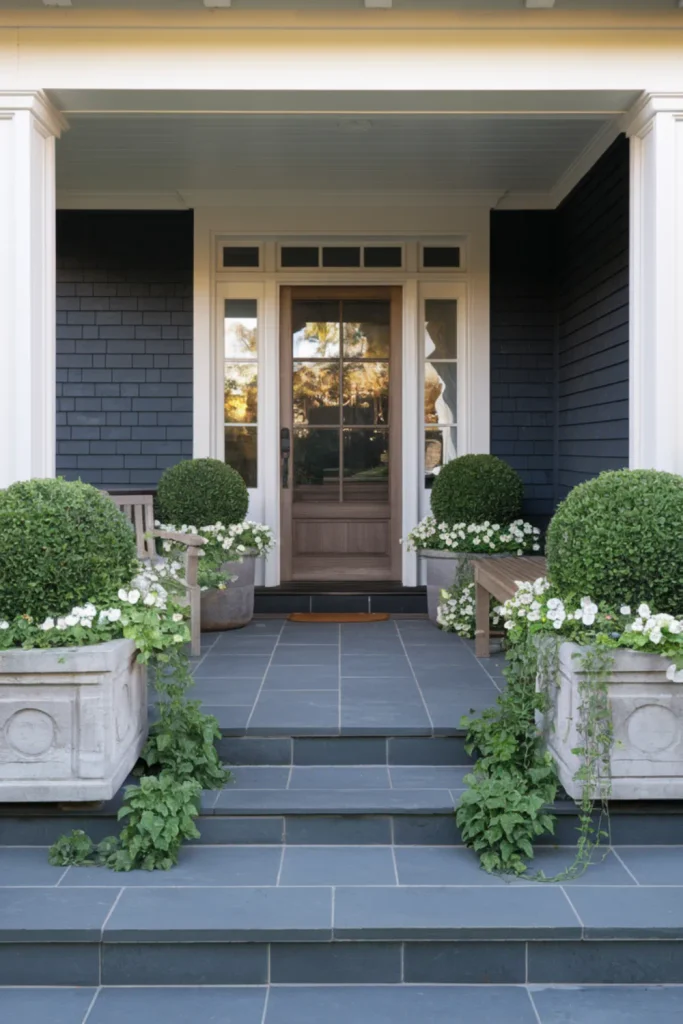
Balanced containers work especially well on a front patio where the doorway needs a clear focal point.
Place matching stone-look planters on either side of the entrance, then repeat smaller pots near a bench for a connected arrangement.
Compact evergreens provide year-round structure, while seasonal flowers make updates simple.
Measure the fully opened door before positioning anything, and keep planters away from steps, handrails, and the main walking route.
13. Shaded Patio Garden With Ferns and Hostas
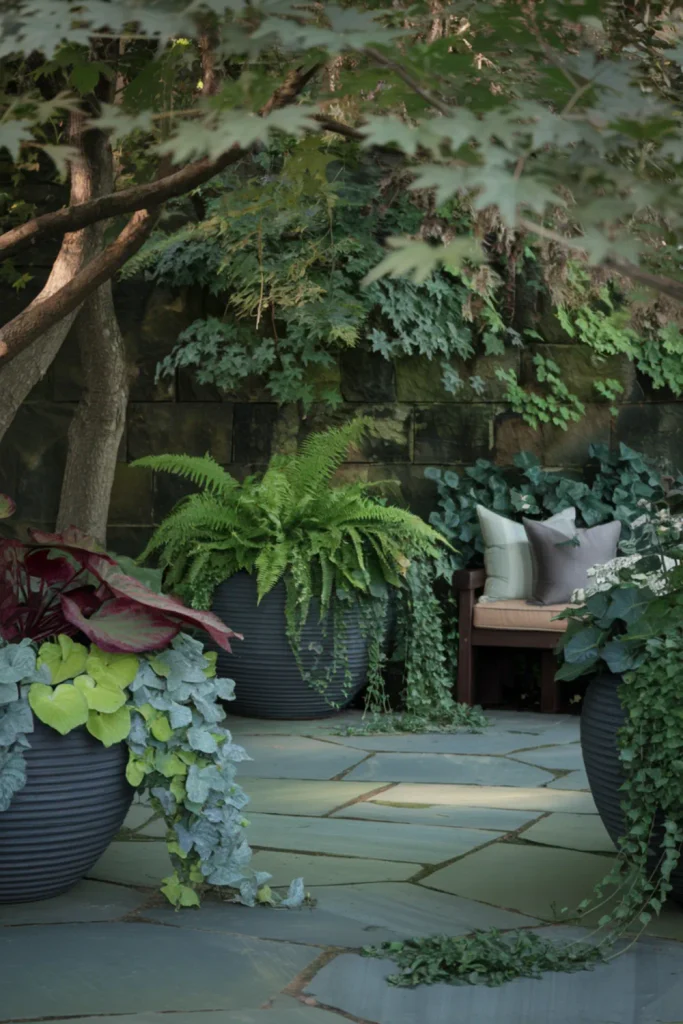
Deep green ferns, broad hosta leaves, burgundy heuchera, and trailing ivy prove that a shaded patio does not need abundant flowers.
Grouping contrasting leaf shapes gives the container garden definition even under mature trees.
Use a moisture-retentive potting mix, but make sure the containers still drain freely after heavy rain.
Slugs often hide beneath crowded pots, so leave enough room to inspect and clean around each grouping.
14. Sunny Succulent Garden Beside a Gravel Patio
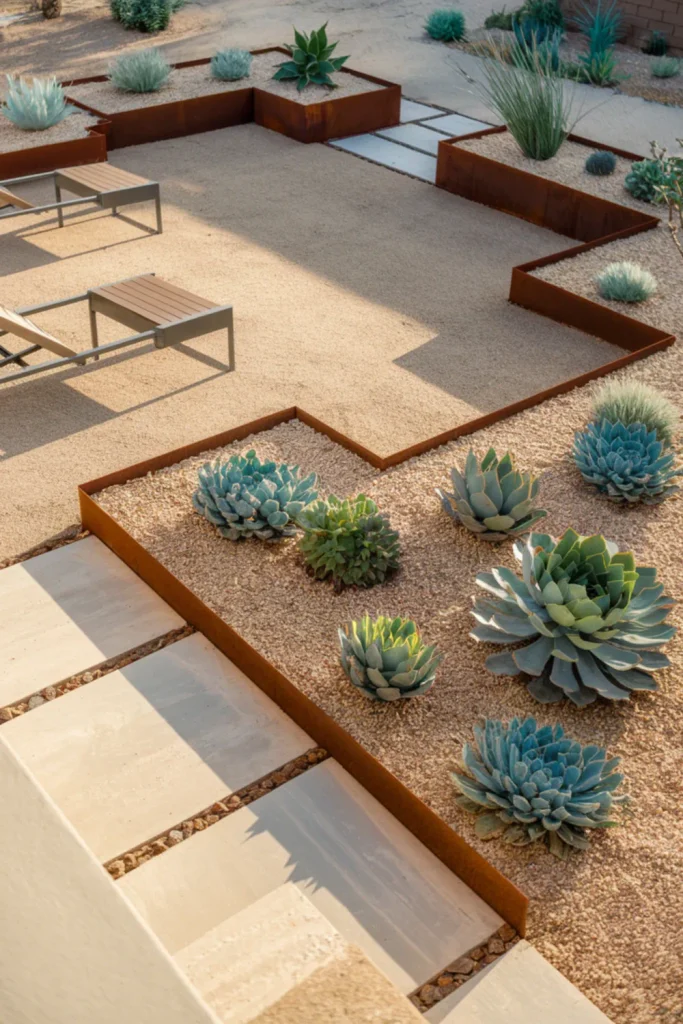
Hot, exposed patios often benefit from plants that can handle reflected heat and irregular rainfall.
Agave, aloe, sedum, and blue fescue arranged beside pale gravel produce a sculptural, low-water garden with strong shapes.
Place sharp or spiny specimens well beyond chair and walkway clearance.
Landscape fabric beneath the gravel may reduce mixing with the soil, but it should not cover planting areas where healthy drainage remains essential.
15. Narrow Side Patio With a Linear Garden Layout
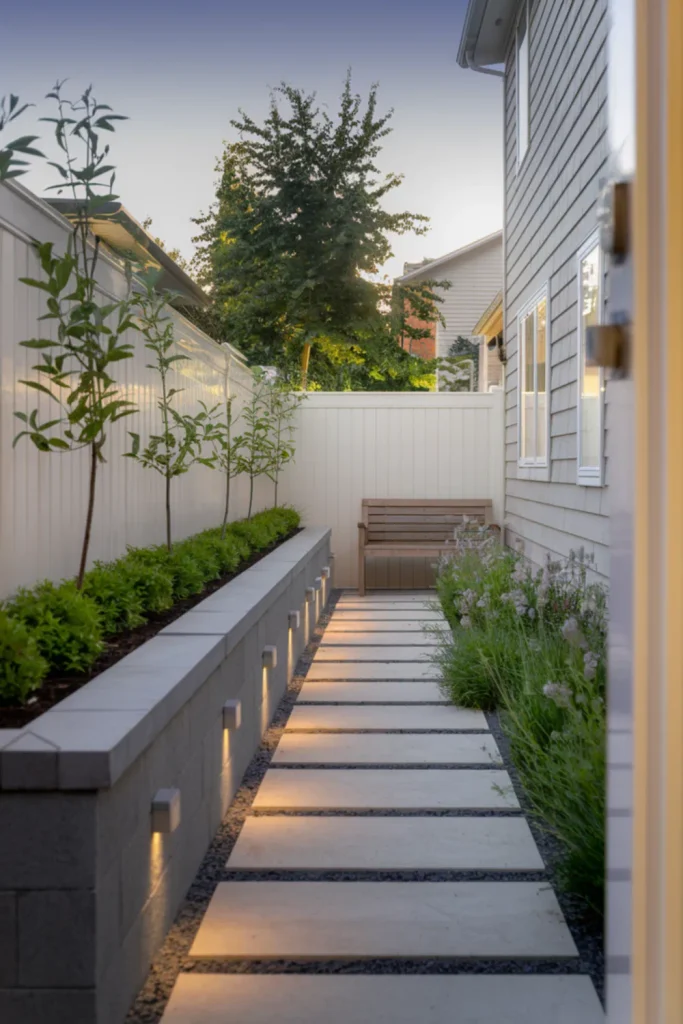
Clear circulation should guide every decision in a long, narrow patio garden.
Run one slim planter along the wall, train espalier fruit trees against the fence, and keep the bench shallow enough to preserve a comfortable walkway.
Rectangular pavers laid lengthwise reinforce the shape without filling it with furniture.
Allow access to the trained trees for pruning, and avoid placing bulky containers where the passage becomes noticeably tighter.
16. Tropical Patio Garden With Oversized Foliage
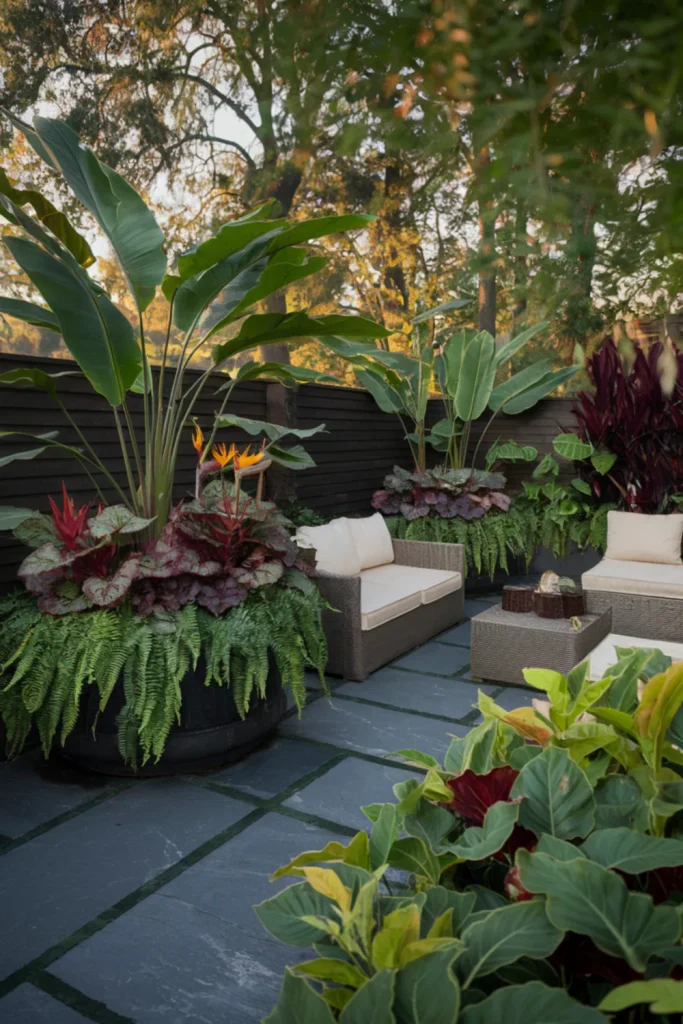
Oversized leaves create a lush enclosure with fewer plants than a collection of small pots.
Elephant ears, bird of paradise, banana plants, ferns, and coleus can surround woven seating while leaving the central patio open.
Choose containers in a limited range of dark or natural finishes so the foliage remains dominant.
Gardeners in cold climates should also plan where tender tropical plants will be stored before the first frost arrives.
17. Japanese-Inspired Courtyard Patio Garden
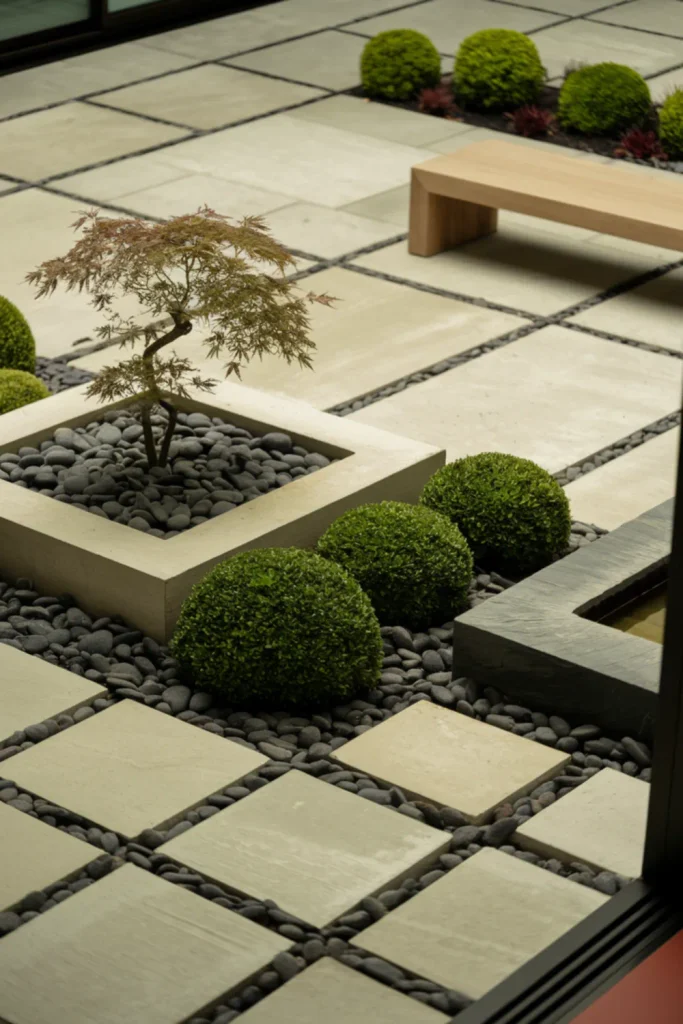
Restraint matters more than quantity in a Japanese-inspired courtyard garden.
One sculptural maple, clipped evergreen mounds, dark river stones, and a simple water basin can balance an area of pale paving without making the layout feel bare.
Choose each focal element carefully and leave visible space around it.
Before installing a maple, check its tolerance for afternoon sun, wind exposure, and the local summer climate.
18. Pollinator Patio Garden in Colorful Containers
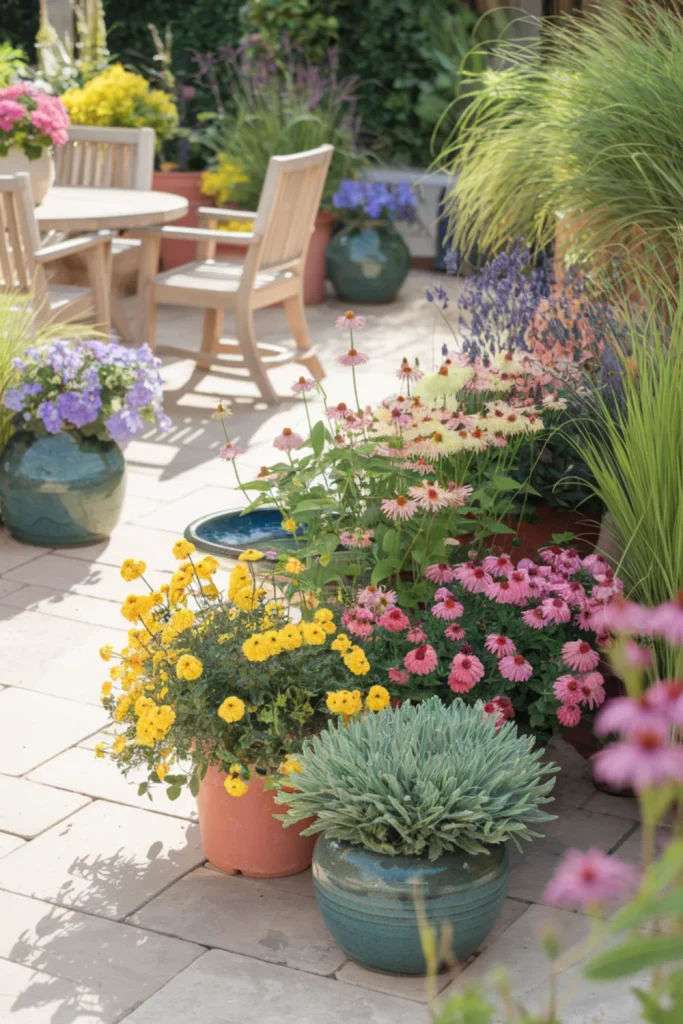
Colorful containers can provide meaningful pollinator habitat even when no in-ground beds are available.
Combine coneflowers, salvia, lantana, coreopsis, verbena, and native grasses with overlapping bloom periods for a longer feeding season.
Grouping several pots together helps bees and butterflies locate the flowers.
Skip systemic pesticides, provide shallow water with safe landing stones, and remove spent blooms when appropriate to encourage continued flowering.
19. Patio Kitchen Garden With Herbs and Vegetables
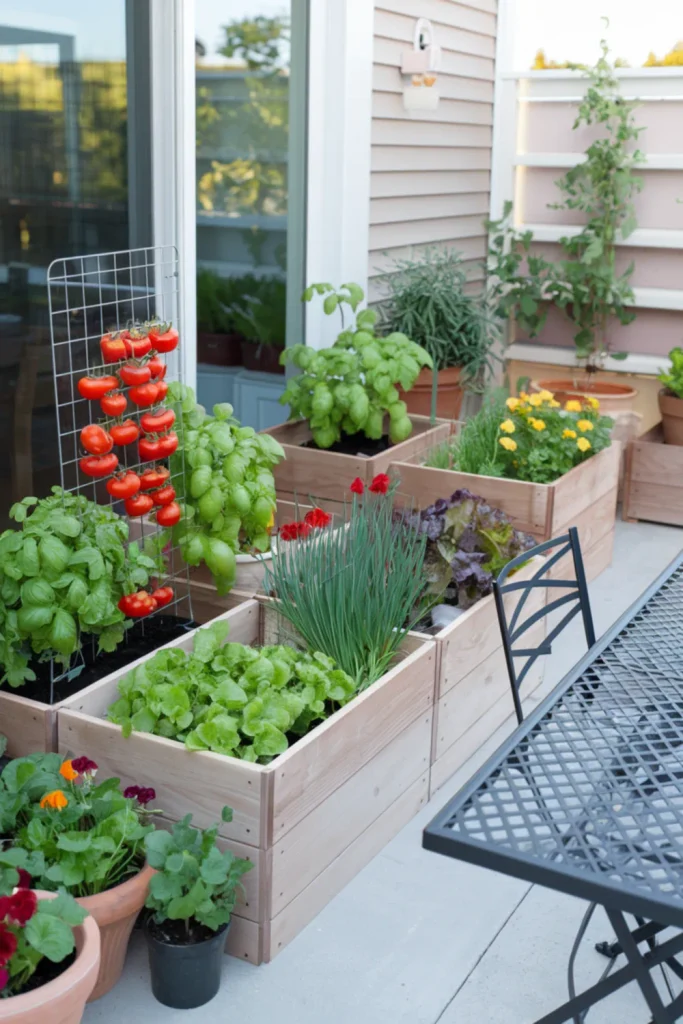
Fresh ingredients stay easier to use when the kitchen garden sits close to the door.
Arrange trellised cherry tomatoes, basil, parsley, chives, lettuce, strawberries, and edible flowers around the patio’s sunniest edge without crowding the dining table.
Put taller crops where they will not shade smaller plants.
Large containers hold moisture longer than tiny pots, but tomatoes and other heavy feeders still need consistent watering and suitable fertilizer.
20. Rolling Planter Garden for a Flexible Patio
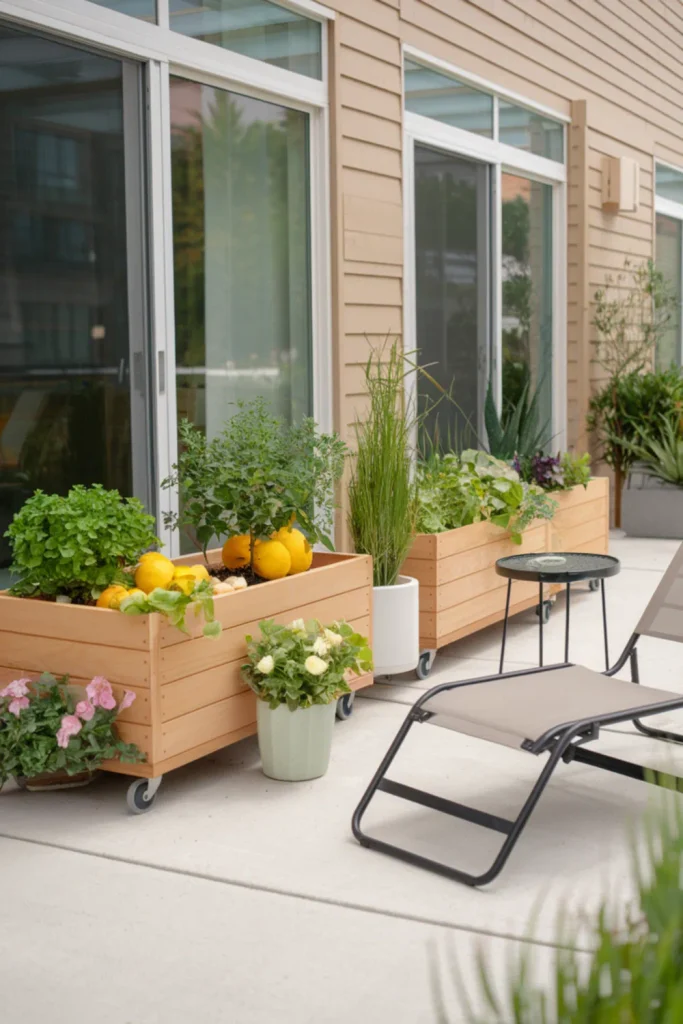
Changing sunlight and rental restrictions make movable planters a practical alternative to fixed garden beds.
Cedar boxes on locking casters can hold herbs, leafy greens, flowers, or a dwarf citrus tree, then shift when the patio layout changes.
Use exterior-rated wheels sized for the combined weight of wet soil and mature plants.
Lock every caster after repositioning, particularly when tall growth could catch strong wind.
21. Tiered Corner Garden for a Tiny Patio
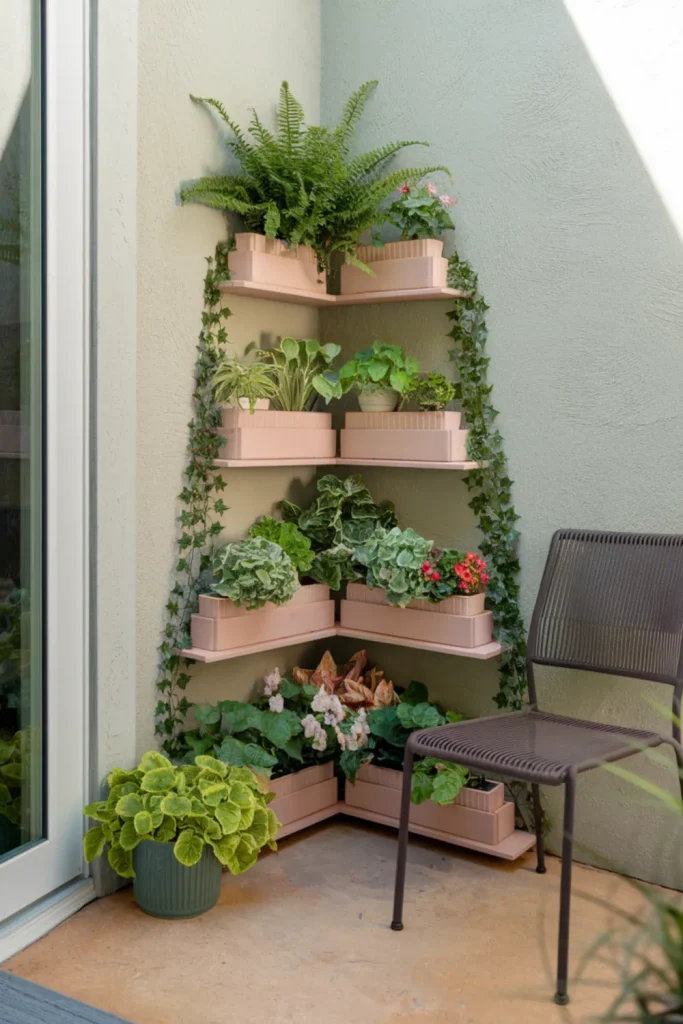
An overlooked corner can hold far more greenery when the containers are arranged vertically.
Triangular shelves filled with ferns, begonias, herbs, and trailing plants turn a tiny patio into a layered garden while leaving room for one chair.
Place sun-loving plants on the highest level and shade-tolerant varieties below.
Check that water from the upper pots will not oversaturate plants underneath or damage an untreated wooden stand.
22. Paver Patio With Plant-Filled Gravel Joints
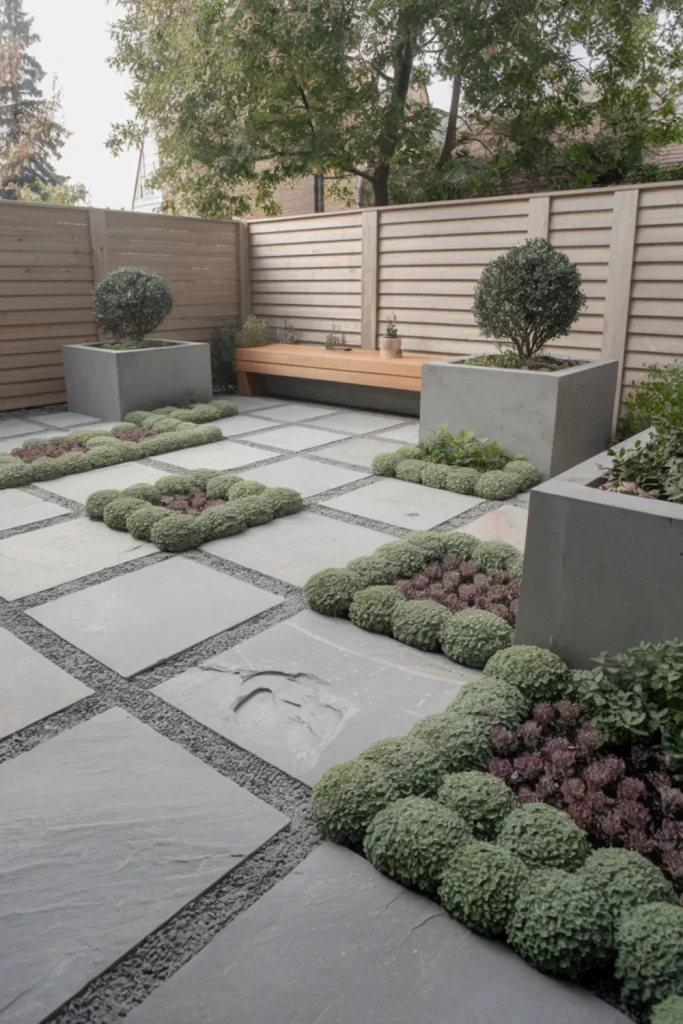
Wide joints between large stone pavers offer a subtle way to weave plants into the hardscape.
Creeping thyme and low sedum soften the grid while maintaining a stable surface for outdoor seating.
Reserve planted joints for lower-traffic sections, since frequent foot pressure can damage delicate growth.
Select compact plants suited to heat and lean soil, and keep raised crowns away from chair legs and primary walking routes.
23. Evening Patio Garden With Layered Lighting
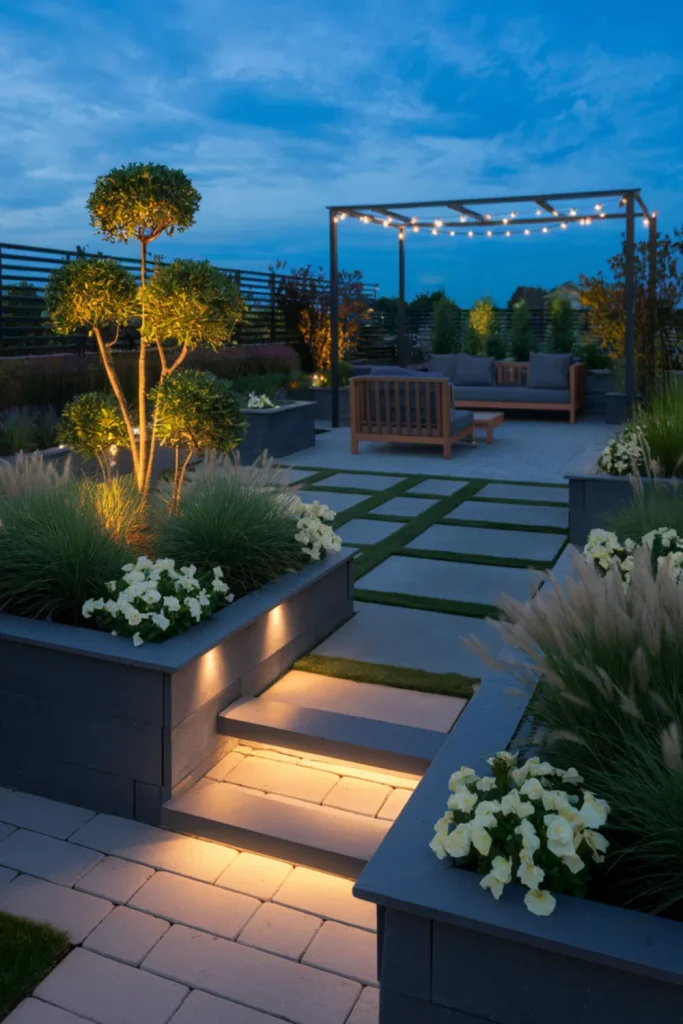
Good patio lighting should reveal the garden without washing the entire yard in brightness.
Combine low path lights, a few warm uplights beneath a small tree, and soft overhead lights near the seating area.
Each layer serves a different purpose while showing off grasses and pale flowers after sunset.
Use exterior-rated fixtures, conceal cables along safe routes, and aim beams away from windows and neighboring properties.
24. Rustic Patio Garden With a Potting Station
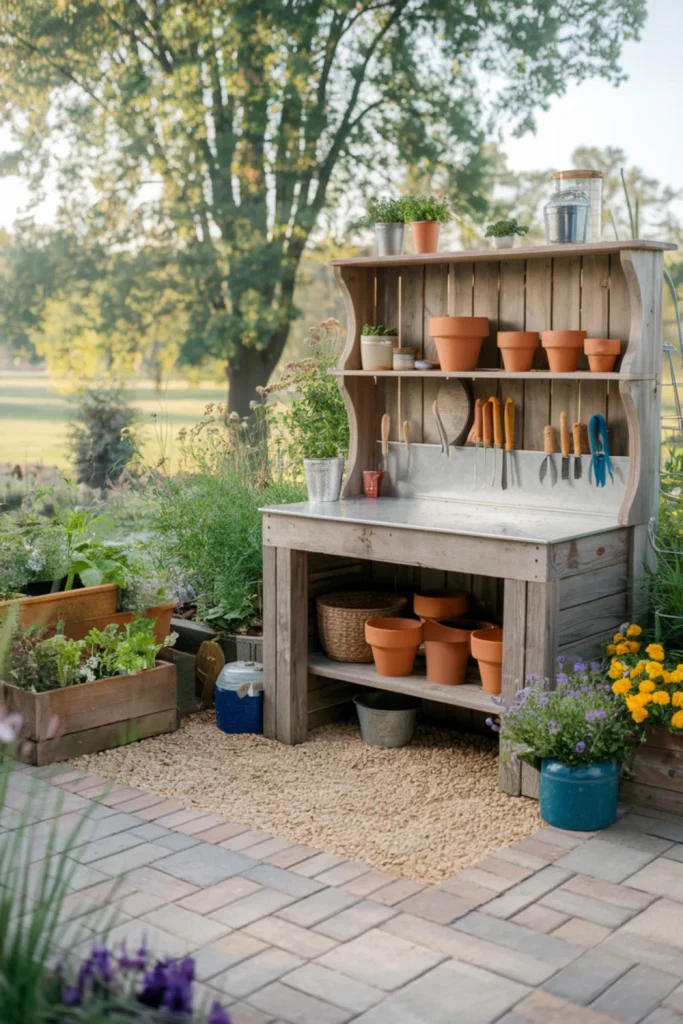
Keeping tools and potting supplies beside the garden makes routine maintenance faster and less messy.
A compact cedar station with a zinc worktop, open shelves, and space for stacked terracotta pots fits neatly along the patio’s outer edge.
Store soil in a lidded container below to keep it dry and discourage pests.
Position the station near water access, but away from the main dining and relaxation area.
25. Four-Season Patio Garden With Evergreen Structure
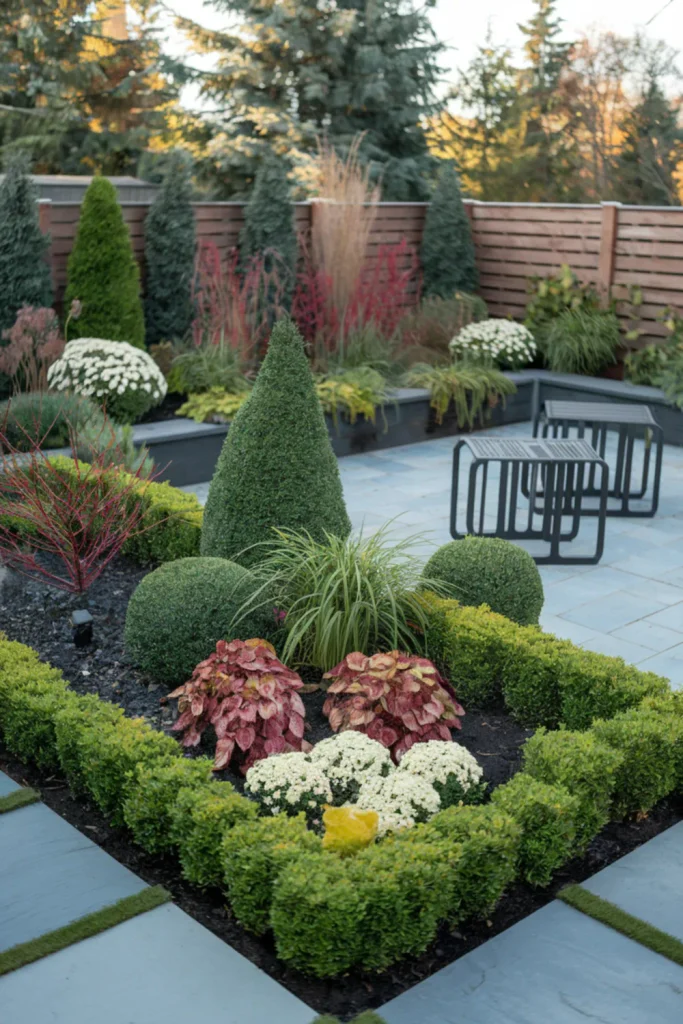
Summer flowers are only one part of a patio garden that looks considered throughout the year.
Dwarf conifers, boxwood, red-twig dogwood, heuchera, and ornamental grasses provide lasting shape, colored stems, and varied foliage around simple black seating.
Start with the evergreen framework, then reserve smaller containers for seasonal changes.
Confirm each plant’s mature size so permanent selections do not crowd the patio after several growing seasons.
How to Choose the Best Idea for Your Space
Let the patio’s limitations guide the design.
A narrow layout may benefit from wall planters or espaliered trees, while an exposed patio may need tall container plants for privacy.
For a sunny area, consider Mediterranean herbs, pollinator flowers, or drought-tolerant succulents.
Ferns, hostas, and foliage plants are better suited to shaded spaces.
Measure the usable floor area before buying planters, and include enough clearance to pull out chairs and open doors.
Choose containers based on mature plant size rather than their size at the garden center.
When the budget is limited, begin with one focal grouping and expand it over time.
Repeating the same planter material or two or three plant varieties will make a smaller collection feel coordinated without requiring an expensive matching set.
FAQ
How can I create a patio garden without spending much?
Begin with repurposed containers, inexpensive terracotta pots, and easy-to-grow plants divided from existing garden beds.
Spend first on quality potting mix and drainage rather than decorative accessories.
Group several affordable pots together and repeat a limited color palette so the arrangement feels intentional.
Which containers work best for a small patio?
Tall, narrow planters and tiered stands provide more planting room without occupying much floor space.
Lightweight fiberglass or resin containers are easier to reposition than concrete.
Always choose pots with drainage holes, and avoid undersized containers that dry quickly or cannot support a plant’s mature root system.
How do I keep a patio garden manageable while traveling?
Group plants according to their watering needs and use larger containers that hold moisture longer.
Drip irrigation with a timer can support a collection during short absences, but test it before leaving.
Self-watering planters also help, though plants should never sit permanently in saturated soil.
Conclusion
The most useful patio garden ideas respond to the actual conditions of the space rather than relying on decoration alone.
Start with sunlight, circulation, and one main purpose, such as privacy, edible planting, or comfortable seating.
Once that decision is clear, choose one strong planting arrangement and leave room for it to mature.
A smaller, well-planned collection will usually be easier to maintain than dozens of unrelated pots.