
The patio door is two steps from your couch, yet the space on the other side might get used only when you remember to water a plant. Sometimes the problem is a chair you have to squeeze past. Sometimes it’s the afternoon sun, or the feeling that you’re sitting on display.
Good apartment patio ideas solve those little annoyances and give you a reason to head outside. Think about what you would actually do there on an ordinary Tuesday. A place to finish your coffee, pot up some basil, or read for twenty minutes calls for a different mix of furniture and decor.
1. Set Out a Folding Bistro Set
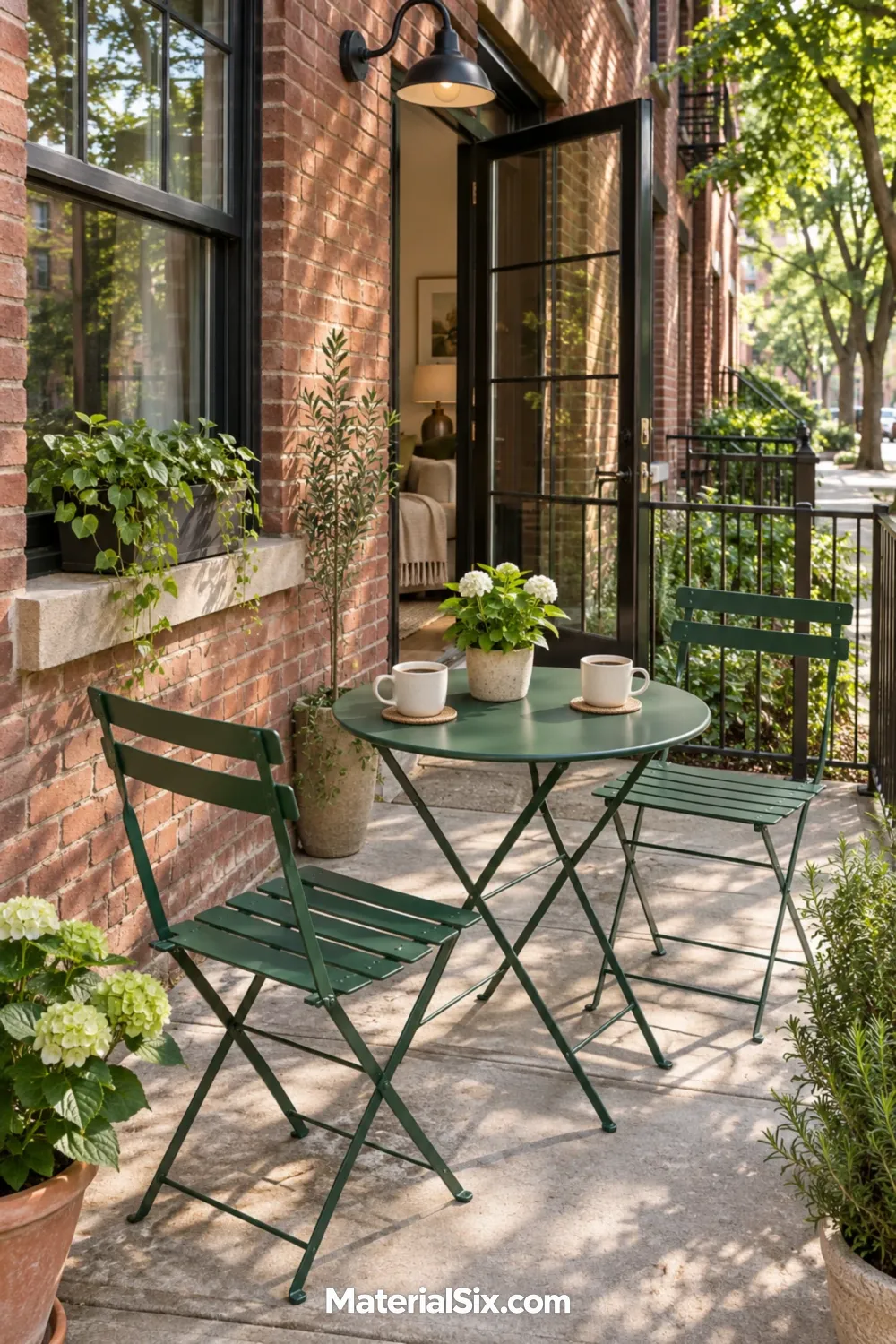
Two slim chairs and a round café table give you room for coffee and breakfast without asking much of the patio. Pull a chair back as far as you would when getting up, then check that you can still pass between it and the door. Fold the set and move it aside when you need floor space to repot plants or sweep.
2. Put a Compact Loveseat Against the Wall
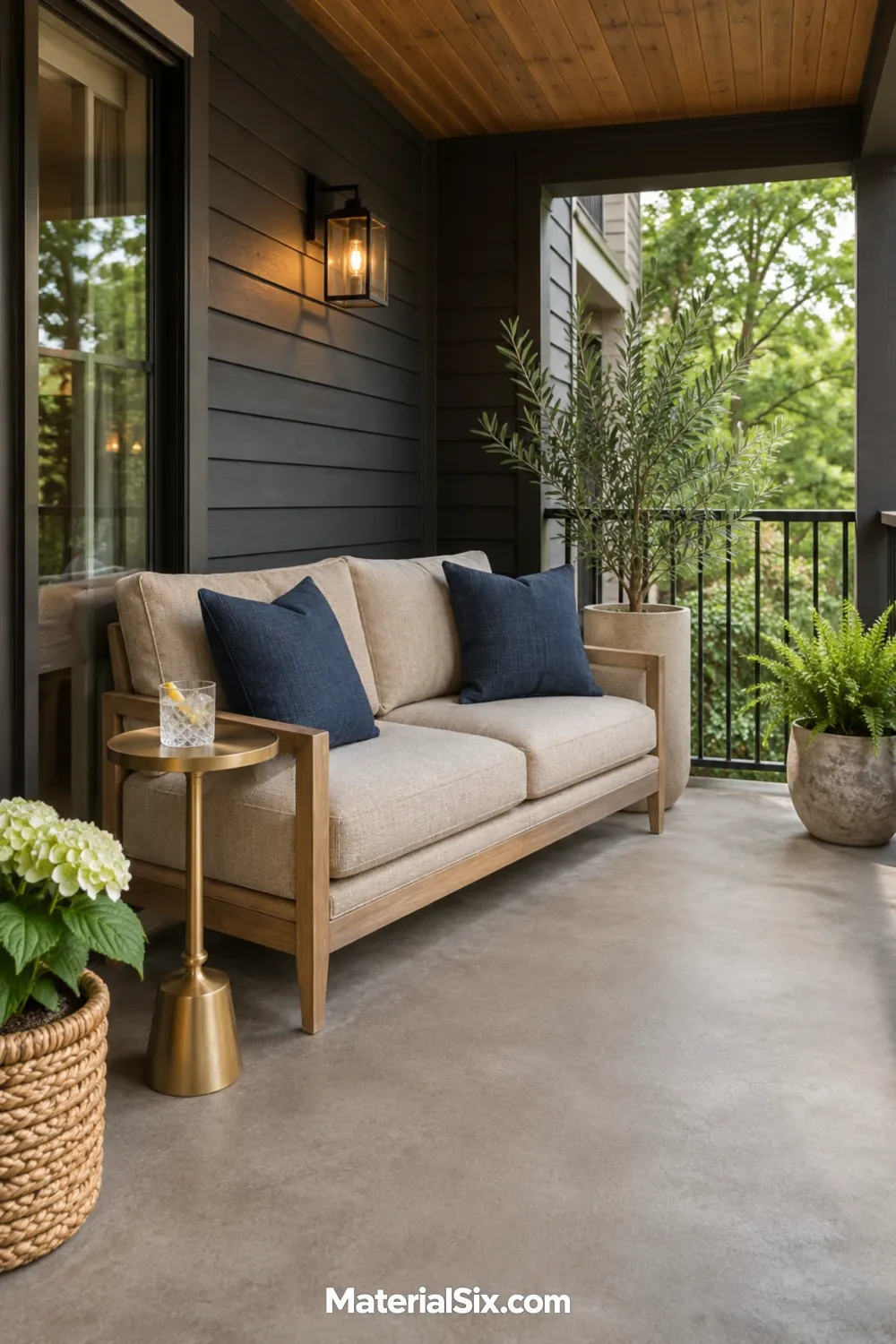
A single loveseat can replace two chairs that would otherwise face each other across a narrow patio. Run it along the longest usable wall and try a drink perch beside one arm. That arrangement puts both people on the same side of the space, leaving the middle open for walking.
Measure the actual depth of the frame and cushions when you shop. A short loveseat with a deep seat can project farther into the patio than a wider, upright one.
3. Pull Out Nesting Tables as Needed
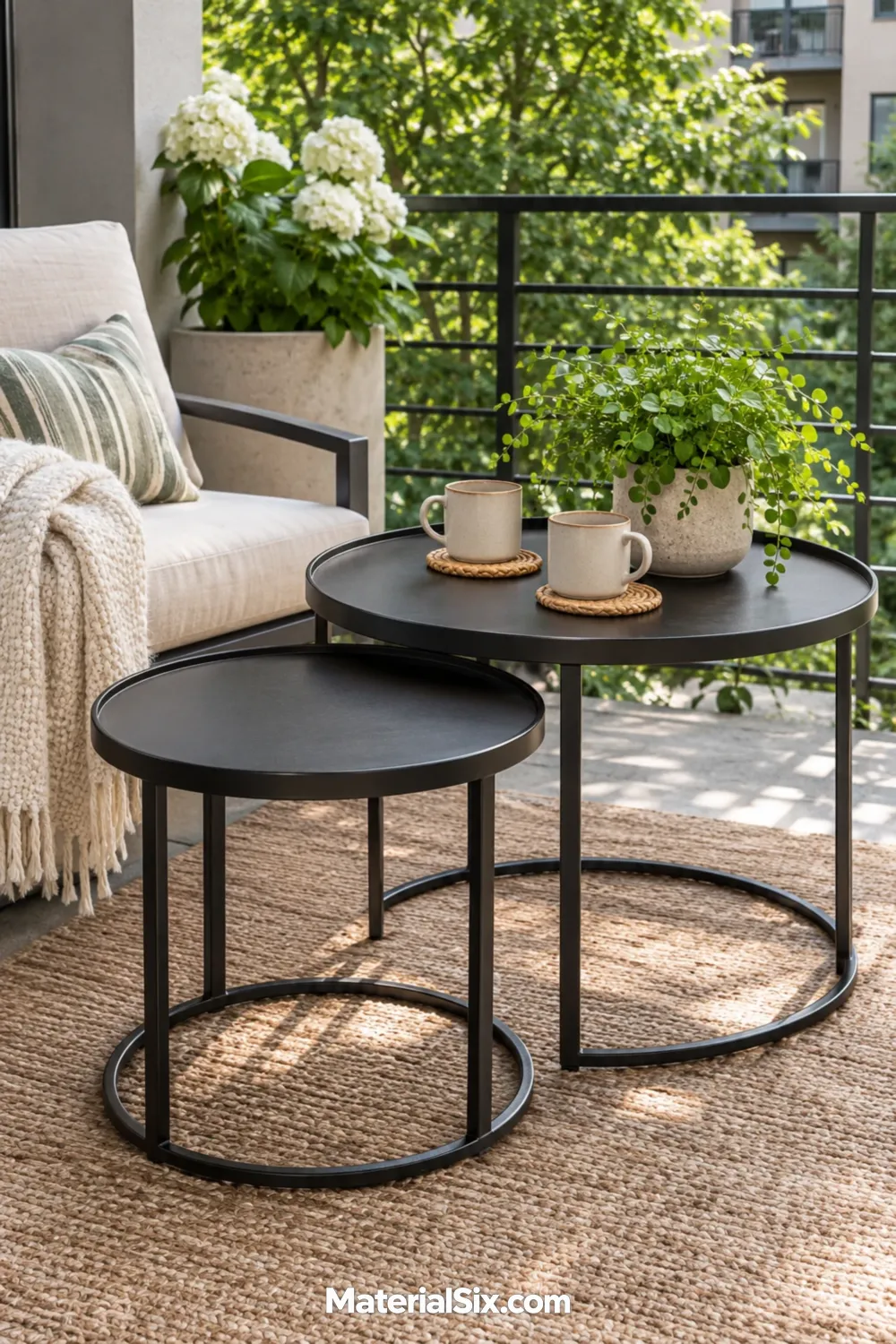
Keep the smaller table tucked under its partner most days, then slide it near the second seat when a friend comes over. Look for a pair with two genuinely usable surfaces and enough space under the larger top to slide the smaller one away without lifting it.
4. Keep Cushions in a Storage Bench
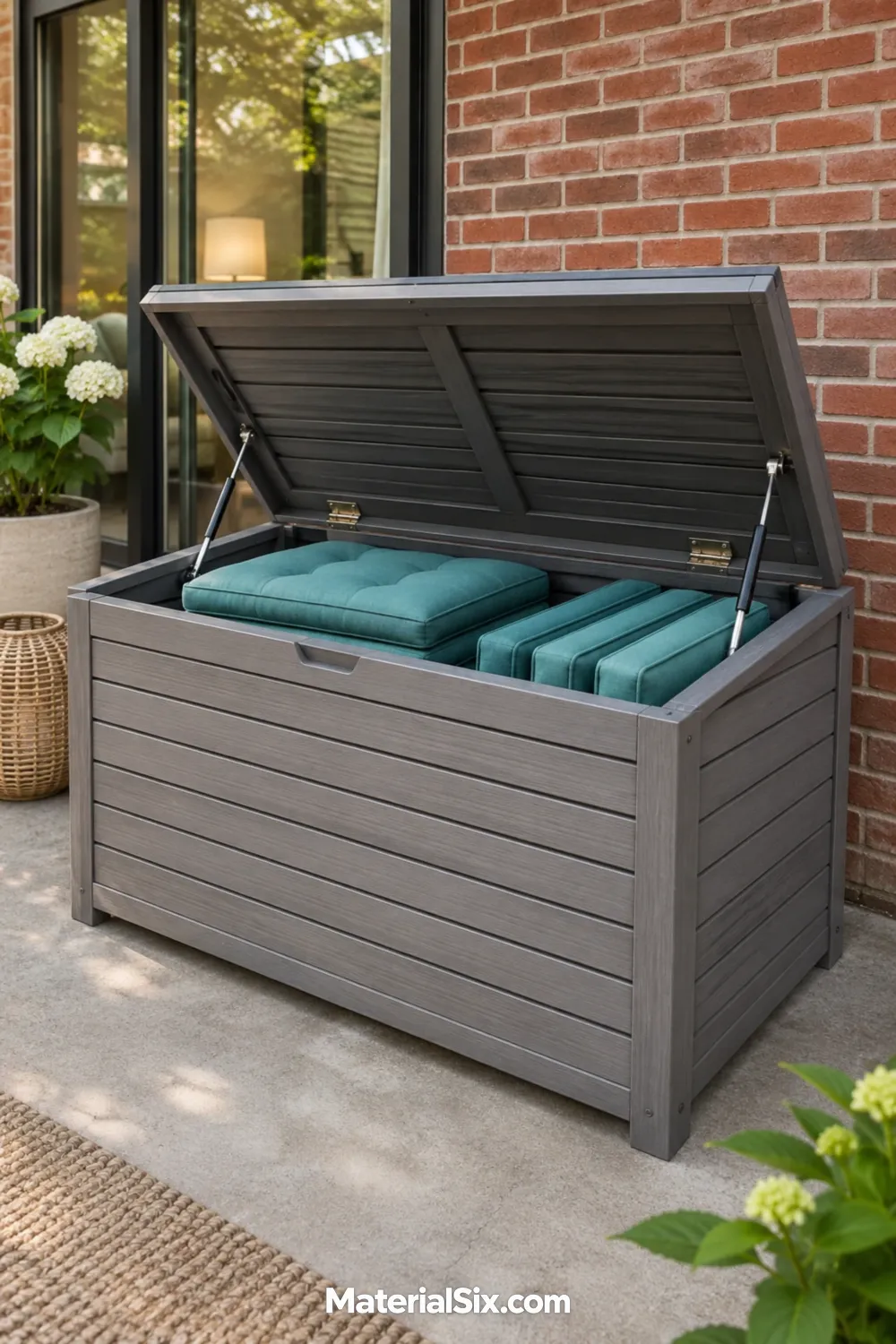
An outdoor storage bench gathers loose seat pads and a few patio accessories in one place. Set it where you can raise the lid all the way, especially beneath a low window or against siding. Let damp cushions dry before putting them away and use a smaller bin inside for items that tend to disappear into the corners.
If you want the bench to double as seating, choose one designed for that purpose. A storage box can have a flat lid without being made to sit on.
5. Define the Seating Area With an Outdoor Rug
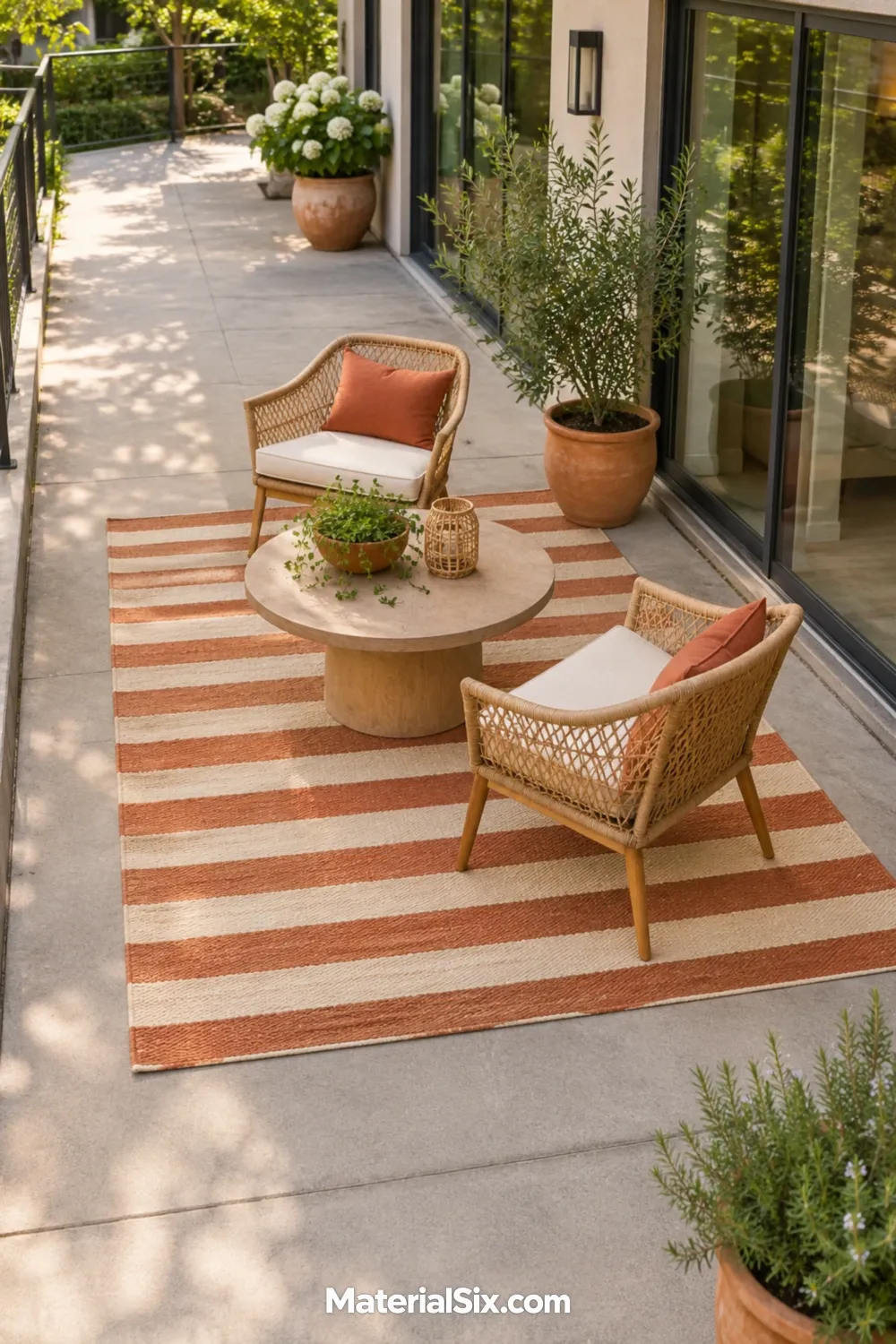
A flatweave rug can make two loose chairs and a side table read as one seating area. Tape out the corners before buying and see where the rug would land relative to the route from the door. A striped pattern can echo colors from cushions or planters and give an otherwise bare slab a stronger sense of direction.
6. Give Bare Concrete a Wood Look With Deck Tiles
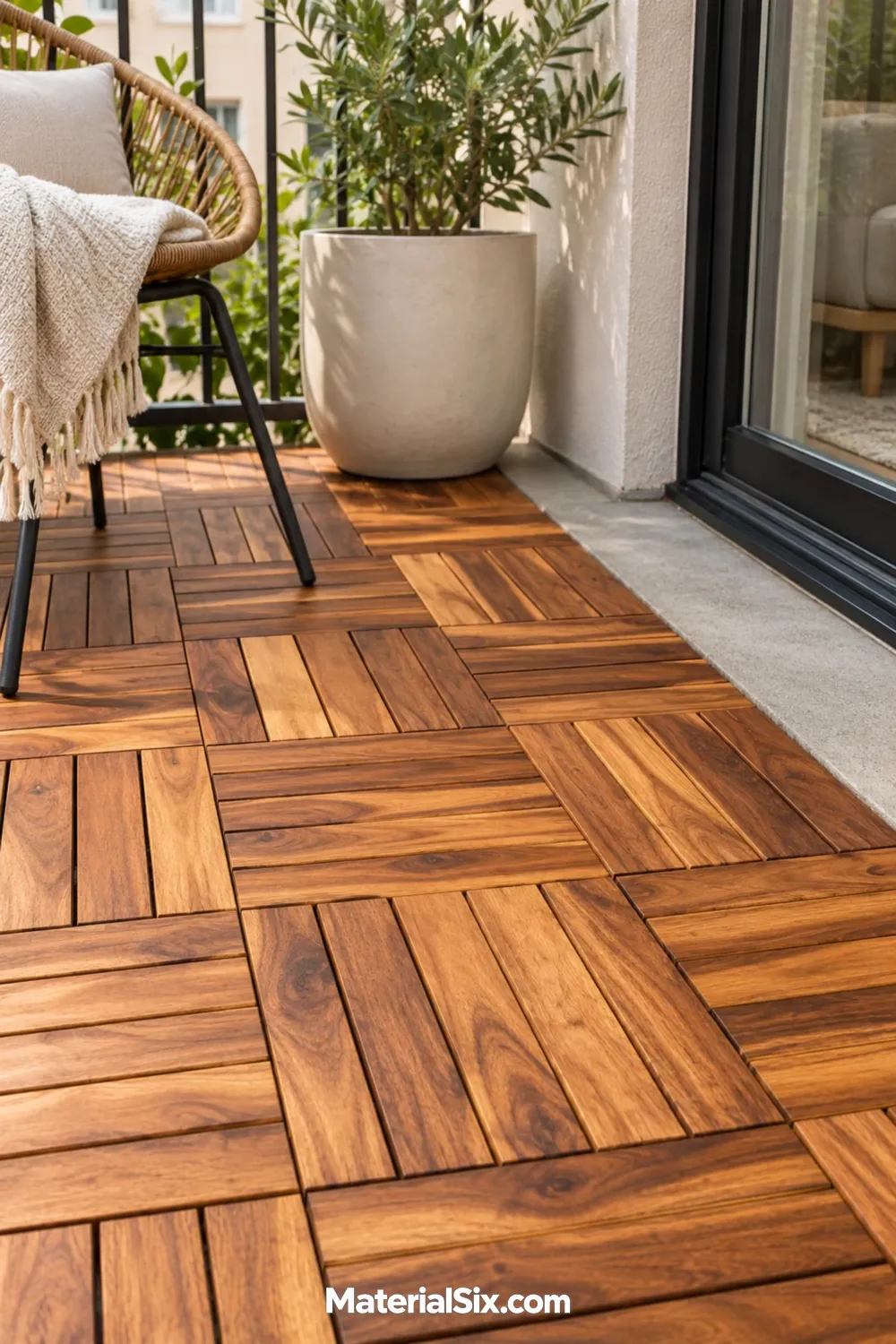
Interlocking wood deck tiles can bring the warmth of a deck to a plain apartment patio. Try covering the area under the chairs and leave a strip of concrete at the threshold if the door needs clearance. Before ordering, confirm that management allows removable flooring and check the tile manufacturer’s requirements for your surface.
Work out how full tiles will land at the edges. A slightly smaller rectangle with a clean border can look more deliberate than a run of awkward slivers against the wall.
7. Add Privacy Where You Sit With a Freestanding Screen
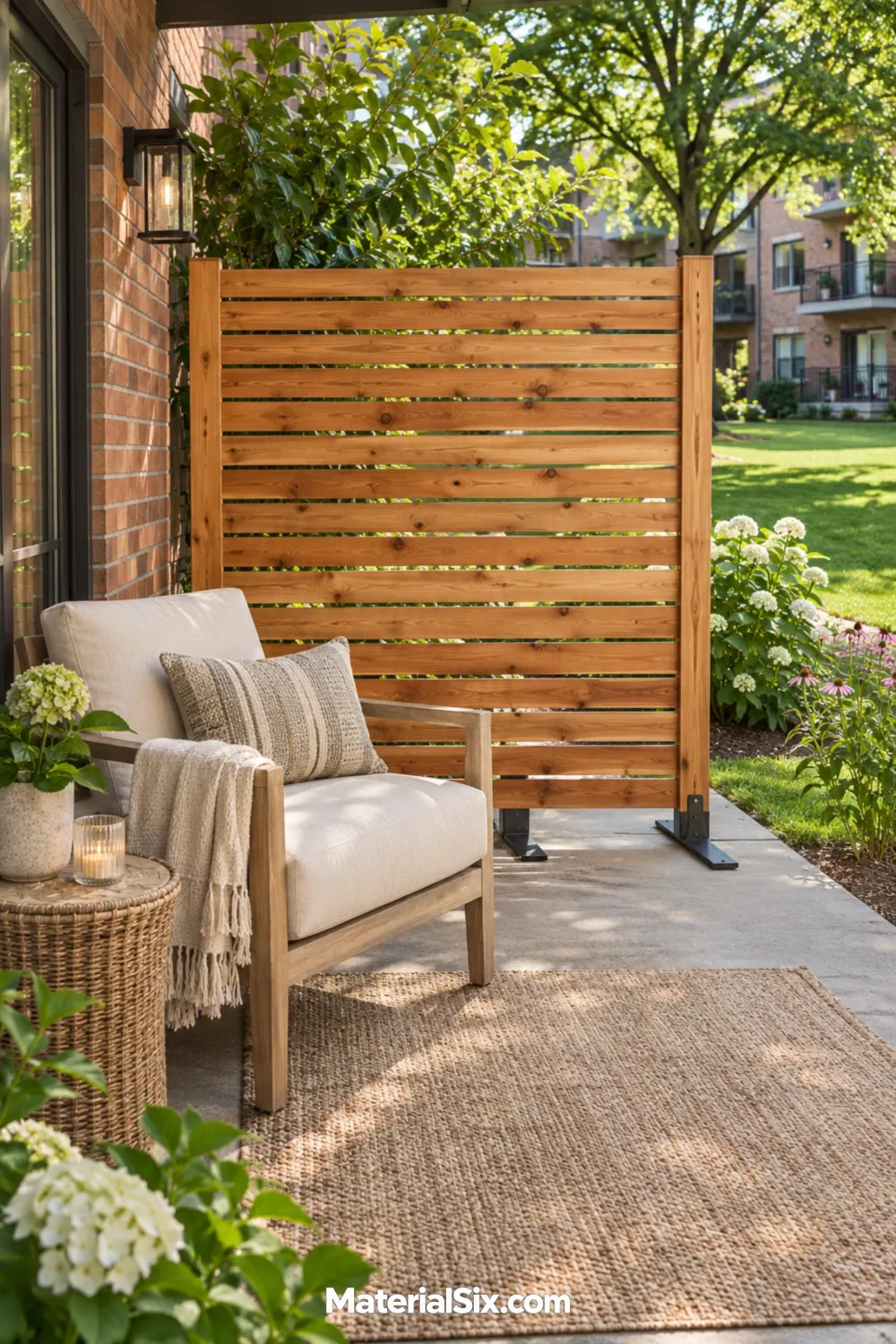
Sit down and look toward the spot where passing neighbors are most visible. A short section of slatted screen placed across that sightline may be all you need. It still lets you look out toward the garden or the sky from the other side of your seat.
Choose a screen intended for outdoor use and follow its installation and wind guidance. Check what your building permits before ordering one, including whether the feet can fit completely within your patio.
8. Outline the Patio With a Low Planter Border
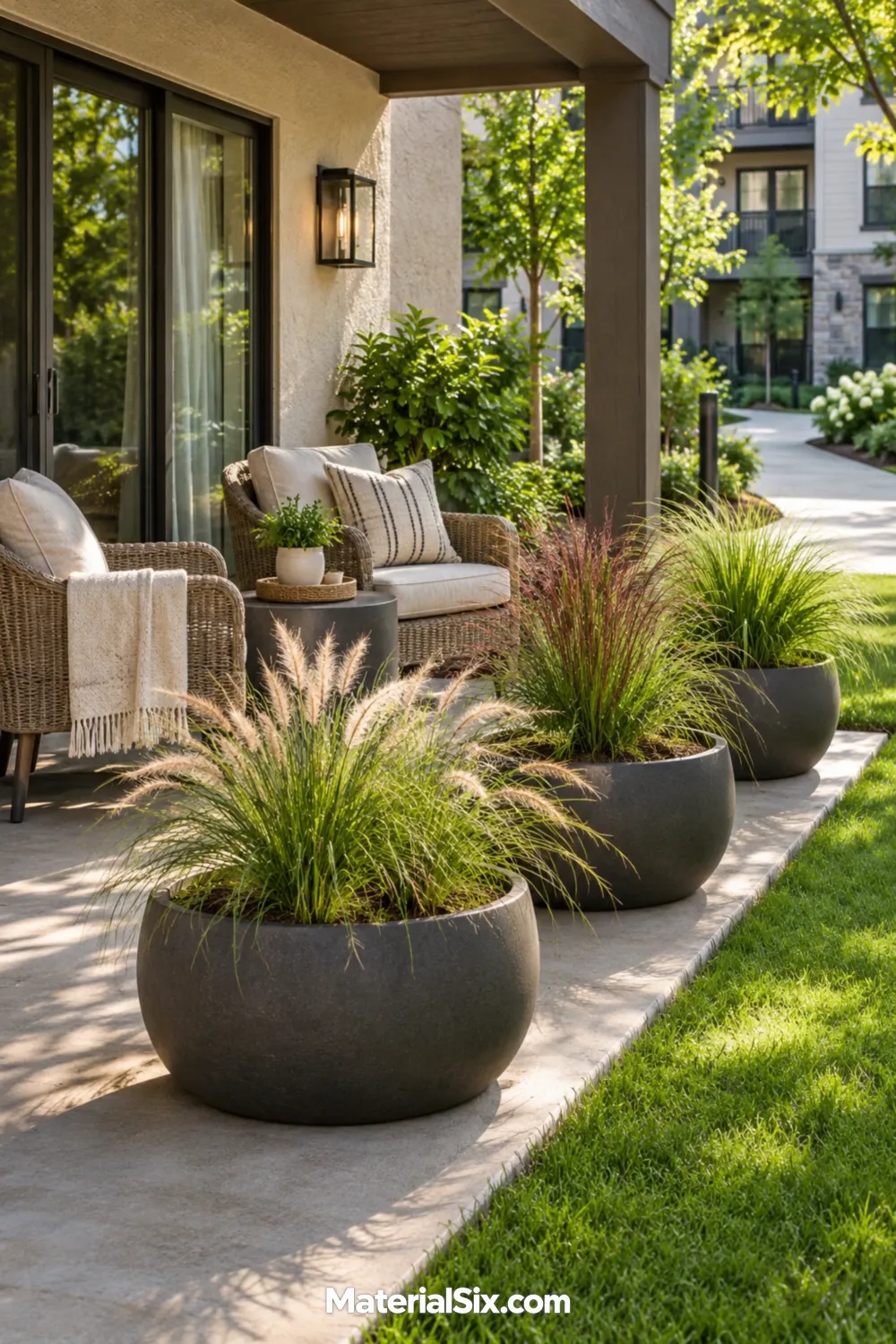
On a ground-floor patio that opens onto shared lawn, group a few low containers along your edge. A repetition of one pot finish and one grassy texture gives the border a rhythm, and you can leave a gap where you normally enter. Broad, squat containers help keep the planting visually low.
9. Grow Upward With a Tiered Plant Stand
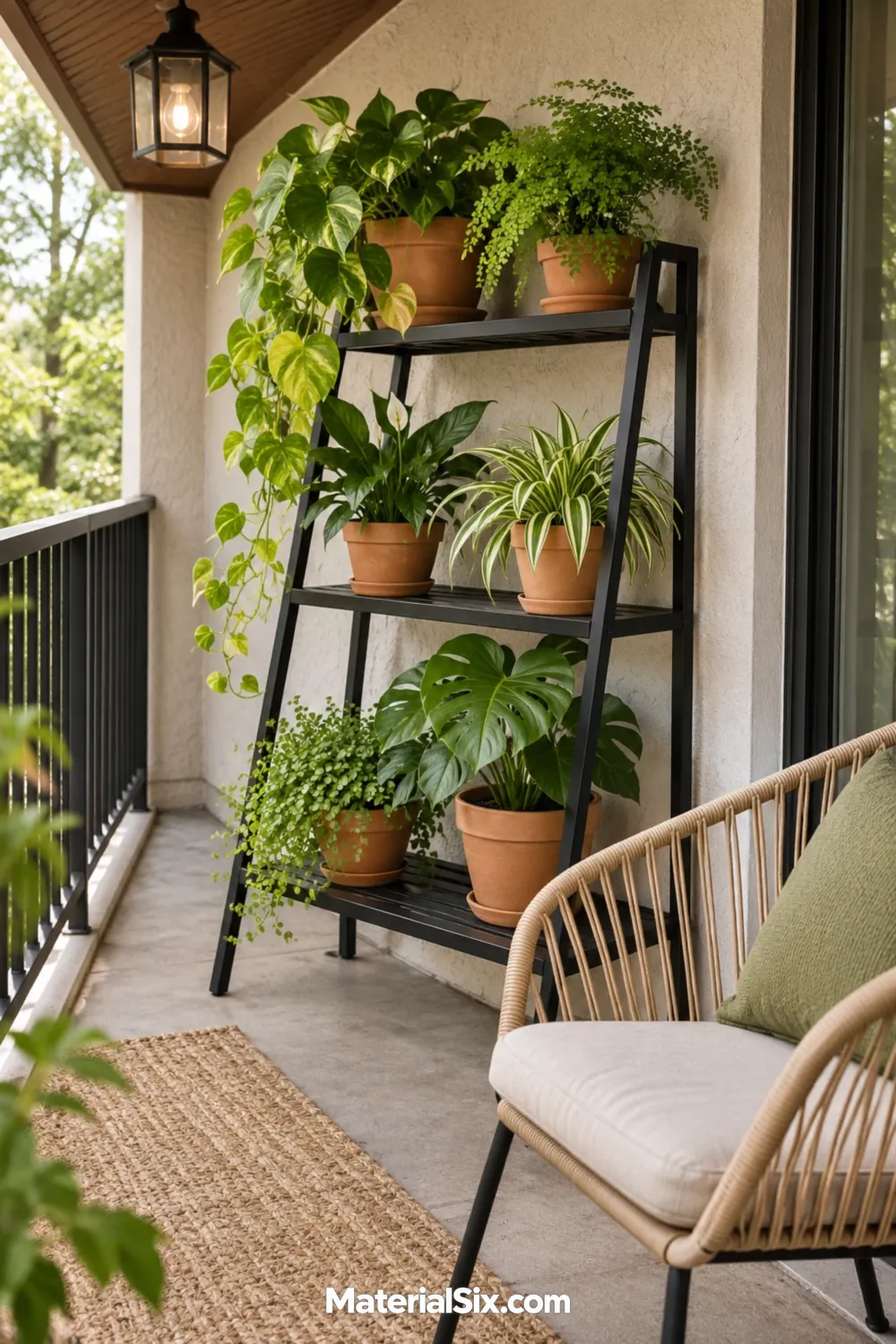
Stack plants on a freestanding stand when the floor feels crowded with individual pots. Put a trailing plant toward the top and a broad, upright plant lower down so their silhouettes stay visible. Pair plants with similar light needs on the same side of the patio, and use saucers where you need to catch runoff.
10. Put Your Favorite Herbs on a Rolling Cart
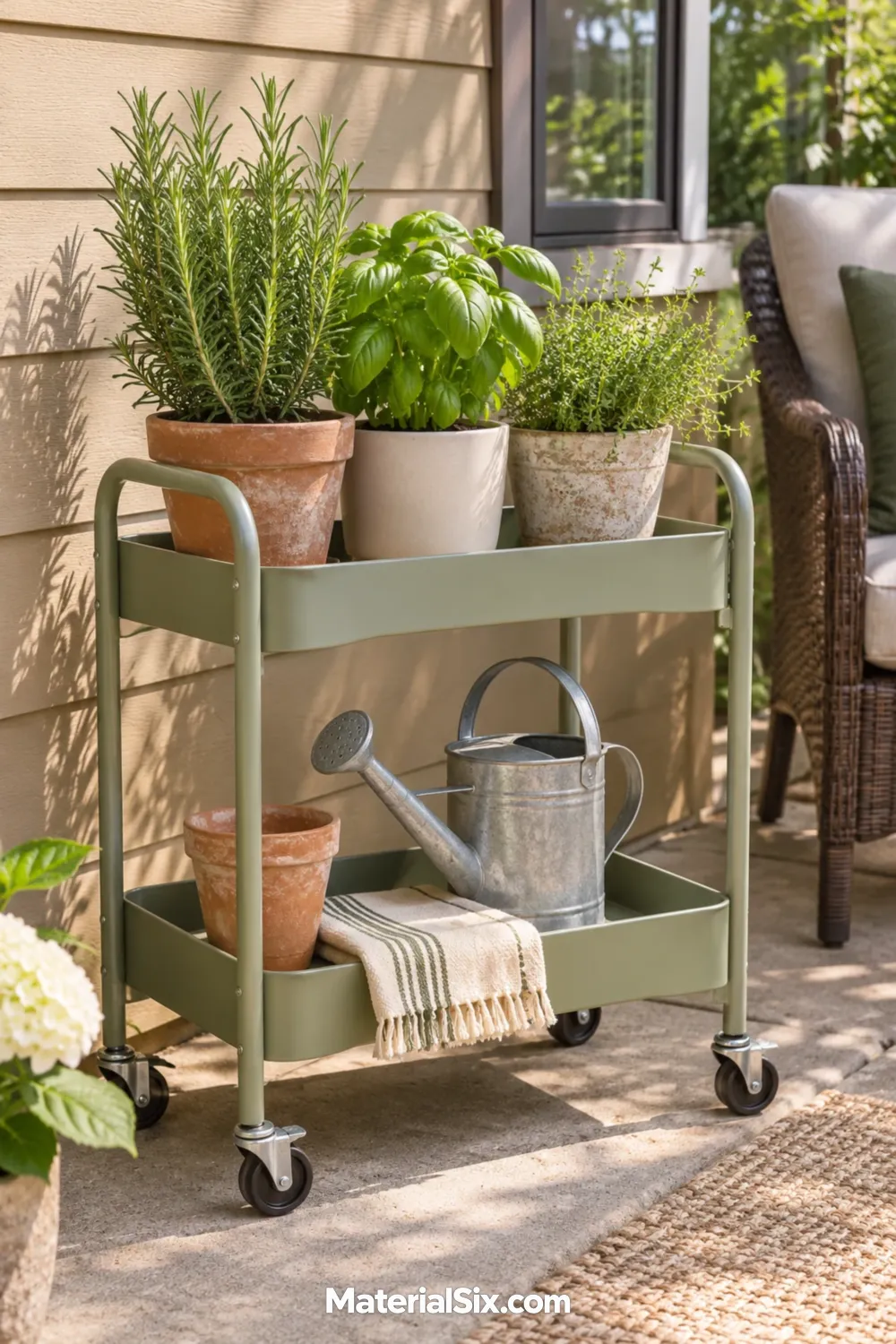
Put the herbs you cook with on a compact outdoor cart so you can bring the pots together when watering. Pick its usual parking spot based on the light the plants need, then check that the cart rolls across your patio surface without catching at joints. Keep the watering can on the lower shelf to free up room for pots above.
11. Make an Afternoon Seat With a Compact Umbrella
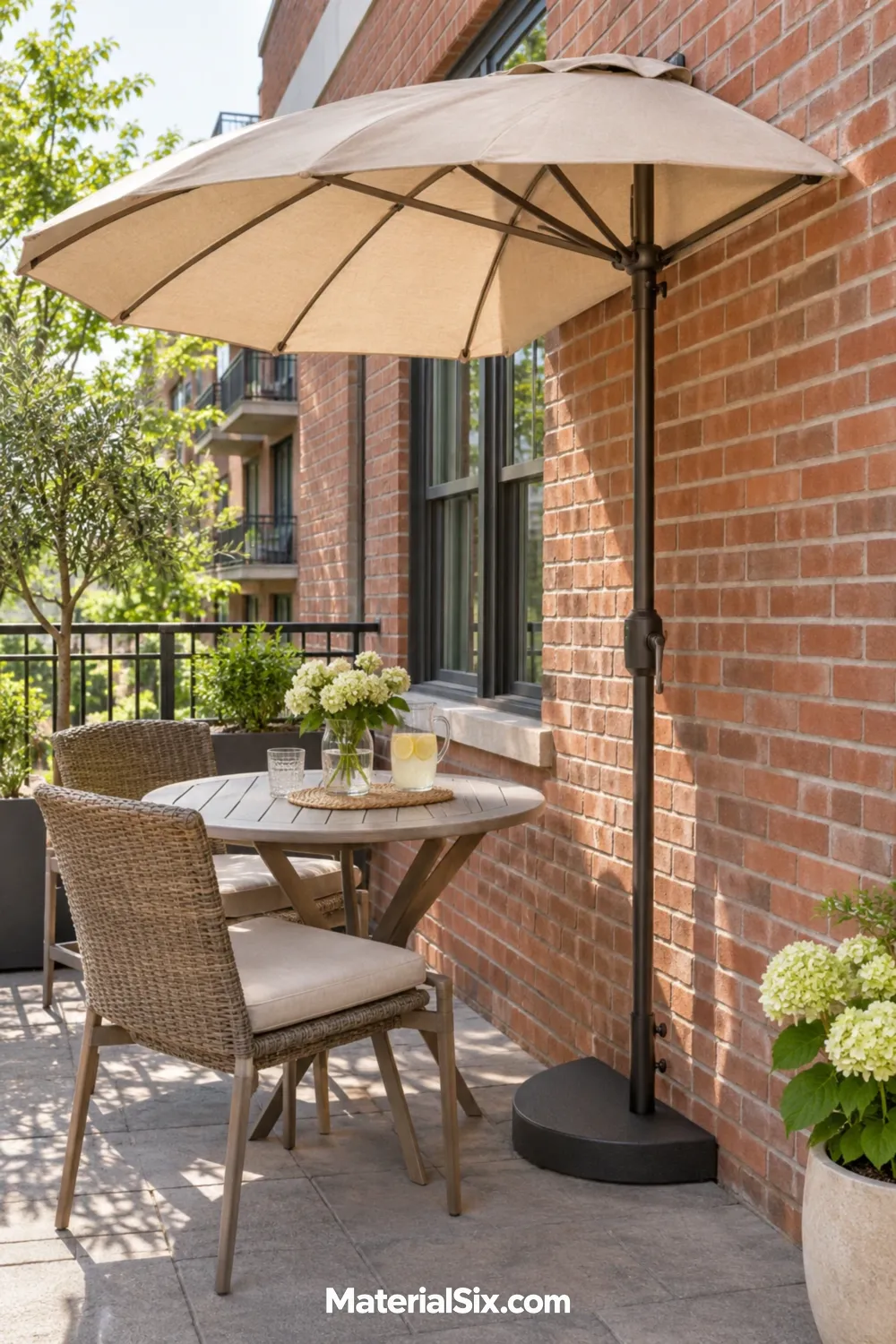
Watch where the sun hits at the hour you actually want to sit outside. You may need shade over just one chair or a narrow table. A half umbrella can work against a flat wall where a round canopy would run into the building.
Count the base as part of the footprint when you measure, and leave room to reach the handle or crank. Check the building’s shade rules and choose a canopy and base that the manufacturer specifies for use together.
12. Trace the Seating Area With Solar String Lights
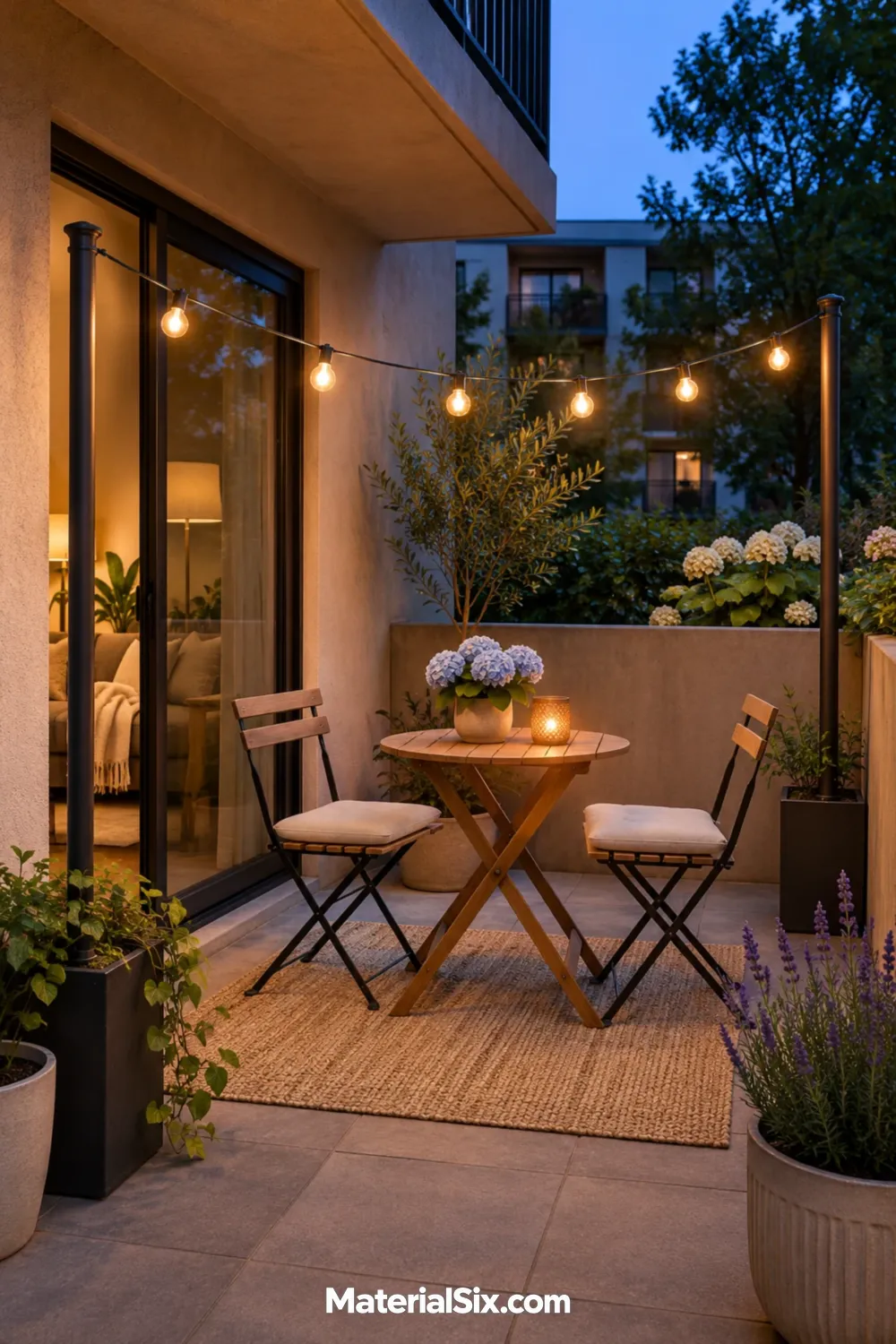
A short strand of warm bulbs gives your seating area a defined outline at dusk. If you choose solar lights, find a daytime spot for the panel before deciding where the strand will run. On a covered patio, the best panel location may be closer to the open edge than the spot where you want the bulbs. Check which mounting options your building permits.
13. Light the Table With a Cordless Lamp
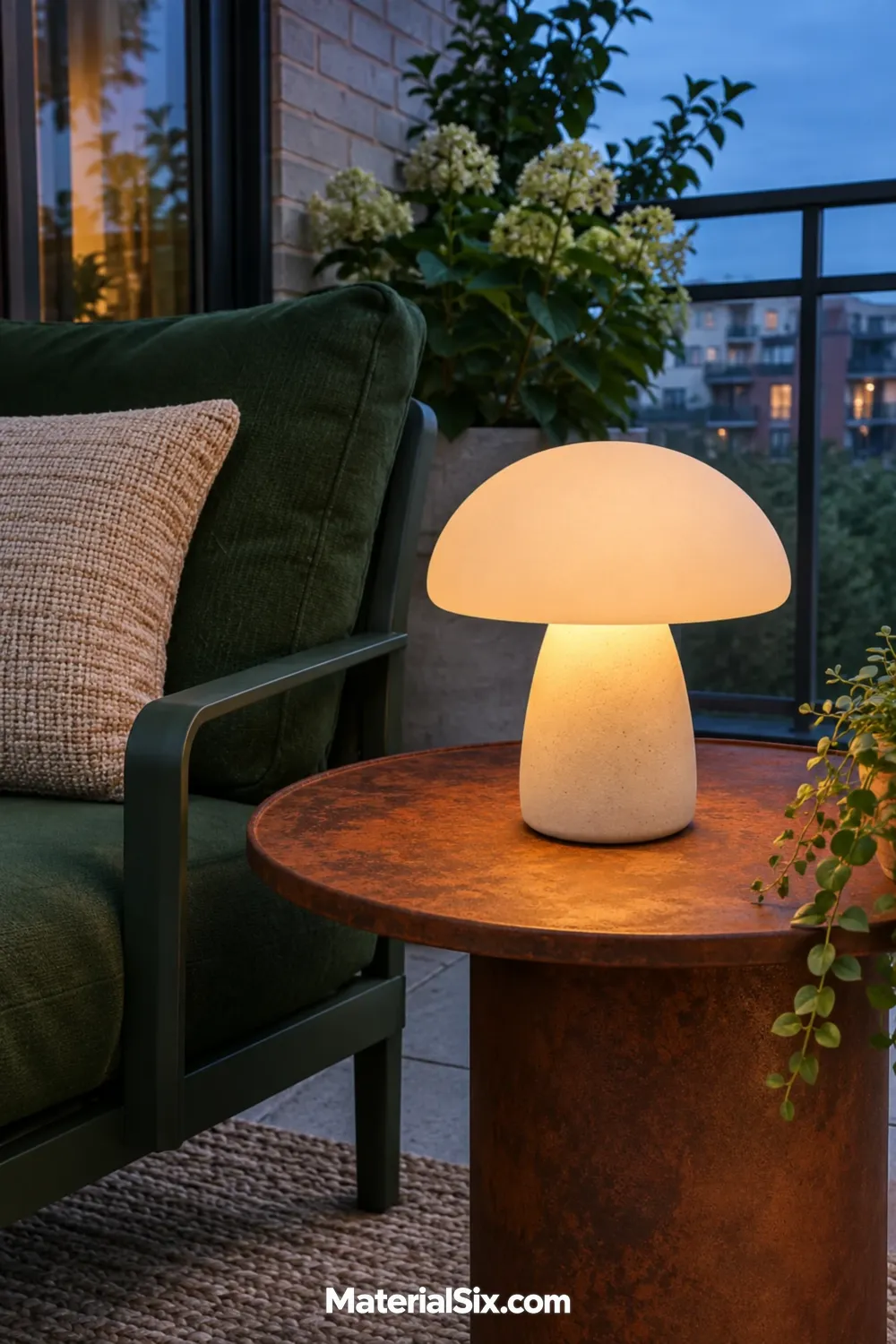
Try a rechargeable outdoor table lamp when your patio lacks a convenient outlet. A downward-facing shade puts the glow around a book, drink, or plate. Start with the dimmer setting if the lamp sits close to eye level, and pick a spot indoors where you’ll remember to charge it.
14. Make a Narrow Station for Drinks and Snacks
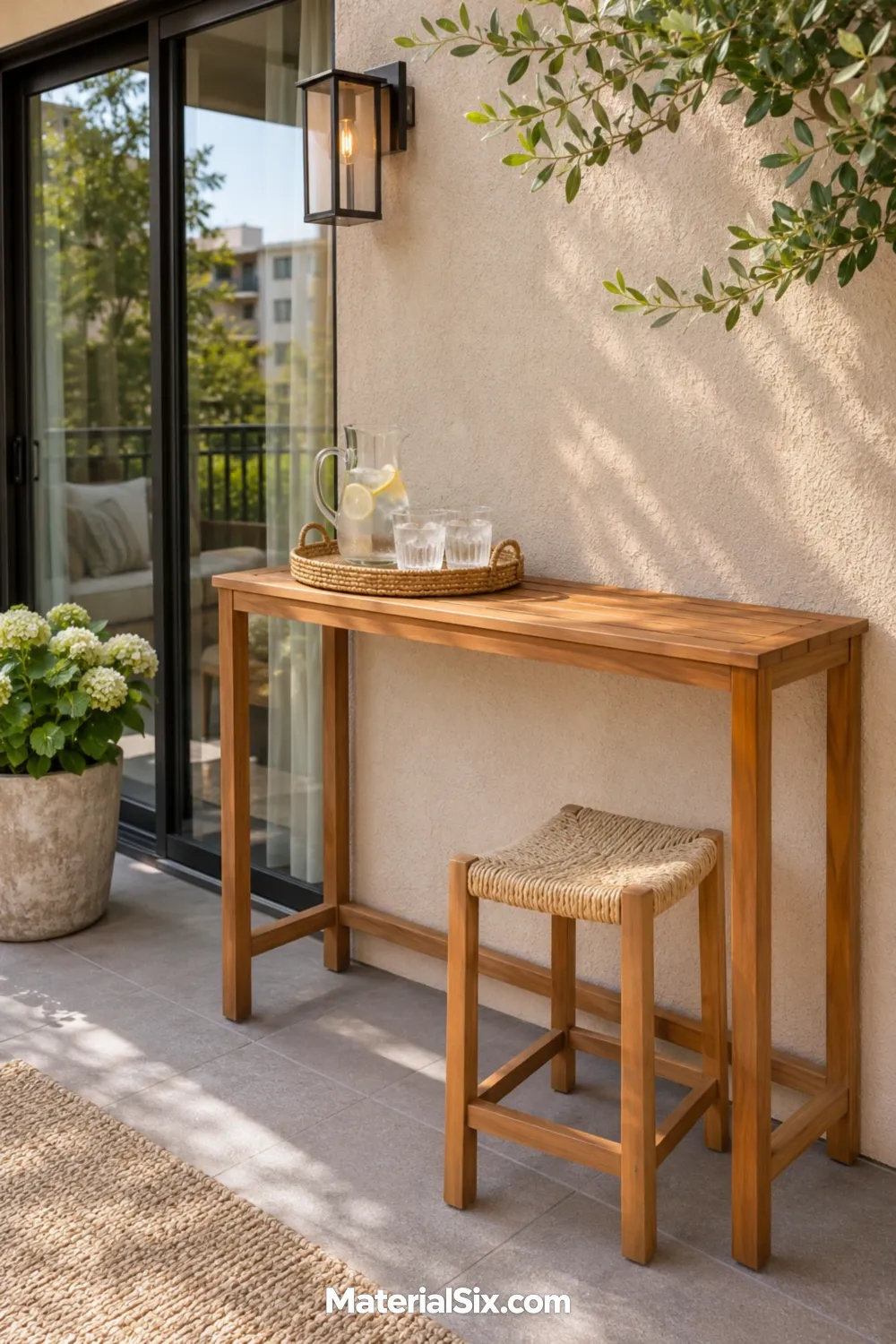
A shallow console along the wall keeps pitchers, cups, and snacks off the main table. Use a tray you can load in the kitchen and carry outside in one trip. Measure the console against the space you need behind a pulled-out chair, since a narrow top can still take up valuable room in a busy corner.
15. Set Out Floor Cushions for Casual Seating
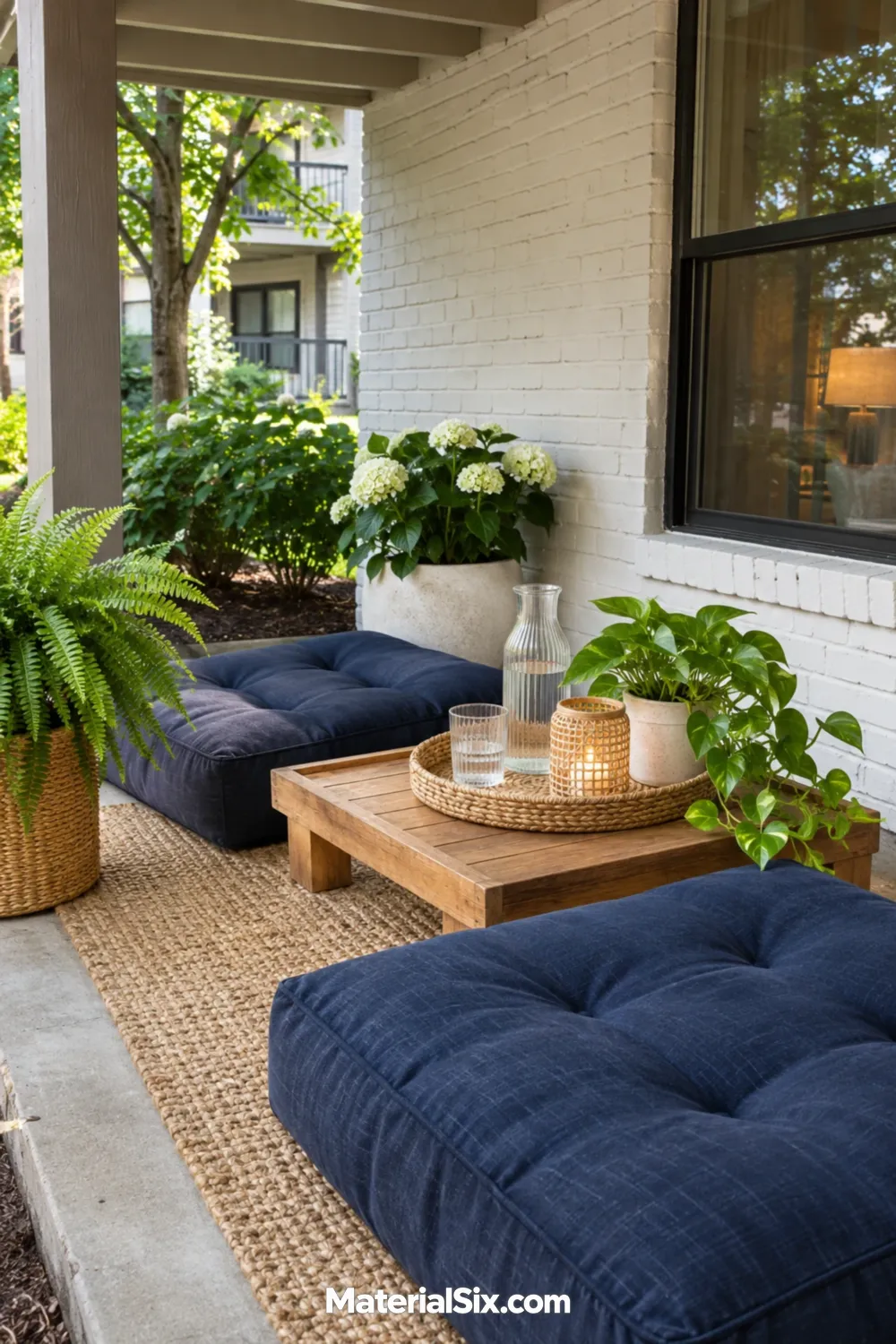
Thick outdoor floor cushions make sense for a covered patio where you sometimes want extra spots to sit. Put a short, steady table between them so drinks have somewhere to go. Removable covers make it easier to deal with tracked-in dirt, and the cushions can stack indoors between visits.
16. Give One Good Chair a Reading Corner
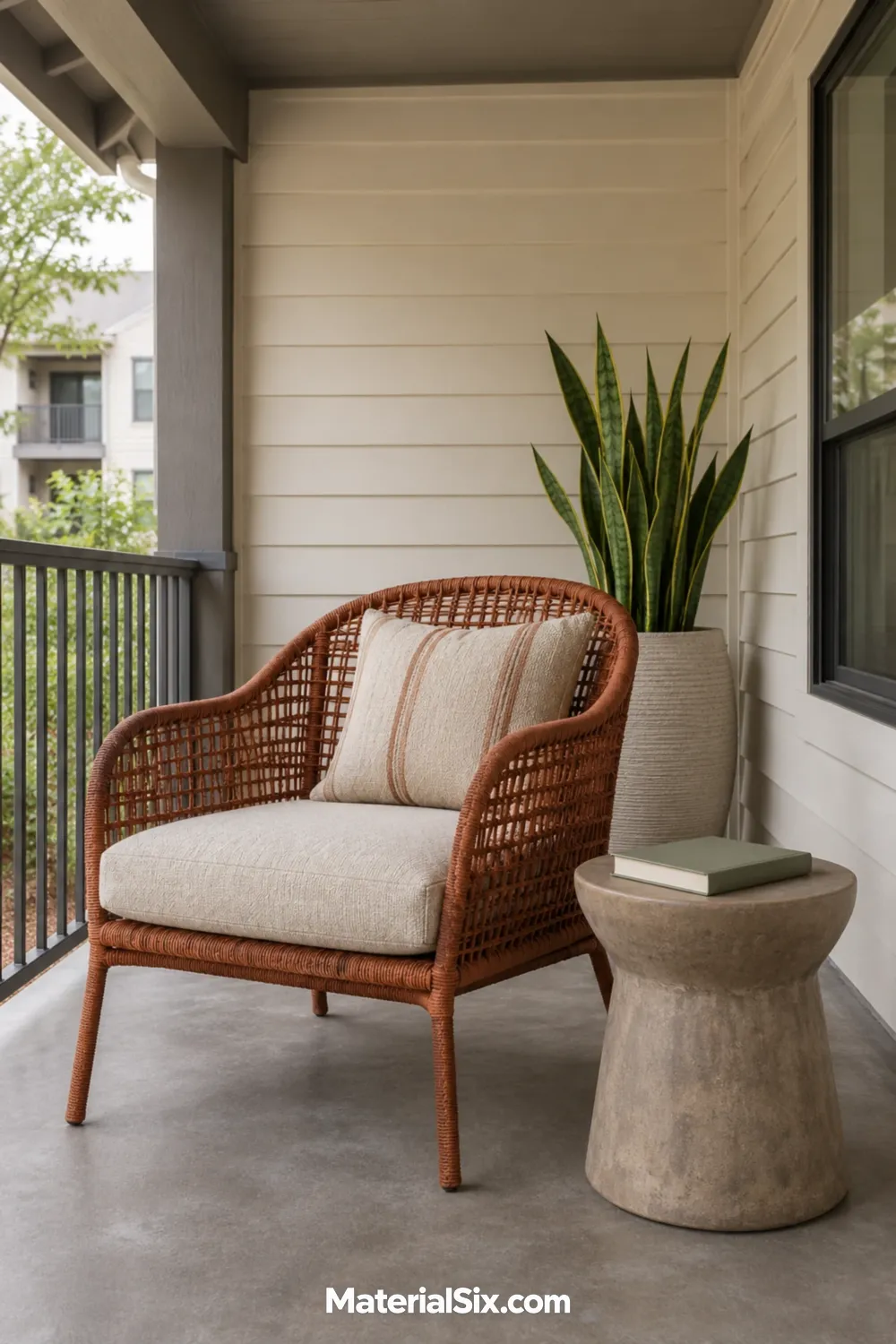
Angle a chair toward your favorite view, even if it’s just the leaves in a planter. Before you add more furniture, sit for a few minutes and see where your hand naturally reaches. That’s a good place for a low stool to hold a book and a glass.
17. Pull the Colors Together With Outdoor Textiles
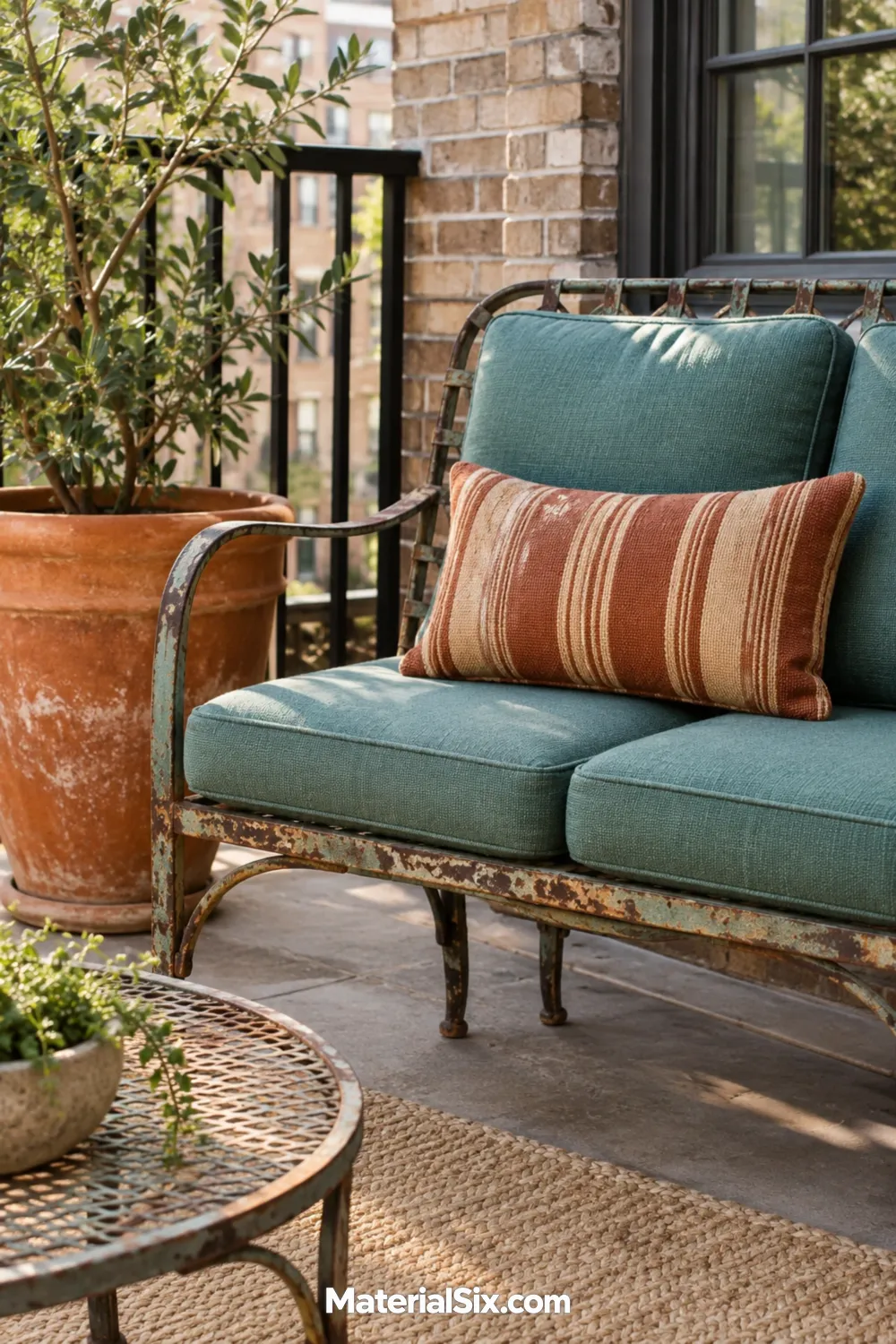
Pick one color from something you already have outside, such as a terracotta pot or blue chair frame, and repeat it in a cushion or pillow stripe. A second, quieter color can carry across the largest seat pads. That small amount of repetition can tie together pieces you bought at different times.
18. Display a Patterned Panel Without Drilling
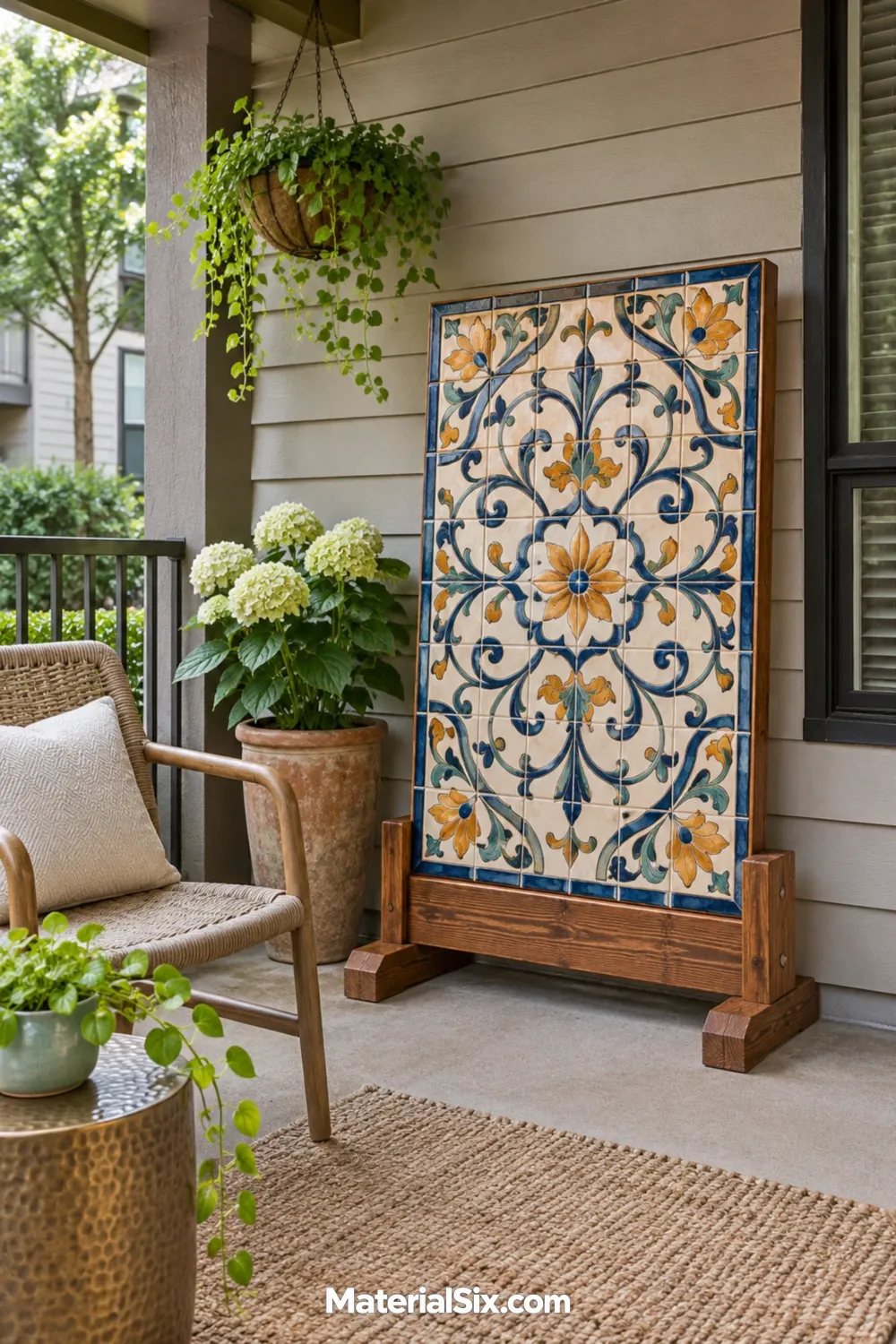
On a sheltered patio, a ceramic or weather-rated decorative panel can sit on a sturdy freestanding display stand. Keep the arrangement low and use a stand suited to the panel’s size and weight. A single patterned piece next to a plain chair gives a bare wall some character while keeping the siding clear.
What to Check Before You Buy Patio Furniture
Sketch the space from above and mark the door, any shared walkway, and anything fixed in place. Draw furniture as it works in use, including where a chair sits when someone is at the table and how far a bench lid opens. Painter’s tape on the floor can make those footprints easier to judge.
Then visit the patio at two different times of day. Notice where the sun falls and which spots feel most exposed. For a rental, check your building’s rules on floor coverings, screens, shades, light mounts, and what can go along the patio’s edges before buying anything that depends on them.
Give the Patio a Job You’ll Come Back To
Pick one thing you already enjoy and give it an outdoor home. If it’s morning coffee, try the smallest table that fits your cup and whatever you bring out with it. Use the spot for a week. You’ll soon know whether what’s missing is shade, somewhere for a second person to sit, or simply a better view from your chair.