
A narrow strip between the house and fence can be difficult to landscape without blocking access or making the area feel crowded.
The right narrow side yard landscaping plan can turn that overlooked passage into a useful walkway, garden, seating nook, or drainage feature.
These ideas cover different budgets, climates, light conditions, and maintenance levels.
Use them to compare pathways, planting arrangements, privacy solutions, and compact features that fit the actual width and purpose of your side yard.
1. Gravel Side Path With Layered Shade Plants
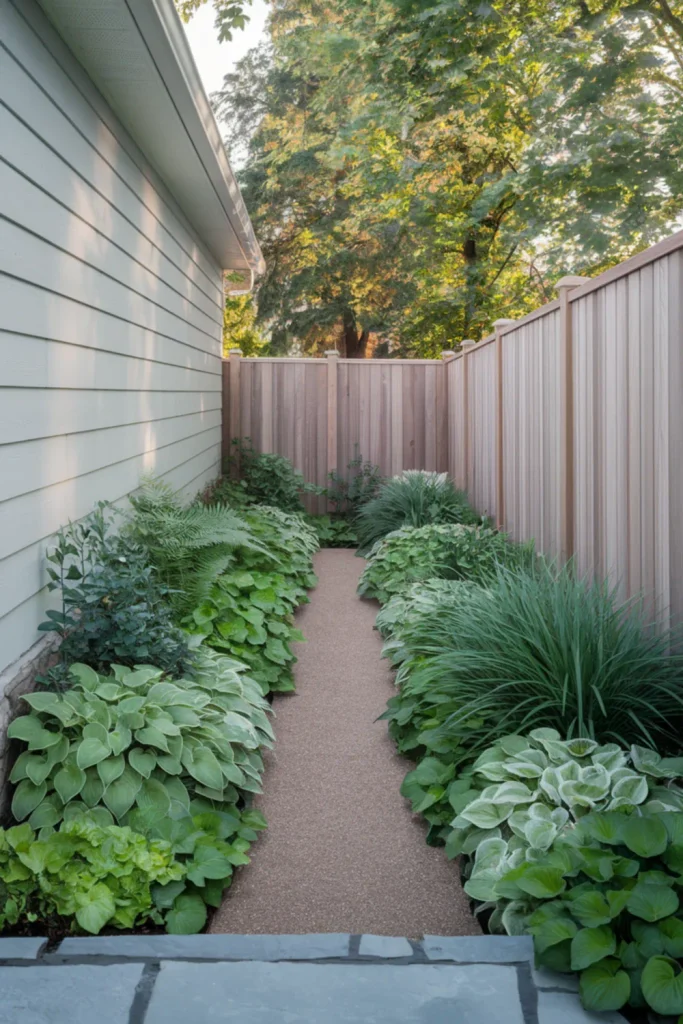
When direct sun rarely reaches the space between houses, foliage becomes more useful than flowers.
A pea-gravel path framed by hostas, ferns, coral bells, and Japanese forest grass gives the passage depth without demanding much width.
Install firm edging to keep gravel out of the beds, and choose plants based on soil moisture as well as shade.
This is one of the most dependable narrow side yard landscaping ideas.
2. Stepping-Stone Walkway With Creeping Ground Cover
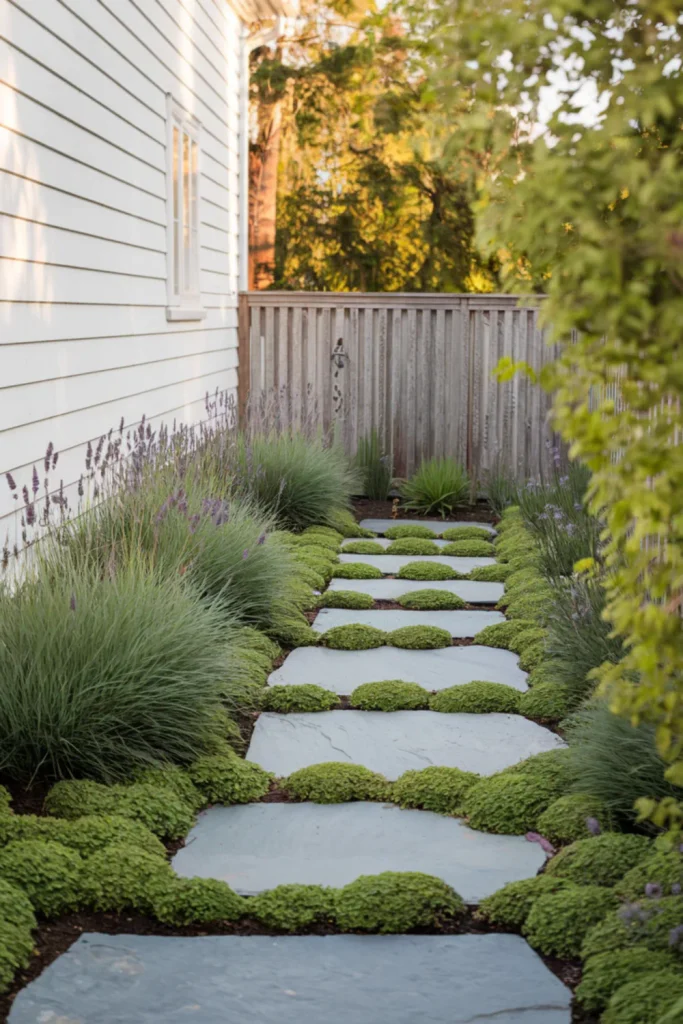
Softening the gaps around stepping stones makes a side walkway feel less rigid and more connected to the garden.
Creeping thyme works in sunny locations, while dwarf mondo grass handles partially shaded areas.
Set each stone on a compacted base so it remains level during wet weather.
Leave enough space between the planted edges for comfortable walking, especially when carrying tools or moving a trash bin.
3. Modern Concrete Pavers With Black River Rock
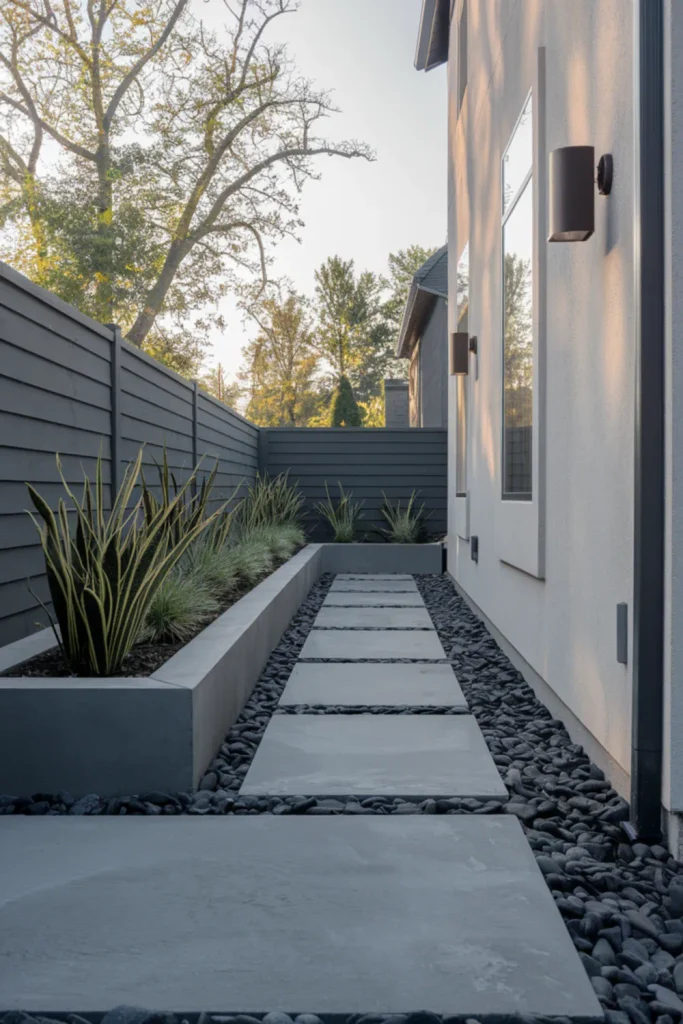
Clean lines help a tight passage look wider and less cluttered.
Large concrete pavers over black river rock establish a strong route, while one slim planter provides enough greenery to soften the hard surfaces.
Keep the pavers evenly spaced and use landscape edging beneath the rock to reduce migration.
In modern side yard landscaping, repeating just two or three materials usually produces the clearest result.
4. Cottage Brick Path With Overflowing Flower Borders
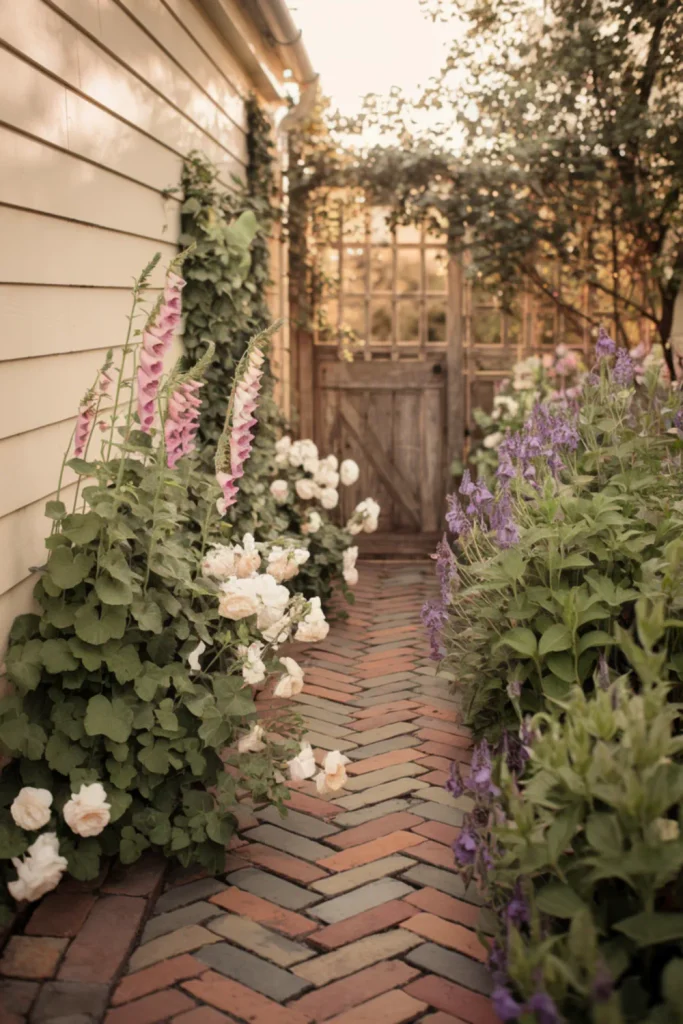
Few materials suit a cottage side garden as naturally as weathered brick.
Laid in a herringbone pattern, it gives the path character while loose borders of catmint, salvia, hardy geraniums, and roses soften both sides.
Avoid choosing plants that collapse across the walkway after rain.
Maintaining at least a 36-inch passage will make the garden easier to use without losing its abundant, informal appearance.
5. Low-Maintenance Side Yard With Gravel and Grasses
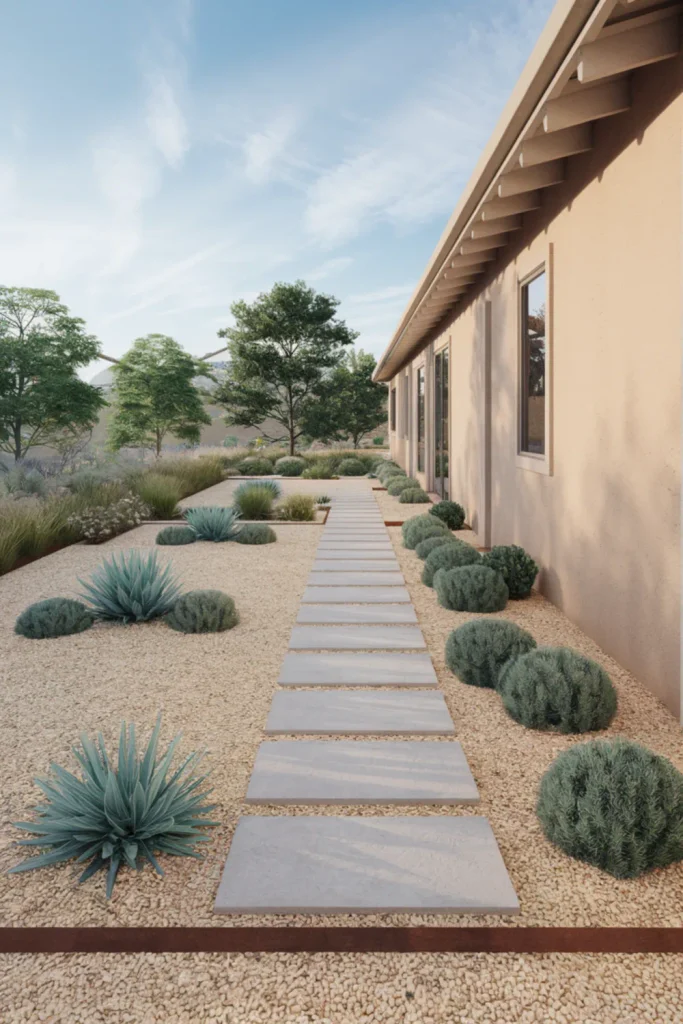
In hot, dry regions, a narrow lawn strip often requires more work than it deserves.
Decomposed granite, staggered stepping pads, and drought-tolerant grasses provide a lower-maintenance alternative with year-round structure.
Select clumping grasses rather than spreading varieties, and place agaves away from the walking edge.
A limited palette of sage green, blue-gray, and warm stone also keeps the side yard design from feeling busy.
6. Shady Side Yard Fern Garden
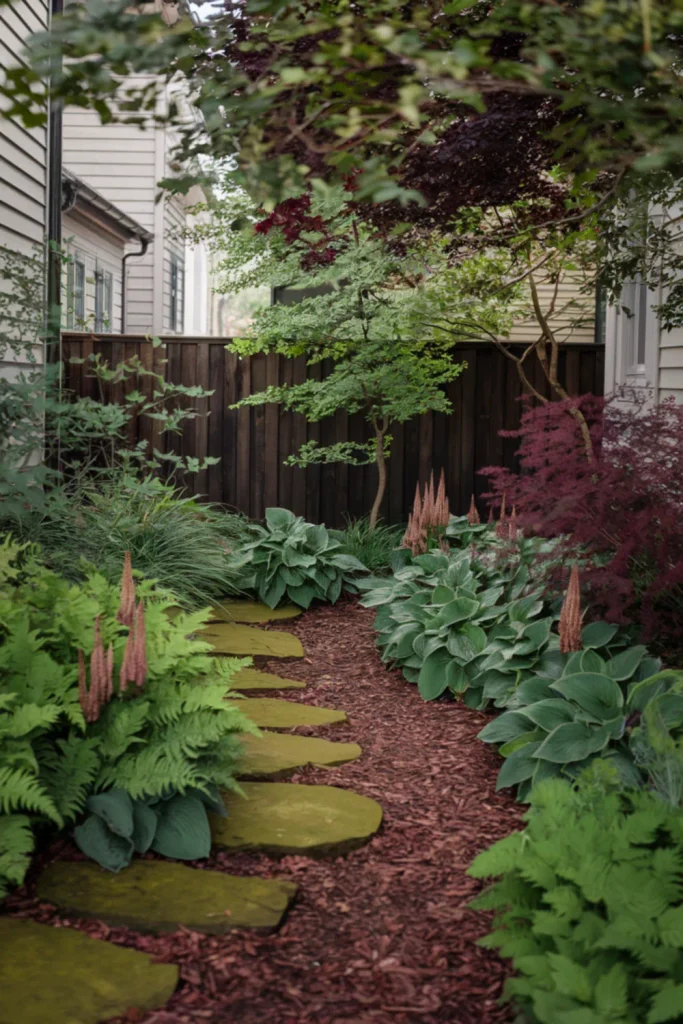
Deep shade does not have to leave the side of a house looking bare.
Ferns, hellebores, hostas, brunnera, and a compact Japanese maple can produce a layered woodland garden without relying on strong sunlight.
Vary leaf shape and color so the planting remains distinct from a distance.
Before adding plants, check whether the soil stays dry beneath the roof overhang or collects water after storms.
7. Vertical Herb Garden Along the House Wall
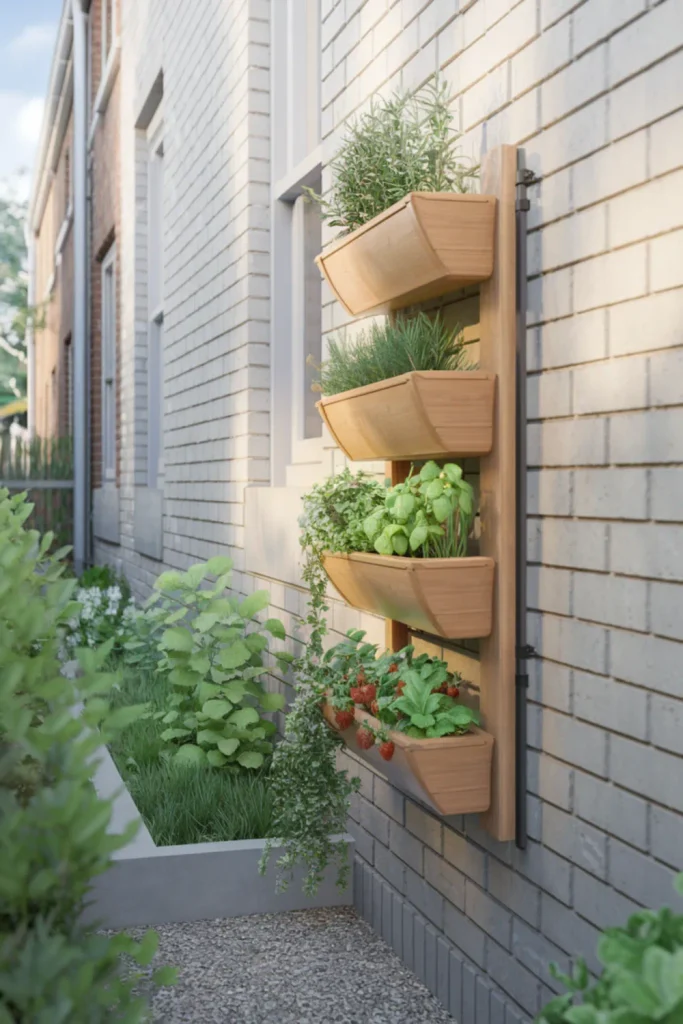
Growing herbs on a wall preserves the walkway below and puts an unused vertical surface to work.
A cedar planting system filled with rosemary, thyme, parsley, and trailing strawberries suits a sunny side passage with easy kitchen access.
Group plants with similar watering needs and include a drip line if the containers dry quickly.
Confirm that the mounting hardware can support the planter’s weight after the soil becomes saturated.
8. Espalier Fruit Trees Beside a Narrow Walkway
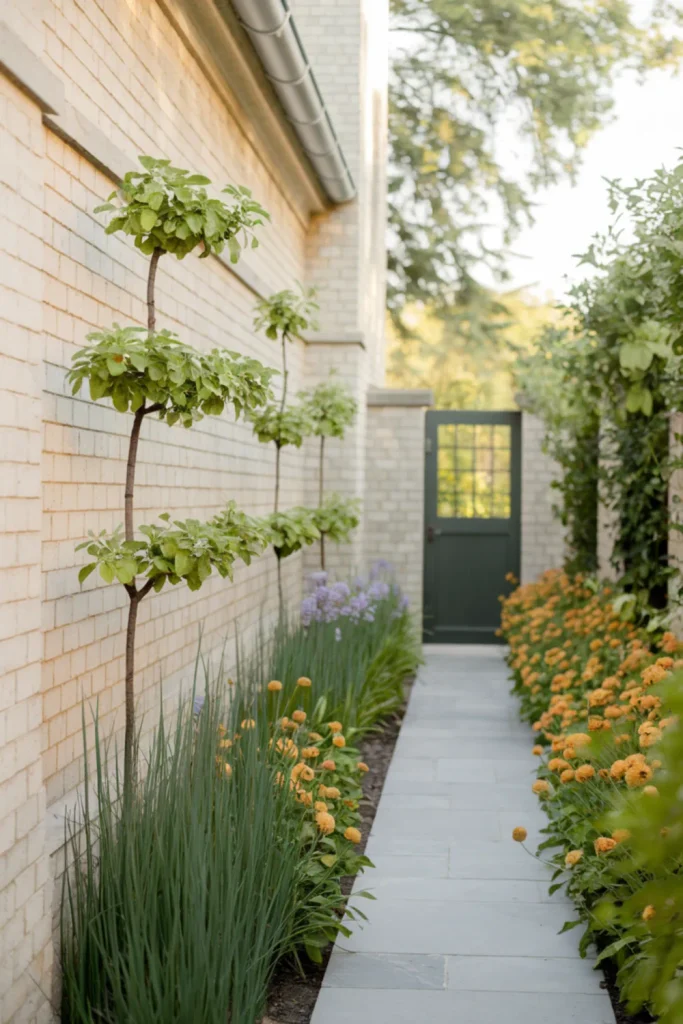
Rather than squeezing a full-size fruit tree into limited ground, train apples or pears flat against a sunny wall.
Their horizontal branches bring structure to a small side garden while leaving the walking route open.
Espalier trees need firm supports and regular pruning to maintain their shape.
Allow air to circulate between the branches and exterior wall, and avoid planting where roof runoff could repeatedly soak the roots.
9. Cedar Privacy Screen With a Slim Planting Bed
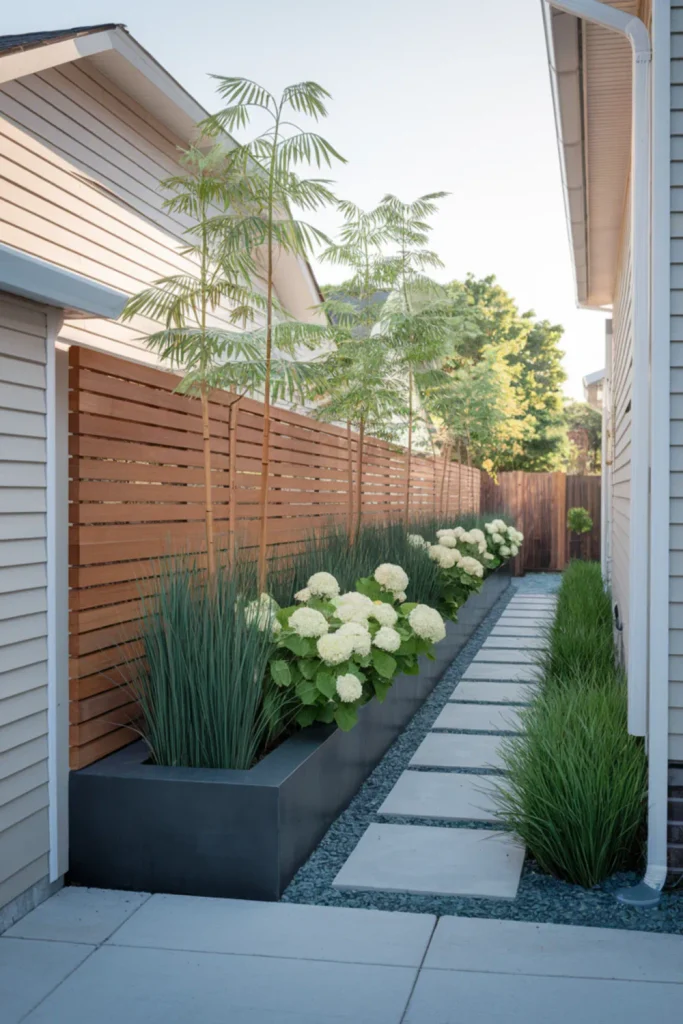
Privacy matters most where neighboring windows overlook the passage between houses.
A horizontal cedar screen paired with upright grasses and compact shrubs blocks the view without making the area feel enclosed.
Keep planting beds shallow and check the mature width of every plant before buying.
Local fence-height rules may also apply, so confirm property lines and restrictions before installing a permanent screen in a narrow side yard.
10. Climbing Hydrangea on a Side-House Trellis
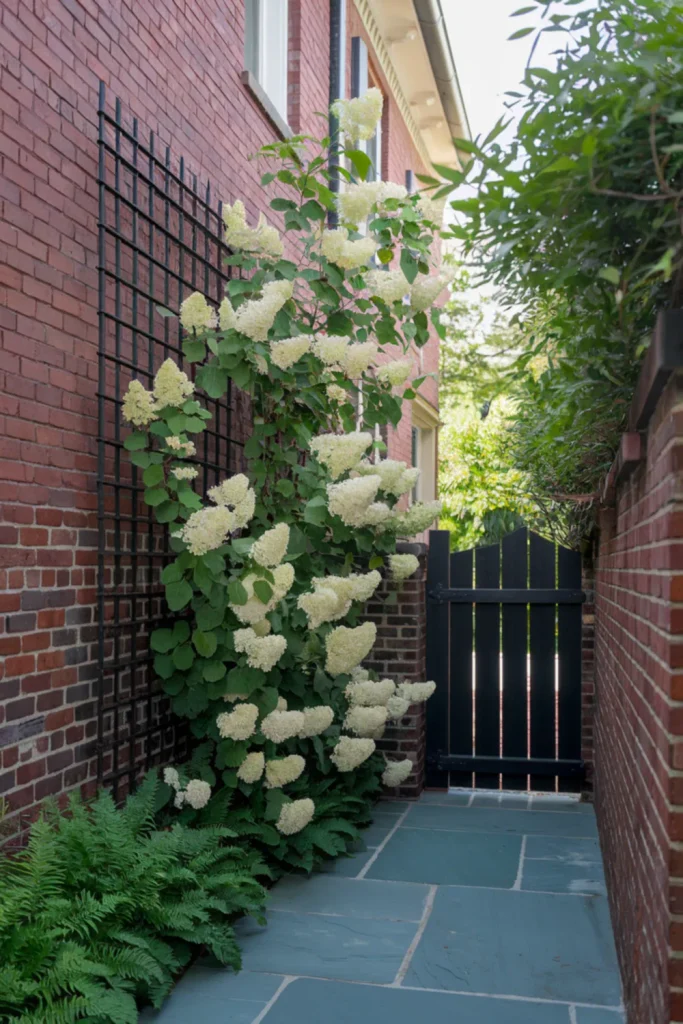
On a tall blank wall, climbing hydrangea supplies greenery without consuming valuable floor space.
Its broad leaves and white flowers work especially well beside bluestone or brick paths in a partially shaded side garden.
Mature vines become heavy, so attach them to a sturdy freestanding trellis rather than relying on delicate lattice.
Regular pruning around windows, gutters, and rooflines will keep the plant from becoming difficult to manage.
11. Dry Creek Bed for Side-Yard Drainage
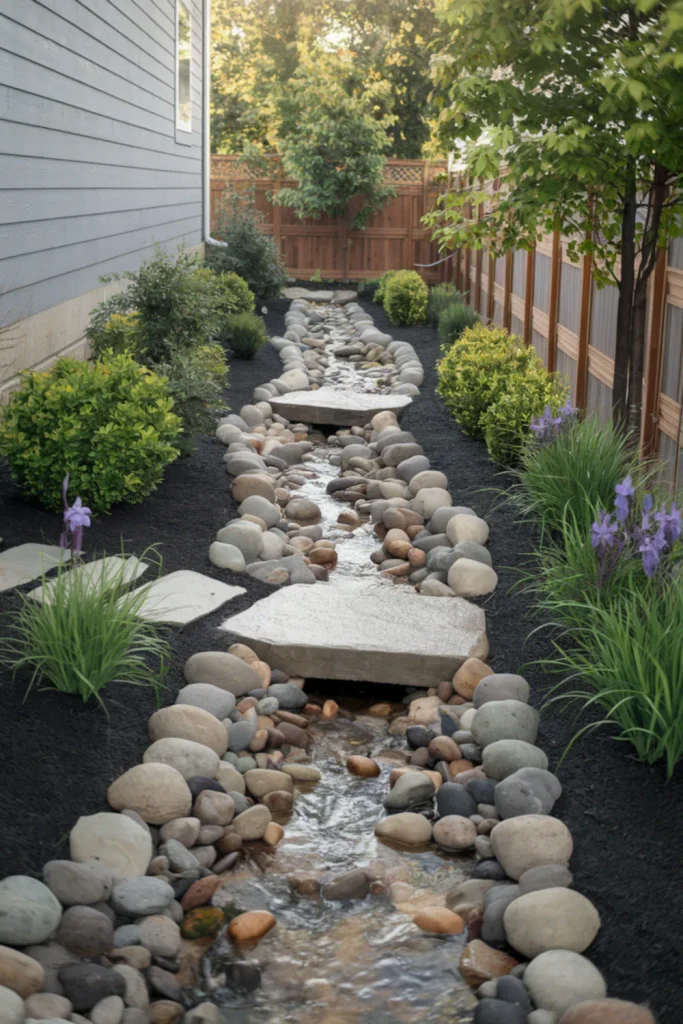
Water collecting beside the foundation calls for more than decorative planting.
A shallow dry creek lined with river stones can guide runoff through the side yard while reading as part of the landscape.
Larger rocks along the bends make the channel look natural, and moisture-tolerant sedges help stabilize its edges.
Proper grading is essential, so verify where the water will exit before building the creek or adding stepping stones.
12. Rain Garden Beneath a Downspout
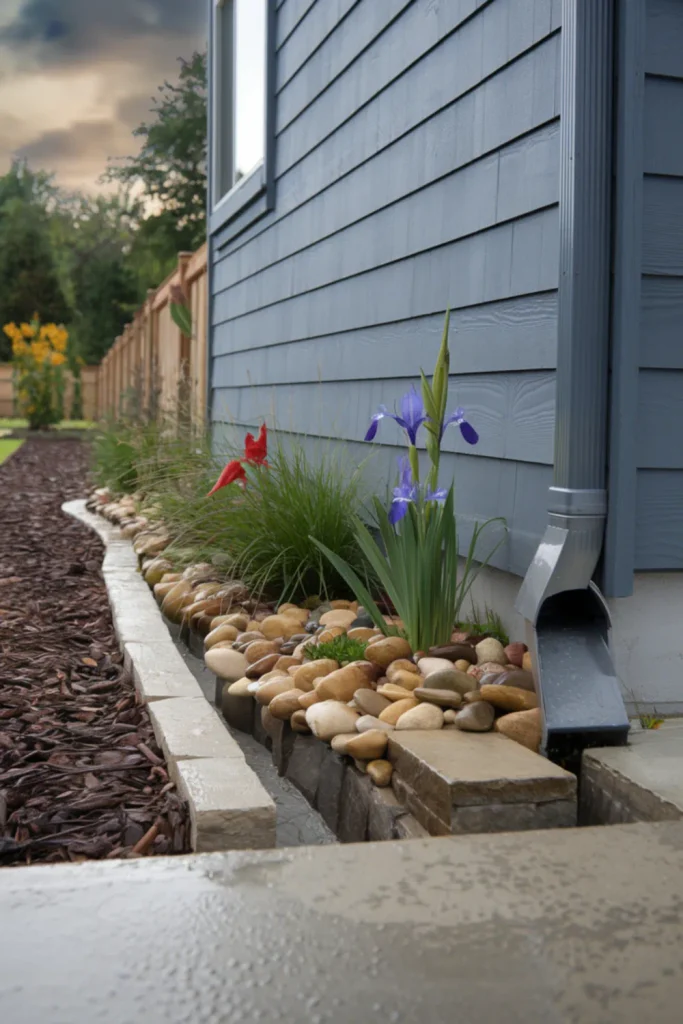
Beneath a downspout, a compact rain garden can capture runoff that would otherwise pool near the house.
A stone channel leading to iris, sedges, cardinal flower, and swamp milkweed makes the drainage route clear and attractive.
Test how quickly the soil absorbs water before planting, since a rain garden should drain between storms.
It should also sit far enough from the foundation to avoid directing moisture toward the basement.
13. Narrow Raised Beds for Kitchen-Garden Crops
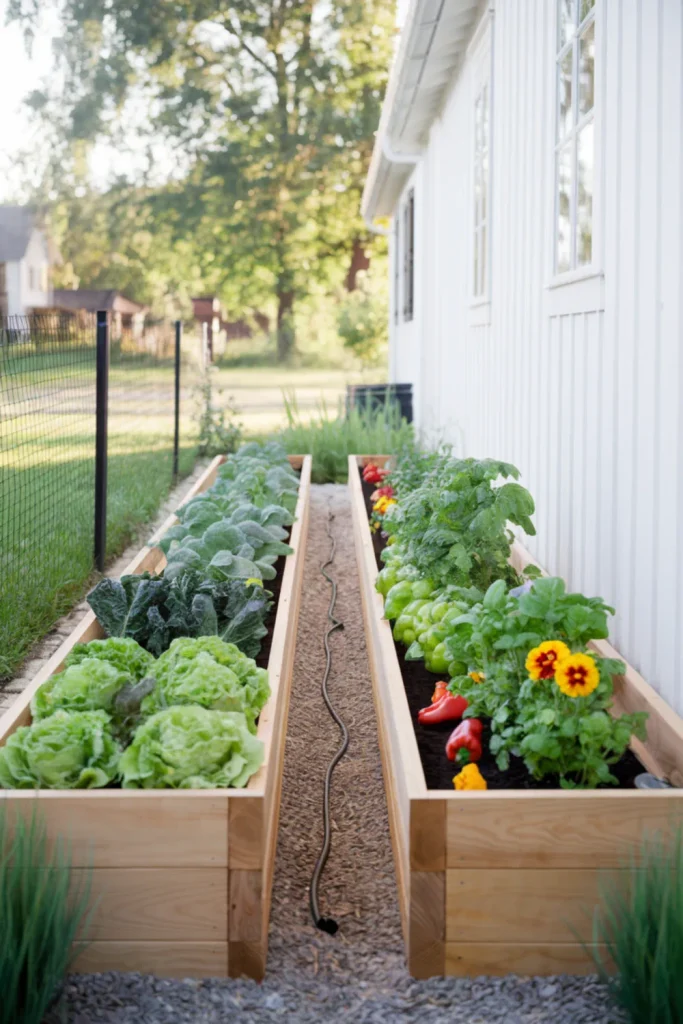
Vegetable beds do not need to be deep or wide to produce a useful harvest.
Long cedar planters beside a sunny wall can hold lettuce, peppers, herbs, and compact tomatoes while preserving a central gravel path.
Limit bed depth so every plant remains reachable from one side.
Food crops generally need six or more hours of direct sun, so track the light before committing this section of the yard to vegetables.
14. Renter-Friendly Side Garden With Containers
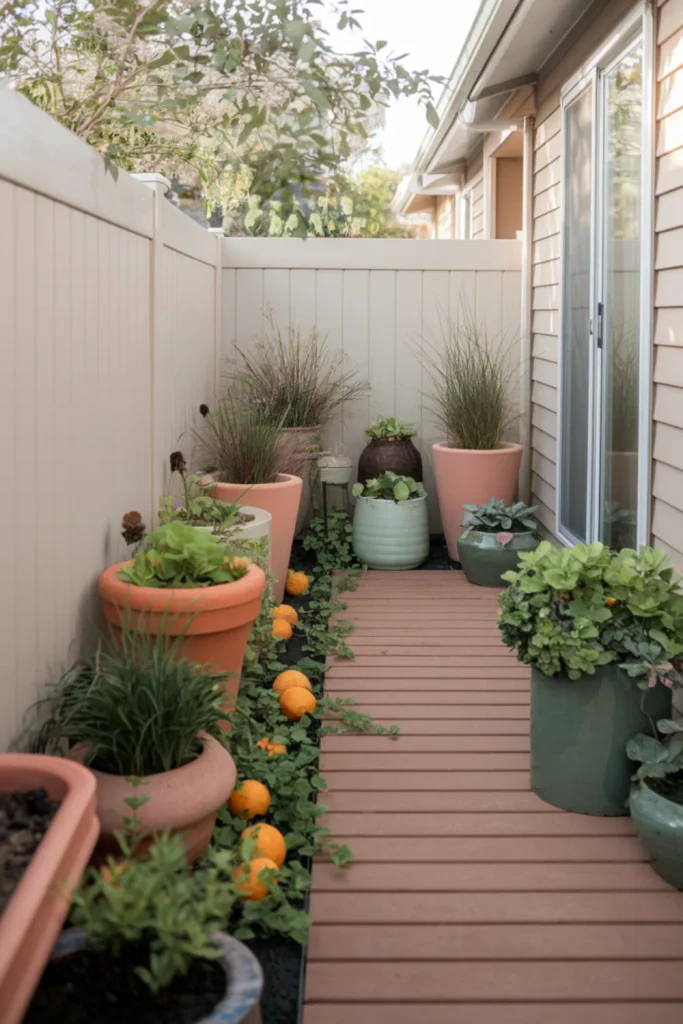
Renters can improve a plain side passage without digging beds or installing permanent hardscape.
Group lightweight pots in several heights, then use removable deck tiles to define a clean route through the space.
Compact citrus, coleus, herbs, and trailing foliage provide variety without spreading into the walkway.
Choose containers you can lift when empty, and avoid blocking gates, meters, hose connections, or access required by the property owner.
15. Compact Side-Yard Café Patio
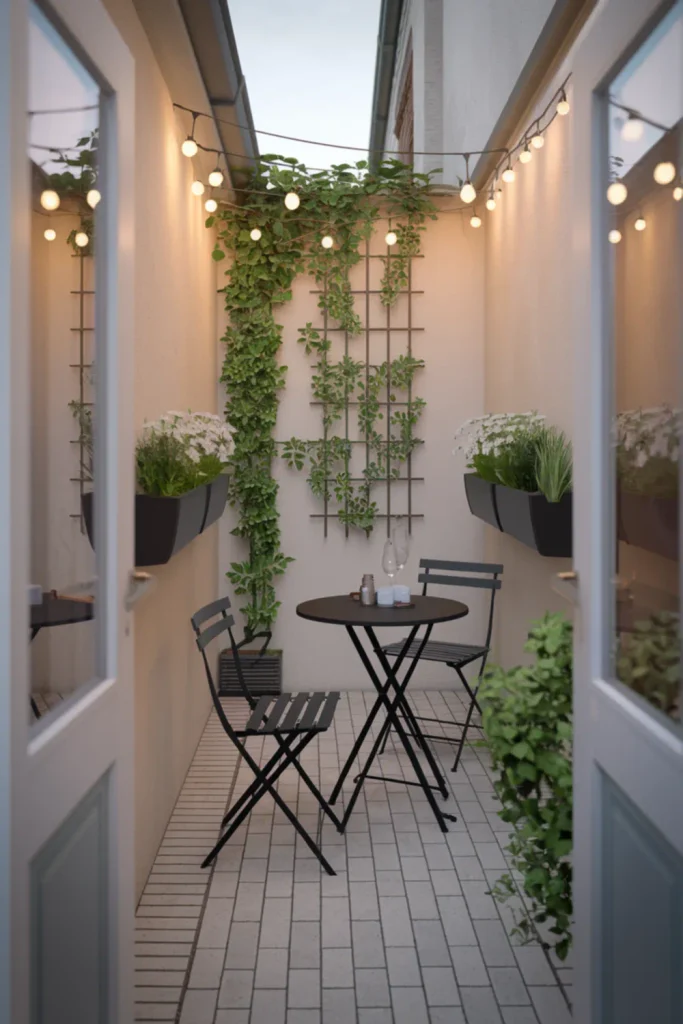
Folding furniture allows a narrow patio to work for both seating and everyday circulation.
A small bistro table, two chairs, wall planters, and a slim jasmine trellis can turn an unused section into a pleasant coffee spot.
Place the furniture near the widest part of the passage and make sure chairs do not damage nearby plants when pulled out.
Overhead lights should remain high enough for safe, unobstructed movement.
16. Nature-Inspired Side Yard Play Path
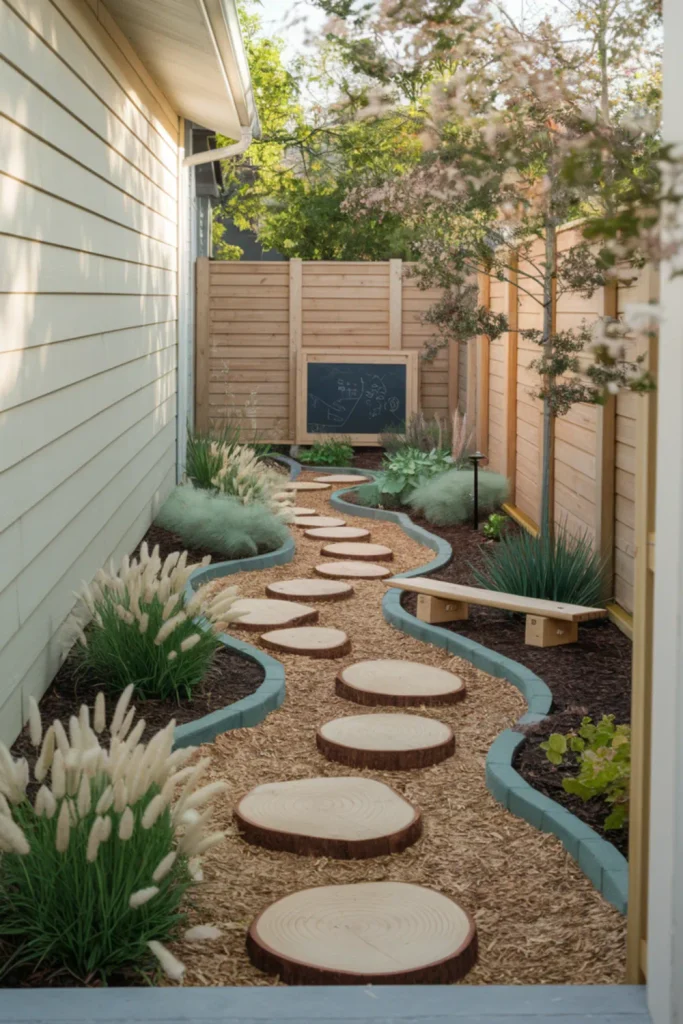
Narrow ground beside the house can become an active play zone without adding bulky plastic equipment.
Wood-slice steps, a low balance beam, sensory plants, and soft playground mulch offer several ways for children to move and explore.
Use splinter-free, rot-resistant materials and avoid plants with thorns, irritating sap, or toxic berries.
Secure fencing and a clear sightline from the house matter more than filling every available corner.
17. Dog-Friendly Side Yard Run With Durable Ground Cover
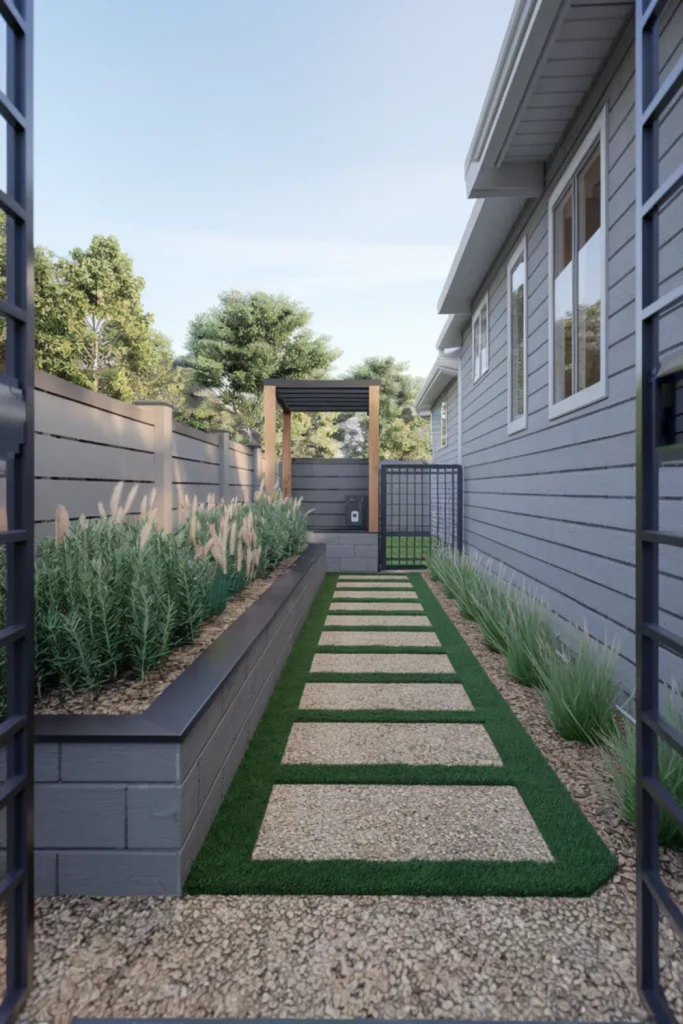
Mud and worn grass are common problems when dogs repeatedly use the same side passage.
Decomposed granite, artificial turf, or smooth gravel provides a more durable surface, while a protected planter keeps greenery beyond paw reach.
Plan for drainage and include shade plus a reliable water source during warm weather.
Avoid sharp stone, cocoa mulch, and toxic plants, and leave enough clearance for easy rinsing and waste removal.
18. Side Yard Walkway With Layered LED Lighting
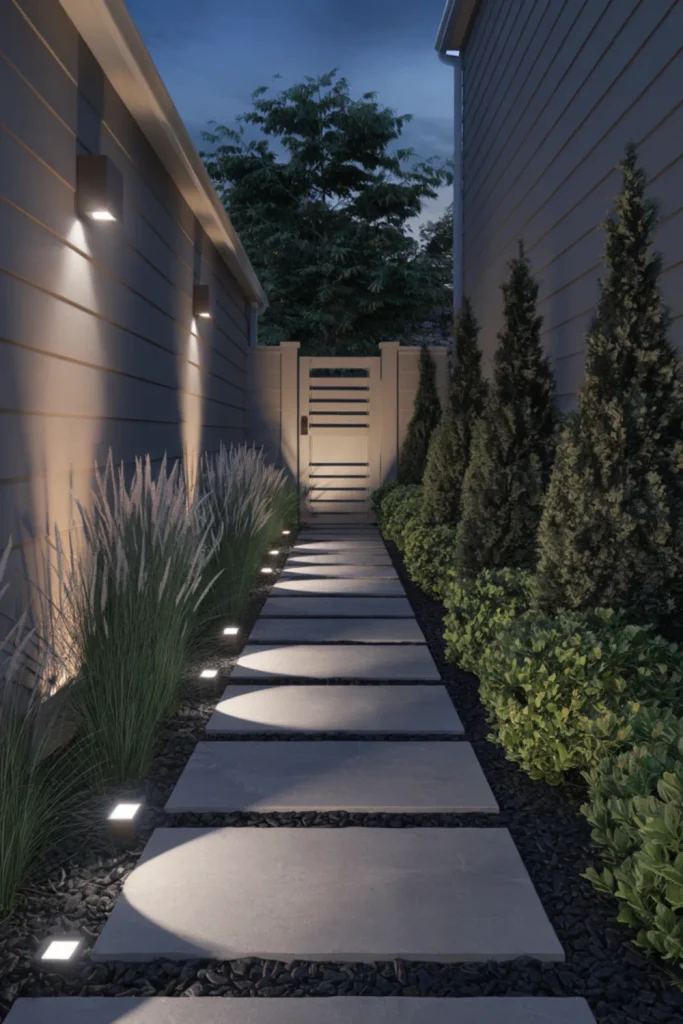
Once daylight fades, a narrow walkway can feel darker than the rest of the property.
Low path lights combined with downward-facing wall sconces define the route without flooding neighboring windows with glare.
Place fixtures near steps, gates, turns, and changes in surface rather than spacing them only for symmetry.
Warm-white LEDs usually work better around planting because they reveal texture while keeping the side yard from looking overly bright.
19. Louvered Screen for Bins and Utility Equipment
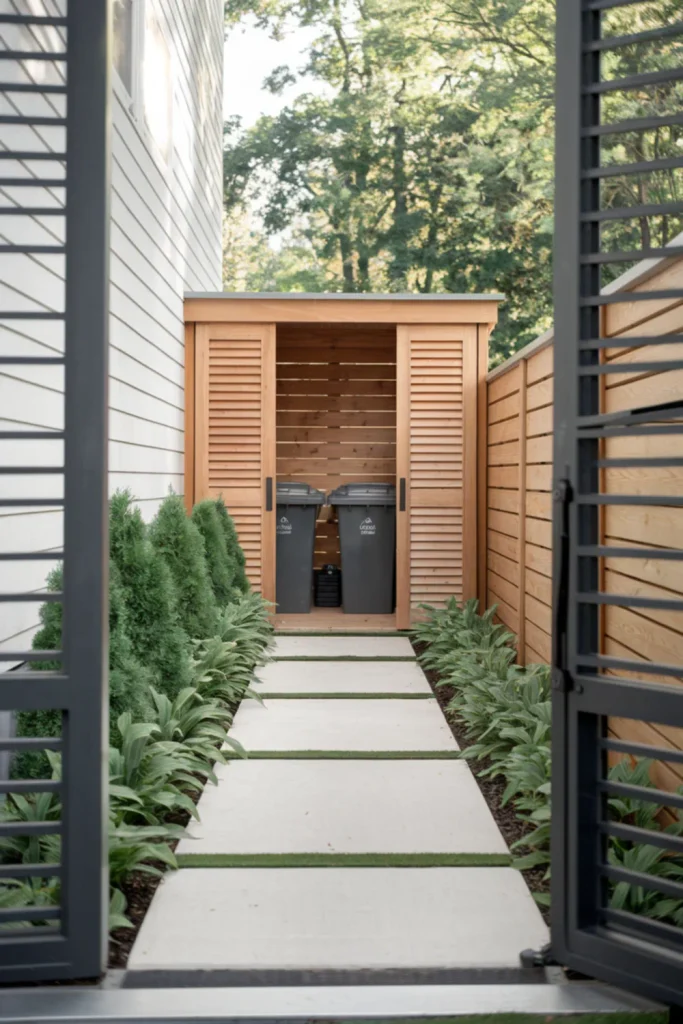
Utility equipment often occupies the exact area homeowners would rather landscape.
A cedar louvered enclosure can conceal trash bins and mechanical clutter while maintaining ventilation and service access.
Match its finish to the fence or gate so it reads as part of the overall design.
Never crowd an air-conditioning condenser, gas meter, or electrical panel; verify the required clearance and door-swing space before deciding on the enclosure dimensions.
20. Garden Gate Framing the Backyard Entrance
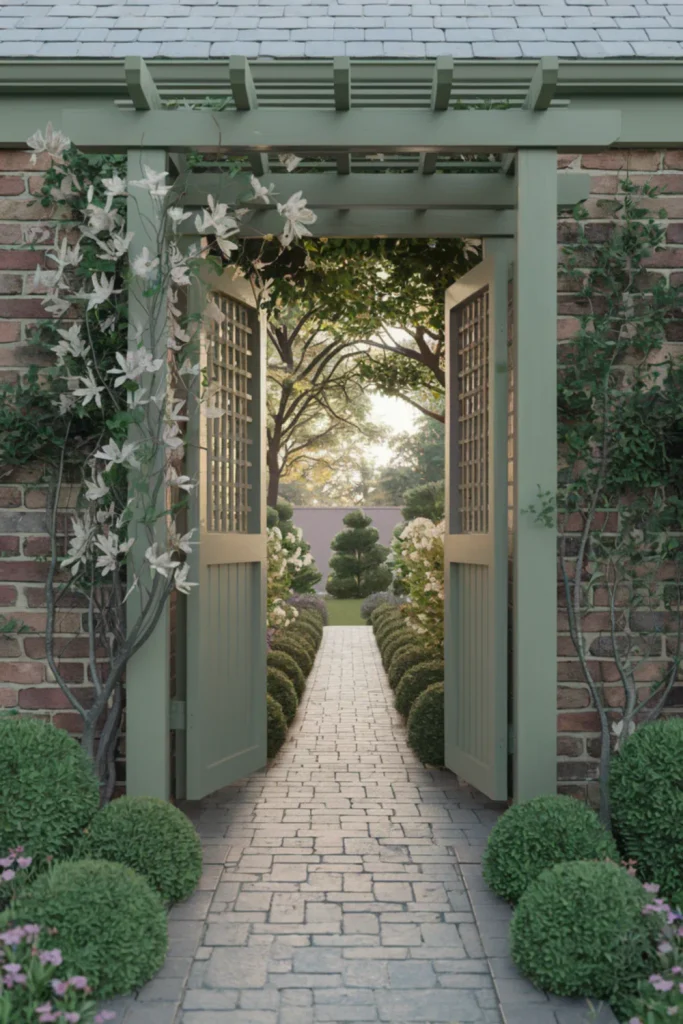
At the end of a long side passage, a distinctive gate gives the eye somewhere to land.
Sage-painted wood, a simple cedar arbor, and climbing jasmine create a clear transition from the front yard to the garden behind it.
Keep the structure narrow enough to preserve access for wheelbarrows and outdoor equipment.
Hinges, latches, and posts should be rated for exterior use so the gate remains square through changing seasons.
21. Japanese-Inspired Side Passage Garden
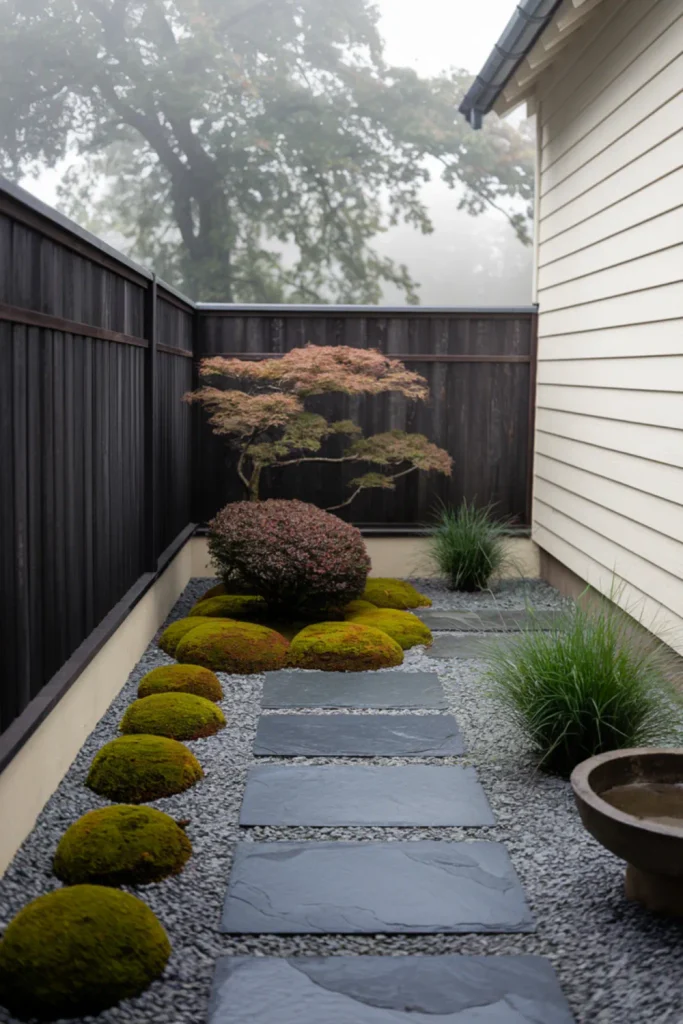
Restraint is what makes a Japanese-inspired layout effective in limited space.
Slate stepping stones, fine gravel, moss, dwarf mondo grass, and one sculptural maple create a calm composition without crowding the path.
Leave open areas between features instead of filling every gap with plants.
Where moss cannot handle the climate, use low ground cover or textured stone rather than forcing a high-maintenance substitute that will struggle through summer.
22. Tropical Side Garden With a Boardwalk Path
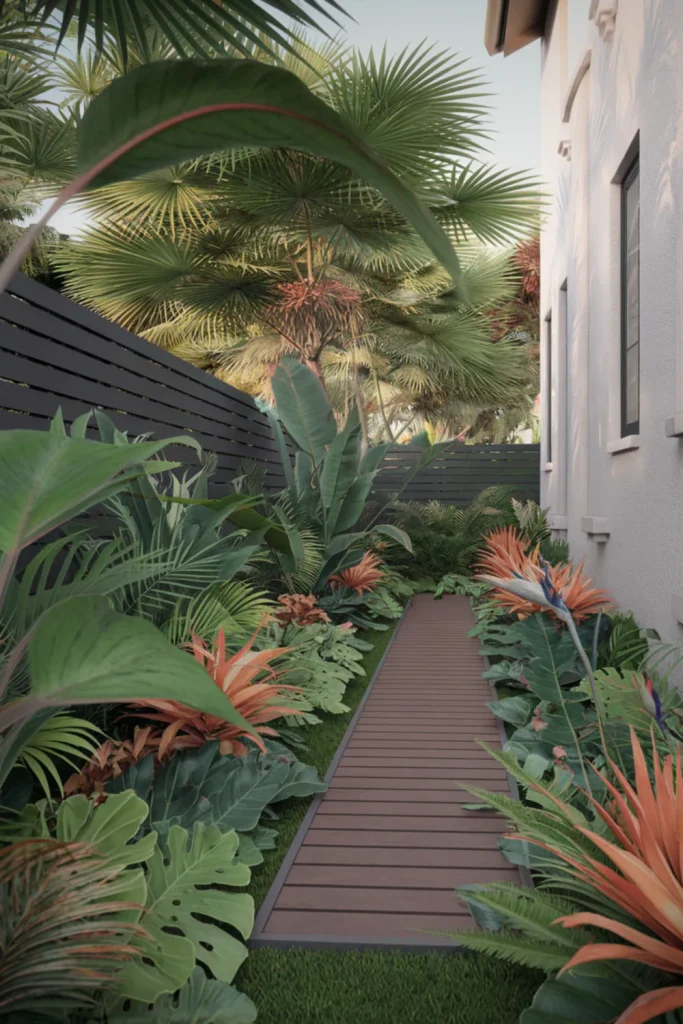
Broad leaves make a strong impression along a narrow boardwalk, even when the plant palette is small.
Elephant ears, ginger, ferns, and dwarf palms can produce a dense tropical side garden in warm, humid regions.
Check mature spread carefully because many tropical plants quickly lean into the passage.
Composite decking handles damp conditions with less upkeep than untreated lumber, but it still needs a stable, well-drained base beneath it.
23. Mediterranean Side Yard With Terracotta Accents
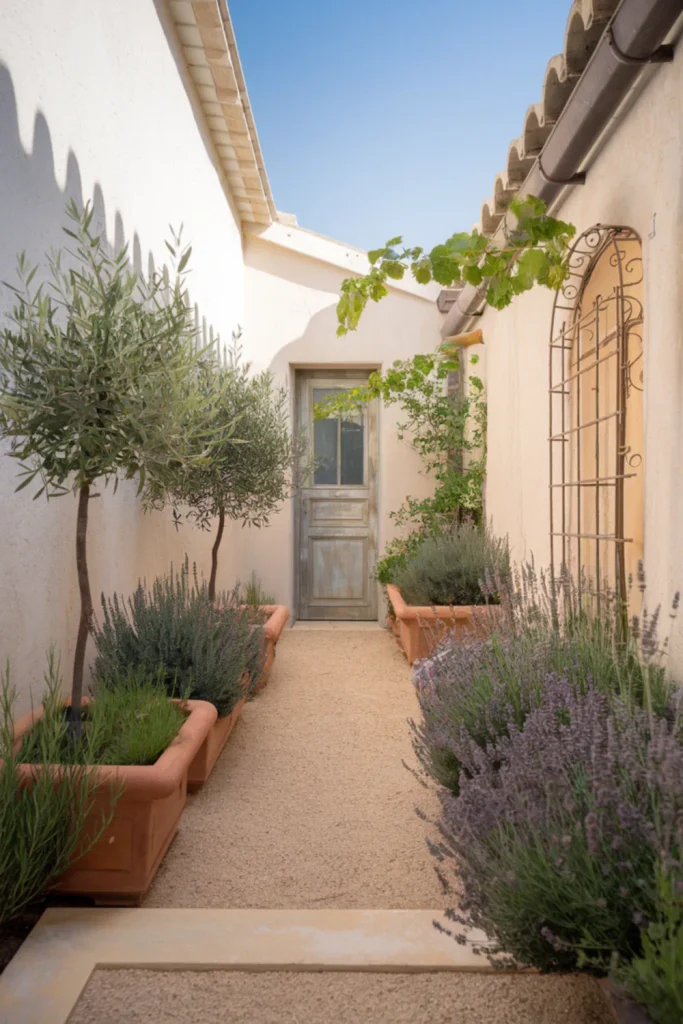
Sun-baked walls and dry soil lend themselves to a Mediterranean planting scheme.
Pale gravel, terracotta pots, lavender, rosemary, thyme, and a compact olive tree keep the palette cohesive while tolerating reflected heat.
Position containers where they will not narrow the walking route, and choose frost-resistant pottery in colder regions.
Good drainage is essential, since these plants are more likely to suffer from wet roots than from short dry periods.
24. Budget Side Yard Makeover With Mulch and Pavers
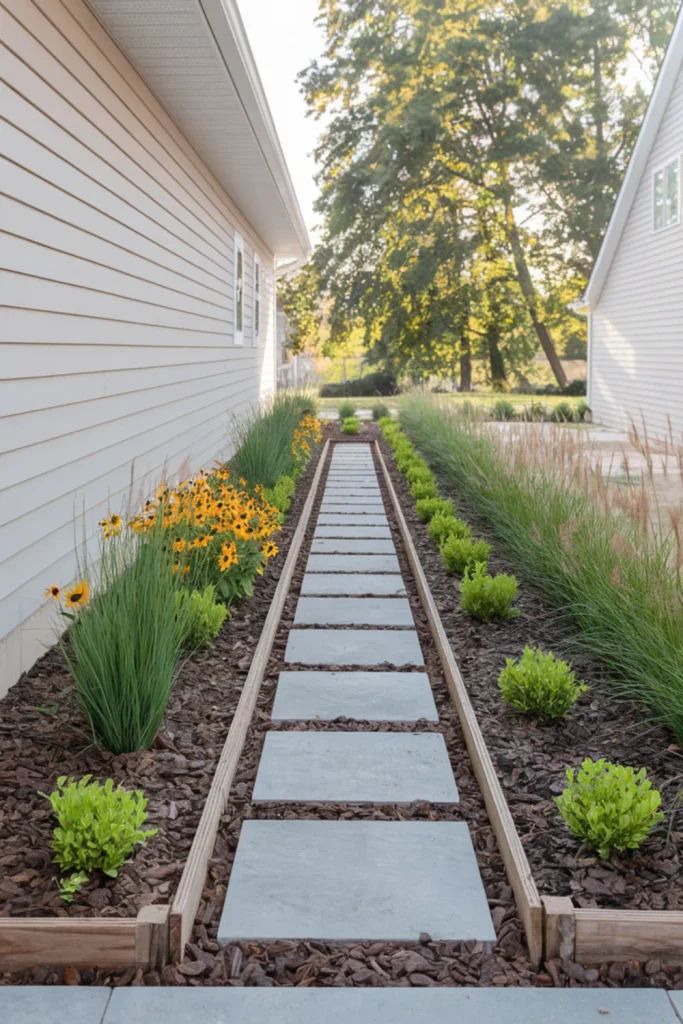
Budget matters, but a simple material plan can still make a neglected passage look intentional.
Square concrete pavers set over bark mulch establish the route, while repeated groups of native grasses and black-eyed Susans provide affordable color.
Prepare and compact the ground before placing each paver to reduce rocking and uneven edges.
Pressure-treated wood or flexible landscape edging will also help keep mulch from spilling into adjacent beds.
25. Small Side-Yard Fountain Courtyard
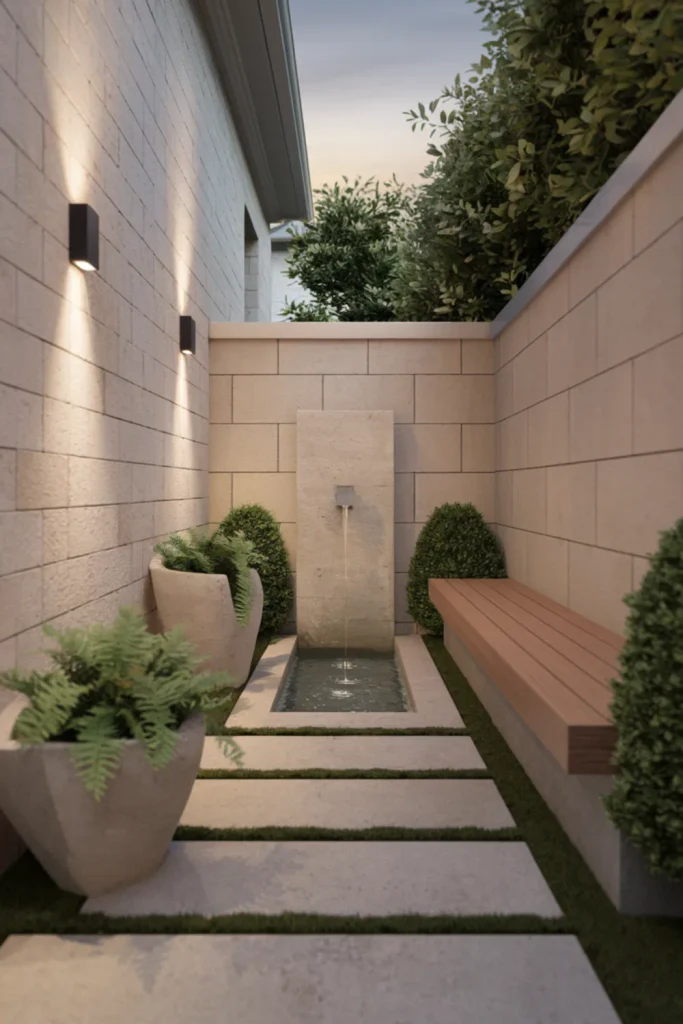
Water sounds can soften street noise and make an enclosed side courtyard feel separate from the rest of the property.
A wall-mounted fountain, narrow basin, limestone paving, and slim built-in bench use vertical surfaces while keeping the center open.
Confirm access to electricity and water before selecting the fountain.
The basin should also be easy to drain and clean, especially beneath trees that drop leaves or pollen.
FAQ
What is the most affordable surface for a narrow side-yard walkway?
Mulch with spaced concrete pavers is usually one of the least expensive combinations.
Pea gravel and decomposed granite are also budget-friendly, though they need solid edging and a compacted base.
Compare delivery costs locally because bulk stone can become expensive when transportation is included.
How wide should a side-yard path be?
About 36 inches provides comfortable everyday access for most households.
A narrower path may work for occasional foot traffic, but moving bins, lawn equipment, or wheelbarrows becomes harder.
Measure gates and equipment first, then keep plants and decorative stones from spilling into the required clearance.
Which plants work beside a house with very little sunlight?
Ferns, hostas, hellebores, brunnera, coral bells, and Japanese forest grass handle many shaded side yards.
Plant choice also depends on moisture because roof overhangs may keep the soil surprisingly dry.
Check regional hardiness and mature width before buying, especially along a narrow walkway.
Conclusion
Choose narrow side yard landscaping ideas according to how the passage needs to function first, then select the style and plants.
A clear path with one strong feature often works better than several competing additions.
Begin by solving drainage, access, or privacy concerns, and test the layout with temporary markers before installing pavers, screens, raised beds, or permanent seating.