
Modern backyard landscaping works best when the layout supports how you actually spend time outdoors.
The challenge is choosing the right balance of paving, planting, privacy, seating, and open space without making the yard feel crowded or difficult to maintain.
These 27 ideas cover compact patios, family yards, fire-pit lounges, modern garden paths, pergolas, pool areas, and low-maintenance landscapes.
Use them to compare materials, layouts, and features that fit your property, budget, and preferred level of upkeep.
Need even more small backyard ideas?
Explore our 35 Small Backyard Landscaping Ideas for privacy ideas, seating, greenery, patios, and clever layouts for compact outdoor spaces.
What to Consider Before Planning
Start with the activities the backyard needs to support, then assign each one a suitable area.
Dining usually works best near the kitchen, while fire pits and lounge seating may benefit from a quieter location farther from the house.
Preserve comfortable paths between these zones rather than filling every open section.
Next, consider sunlight, drainage, privacy, and existing trees before choosing plants or hardscaping.
Repeat two or three materials throughout the yard to keep the modern backyard design connected.
It also helps to choose a limited planting palette with varied heights and seasonal texture.
Before committing to permanent construction, mark patios, paths, and furniture footprints on the ground so you can test the proportions.
1. Geometric Concrete Pavers With Ornamental Grass Borders
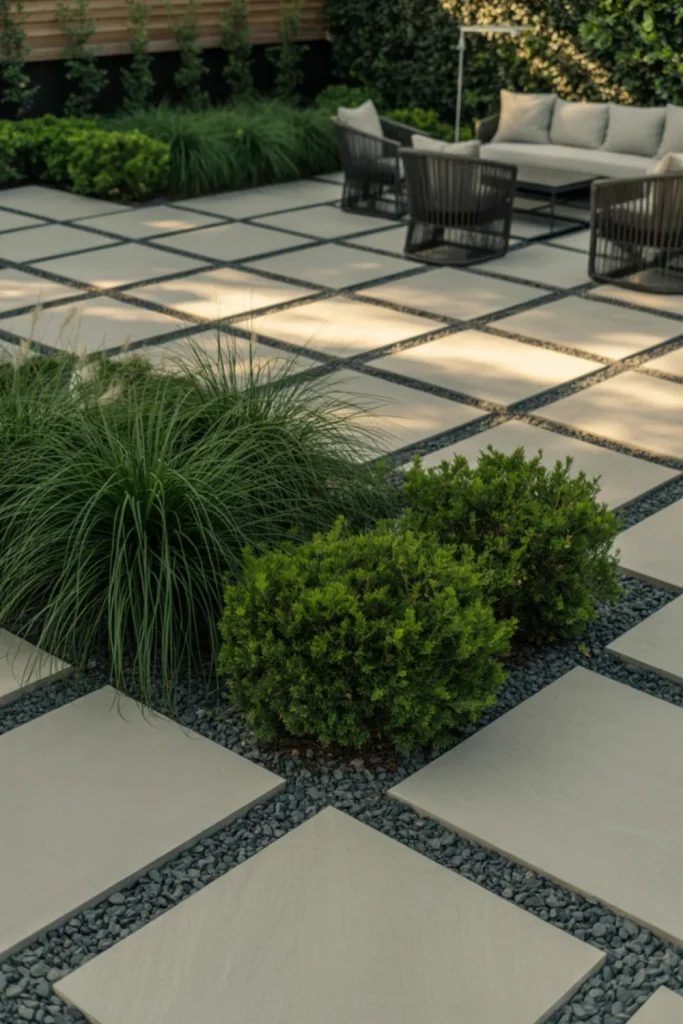
Clean geometry does most of the work in this modern backyard landscaping scheme.
Oversized concrete pavers form a crisp grid, while dark gravel joints and feather reed grasses keep the surface from feeling like one solid slab.
The contrast works especially well beside contemporary homes with simple exterior lines.
Choose pavers rated for outdoor freeze-thaw conditions, and prepare a stable compacted base to prevent uneven settling.
Ornamental grasses should sit far enough from the path that mature foliage will not constantly fall across the walking surface.
2. Zoned Modern Outdoor Living Space
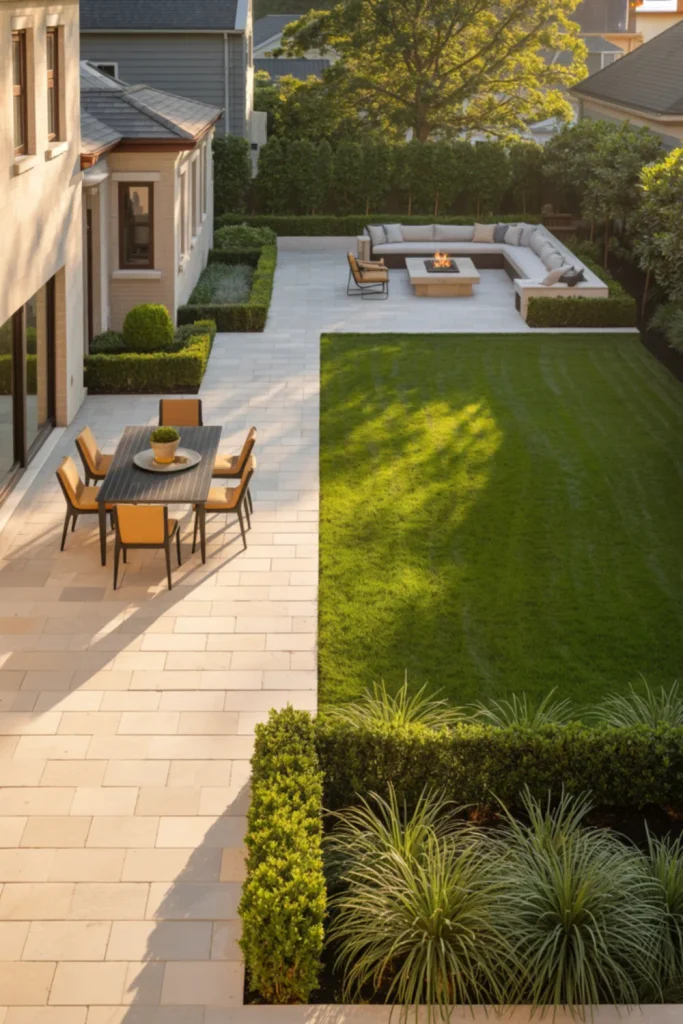
Large yards often feel unfinished when every feature sits along the property line.
Dividing the space into dining, lawn, and lounge zones gives this modern backyard design a clearer purpose while preserving open sightlines.
Repeating pale paving, black furniture, and similar plants connects the separate areas.
Plan the routes between zones before selecting furniture, allowing at least three feet for comfortable circulation.
The dining terrace should remain close to the kitchen, while quieter seating can occupy the more secluded end of the yard.
3. Small Backyard Landscaping With Built-In Bench Seating
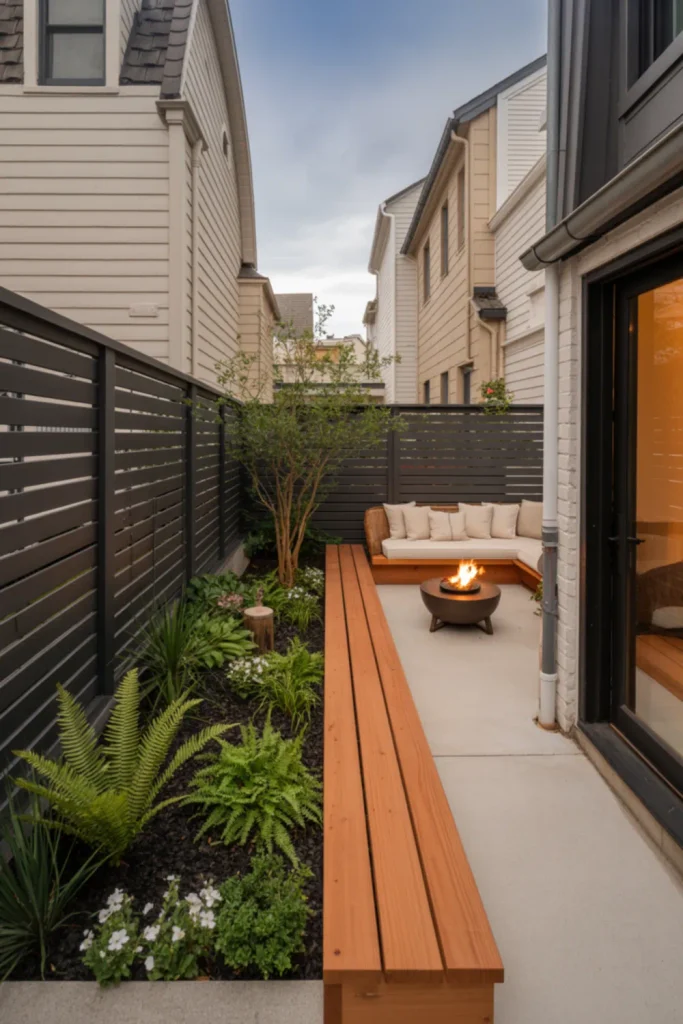
Built-in seating earns its footprint by placing several seats against an otherwise unused boundary.
Here, a cedar bench, narrow planting bed, and compact fire bowl turn a small backyard into a functional outdoor living space without crowding the center.
A black privacy fence makes the pale paving and greenery stand out, while light cushions prevent the corner from looking heavy.
Before construction, measure seat depth and leave enough room for knees around the fire feature.
Hinged bench lids can also provide dry storage for cushions and small garden supplies.
4. Minimalist Gravel Courtyard With Sculptural Plants
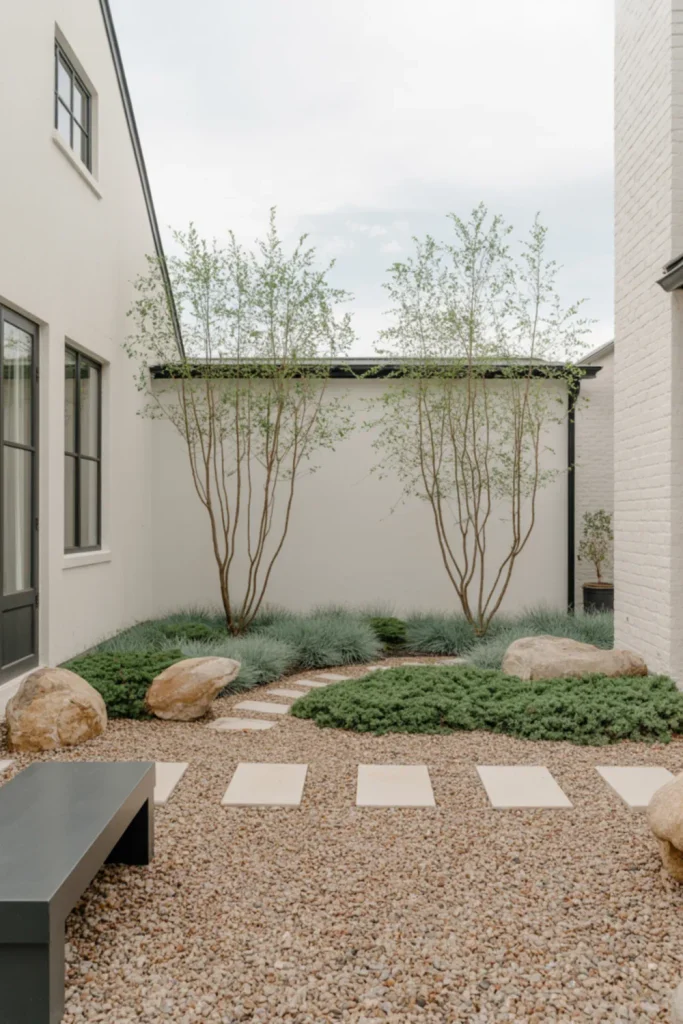
Instead of filling every corner with plants, this minimalist landscape relies on open gravel, concrete stepping pads, and a few carefully positioned trees.
The restrained layout makes each sculptural form more noticeable and reduces the amount of lawn that needs mowing.
Choose angular gravel that compacts underfoot rather than loose rounded stone that shifts easily.
A permeable landscape fabric can limit weeds, but it should not block water from reaching tree roots.
Occasional raking will also keep the courtyard surface even and remove fallen leaves.
5. Low-Maintenance Garden With Native Planting
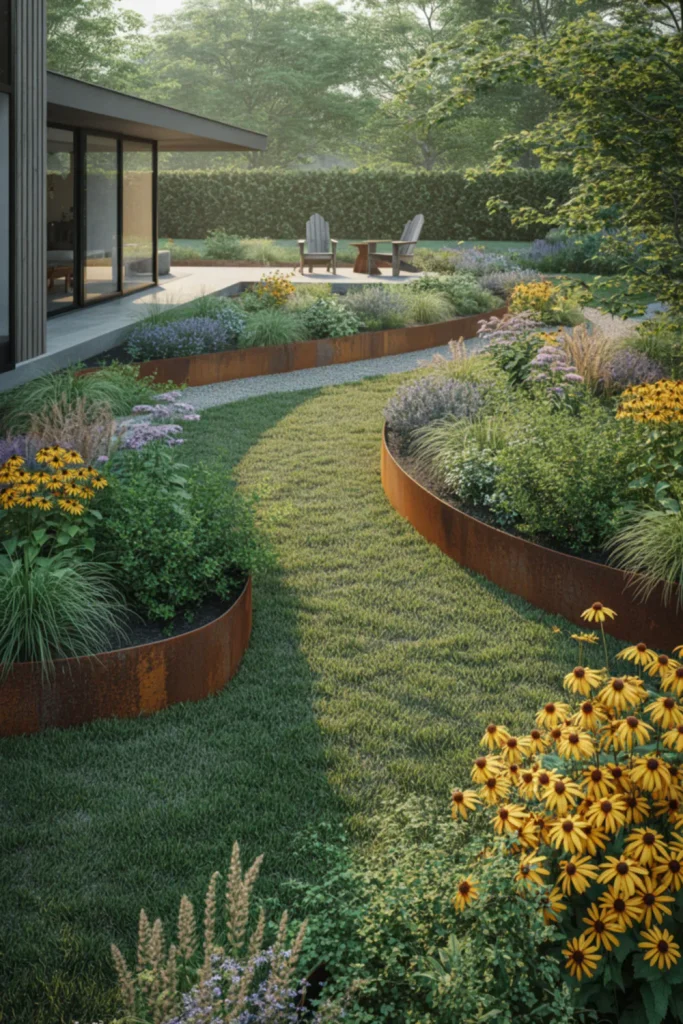
Native planting makes a low-maintenance garden feel full without requiring constant watering or seasonal replacement.
Broad sweeps of switchgrass, coneflowers, and compact shrubs surround a simple lawn, giving the backyard structure through several seasons.
Weathered steel edging keeps the relaxed planting from spreading into paths and turf.
Match each species to the yard’s actual light and soil conditions rather than choosing plants only for appearance.
Leaving enough room for mature growth reduces pruning and helps the modern garden design stay balanced over time.
6. Covered Pergola Over a Modern Dining Terrace
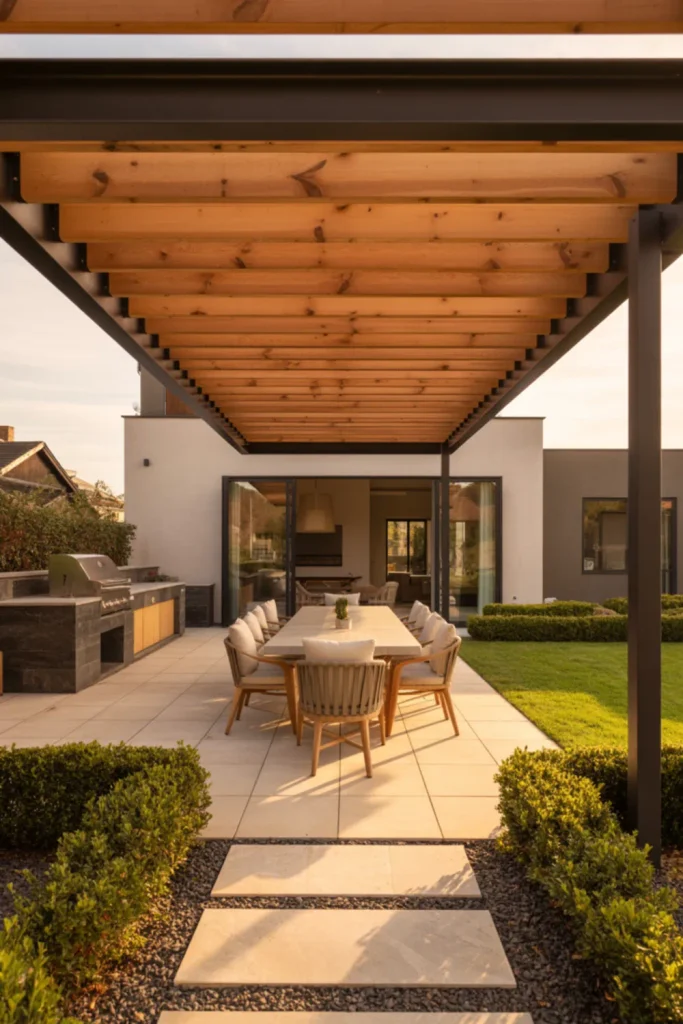
Dining outdoors becomes much more practical when the table has reliable shade.
A cedar and black-steel covered pergola defines this entertaining area, while large porcelain slabs provide a durable surface for chairs and serving furniture.
Its position beside the house keeps trips to the kitchen short and allows the structure to feel connected to the main architecture.
Check local setback and permit rules before choosing the pergola size.
The roof should also direct rainwater away from both the foundation and the busiest route across the patio.
7. Sunken Fire-Pit Lounge With Concrete Seating
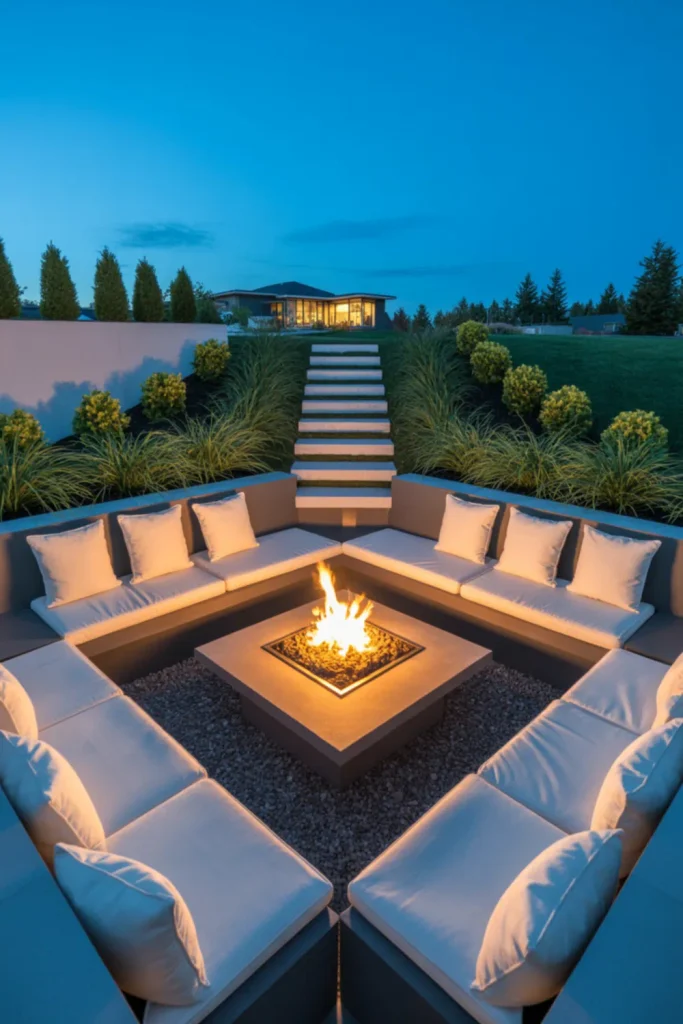
Before excavating a sunken lounge, drainage deserves as much attention as the seating layout.
Once that issue is addressed, the lowered floor creates a distinct fire-pit gathering area without blocking views across the modern backyard.
Concrete benches provide durable structure, while removable cushions make the hard surfaces comfortable.
Keep combustible materials at the clearance recommended for the chosen fire appliance, and include broad, evenly lit steps.
In wet climates, a floor drain or concealed channel can prevent rainwater from collecting around the fire table.
8. Black Slatted Privacy Wall With Layered Greenery
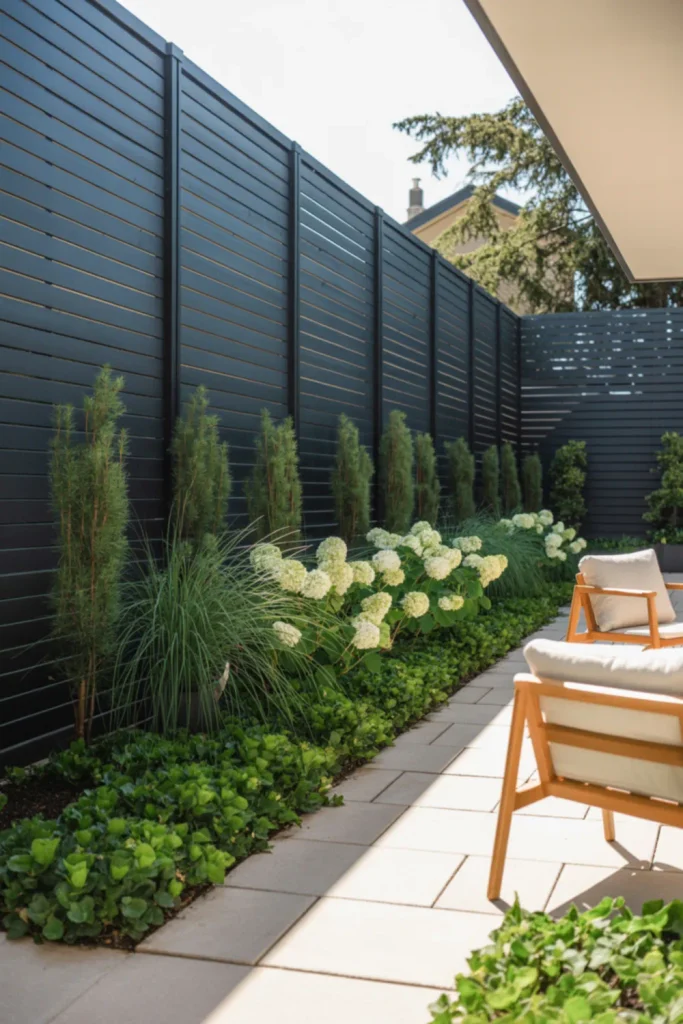
Matte-black slats give this backyard privacy wall a strong architectural presence, but the layered greenery keeps it from dominating the garden.
Upright evergreens provide year-round screening, while hydrangeas and ornamental grasses soften the lower section.
Leaving narrow gaps between slats can reduce wind pressure and make the boundary feel less boxed in.
Use exterior-rated fasteners and seal any cut ends if the screen is made from wood.
Planting should remain far enough forward to allow fence maintenance and healthy air movement.
9. Modern Deck With an Integrated Privacy Fence
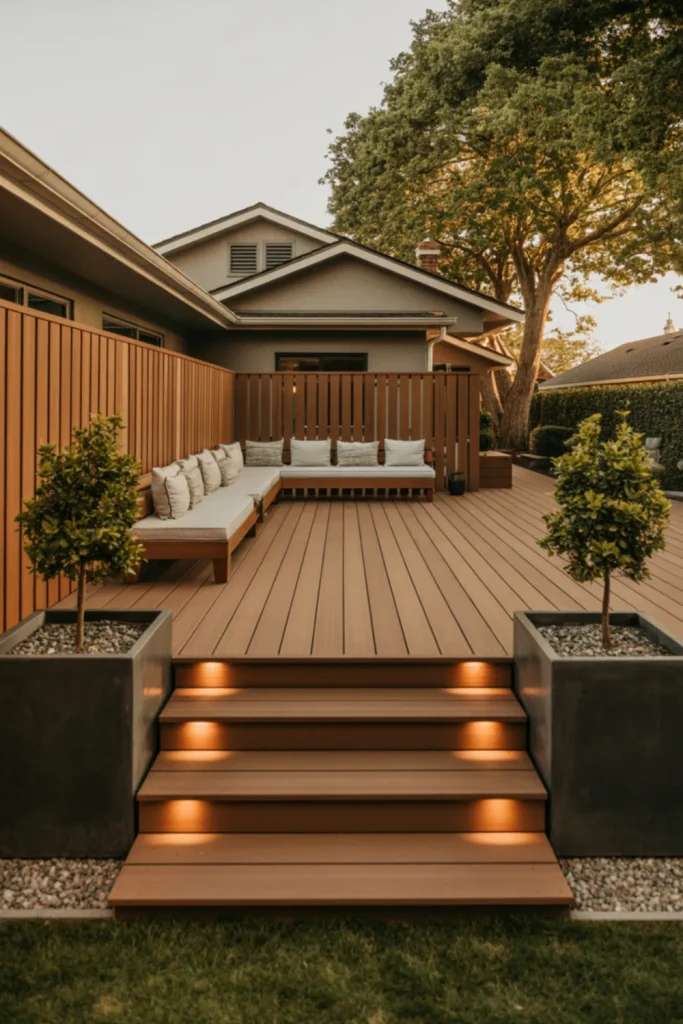
Matching the deck boards and privacy fence makes two practical features look like one considered design.
Warm composite decking balances the dark planters and neutral cushions, giving this modern outdoor living space a clean but comfortable finish.
Built-in seating uses the protected corner efficiently, while stair lights improve visibility after sunset.
Confirm the screen’s wind load and structural support before attaching it to an existing deck.
Planters should also include drainage trays or protective feet so trapped moisture does not stain or damage the boards.
10. Minimalist Water Feature Beside a Patio
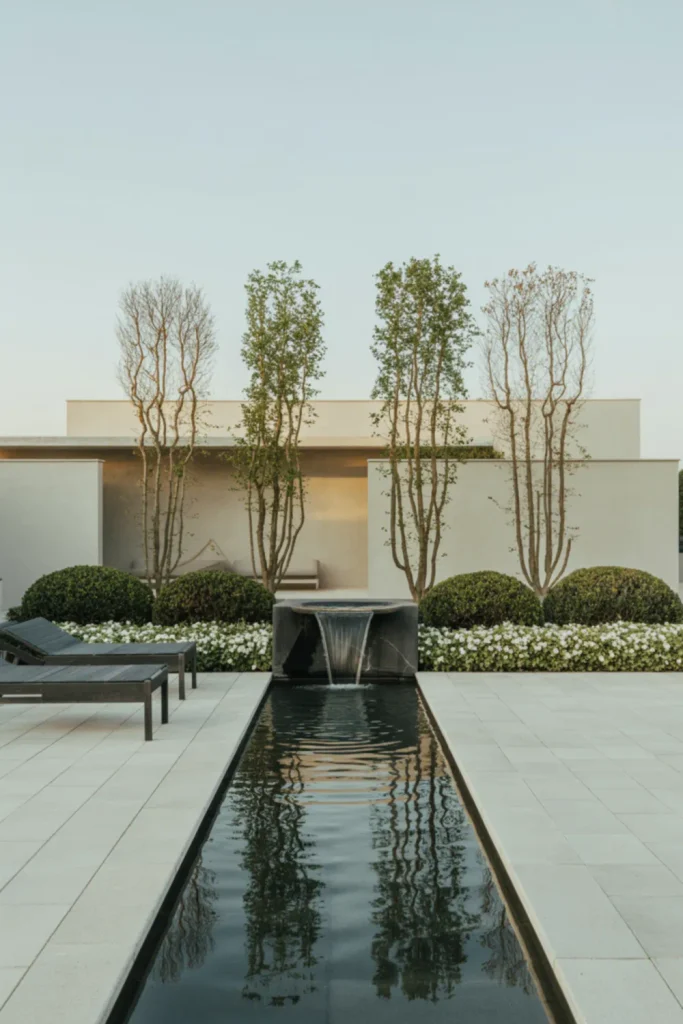
Water has the strongest effect when it can be seen and heard from the places people already use.
Set beside a lounge patio, this narrow reflecting pool reinforces the linear modern landscape design while a dark spillway provides gentle movement.
Low shrubs and upright trees frame the surface without hiding it.
Keep the basin away from plants that shed heavily, since leaves can quickly clog a small pump.
An accessible equipment compartment will make cleaning, winterizing, and routine water-level checks much easier.
11. Floating Paver Garden Path Through Greenery
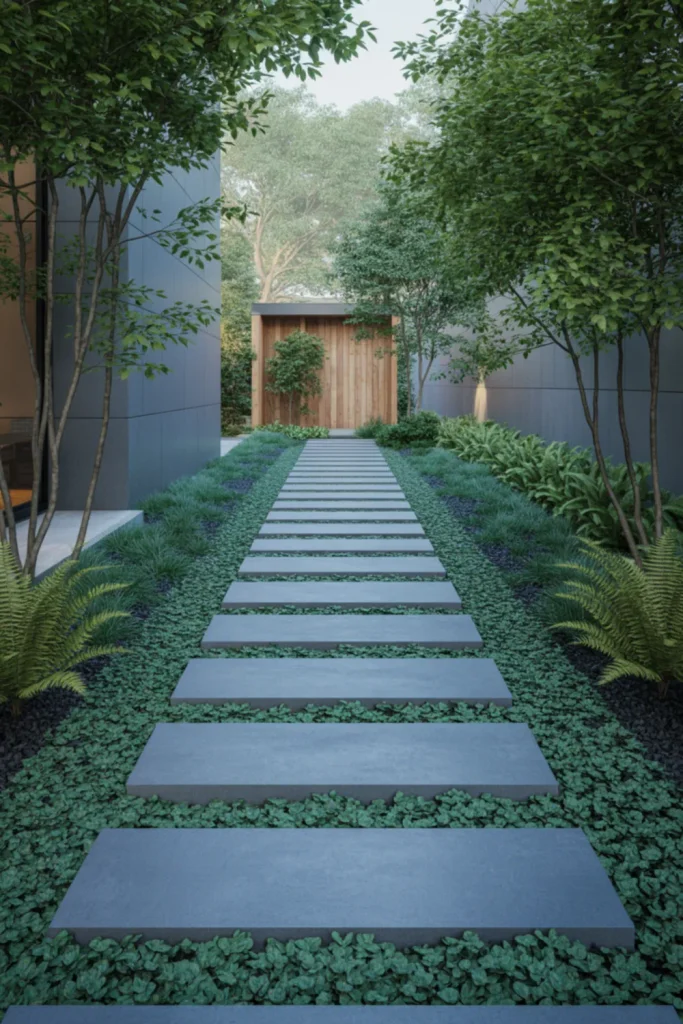
Few features guide the eye through a backyard as clearly as an intentional garden path.
Broad concrete slabs appear to float through low groundcover, leading from the house to a garden studio while preserving space for drainage and planting.
Repeating the same slab dimensions gives the route a modern rhythm.
Keep the spacing comfortable for a natural walking stride, and set every paver level to reduce tripping.
Groundcover should tolerate occasional foot traffic and remain low enough that it will not conceal the slab edges.
12. Corten Steel Planters in a Contemporary Garden
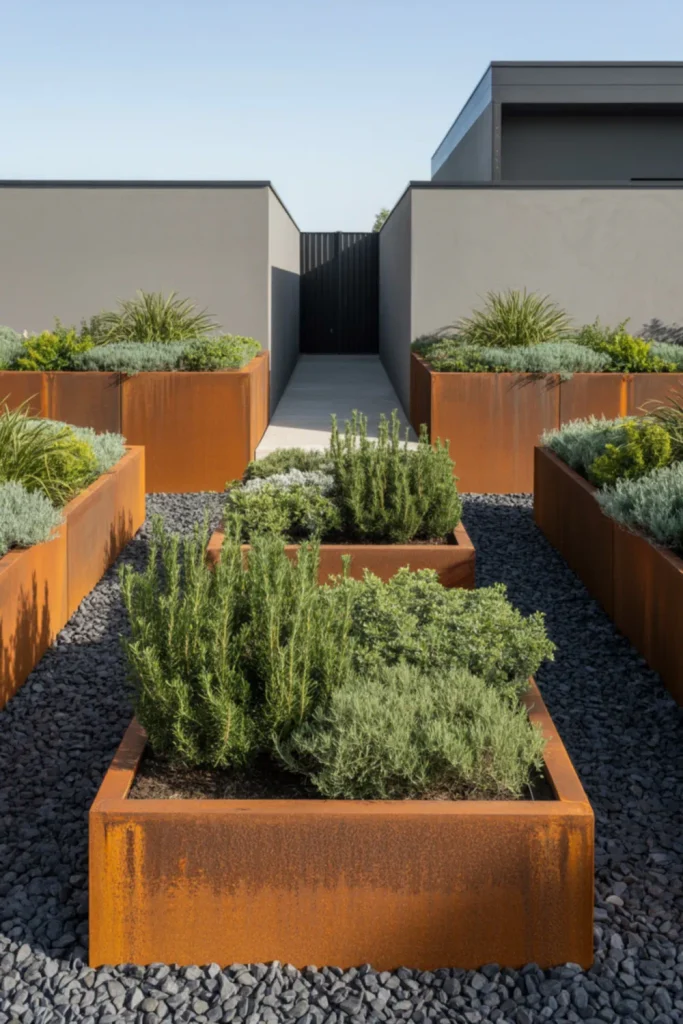
Warm rust tones help Corten steel planters stand out against charcoal gravel and a black fence.
Their sharp rectangular forms suit contemporary landscaping, while rosemary, sage, grasses, and compact evergreens keep the planting useful and structured.
Allow the steel to finish weathering before placing it beside pale paving because early runoff can leave orange stains.
Raised planters also dry faster than in-ground beds, so drip irrigation may be needed during hot weather.
Choose generous dimensions to prevent the arrangement from looking like scattered containers.
13. Linear Lawn Framed by Clean Planting Beds
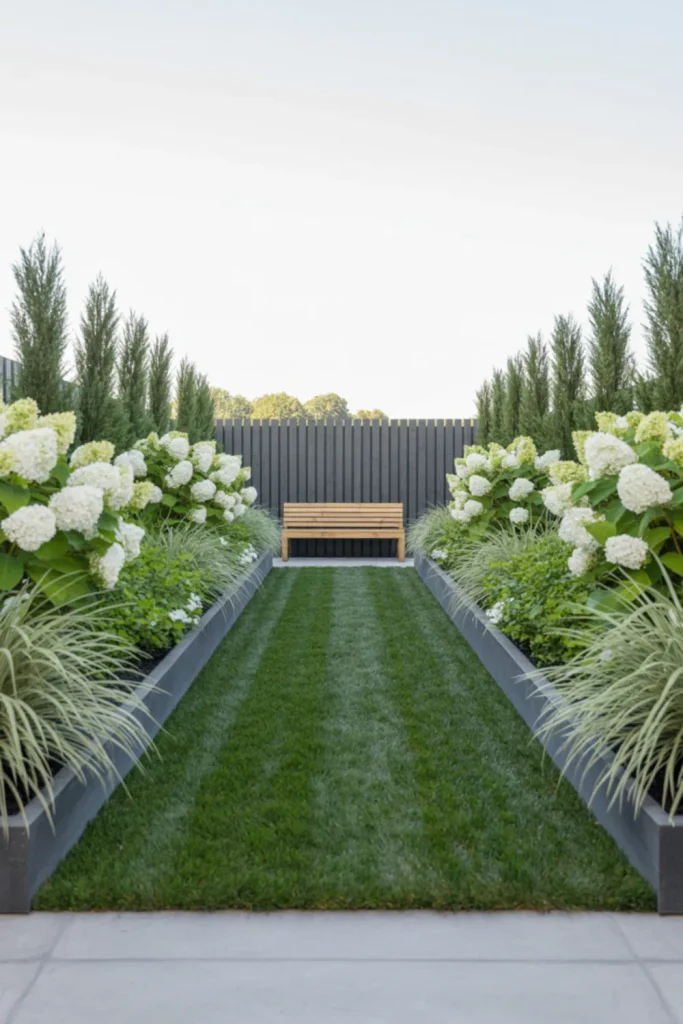
Keeping one clear strip of lawn often works better than breaking a narrow yard into several small patches.
In this backyard landscape design, dark steel edging frames the turf, while repeated shrubs and ornamental grasses lead the eye toward a timber bench.
The open center remains useful for play, pets, or casual gatherings.
Select a grass variety suited to the region and the yard’s sunlight rather than relying on appearance alone.
Crisp borders require occasional trimming, but they make the entire linear layout look more deliberate.
14. Poolside Landscaping With Porcelain Pavers
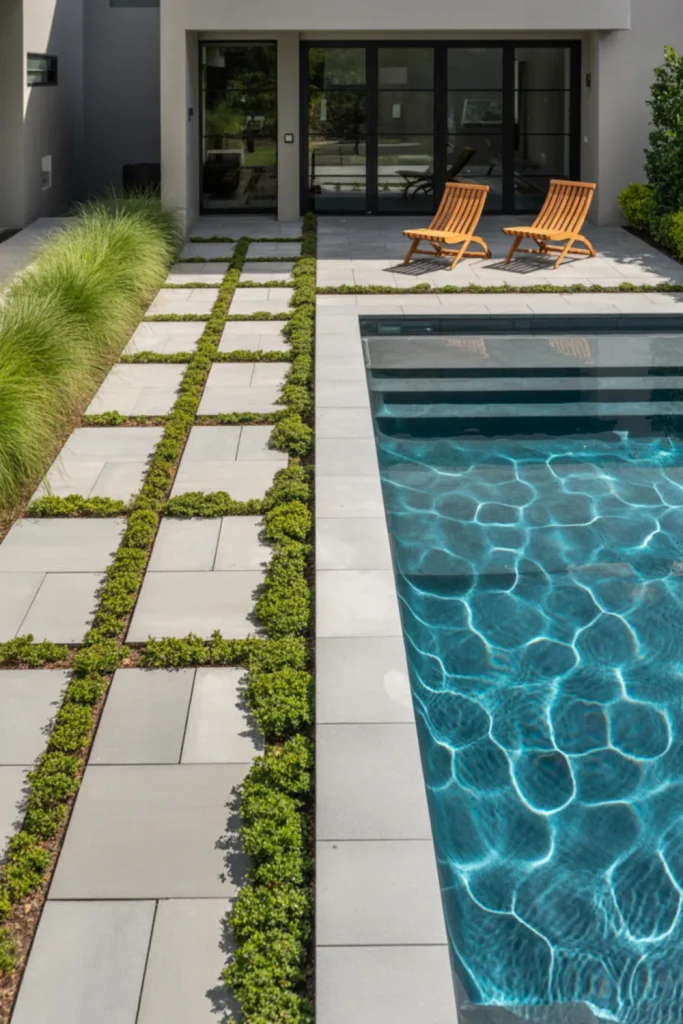
Pool areas need surfaces that handle water, heat, and frequent foot traffic without becoming uncomfortable.
Large porcelain pavers provide a clean foundation for this modern backyard landscaping with a pool, while narrow planting bands soften the hard edges without dropping excessive debris into the water.
Look for textured outdoor-rated tiles with reliable slip resistance, especially around steps and entry points.
Test darker samples in direct sun because some finishes become uncomfortably hot.
Low grasses and compact evergreens are easier to manage than messy flowering trees near the pool.
15. High-End Backyard Lounge Without a Pool
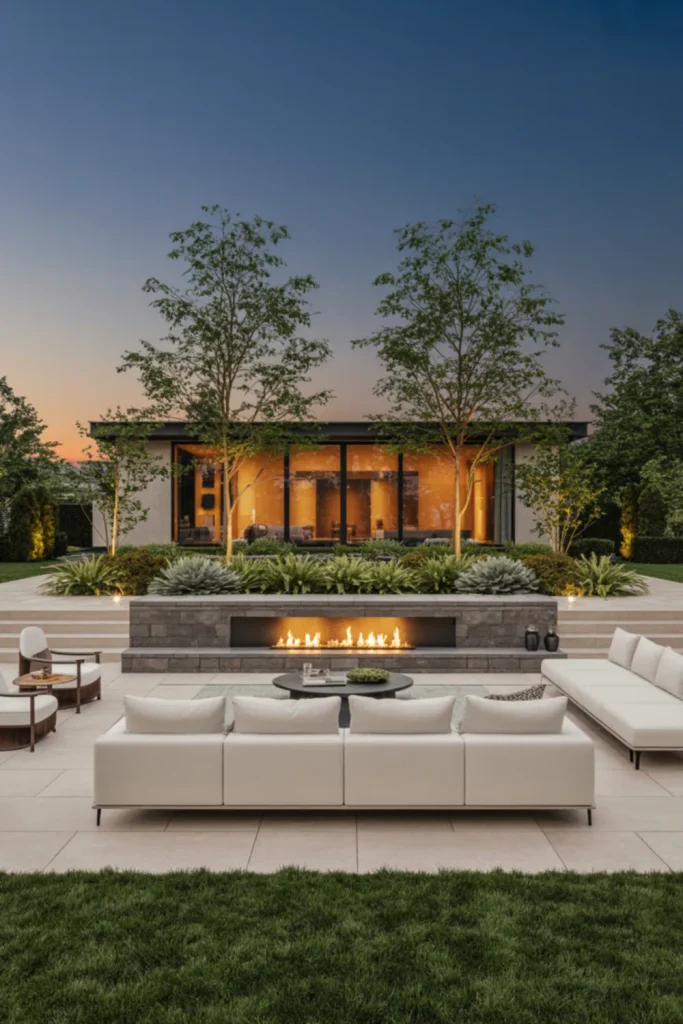
Luxury does not require filling the yard with costly features or a swimming pool.
Here, a limestone terrace, deep sectional seating, mature trees, and a linear fireplace create a high-end backyard centered on everyday use.
The limited cream, charcoal, and green palette keeps the materials connected to the home.
Spend first on comfortable seating and durable paving rather than decorative extras that may date quickly.
When using a gas fireplace, preserve the manufacturer’s clearances and position the flame away from strong prevailing winds.
16. Budget Backyard With Gravel and Precast Pavers
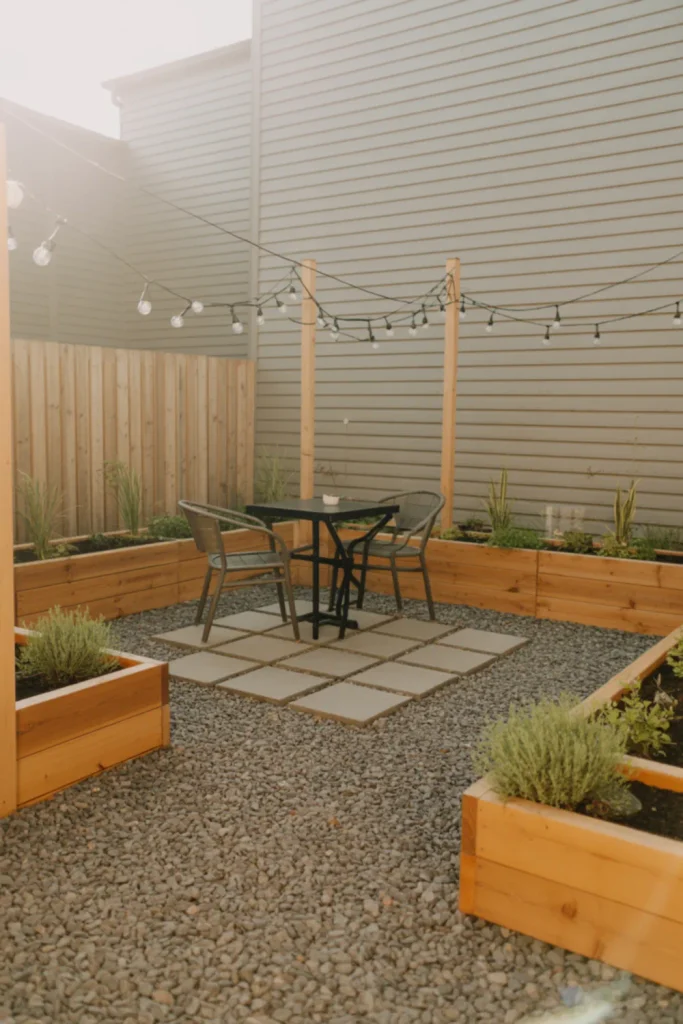
Limited budgets benefit from simple shapes and readily available materials.
Square precast pavers set within pea gravel define an affordable patio, while cedar planter boxes and neat string lights give the backyard a finished appearance.
Keeping the layout rectangular reduces cuts, material waste, and installation time.
Use proper edging so gravel does not migrate into nearby lawn or planting beds, and compact the base before laying the pavers.
Buying young grasses and perennials costs less upfront, though the garden will need time to fill out.
17. Family Backyard With Separate Play and Seating Zones
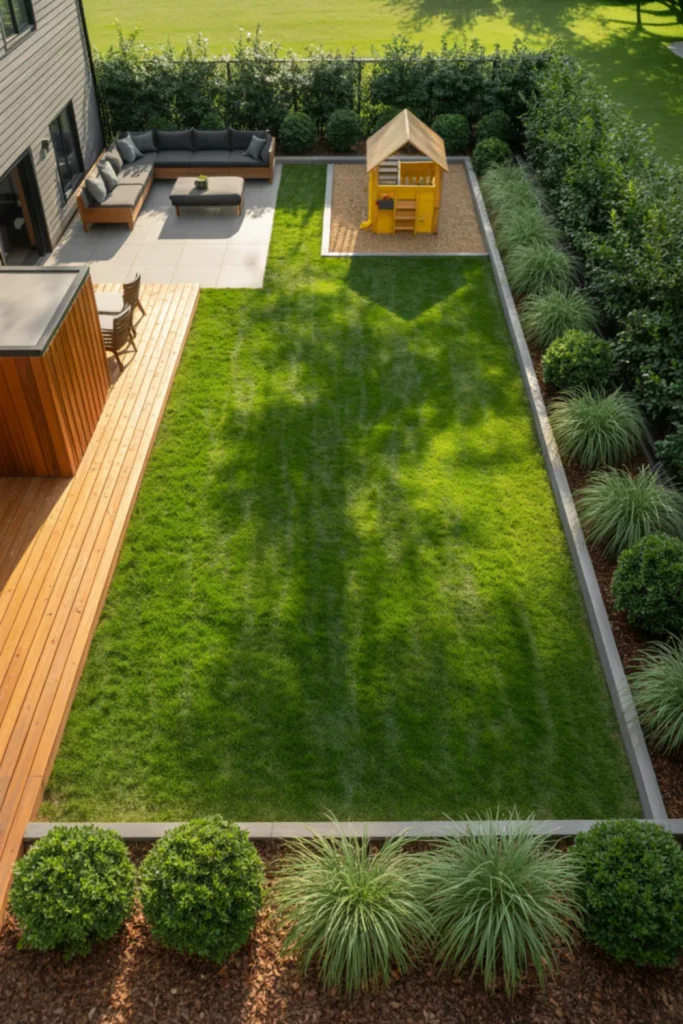
Families usually need a backyard to support several activities at once.
An open central lawn provides room for play, while the patio and compact play structure occupy separate zones along the edges.
Durable shrubs and soft grasses maintain the modern backyard design without introducing thorny or fragile plants near active areas.
Preserve a clear view from the house and main seating area so adults can supervise easily.
It also helps to place play equipment over an appropriate impact-absorbing surface rather than directly on concrete or hard-packed soil.
18. Long Narrow Backyard With a Layered Layout
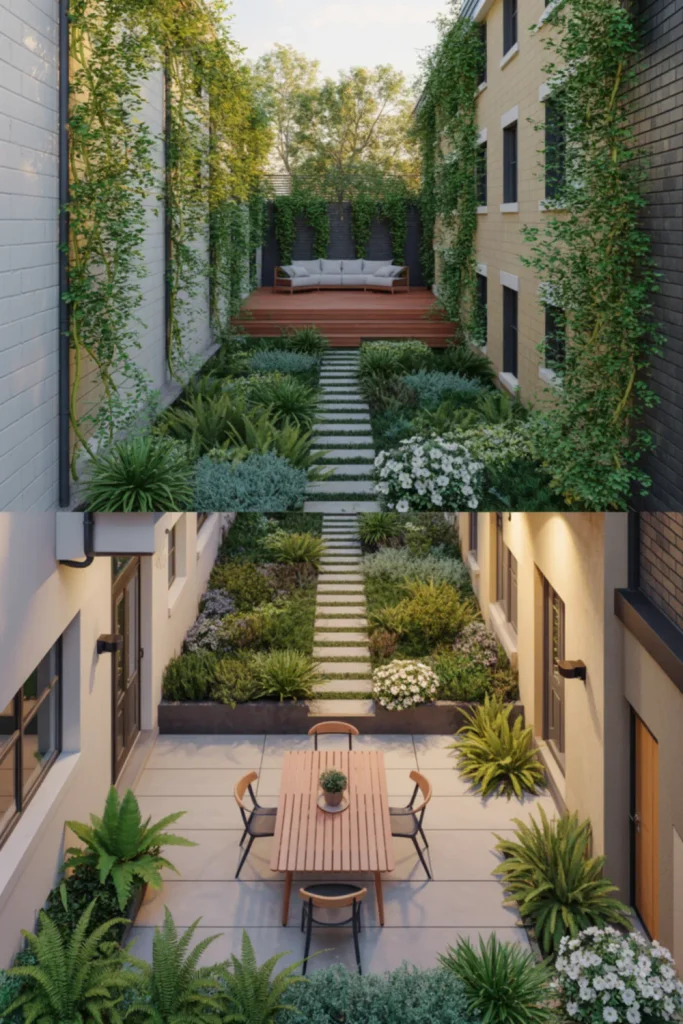
Length becomes less awkward when the yard unfolds as a sequence rather than one uninterrupted corridor.
A dining patio near the house, middle garden, and distant lounge create three destinations within this long backyard.
Staggered planting beds interrupt the straight boundaries and make the space appear broader.
Avoid placing every feature against one fence because that reinforces the tunnel effect.
Keep the main path wide enough for comfortable movement, and repeat a small set of materials so the layered design still reads as one landscape.
19. Wide Backyard Organized With Repeated Planting Islands
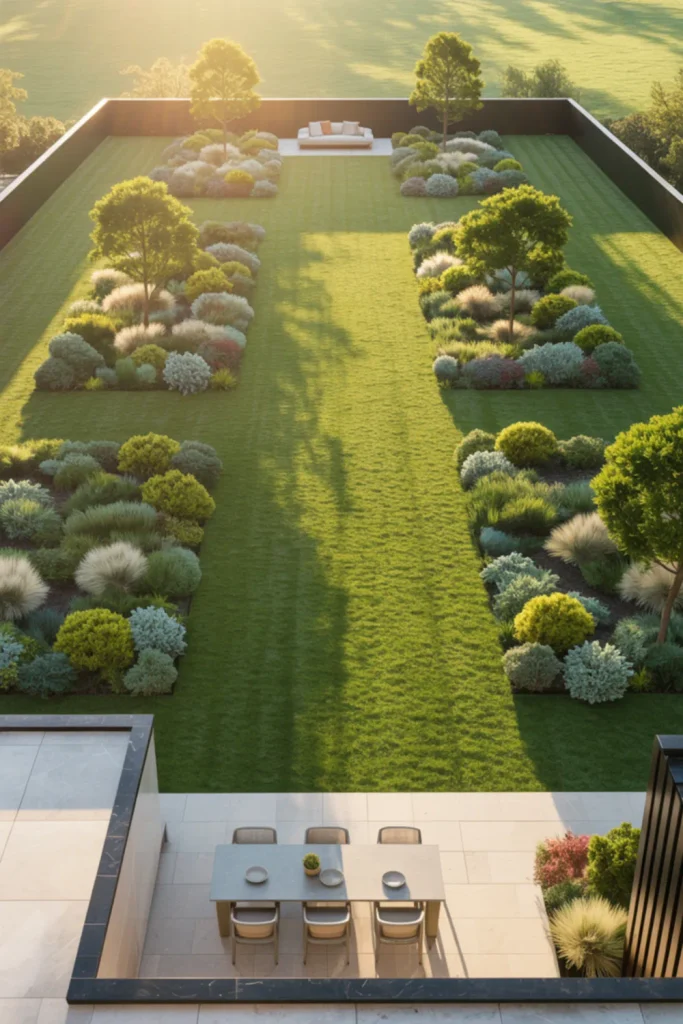
Wide properties can feel empty even when they contain plenty of lawn.
Geometric planting islands give this modern backyard structure, separating the dining and lounge areas without constructing solid barriers.
Repeated multi-stem trees, rounded shrubs, and ornamental grasses connect the islands across the property.
Position them carefully so they frame views instead of obstructing the main routes.
It is also worth checking mature canopy width before planting; small trees placed too close together may merge into a dense screen and overwhelm the open layout.
20. Vertical Planting Wall for a Compact Patio
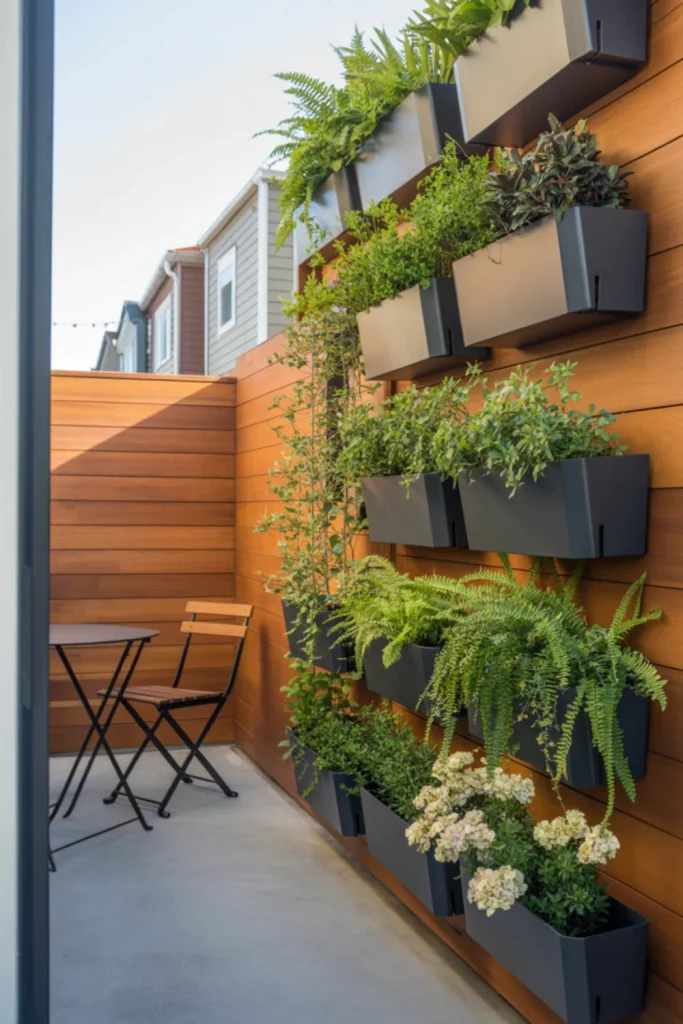
Look upward when a compact patio has little room for conventional garden beds.
A cedar wall fitted with modular planters brings ferns, herbs, and trailing greenery into the small backyard while leaving space for a bench and café table.
The combination of warm wood and black containers suits a modern garden design without requiring elaborate construction.
Confirm that the wall can support the weight of wet soil, not just empty planters.
A simple drip line can reduce uneven watering, especially across higher sections that dry quickly.
21. Contemporary Garden Lighting Along Steps and Trees
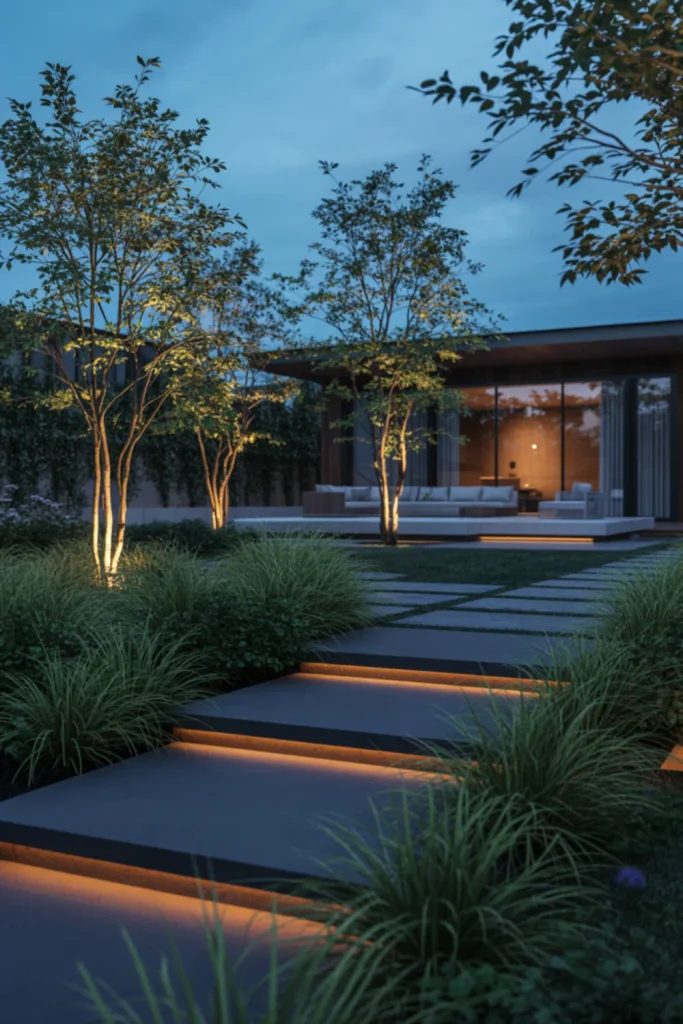
Good landscape lighting reveals the layout without making the backyard look like a brightly lit stage.
Recessed strips mark the floating steps, low fixtures define the path, and carefully aimed uplights highlight tree trunks and branching forms.
Using several subtle light sources creates more depth than relying on one strong floodlight.
Choose warm LEDs with consistent color temperature throughout the modern outdoor living space.
Fixtures should be rated for wet conditions, and cables need to remain protected from edging tools, digging, and routine garden maintenance.
22. Drought-Tolerant Modern Backyard With Desert Plants
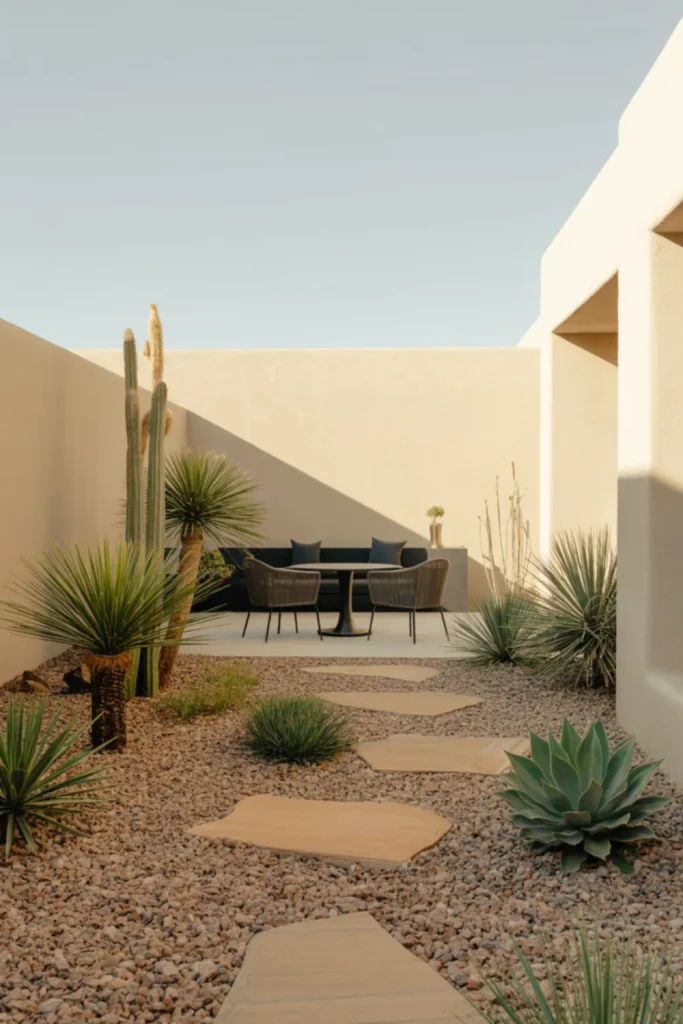
Dry-climate gardens work best when plant selection follows local conditions rather than imitating a lawn-based landscape.
Agave, yucca, desert spoon, and native grasses provide distinct forms across broad gravel beds, while sandstone slabs create a stable walking route.
Group plants with similar water needs and use drip irrigation close to their root zones.
Avoid placing sharp-leaved species beside narrow paths or seating areas.
Leaving enough open gravel around each specimen also allows the sculptural shapes to remain clear as the plants mature.
23. Naturalistic Modern Garden With Soft Planting
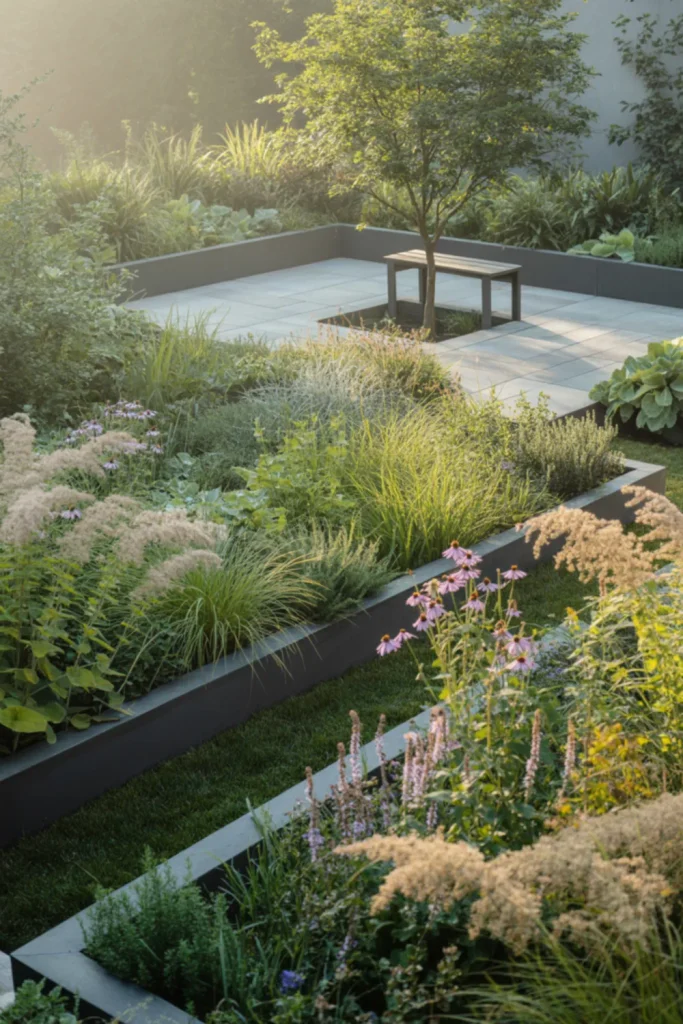
Modern does not have to mean rigid rows of clipped shrubs.
Loose drifts of salvia, coneflowers, grasses, and airy white flowers soften the stone patio, while dark metal edging keeps the planting boundaries clean.
The contrast between structured hardscaping and natural movement gives this contemporary garden design its character.
Repeat a limited group of plants instead of mixing too many single specimens.
Selecting varieties with different bloom periods will extend seasonal color, while leaving seed heads through winter can support wildlife and reduce autumn cleanup.
24. Modern Outdoor Kitchen With a Paved Entertaining Area
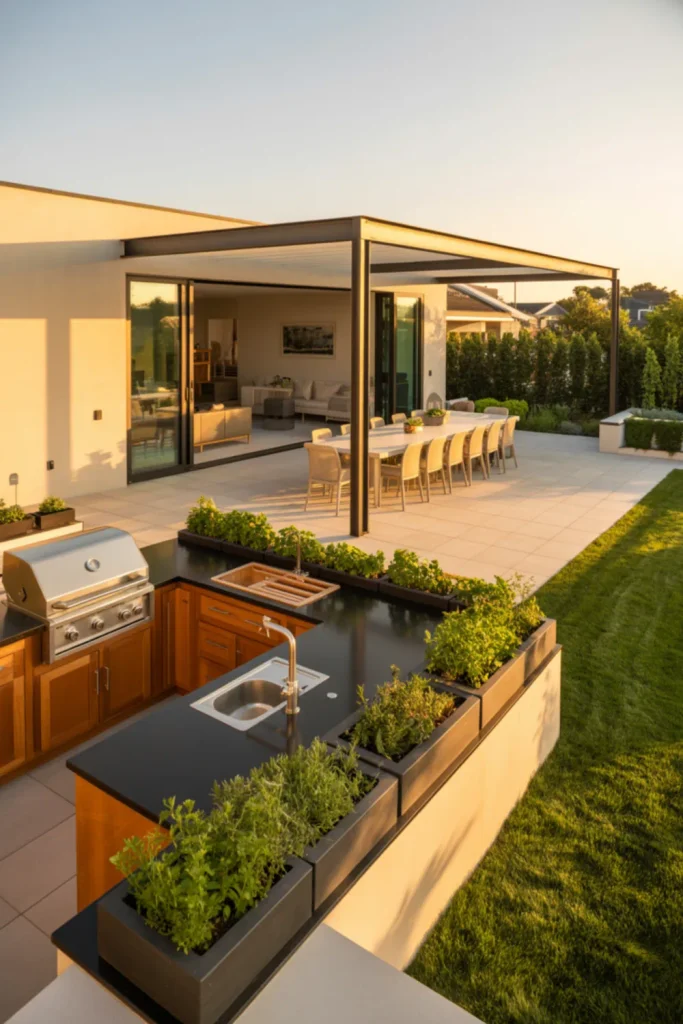
Cooking outside works more smoothly when preparation, grilling, and dining happen within one connected zone.
An L-shaped outdoor kitchen provides useful counter space, while a nearby table and slim pergola support larger gatherings without interrupting circulation.
Porcelain pavers make spills easier to clean than loose gravel beneath cooking equipment.
Leave adequate landing space beside the grill and refrigerator, and avoid placing guest seating directly in the cook’s route.
Storage cabinets should be rated for exterior conditions and ventilated where required by the appliances.
25. Renter-Friendly Patio With Modular Deck Tiles and Planters
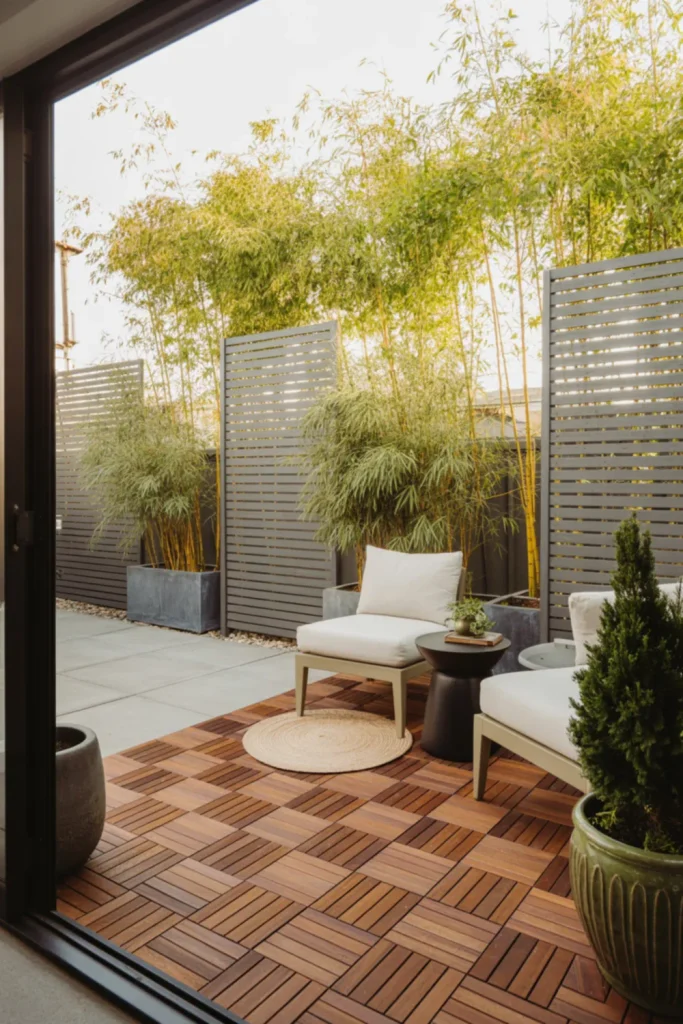
Renters can build a polished outdoor space without drilling into walls or replacing permanent surfaces.
Interlocking deck tiles cover plain concrete, while planter-supported privacy panels and lightweight furniture define the patio.
Because every element can be removed, the arrangement can move to another home or adapt to a different layout.
Check whether the tiles allow water to drain freely beneath them, since trapped moisture can stain the slab.
Use large, stable planters for freestanding screens and confirm any property rules before adding tall privacy features.
26. Tiered Modern Landscaping for a Sloped Backyard
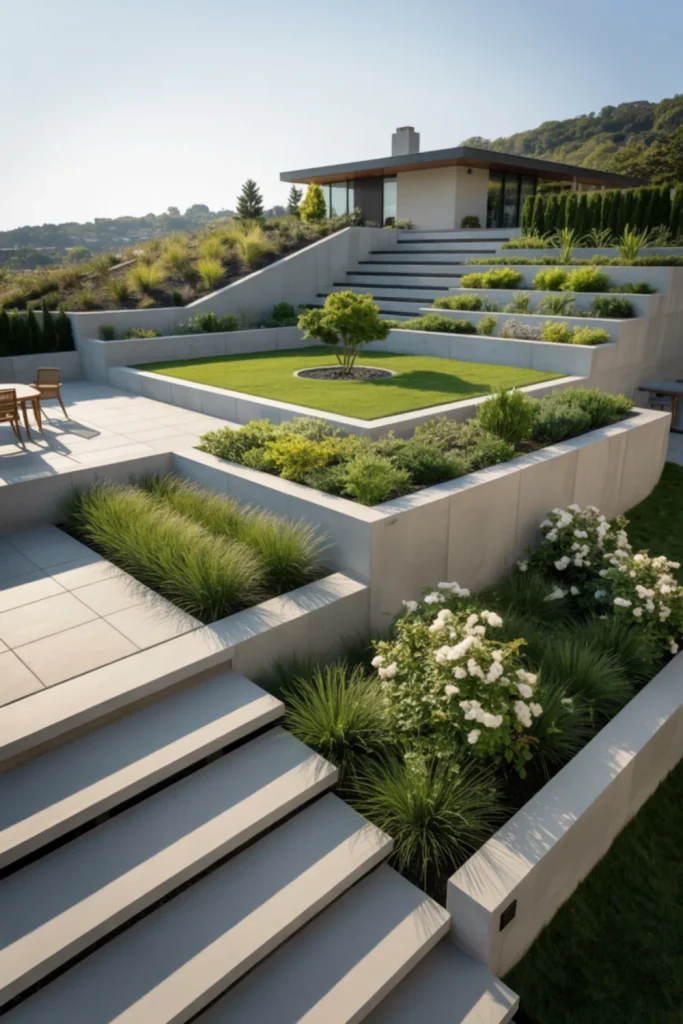
Sloped ground becomes more useful when it is divided into stable, connected levels.
Low concrete retaining walls create separate spaces for a lounge, structured planting, and a small upper lawn, while broad steps tie the terraces together.
This modern hardscape design also helps slow runoff when drainage is planned correctly.
Retaining walls may require engineering, footings, or permits depending on their height and location.
Avoid treating drainage as an afterthought, since water pressure behind the walls can cause cracking, shifting, or long-term failure.
27. Secluded Modern Backyard Retreat Beneath Mature Trees
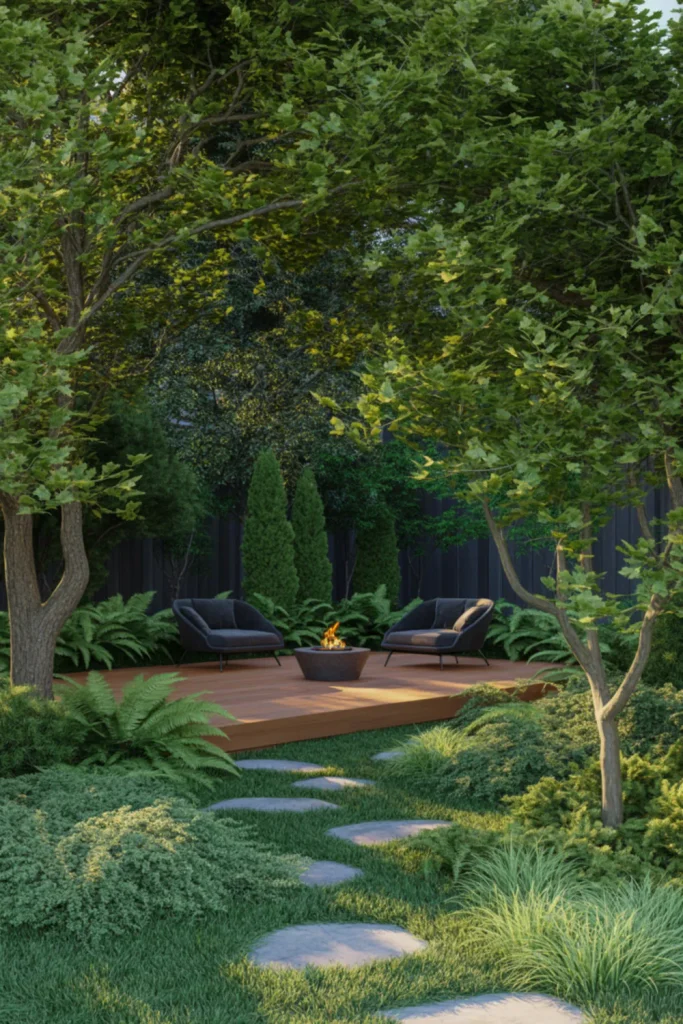
Under mature trees, a slightly raised cedar platform provides a dry, level place to sit without paving the entire shaded area.
Ferns, evergreens, and ornamental grasses surround the lounge, allowing the backyard retreat to feel secluded while keeping the planting palette controlled.
Irregular stepping stones preserve more permeable ground around established roots.
Avoid cutting major roots when preparing the platform or path, and consult an arborist if excavation is needed.
Shade-tolerant plants will perform better here than repeatedly replacing sun-loving varieties that struggle beneath the canopy.
Looking for more small backyard inspiration?
Explore these 35 small backyard landscaping ideas for more ways to add privacy, greenery, seating, and style to a compact yard.
How to Choose the Best Idea for Your Space
Begin with the yard’s strongest constraint.
A narrow property may benefit from layered zones, while a wide lawn often needs planting islands or paths to give it structure.
Sloped land may require terraces and drainage work before decorative features make sense.
In a compact backyard, perimeter seating and vertical planting usually provide more value than several freestanding elements.
Budget should also guide the order of work.
Drainage, grading, retaining walls, paving bases, and electrical connections are harder to change later, so address them before furniture and decorative planting.
Choose one main feature, such as a pergola, fire-pit lounge, dining terrace, or water feature, then support it with simpler landscaping.
Repeating the same paver, wood tone, or plant group across the backyard will make even a phased project feel coordinated.
FAQ
What is the most affordable way to get a modern backyard look?
Use a simple rectangular layout with gravel, precast concrete pavers, and repeated groups of affordable plants.
Clean edging often makes more difference than expensive materials.
Start with young grasses or shrubs, but space them according to mature size so the beds fill in without becoming overcrowded.
Which materials require the least backyard maintenance?
Composite decking, outdoor-rated porcelain pavers, concrete, gravel, and weathering steel generally need less routine refinishing than untreated wood.
Material choice is only part of the equation, though.
Proper installation, drainage, stain resistance, and suitability for the local climate have a major effect on long-term maintenance.
How can a small backyard include seating without feeling crowded?
Place built-in or narrow bench seating along a fence or property boundary, leaving the center open for circulation.
Choose furniture with slim frames and avoid oversized sectional pieces.
Before buying anything, mark its dimensions on the patio and preserve at least three feet along the main walking route.
Conclusion
Choose modern backyard landscaping ideas that solve the yard’s biggest functional issue first, whether that is privacy, poor circulation, limited seating, or difficult maintenance.
Once the layout is clear, select a restrained mix of paving and plants that can be repeated throughout the space.
Test the dimensions on the ground before ordering materials, especially around paths, dining tables, and fire features.