
A beautiful backyard should work for every member of the family, including the one who tracks muddy paws across the patio. The challenge is finding room for running, sniffing, drinking, and resting without letting dog gear take over the entire space.
These modern backyard ideas for dogs combine clean lines, practical surfaces, and thoughtful zones. Think a grassy play area beside a calm seating space, a wash station that blends into the house, and a shaded spot where your dog can stay close while you relax.
You do not need to install all 17 ideas. Start with the issue you deal with most often, whether that is worn lawn, scattered toys, or a dog who loves digging, then build around the way your household actually uses the yard.
The images in this article are AI-generated design illustrations. Use them for layout and style inspiration, not as verified planting lists or construction plans.
Before You Plan: Let Your Dog’s Habits Shape the Design
Watch where your dog already walks, rests, and goes to the bathroom. Those patterns are useful clues. A fence-line runner needs a clear route, while an older dog may benefit more from easier access and a shaded resting spot.
Check the perimeter, gate hardware, drainage, and afternoon shade before shopping for decorative features. Fence height, gaps, and digging protection need to suit your individual dog. Choose surfaces for traction and comfort, and check them in actual weather conditions. Even artificial grass can become hot enough to hurt paws, as the American Kennel Club explains.
1. A Zoned Layout That Gives Everyone Room
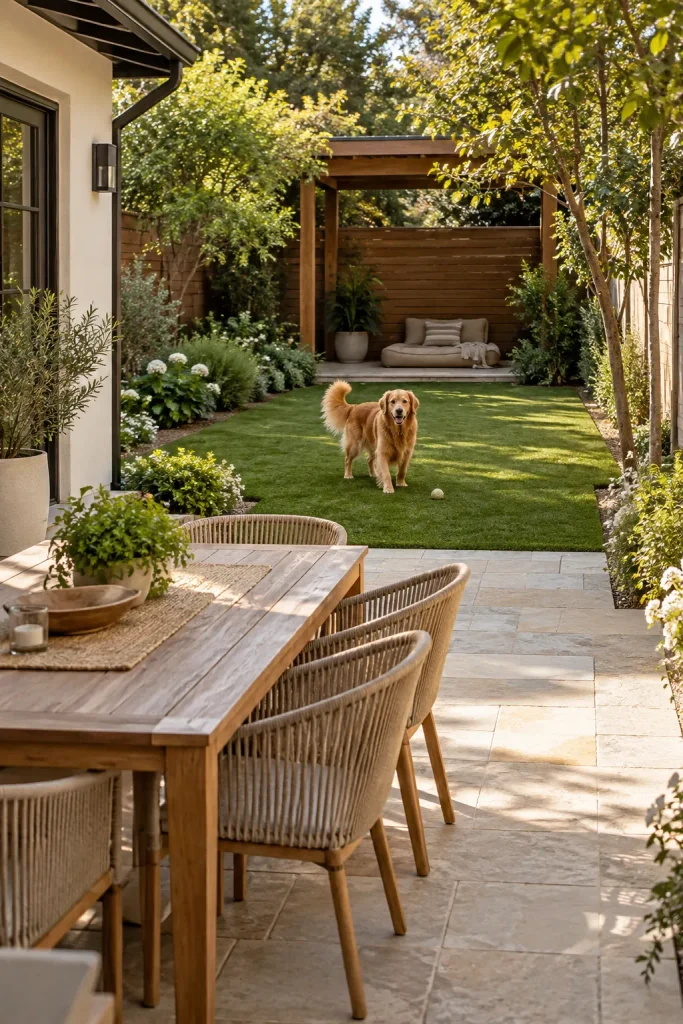
A modern dog-friendly backyard feels calmer when each activity has a place. Position the dining or lounge area near the house, leave an open section for play, and place a shaded resting spot where your dog can still see you. The zones can share a simple palette of warm wood, pale paving, and green lawn without looking identical.
Use changes in surface rather than lots of small barriers to define the layout. Keep the route between the door and the yard clear of furniture legs, planters, and toys. In a compact garden, even two well-planned zones can make daily use easier.
2. A Secure Vertical-Slat Privacy Fence
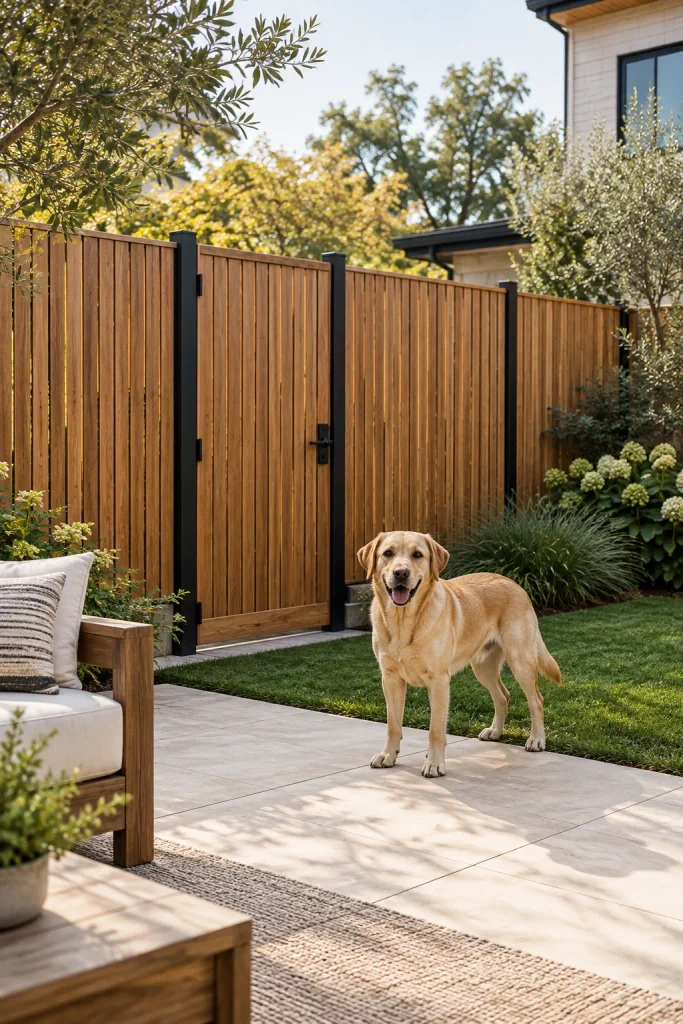
A vertical-board fence adds a clean backdrop while helping define the yard’s boundary. Warm wood softens a contemporary patio, and dark posts can echo the frames of your outdoor furniture. Closely spaced boards also reduce open views beyond the fence, which may suit dogs distracted by activity outside.
The attractive finish is only part of the job. Check every gap, the space beneath the gate, and the condition of latches and boards. Keep benches and planters away from the fence so they do not become climbing aids. An escape-prone dog may need a professionally designed solution beyond an ordinary decorative fence.
3. A Perimeter Path for Daily Patrols
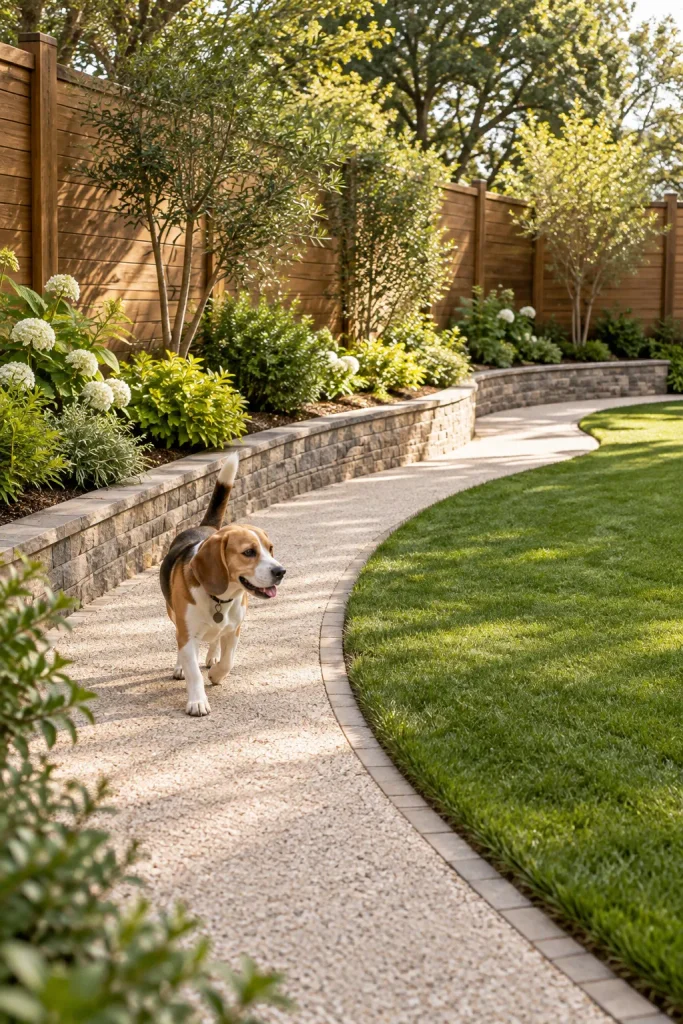
If your dog repeatedly circles the fence, design around that route instead of replanting the same worn strip. A broad, continuous path can turn the habit into an intentional landscape feature. Gently rounded corners help the route feel natural, while a restrained material palette keeps it connected to the patio.
Choose a stable, textured surface with comfortable transitions and room for your dog to turn. Avoid widely spaced stepping stones on a running route. Keep planting out of the travel lane and inspect the path for heat, loose edges, and slippery patches. This is a walking and sniffing route, not a substitute for daily exercise.
4. A Real-Grass Play Lawn with Crisp Edges
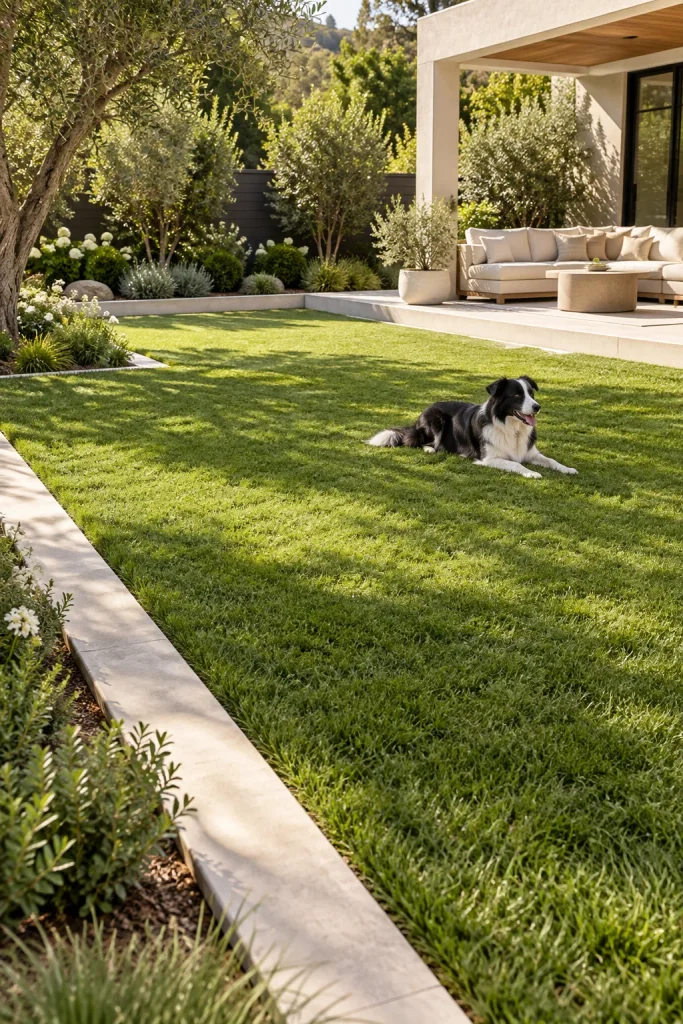
A simple rectangle of grass gives a modern backyard a soft center. It also leaves room for relaxed play without weaving between decorative objects. Keep the surrounding edges clean and largely flush, then repeat the straight lines in nearby paving or furniture for a more finished appearance.
Choose a grass variety suited to your local climate, sunlight, and expected wear, with help from a local extension service or nursery. Rotate toys and resting spots to spread out traffic, and expect occasional repairs. Natural grass still needs care, but a modest, usable patch can be more practical than trying to maintain lawn across the entire yard.
5. A Shaded Pergola Lounge for People and Pups
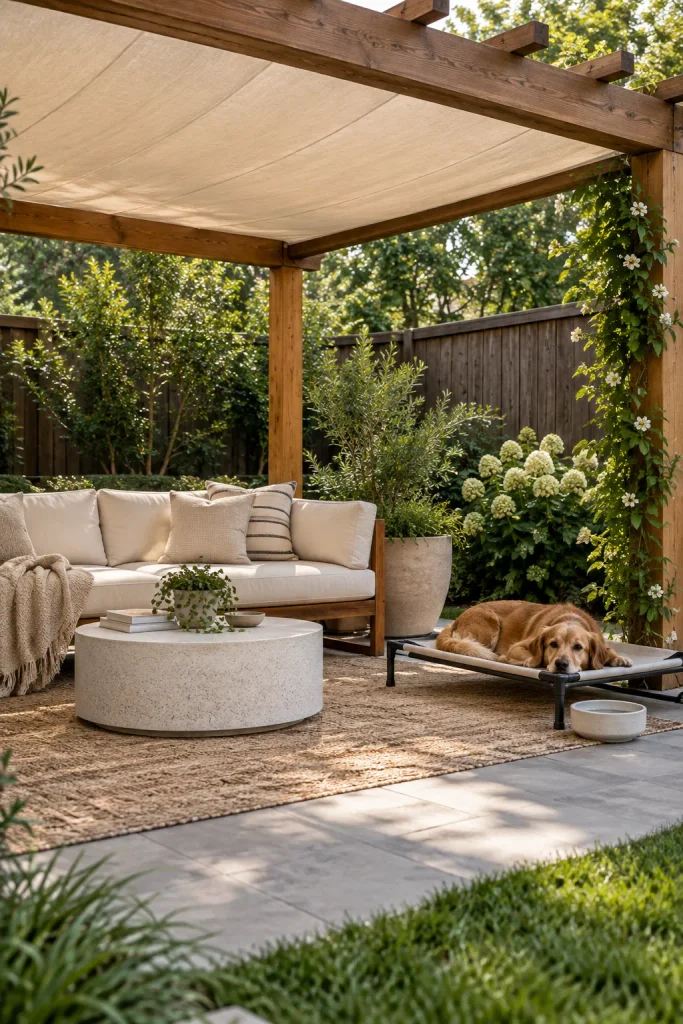
Give your dog a place beside the conversation, not at the far end of the garden. A pergola lounge with an appropriate canopy can shelter a seating area and a low dog cot in one coordinated space. Taupe cushions, timber posts, and a simple washable bed create a relaxed look without extra decoration.
Check the shade at the hours you actually use the yard. Bare pergola slats may leave large areas exposed as the sun moves. Keep fresh drinking water nearby and maintain access to a cooler indoor space. Shade improves the layout, but it does not make outdoor time safe in every temperature.
6. A Minimalist Outdoor Dog-Wash Station
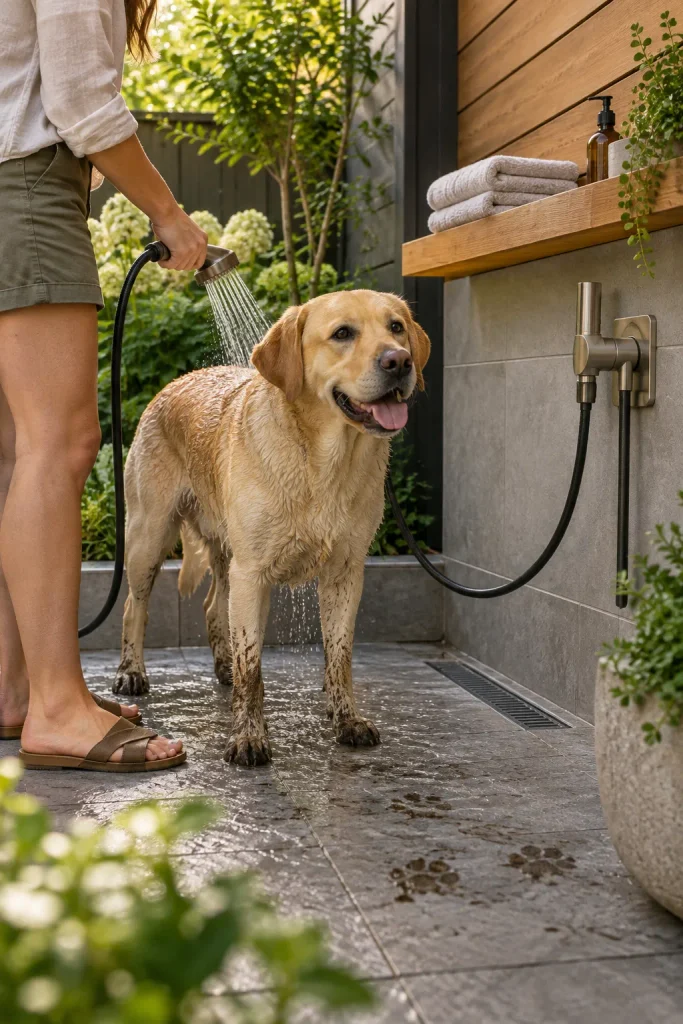
A small rinse area near the back door helps keep dirt from traveling through the house. A wall-mounted hose, a washable floor, and a shelf for a towel can be enough. Matching the wall finish or paving to the house makes the station look like part of the architecture rather than an afterthought.
For many dogs, a ground-level setup avoids the lifting required by a raised tub. Plan reliable drainage, slip-resistant footing, and a comfortable water temperature. Have plumbing and wastewater disposal arranged appropriately for your property and local requirements. Store shampoos and cleaning products out of reach when you are finished.
7. A Discreet Potty Corner That Is Easy to Reach
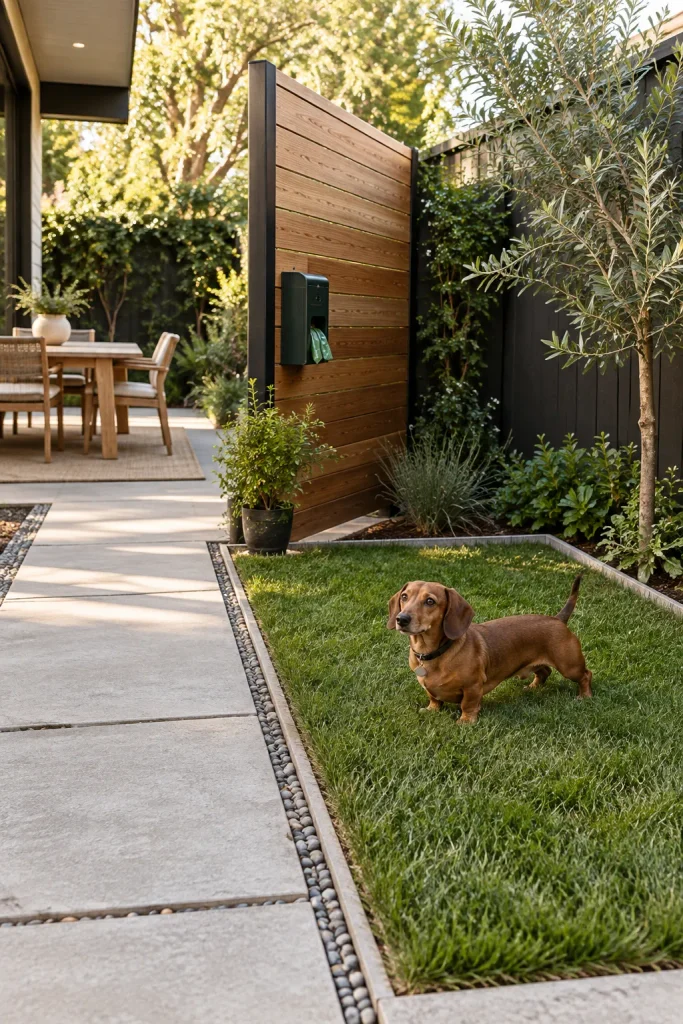
A dedicated bathroom area can make the rest of the yard easier to organize. Place it away from the main dining spot but close enough to reach quickly from the door. A modest panel or change in landscaping can make the corner less prominent without blocking your view of your dog.
Choose a surface your dog willingly uses and that you can maintain. A small natural-grass patch is one option, although it may need replacement or repair. Consistent training matters as much as the layout. Pick up waste promptly, plan drainage carefully, and keep disposal supplies nearby in a closed container.
8. Raised Planters That Protect the Garden
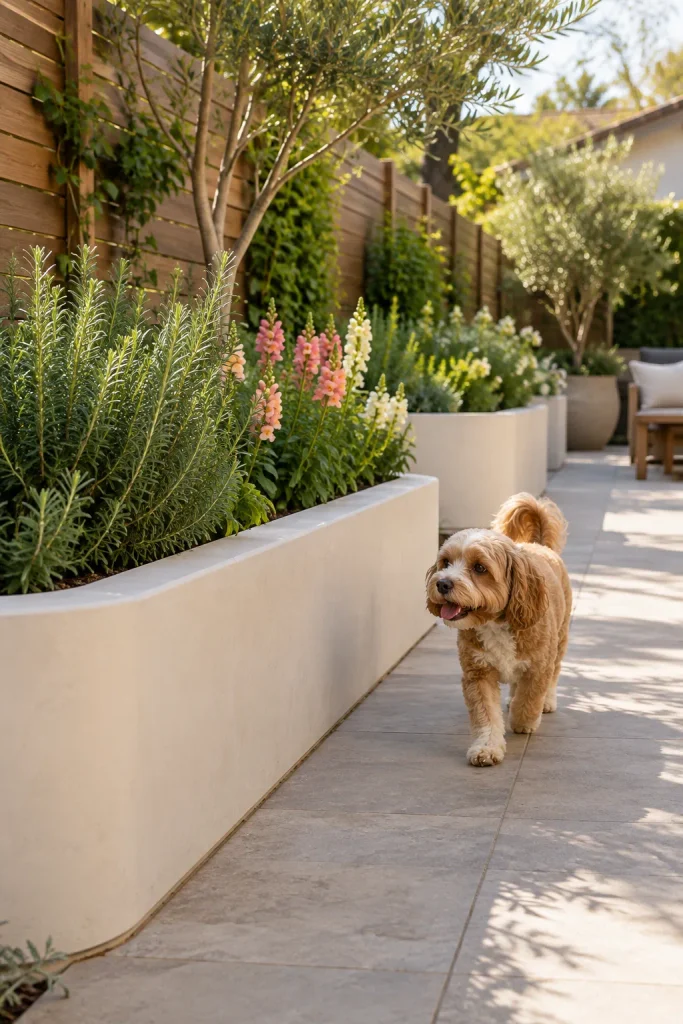
Raised planters bring structure to a dog-friendly landscape and help separate delicate planting from everyday foot traffic. Repeat a small number of substantial containers instead of scattering tiny pots around the patio. Pale, smooth-sided planters pair easily with wood fencing and green lawn.
Height alone does not make a plant inaccessible or safe. Choose species checked for dogs, and consider how easily your own dog can reach the foliage or soil. Use stable planters with finished edges, keep the walking route broad, and avoid placing them beside a boundary fence. Fertilizers and garden treatments still need their own secure storage.
9. A Low-Profile Dog Bed Built into the Lounge
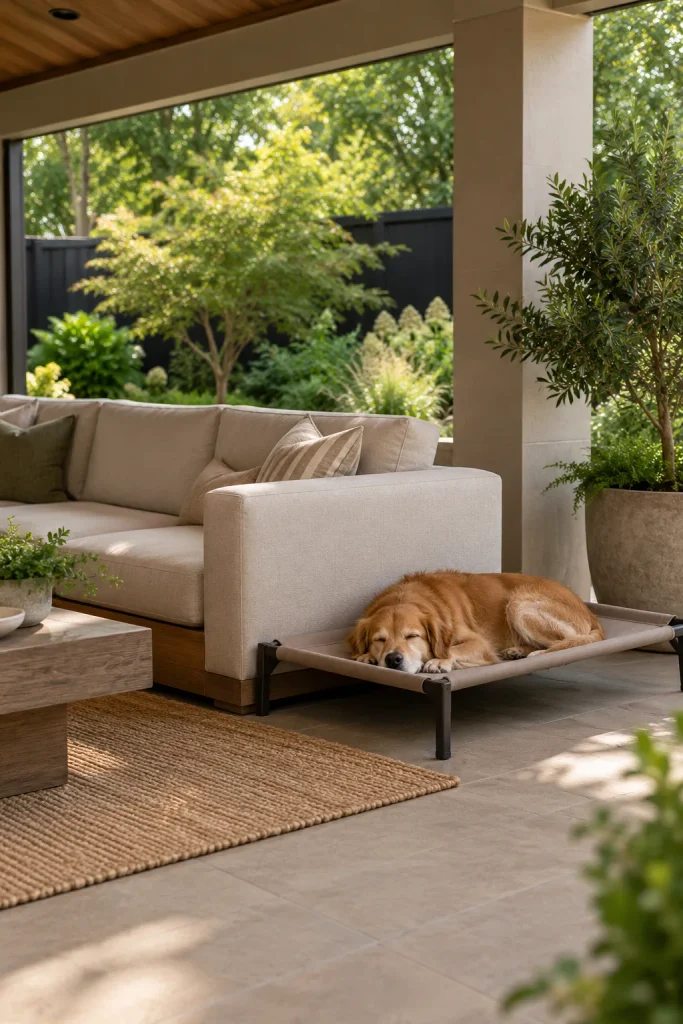
Your dog may prefer to nap wherever you are sitting. Make that habit part of the design with a low cot positioned beside the outdoor sofa. Matching its fabric to the seat cushions makes the bed feel intentional, while a separate, movable frame keeps cleaning and repositioning simple.
Leave enough room for your dog to stretch out and get up without bumping a table. Choose a washable surface and check for exposed fasteners or damaged fabric. Keep the bed in real shade, with airflow around it. A tucked-in location should feel connected to the lounge rather than cramped beneath furniture.
10. A Fresh-Water Station with a Clean Modern Look
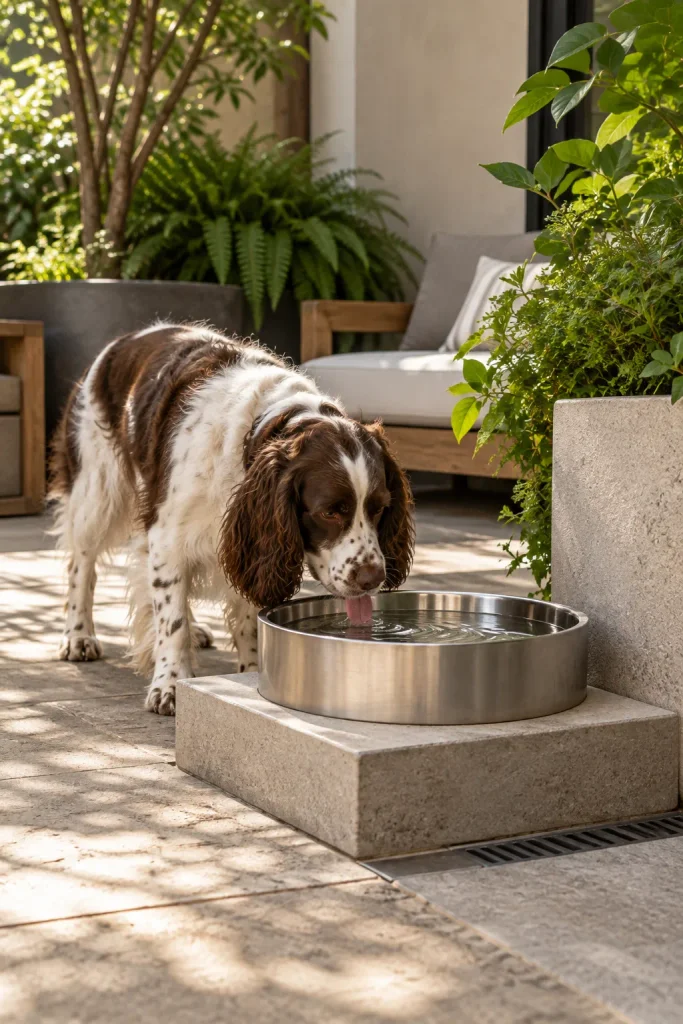
A drinking station can be as simple as a wide stainless steel bowl on a stable, washable base. Position it in shade near the resting area, where it is easy to notice and refill. A low arrangement avoids turning a basic water bowl into an awkward obstacle.
Keep the surrounding floor easy to clean and check for puddles that could make it slippery. Wash the bowl regularly and replace the water when it becomes dirty or warm. Decorative ponds and splash pools should not serve as the drinking supply. Repeating the patio’s materials helps this practical feature blend into the overall design.
11. A Dedicated Digging Box with Architectural Edges

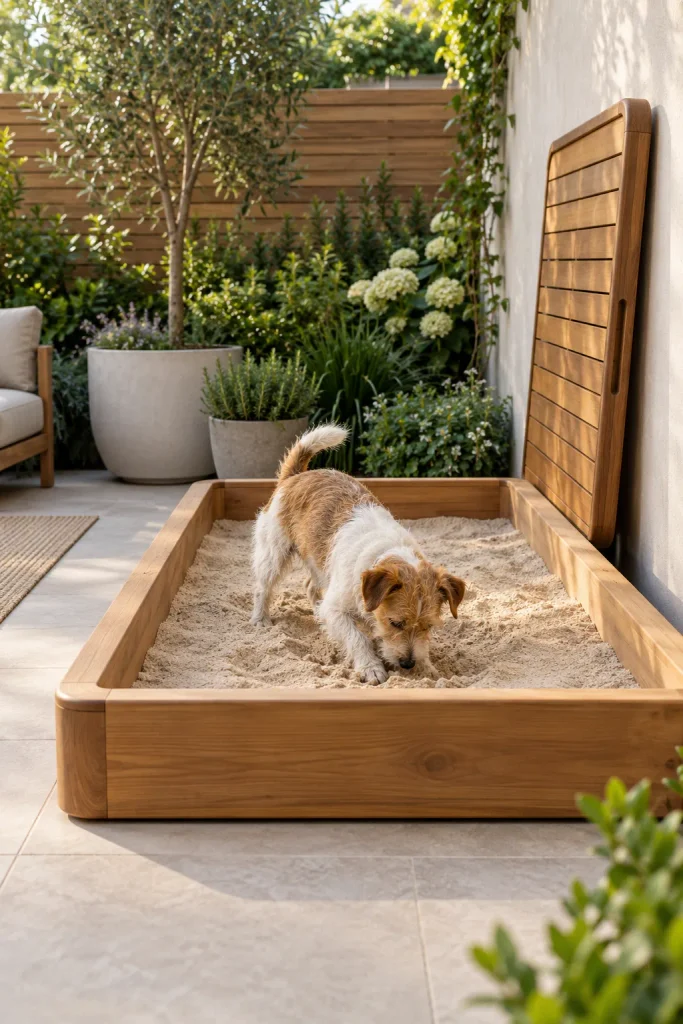
For a dog who enjoys digging, a designated box offers a place to practice the behavior without targeting every garden bed. A low rectangular frame can echo the shape of the lawn or raised planters. Keep the entry easy and finish the edges smoothly so the structure does not create a sharp boundary.
Use clean play sand and introduce the area through supervised, positive training. Keep it free of waste and debris, and cover it when not in use with a cover your dog cannot access or become tangled in. Dogs who eat sand need a different activity and individual guidance, rather than an unattended digging box.
12. A Wide, Gentle Ramp for Easier Access
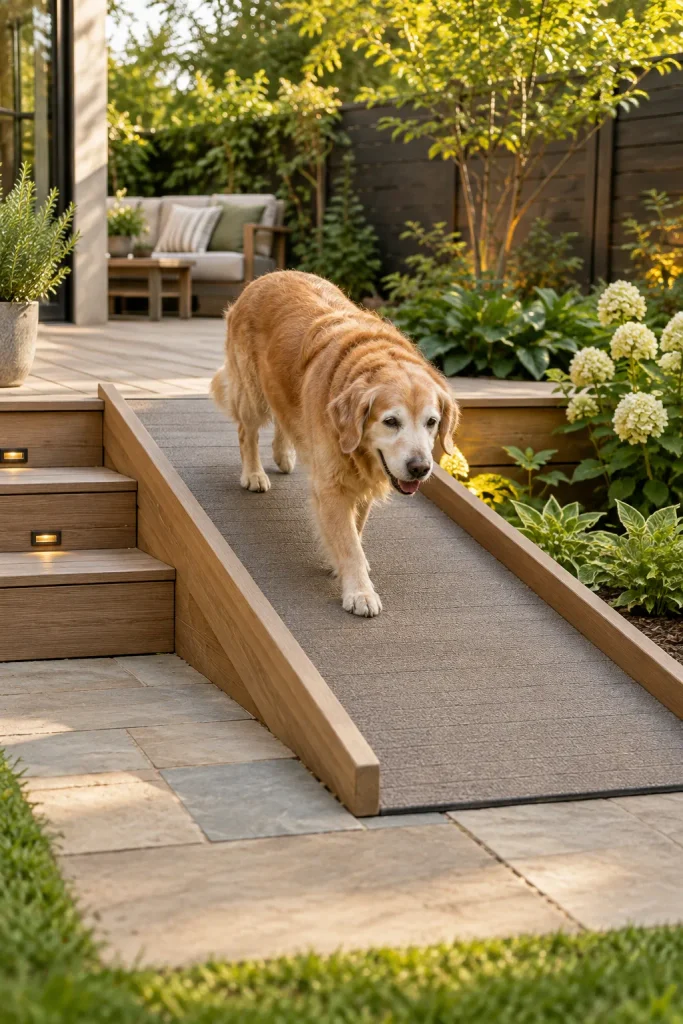
A low deck can become easier to use when a broad ramp sits alongside the steps. Matching its finish to the deck keeps it visually quiet, and an unobstructed approach gives your dog room to move at a comfortable pace. This can be especially useful when steps have become difficult.
The correct slope, width, traction, and edge protection depend on the dog and the height involved. Avoid improvising a steep board ramp because it looks compact. Ask your veterinarian about mobility needs and use a qualified builder where structural work is involved. Check the finished surface when wet, not only on a dry afternoon.
13. A Sniff Garden with Dog-Checked Plants
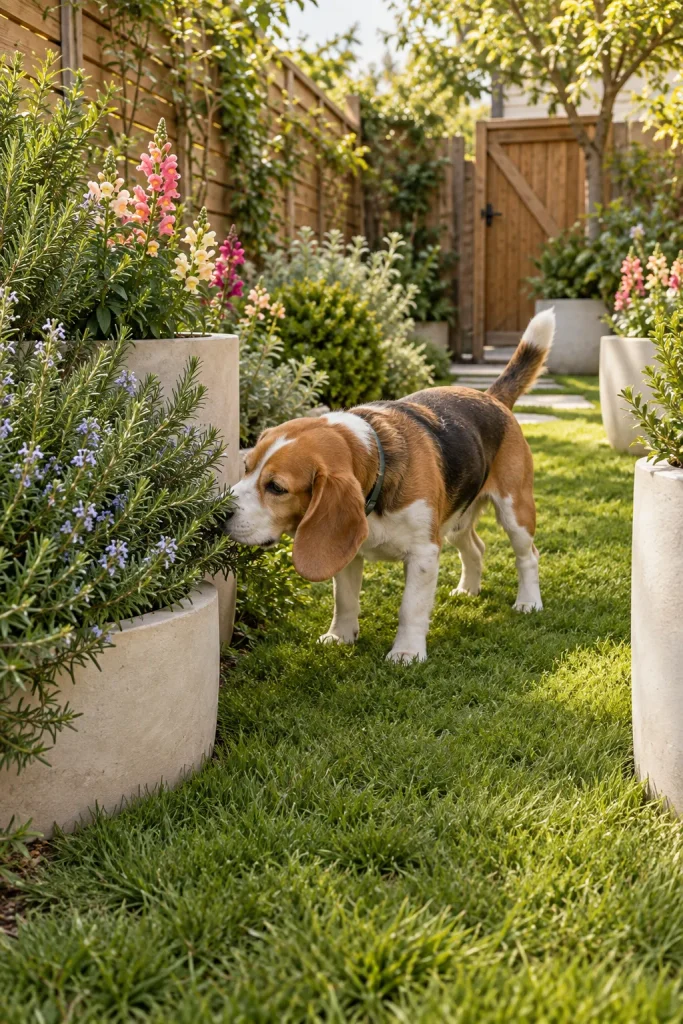
Enrichment can look like an ordinary part of the garden. Place a few dog-checked plants beside an accessible route so your dog can investigate scents at a relaxed pace. Repeated containers and a limited color palette help the area fit a modern landscape instead of becoming a crowded collection of pots.
Rosemary and common snapdragons appear on the ASPCA’s non-toxic plant list for dogs. Confirm botanical names before buying, since common names can be misleading. Non-toxic does not mean a plant should become a snack. Supervise browsing, avoid essential oils, and keep fertilizers, pesticides, and loose garden supplies inaccessible.
14. A Shallow Splash Zone That Packs Away
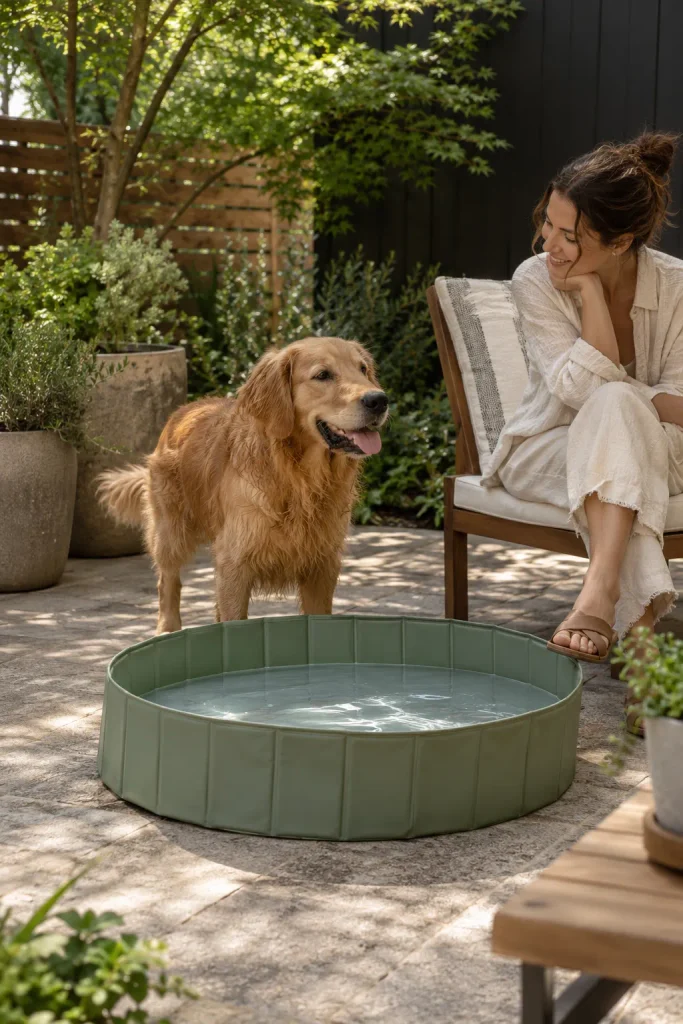
A portable dog splash basin adds a playful feature without committing the yard to a permanent pool. Choose a quiet color that suits the patio, and place it on a stable surface with good traction. Keeping it separate from the lounge furniture gives wet paws somewhere sensible to go.
Use only an appropriate shallow water level for your dog and stay present throughout play. Empty, clean, and store the basin afterward rather than leaving standing water in the garden. Provide a separate bowl for drinking. A splash area is an optional supervised activity, not a way to make excessive heat safe for outdoor play.
15. Closed Storage That Keeps Dog Gear Out of Sight
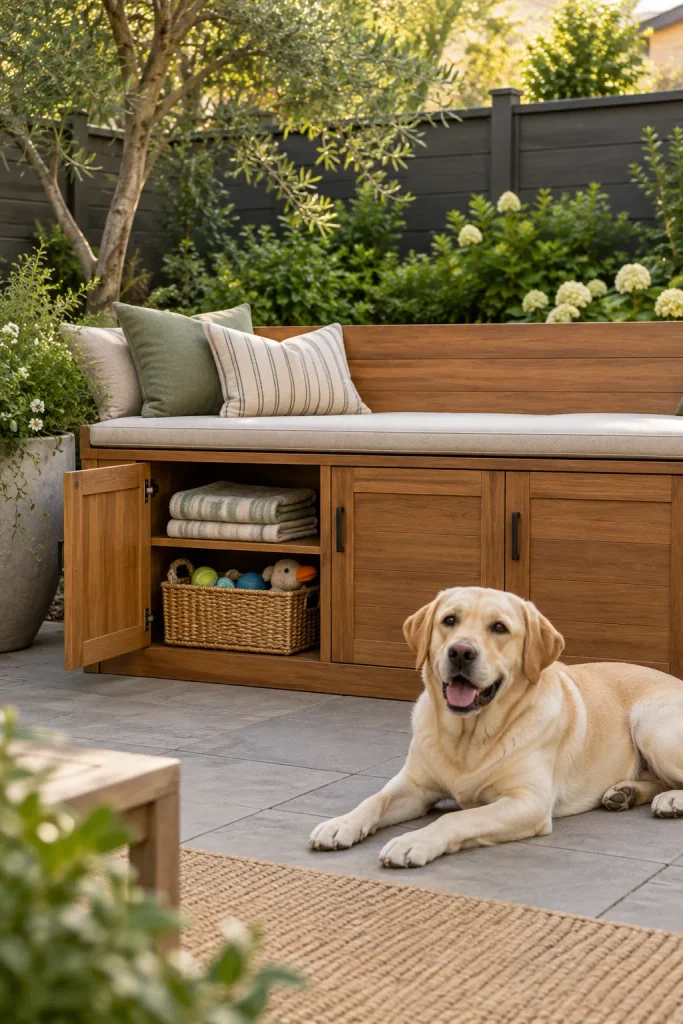
Towels, balls, spare bowls, and cleanup supplies can quickly make a patio feel crowded. A closed outdoor cabinet or storage bench gives those items a home. Choose a finish that repeats the fence or seating furniture, then organize the inside with washable containers.
Keep frequently used gear near the door so putting things away takes less effort. Dry damp toys and towels before storing them, and choose hardware that does not pinch curious noses or paws. Store chemicals, garden products, and anything harmful if swallowed separately in secure storage. One well-placed unit often works better than several baskets spread around the yard.
16. Soft Path Lighting for Evening Potty Trips
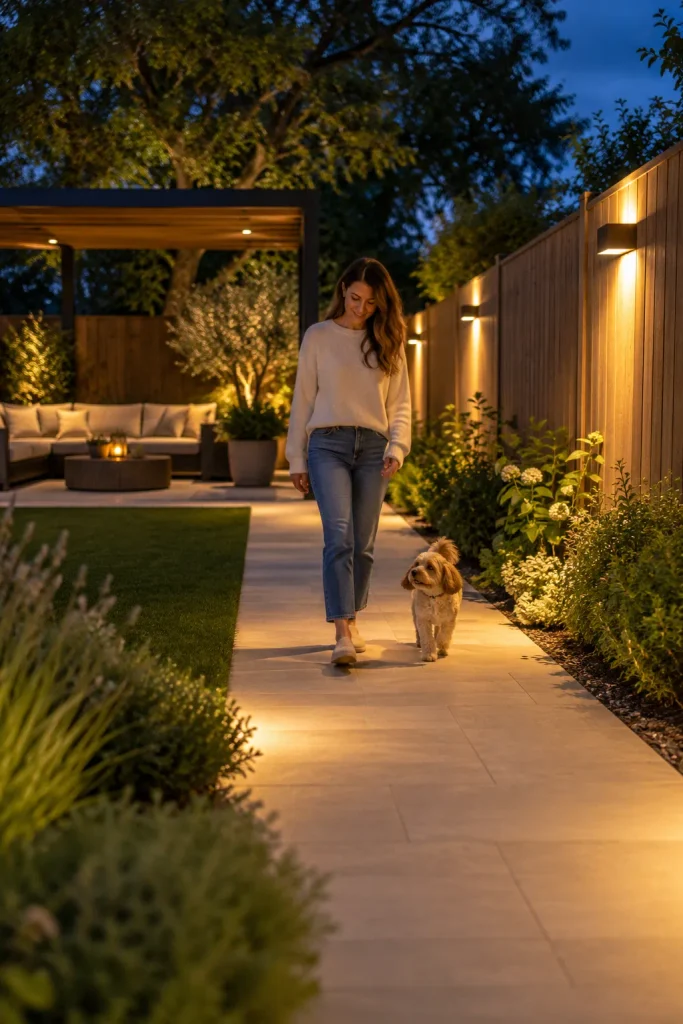
Subtle lighting makes the route from the back door to the yard easier to follow after dark. Shielded wall lights or carefully positioned fixtures can illuminate changes in level without flooding the entire garden. A warm glow also makes a modern patio feel more inviting in the evening.
Keep cables, small detachable components, and fragile fittings out of chewing reach. Position fixtures away from running lanes and check for distracting glare at your dog’s eye level. Use outdoor-rated equipment and have electrical work installed appropriately. Lighting helps you see the path and your dog, but the gate and perimeter still need routine checks.
17. A Compact Side-Yard Dog Run That Still Looks Designed
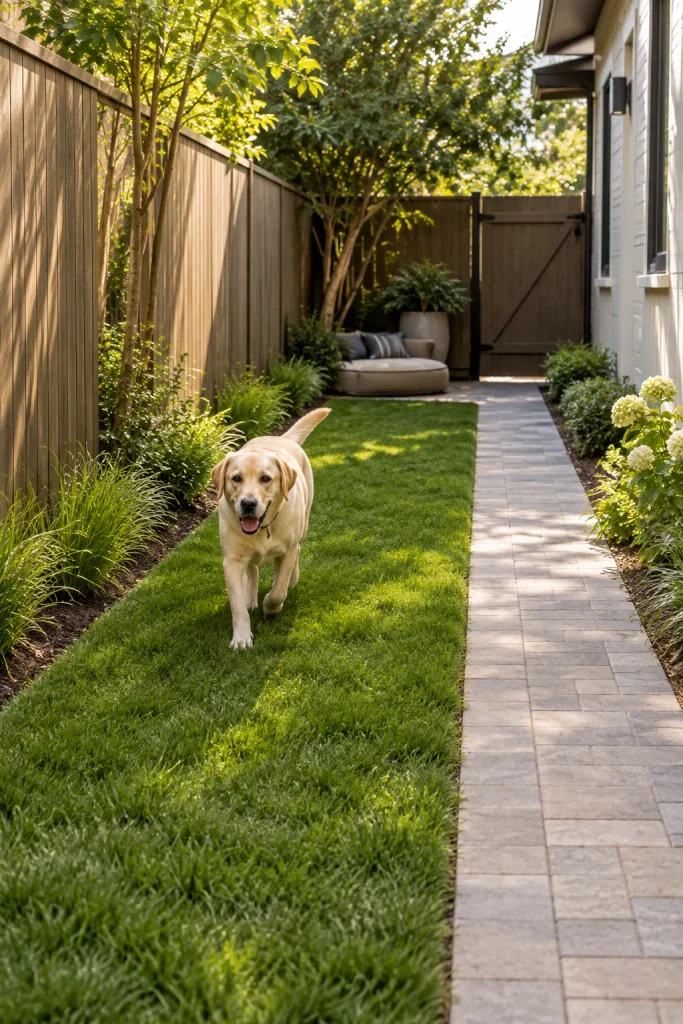
A narrow side yard can become a useful supervised outdoor zone when its layout stays simple. A continuous grass strip, an adjacent maintenance path, and a shaded resting end create a practical arrangement. Repeating the main backyard’s fence and paving helps the run feel connected to the rest of the property.
Avoid filling the passage with obstacles that leave too little room to turn. Check drainage, airflow, sun exposure, and secure gates before adding accessories. Keep equipment and utility access clear. A side-yard run can support bathroom breaks and short activities, but it should not replace walks, social time, or access to a comfortable indoor environment.
Which Idea Should You Start With?
Start with security and comfort: a sound boundary, reliable shade, fresh water, and usable footing. Then address your biggest everyday frustration. If muddy paws are the problem, focus on a clear route and rinse area. If the yard feels cluttered, add closed storage and simplify the layout. If your dog is bored, consider a sniffing route or supervised digging spot.
For the visual side, repeat two or three materials throughout the space. A warm fence, pale patio, and green lawn already form a complete palette. You can add practical features gradually without making every corner compete for attention.
Frequently Asked Questions
Is artificial grass a good choice for a dog-friendly backyard?
It can be suitable in some settings, but it is not maintenance-free or automatically cooler than paving. Artificial grass can become hot in sunlight, and a dog-use installation needs appropriate drainage and regular cleaning. Compare samples in your actual conditions and plan shade before committing. Natural grass has its own wear and maintenance tradeoffs.
Can I use gravel in a backyard for dogs?
Suitability depends on the material and the dog. Loose stones can be uncomfortable, scatter onto paths, or be swallowed by dogs who mouth objects. Avoid assuming that rounded gravel is safe for every pet. For an enthusiastic runner or a dog who eats stones, consider a different, stable surface and ask your veterinarian about the behavior.
How do I keep a small backyard stylish with a dog?
Keep the center open, combine compatible uses, and give everyday supplies one storage location. A seating area with a shaded dog bed, a modest grass section, and a clear route can be enough. Choose a few substantial features rather than many small accessories.
Which garden materials should I be cautious about?
Check plant species and keep garden chemicals, compost, and fertilizers inaccessible. Avoid cocoa mulch, which can be toxic if eaten. The ASPCA’s gardening guidance explains common planting and product hazards. Also inspect any surface for heat, traction, splinters, sharp edges, and loose pieces.
Make the Backyard Work for Both of You
The most useful modern backyard ideas for dogs start with ordinary routines: moving around comfortably, finding shade, getting a drink, and spending time together. Clean lines and coordinated materials help those practical choices look considered.
Choose one improvement that solves a real problem, then build from there. A backyard that supports your dog’s habits and gives you somewhere enjoyable to sit is a space you are both more likely to use.
Save your favorite ideas to your backyard inspiration board so you can return to them when you are ready to plan.