
A porch rug can look great on a sunny afternoon and become a soggy dirt collector after one storm. Add muddy sneakers, garden boots, and a dog that heads straight for the door, and choosing by color alone starts to feel expensive.
The better approach is to match the rug to the mess. A scraper mat tackles clumps of soil at the threshold. An outdoor area rug makes a seating corner comfortable and easier to style. Some materials tolerate getting wet, but that does not mean their backing should sit against a damp floor indefinitely.
These 15 front porch rug options focus on practical constructions and layouts, from open rubber grids to natural-looking synthetic flatweaves. They are material and design recommendations, rather than a ranking of products tested firsthand. Choose the option that suits your porch’s exposure, then check the specific product’s outdoor rating, cleaning instructions, and compatibility with your decking before buying.
1. Open-Grid Rubber Rugs for the Muddiest Entry
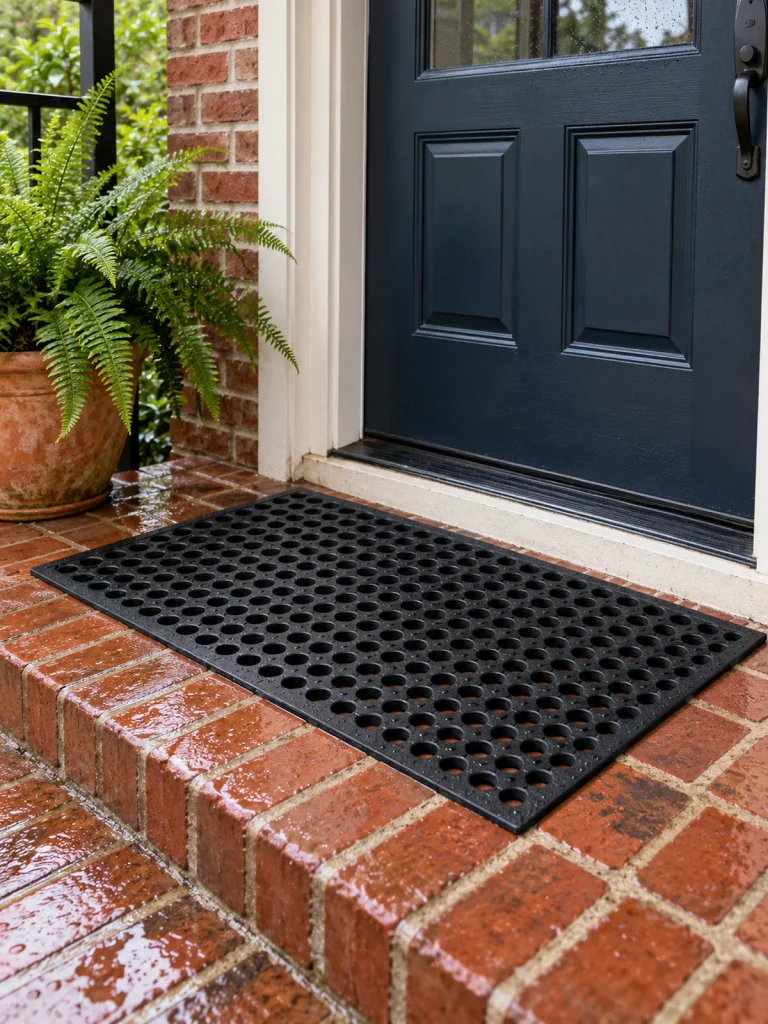
An open-grid rubber mat puts function first, with a dark, substantial surface that suits brick steps, concrete landings, and everyday family entrances. The openings let loose grit fall through and give water a route through the mat, provided the porch beneath can drain. That makes this construction worth considering for an uncovered doorway near a muddy yard. NoTrax
Look for a manageable size with finished, beveled edges and enough weight to lie flat. Lift it to remove the sediment underneath instead of letting debris fill the holes. This is a scraper rather than an absorbent rug, so follow it with a separate indoor drying mat. Check that openings suit the footwear and mobility aids used at your entrance.
2. Stiff-Bristle Scraper Mats for Garden Boots
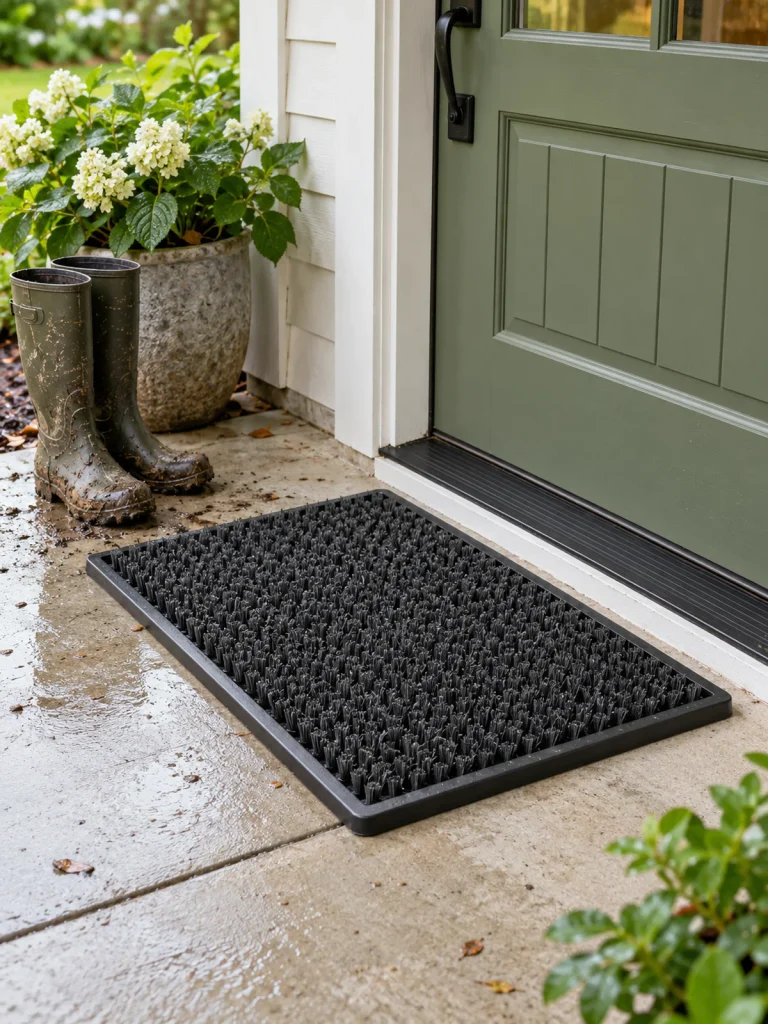
Short synthetic bristles make a compact scraper mat useful beside a porch where gardening shoes regularly arrive covered in soil. The upright texture looks more utilitarian than a woven rug, but it provides a purposeful boot-cleaning spot without covering much floor. A charcoal mat pairs easily with painted cottage doors and simple planters.
Choose an outdoor-rated construction whose base can be emptied and rinsed according to its care label. Place it on a level landing where someone can stand comfortably while wiping both feet. Empty trapped soil before it builds into a muddy layer. Bristles can feel rough on bare feet, so keep this option near the entrance rather than beneath a lounge chair.
3. Ribbed Polypropylene Mats for Busy Doorways
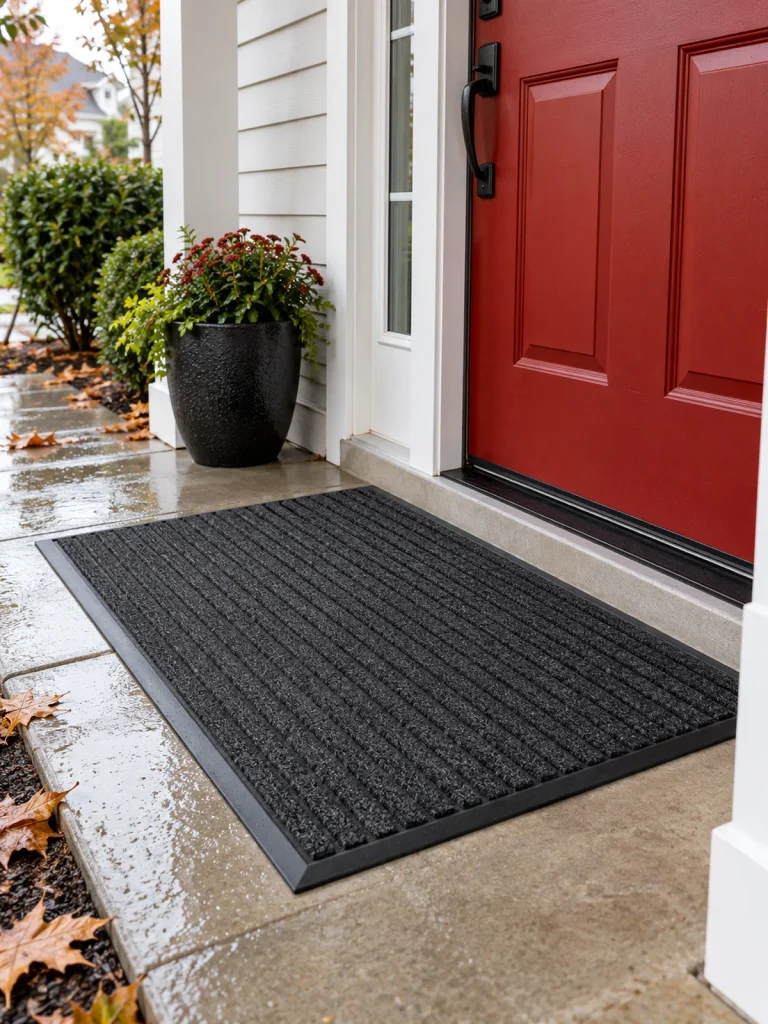
Parallel ribs give a low-pile polypropylene entry mat a tidy, understated appearance while adding texture for wiping shoes. A charcoal version works with bright front doors and visually recedes against a busy brick or stone exterior. This is a practical direction for an entrance that gets frequent foot traffic and occasional windblown rain.
Shop for a mat specifically approved for your exposure level, with firmly finished edges and a backing compatible with the porch floor. Brush or vacuum along the channels to remove grit, then use the cleaning method the manufacturer allows. Dense fibers and a solid backing can hold moisture between cleanings, making a roofed threshold a more forgiving location than a permanently wet landing.
4. Waffle-Texture Mats That Contain Wet Grit
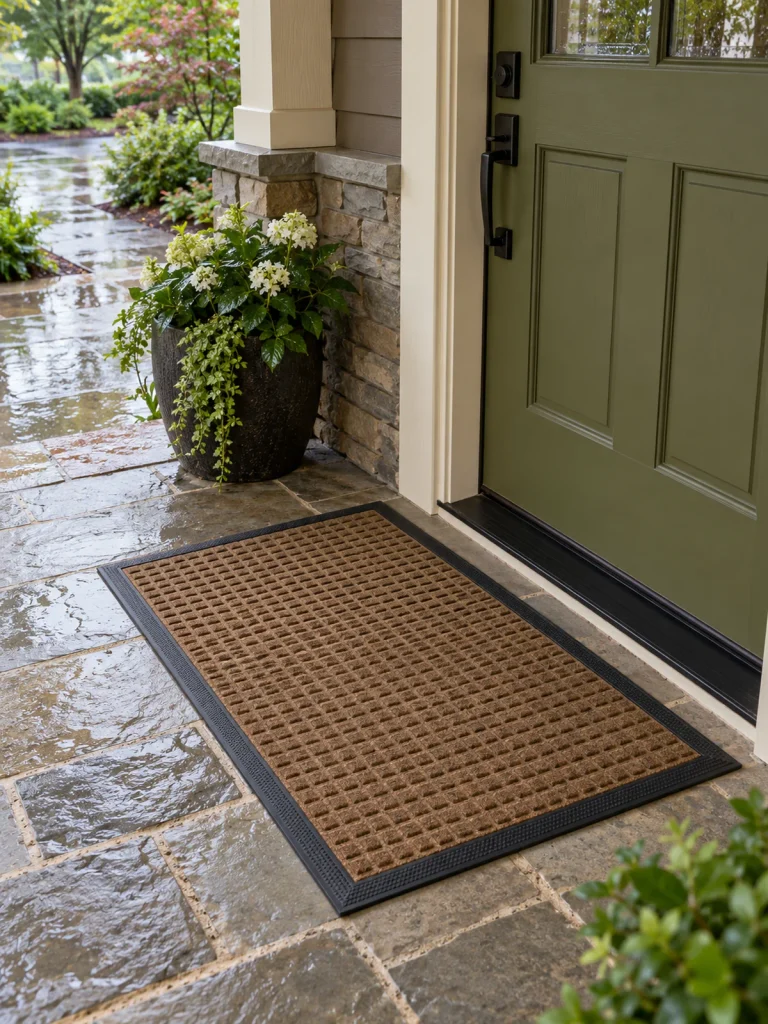
A recessed waffle pattern creates small pockets for the water and dirt shoes leave behind. Paired with a raised perimeter, the design can help keep everyday wet grit in one manageable area. Brown or olive tones look at home on a sheltered Craftsman porch without making the entry feel like a commercial hallway.
Check the specifications carefully: some water-containment mats have absorbent polyester faces, while others use different synthetic fibers. Their ability to collect moisture is useful under cover, but continuous rainfall can overwhelm that function. Select a size that gives both feet room to wipe, and empty or clean it before the pockets fill. Let the mat and the floor beneath dry before putting it back.
5. Vinyl-Loop Mats for a Modern Entrance
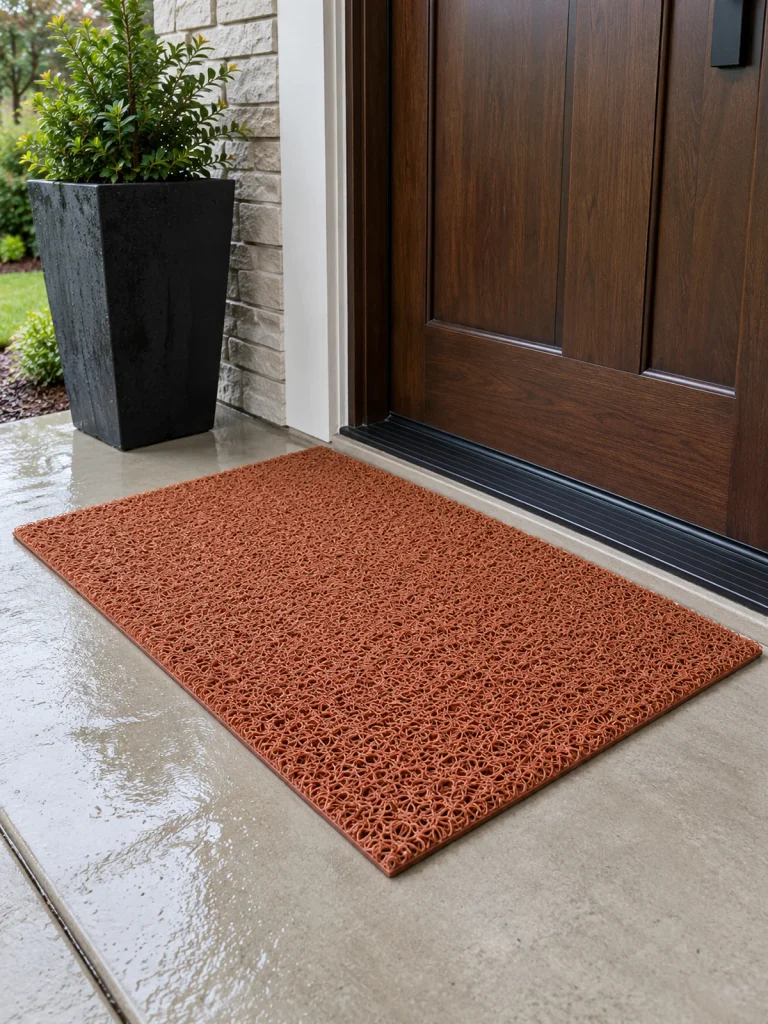
A vinyl-loop mat brings springy, tangled texture to a clean-lined entry. Terracotta, gray, or muted blue gives a concrete porch some color without needing fringe or a thick pile. Outdoor-rated versions offer a different look from bristly utility mats while still providing texture for wiping off loose debris.
Choose the specific mat for outdoor use, since a similar-looking indoor floor covering may have different placement requirements. Shake out trapped grit and hose it only when the care instructions permit. Some vinyl-loop mats have solid backings, so do not assume their open-looking surface makes the entire mat drain through. Check floor compatibility, especially on composite decking, and lift the mat regularly to let both surfaces dry. chilewich.com
6. Rubber Scrollwork Mats for a Traditional Stoop
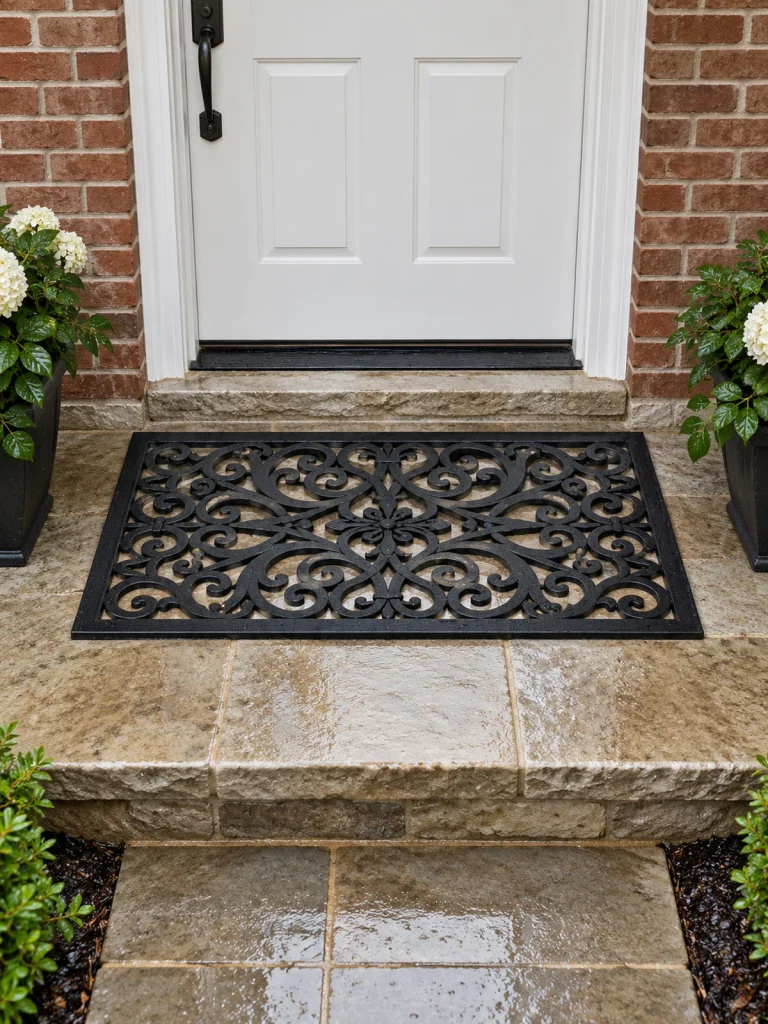
Open rubber scrollwork offers a more decorative alternative to a plain drainage grid. Black curls and cutouts complement white doors, older brick homes, and stone stoops while leaving much of the flooring visible. It is a useful choice when an exposed entrance needs a washable mat that does not look like a workshop accessory.
Prioritize a sturdy, outdoor-rated piece with a flat perimeter rather than delicate edges that curl upward. The cutouts let debris fall below, so cleaning includes sweeping underneath. Decorative openings also make this a poor substitute for an absorbent wiping surface. Check whether narrow heels, cane tips, or small wheels could catch in the pattern before choosing it for the main doorway.
7. Plastic-Straw Rugs for a Rain-Exposed Sitting Area
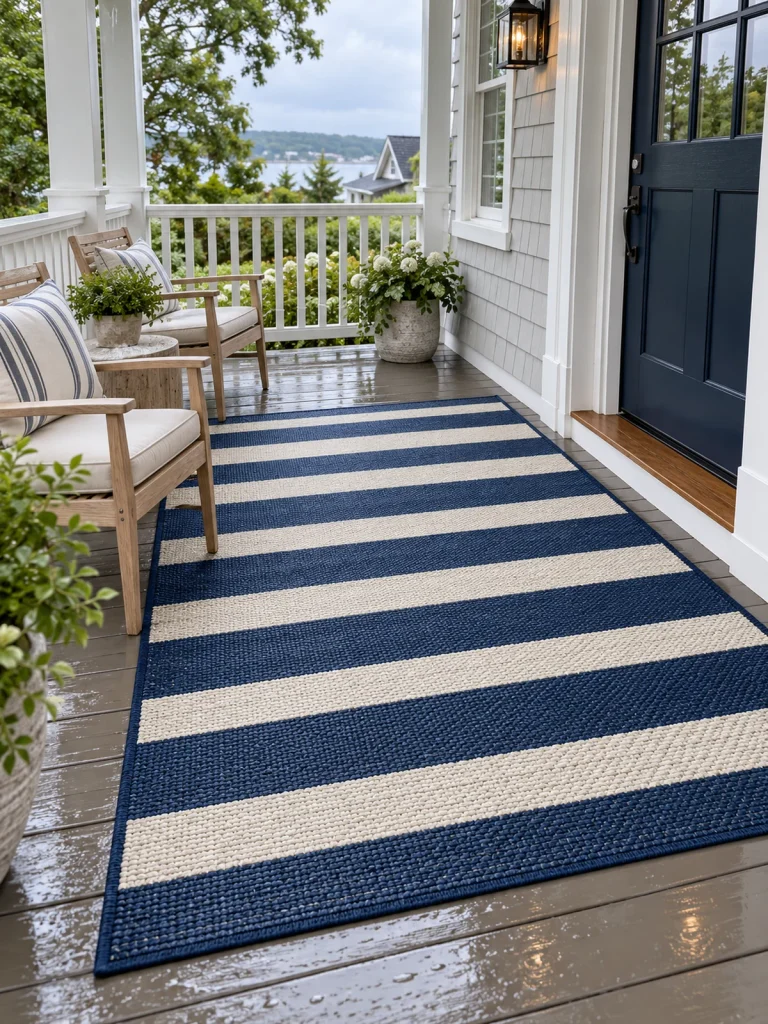
Woven plastic-straw outdoor rugs give a porch seating area an easygoing look, especially in broad navy-and-cream stripes. Their smooth, visibly synthetic strands suit a space where rain occasionally blows across the floor and a soft indoor-style rug would be difficult to manage. Keep the rug in the sitting zone, with a separate scraper by the door.
Look for explicit outdoor and UV-resistance specifications rather than relying on the word “plastic.” Fab Habitat’s care guidance for its outdoor rugs allows water and mild detergent followed by hanging to dry. Follow the instructions for the exact rug you buy. Lightweight versions may shift or lift in gusts, so choose a compatible outdoor anchoring approach and bring them in during severe weather. fabhabitat.com
8. Reversible Geometric Rugs for Easy Seasonal Changes
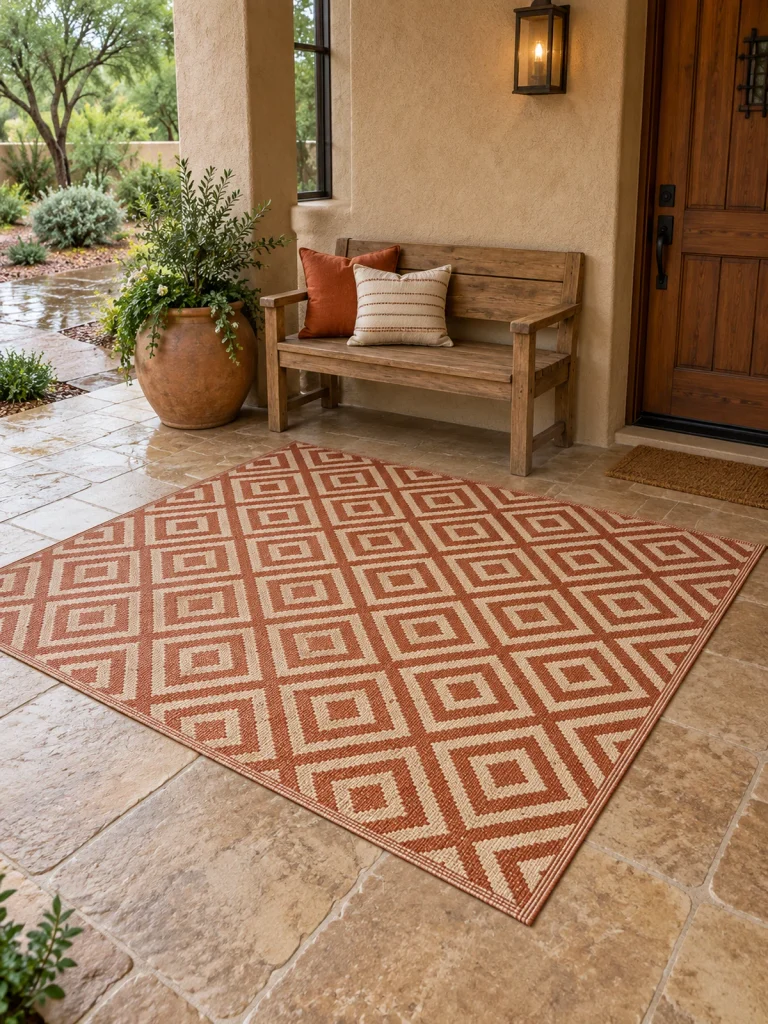
A reversible woven plastic rug adds a lively pattern while giving both sides a useful role. Rust-and-cream diamonds work well against stucco, clay pots, and simple wood seating. Reversibility is especially handy where one side receives more sun or where you want to rotate the rug’s appearance without replacing it.
Confirm that both faces are intended for use and that the listing describes the actual material. Recycled plastic strands and recycled polyester yarn are different constructions with different care needs. Clean and dry the rug before flipping it; turning a muddy face downward simply transfers the mess to the porch. This style belongs in a seating area with manageable dirt, while a scraper handles clumps of mud at the threshold.
9. Faux-Sisal Rugs for a Natural Look Without Jute
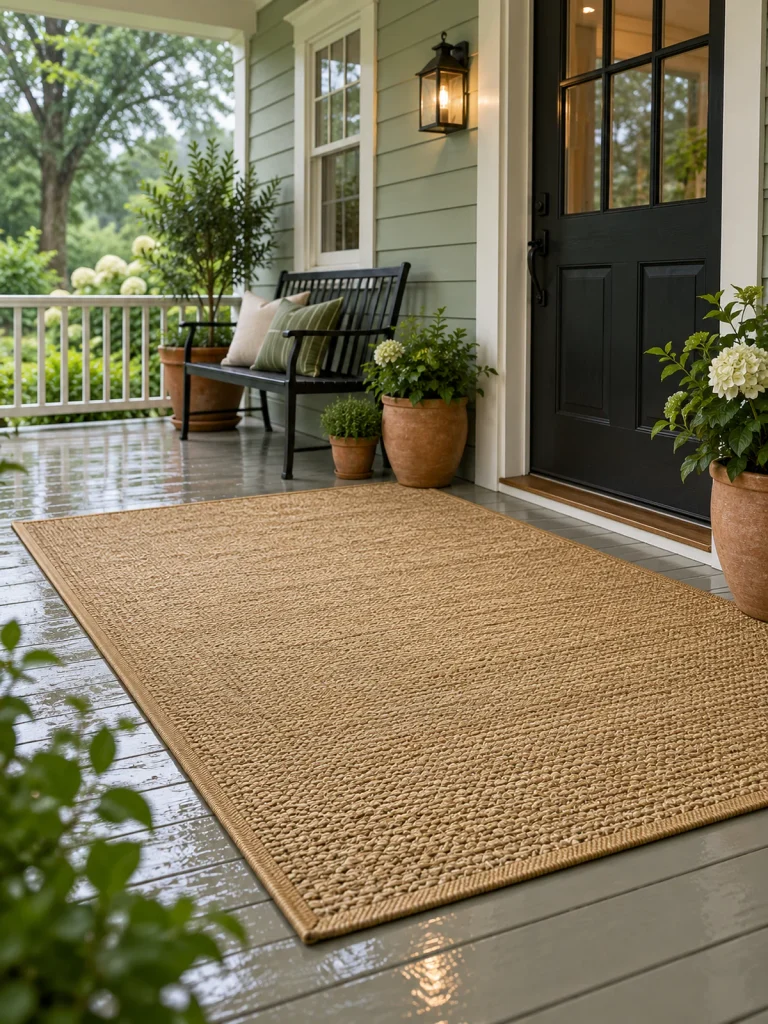
Warm tan synthetic flatweaves provide the relaxed texture people often want from jute or sisal, with outdoor-rated options available for porches. The look fits a farmhouse bench, pale siding, and terracotta planters without adding a strong pattern. Inspect the fiber label rather than assuming a natural-looking rug contains natural fibers.
IKEA’s LYDERSHOLM, for example, lists a polypropylene surface and synthetic-rubber backing, with instructions to rinse after gentle cleaning and dry fully before use. That illustrates why backing matters as much as appearance. Choose a similarly specified outdoor construction for your exposure level, and avoid leaving it over persistent dampness. Expect a firm woven texture rather than the cushion of an indoor plush rug. IKEA
10. Heathered Flatweaves That Make Everyday Dirt Less Obvious
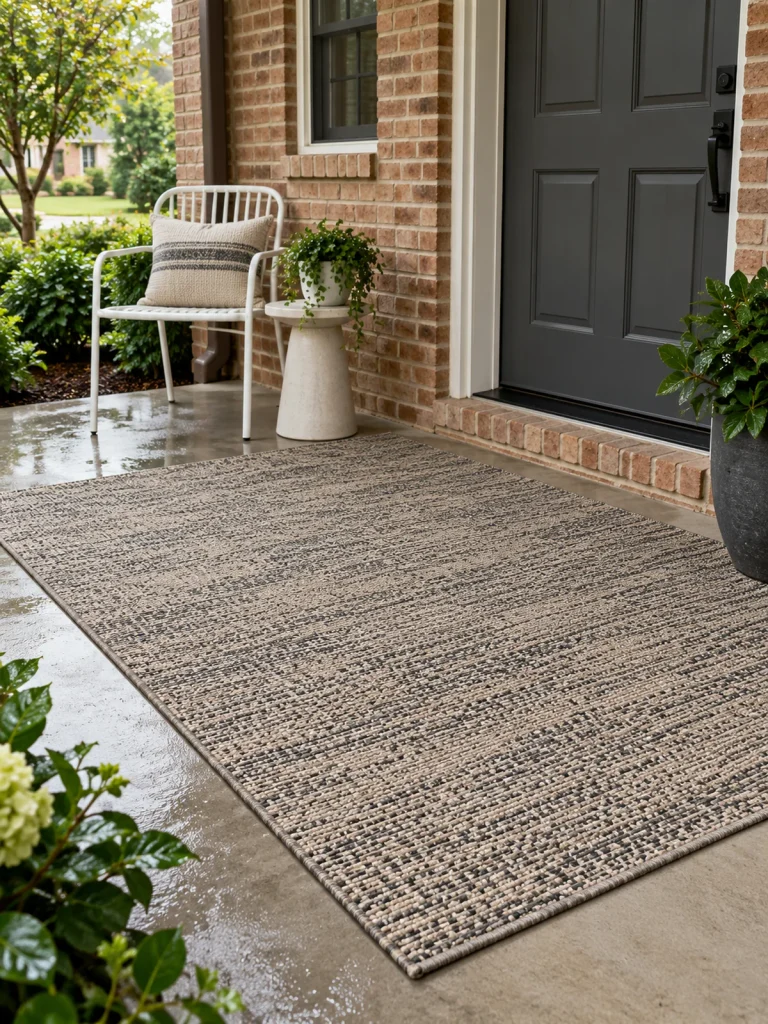
Mixed taupe, gray, and charcoal yarns create a quieter surface than a bold print while making scattered specks less noticeable. A heathered outdoor flatweave suits a small brick ranch porch, particularly when the furniture and trim already bring plenty of visual detail. Its understated texture can carry through different seasons without a full decor change.
Choose an outdoor-rated, low-profile weave and inspect the underside before buying. A mottled color helps with appearance; it does not remove dirt or change how well the rug tolerates moisture. Sweep frequently so hidden grit does not accumulate. This is a comfortable-looking option for a covered sitting corner, with a dedicated entry mat taking the heavier mud.
11. Outdoor Runners for Long, Narrow Porches
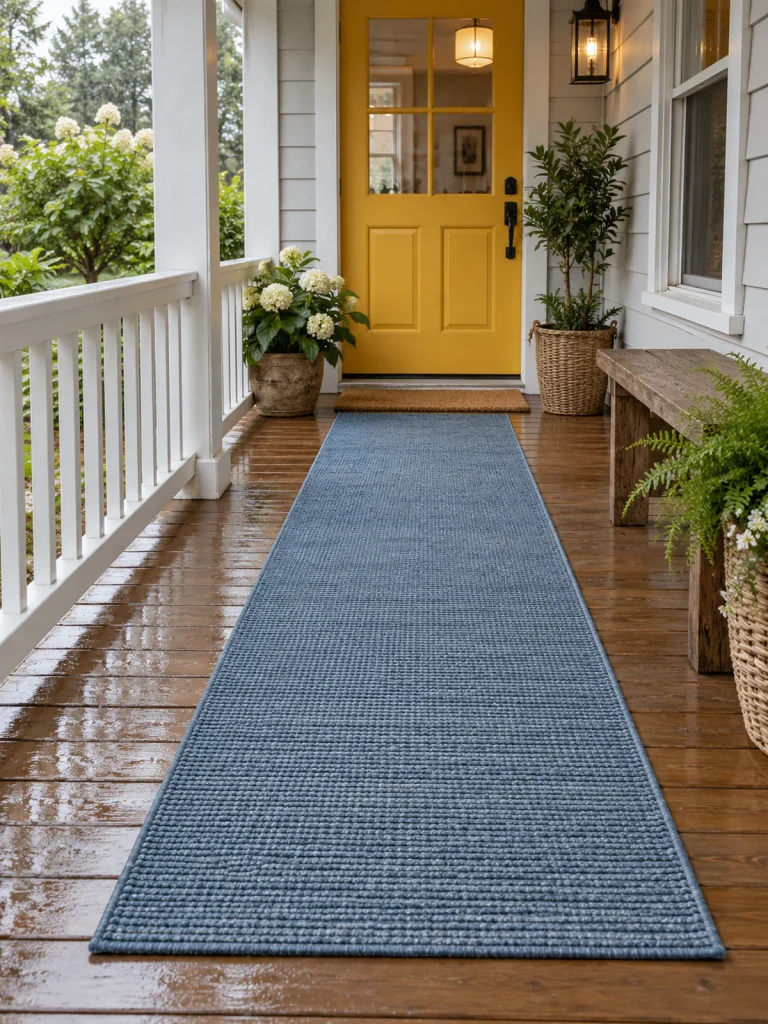
A slim outdoor runner can make a long porch feel intentional without squeezing an oversized rug between the wall and railing. Muted blue or gray works with white trim and lets a colorful front door remain the focal point. Leave visible flooring along both sides so the runner reads as a deliberate pathway.
Measure the entire route, including door swings, steps, and any change in floor level. Choose a low-profile outdoor synthetic construction that lies flat without crossing a stair edge. Avoid a size that leaves a loose corner directly where people turn toward the door. Because runners sit in a walking route, secure them with a floor-compatible outdoor solution and remove them if they move or curl.
12. Round Outdoor Rugs for a Separate Conversation Corner
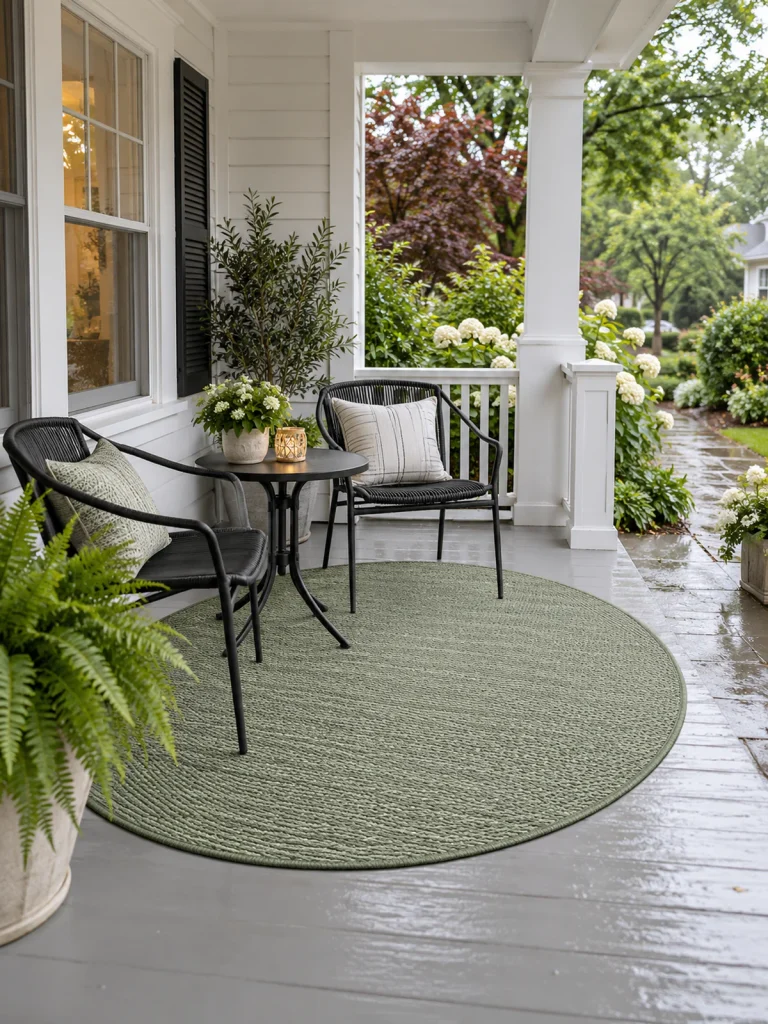
A round rug softens the straight lines of porch railings and gives two chairs a distinct place to gather. Sage green feels quiet beside white siding and black metal furniture. This shape works best on a wide porch where the sitting area can remain separate from the wet route to the front door.
Choose an outdoor-rated synthetic flatweave, then size it so the chairs remain stable during ordinary use. Keep the rug edge out of the main walking path and allow space to move around the furniture. The curve does not offer any special weather resistance; the material, backing, and drying conditions determine that. Use this option for a conversation corner rather than a boot-wiping station.
13. Botanical Polypropylene Rugs for Leafy Porches
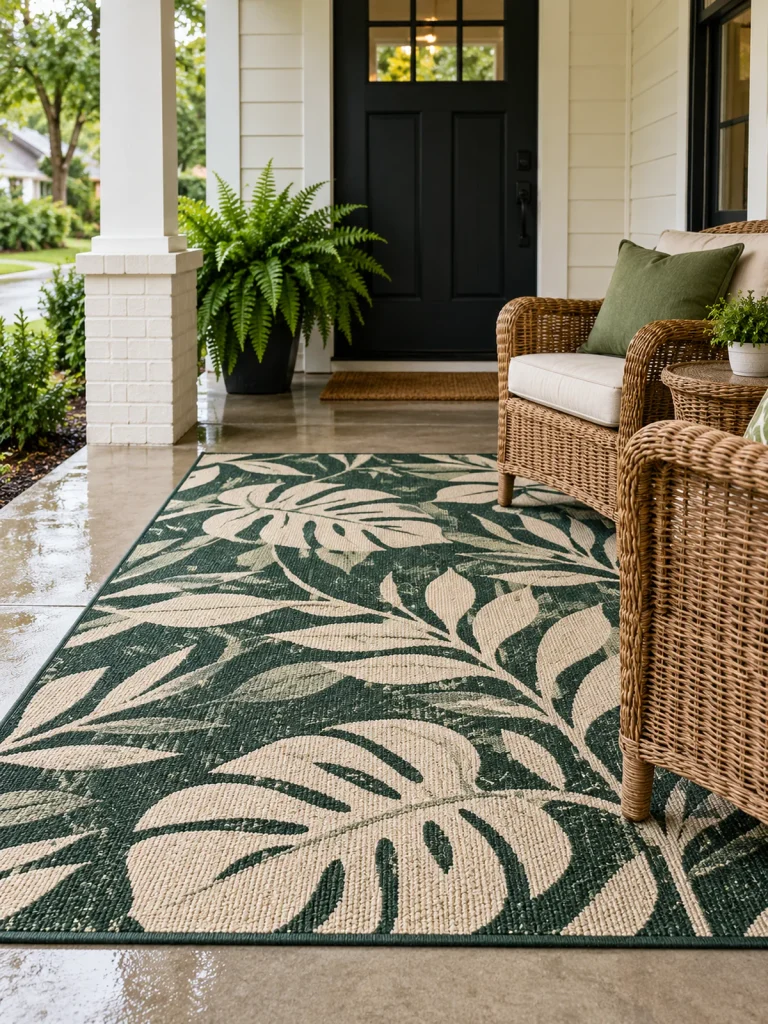
A broad leaf pattern introduces garden color without needing rows of pots around the door. Forest green and cream can connect a small wicker seating set to the planting beyond the porch. Choose an outdoor polypropylene rug with a low pile so the design remains practical to sweep between deeper cleanings.
For a rainy location, confirm the product’s outdoor placement instructions and how the backing should dry. The botanical print may make a few fallen leaves less obvious, but damp foliage still needs to be cleared promptly. Keep planters on suitable stands or trays rather than letting wet pot bottoms sit on the rug. Use a darker, smaller scraper at the door if muddy shoes cross this space regularly.
14. Bordered Outdoor Rugs for a Defined Seating Zone
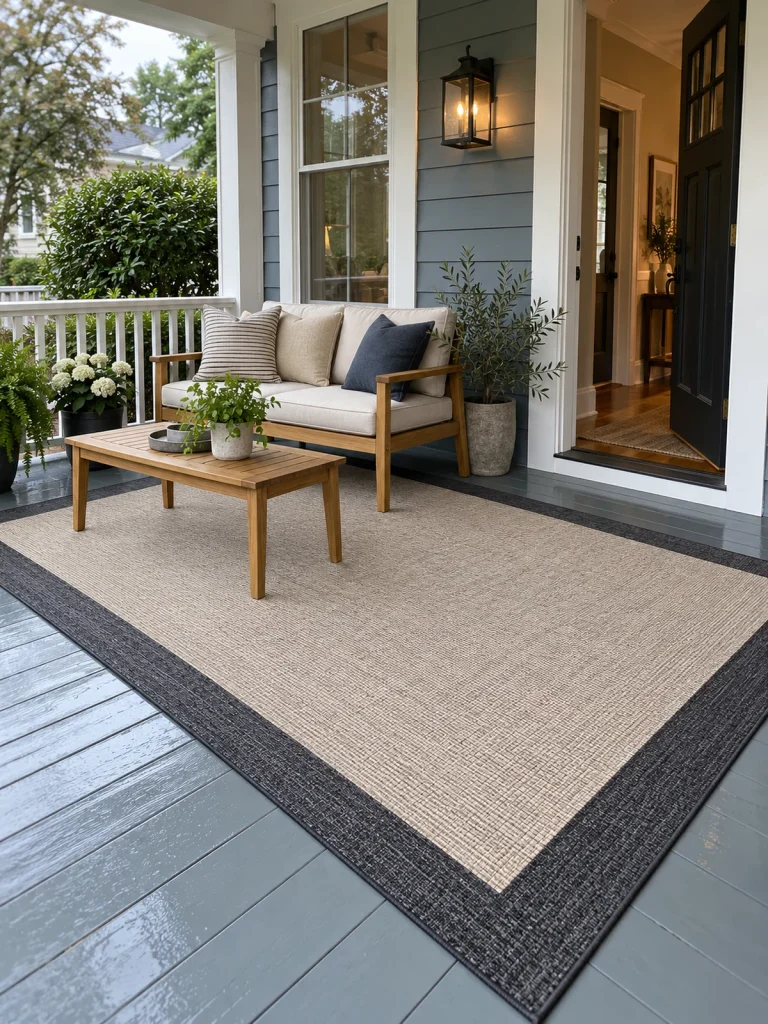
A charcoal border around an oatmeal field gives a porch seating group a clear outline. It works particularly well with a simple loveseat and narrow coffee table, creating a finished arrangement without a large decorative print. The defined perimeter also makes it easier to judge where furniture belongs when setting up the space.
Look for a tightly woven outdoor synthetic rug with firmly bound edges. Size it around the furniture rather than stretching it into the doorway to fill the porch. Pale centers show muddy footprints, so reserve this design for seating reached after shoes have been wiped. Lift furniture as needed for cleaning, and check beneath the rug after wet weather instead of judging dryness from the top alone.
15. A Scraper Mat and Outdoor Rug for Two Separate Jobs
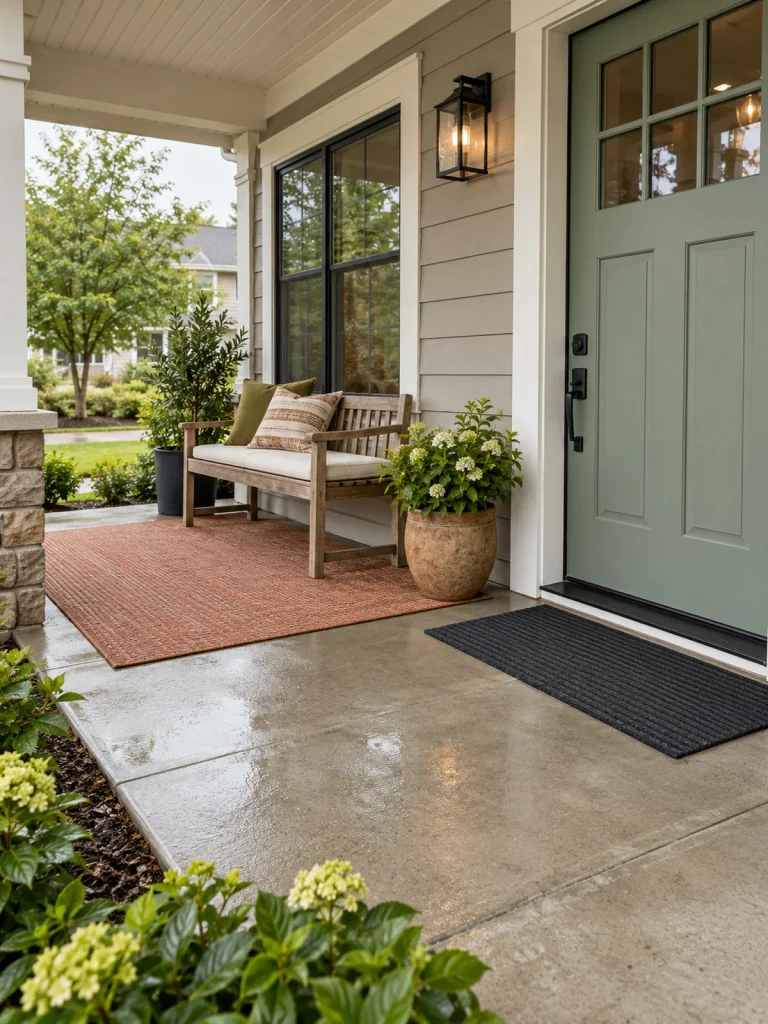
A two-zone arrangement solves a problem a single decorative rug often cannot: catching mud while keeping the sitting area inviting. Place a compact scraper at the front door and a separate outdoor flatweave under the bench or chairs. A charcoal mat and muted terracotta area rug feel coordinated without needing matching patterns.
Leave a clear gap of exposed flooring between them rather than stacking the rugs. That makes each piece easier to lift, clean, and dry, and avoids adding thickness at the threshold. Choose each construction for its job and exposure level. This approach suits wider porches especially well, but on a tiny landing, prioritize one effective entry mat over squeezing in both.
Check These Details Before Buying a Porch Rug
Start with exposure. An uncovered landing needs a product explicitly approved for direct outdoor weather. A covered porch still gets windblown rain, but it gives absorbent entry mats and woven seating rugs more opportunity to dry. “Washable” describes cleaning, not permission to leave a rug outside.
Read the entire construction label, including backing. A synthetic face does not guarantee that the underside drains, and a drainage mat cannot fix a floor where water pools. Check the porch-floor manufacturer’s rules for rubber, latex, pads, and adhesives before choosing a backing or grip product.
Measure with the door fully open and closed. The combined thickness of rug and any pad must clear the door, and the edges should remain flat through normal foot traffic. Keep all rugs on level flooring, away from stair edges.
Finally, plan for cleaning underneath. Remove loose grit, follow the product’s washing instructions, and let both rug and floor dry. Store the rug during prolonged wet spells when it cannot dry properly. Outdoor-rated materials still need maintenance.
Frequently Asked Questions
What rug material works best on an uncovered front porch?
Outdoor-rated open rubber mats are a practical starting point for scraping and drainage. For a seating area, consider an outdoor-rated woven plastic or polypropylene rug. Check the specific backing, weather limits, and floor compatibility before choosing.
Can an outdoor rug stay outside in the rain?
Some can tolerate rain, but the product’s instructions control. Lift it after wet weather, clear debris underneath, and allow the floor and rug to dry. Bring it in when prolonged rain prevents drying or the manufacturer recommends storage.
Is a washable indoor rug suitable for a covered porch?
Only if the manufacturer approves outdoor placement. Machine washing does not establish resistance to sun, windblown rain, or outdoor dampness. A covered porch can still expose an indoor-only backing to conditions it was not designed for.
Will a black rug hide mud better than a lighter one?
Black can disguise dark wet marks, but pale dried soil may stand out sharply. A medium brown or heathered surface can make mixed everyday dirt less conspicuous. Choose for cleaning performance first, then match the color to your local soil.
Should I layer a doormat over an outdoor rug?
Check clearance, movement, and drying before layering. Stacked pieces add thickness and can hold moisture between layers. On a wet porch, separating a scraper from the seating rug is usually easier to maintain. A small landing may only need the scraper.
Choose for the Mess Your Porch Actually Gets
Start at the threshold. For muddy boots and an exposed landing, prioritize a suitable outdoor scraper that is easy to lift and clean. For a porch used mainly for sitting, choose an outdoor synthetic rug that fits the furniture and has space to dry. When you need both functions, give each its own zone. The right material helps, but a clear walkway and a realistic cleaning routine make the setup work day after day.