
The wall just inside the front door often has to do several jobs at once. You see it every time you come home, but it may also sit beside a swinging door, a narrow walkway, or the spot where everyone drops their keys. In a tall foyer, that same wall can look bare even after you hang your favorite print.
Your layout can narrow the field of entryway wall decor ideas before you buy a thing. Some use its full height, some add storage or light, and others give one everyday object, like a mirror or bench, a clear place in the room.
1. Use a Round Mirror to Soften the Entry
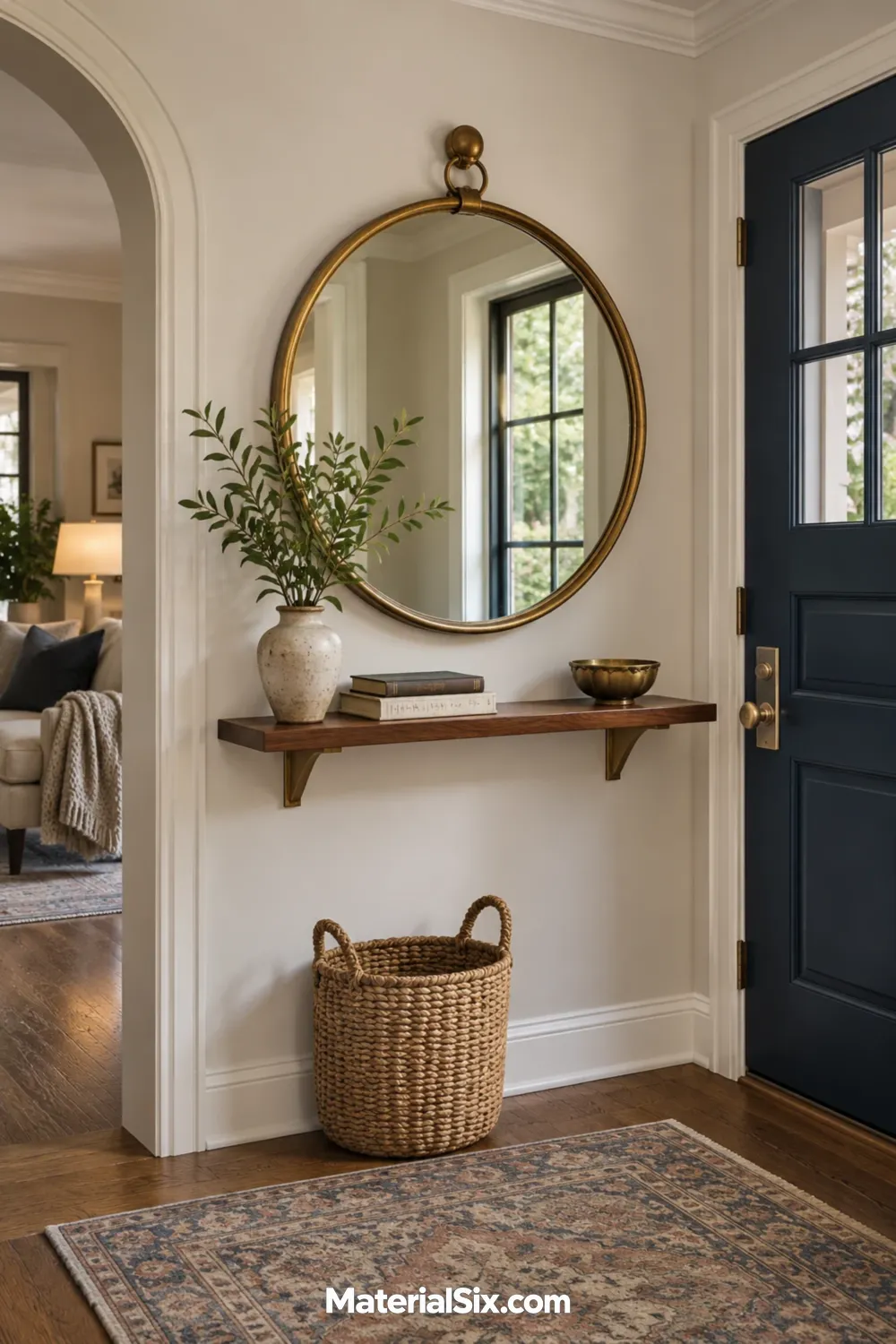
A round mirror is especially useful where the door, trim, and flooring create a grid of straight lines. Before you hang it, hold it at two heights and check the reflection from the front door. A view of the window or a finished wall can feel more intentional than a reflection of the pile you plan to carry upstairs.
2. Give One Oversized Landscape the Whole Wall
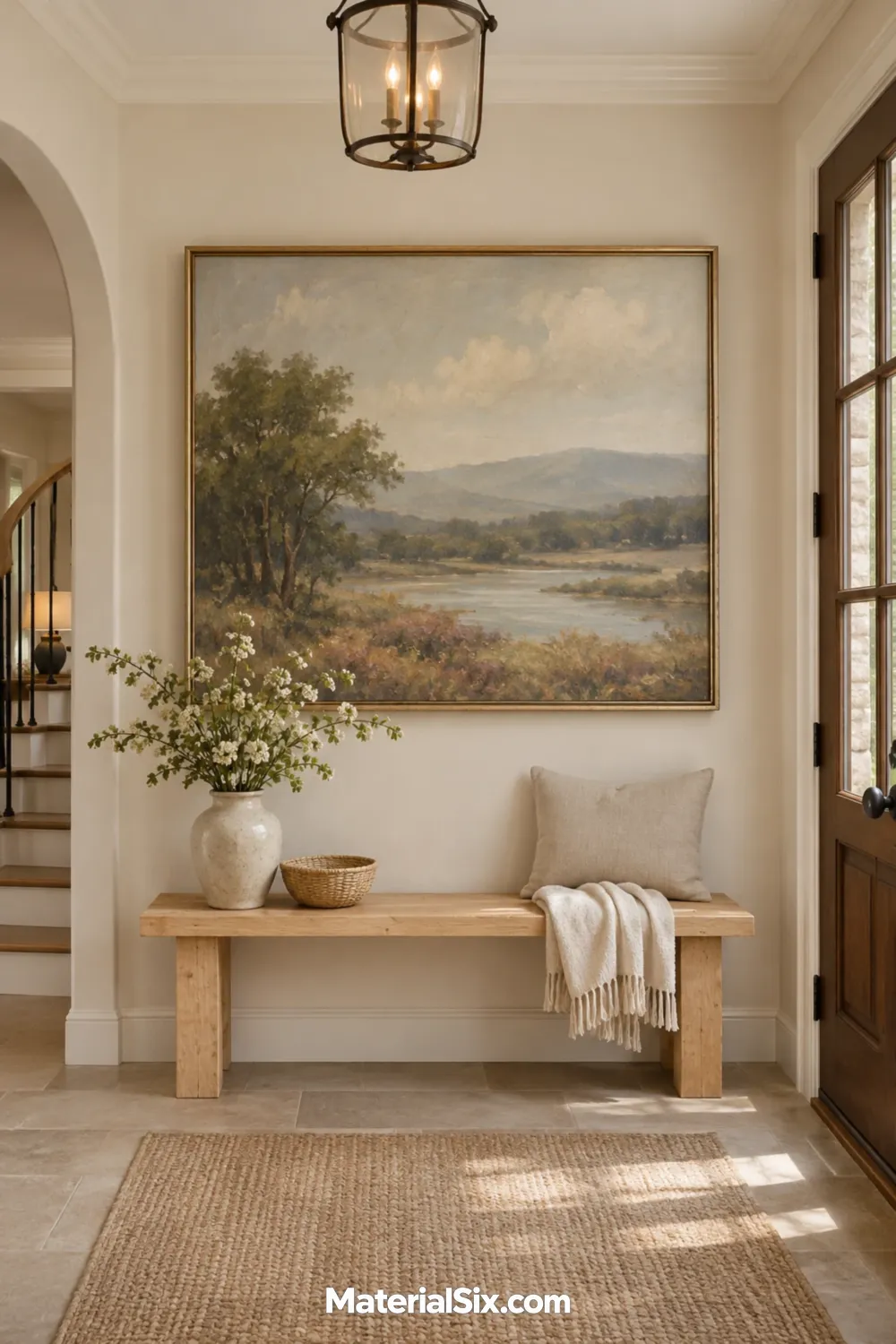
One large landscape can carry a wall you mainly see from across the room. Pick a piece whose main shapes still read from the doorway. Above a short bench, line up the painting with the bench so they read as a pair, even if the wall extends unevenly on either side.
3. Follow the Stairs With a Family Gallery
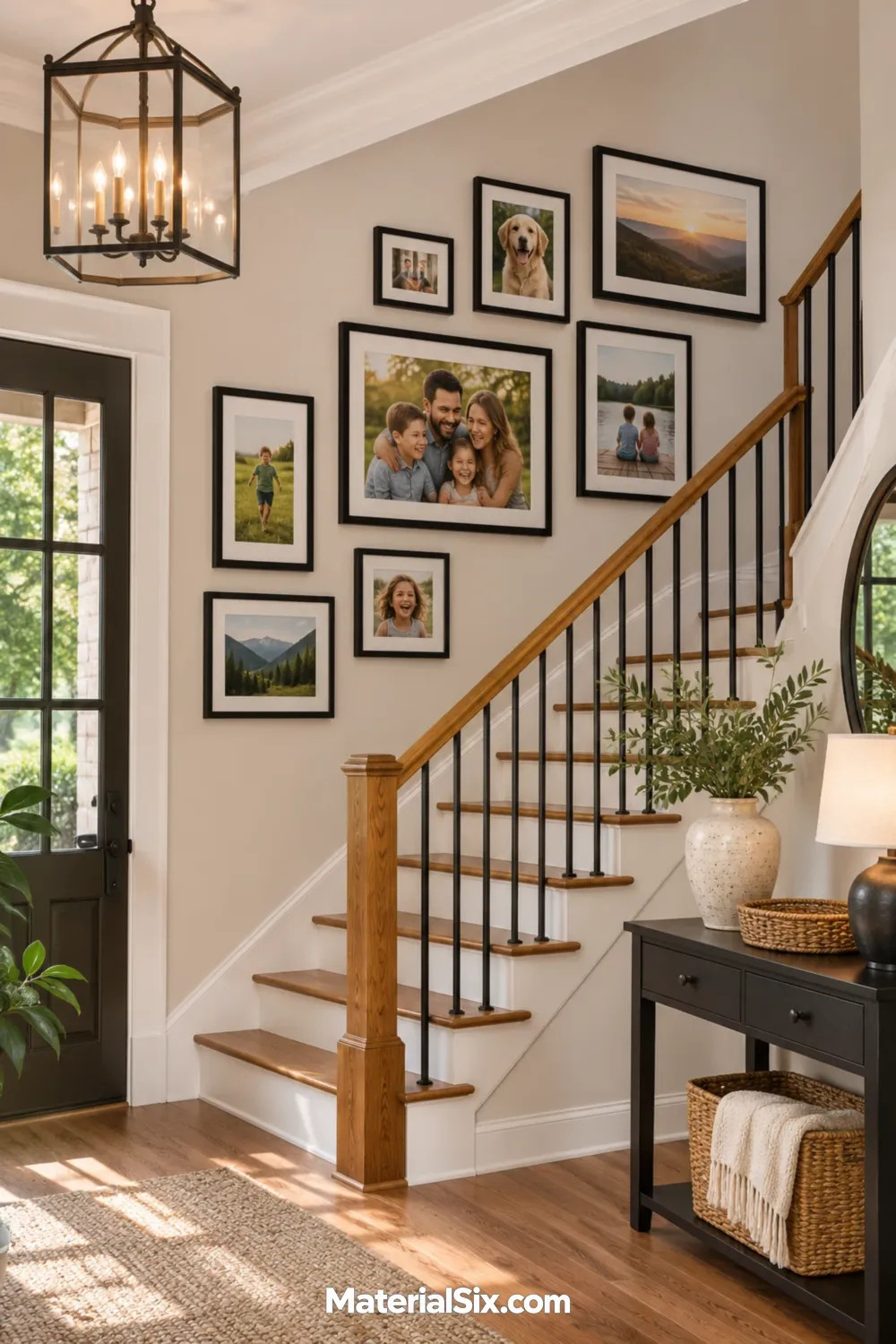
A staircase gallery can feel scattered when every frame follows a separate angle. Arrange the largest photographs along an imaginary diagonal that rises with the stairs.
Fill the gaps with smaller frames, checking how the group looks from both landings. Paper cutouts make it easier to adjust spacing around the handrail and the switch plate before hanging the actual frames.
4. Layer Art on Shallow Picture Ledges
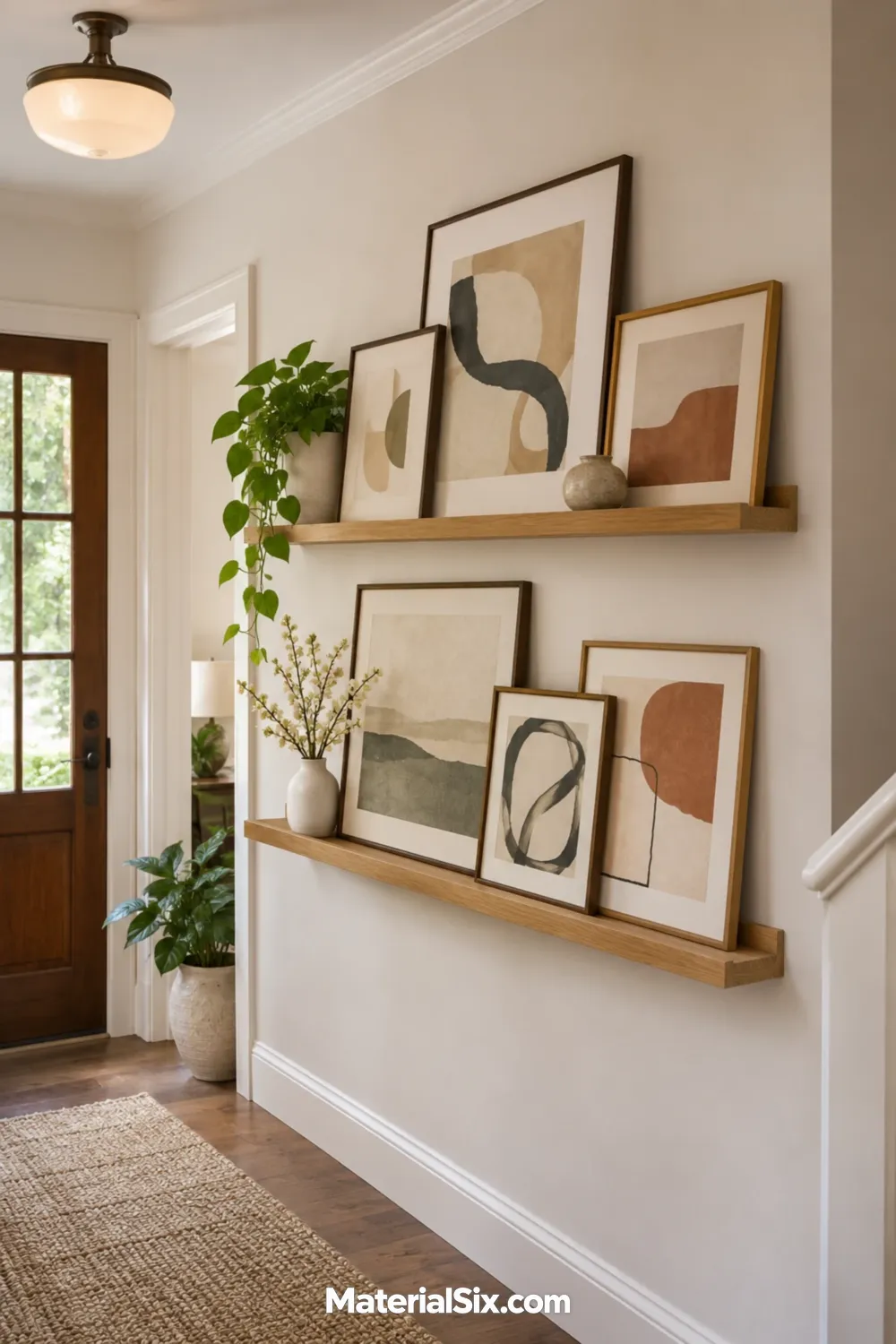
Picture ledges let you swap the front print without rearranging every frame. Set the taller pieces at the back and overlap only the edges so the artwork stays visible. In a narrow passage, measure how far the ledge and leaning frames project when you walk past with a tote on your shoulder.
5. Wallpaper the Recess by the Door
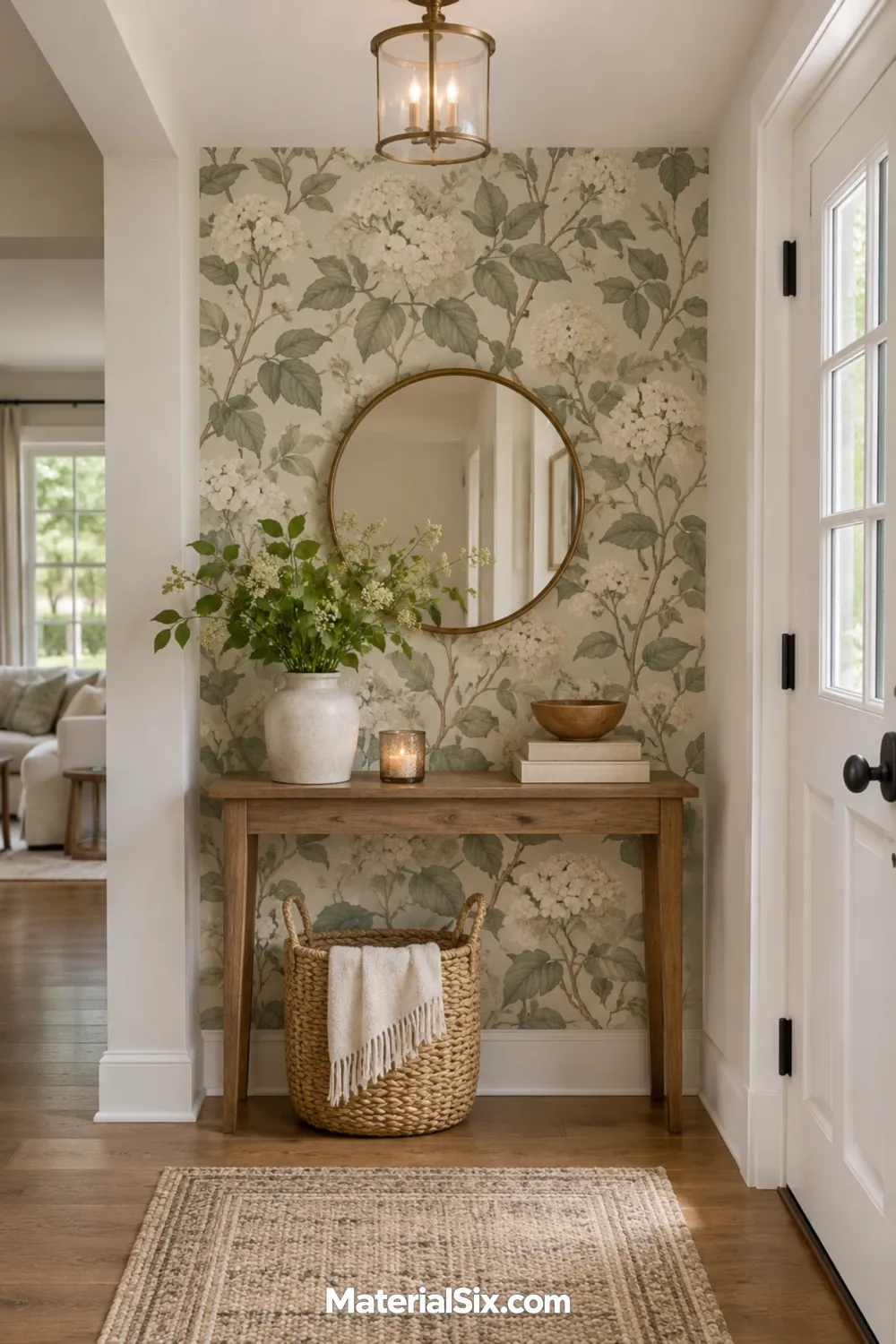
Let a recess or inside corner mark the stopping point for bold wallpaper. A small patterned section can feel finished when the adjacent paint picks up a quiet color from the print. Check a sample with the door shut and the entry light on, since colors may look different from their appearance in an adjacent sunny room.
6. Add Painted Beadboard Below the Sight Line
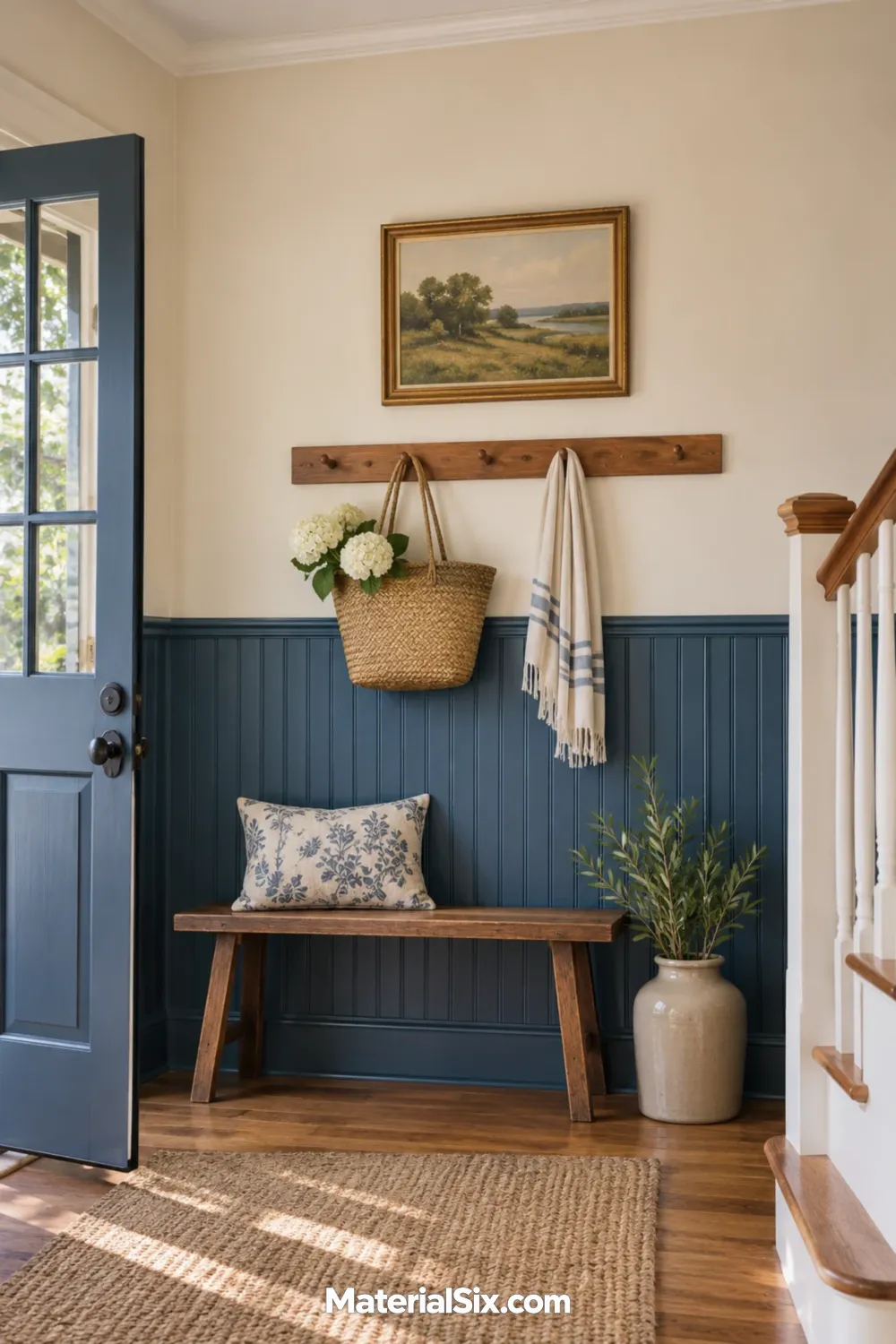
Painted beadboard gives a plain entry a strong horizontal line and adds detail close to the floor. Mock up the top edge with painter’s tape, then see how it meets the door casing and any nearby bench or switch.
Choose the stopping height with those existing lines in view. A darker lower color can anchor the space while a warm cream above picks up light from the adjoining rooms.
7. Hang a Peg Rail Over the Boot Bench
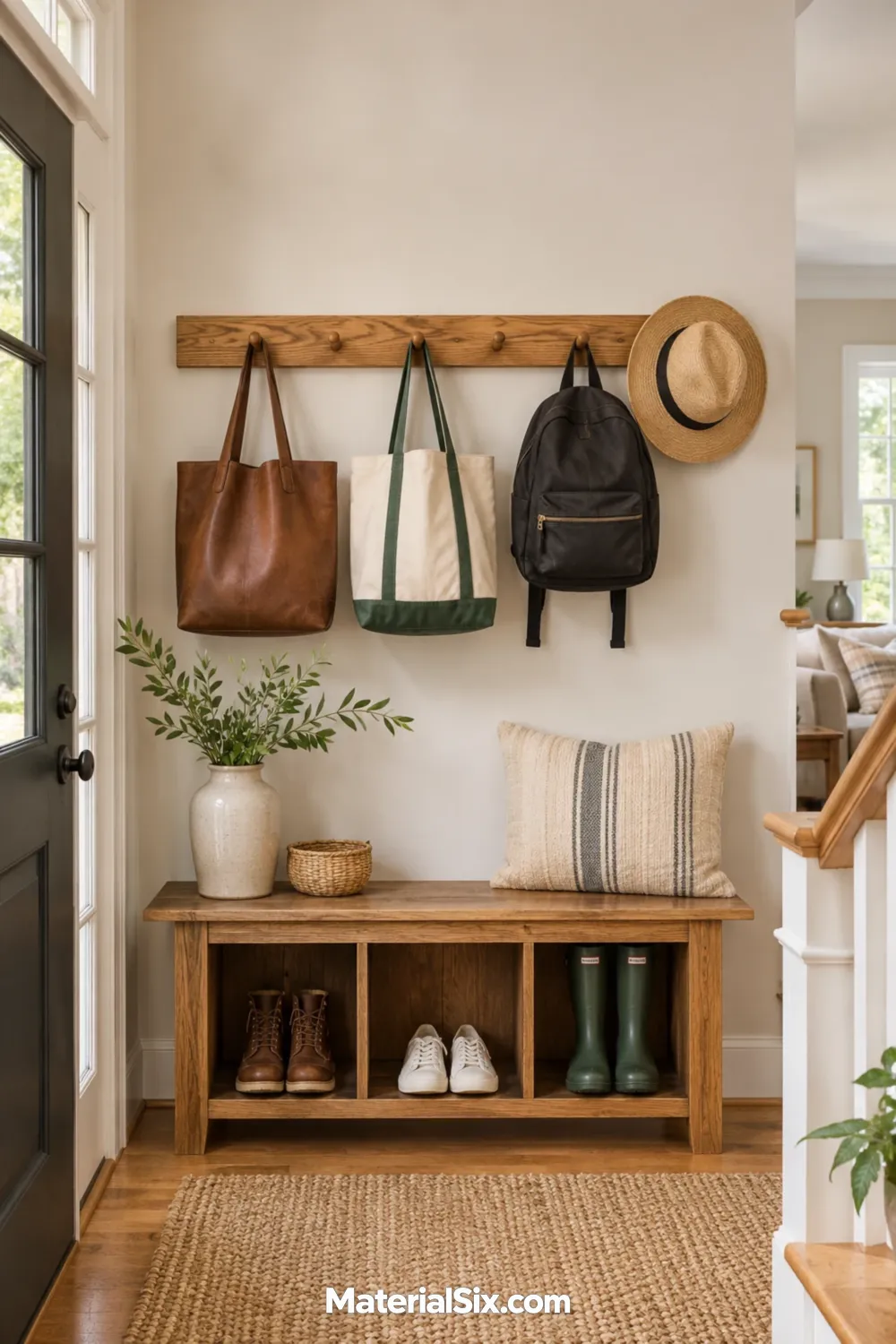
Give the everyday bags a row of pegs directly above the place you take off your shoes. Test the longest strap while someone is seated so the bag clears their shoulder. A little empty space at one end leaves room for guests or the bag you pack the night before.
8. Set Up a Wall-Mounted Mail Drop
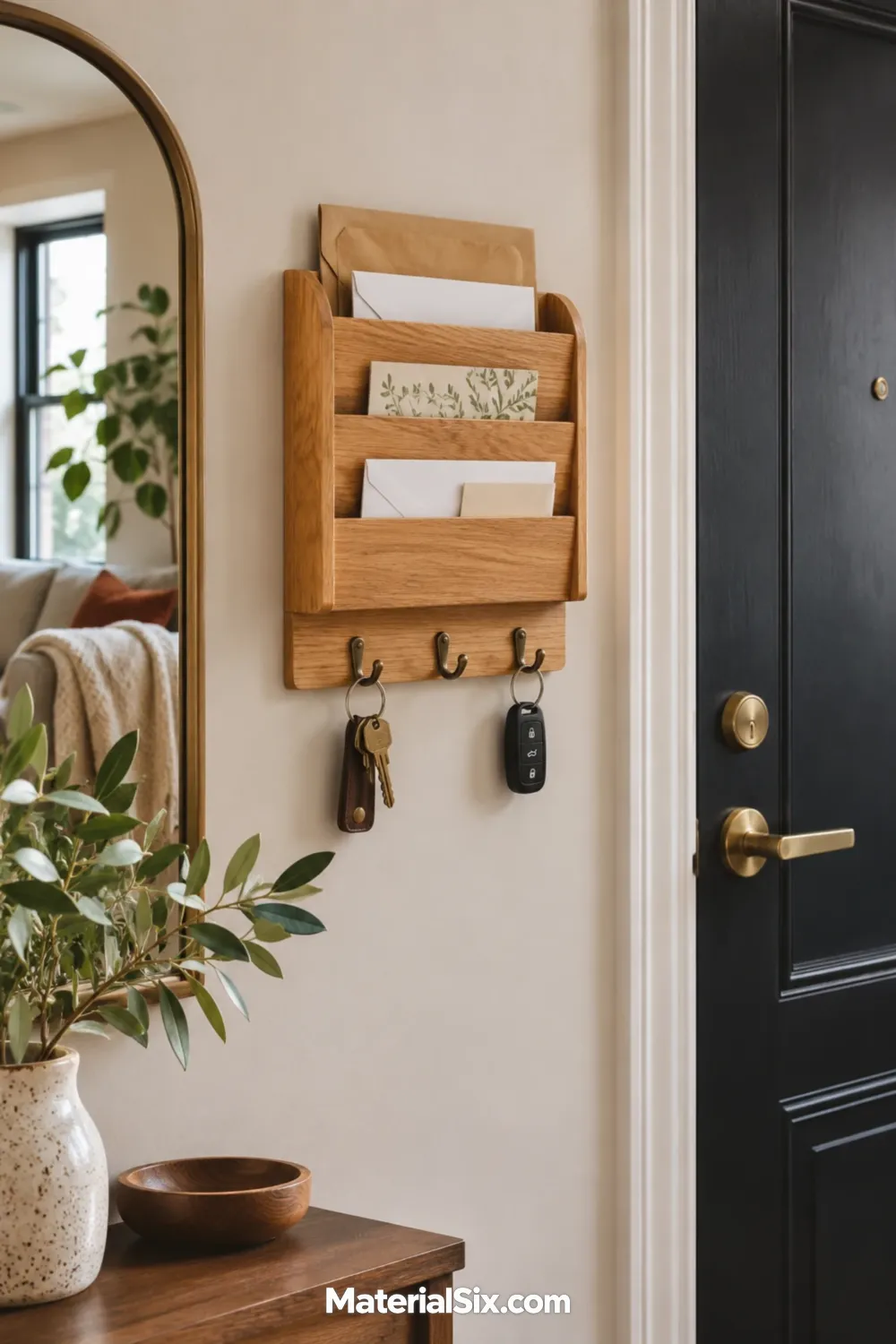
A wall-mounted organizer gives everyday keys and outgoing mail a place to land where a table would crowd the door. One slot can be enough if you empty it regularly. Try the spot with the door fully open and check that you can pull out an envelope without reaching across the door trim.
9. Light a Dark Wall With a Plug-In Sconce
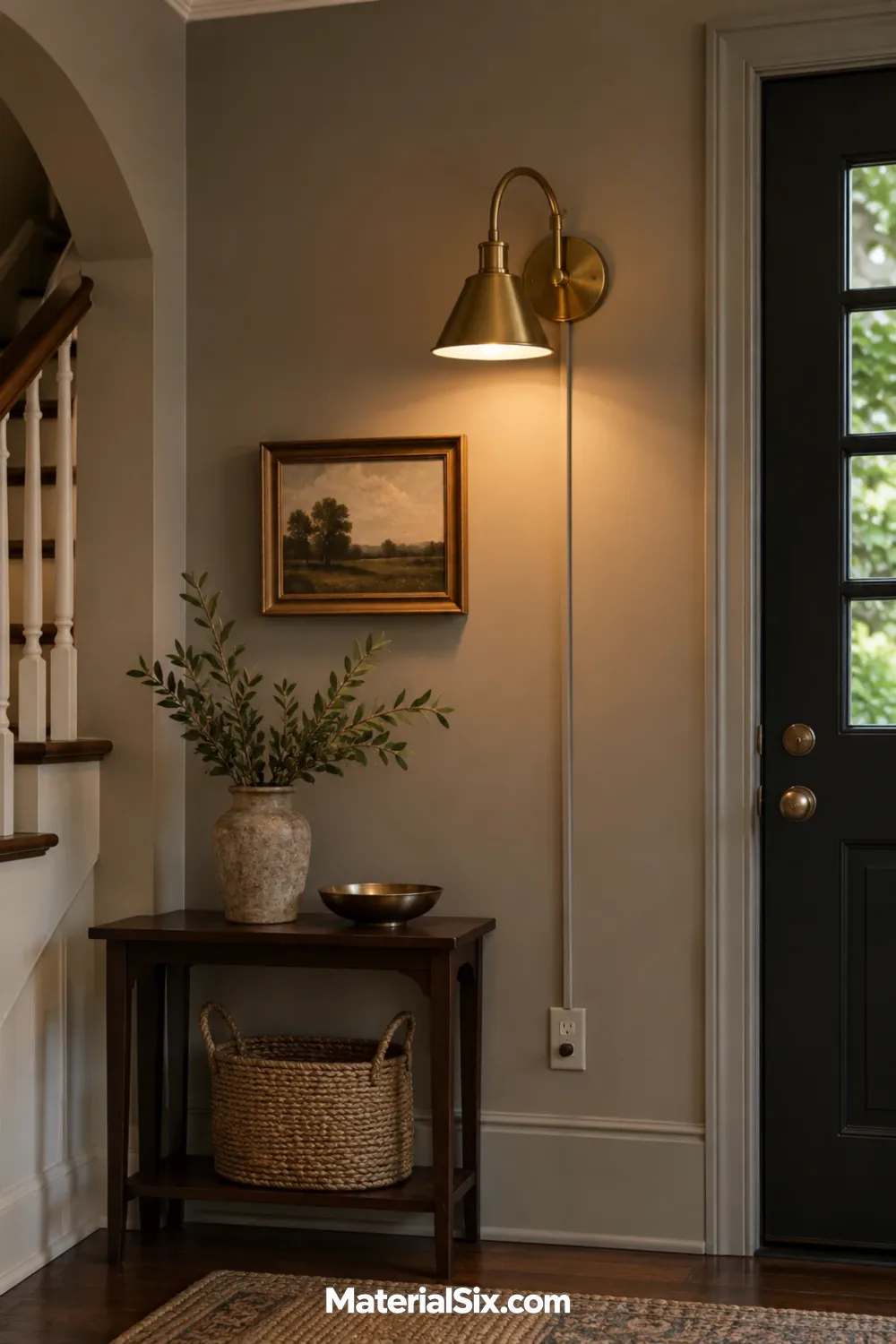
A plug-in sconce can give a dim hallway an inviting pool of light around one piece of art. Look for a model with an accessible switch and plan the route from the fixture to an existing outlet before picking the height.
A straight cord cover painted in the wall color can make the run less noticeable. Follow the fixture and cover instructions and keep the cord clear of the door and walkway.
10. Arrange Flat Baskets Like a Sculpture
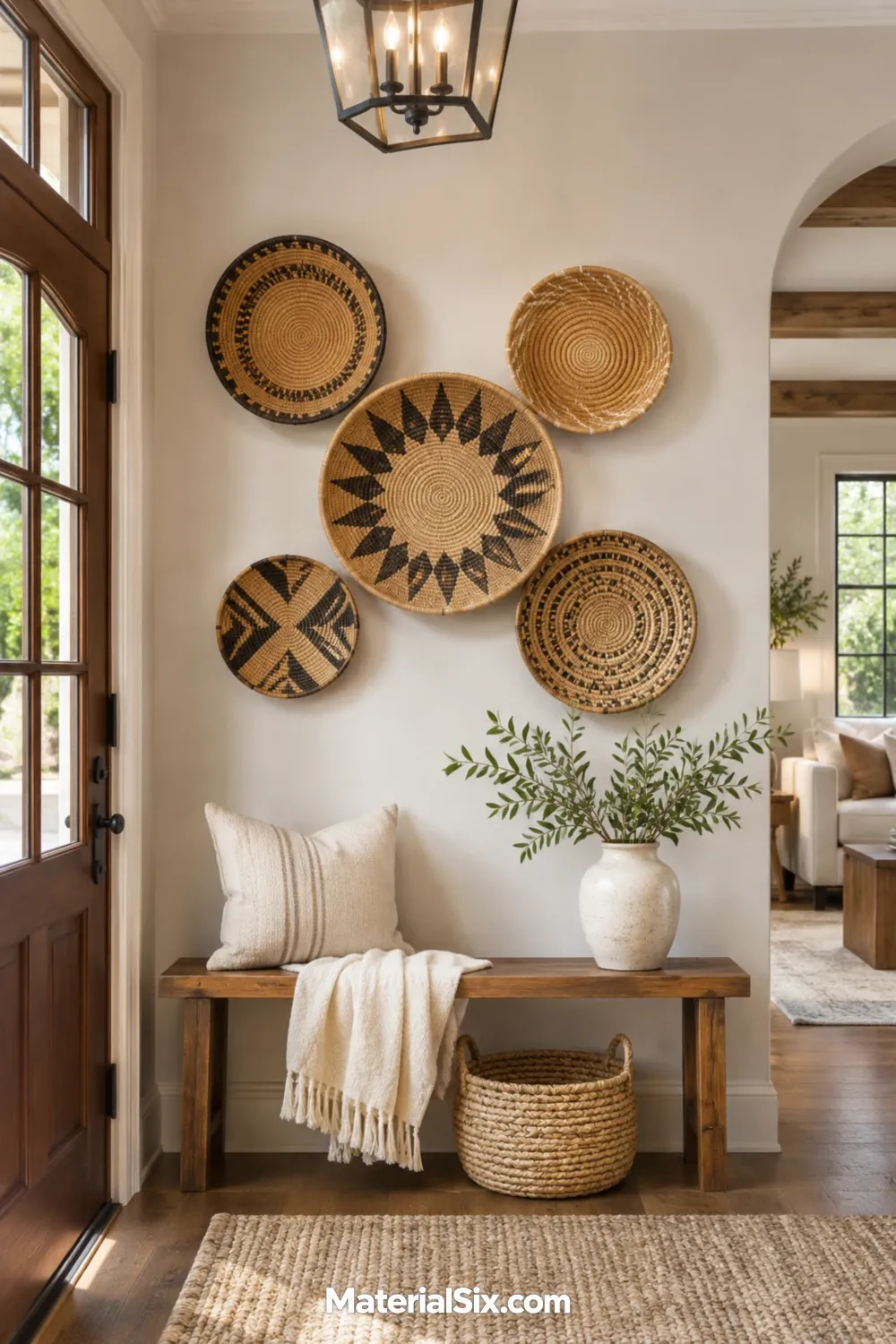
Build a woven basket display around one large, shallow piece. Set the smaller ones a little off center and repeat one color or weave so the group hangs together visually. Check the depth of the rims if the display will sit close to the route from your door to the rest of the house.
11. Warm Up the Foyer With a Woven Hanging
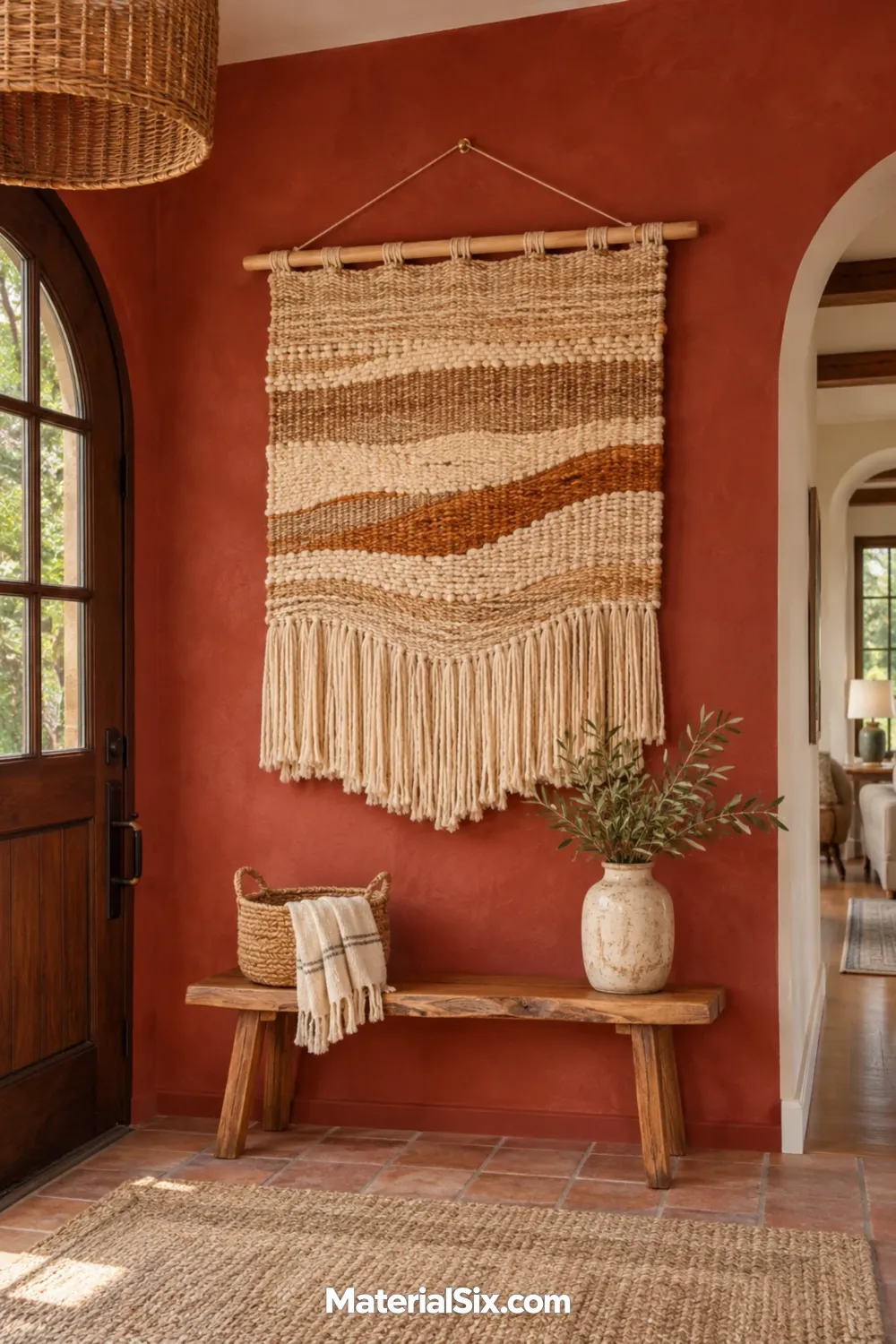
A large woven hanging softens an entry lined with hard surfaces and brings texture to a wall you see up close. Hang it where the lower edge clears the bench and stays beyond the reach of a swinging door or damp coat.
12. Put a Vertical Planter in a Bright Spot
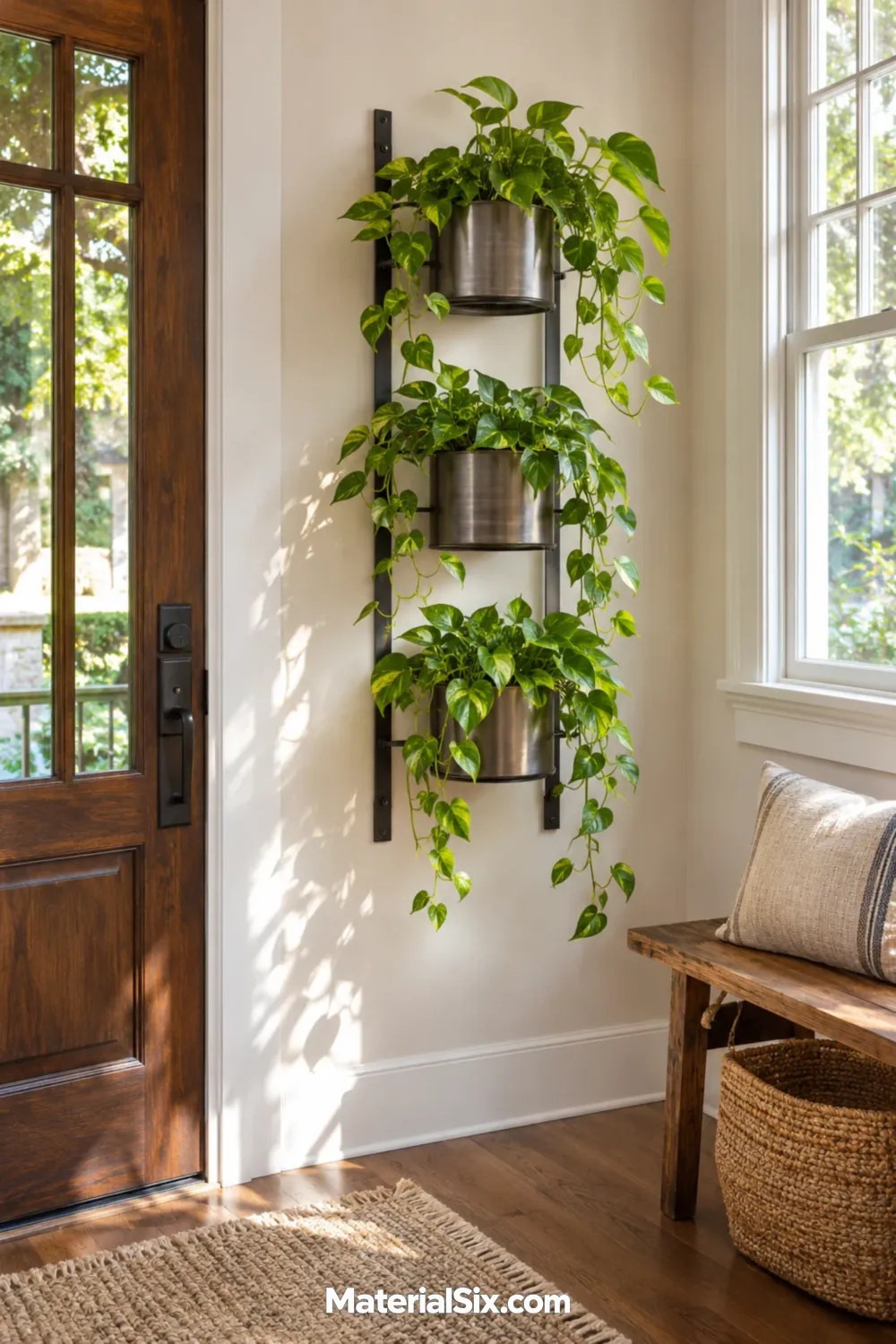
A vertical wall planter makes sense when your entry gets useful window light and floor space is limited. Look for individual pots you can lift out rather than a single trough you have to water in place.
Check where the vines will trail as they grow, especially near the latch or the path to the hallway. Pick plants for the light at that exact wall, which can be different from the light right beside the glass.
13. Display Salvaged Ironwork as Wall Art
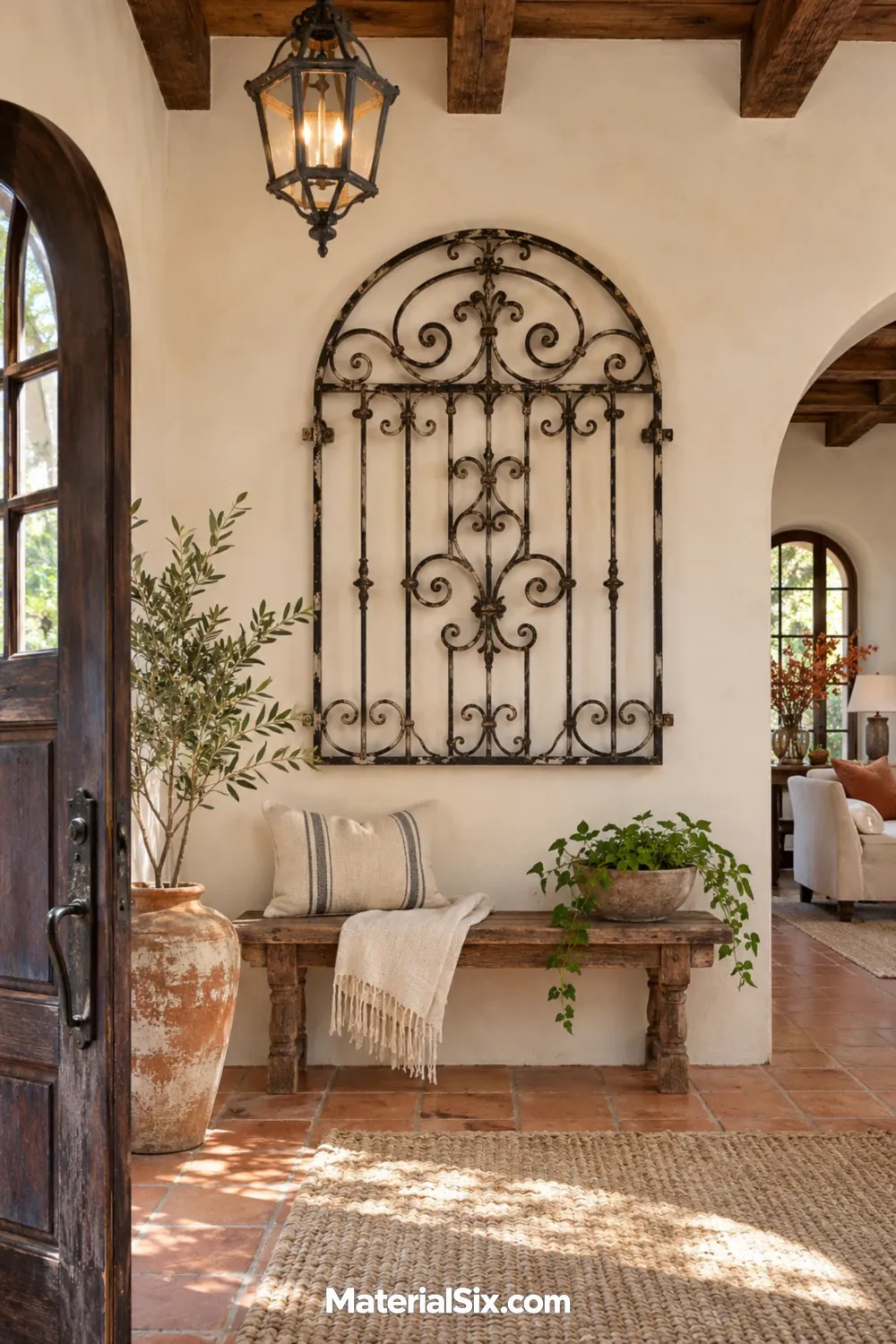
A single piece of salvaged ironwork brings a strong silhouette to a pale or plastered foyer wall. Give it room so the pattern stands out from the door molding. Inspect vintage pieces for sharp edges and use hardware suited to the actual weight, wall material, and mounting points. Have a qualified installer handle heavier pieces if the wall or hardware is uncertain.
14. Paint an Arch to Define an Open Entry
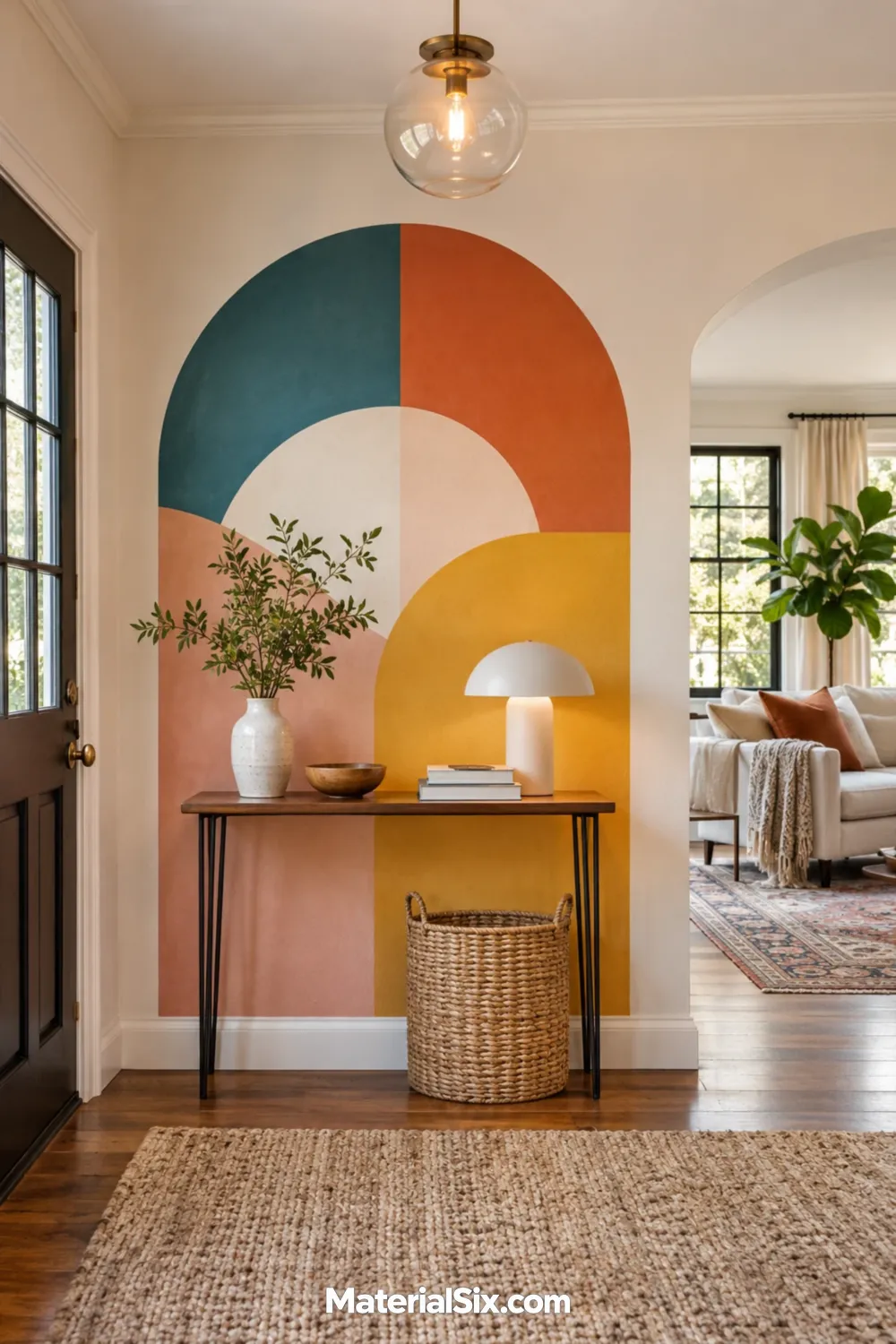
In an open floor plan, a simple painted arch can mark the space where you arrive without interrupting the route into the living room. Use the console as a guide for width and test the height in tape from the front-door view. Echo one color from the adjoining room so the entry has its own shape and still feels connected.
15. Style an Existing Niche With Ceramics
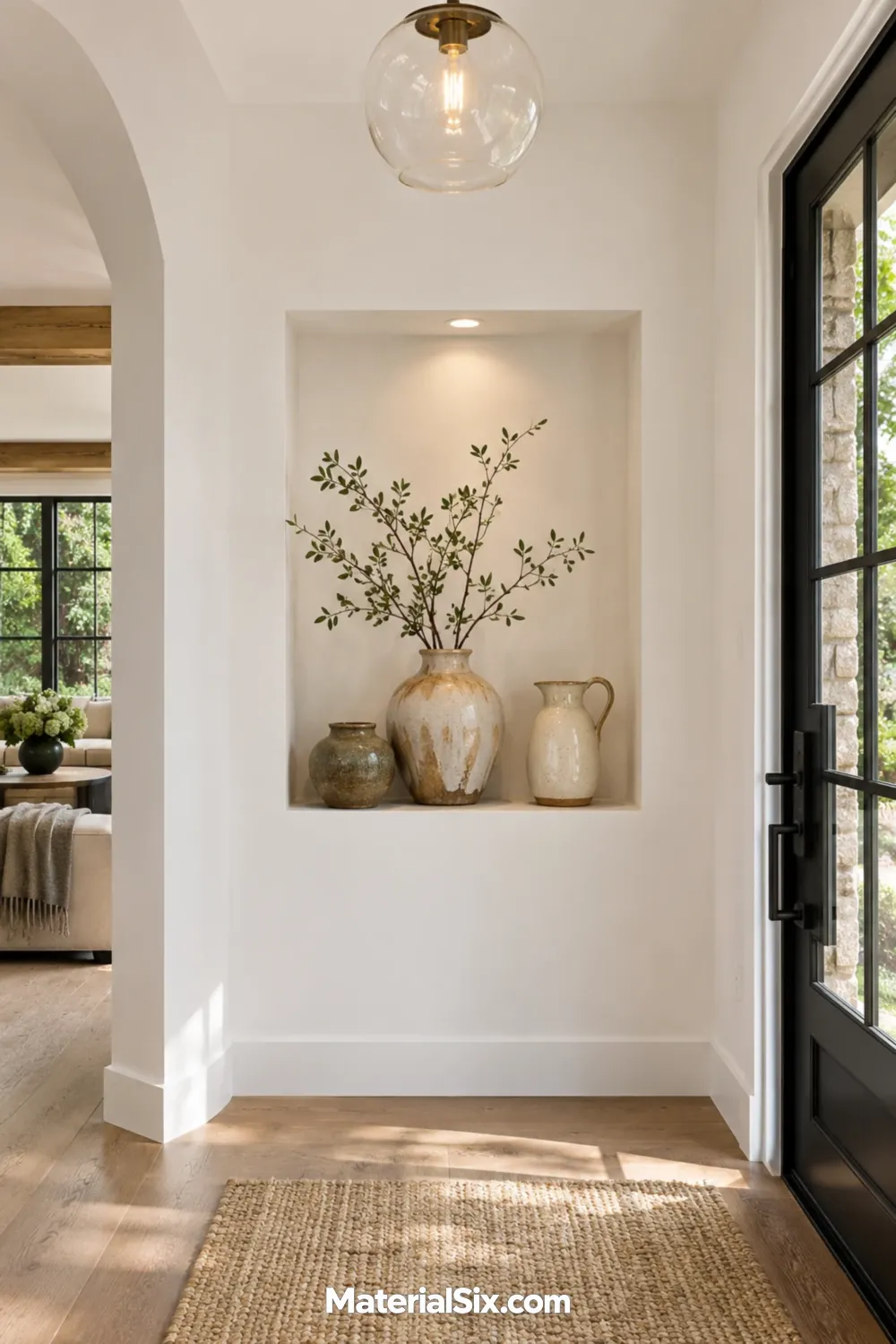
Use an existing niche for a small group of matte ceramic pieces. Put the tallest vessel slightly off center and leave bare space around the group so the recess has a visible outline. Choose pieces that sit fully inside the shelf edge, especially near a busy door.
Choose Decor That Fits the Way You Enter
Stand outside and open the door as you normally would. Notice which wall you see first, then walk to your next stop with a bag in hand. That quick test separates the wall you want to look at from the wall you may need for keys, mail, or coats. In a small foyer, those may be the same wall. Keep the pieces with depth near the quieter end and reserve the tightest stretch for flat decor.
Look at the wall from an adjoining room, too. A tall statement piece or distinctive wall finish may make more sense when you can see it from farther away. Up close, texture, a change in paint color, or a neatly grouped collection can carry the space. Before drilling or painting, use paper or tape to block out the edges and live with the arrangement through a morning and evening.
Give the Wall a Clear Job
Choose the feature that matters most to you when you walk in. One piece of art can set the mood, while a rail or mail rack may make the last few steps out the door easier. Once that feature is in place, you can see how much room the wall has for anything else.