
Craft supplies can make a room feel cluttered long before the workspace is fully set up.
The right craft room decor should bring color and personality to the room while keeping tools easy to reach and work surfaces clear.
Whether you have a dedicated studio, a shared home office, or a converted closet, these ideas will help you compare wall displays, decorative storage, color schemes, furniture layouts, and budget-friendly details that suit both your space and the crafts you enjoy.
1. Colorful Pegboard Craft Supply Wall
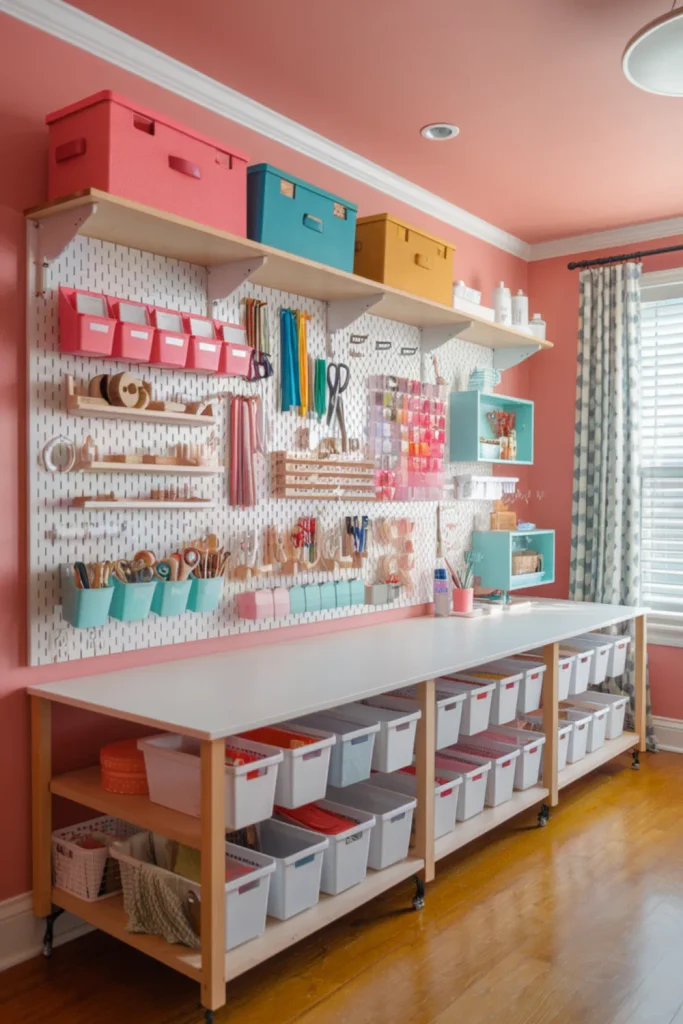
When scissors, ribbons, and brushes keep covering the worktable, a pegboard moves everyday tools onto the wall without hiding them.
A white panel also lets coral, teal, mustard, and blush supplies provide much of the craft room decor.
Place frequently used tools between seated shoulder and eye level, then reserve higher sections for lightweight baskets or display pieces.
Leave several empty holes between groups so the arrangement can change as your collection grows.
Heavy machines and bulk paper still belong on sturdy shelves or inside base cabinets.
2. Framed Tool Gallery Above the Worktable
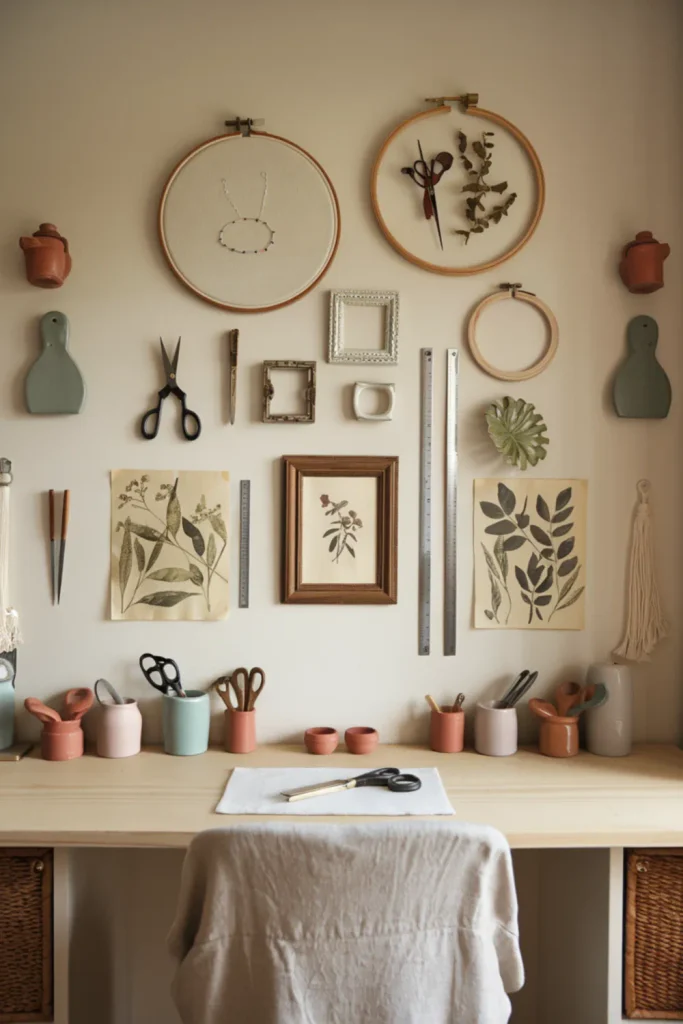
Treating attractive tools like artwork gives the room personality while keeping the desk clear.
Embroidery hoops, decorative scissors, rulers, weaving frames, and pressed botanicals can form a collected gallery above a pale wood worktable.
Before mounting anything, trace each object on paper and test the arrangement on the floor.
Tools used weekly should hang from removable hooks rather than permanent frames.
Keep sharp items out of a child’s reach, and repeat two or three materials, such as warm wood, brass, and linen, to make the display feel connected.
3. Wall-Mounted Ribbon Display by Color
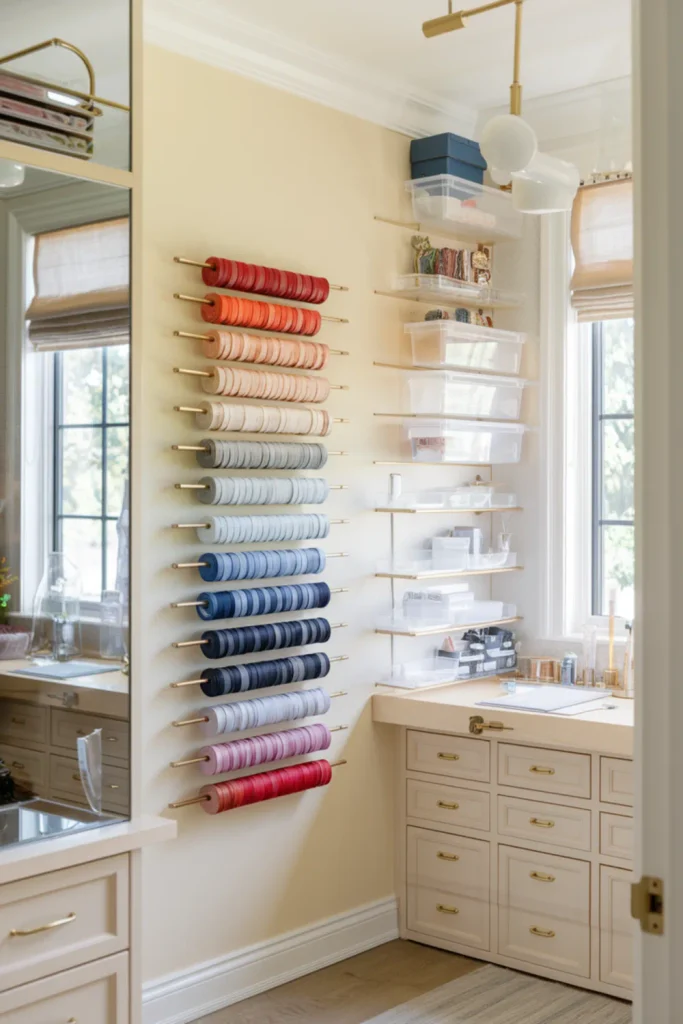
Color order does more than make ribbon storage look polished; it also helps you find the right shade quickly.
Slim brass or wooden rods can hold dozens of spools without using deep shelving, making this one of the more practical craft room wall decor ideas.
Install several short rods instead of one long fixed rail so empty spools are easier to replace.
Check that each rod projects far enough for the widest roll in your collection.
Keep delicate ribbon away from strong direct sunlight, which can fade saturated colors over time.
4. Oversized Fabric-Covered Inspiration Board
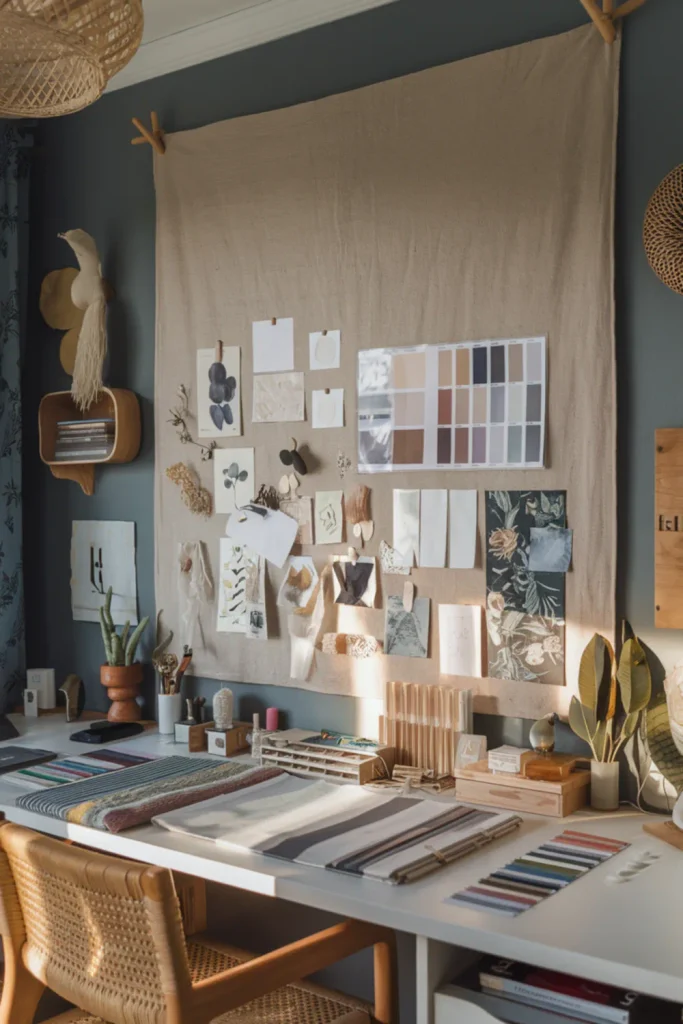
Instead of hiding fabric samples and color references in drawers, gather them on one generous inspiration board above the desk.
Linen or tightly woven cotton gives the surface a softer finish than plain cork and complements a creative workspace.
Use the board for swatches, thread combinations, artwork, and current project references, but edit it regularly so it remains useful.
A lightweight board can be secured with removable hanging strips in a rental.
Choose a fabric color that relates to the walls because part of the background will remain visible between pinned pieces.
5. Embroidery Hoop Textile Wall
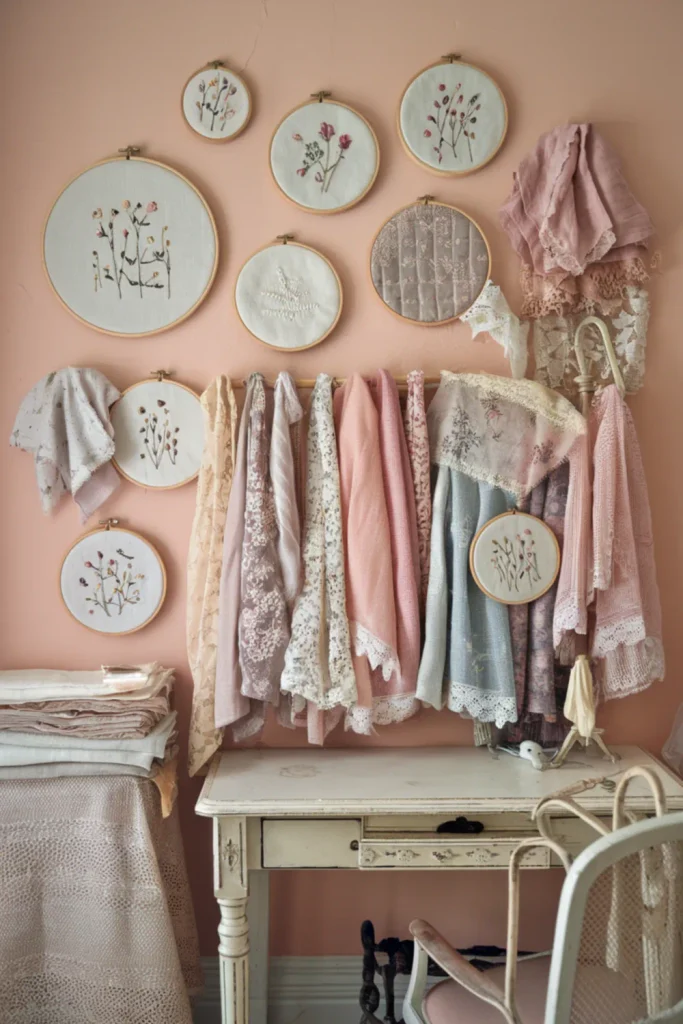
Fabric remnants become an inexpensive craft room decoration when stretched inside embroidery hoops of different sizes.
Floral cottons, linen, lace, and simple stitched pieces work especially well against pale peach, cream, or muted green walls.
Limit the display to a related color family so the arrangement reads as a collection rather than leftover material.
Lightweight hoops can hang from small removable hooks, which makes the idea suitable for renters.
Before trimming the fabric, leave enough excess at the back to tighten or reuse it when the material begins to loosen.
6. Vintage Printer Tray for Tiny Supplies
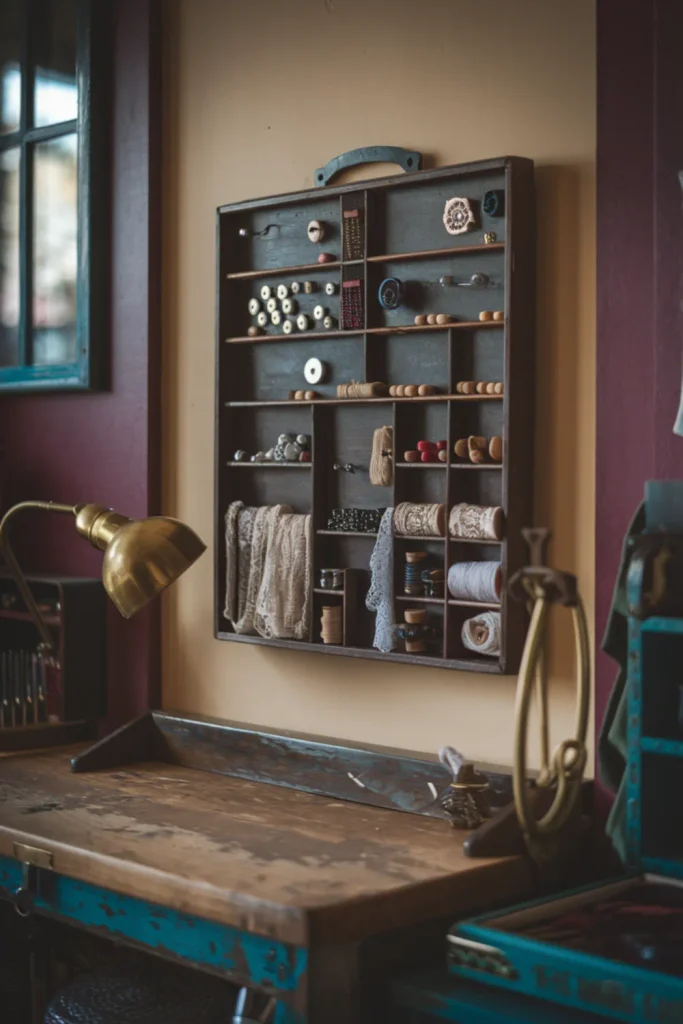
Tiny supplies are easier to appreciate when each one has its own compartment.
An old printer tray can display buttons, thread spools, stamps, lace rolls, and small crafting curios while supporting vintage craft room decor.
Clean unfinished wood with a dry brush first, since moisture may swell or stain an older tray.
Mount it into wall studs or use anchors rated for the tray’s filled weight.
Reserve this display for lightweight materials and keep frequently used pieces in the lower sections.
Very small beads are safer inside lidded containers than loose compartments.
7. Farmhouse Craft Room With Open Shelves
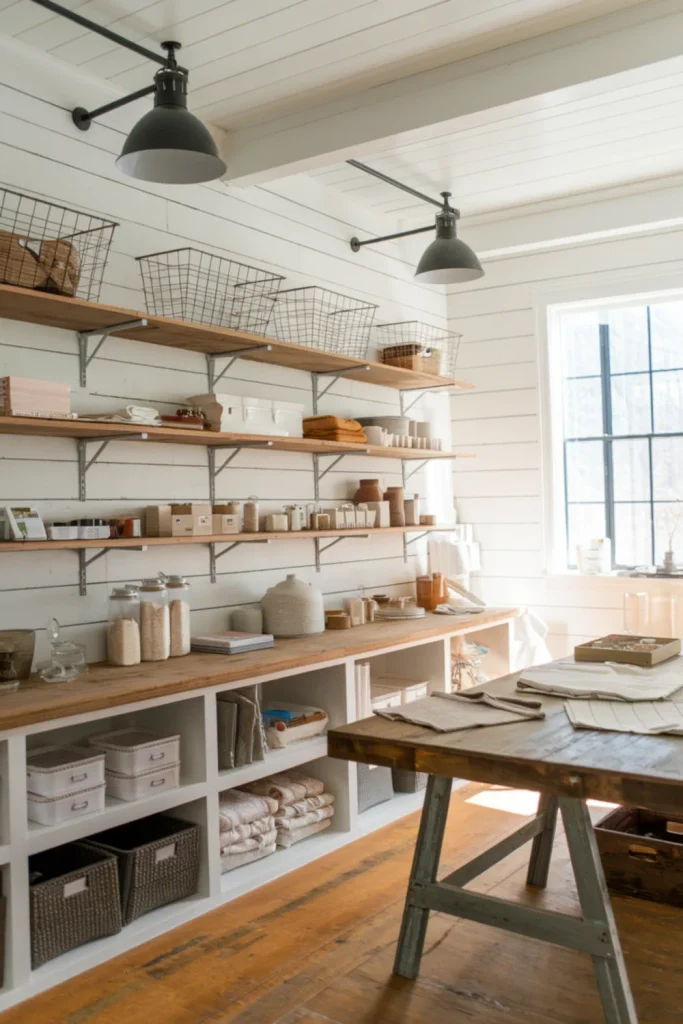
Open shelves make a farmhouse craft room feel lighter than a wall of upper cabinets, especially when reclaimed wood is paired with white walls and black hardware.
Wire baskets, glass jars, folded fabric, and ceramic tool cups can stay within reach while contributing texture.
Keep everyday materials on the middle shelves and move seasonal supplies into matching boxes above.
Reclaimed boards should be sanded and sealed before use to prevent splinters or dust near fabric.
Avoid filling every inch; a few open sections give finished projects and attractive supplies room to stand out.
8. Boho Craft Room With Woven Storage
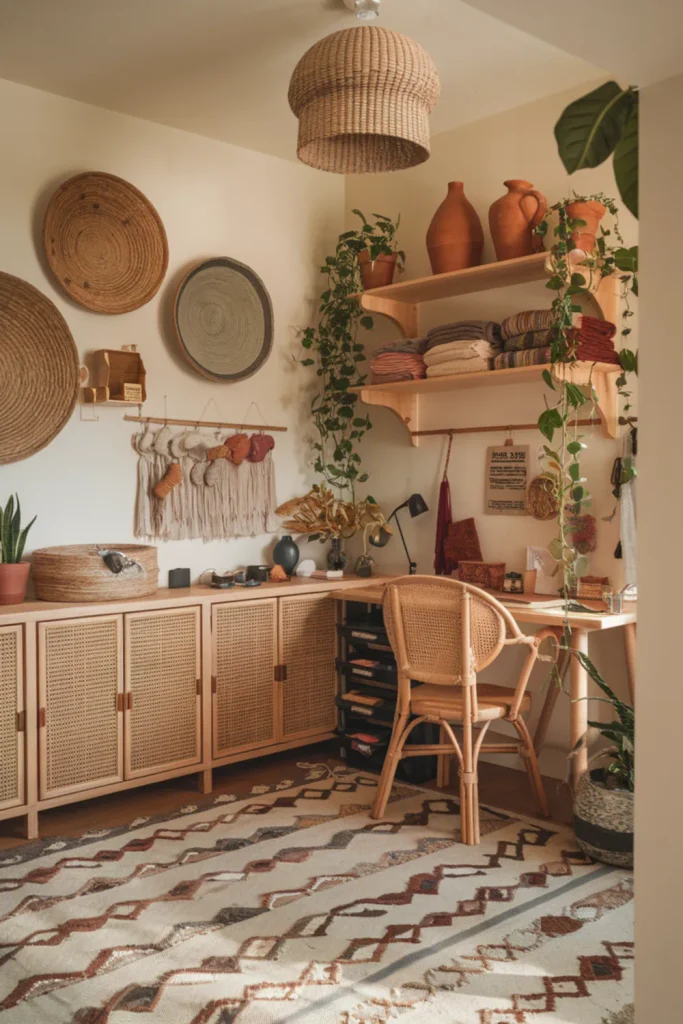
Texture does much of the decorating in a boho craft room.
Cane-front cabinets, woven baskets, terracotta pottery, a flat-weave rug, and warm wood can soften the hard surfaces required for cutting and storage.
Use baskets for yarn, fabric, and other lightweight materials, but add smaller containers inside so loose notions do not disappear at the bottom.
Natural fibers can collect dust, so choose designs that are easy to vacuum or wipe.
Keeping the main palette to cream, rust, olive, and wood tones prevents the layered materials from making the workspace feel overly busy.
9. Apothecary Cabinet Craft Supply Station
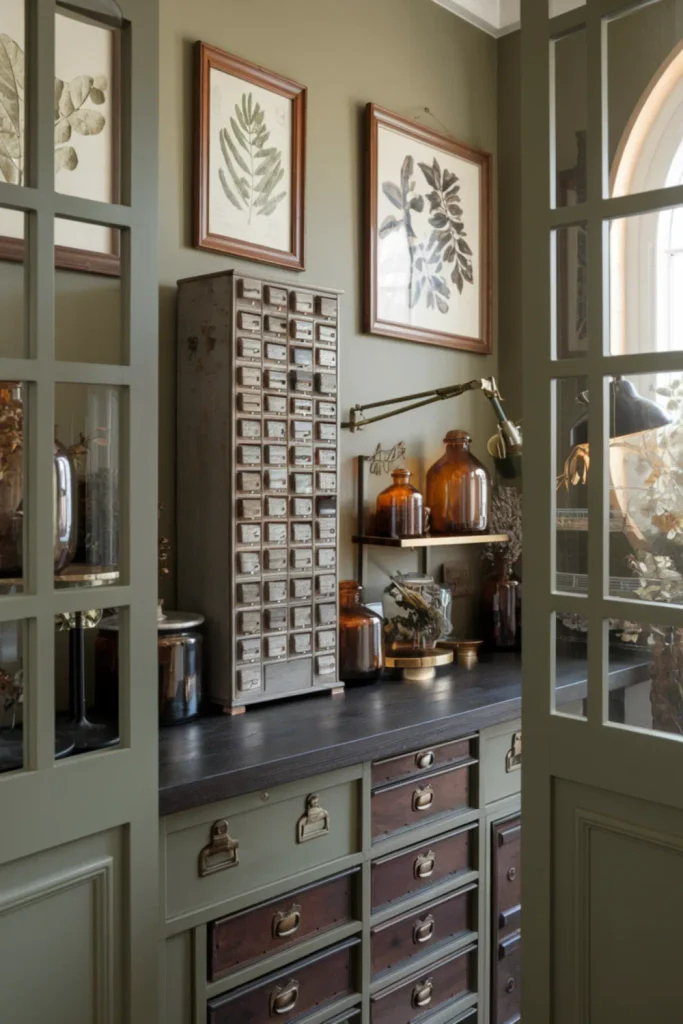
For anyone who collects buttons, stamps, beads, or sewing notions, an apothecary cabinet offers useful storage with a strong vintage presence.
Its many shallow drawers keep small categories separate while adding warmth to an art studio or craft room design.
Measure the drawer interiors before buying an antique cabinet because some compartments may be too narrow for modern supplies.
Blank metal label holders can identify contents without permanently marking the wood.
Place the heaviest materials in lower drawers, and secure a tall cabinet to the wall to prevent tipping when several drawers are open.
10. Modern Black-and-White Craft Studio
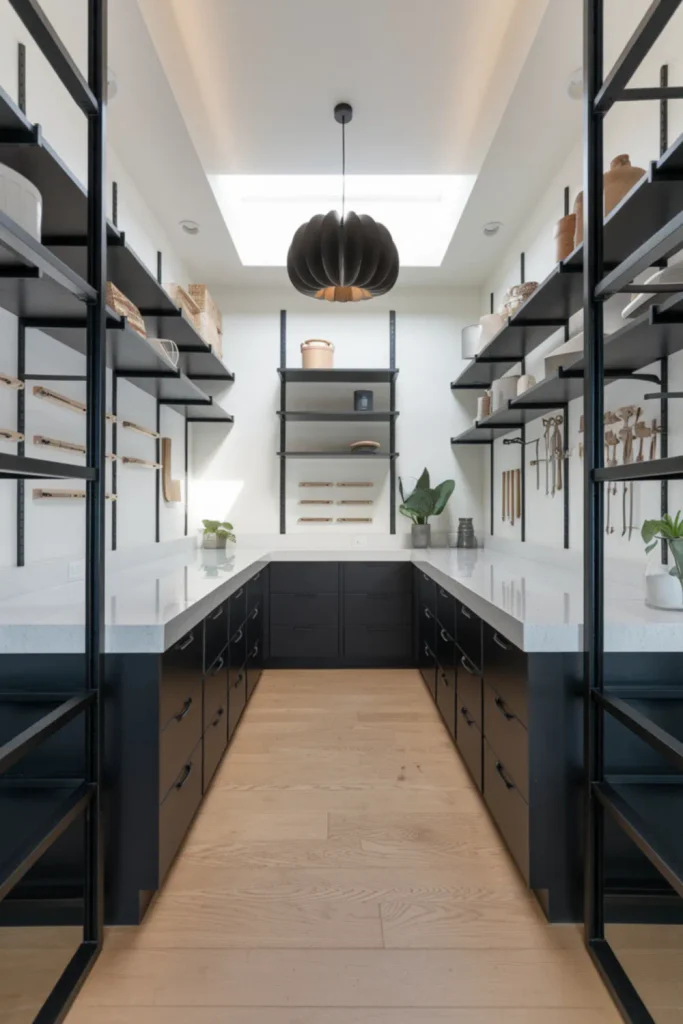
Limiting the palette to black, white, and pale oak gives a modern craft room a calmer backdrop for colorful projects.
Matte black base cabinets conceal less attractive supplies, while white counters reflect light and make small pieces easier to see.
Choose a durable work surface that resists glue, ink, and cutting marks, or protect quartz with a removable cutting mat.
Closed storage matters in this scheme because scattered packaging quickly disrupts the clean lines.
Introduce wood flooring, baskets, or one plant so the high-contrast craft room decor does not feel cold or clinical.
11. Pastel Cricut Crafting Corner
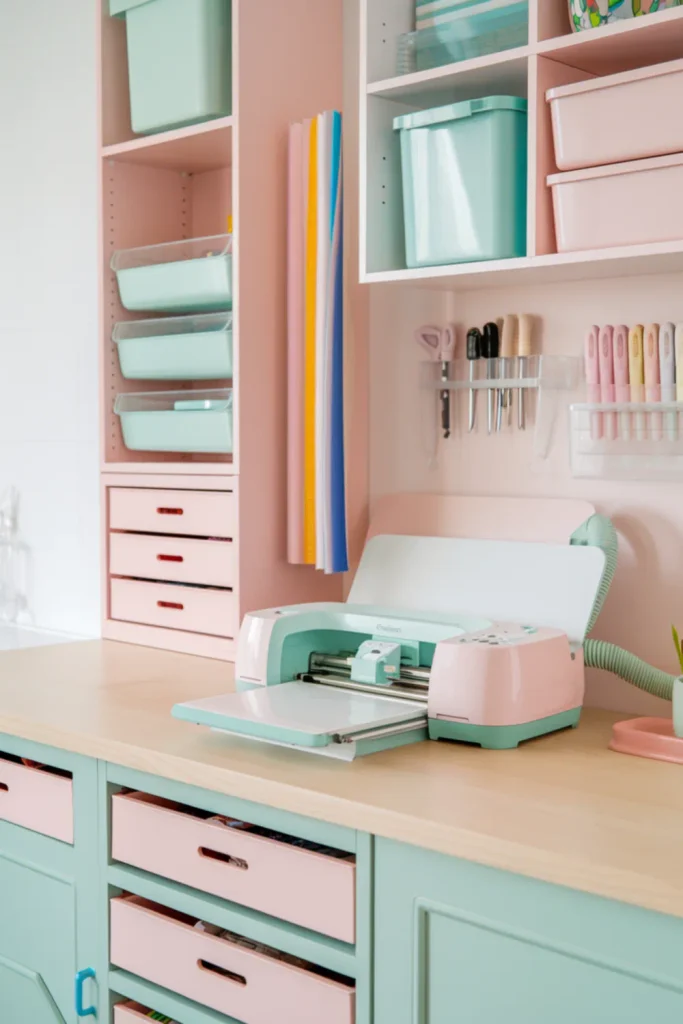
Keeping the cutting machine, vinyl, mats, and weeding tools together prevents a compact Cricut workspace from spreading across the room.
Blush drawers, mint bins, and a pale wood counter give the station a playful palette without competing with the materials.
Store vinyl rolls vertically so colors remain visible, but keep them away from heat and direct sun.
Leave open space behind the machine for the cutting mat to move freely during operation.
Cord clips mounted beneath the counter also keep plugs accessible without allowing cables to cover the work surface.
12. Fabric Rainbow Sewing Room Wall
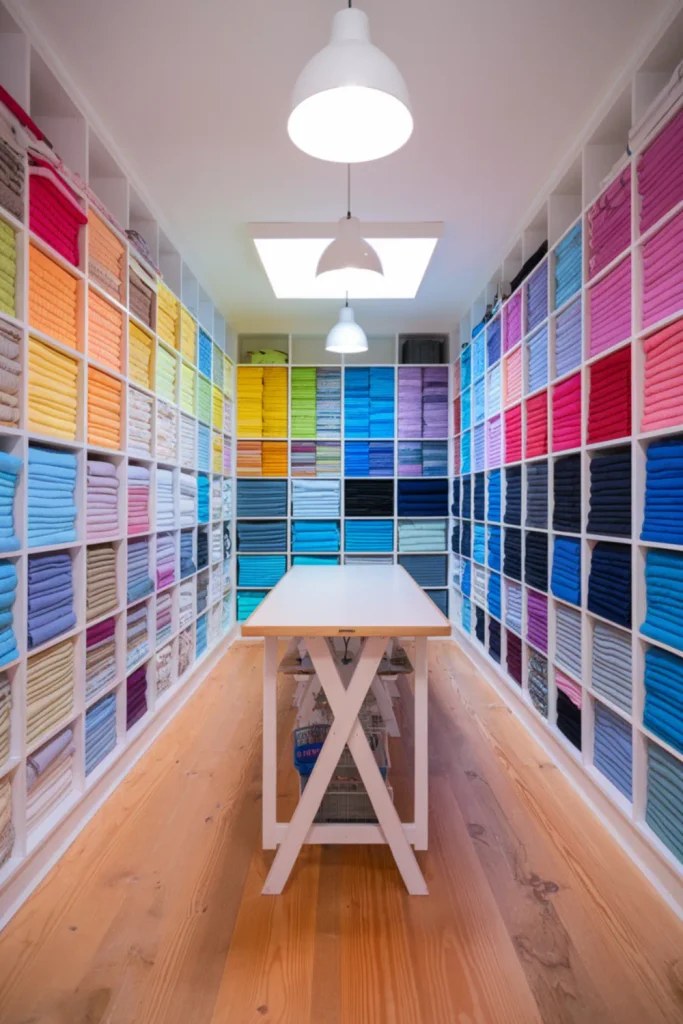
Few craft room colors are as effective as the ones already found in a fabric collection.
Arranging folded cotton by hue turns white cubby shelves into a rainbow feature while making project planning faster.
Keep stacks shallow and group fabrics by both color and weight so heavier yardage does not crush delicate pieces.
Open shelving works best in a room with controlled sunlight, since prolonged exposure may fade darker fabric.
Place frequently used colors between waist and shoulder height, then store special-occasion textiles in breathable boxes on the upper shelves.
13. Closet Craft Nook With Floral Wallpaper
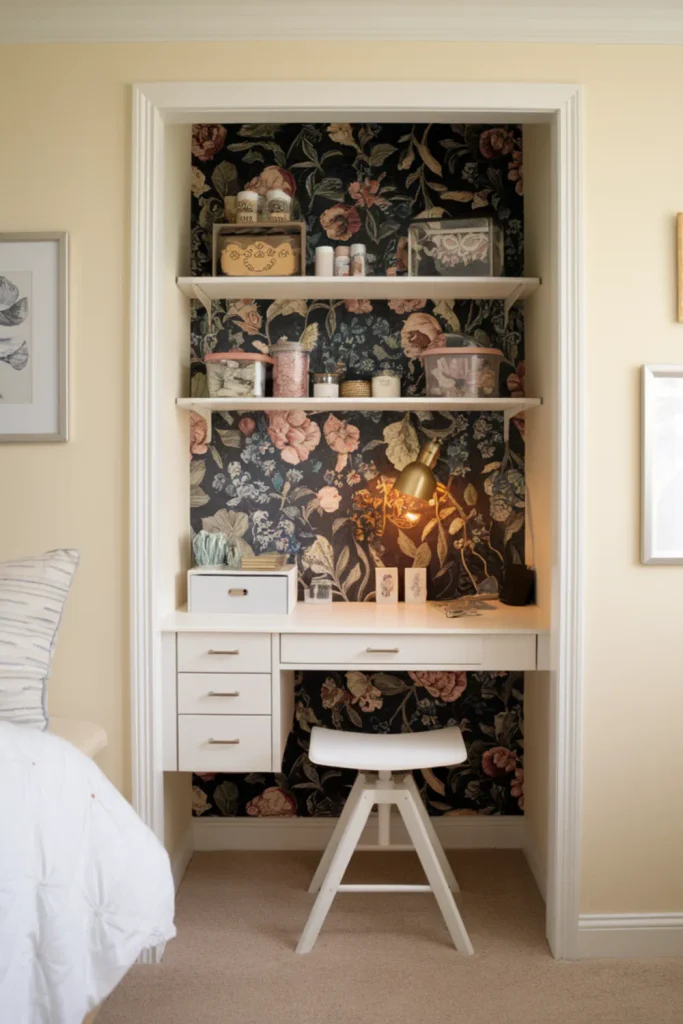
Before converting a closet into a craft nook, check whether the chair can move comfortably once the doors are open.
A compact desk, two floating shelves, and removable floral wallpaper can make the recess feel distinct without using an entire room.
Choose shallow storage so jars and tools do not project into your headroom.
Battery-powered task lighting is useful when the closet lacks an outlet, though rechargeable fixtures reduce ongoing battery costs.
A stool that fits beneath the desk keeps the surrounding floor clear and allows the nook to close when crafting is finished.
14. Under-Stairs Craft Nook With Built-In Storage
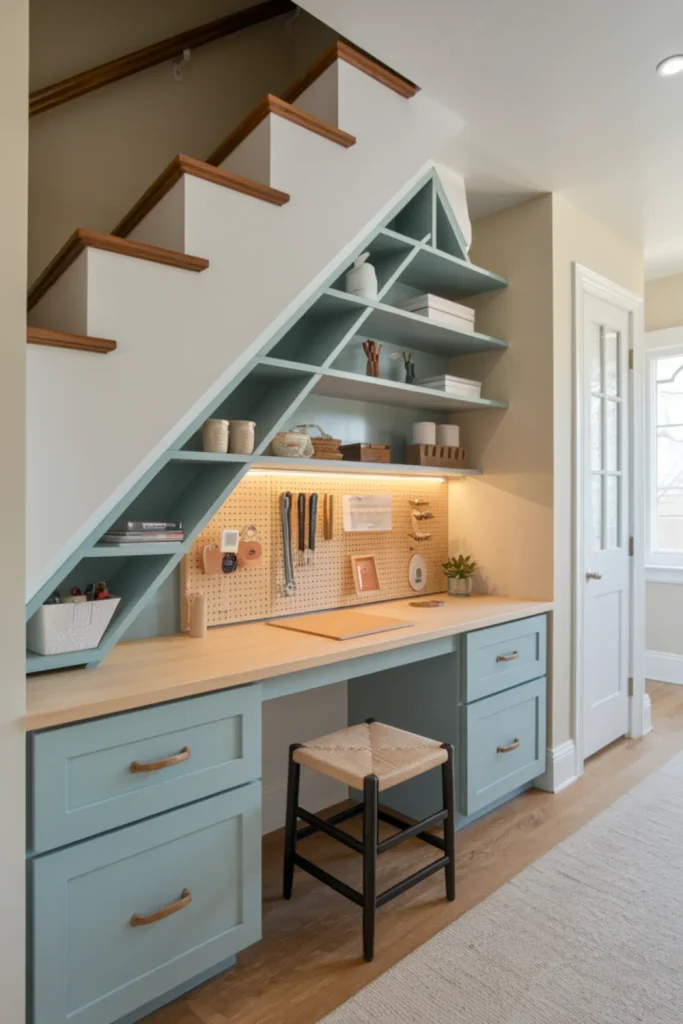
Unused space beneath a staircase can accommodate a practical craft area when storage follows the sloped ceiling instead of fighting it.
Triangular shelves hold smaller supplies near the low end, while a desk and pegboard fit where headroom is greater.
Built-in lighting is essential because this part of the house often receives little daylight.
Keep the chair path open and avoid extending drawer units into the main hallway.
Before adding cabinetry, locate electrical wiring and structural supports inside the wall, particularly if the design includes outlets or recessed lights.
15. Renter-Friendly Rolling Craft Cart
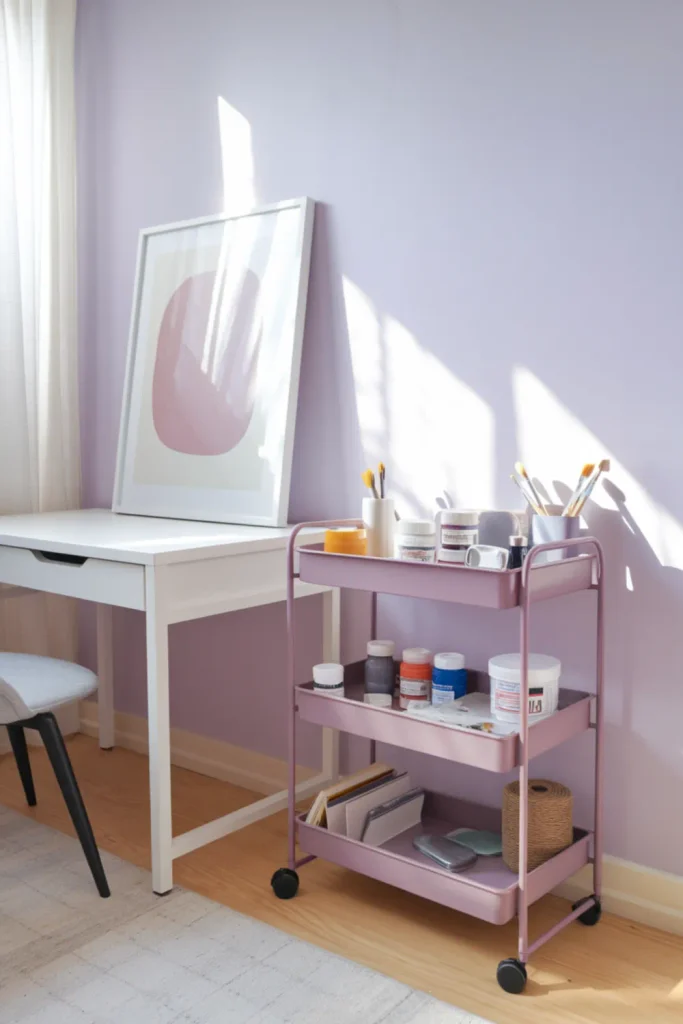
Renters do not need permanent shelving to build an organized craft space.
A three-tier rolling cart can hold paint, paper, brushes, and current project supplies beside a simple desk, then move into a closet when the room is needed for something else.
Use fitted cups or divided bins so small items do not shift whenever the cart rolls.
Locking casters provide a steadier surface while working, especially on hard flooring.
Match the containers to two or three colors from the room so this budget-friendly storage also contributes to the craft room decor.
16. Fold-Down Desk With Decorative Cabinet Front
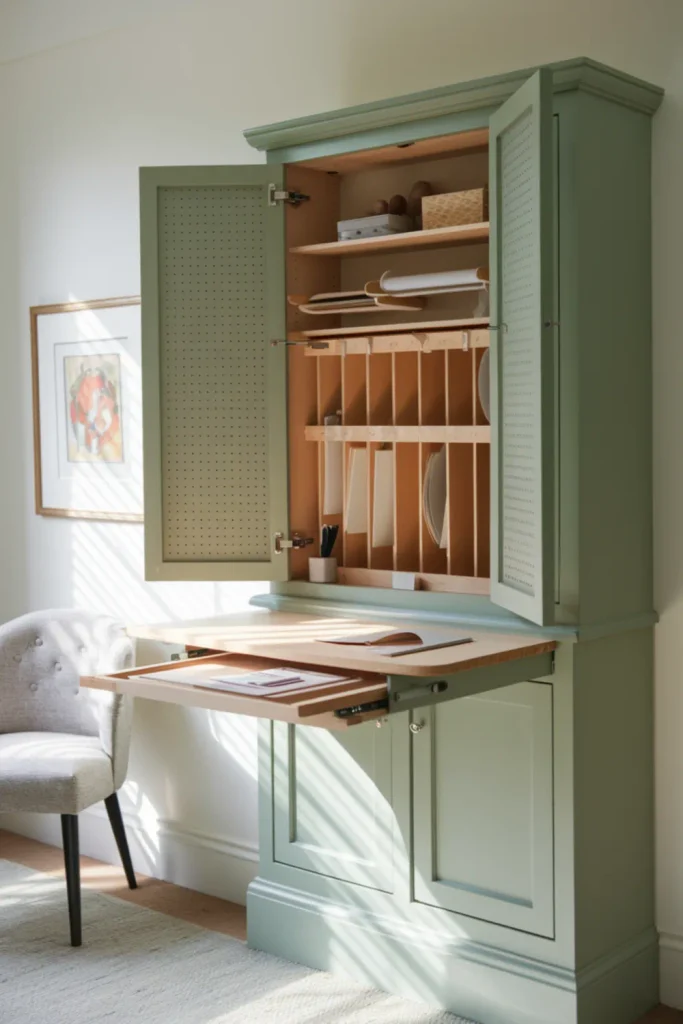
Closing the doors on an unfinished project is useful when the craft room shares space with a bedroom, hallway, or living area.
A fold-down desk provides a worktop, shallow shelves, and tool storage inside one wall-mounted cabinet.
Check the hardware’s weight rating before storing paper or small machines, and secure the unit into studs rather than drywall alone.
The open desk should sit at a comfortable working height with enough knee clearance below.
Painting the exterior sage, navy, or terracotta allows the closed cabinet to function as a deliberate accent.
17. Office and Craft Room With Defined Zones
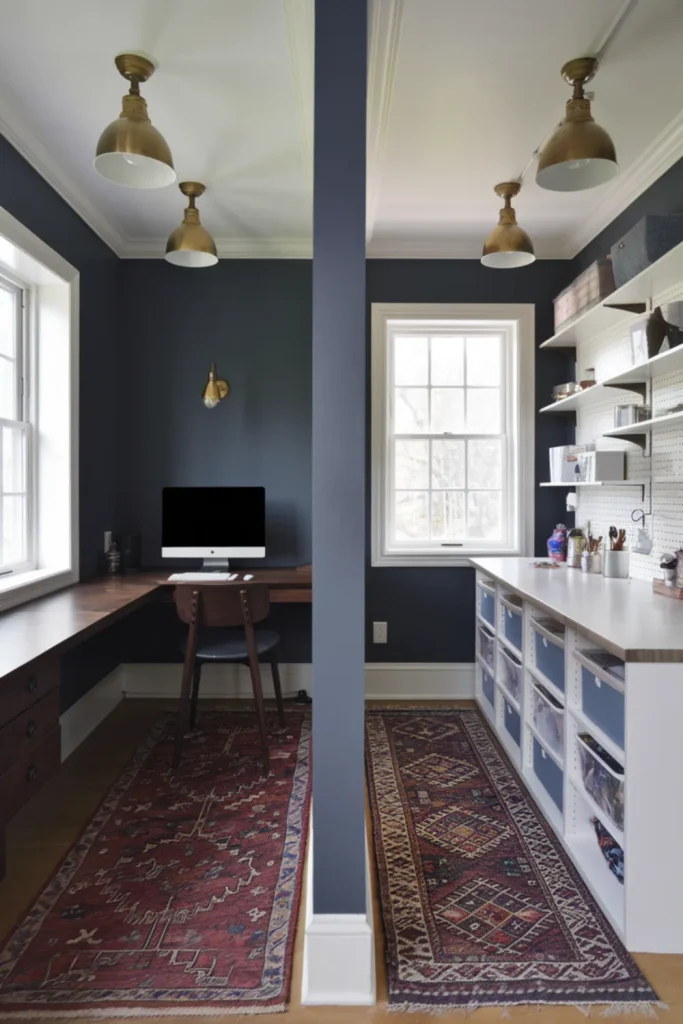
Shared rooms work better when computer tasks and messy crafts occupy separate surfaces.
Positioning a walnut office desk on one wall and a white craft counter opposite it protects electronics from paint, glue, and fabric fibers.
A repeated wall color, matching brass lamps, and one central rug can connect both zones without making the furniture match exactly.
Keep file storage near the computer and washable tools near the craft counter.
Before finalizing the layout, check that the desk chairs can roll back without colliding in the center of the room.
18. Library Craft Room With Books and Supplies
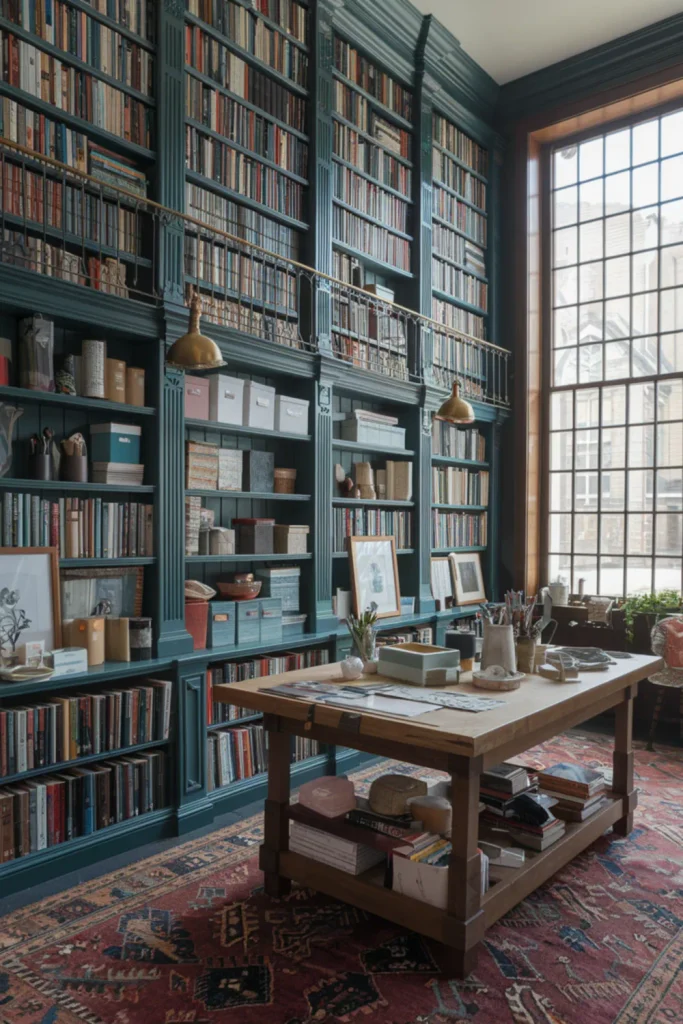
Books and creative supplies can share a room successfully when the shelves include both display space and concealed storage.
Dark teal bookcases, an oak library table, brass lights, and a patterned rug give the combination a thoughtful creative studio character.
Place reference books near the worktable, then use fabric boxes for cords, adhesives, and packaging that would make the shelves look cluttered.
Heavy books belong on lower shelves to keep tall units stable.
Avoid placing glue, paint, or open containers directly above valuable books in case something leaks or spills.
19. Central Craft Island With Display Shelving
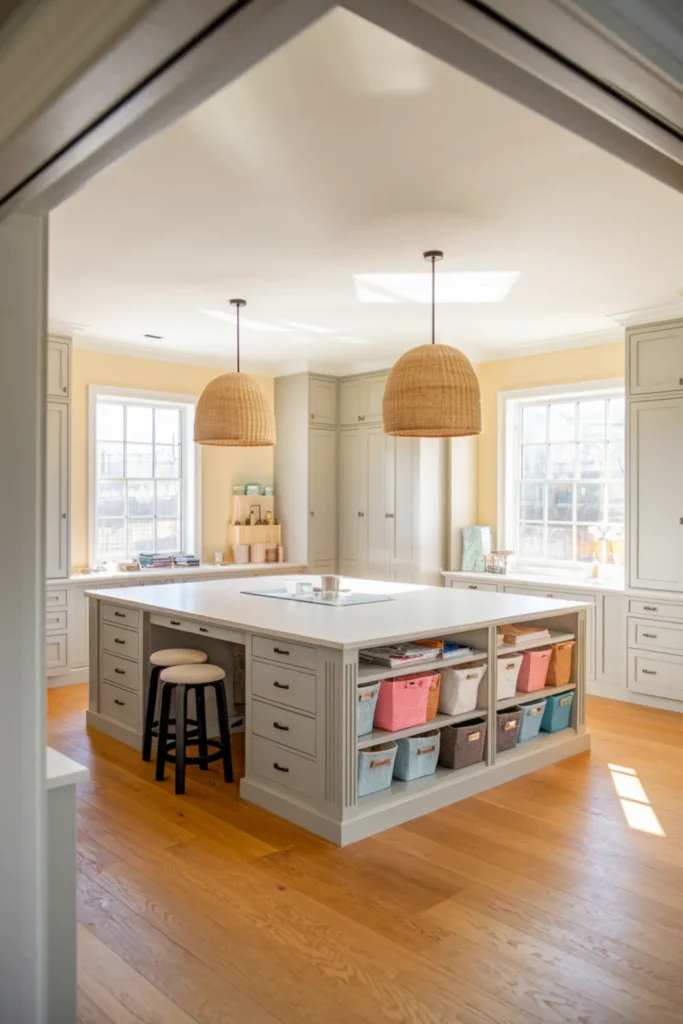
Serious cutting projects need more open surface than a standard writing desk usually provides.
A central island offers space for fabric, paper layouts, and group projects while deep drawers and open end shelves keep supplies close.
Aim for at least 36 inches of clearance around each side, with more room where drawers or cabinet doors open.
An oak top handles daily use well, though a replaceable cutting mat should protect it from blades and glue.
Pendants can brighten the center, but hang them high enough that they do not block sightlines across the room.
20. Cube Storage Wall With Styled Displays
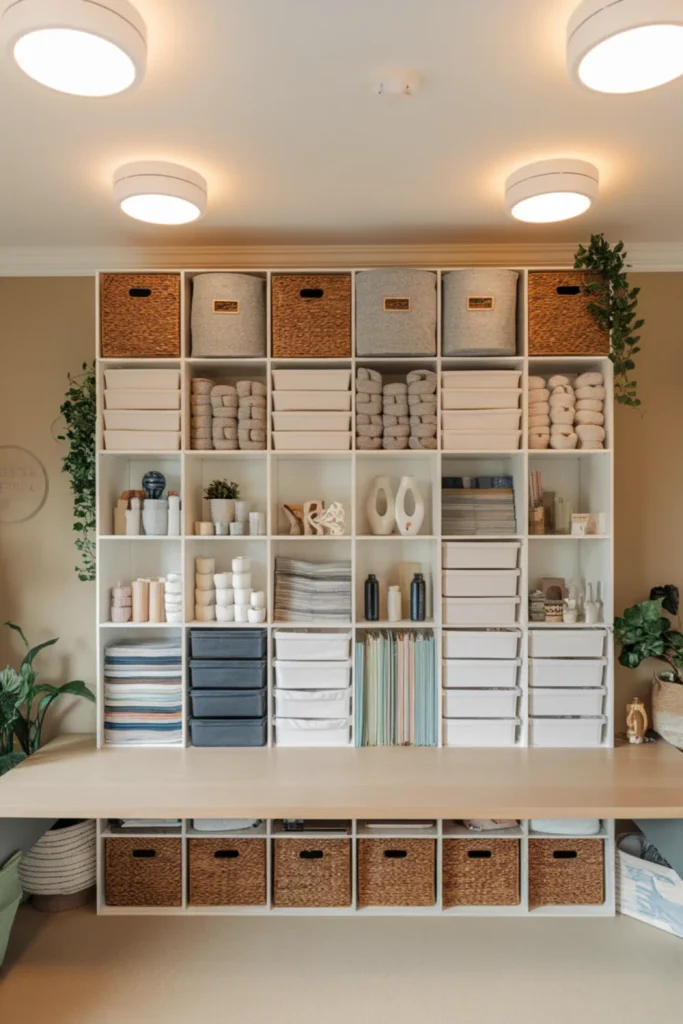
Modular cubes earn their place in craft room organization because they can hold paper, baskets, fabric bins, books, and finished projects within one system.
Alternating closed bins with open displays keeps the wall practical without turning every supply into decor.
Measure scrapbook paper and larger machines before choosing cube dimensions, since some popular units are too shallow.
Secure tall storage to the wall, particularly in homes with children.
Placing heavier materials in the lowest compartments improves stability, while the upper cubes can hold lightweight baskets and less frequently used items.
21. Paint Organization Wall in a Gradient Palette
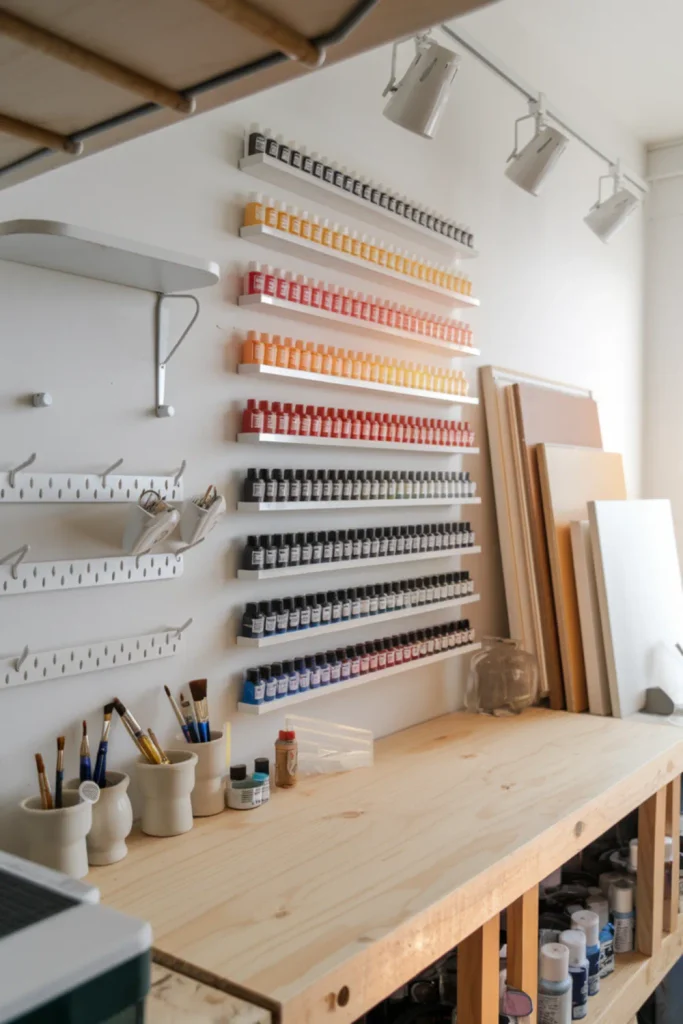
Sorting paint by hue makes color selection faster and turns inexpensive bottles into a strong craft room feature.
Narrow shelves with a small front lip keep each row visible while reducing the risk of bottles falling.
Arrange paint by color family first, then separate acrylic, fabric, and specialty finishes so similar packaging does not cause mistakes.
Direct sunlight can alter pigments and dry out products, so use a wall with controlled light.
Check bottles every few months and remove leaking or hardened paint before it damages the shelf below.
22. Glass Jar Supply Display on Open Shelves
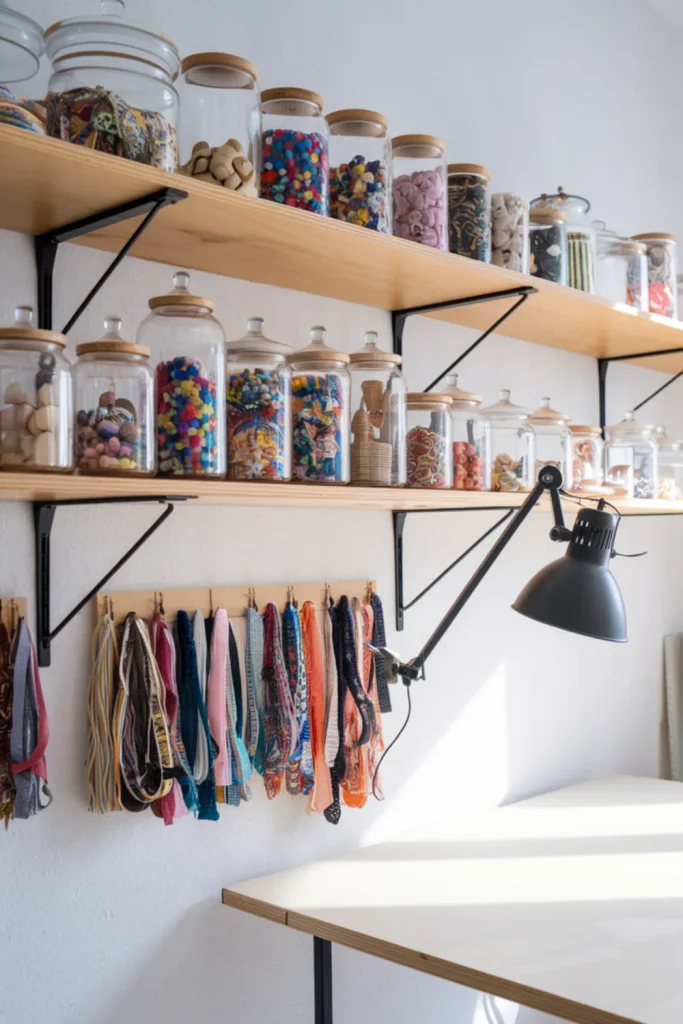
Clear jars answer the question of where small, colorful materials are stored before a drawer is even opened.
Buttons, beads, pom-poms, embroidery floss, and wooden shapes can form a cheerful display on natural oak shelves.
Choose wide-mouth jars so hands or scoops can reach the contents easily, and use lids where dust is a concern.
Grouping materials by type is usually more practical than arranging everything solely by color.
Keep heavy glass containers on lower shelves and away from the edge, especially in a craft room used by children.
23. Wallpaper-Backed Craft Cabinets
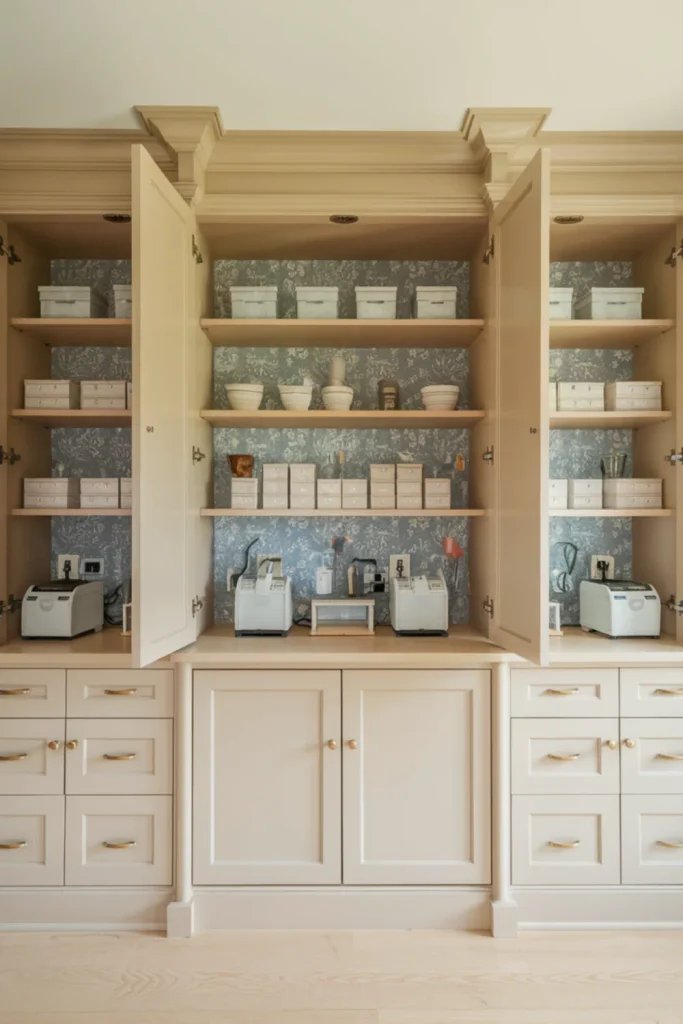
Pattern feels more controlled when it appears inside cabinetry rather than across every wall.
Blue botanical wallpaper behind open shelves gives white cabinets depth and helps coordinated boxes, paper, and ceramic containers stand out.
Peel-and-stick wallpaper suits a DIY craft room makeover because damaged sections can be replaced without refinishing the cabinet.
Apply it only to smooth, clean surfaces, and test adhesion before covering the entire back panel.
Keep glue, ink, and open paint containers on washable shelf liners so spills do not permanently stain the pattern.
24. Reclaimed Wood Shelf for Handmade Displays
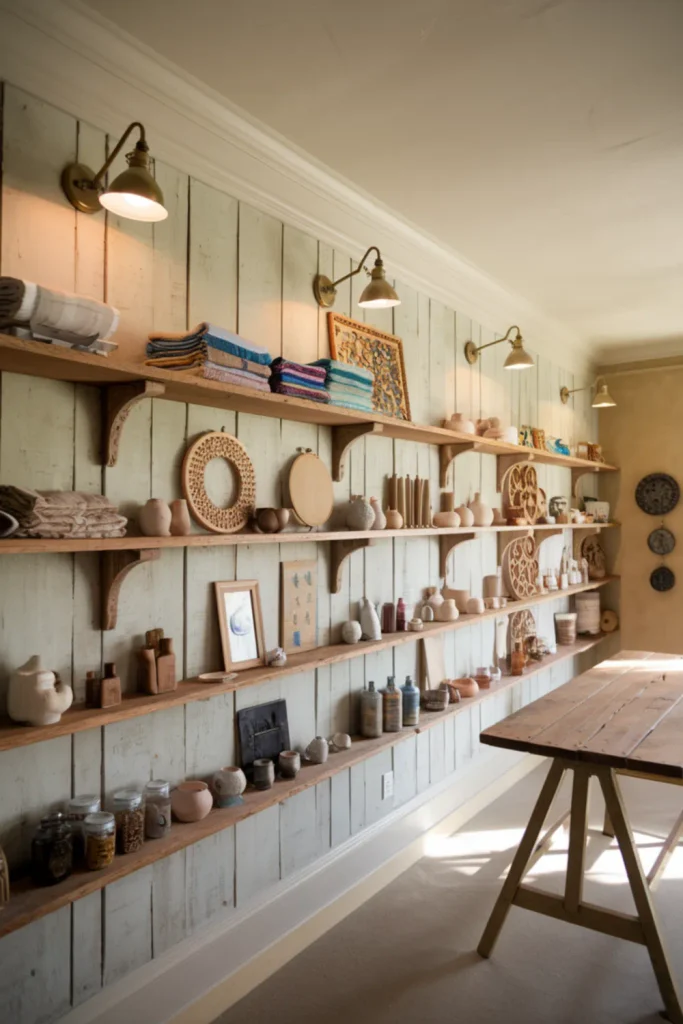
Finished projects deserve space in the room where they were made.
Long reclaimed wood shelves can hold pottery, embroidery, folded textiles, carvings, and framed work above a sturdy trestle table.
Sand rough boards thoroughly and seal them with a low-sheen finish so splinters and wood dust do not catch on fabric.
Arrange pieces with varied heights, but leave open space between groups to keep the display readable.
Frequently used tools can occupy the lowest shelf, while fragile handmade objects should sit higher and away from the active work surface.
25. Floral Wallpaper Craft Room Accent Wall
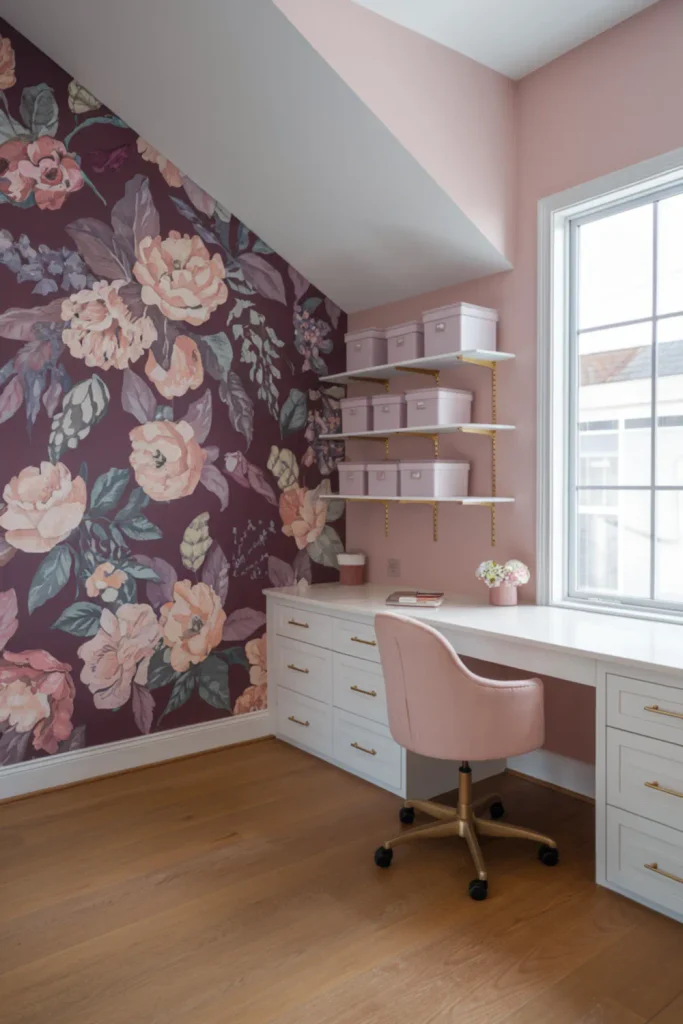
One patterned wall can establish the craft room’s palette without surrounding the work area in competing detail.
A muted floral design in plum, blush, sage, and cream pairs well with white cabinetry, brass shelves, and pale wood floors.
Order a sample first and view it under both daylight and task lighting, since background colors often shift after sunset.
Place the wallpaper behind the main desk or storage wall rather than an area hidden by tall cabinets.
Washable wallpaper is a sensible choice where paint, adhesive, or dusty materials are used often.
26. Color-Blocked Craft Room Work Zone
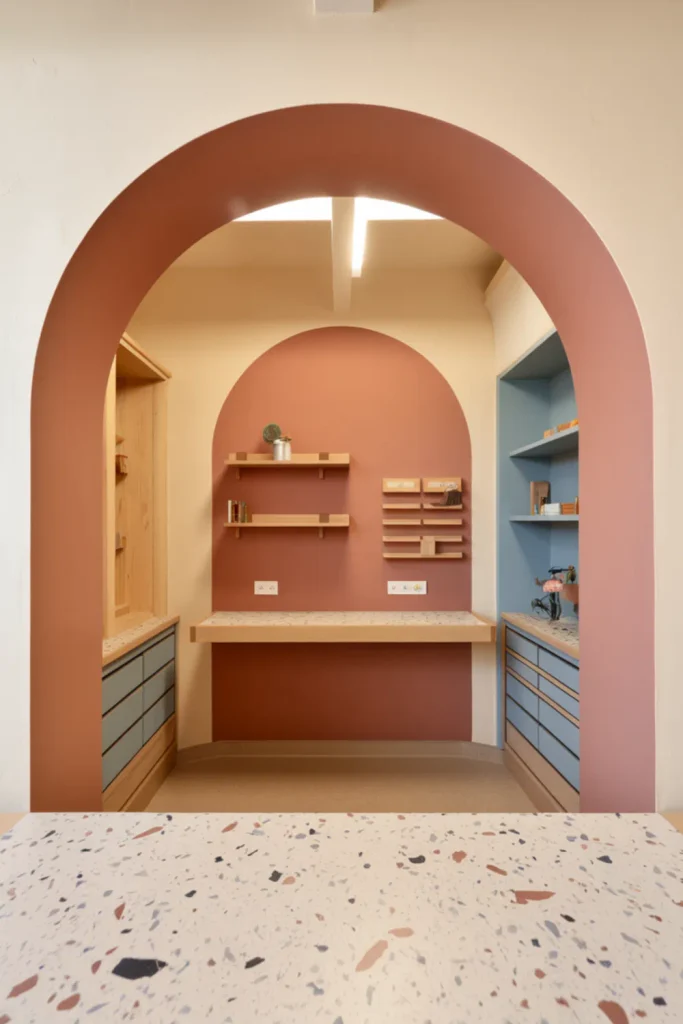
Paint can define a craft area even when there is no separate room.
A broad terracotta arch behind a wall-mounted desk and floating shelves visually contains the workstation while warm ivory walls keep the surrounding area quiet.
Use a level, pencil, and painter’s tape to establish clean edges before applying color.
The painted shape should extend beyond the desk width so it does not look undersized once shelves and tools are installed.
In a rental, choose a color that can be covered easily with the original wall paint before moving.
27. Cozy Craft Room With Layered Lighting
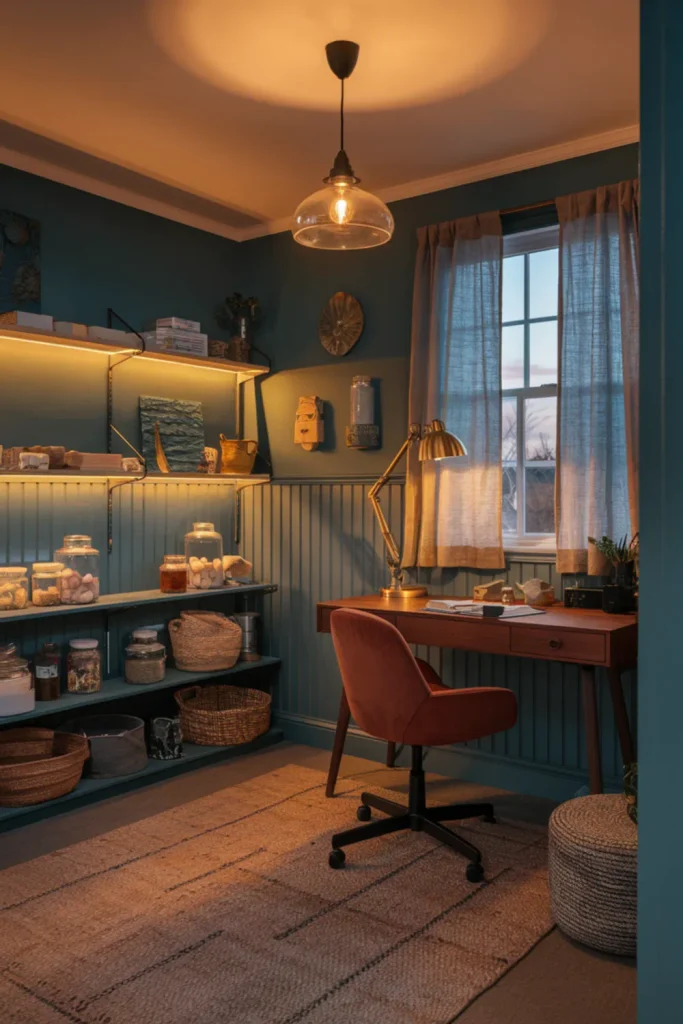
Good lighting changes how long a craft room remains comfortable to use.
Combine a warm pendant for general light, an adjustable task lamp for close work, and soft shelf lighting to reduce harsh contrast after sunset.
Deep blue-green walls, walnut furniture, linen curtains, and a woven rug make the room feel settled without relying on excessive decoration.
Use daylight-balanced bulbs at the worktable when accurate color matching matters.
Keep lamps and cords away from paper, fabric, and hot tools, and choose washable textiles where loose fibers or paint spills are common.
28. Industrial Craft Room With Metal Storage
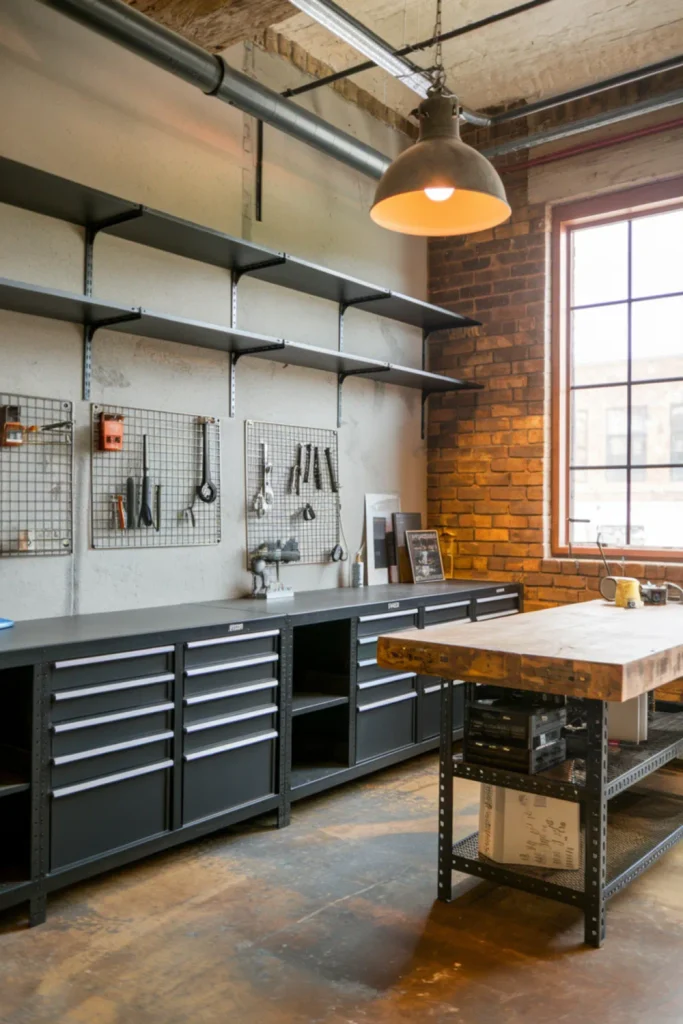
Hardworking materials suit crafts that involve heavy tools, cutting, ink, or frequent cleanup.
Steel drawers, black grid panels, a reclaimed wood bench, and a concrete-look floor give an industrial craft room durability as well as a clear design direction.
Add drawer liners to stop metal tools from sliding and creating unnecessary noise.
Any reclaimed worktop should be checked for protruding nails, loose boards, and old finishes before use.
Warm wood, brick, and focused lighting help balance the darker metal surfaces while keeping the workspace practical.
29. Tailored Masculine Craft Studio
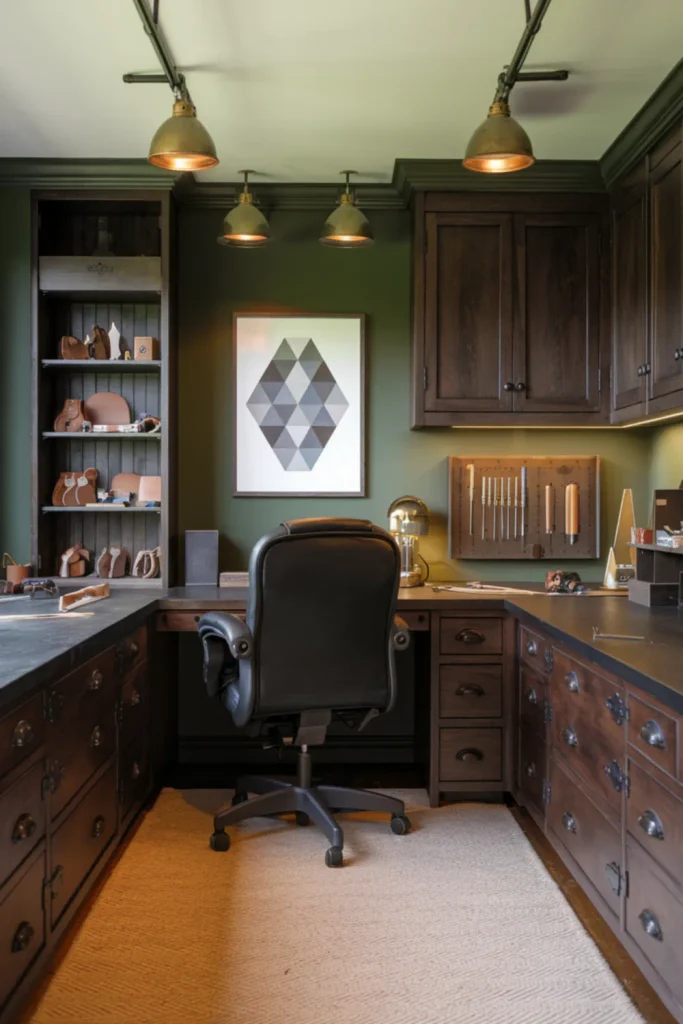
Deep green walls, walnut cabinetry, black hardware, and brass lighting offer a grounded alternative to the pastel schemes common in craft room inspiration.
The combination works well for leatherwork, model building, printmaking, or any hobby that uses darker tools and materials.
Install strong task lighting above the primary work surface because deep wall colors absorb more light than white.
Closed drawers can conceal packaging and backup supplies, while framed geometric art keeps the room from resembling a utility workshop.
Select a durable rug with a low pile so dropped parts remain easy to find.
30. Teen Craft Room With Removable Displays
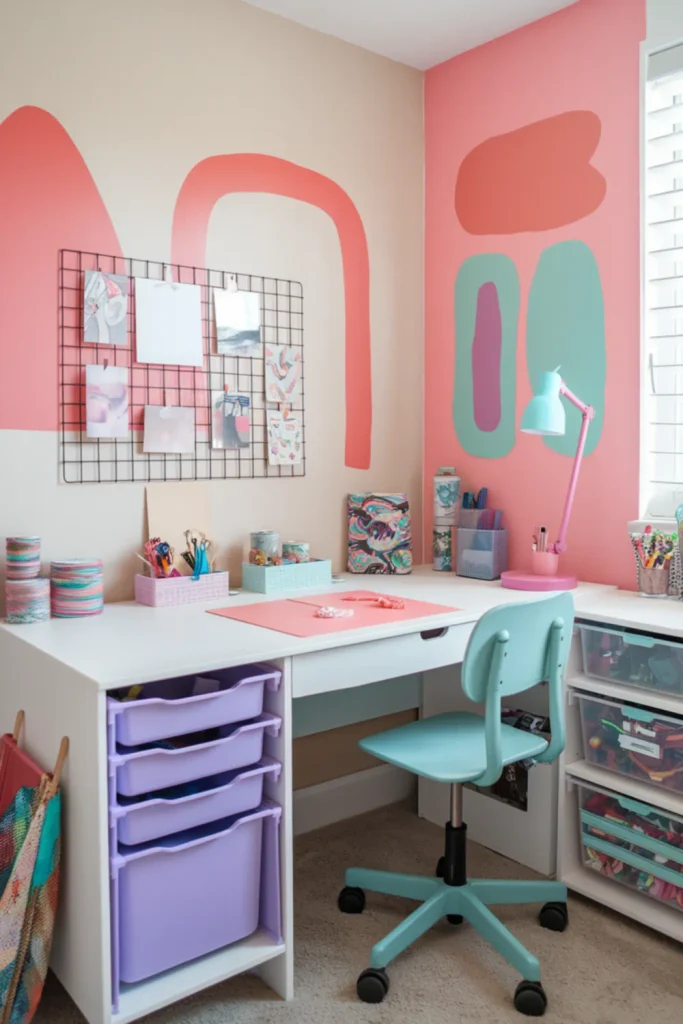
Creative interests change quickly, so a teen craft room should be easy to update without replacing major furniture.
A wire display grid, rolling drawers, abstract removable decals, and a compact white desk allow artwork, beads, yarn, and paper projects to rotate over time.
Keep sharp tools and strong adhesives in a separate closed container, especially when younger siblings use the room.
A wipeable chair and hard work surface handle paint and glue better than delicate finishes.
Leave some shelves empty so new hobbies have somewhere to go.
31. Sunlit Luxury Craft Studio With Custom Cabinetry
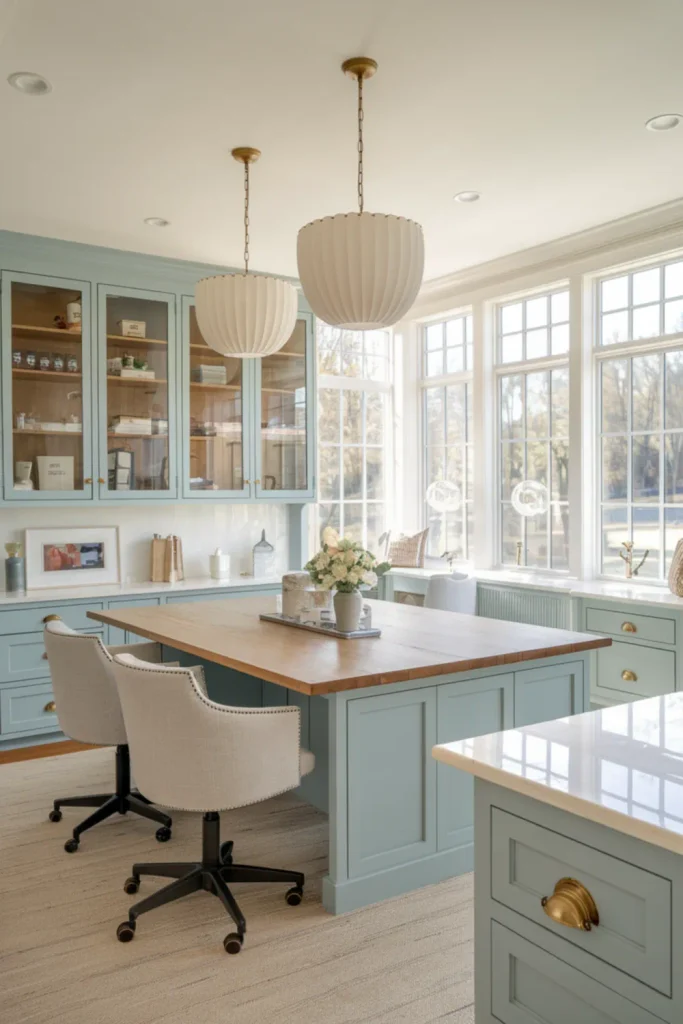
Custom cabinetry makes sense when a craft collection includes oversized machines, wide paper, fabric bolts, or tools that standard drawers cannot hold.
Soft blue cabinets, brass hardware, quartz counters, and an oak-topped island give the studio a composed appearance while supporting demanding projects.
Plan storage around actual equipment dimensions, including ventilation space and room for cords.
Glass-front cabinets should display only supplies that remain orderly; less attractive materials can stay behind solid doors.
Add outlets at counter height so machines do not depend on extension cords crossing the floor.
32. Budget Craft Room Makeover With Repurposed Furniture
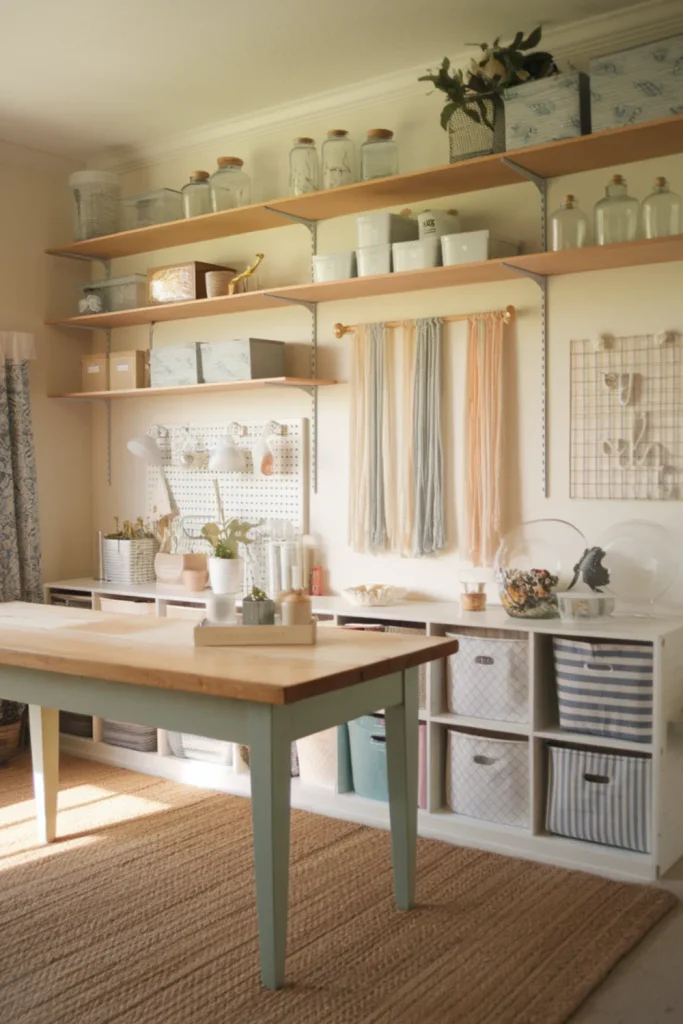
Secondhand furniture often provides more usable work surface than a small decorative craft desk.
A repainted dining table, thrifted glass jars, mismatched shelves, and fabric-covered boxes can create attractive craft room decor without requiring custom cabinetry.
Check the table for wobble, splinters, and a comfortable working height before spending time refinishing it.
Repeating one sage or muted blue paint color across unrelated pieces helps the collection feel intentional.
Save money on display containers, but buy reliable wall anchors and shelf brackets where safety and weight support matter.
Conclusion
Start your craft room decor plan with the feature that will improve how you work, whether that is a clear tabletop, better lighting, or easier access to tools.
Then choose one color palette and repeat it through storage, furniture, and wall displays.
Completing the practical layout first will make it easier to add decorative details without creating more clutter.