
Guests arrive bundled in coats, the daylight disappears early, and the porch that looked cheerful in summer can suddenly feel bare. A few thoughtful winter details can make that cold walk to the door feel much more welcoming, even when nobody plans to sit outside for long.
The most useful cozy winter front porch ideas work with the way you actually use your entrance. A narrow stoop might need only a wreath and a soft glow. A deep covered porch can handle a bench, blankets brought out for visitors, or a small table for a warm drink. Greenery, natural textures, and a restrained color palette help the space feel seasonal well beyond the holidays.
These 18 ideas range from quick decorating changes to simple furniture arrangements. Choose the ones that suit your weather and available shelter, then leave plenty of room for guests to open the door, set down a bag, and step inside comfortably.
1. Frame the Door With Loose Evergreen Garland
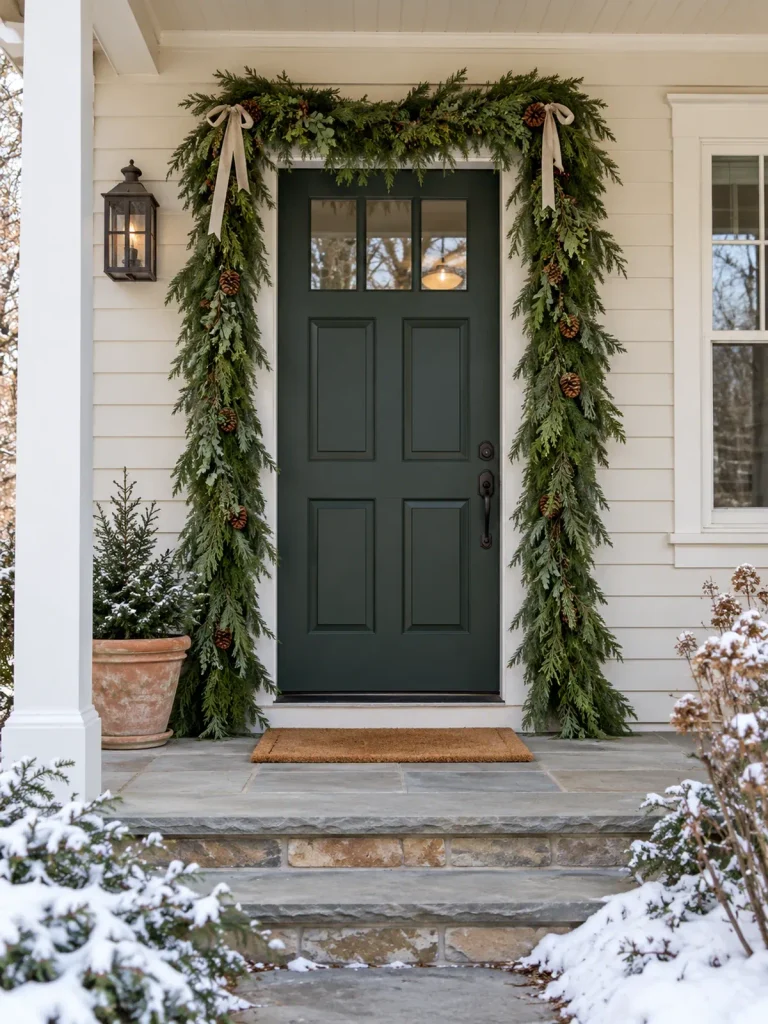
A loose evergreen garland gives the doorway a soft outline against bare winter landscaping. Mix the feathery texture of cedar with fuller pine branches, then keep the finishing touches simple: a few pinecones and cream ribbon are enough. The greenery supplies most of the color, so the look can stay up after holiday ornaments come down.
Fit the garland around the trim rather than across glass, hardware, or the opening. Use attachment methods suited to your exterior surface and the garland’s weight. On a smaller porch, shorten the trailing ends so they stay off the landing and do not brush against arriving guests.
2. Fill Tall Planters With Cedar and Red Twigs
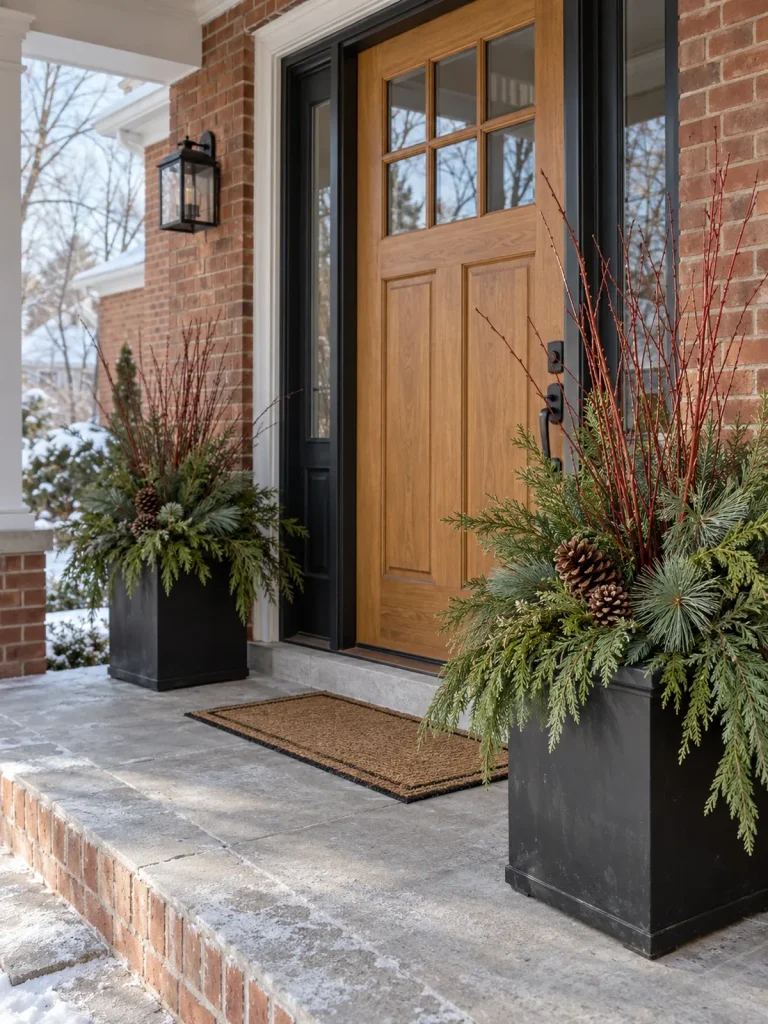
Empty summer containers can become winter porch planters with a few contrasting materials. Let cedar spill over the rim, add pine for fullness, and place upright red twigs toward the center. Large pinecones help bridge the space between the fine needles and bare branches.
A matching pair feels settled beside a wider doorway, while one substantial planter can suit an asymmetrical entry. Position containers beyond the door swing and away from the place guests naturally stand. Use pots rated for your winter conditions, and secure the cuttings inside an insert so wind does not scatter the arrangement across the porch.
3. Soften a Wooden Bench With Winter Textures
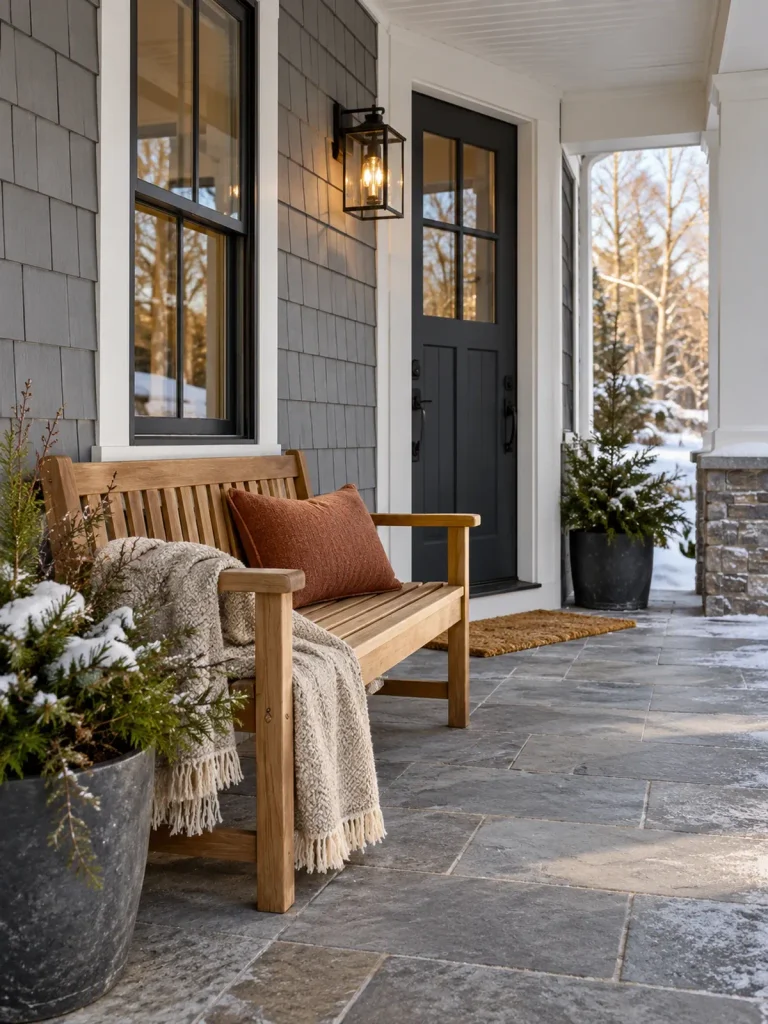
A wooden bench makes a covered porch feel furnished without requiring a full seating group. Choose one warm-colored outdoor pillow, such as rust or cinnamon, and add an oatmeal throw when guests are expected. Against gray siding or stone, those soft textures create an inviting contrast.
Place the bench along a wall where someone can pause without blocking the entrance. Leave enough room in front for a person to sit down and stand comfortably. Bring ordinary blankets back indoors afterward, and store cushions when weather requires it. Even a roofed porch can collect windblown snow, so avoid treating shelter as complete weather protection.
4. Layer a Simple Doormat Over a Checked Rug
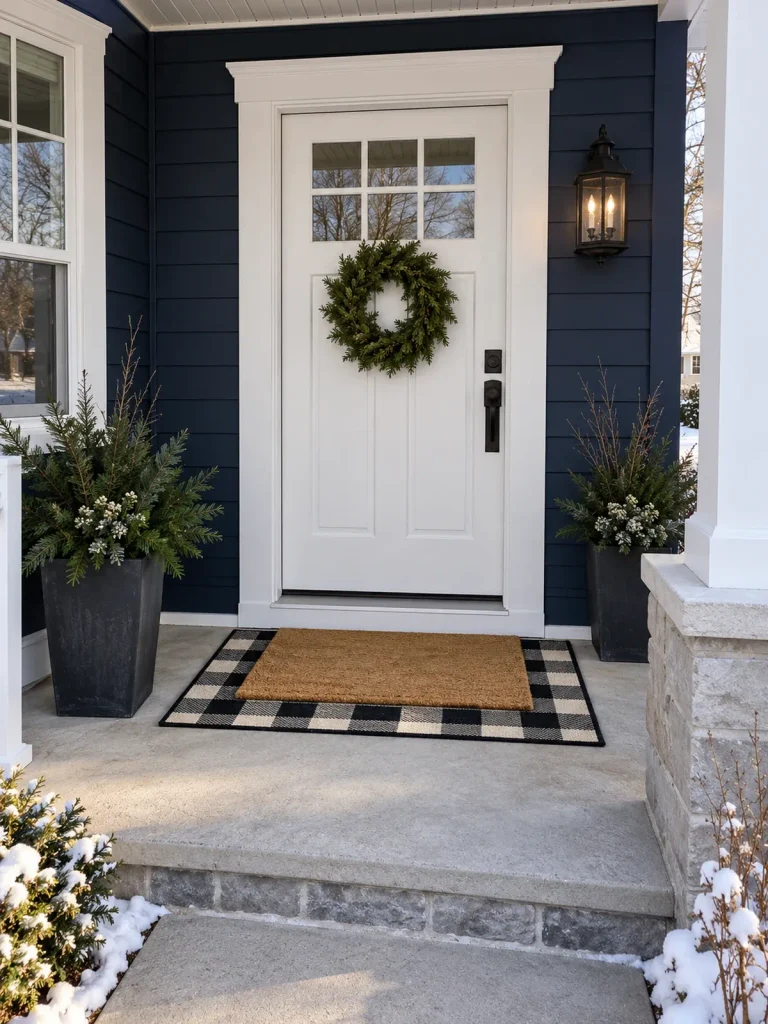
A plain coir mat over a checked outdoor rug adds pattern right where guests pause at the door. Black and ivory keep the combination easy to pair with evergreen decorations, painted doors, and natural wood. It is a small change that can make a sheltered entry feel thoughtfully put together.
Choose thin layers that lie flat and allow the door to open freely. The bottom rug should remain visible around the mat without stretching into a step or narrow passage. Check both layers after wet weather. On an exposed porch that stays snowy or damp, a single suitable outdoor entry mat is the more practical choice.
5. Group Glowing Lanterns on a Side Ledge
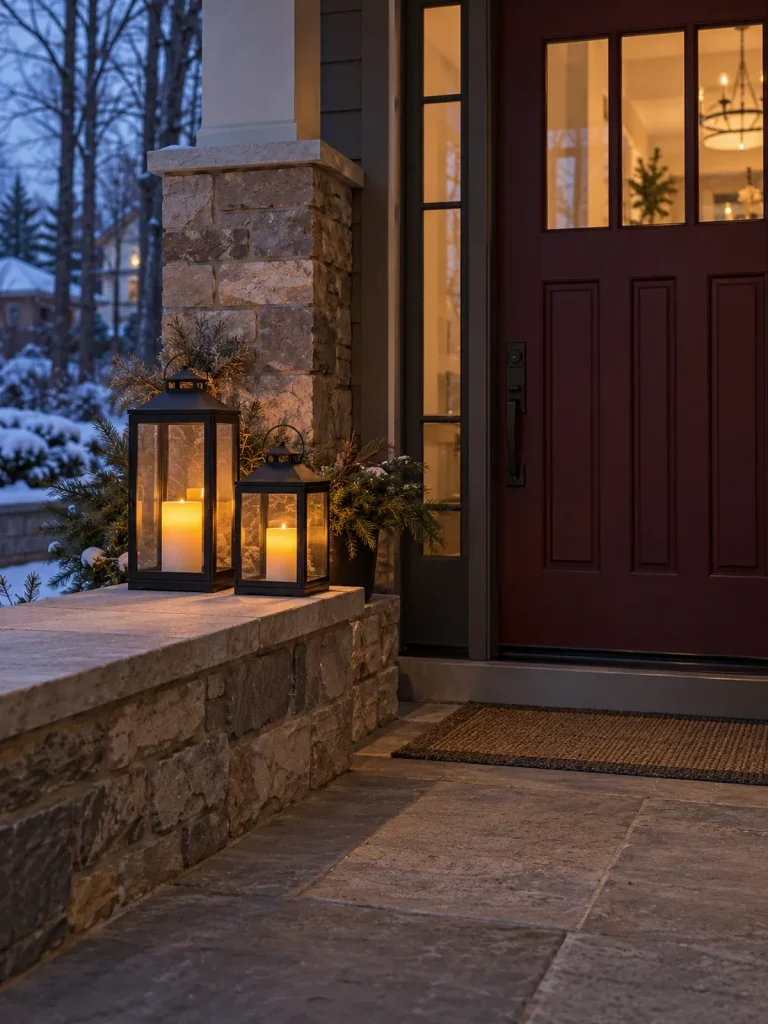
Lanterns bring a gentle glow down to porch level, which feels especially inviting on dark winter afternoons. Group two different sizes on a broad side ledge rather than lining them along the walking route. Black frames give the arrangement definition against brick, stone, or pale siding.
Use flameless candles and lanterns that are rated for the conditions where you will place them. A protected ledge still needs enough depth to support each lantern fully, with no overhanging base. Keep the grouping compact and remove it during severe weather. Decorative candlelight adds atmosphere, while the regular porch light should still illuminate the entrance and steps.
6. Hang a Grapevine Wreath With Velvet Ribbon
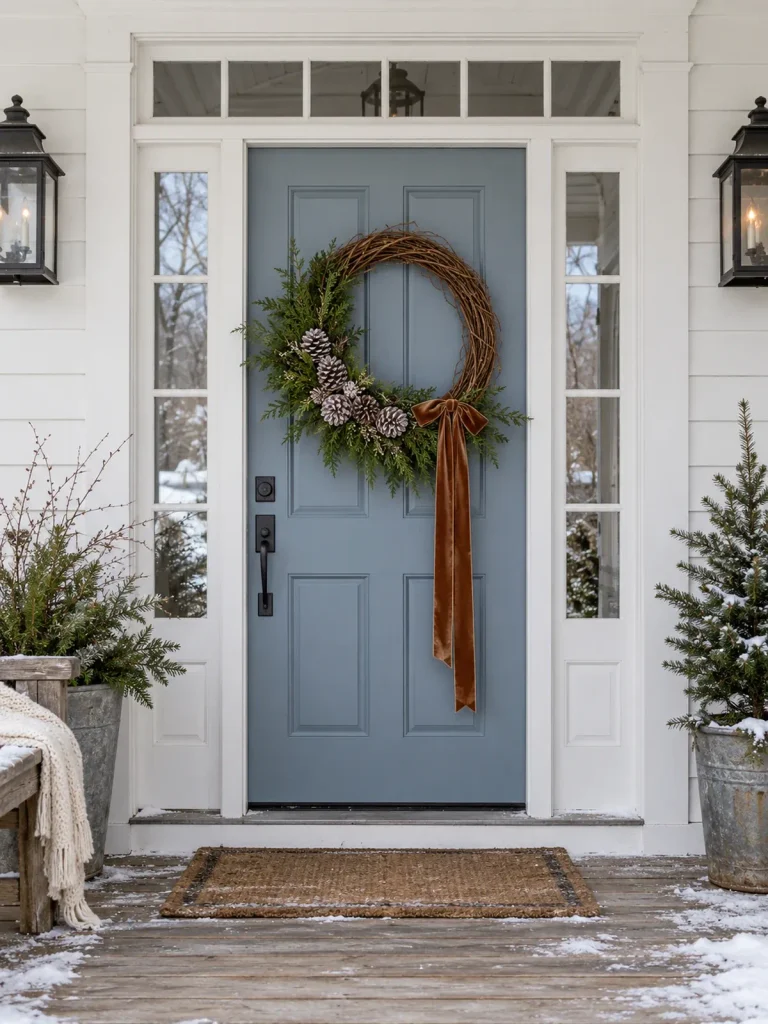
An asymmetrical grapevine wreath offers a quieter winter look than a heavily decorated holiday wreath. Keep part of the brown vine exposed, tuck cedar and pinecones around the lower side, and finish with a single velvet ribbon. Dusty blue, soft green, and natural wood doors all suit this restrained combination.
Choose a wreath that fits the door panel without covering the handle or brushing the frame. Long ribbon tails look graceful, but trim them if they catch in the latch or flap against the finish. Real velvet belongs in a well-protected spot; an outdoor-suitable ribbon is easier to manage on an exposed door.
7. Set Out Rocking Chairs With Plaid Pillows
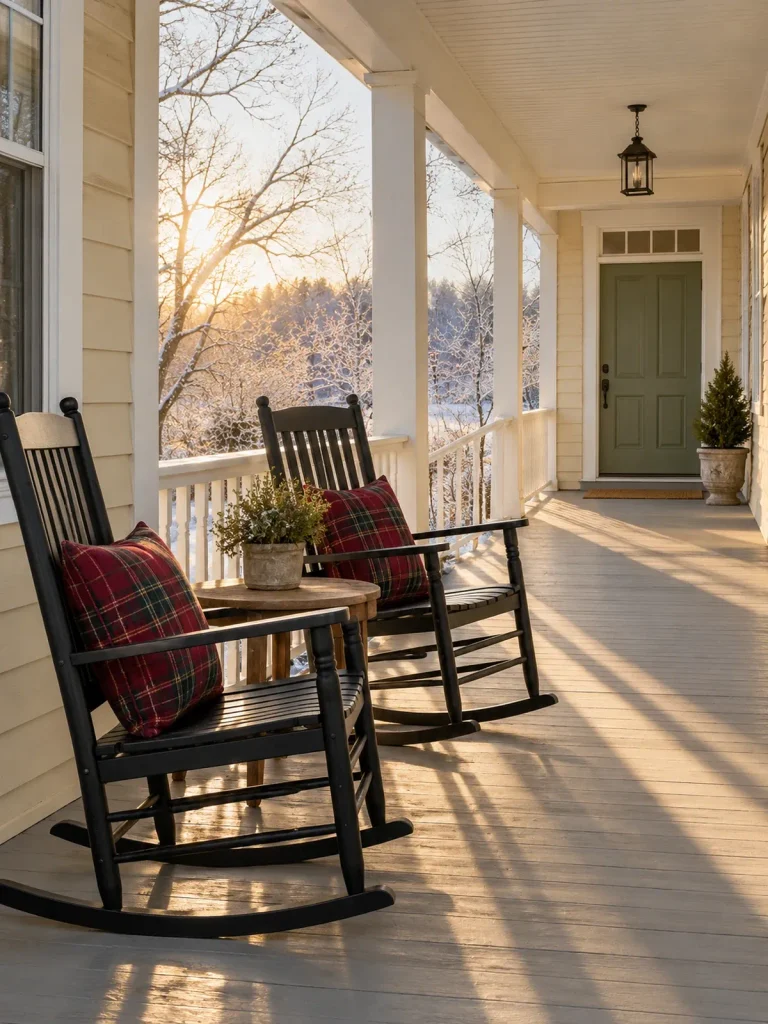
Two rocking chairs can turn the side of a deep porch into a place for a short winter catch-up. Black wood and red plaid pillows suggest a familiar farmhouse look, while a small table gives guests somewhere to set a mug. Keep the rest of the furnishings spare so the chairs remain the focus.
Allow room for the full rocking motion, not just the footprint of the chair at rest. Neither the runners nor a seated guest should reach into the route to the door. This arrangement works best on a level, sheltered porch during comfortable weather; cushions can come indoors between visits.
8. Trace a Porch Beam With Warm String Lights
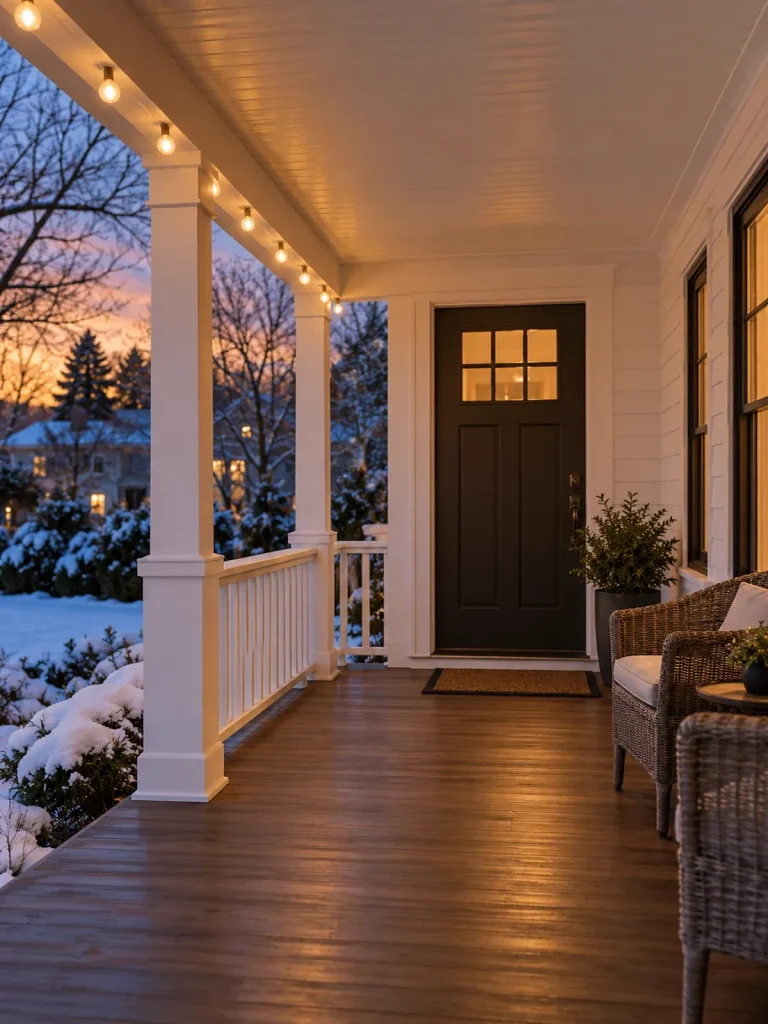
A short strand of warm string lights can soften the ceiling line of a covered porch. Following one beam creates a tidy glow without turning the entrance into a holiday display. Small globe bulbs suit a bungalow or cottage, especially when paired with simple furniture and an otherwise quiet doorway.
Choose lights and any extension cords marked for outdoor use, and use GFCI-protected power outdoors. Follow the manufacturer’s mounting and connection limits, keeping cords away from walking areas and moving doors. Let the existing porch fixture provide the main visibility. The string lights are an extra layer of atmosphere, not a substitute for useful entry lighting. Electrical Safety Foundation International
9. Use a Hanging Basket on a Narrow Entry Wall
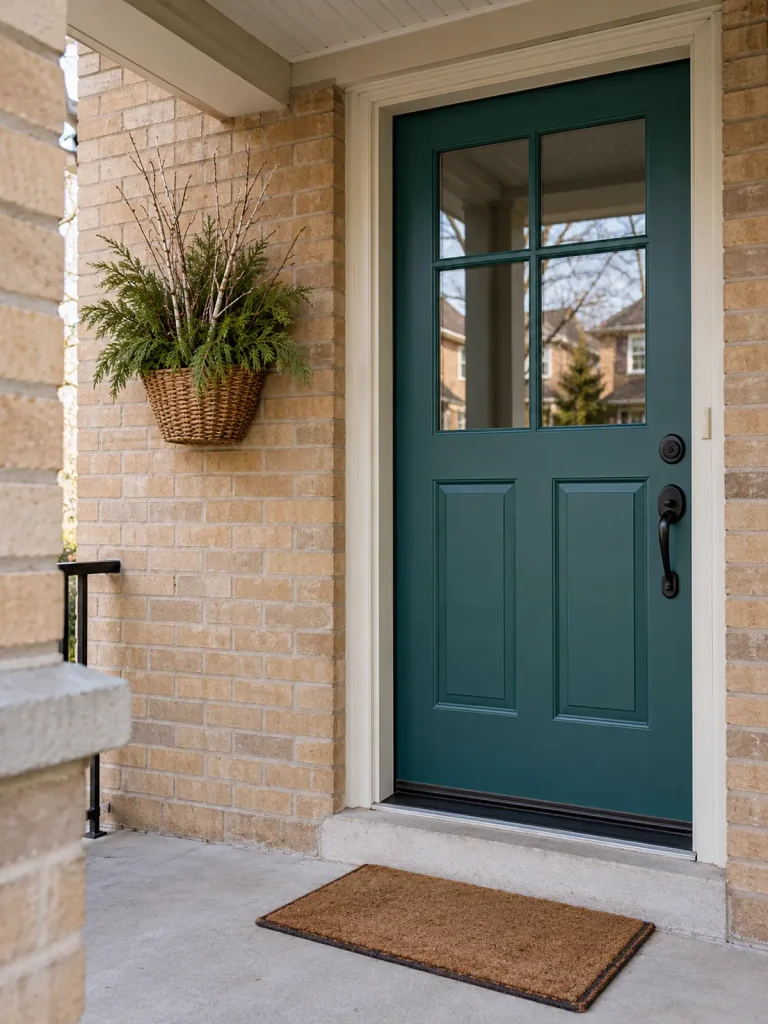
On a narrow stoop, decorating the wall can be more useful than filling the floor. A shallow hanging basket with cedar tips and bare twigs adds winter texture beside the door while leaving room for a guest carrying groceries or a delivery box.
Look for a flat-backed basket that sits close to the surface, and keep the arrangement compact enough that branches do not catch sleeves. Hang it with hardware suitable for the wall and its filled weight. Natural woven baskets are best under reliable cover; an outdoor-rated alternative makes more sense where rain reaches the entry. Keep the doorbell and house number fully visible.
10. Flank the Door With Small Evergreen Trees
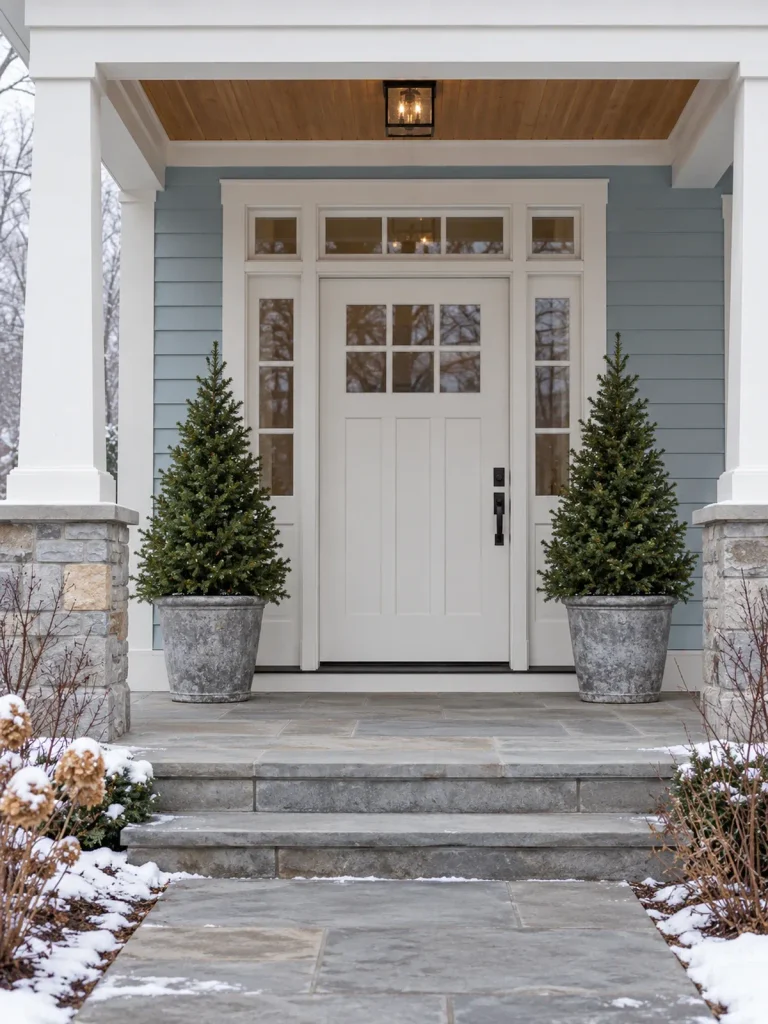
Small evergreen trees give a roomy landing a calm, balanced outline. Their upright shapes frame the door without needing ornaments, ribbons, or a complicated arrangement. Weathered gray containers keep the effect understated, while dark pots create a sharper contrast against white trim.
Choose living plants with your local winter conditions and container growing in mind. Roots in pots face colder conditions than roots in the ground, so a nursery can help you choose a suitable variety and overwintering plan. Use draining containers and monitor soil moisture rather than assuming winter plants need no care. Quality outdoor faux trees offer a lower-maintenance alternative for a difficult site. missouribotanicalgarden.org
11. Bring in Birch Texture With a Small Log Tub
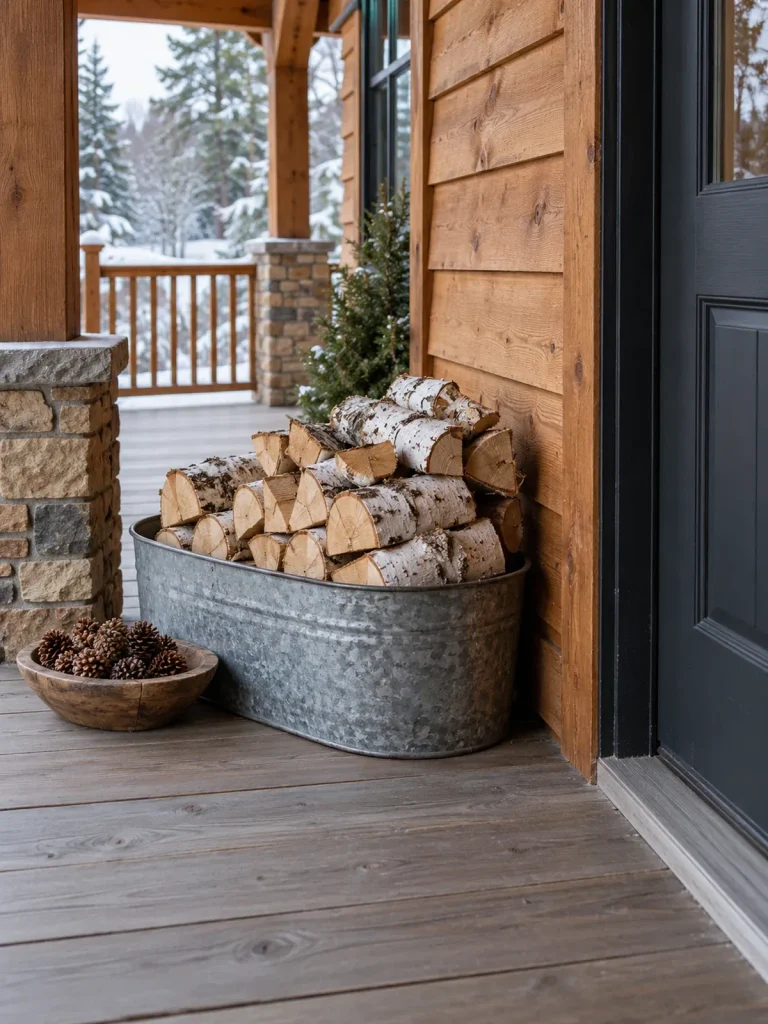
Pale birch bark adds a cabin-like texture that works well with cedar siding and dark painted doors. A low galvanized tub keeps a small grouping contained, and a shallow bowl of pinecones repeats the natural brown tones. Treat the arrangement as a temporary seasonal vignette rather than a working woodpile.
For a display that stays close to the house, decorative faux logs avoid turning the porch into firewood storage. Bring real logs out only briefly, then return them to appropriate storage away from the building. Keep the tub out of splash zones and traffic. A modest amount looks more intentional than an overflowing stack.
12. Warm a Mild-Winter Porch With Terracotta
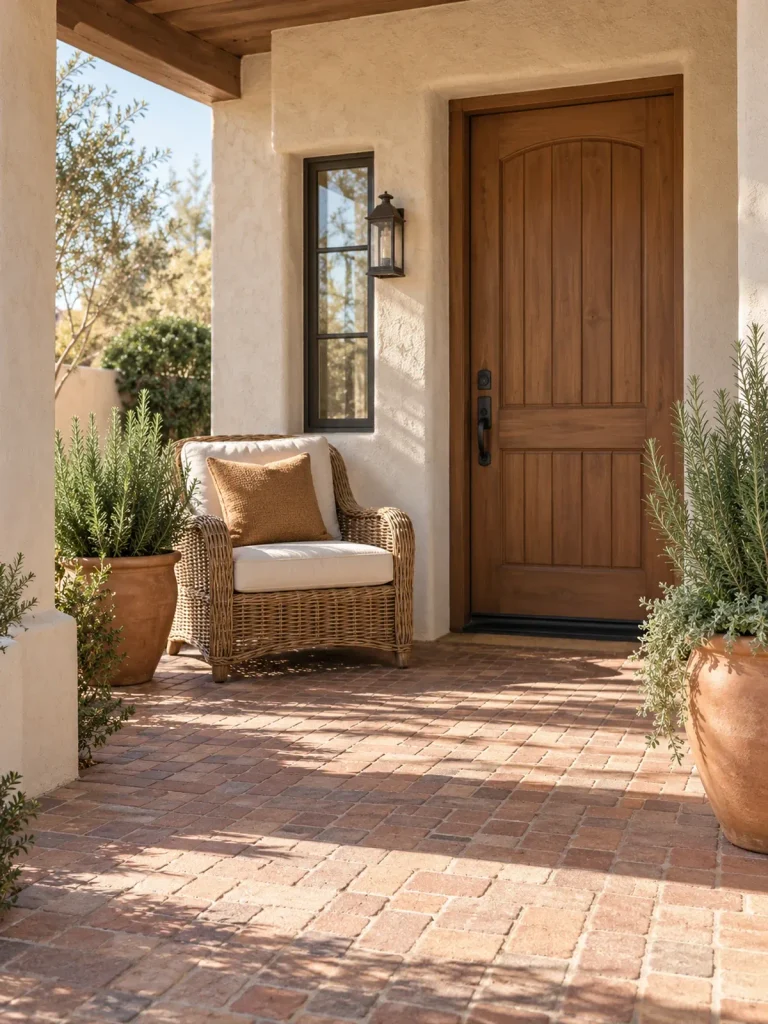
A porch does not need snow to feel ready for winter. On a sheltered stucco entry, terracotta pots, a wood door, and caramel cushions create warmth through color and texture. A single wicker-style chair makes the setting feel relaxed without filling the landing with furniture.
Rosemary adds a fine evergreen texture where local winter conditions suit it; in colder areas, choose a locally appropriate plant or use cut greenery instead. Ordinary terracotta can be vulnerable to freezing conditions, so select containers for your climate or bring them under proper protection. Keep the soft furnishings removable, and let the warm materials do most of the decorating.
13. Refresh a Window Box With Winter Cuttings
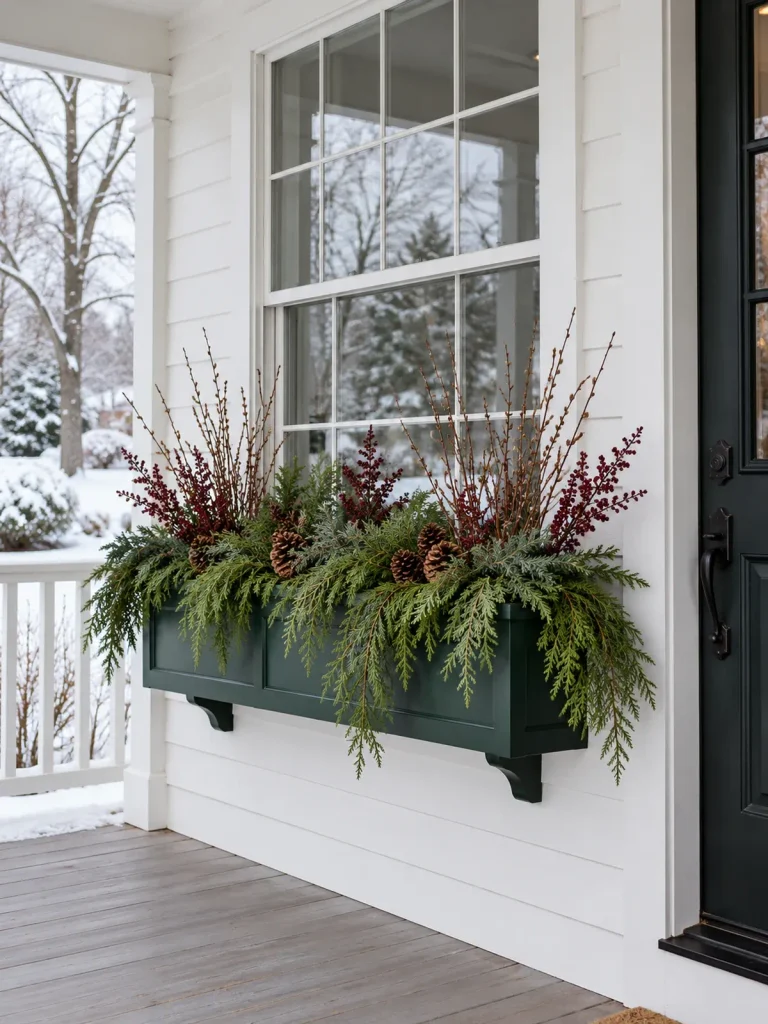
An existing window box can carry winter interest across a blank porch wall. Fill it with overlapping cedar cuttings, a few pinecones, bare twigs, and restrained burgundy accents. The arrangement draws attention upward, making it useful when the floor needs to remain open.
Keep the tallest stems below the parts of the window you need to see through or operate. Spread the materials along the box rather than building one oversized mound at the center. Check that the box and its supports are secure before adding weight, and keep drainage openings clear. Remove brittle cuttings as they dry so the display stays tidy near the entrance.
14. Tie Small Cedar Swags to the Railing
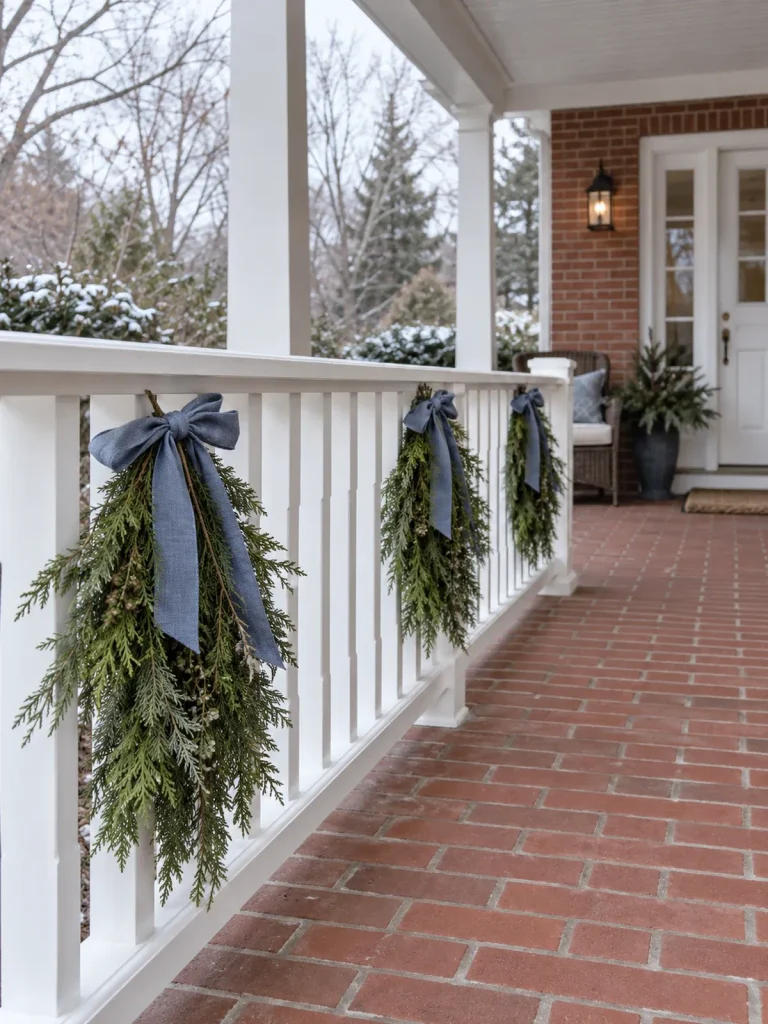
Separate cedar swags give a long railing a gentle seasonal rhythm. Small bundles tied with muted blue ribbon feel soft against white balusters and red brick, especially when the doorway already has enough decoration. Repeating one simple shape keeps the porch from looking crowded.
Attach each bundle to the outer face of the balusters, leaving the handrail fully usable. Keep greenery within the railing’s outline and away from gates, stairs, or the route guests follow. Use ties that suit the material and will not damage the finish. After windy weather, check for loose branches and trailing ribbons before welcoming visitors onto the porch.
15. Make a Small Cocoa Spot With a Bistro Set
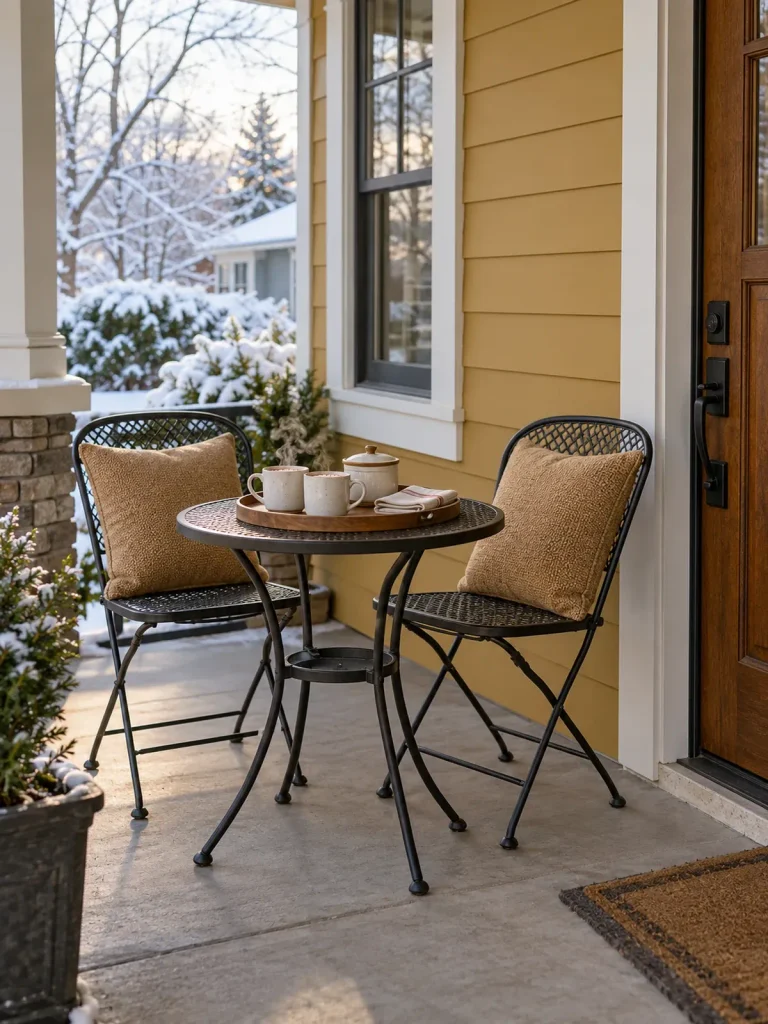
A small bistro set creates a reason to enjoy the porch for a few minutes on a mild winter afternoon. Two cocoa mugs on a tray, simple napkins, and a covered snack container make the welcome feel considered without requiring an outdoor dining setup. Camel-colored pillows soften the metal furniture.
Choose a side nook with enough space to pull out the chairs while keeping the entrance clear. Bring the drinks and food outside just before sitting down, then clear the table afterward. Skip a freestanding heater or open flame in a cramped entry; this is a fair-weather perch for a brief visit, not an attempt to heat the outdoors.
16. Keep Guest Blankets in Covered Storage
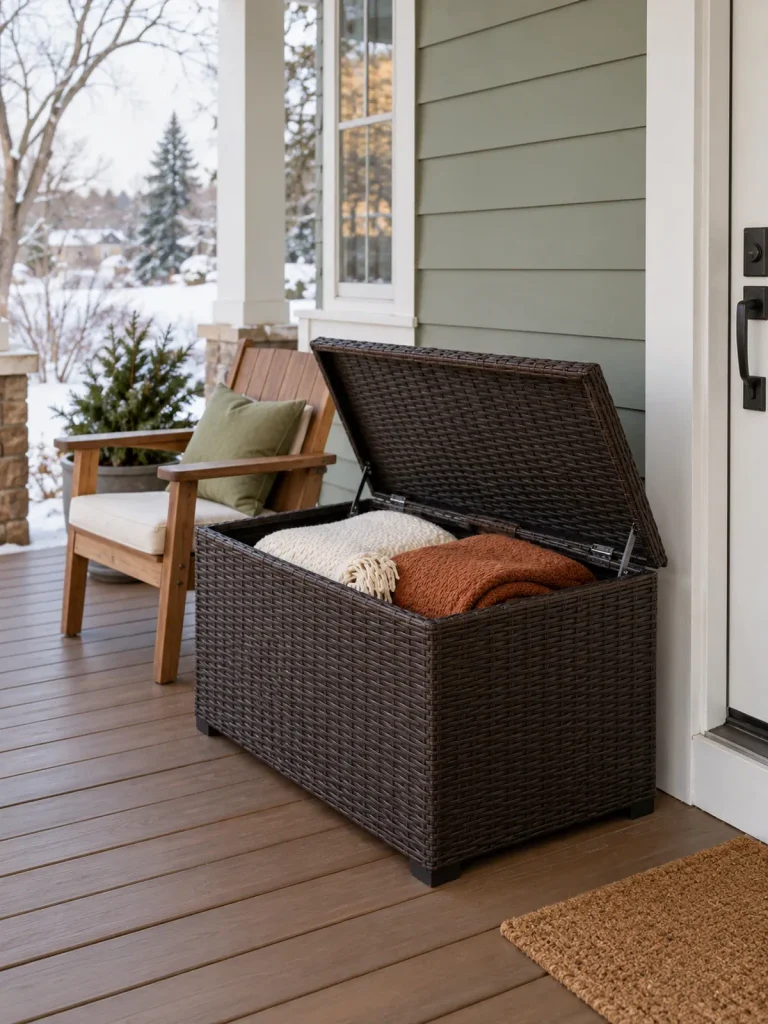
Blankets are more useful when they are easy to bring out and put away. A compact outdoor storage chest beside a chair keeps the porch looking orderly and provides a home for removable seating accessories. A dark woven-look finish works with wood furniture, painted siding, and simple winter greenery.
Check the chest’s actual weather rating rather than assuming a woven exterior keeps moisture out. Put away only completely dry textiles, and inspect them regularly for dampness. In a wet or very cold climate, indoor storage may be the better option. Keep the lid closed between uses, and do not treat the chest as extra seating unless it is designed for that purpose.
17. Style a Vintage Sled in a Sheltered Corner
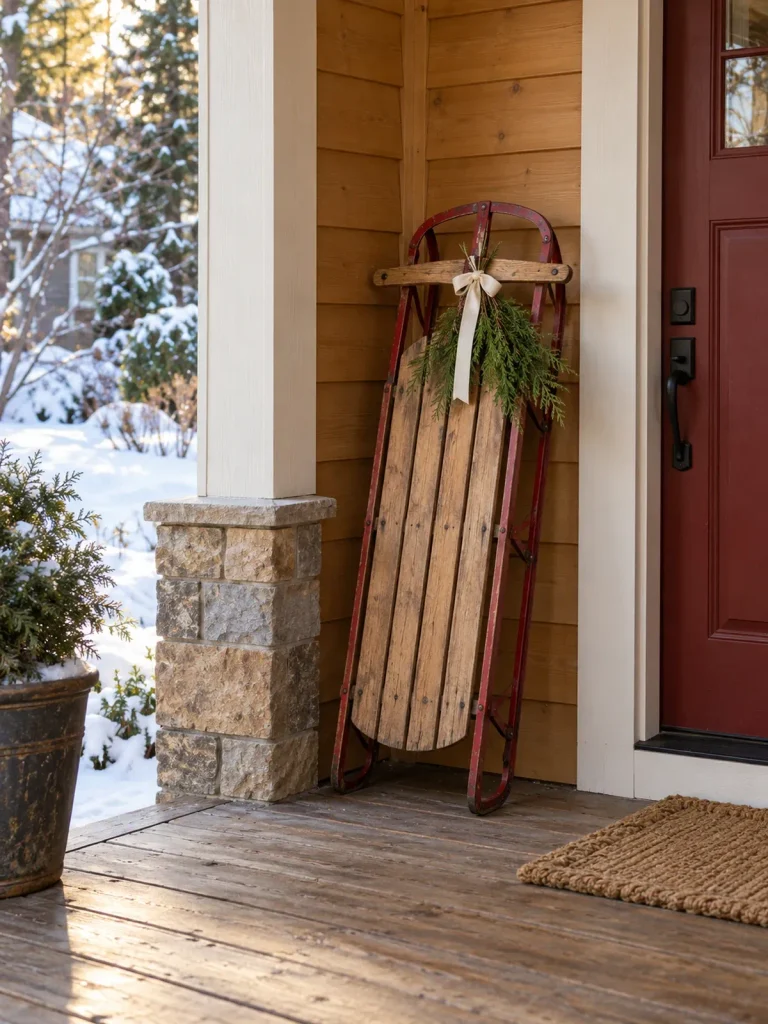
A vintage sled adds a nostalgic winter detail without requiring a porch full of seasonal props. The worn wood and red runners provide enough character on their own. A small cedar bundle tied near the top connects the piece to the rest of the greenery without covering its shape.
Set the sled in a recessed, sheltered corner outside the door swing, and secure it so a bump or gust cannot tip it into the walkway. Check for rough wood, loose hardware, and sharp metal before displaying an older piece. One sled is enough; leaving space around it makes the entrance feel calmer and easier to use.
18. Arrange Dried Hydrangeas in a Stone Urn
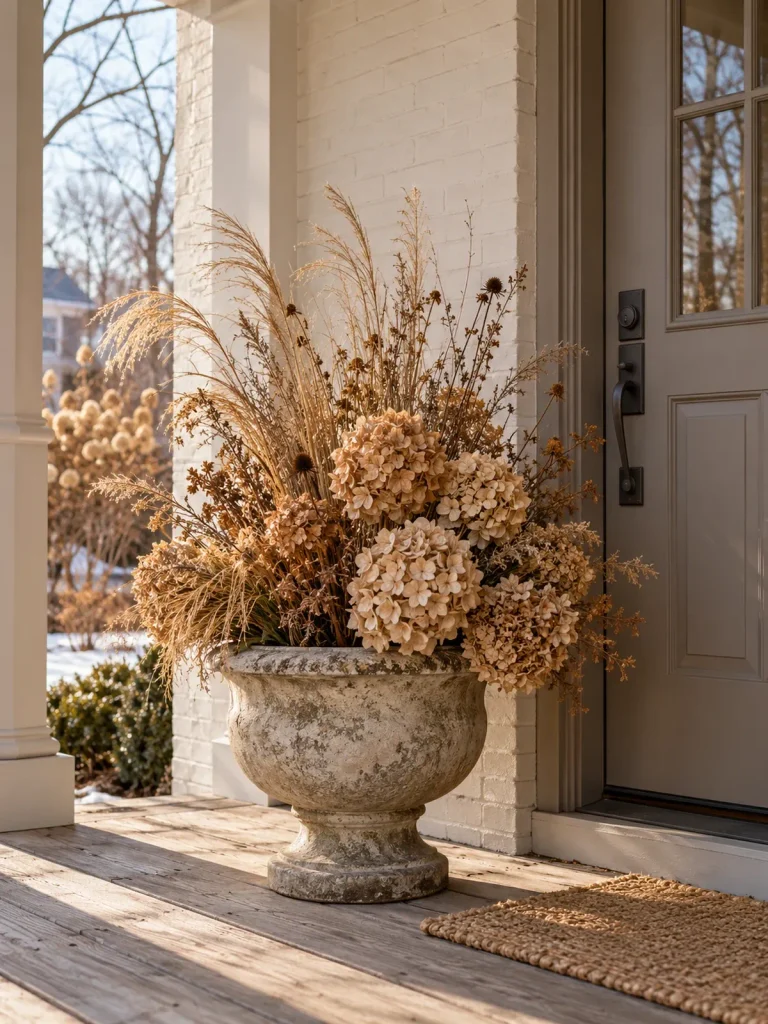
Dried hydrangeas bring a soft, papery texture to a winter entrance. Arrange the flower heads low and full in a stone urn, then add a few tawny grasses and brown seedheads for height. The muted colors feel warm against cream brick and gray paint, with no bright holiday accents needed.
Reserve this look for a deep, sheltered porch where rain and strong wind are unlikely to reach the stems. Dried flowers are fragile and can shed, so keep the arrangement away from the place guests brush past. Anchor the stems inside the container and remove fallen pieces promptly. Weather-suitable faux stems are another option for a less protected entry.
How to Combine Winter Porch Details Without Crowding the Entry
Start with the part of the porch guests actually use. Open the door fully, walk the route from the steps, and decide where someone carrying a bag would pause. Decorate the space left over.
For a small stoop, combine one door decoration with a practical mat. On a wider landing, add a single planter or a balanced pair. A deep covered porch can take a seating area, but the chairs need room to move without narrowing the entrance.
Repeat one or two colors across the pieces you choose. Cedar, cream, and black feel calm; rust, tan, and natural wood feel warmer. You do not need to use every idea to make the porch welcoming.
After snow, rain, or wind, check the walking surface, mats, containers, and attachments. Bring vulnerable textiles and fragile decorations indoors when necessary. Keeping the entrance easy to use is part of making guests feel comfortable.
Frequently Asked Questions
How can I decorate a tiny front porch for winter?
Use the door or wall as your main decorating surface. A compact wreath or shallow hanging basket adds interest without taking up standing room. Add one flat outdoor mat, and leave the floor clear if a planter would crowd the entrance.
What winter porch decorations can stay up after Christmas?
Plain evergreen wreaths, unadorned potted trees, pinecones, grapevine, lanterns, and neutral textiles all work beyond the holidays. Remove ornaments and strongly Christmas-themed accessories, then use a limited palette that complements your house.
Can pillows and blankets stay outside all winter?
That depends on their care instructions and the exposure. Outdoor fabric does not make every cushion waterproof, and ordinary blankets should come inside after use. Store textiles clean and dry, checking any outdoor chest regularly for moisture.
How do I make an uncovered porch feel cozy?
Focus on outdoor-rated lighting, a suitable entry mat, and sturdy containers selected for your climate. Skip fragile dried arrangements and loose indoor textiles. A simple wreath and one substantial planter can add warmth without creating a display that needs constant rescuing.
How can I decorate without buying a whole new set of accessories?
Reuse existing planters, simplify a holiday wreath, or move one suitable chair into a sheltered spot. Choose one focal point first, then add only what helps it feel finished. Avoid buying extra pieces before checking the space with the door open.
A Warm Welcome Starts With One Thoughtful Detail
Choose the winter porch idea that fits the entrance you have: greenery on a small door, lanterns on a broad ledge, or comfortable seating under a deep roof. Begin with one focal point and a clear path, then add a second detail only if the space needs it. A welcoming porch can be simple, easy to maintain, and ready for the next knock at the door.