
Your front door might open into a narrow hallway, a small alcove, or straight into the living room. Whatever the layout, the entrance still needs to handle the same everyday things: shoes, keys, bags, and the moment you walk through the door with your hands full.
These apartment entryway ideas combine useful storage with welcoming details, without assuming you have a separate foyer. You’ll find options for tight walls, open-plan rooms, and roomier condo entrances, plus ways to add color and warmth.
Start with the problem you notice most, then choose the setup that fits your space and routine.
1. Choose a Slim Console for a Narrow Wall
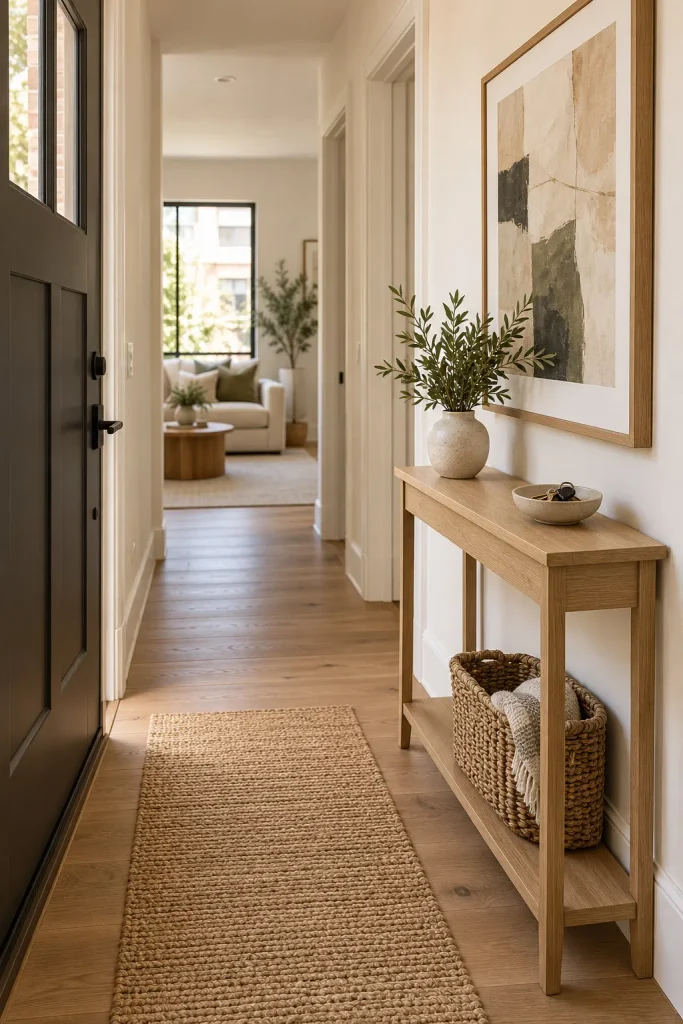
A slim console table gives you a landing surface without filling the hallway with furniture. Look for a shallow profile, then measure the space with the front door open before choosing a piece. A table that looks petite online can still stick out farther than you expect.
Style the top with a key bowl and one decorative object, leaving room to set down a phone. An open lower shelf can hold a basket for reusable shopping bags. Light oak and slender legs suit a bright apartment entryway, while a darker finish adds definition against pale walls.
2. Use a Floating Shelf When Floor Space Is Tight
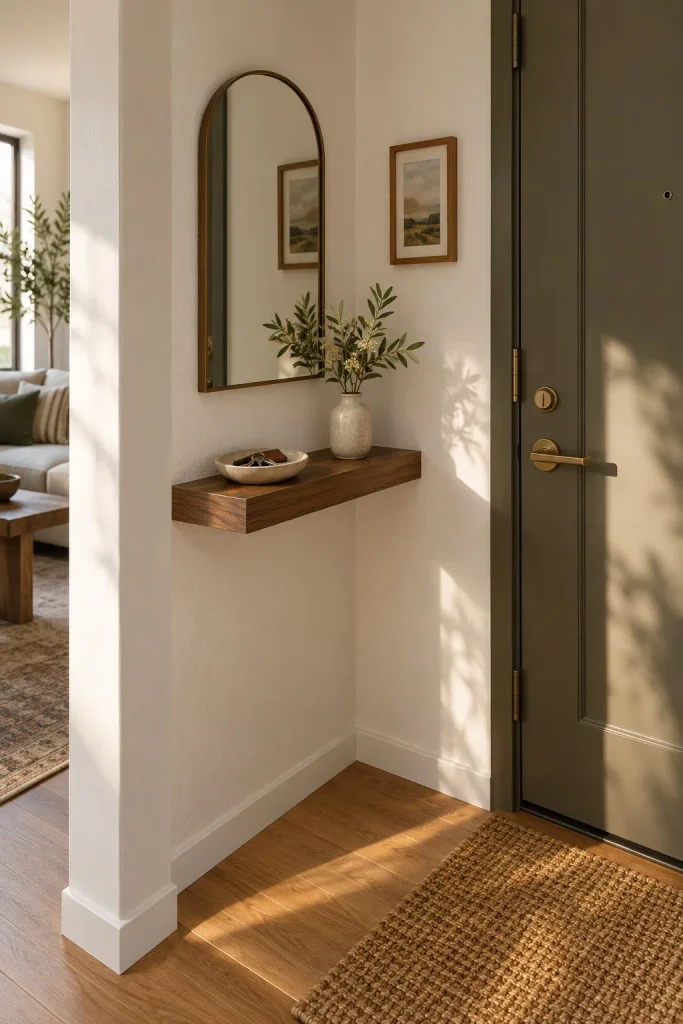
When even a narrow table feels bulky, a floating shelf can handle the essentials. A short walnut ledge beside the door creates a dedicated spot for keys, sunglasses, and a small vase while leaving the floor open. That empty space is especially useful in a small apartment entryway where every piece of furniture affects the walking route.
Choose a depth that supports your everyday items without encouraging piles. Check your lease before drilling, and use hardware suitable for the wall and intended load. Keep heavy bags elsewhere so the shelf remains a simple landing spot rather than overloaded storage.
3. Hide Everyday Shoes in a Shallow Cabinet
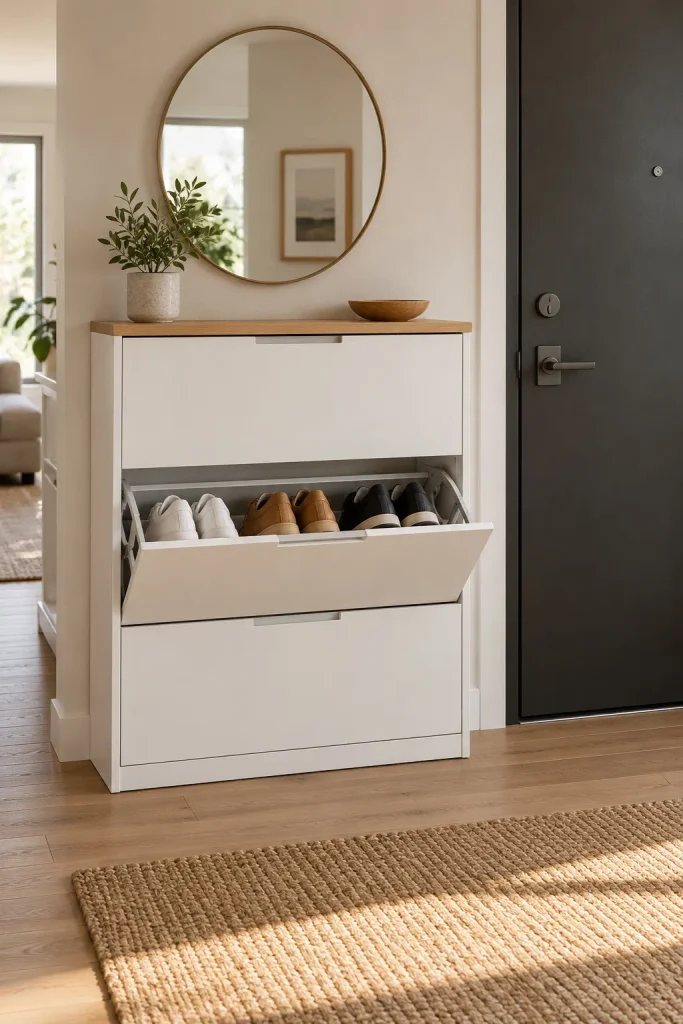
A shallow shoe cabinet keeps the entrance visually quiet while giving everyday footwear a defined home. Flip-front compartments can work well along a narrow wall, but check the cabinet’s internal dimensions against your shoes before buying. Tall boots and larger sneakers may need a different storage spot.
Leave enough space to open each compartment and stand in front of it comfortably. Use the top for a small catchall instead of lining it with accessories. Follow the manufacturer’s anchoring instructions, even for a low-profile unit. White doors with a wood top create a calm backdrop for apartment entryway decor.
4. Add a Storage Bench for Shoes and Seating
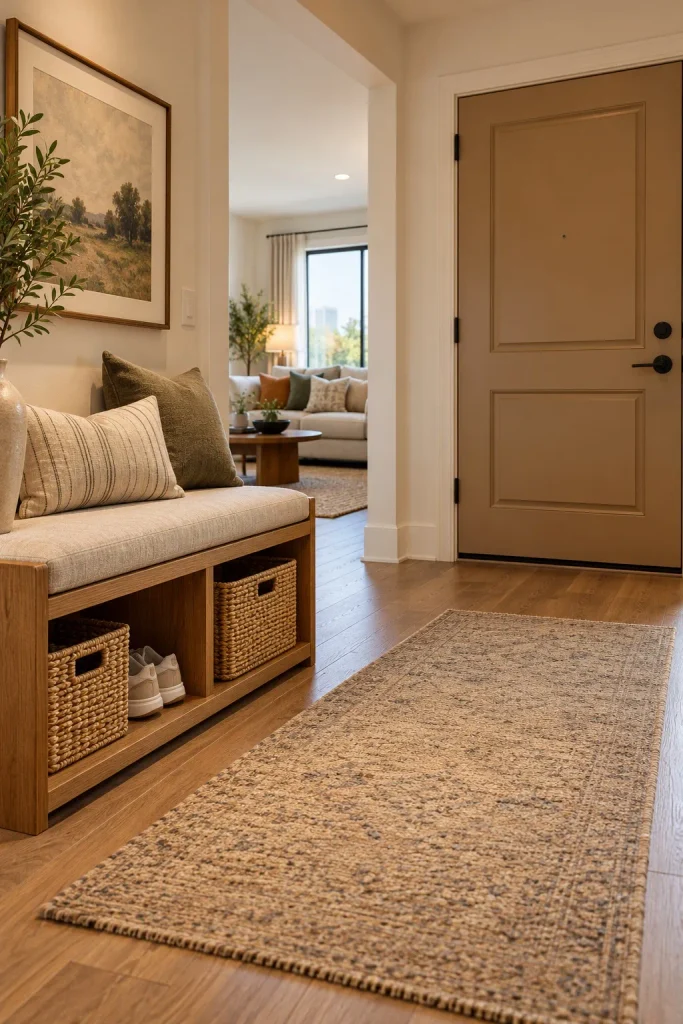
If sitting down to put on shoes would make mornings easier, prioritize a bench over another table. An oak bench with open cubbies offers a seat and storage in one footprint. Baskets can hold hats or shopping bags, while one open compartment keeps frequently worn shoes easy to reach.
Measure both the bench and the space your knees will occupy when seated. A slim cushion adds comfort without crowding the surface with pillows. Choose a bench intended for seating, and keep its top mostly clear. This approach suits an entry with enough width for someone to sit while another person passes.
5. Build a Wall Hook Drop Zone
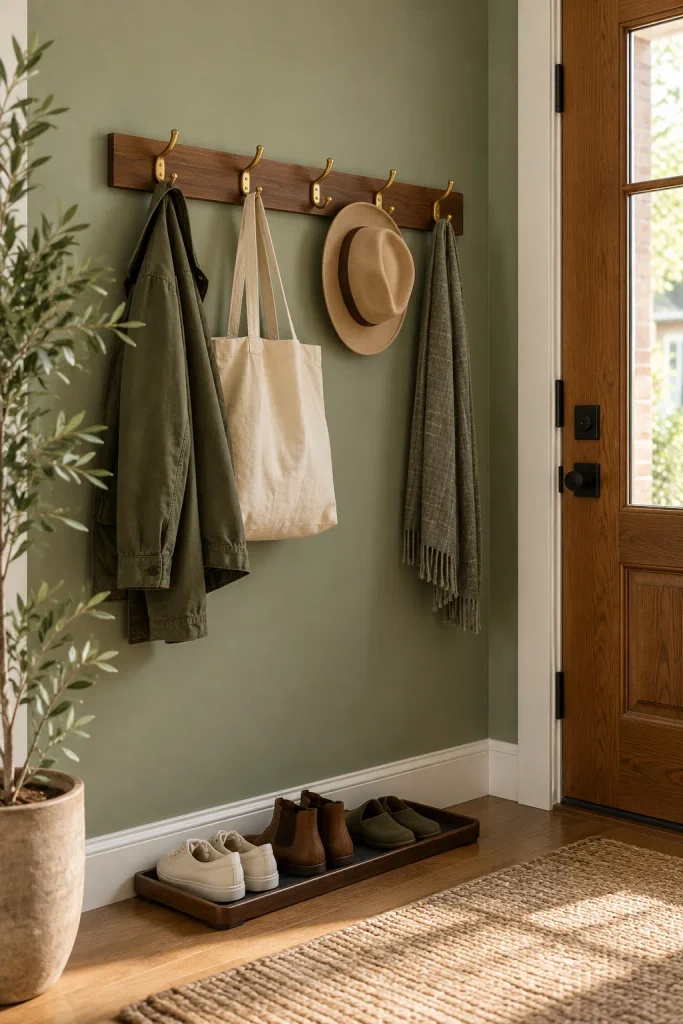
Wall hooks turn a blank stretch beside the door into a practical drop zone. A wood rail with spaced metal hooks can hold a daily jacket, tote, and hat without adding a freestanding furniture footprint. Arrange the hooks around what you actually carry rather than filling every available inch.
Remember that coats and bags project farther into the hallway than the hooks themselves. Place the rail where loaded items won’t interfere with the door or switches. For a rental, check permission and mounting requirements first. Limit this spot to current essentials, with occasional-use outerwear stored in a closet.
6. Keep Everything Together with a Freestanding Hall Tree
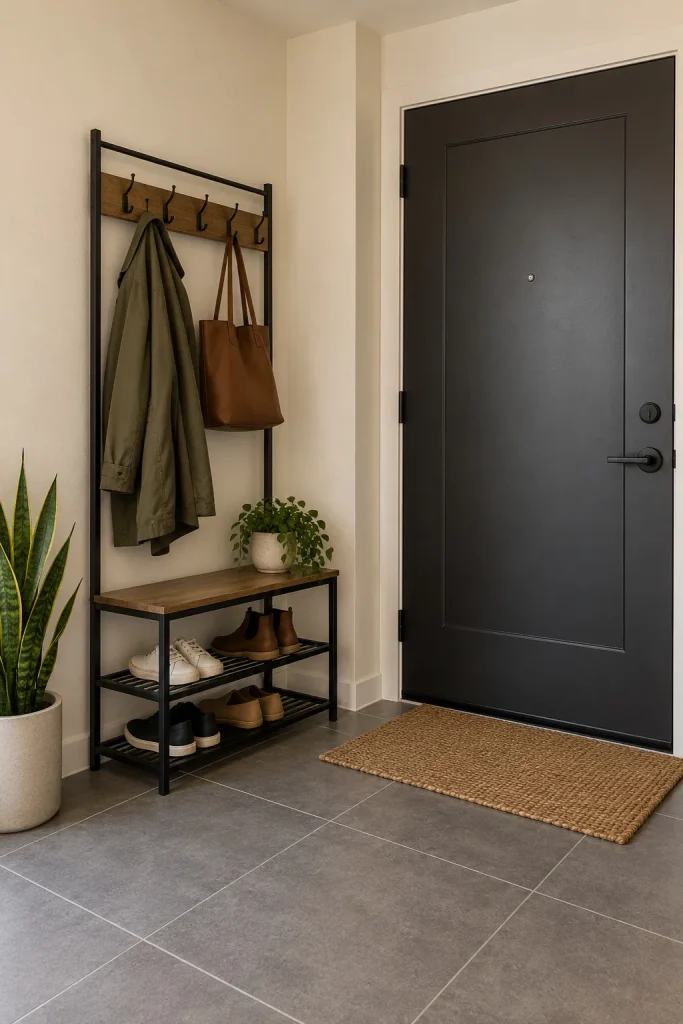
A freestanding hall tree brings several entryway functions together when separate pieces would feel scattered. A modest metal-and-wood design can combine hooks, a small seat, and a shoe shelf. It also gives the entrance a clear purpose in apartments without an existing coat closet nearby.
Check the full footprint, including hanging sleeves and bags, before committing to a model. Keep heavier items low and follow any anti-tip requirements. Freestanding furniture may still require anchoring. Black metal adds structure against cream walls, while a wood seat keeps the arrangement warm. Use only a few hooks at a time to avoid a crowded silhouette.
7. Give a Roomier Entry a Closed Storage Wardrobe
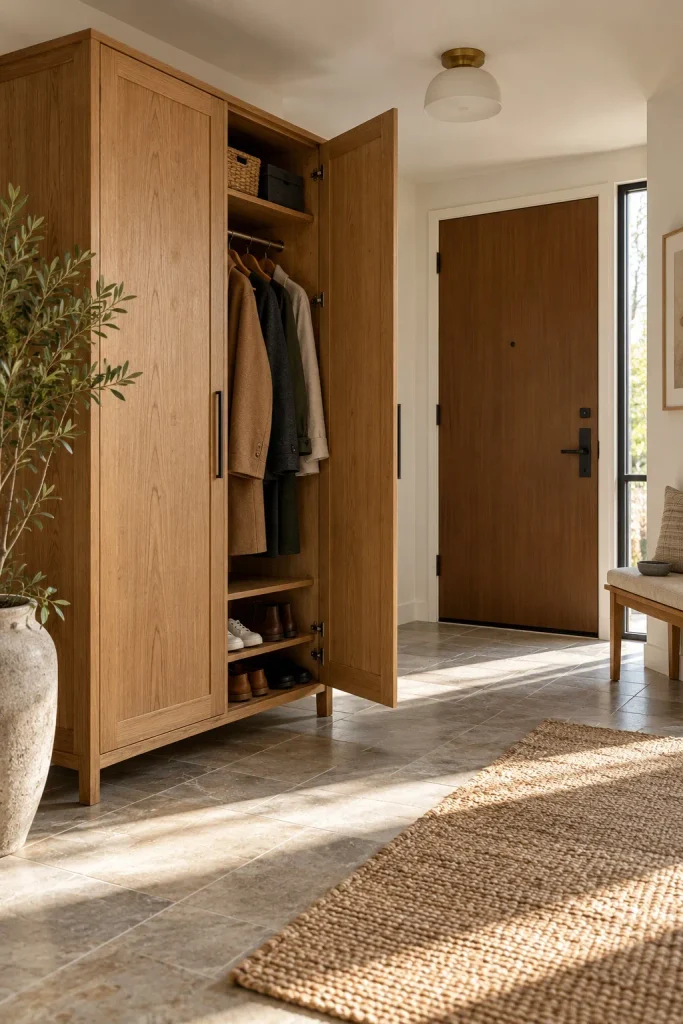
A roomier condo entrance can benefit from a tall wardrobe that conceals coats, shoes, and bags behind closed doors. This is a different commitment from a small drop zone: the cabinet becomes the main entry storage, so choose its interior layout around your household’s belongings.
Include hanging space for the coats you wear most and a lower shelf or tray for shoes. Measure door-opening clearance as carefully as the cabinet depth. Check baseboards, nearby switches, and the route for bringing the unit inside. Secure it according to the manufacturer’s instructions, and leave the surrounding walls simple so the entry doesn’t feel packed.
8. Define an Entry Behind the Sofa
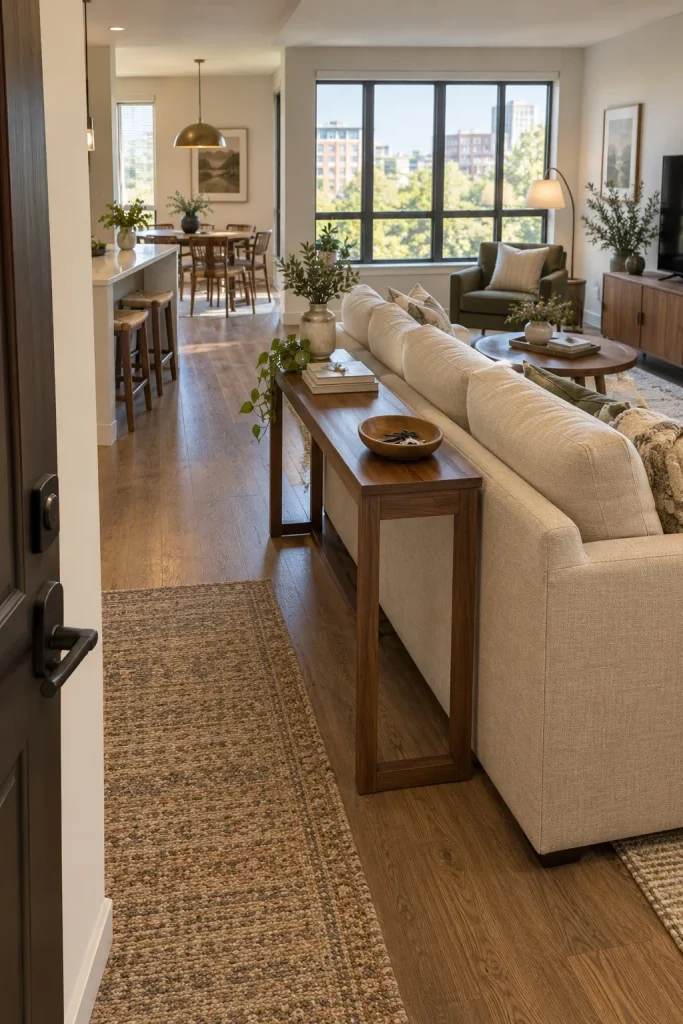
When the front door opens directly into the living room, furniture placement can suggest an entrance without adding a partition. Position the sofa so its back faces the arrival area, then place a narrow console behind it. The console becomes a place for keys while the sofa establishes the living zone beyond.
Try the arrangement with floor markings before moving heavy furniture. You need a comfortable route from the door into the room, with no awkward squeeze around the sofa arm. Keep console styling low and restrained so the entry still feels connected to the living space rather than visually blocked off.
9. Put an Awkward Corner to Work
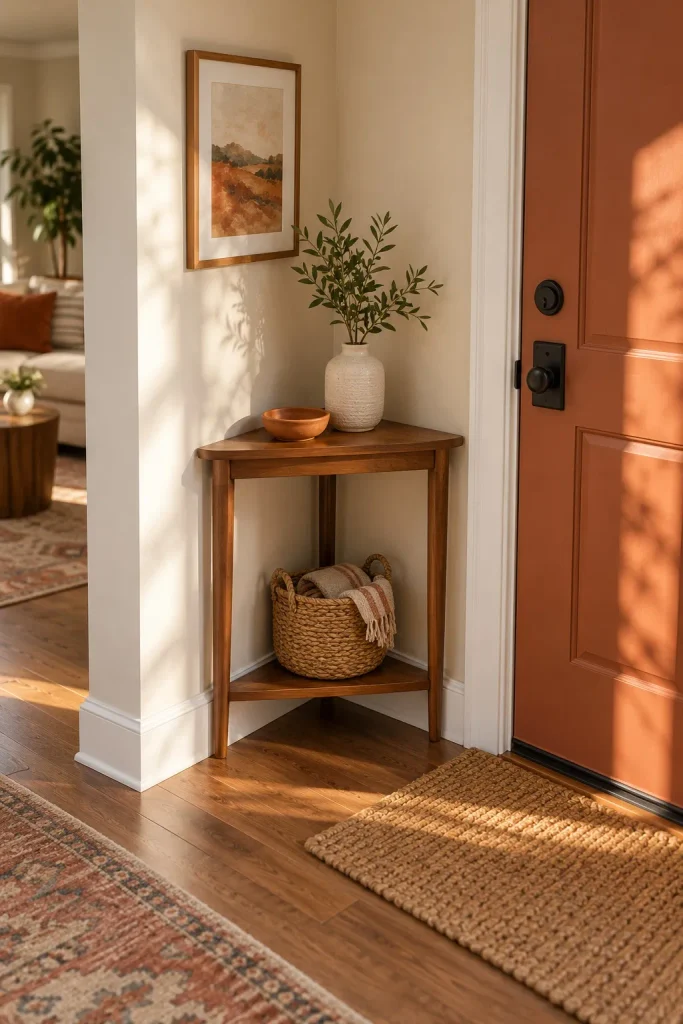
An unused corner can hold a small landing surface even when neither adjacent wall has room for a standard console. A triangular corner table follows the shape of the junction, creating space for a dish and a little vase without stretching along the hallway.
Check that the table sits neatly around baseboards and doesn’t overlap the door swing. A small basket underneath can hold a folded shopping bag, but avoid piling shoes around its legs. Warm wood and terracotta accessories make the arrangement feel intentional. This is a useful choice for someone who needs a place for keys more than substantial entryway storage.
10. Create Adjustable Storage with a Pegboard
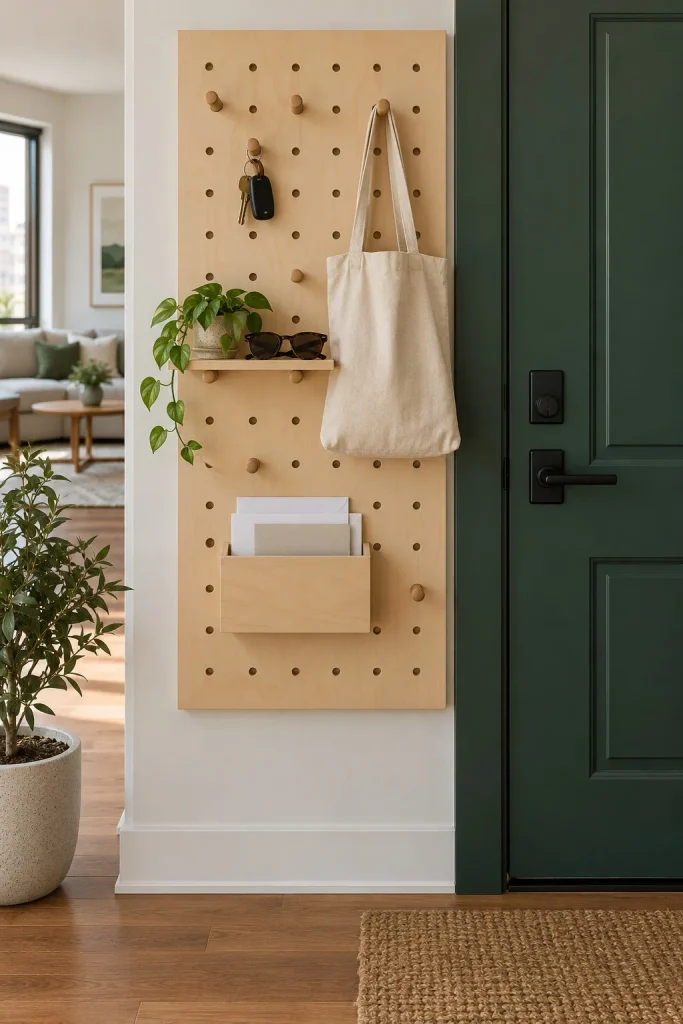
A pegboard lets you adjust your entryway organization as your routine changes. Wooden pegs can hold a light tote or keys, while small shelves and pockets provide homes for sunglasses and incoming mail. A pale birch board gives the setup a furniture-like finish instead of making the entrance feel like a utility wall.
Plan around a few specific objects and leave some holes unused. Too many attachments can make the wall look busy and push items into the passage. Mount the system as directed for your wall type, check its load limits, and keep heavier bags on a more suitable support.
11. Set Up a Small Mail and Charging Station
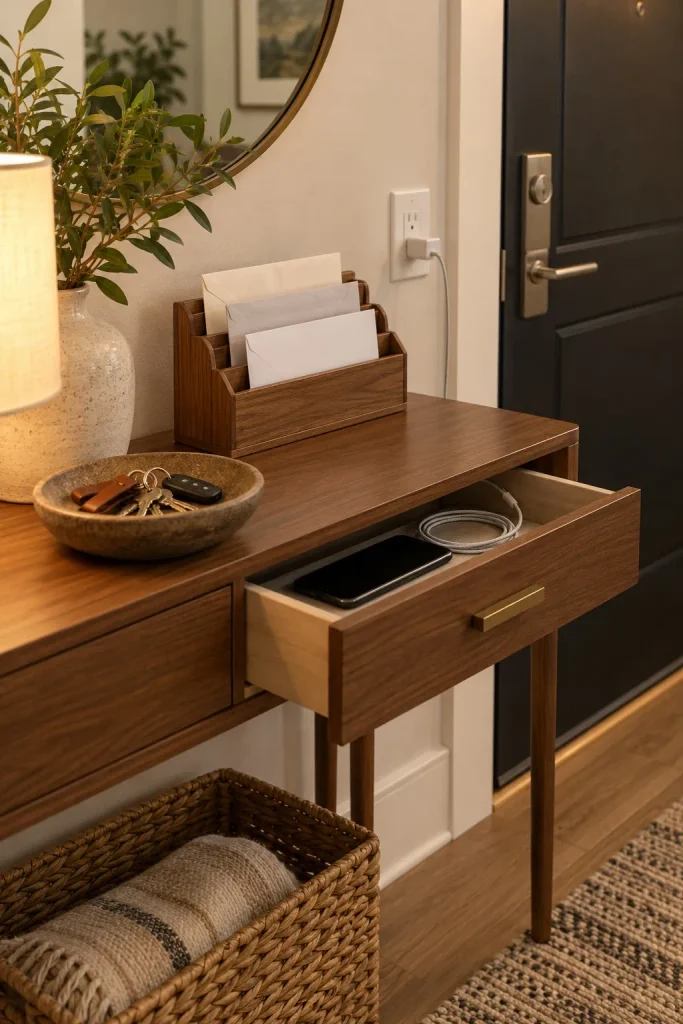
If paper and charging cables collect near the door, give them a contained station. A compact letter sorter on a console separates incoming mail from the rest of the surface. Add a small tray for keys and use a nearby outlet for a neatly routed charging cable.
A shallow drawer can conceal the cable when it isn’t in use. If you charge a phone inside storage, follow the device’s ventilation guidance and avoid trapping it beneath papers. Keep only mail that needs action here, then clear it regularly. The goal is a brief stop for daily items, not another place for documents to accumulate.
12. Make a Landing Spot for Wet Shoes and Umbrellas
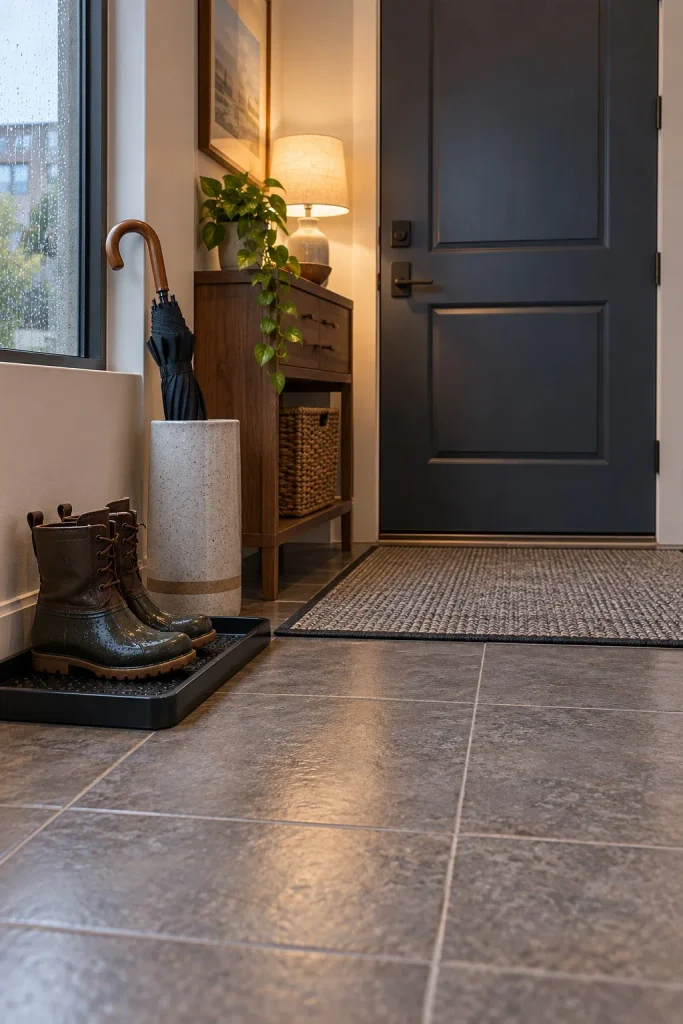
Wet-weather gear needs a different landing spot from clean bags and mail. A boot tray just inside the apartment can contain damp soles, while a narrow umbrella stand gives a folded umbrella somewhere to drip away from furniture. Pair them with a low-profile washable mat if there’s room.
Place the arrangement outside the door’s opening path and keep the route into the apartment clear. Empty collected water and let shoes and umbrellas dry before putting them away. Choose floor protection appropriate for your flooring, checking underneath regularly. Keeping this setup indoors also avoids relying on shared hallway space for personal storage.
13. Use Removable Wallpaper to Mark the Entry
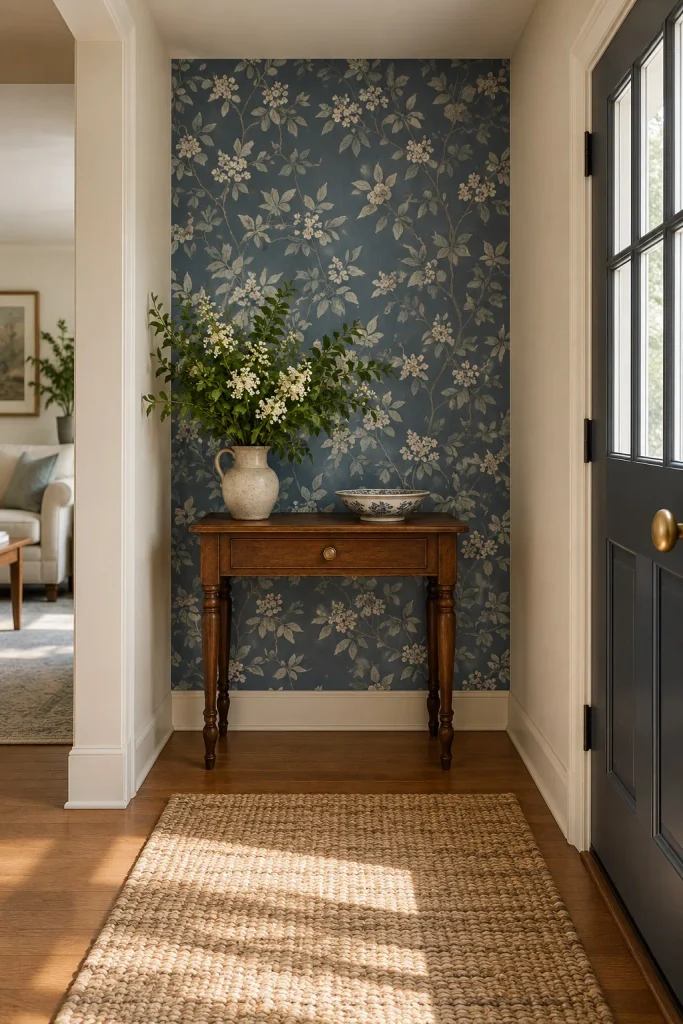
Removable wallpaper can give an apartment entrance its own identity without adding another piece of furniture. Try a restrained botanical pattern on the wall behind a petite table, with neighboring walls left plain. The change in pattern marks the arrival area even when it connects directly to a larger room.
Treat removability as a product-specific feature rather than a promise of damage-free removal. Check your lease, the wallpaper instructions, and the wall finish before applying it. Test as directed in a discreet area. Repeat one color from the pattern in a small accessory so the entry feels connected to the rest of the apartment.
14. Pair a Mirror with Gentle Entry Lighting
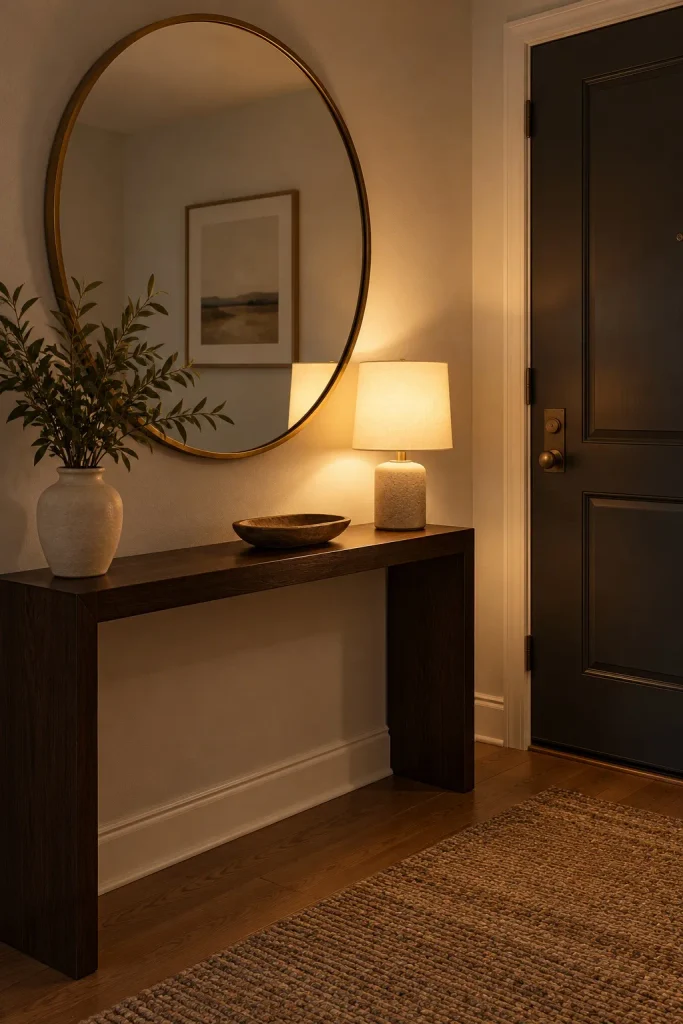
A mirror and a small lamp bring two useful functions to an entrance: a place for a quick appearance check and a softer light for coming home. A round brass mirror above a dark wood console creates a simple focal point, while a compact table lamp adds a warm pool of light below.
Consider what the mirror will reflect before mounting it. A calm wall or artwork can be more appealing than a view of clutter. Secure the mirror with suitable hardware, and route the lamp cord away from feet and the door. Leave enough tabletop space for everyday items alongside the lamp.
15. Anchor the Entrance with a Low Profile Rug
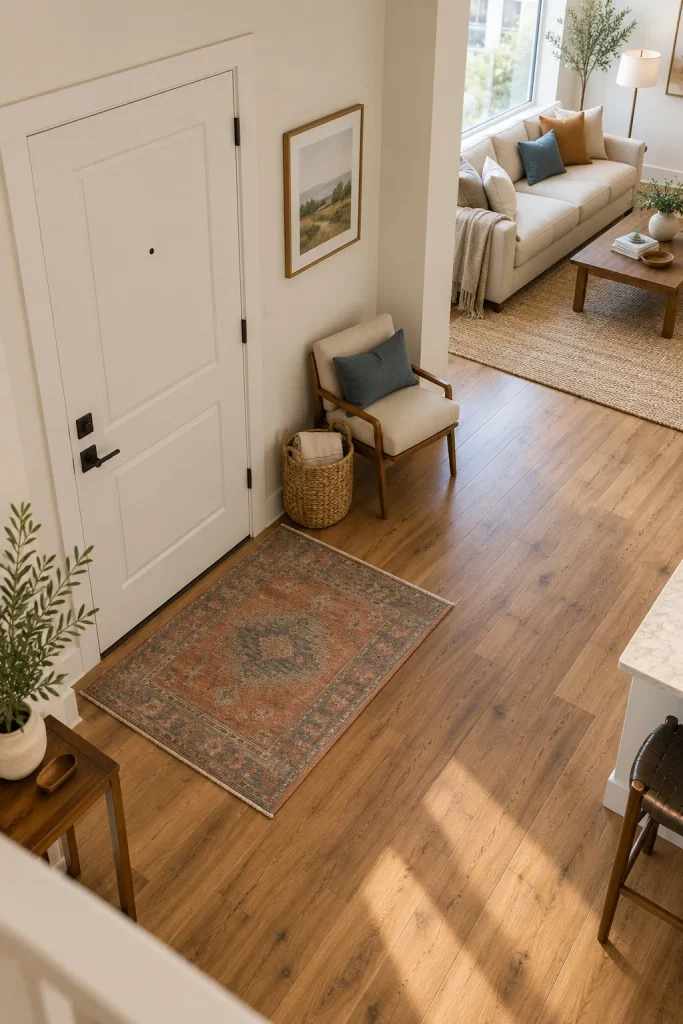
A rug can define an entryway when there are few walls to work with. In an open apartment, a small flatwoven rectangle near the door creates a visual pause before the living area begins. A muted pattern adds interest without needing extra furniture or wall decor.
Check the rug’s thickness and position with the door fully open. Keep edges flat, use a pad appropriate for the rug and floor, and avoid a size that catches awkwardly beneath nearby furniture. Choose care requirements that fit your routine. For a long entrance hallway, a runner can follow the route instead of marking a compact rectangular zone.
16. Finish a Bright Entry with a Plant Corner
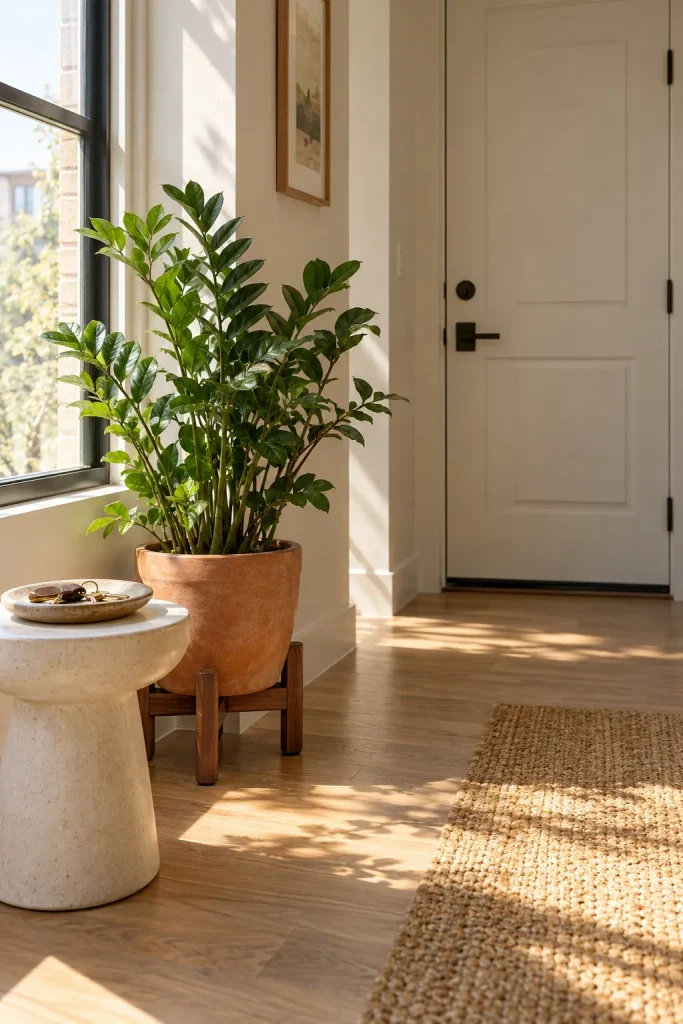
A bright entry corner can support a plant without turning the entrance into a storage area. One upright plant in a terracotta pot adds texture beside a pale wall, especially when a nearby window provides suitable light. A small stool with a key dish can complete the corner if a console would feel excessive.
Choose the plant for the actual light conditions and check species suitability if you have pets. Use a stable stand and a protective saucer, keeping leaves and the pot outside the walking route. If the entry has little daylight, choose a nonliving decorative branch arrangement instead of assuming a houseplant will thrive there.
Conclusion
Choose the entryway setup that solves your most frequent frustration first, whether that means finding your keys, containing shoes, or defining a front-door zone. Add decorative touches after the layout works for your routine. Save your favorite ideas, measure your entrance, and start with the one change you will use every day.