
An outdoor air conditioner can interrupt an otherwise thoughtful garden, especially when it sits beside a patio, walkway, or front-facing side yard. Good AC unit landscaping helps that utility area feel connected to the rest of your home while keeping the equipment easy to reach.
You do not have to hide every inch of the unit to make a noticeable difference. A clean gravel border, an offset planting bed, or a carefully placed screen may be enough. These ideas offer several ways to work with the space you have, from open, low-maintenance layouts to planted views that soften the equipment from a favorite outdoor spot.
Plan the open space before the planting
Start by finding the installation instructions for your exact model. Airflow direction, overhead space, service access, and electrical access all affect the layout. Do not copy the spacing in an inspiration image.
Trane’s general landscaping guidance suggests keeping plants 2–3 feet away and maintaining overhead clearance, but your equipment instructions and site requirements govern. Measure plant setbacks from mature foliage. Have your HVAC contractor review screens or nearby structures, and contact 811 before digging. Read Trane’s landscaping guidance.
1. Frame the Concrete Pad with a Gravel Border
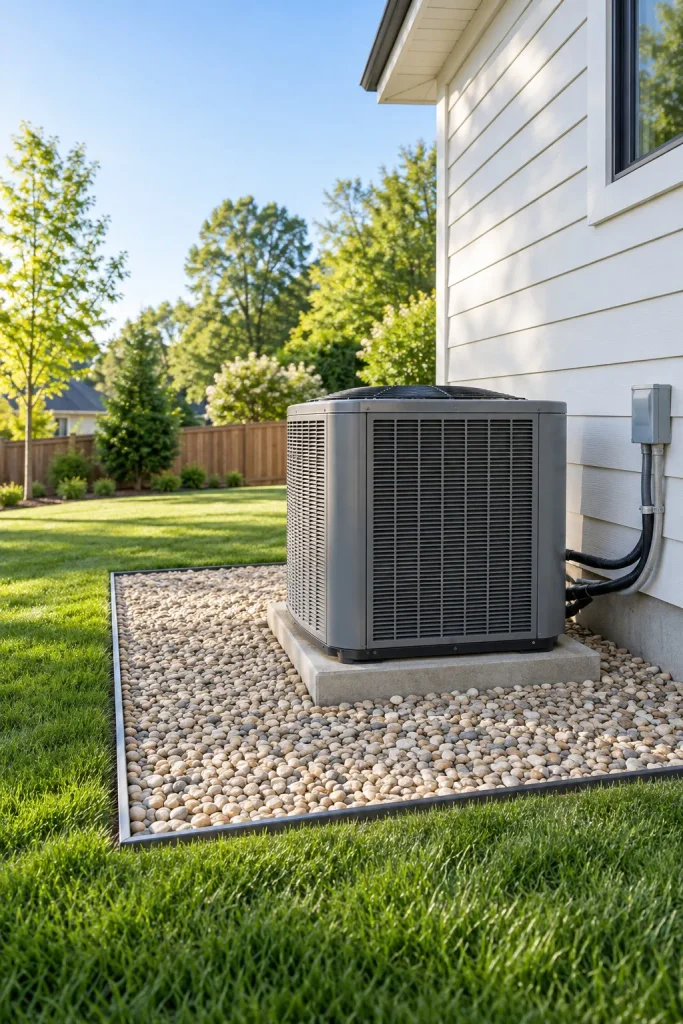
A defined gravel border gives an exposed AC unit a tidy setting without trying to conceal it. Choose one stone color that relates to your walkway or siding, then use a clean edge to separate the gravel from the lawn. The result feels intentional even when the equipment remains fully visible.
Keep the existing concrete pad exposed, and do not pile stone against the cabinet or bury lines. Leave room to stand and work around the equipment. For a restrained look, skip scattered ornaments and let the contrast between the gravel, edging, and grass provide the detail.
2. Make the Service Route Part of the Garden Path
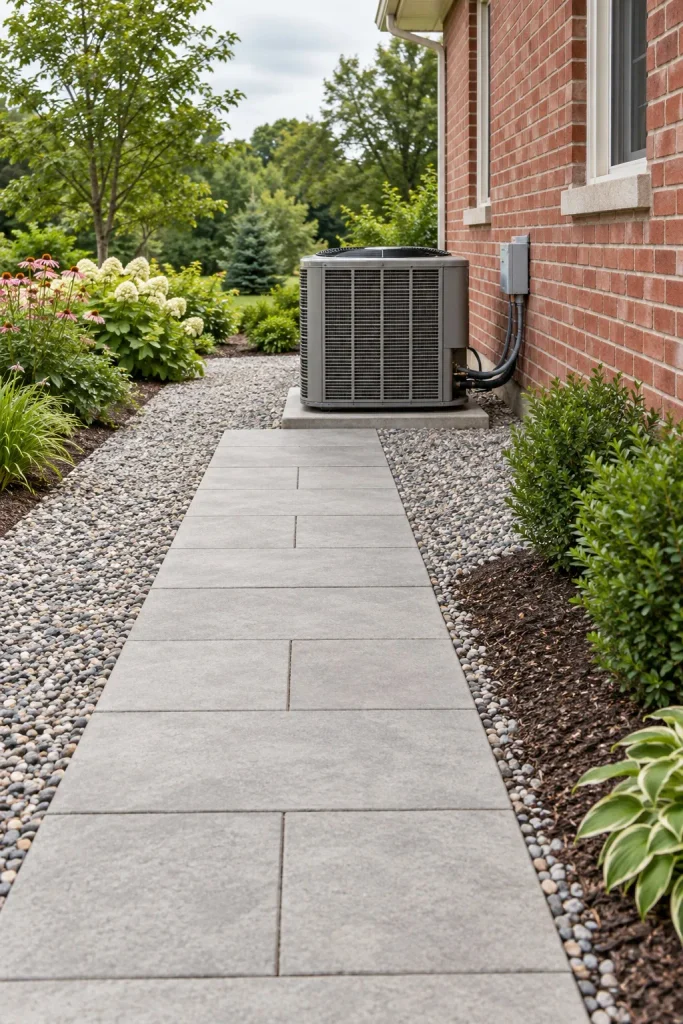
In a side yard, the route to the air conditioner can become the organizing feature of the landscape. A continuous paver path connects the gate or patio to the equipment, while planting beds sit along the outer edge. This approach suits a utility area that also needs to function as a passageway.
Choose a stable walking surface rather than widely spaced stepping stones near the service area. Let the path widen where someone will need to work, and keep the access panels reachable. Match the pavers to an existing patio so the utility corner reads as part of the same yard.
3. Use an Offset Evergreen Hedge for Year-Round Screening
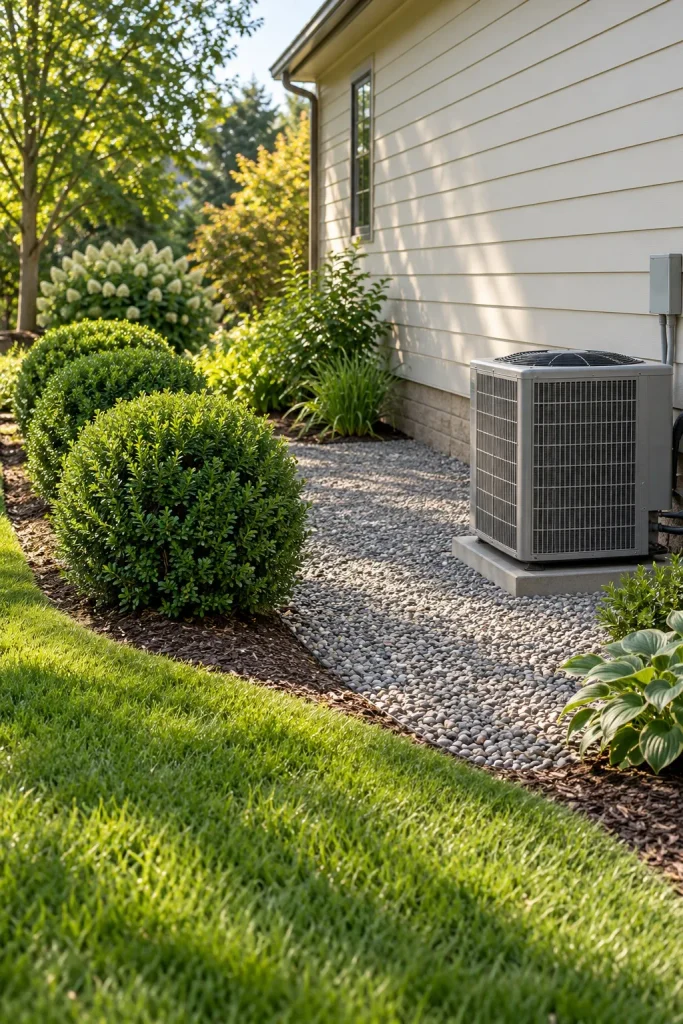
An evergreen hedge can soften the view from a window or driveway without surrounding the air conditioner on every side. Place a short row along the viewing edge, leaving the equipment side open. Rounded shrubs give the layout a softer outline than a solid wall of foliage.
Shop by mature width as well as height. A compact cultivar suited to your region and sun exposure is easier to accommodate than a large shrub kept small through constant pruning. Measure the required clearance from the future outer foliage, not the planting hole. Leave a separate route to the unit rather than squeezing access behind the hedge.
4. Blend the Utility Corner into a Layered Flower Border
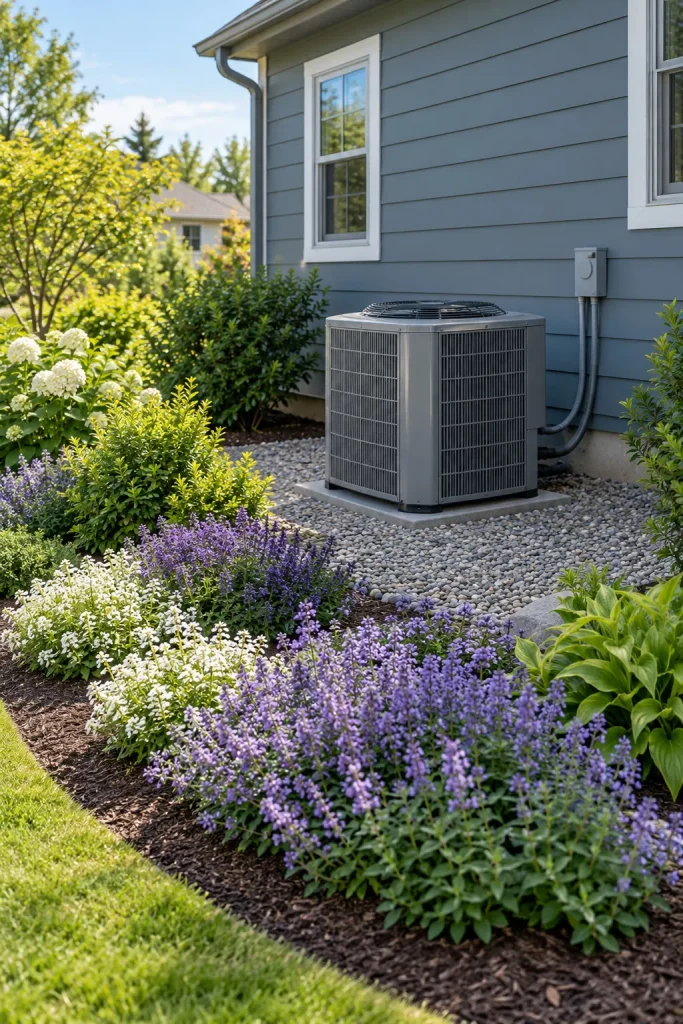
A layered flower border draws attention to the garden as a whole. Place lower flowers along the lawn edge, repeat a few medium-height plants behind them, and keep the AC unit in a separate open zone toward the house. A curved bed line helps the planting feel connected to a larger backyard design.
Choose a limited palette, such as purple flowers, white blooms, and green foliage, to avoid a busy patchwork. Check the mature spread of each plant before setting the bed boundary. Keep room for seasonal cutting back, and position irrigation so it waters the planting rather than spraying the equipment.
5. Soften a Side View with Upright Ornamental Grasses
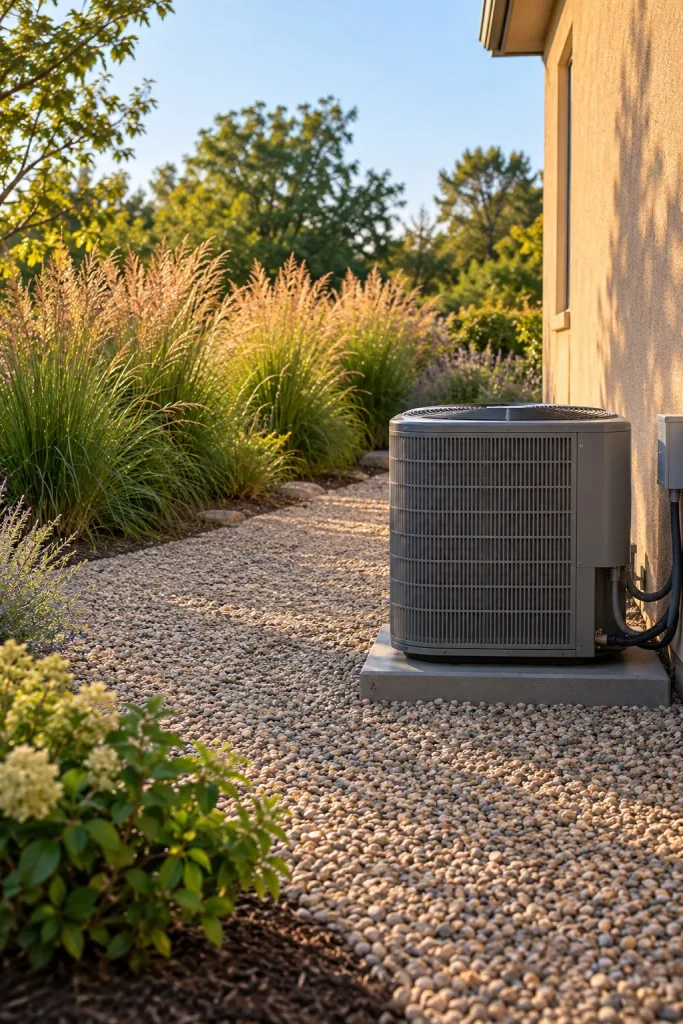
Ornamental grasses introduce movement and a lighter texture than a clipped hedge. Arrange a loose drift along a side bed where the stems can interrupt the view of the AC unit from an angle. Leave a clearly defined open strip between the planting and the equipment.
Choose a locally appropriate, noninvasive clumping grass, then check its full width and the way its stems arch. A narrow base does not guarantee narrow foliage. Avoid placing a floppy variety where it will lean into the cabinet. Plan an easy route for removing cut stems and loose debris during seasonal maintenance, keeping that material out of the utility zone.
6. Interrupt the Patio View with Movable Containers
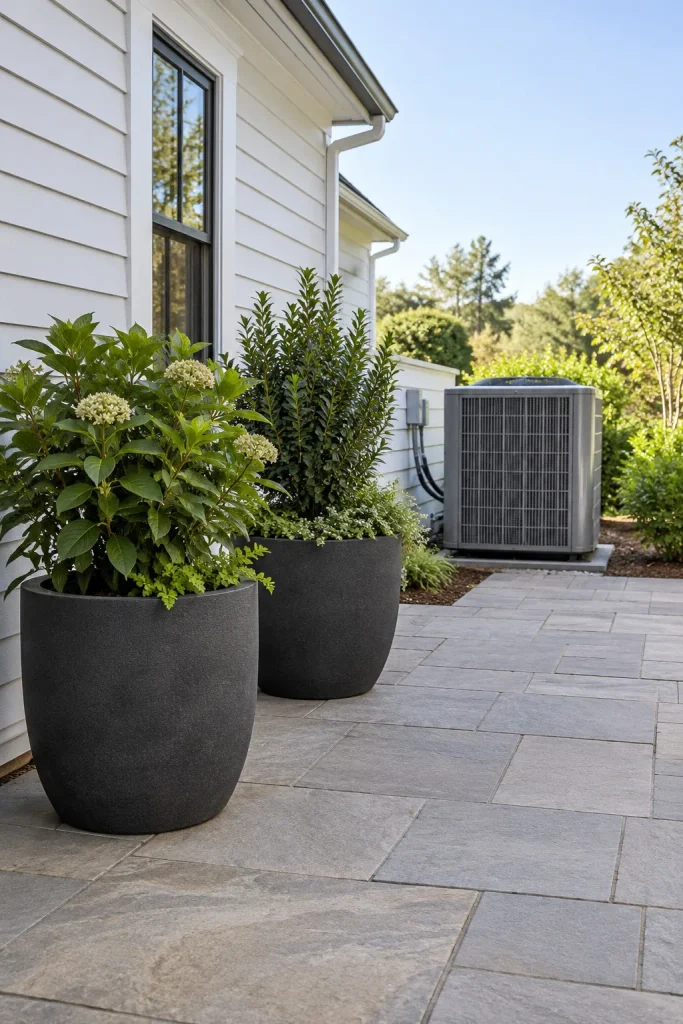
Large containers offer a flexible way to hide an outdoor AC unit from a seated viewpoint. Try two substantial pots along the patio edge instead of a tight ring around the machine. Their placement can break the sightline while keeping the actual equipment area open.
Use outdoor containers with drainage and plants suited to the site’s light. Check where excess water will flow before settling on a location. Filled pots can be heavy, so make a clear moving plan and use appropriately rated supports if needed. Keep the everyday service route clear even when the containers are in their normal positions.
7. Place a Raised Planter Along the Viewing Edge
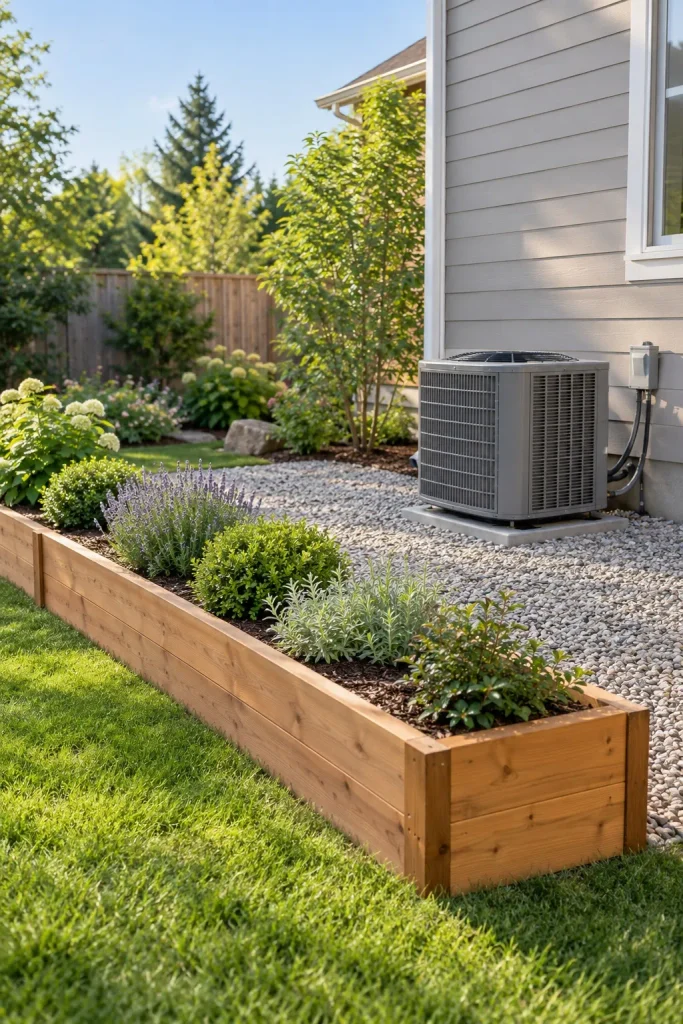
A raised planter creates a defined planting strip where you want a garden feature as well as some visual screening. Position it across the line of sight from the lawn or patio, well outside the equipment’s required open space. One long planter can look calmer than several small boxes.
Keep the planter independent of the AC pad and house, with drainage directed away from the equipment. Choose plants whose mature foliage will stay within the available footprint. Before building, mark the box and the working area on the ground. This makes it easier to see whether a technician could still approach, open panels, and carry equipment through.
8. Screen One Sightline with a Freestanding Slat Panel
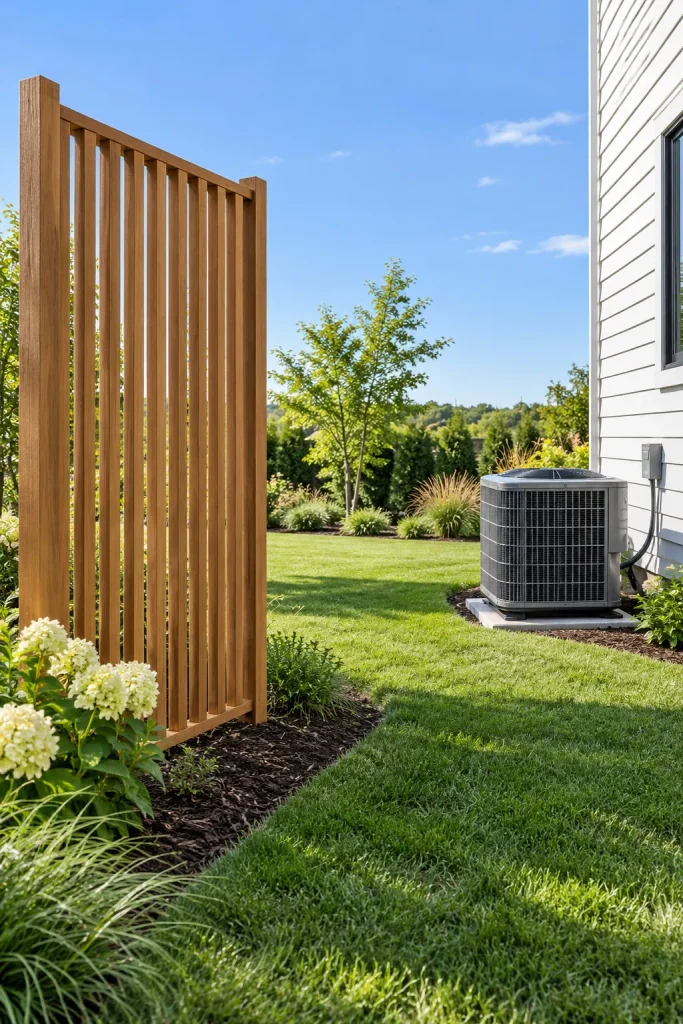
A freestanding slat panel gives a utility corner an architectural backdrop without requiring a full enclosure. Place it where it blocks the main view from your patio, leaving other directions open. Natural cedar pairs easily with lawns and simple planting beds, while the vertical lines add structure.
Ask your HVAC contractor to check the proposed location and design before installation. Gaps between slats do not automatically provide enough airflow, and a screen still needs the correct setback. Keep the top open, avoid attaching anything to the equipment, and preserve access to the disconnect. Locate underground utilities before setting posts, and plan for any future equipment replacement.
9. Grow a Climber on a Separate Garden Trellis
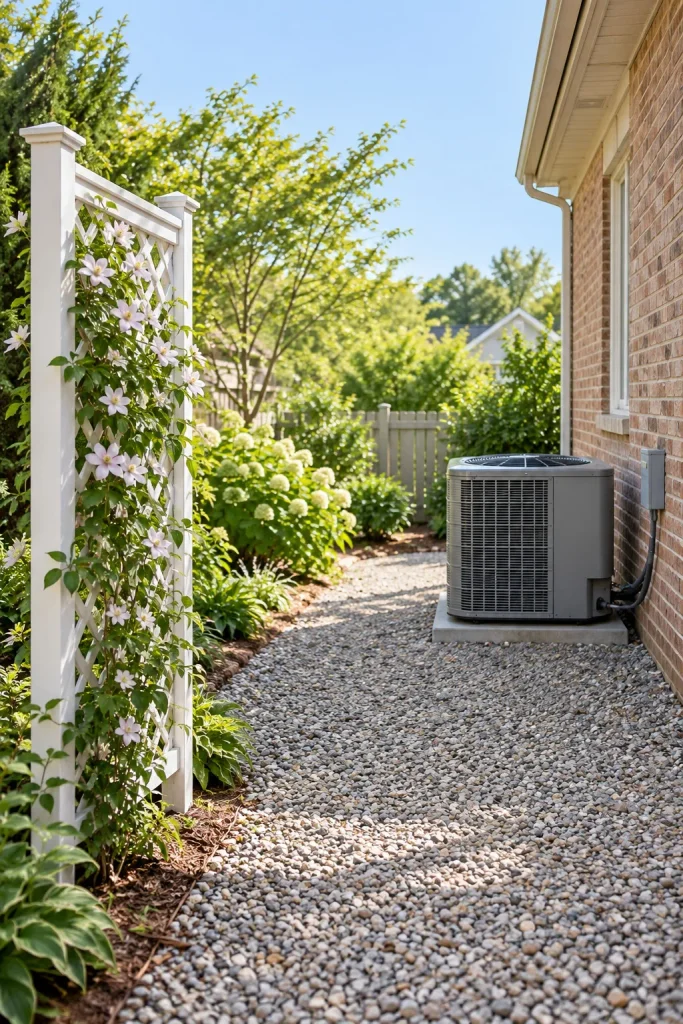
A trellis with climbing plants can soften a garden boundary and partially filter the view toward the air conditioner. Set it along the far edge of the planting area, keeping the vine and its support separate from the equipment. An airy lattice suits a cottage-style yard without becoming a roof over the unit.
Select a manageable, noninvasive climber suited to your climate and the amount of sun. Train new stems onto the trellis, and prune growth that reaches toward the service corridor. Allow space to reach both sides for maintenance. Treat the mature vine-covered structure as an obstruction when checking the required equipment clearances.
10. Create a Low Rock Garden Beyond the Open Apron
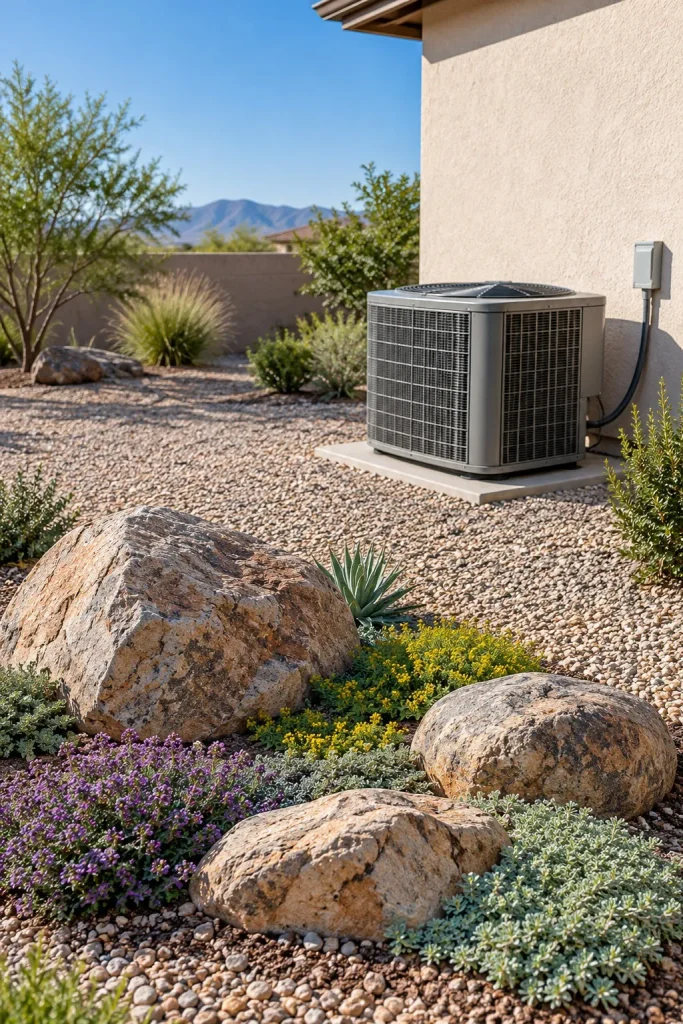
A low rock garden works when you want texture without a tall screen. Group a few substantial stones with small patches of ground cover along the outside of a clear gravel apron. The open center keeps the air conditioner visible, while the planted edge gives the surrounding yard more character.
Choose ground cover for your climate, drainage, and light rather than assuming every succulent or creeping plant will thrive. Keep spreading growth out of the working area. Place larger stones away from access routes, and do not change the pad’s support or surrounding drainage. Repeat the stone color elsewhere in the yard to tie the arrangement together.
11. Draw the Eye Toward a Garden Feature Farther Away
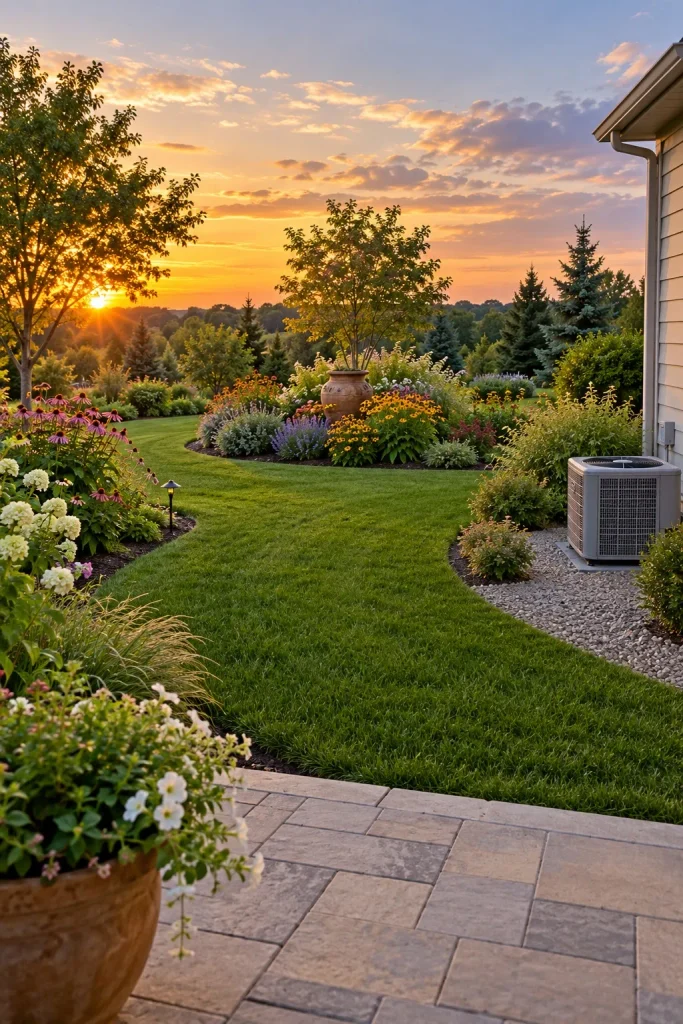
Sometimes the strongest AC landscaping choice is to give the eye something else to follow. A flower island, sculptural planter, or curved lawn edge farther into the yard can become the view’s focal point. The equipment stays in a quiet, orderly utility zone instead of disappearing behind a barrier.
Look outward from the chair, doorway, or window where the unit bothers you most. Place the feature where it catches that view, then repeat a color or plant elsewhere for continuity. Keep the utility corner simple with an open surface and defined edges. This approach is useful when there is too little room for a screen with adequate clearance.
A few questions before you start
Can I put wood mulch around an AC unit?
Use stone in the immediate equipment area and reserve wood mulch for more distant planting beds. Trane recommends landscape rock over loose organic materials that could enter the unit. Keep all materials below the cabinet and off the pad.
Can I cover the top to hide the unit?
Do not use a decorative lid or close-fitting cover while the unit operates. Preserve the discharge space specified by the manufacturer. A screen should stand separately, outside the required clearances.
Can these ideas work around a heat pump?
The visual approaches can, but have the layout checked for your heat pump. Its installation instructions, drainage needs, snow conditions, and service requirements take priority over the illustration.
Choose the layout that fits your yard
Start with your unit’s required open space, then choose the idea that suits the view you want to improve. A neat border may be all you need, while a larger yard might have room for an offset hedge or garden screen. Save your favorite layouts and sketch the access route before buying plants or materials.