
The sofa is your dog’s favorite nap spot, the cat has claimed the window, and a bright rubber toy keeps landing in the middle of your carefully chosen rug. You want a living room that feels like yours while making room for the animals who use it every day. That usually means making a few practical decisions before buying another decorative basket.
The most useful pet-friendly living room decor ideas start with habits: where your pet rests, which surfaces collect hair, and how everyone moves through the room. A washable throw might solve more than replacing a sofa. A bed in the right color can look intentional without being tucked out of sight.
These 18 ideas combine comfortable pet spaces with furniture, textiles, and storage you can live with. You can choose one small change or build a room around several. Let your own pet’s size, behavior, and care needs guide the details.
1. Choose a Tightly Woven Sofa
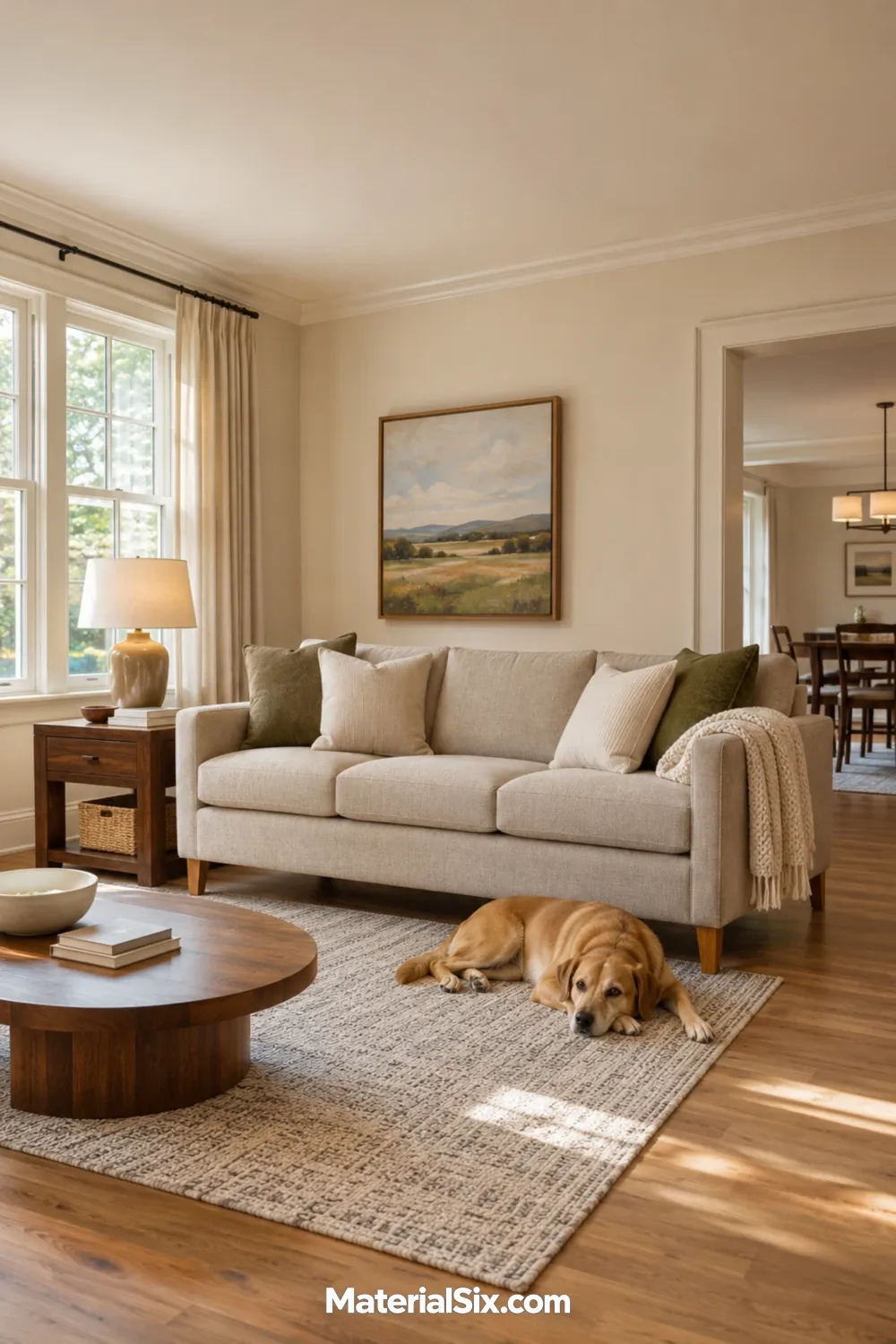
A nubby sofa can look inviting until your cat decides the texture deserves a closer inspection. If you are shopping for new seating, start with a closely woven upholstery sample and look at it in daylight. An oatmeal sofa with simple wood legs gives you a quiet foundation that works with colorful cushions or a neutral room.
Ask about the specific fabric’s cleaning instructions, rather than relying on a broad “performance” label. Take a sample home to see how easily your pet’s hair brushes off. A tighter weave can reduce obvious snags, but it will not make upholstery scratch-proof. Keep a separate scratching surface near a cat’s preferred seating spot.
2. Make a Washable Slipcover Look Intentional
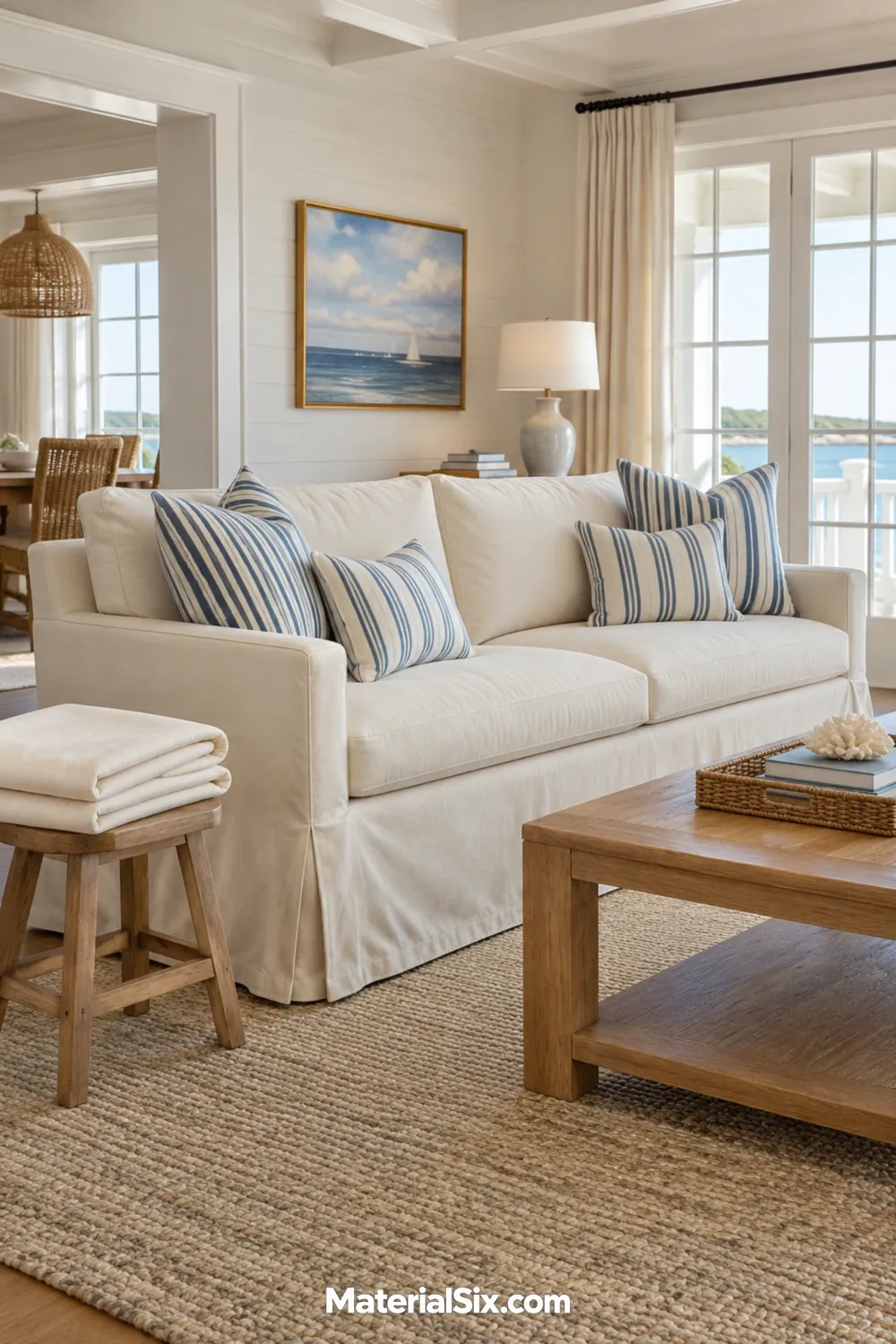
A loose ivory cover can feel polished when the rest of the room has clear lines. Pair a slipcovered sofa with a square oak coffee table, blue striped pillows, and a simple floor lamp. The contrast keeps the space from looking like every surface is draped for protection.
Check whether the entire cover is removable and how the manufacturer says to wash and dry it. Some covers shrink or need professional cleaning despite looking casual. You can make laundry day easier by choosing a design with separately removable cushion covers. Store a spare cover nearby if your budget allows, and measure the sofa carefully before ordering anything described as a universal fit.
3. Let a Patterned Rug Handle Visual Clutter
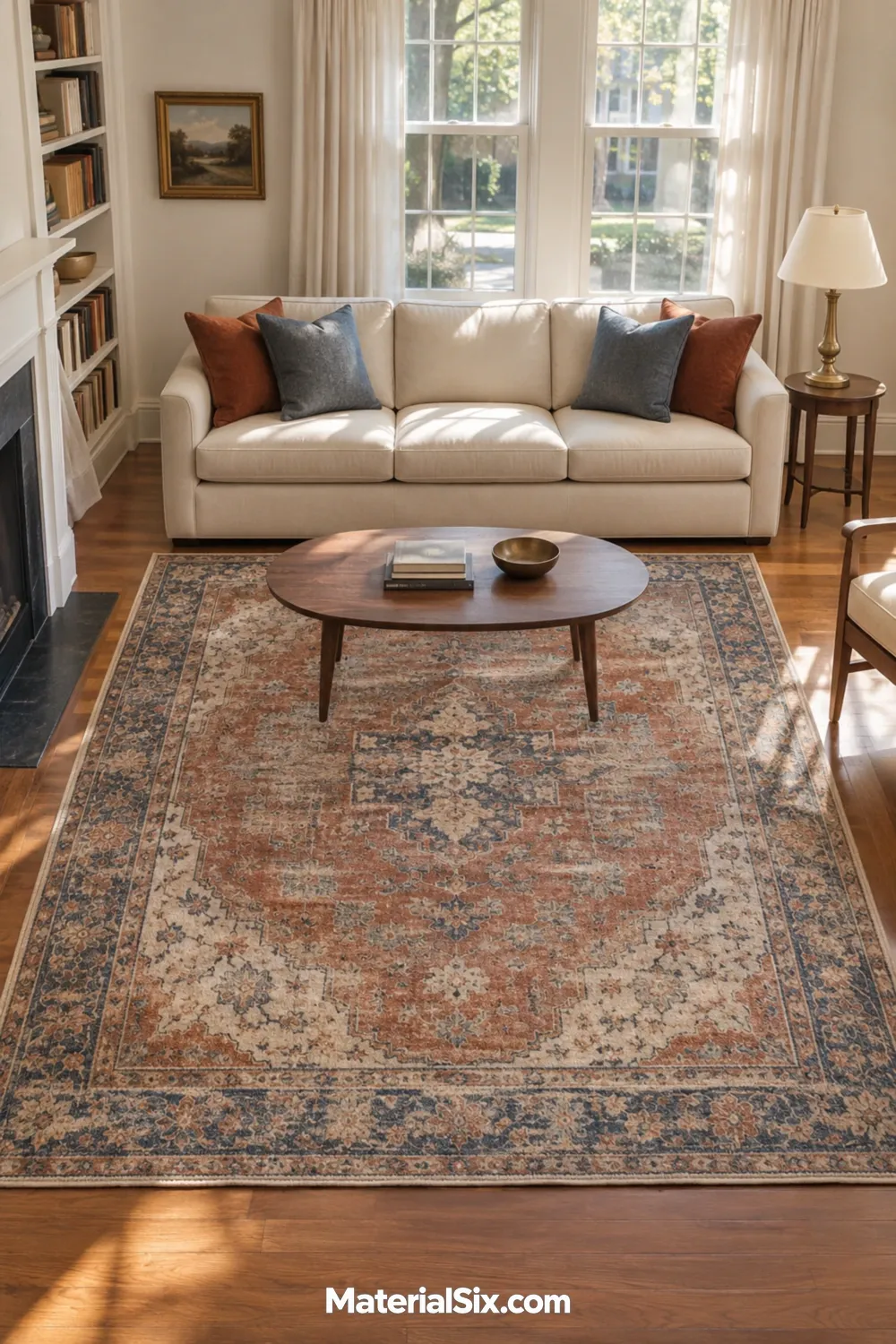
A softly faded pattern gives your eye somewhere to go besides the stray hair that appeared five minutes after vacuuming. Try a rust, denim, and cream rug beneath a plain sofa, leaving enough of the pattern visible around the coffee table. It adds character without requiring a room full of accessories.
Look beyond the word “washable” and check the dimensions your machine can accommodate. A large rug may need commercial equipment, and the backing may have separate care limits. Use an appropriate nonslip pad for your floor. Low pile can be easier to vacuum than deep shag, though the actual material and your pet’s coat still affect everyday cleanup.
4. Define the Pet Route With a Washable Runner
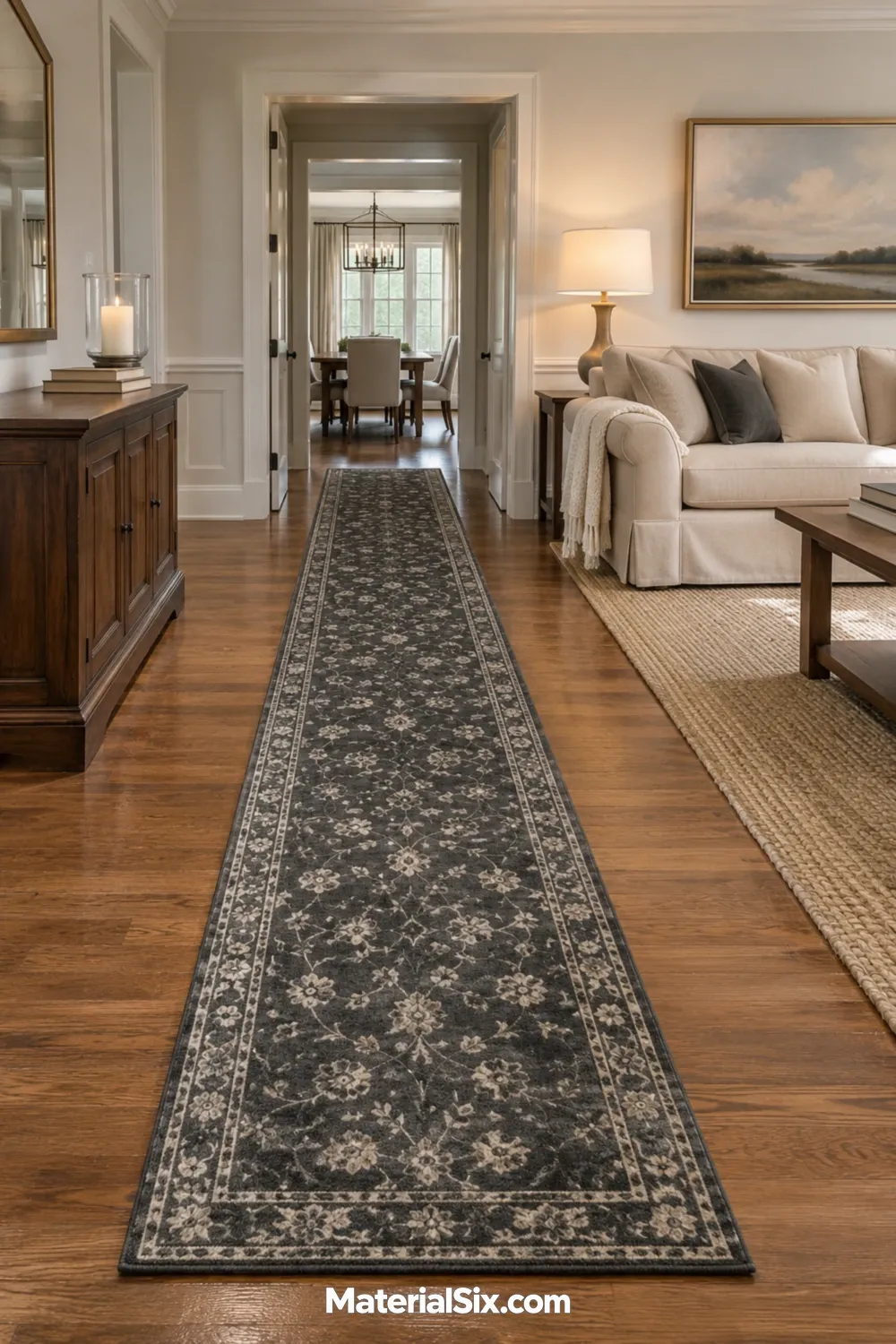
Follow the path your dog takes from the door to the sofa. That strip of flooring often collects the first muddy prints, even when the rest of the living room stays relatively clean. A low-profile runner can make the route feel like part of your decorating plan.
Choose a muted pattern that relates to your main rug without repeating it exactly. Keep the runner out of door swings and check that every edge lies flat. A floor-compatible nonslip backing or pad matters more here than decorative fringe. If you wash it frequently, follow the label and let it dry fully before replacing it. This works especially well in an open living room beside an entry.
5. Balance a Leather Chair With Softer Layers
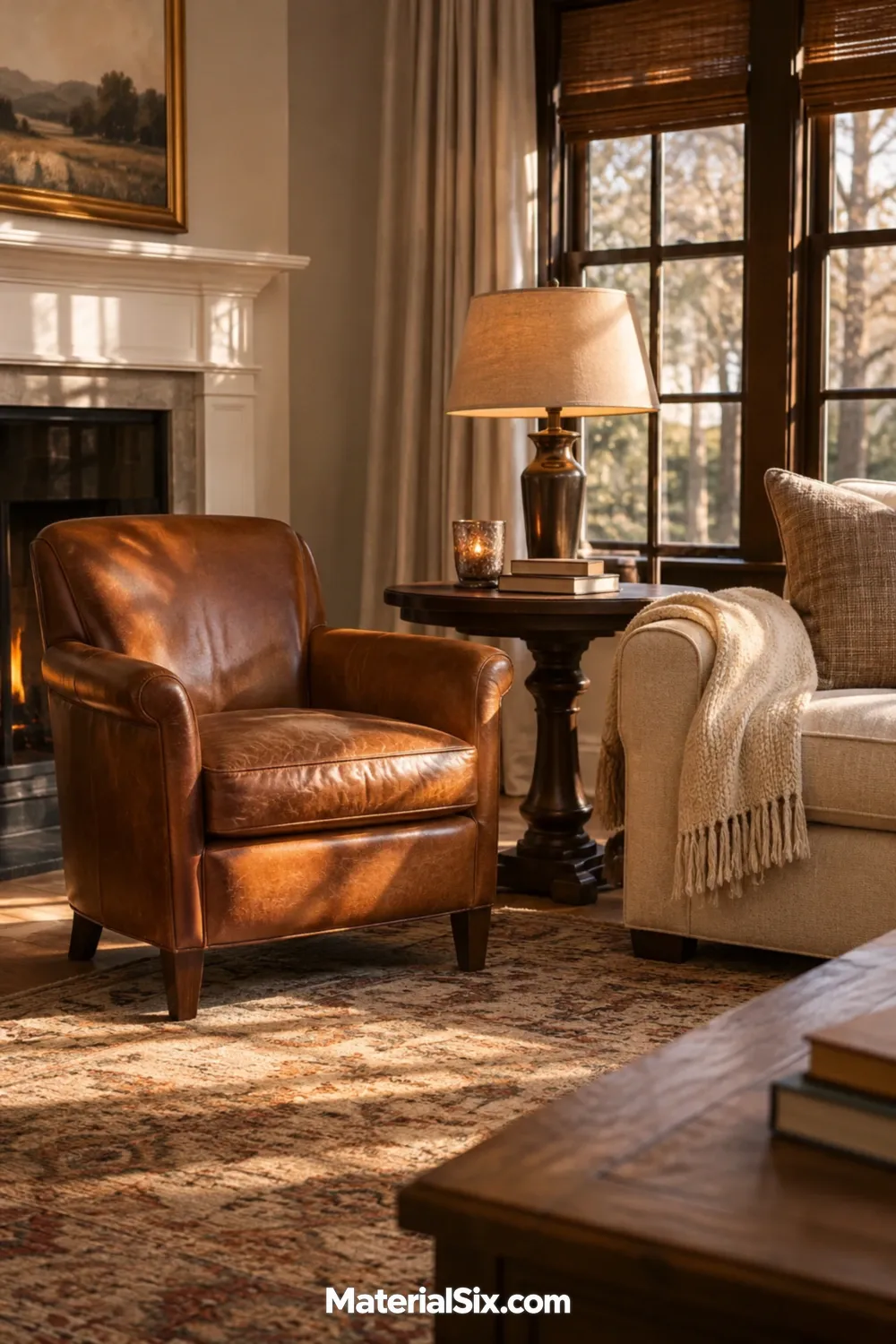
One cognac leather chair can add warmth without committing your entire seating area to leather. Style it beside a cream sofa and a dark wood table, then add a soft throw over the sofa arm. The smooth surface brings contrast to a room full of woven textiles.
Leather is a choice with tradeoffs, not a universal pet solution. Claws can mark it, finishes vary, and some households prefer the character of wear while others find it frustrating. Check the maker’s care guidance and try a material sample if available. Keep a pet blanket on the spot your animal actually uses. If scratches would bother you, use this look on an accent chair away from their usual nap zone.
6. Swap a Sharp Coffee Table for a Rounded Ottoman
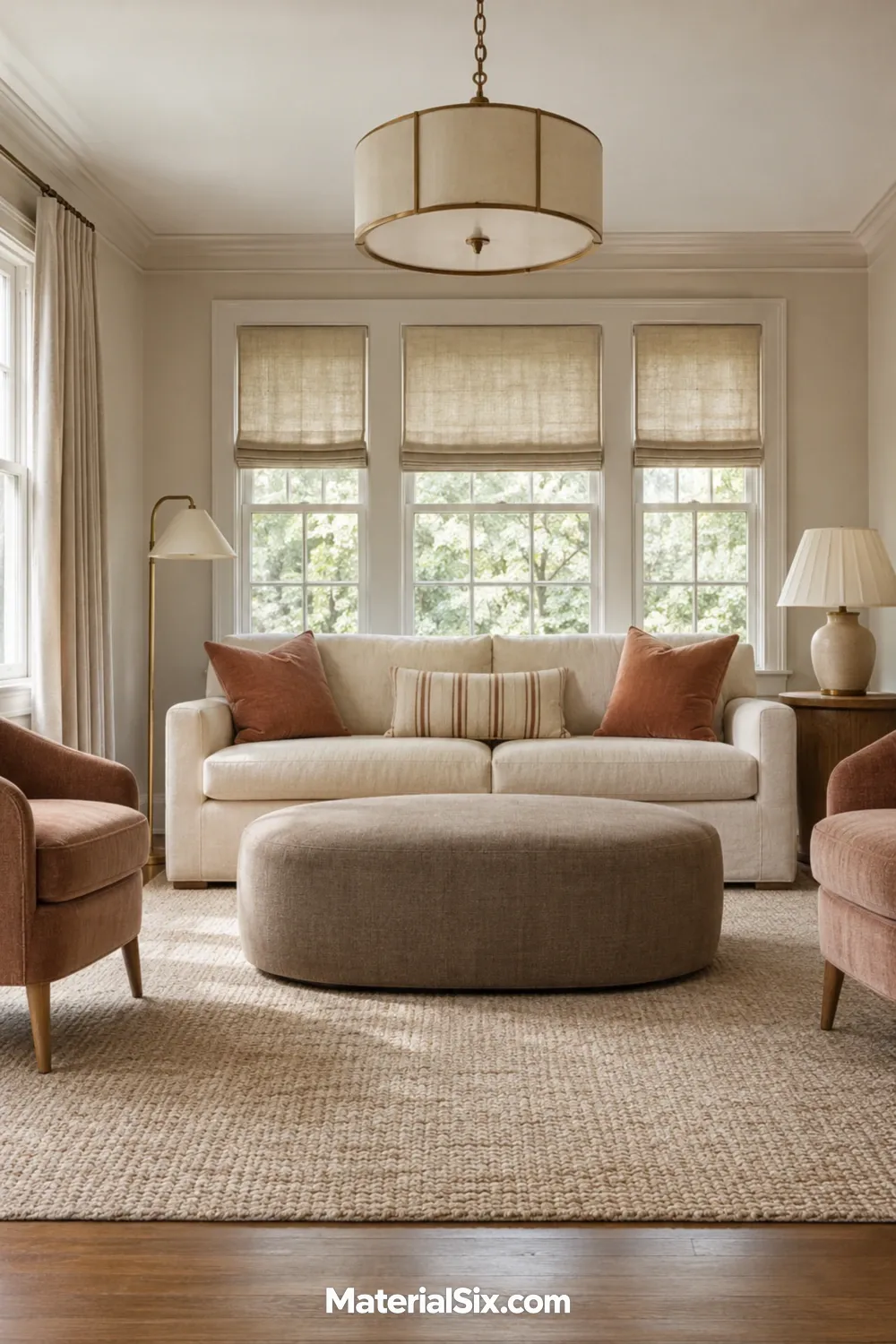
A generously rounded ottoman softens a seating area visually and changes how you move around it. In a compact room, a taupe upholstered version can double as a footrest while leaving a clearer route between the sofa and doorway. Choose a size that still lets people and pets pass comfortably.
You will give up a consistently hard surface for drinks, so use a stable tray when you need one and put it away during active play. Check the upholstery’s cleaning instructions before choosing pale fabric. If you want storage inside, inspect the lid mechanism and keep it closed when pets are nearby. Rounded edges do not replace supervision or sensible placement.
7. Hide Toy Clutter in a Storage Bench
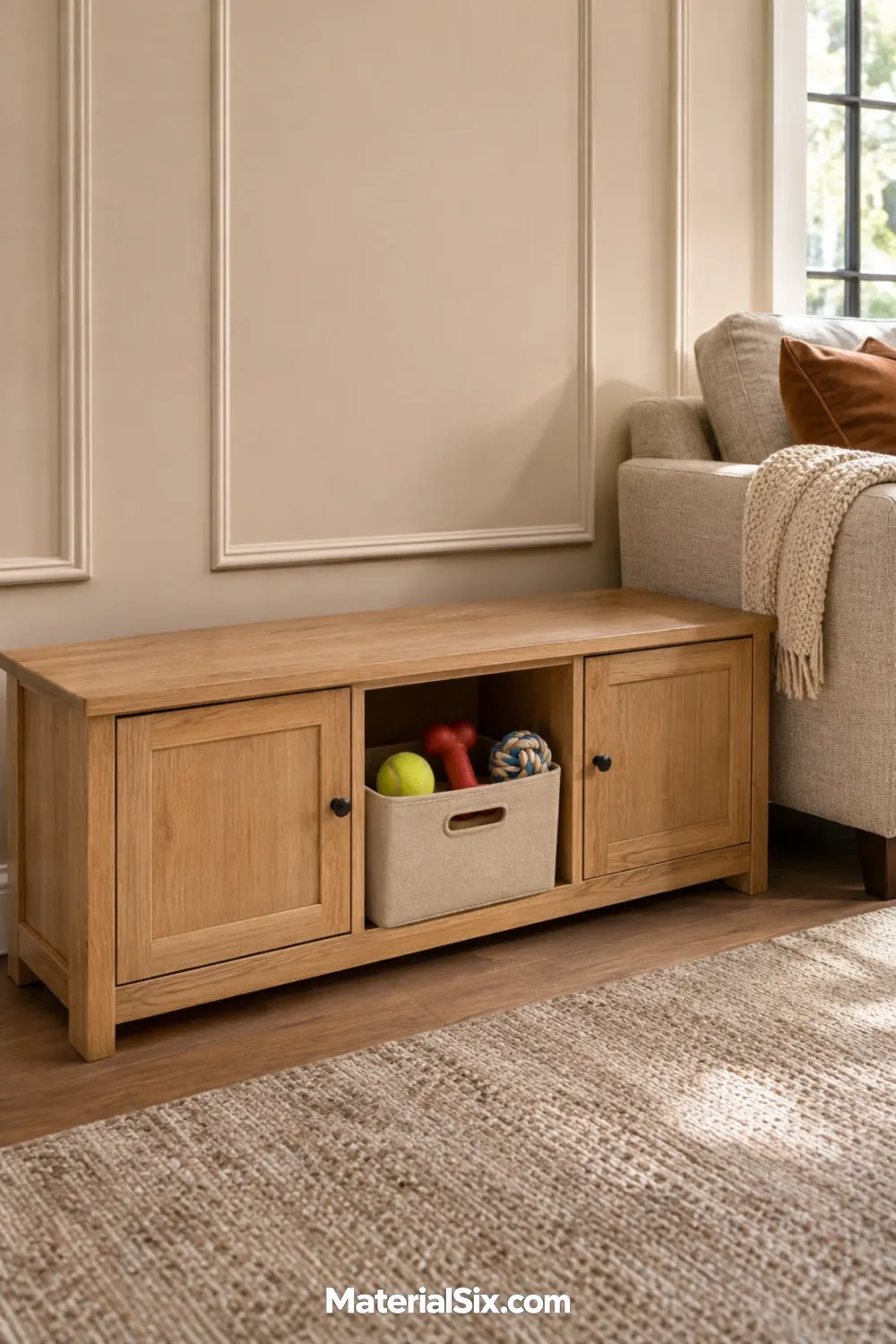
A pile of squeaky toys can undo the calmest color palette. An oak storage bench gives those everyday objects a defined home and adds another warm wood surface to the room. Place it along a wall where opening the doors will not block circulation.
Make the setup useful with a few small choices:
- Put toys in a removable interior bin so you can lift everything out to clean.
- Choose hardware that closes reliably, and shut the doors after use.
- Keep only suitable toys accessible for your own pet.
If your dog chews baskets, solid cabinetry may suit your room better than exposed woven storage. A single toy beside the bed still looks lived-in.
8. Create a Small Pet-Care Station Behind Cabinet Doors
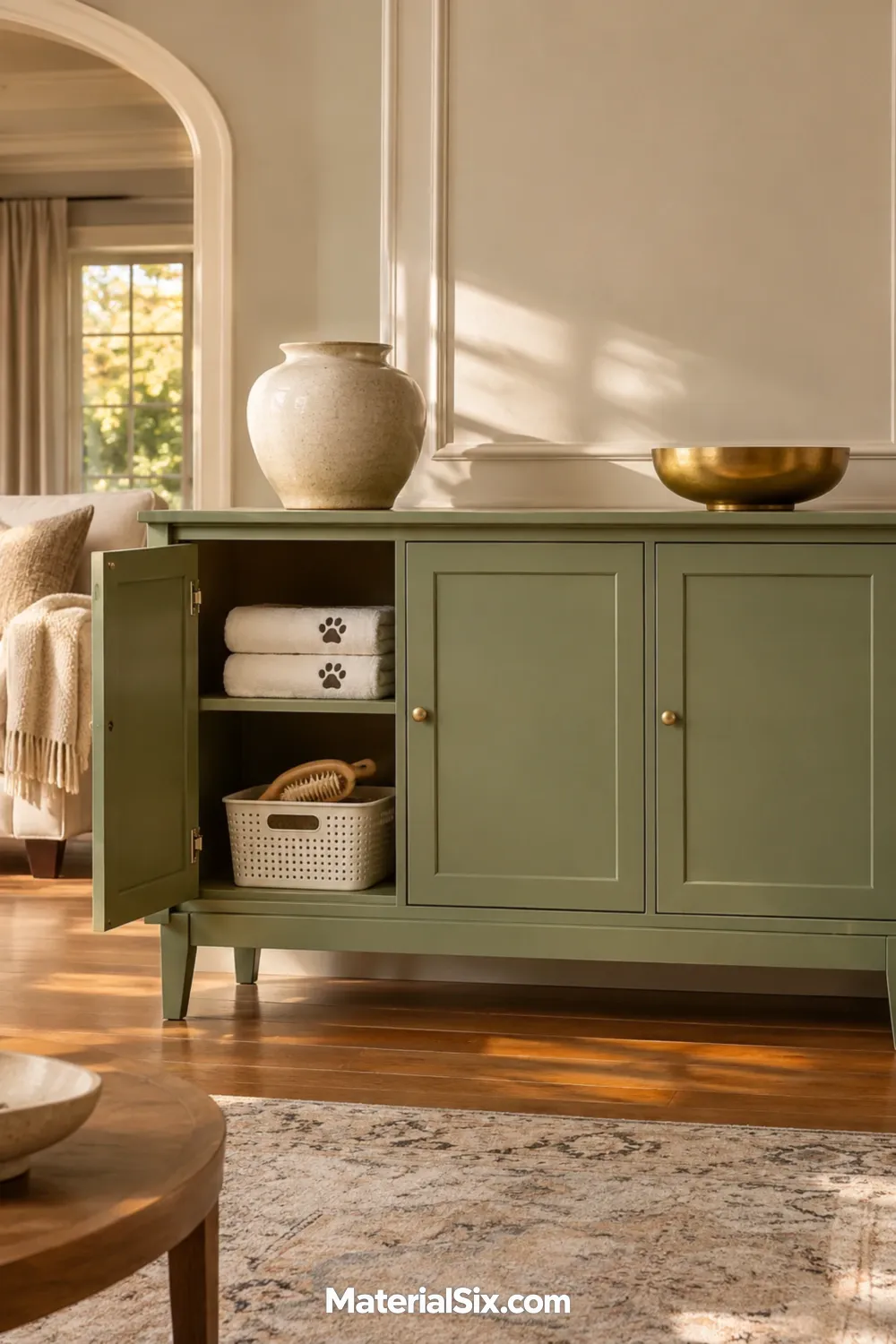
The lint roller, grooming brush, and paw towel need somewhere convenient to live. Give them one section of a sideboard instead of distributing them across side tables. A sage cabinet with simple brass hardware feels like furniture first while keeping daily supplies within reach.
Separate clean towels from used ones, and choose a washable container for grooming tools. Keep cleaning products, medication, and anything your pet could ingest securely stored elsewhere or behind an appropriate latch. This cabinet is for organized access, not an assumption that a closed door is pet-proof. Leave enough room around the sideboard to open it fully, and follow the furniture maker’s anchoring guidance.
9. Match the Pet Bed to Your Upholstery Palette
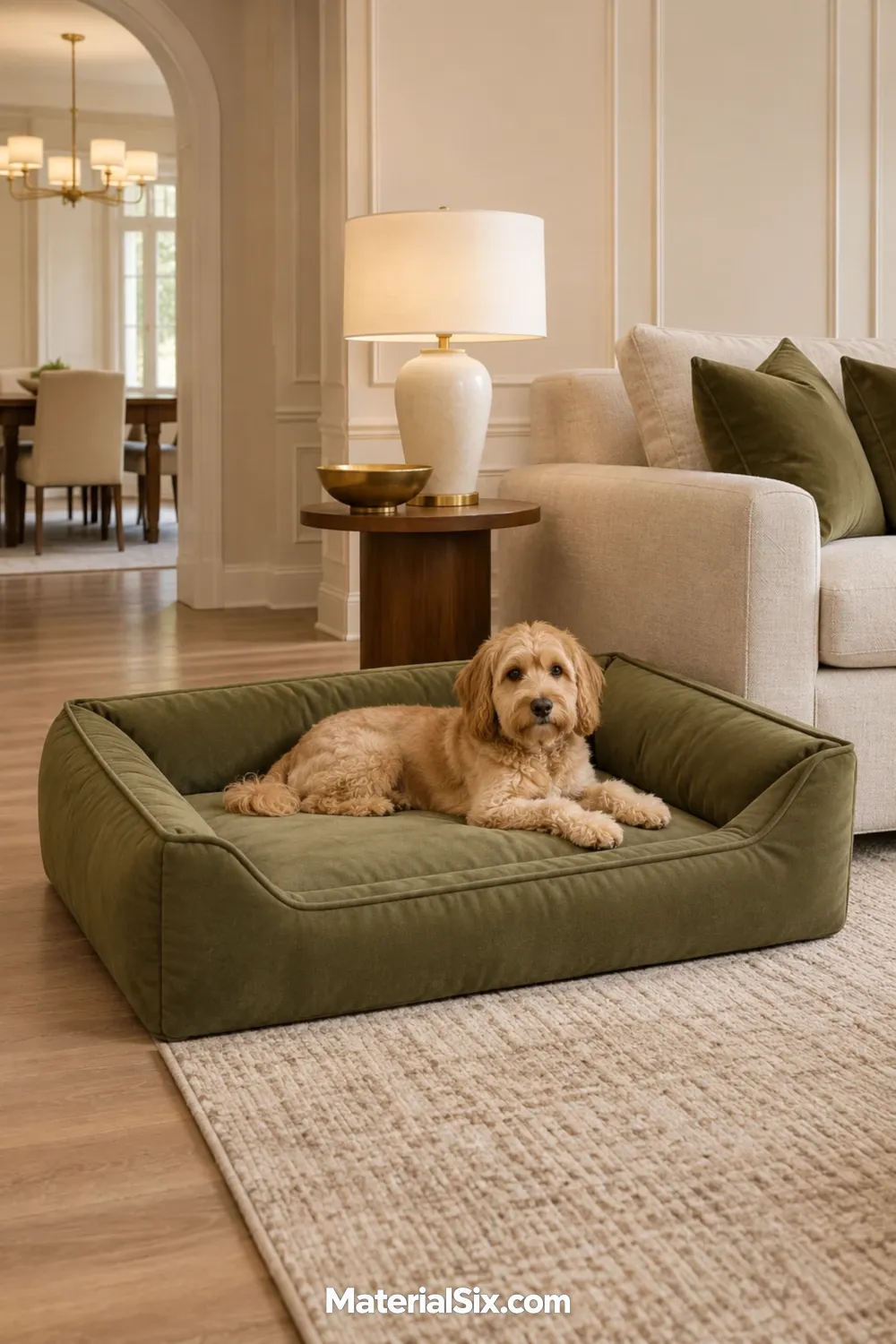
A pet bed becomes part of the living room when its color appears elsewhere. Repeat an olive cushion in a low olive bed beside a beige sofa, or echo a charcoal rug with a charcoal bolster. Matching the palette usually matters more than matching every fabric.
Put the bed where your pet already likes to settle, provided it leaves walkways and vents clear. Measure your animal when stretched out so the purchase fits more than the corner. Look for a removable cover with care instructions you can realistically follow. Avoid forcing an older or less mobile pet to climb into a decorative raised bed. Let comfort decide the shape, then use color to connect it to the room.
10. Turn a Low Window Bench Into a Cat Perch
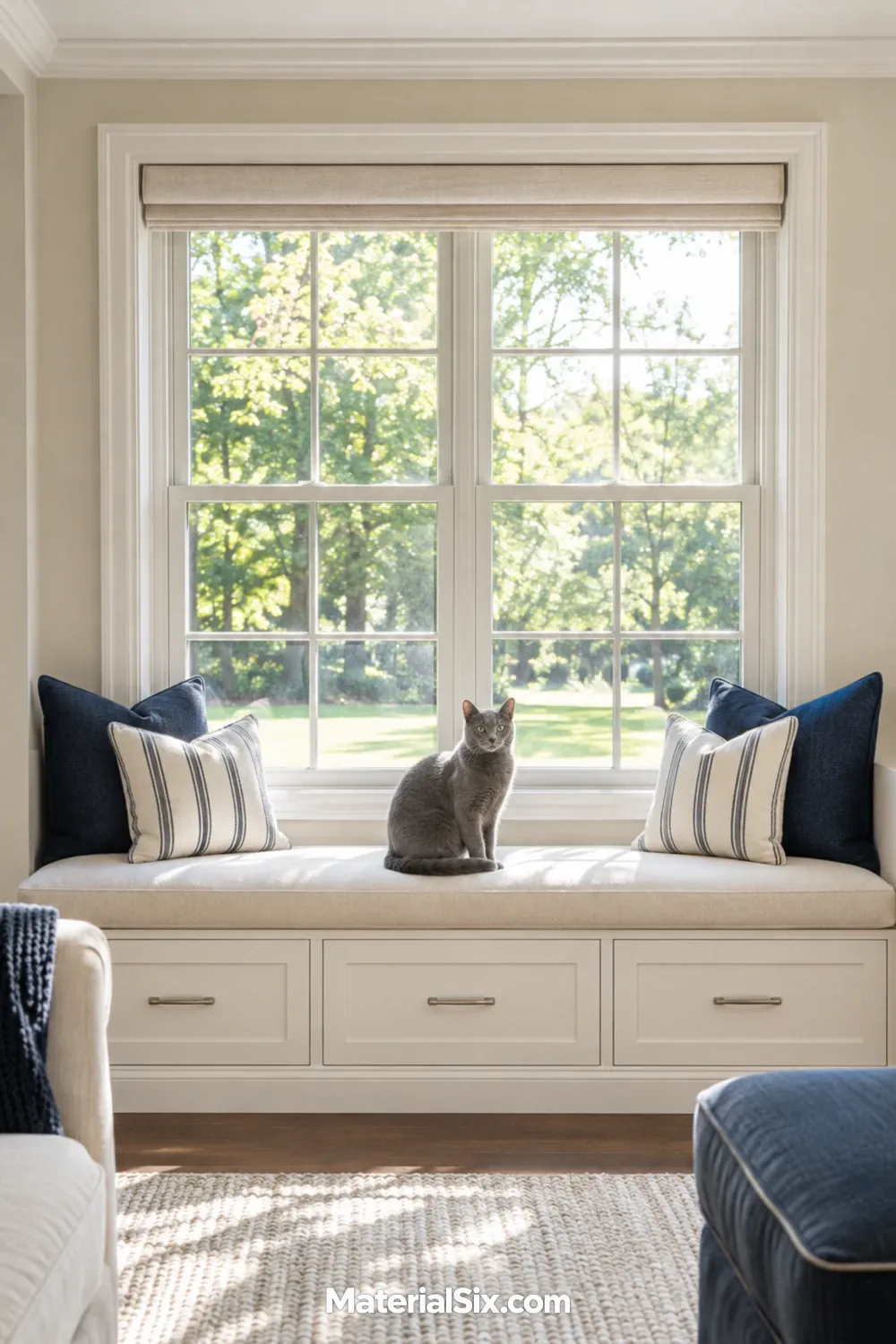
A low window bench can offer a sunny viewing spot while keeping a separate cat tower out of a small seating area. Choose a broad, stable bench with a thin removable cushion and storage below. Warm white paint helps it blend with the trim instead of competing with the sofa.
Keep the route onto the bench manageable for your own cat, and avoid placing fragile objects along that route. A closed window and a securely fitted screen serve different purposes; do not rely on a screen to contain a climbing pet. Cordless window coverings reduce dangling cords nearby. Watch how your cat uses the perch before adding any accessories to the sill.
11. Choose a Scratching Post That Repeats Room Materials
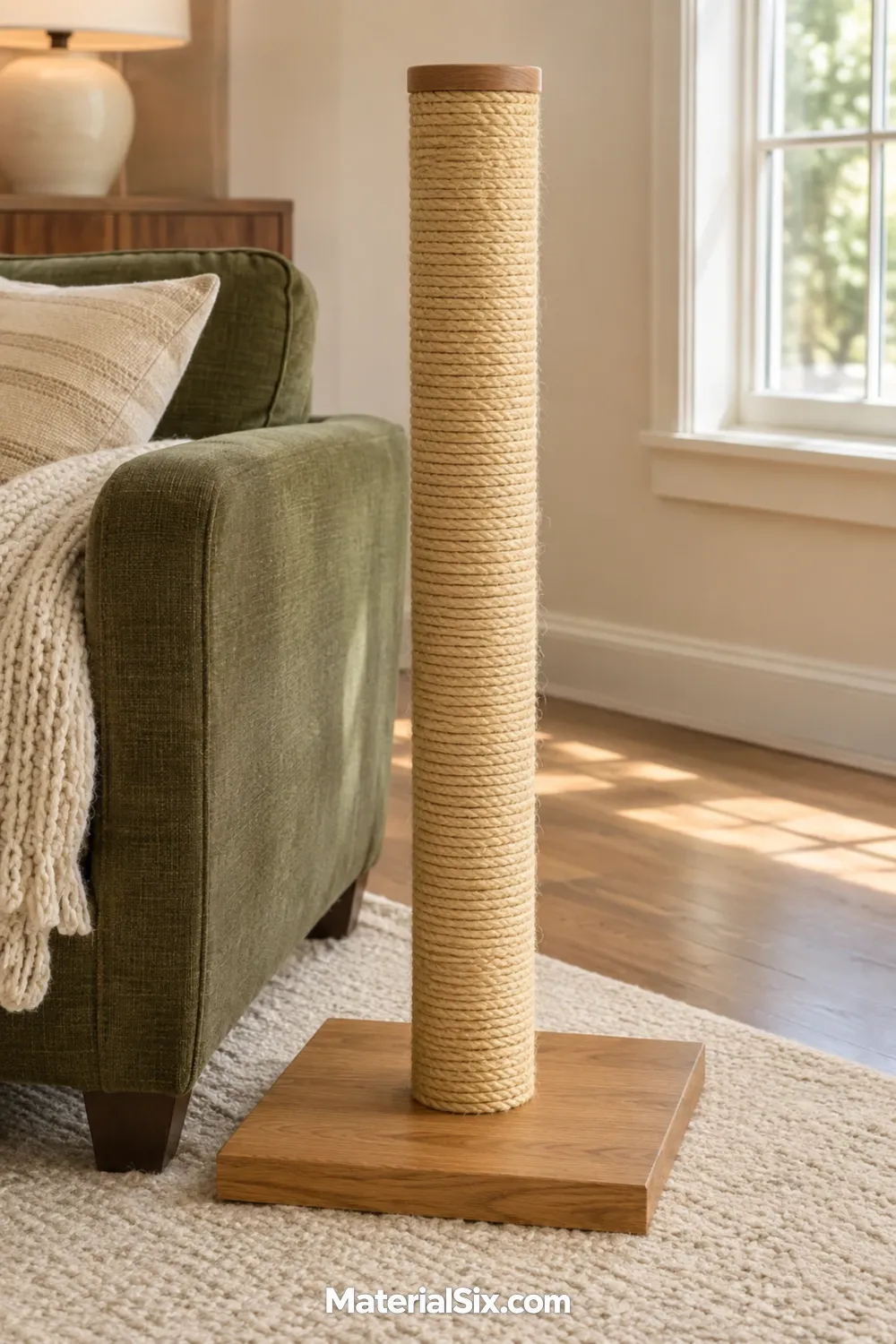
Sisal, oak, and a simple silhouette can make a scratching post feel connected to your furniture. Place a substantial vertical post near the sofa your cat already targets, rather than hiding it in a distant corner. The placement makes the alternative easy to find during the moments it matters.
Check stability and choose enough height for your cat to stretch comfortably. Some cats prefer horizontal scratchers, so their habits should guide the format. A decorative model that tips or offers too little usable surface is unlikely to earn much attention. Keep worn fibers and loose components in check according to the product’s care guidance. Repeating the wood tone helps the necessary object belong visually.
12. Use a Low Cat Cubby as a Side Table
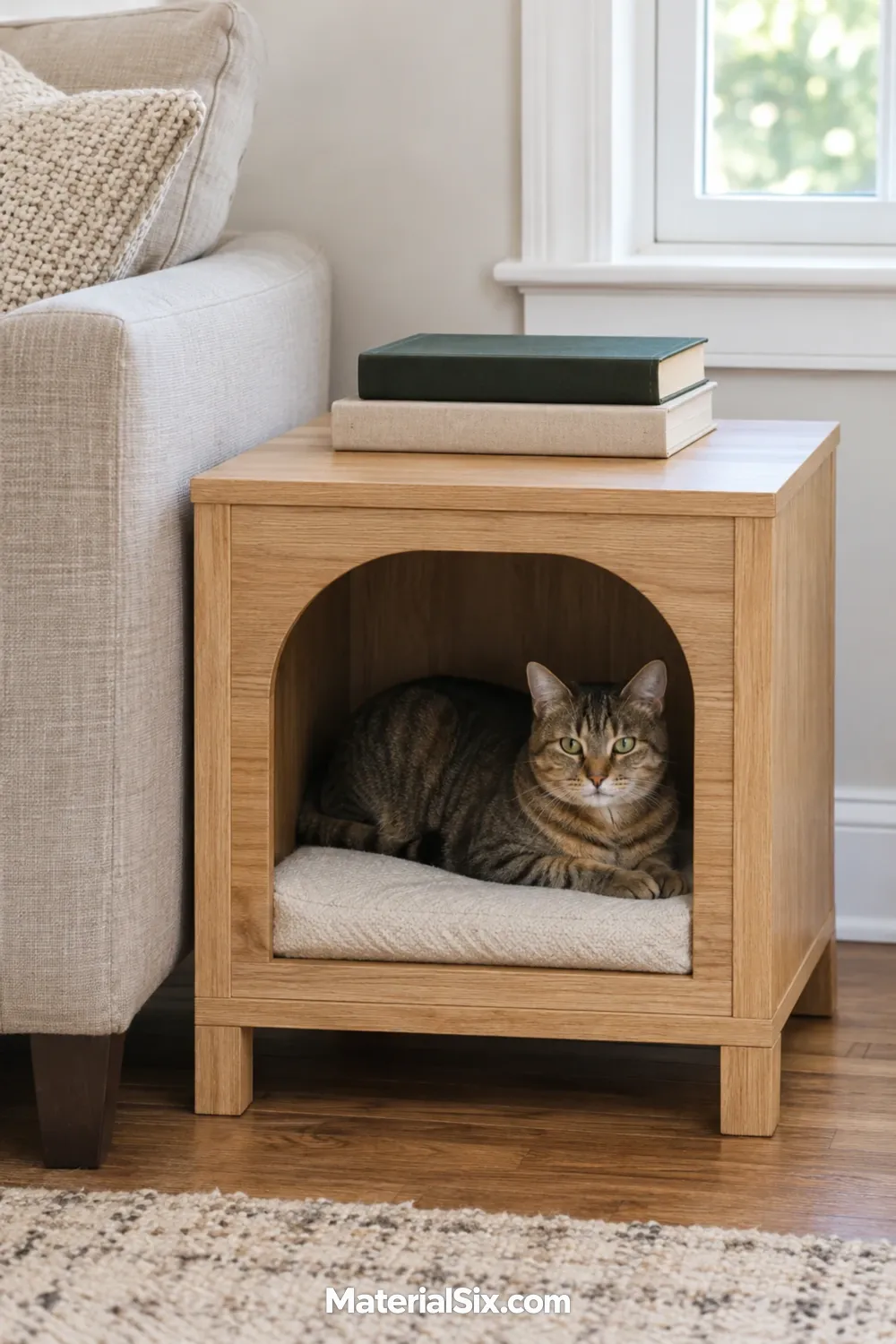
An open wood cubby beside the sofa can provide a sheltered resting spot without adding a separate piece of pet furniture. Choose a purpose-built design with a broad opening and a removable cushion. A lamp-free top with a sturdy book or two keeps the composition quiet.
The cubby needs ventilation, a stable base, and enough room for your cat to turn comfortably. Do not improvise by closing an animal inside ordinary storage furniture. Place the opening where it stays accessible when someone sits down, and keep the top clear of breakables. If your cat prefers an exposed perch, skip this idea. Furniture earns its floor space when it serves the animal that actually lives there.
13. Layer Washable Throws Where Pets Actually Nap
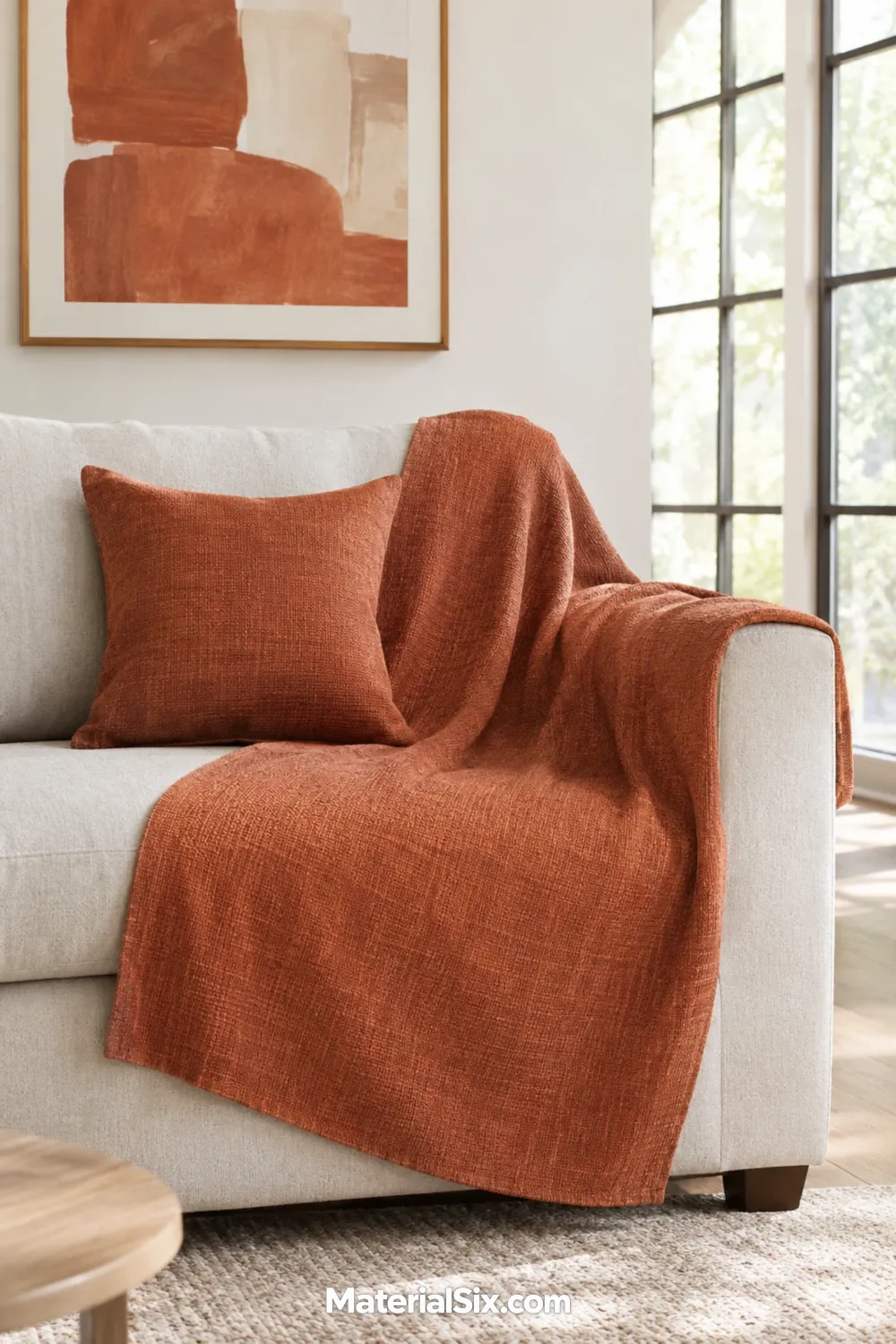
Instead of covering the whole sofa, watch where your pet settles and protect that section. A terracotta throw across one seat and arm can read as a deliberate color accent. Repeat a little of the same warmth in a cushion or artwork to make the placement feel connected.
Choose a tightly constructed, machine-washable textile without long fringe if your pet mouths loose threads. Check both the throw’s and sofa’s care instructions before treating a spill. A blanket will not stop moisture from reaching upholstery, so handle accidents promptly. Keep a second clean throw folded in a cabinet. Swapping one small layer is usually more manageable than laundering every soft furnishing at once.
14. Build a Palette Around Your Pet’s Coat
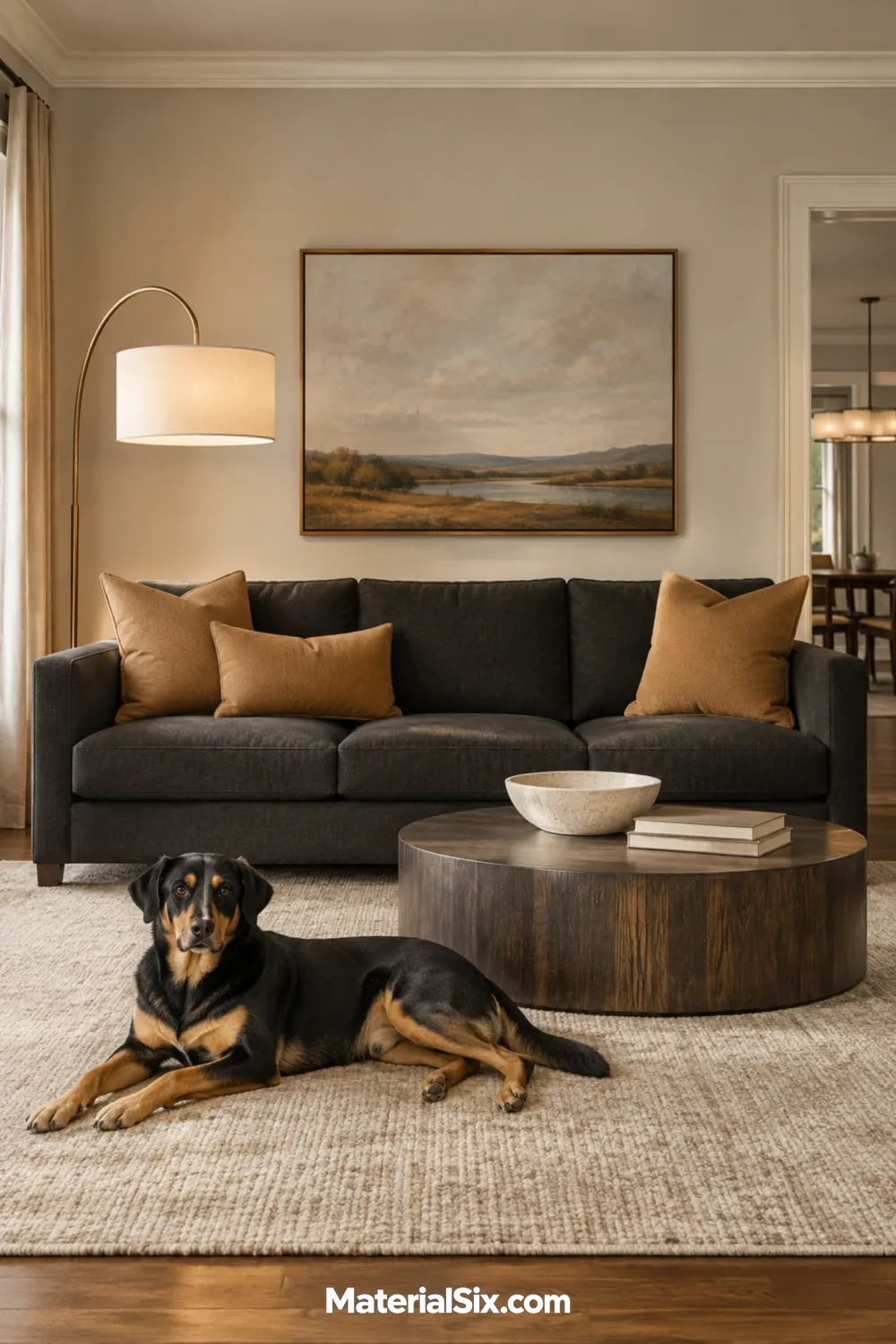
Your pet is already part of the room’s color story. A black-and-tan dog beside charcoal upholstery, camel cushions, and a warm cream rug can look surprisingly cohesive. With a pale cat, you might prefer oatmeal seating and lighter throws in the favorite resting area.
This is about making everyday hair less visually distracting, not eliminating cleaning. Bring upholstery samples home and place a little naturally shed fur against them to see the contrast. Avoid choosing a color you dislike just because it disguises hair. Start with one washable layer in a useful shade, then decide whether a larger furniture change would improve the room. Texture and lighting affect the result too.
15. Keep Low Display Shelves Simple and Stable
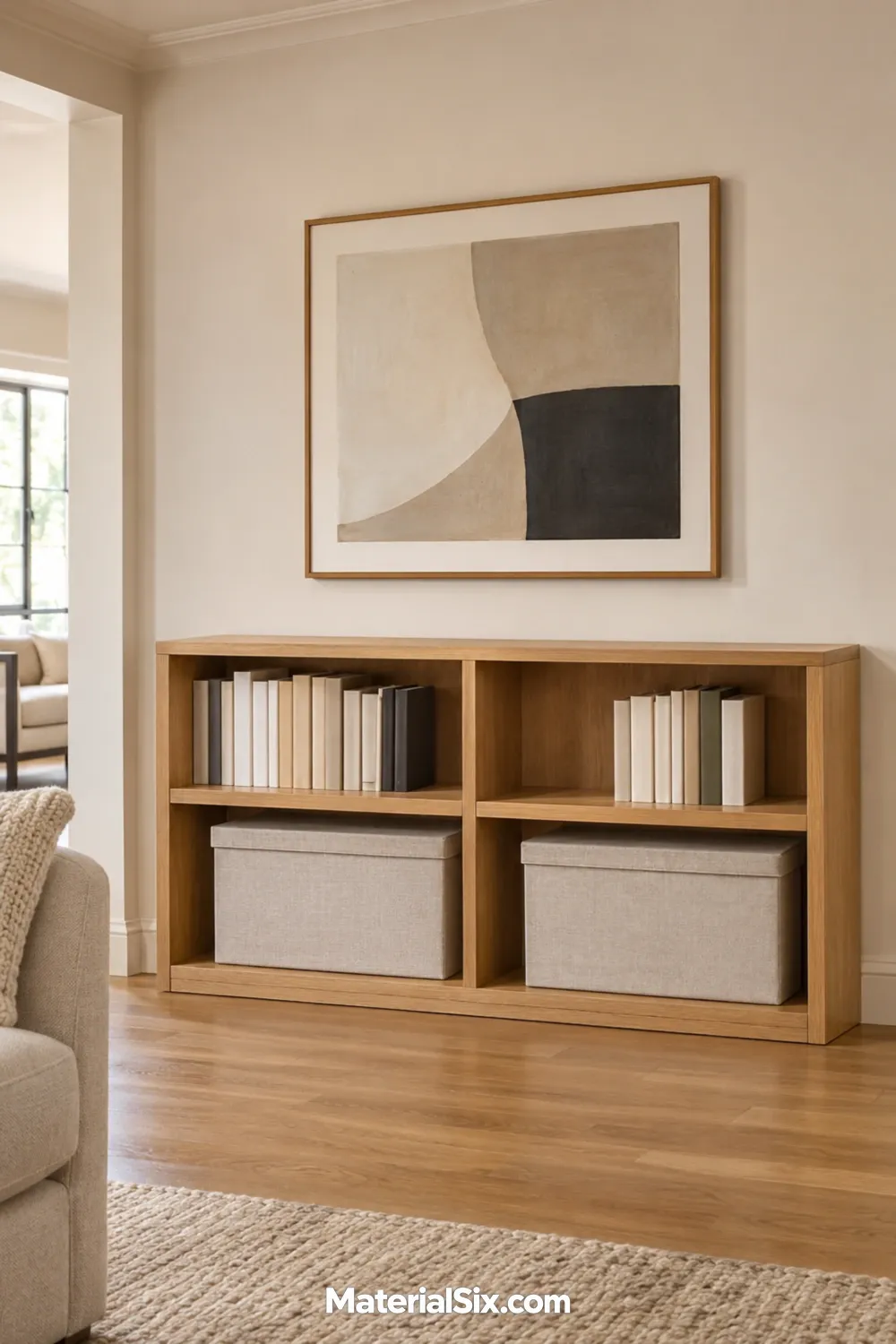
Low shelves can make a room feel open, but their accessible surfaces need thoughtful editing. Group books with large closed storage boxes and leave the edges clear. Move fragile ceramics and small decorative pieces to a location your particular pet cannot easily reach.
Choose stable furniture and follow the manufacturer’s anchoring instructions, especially with pets that jump or climb. Heavy objects still need secure placement; weight alone does not make them safe. Keep small objects that could be swallowed out of the display entirely. A restrained arrangement also leaves fewer pieces to move while dusting. You can add visual interest through the shelf’s wood grain and a framed print mounted above it.
16. Give Windows a Clean Look With Cordless Shades
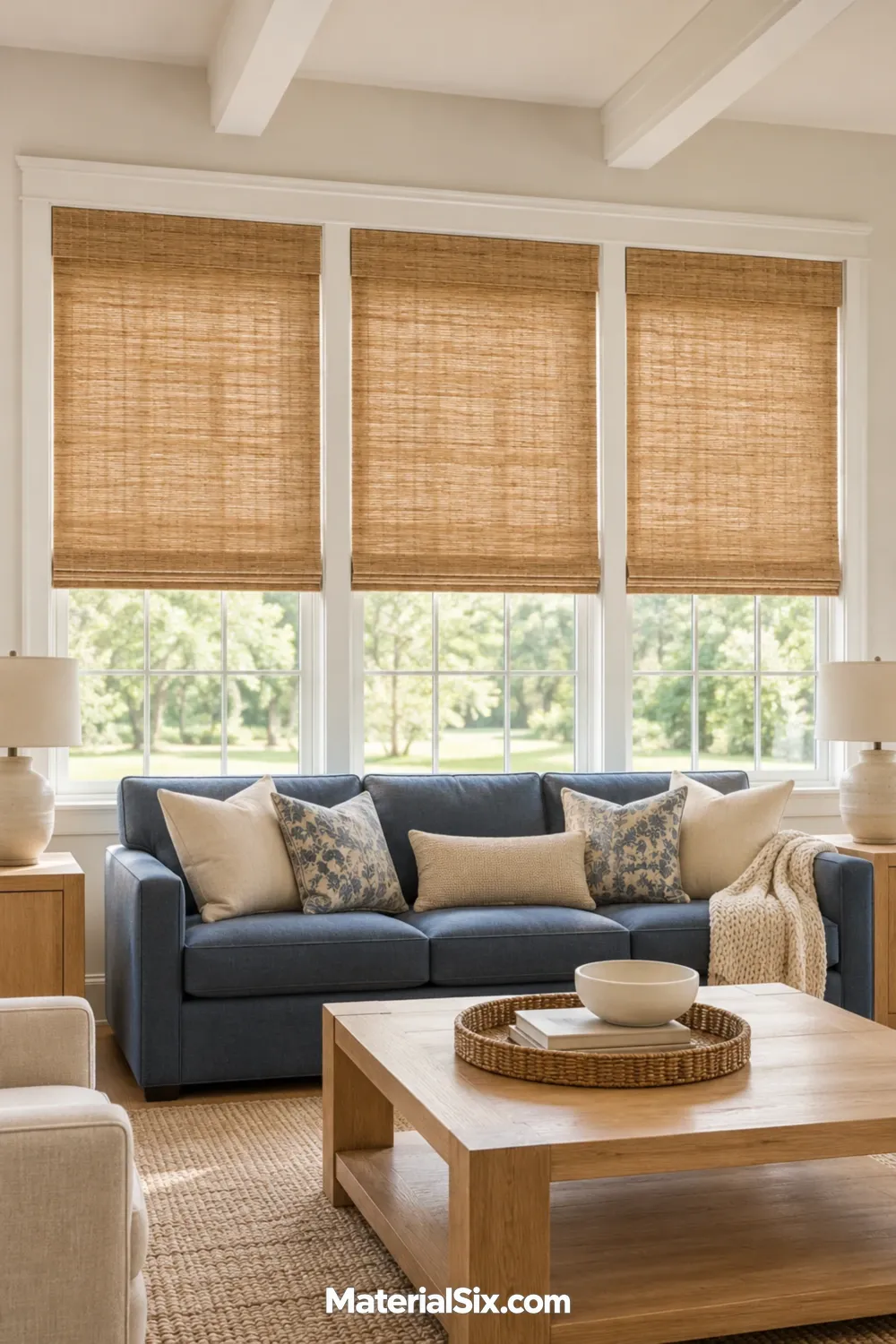
Dangling shade cords can interrupt an otherwise calm window wall. Cordless woven-look shades give a living room a simple finish and pair easily with linen curtains or painted trim. In a blue-and-natural-wood room, their warm texture can replace some of the softness you would otherwise add through floor-length fabric.
Choose a covering appropriate to the window and install it according to its instructions. Cordless does not mean every component is inaccessible to a curious pet. Keep furniture placement and climbing behavior in mind, and check the mechanism periodically. If your dog likes to watch the street, test a height that provides a view without the fabric resting on their usual perch.
17. Make a Water-Bowl Corner Easy to Wipe
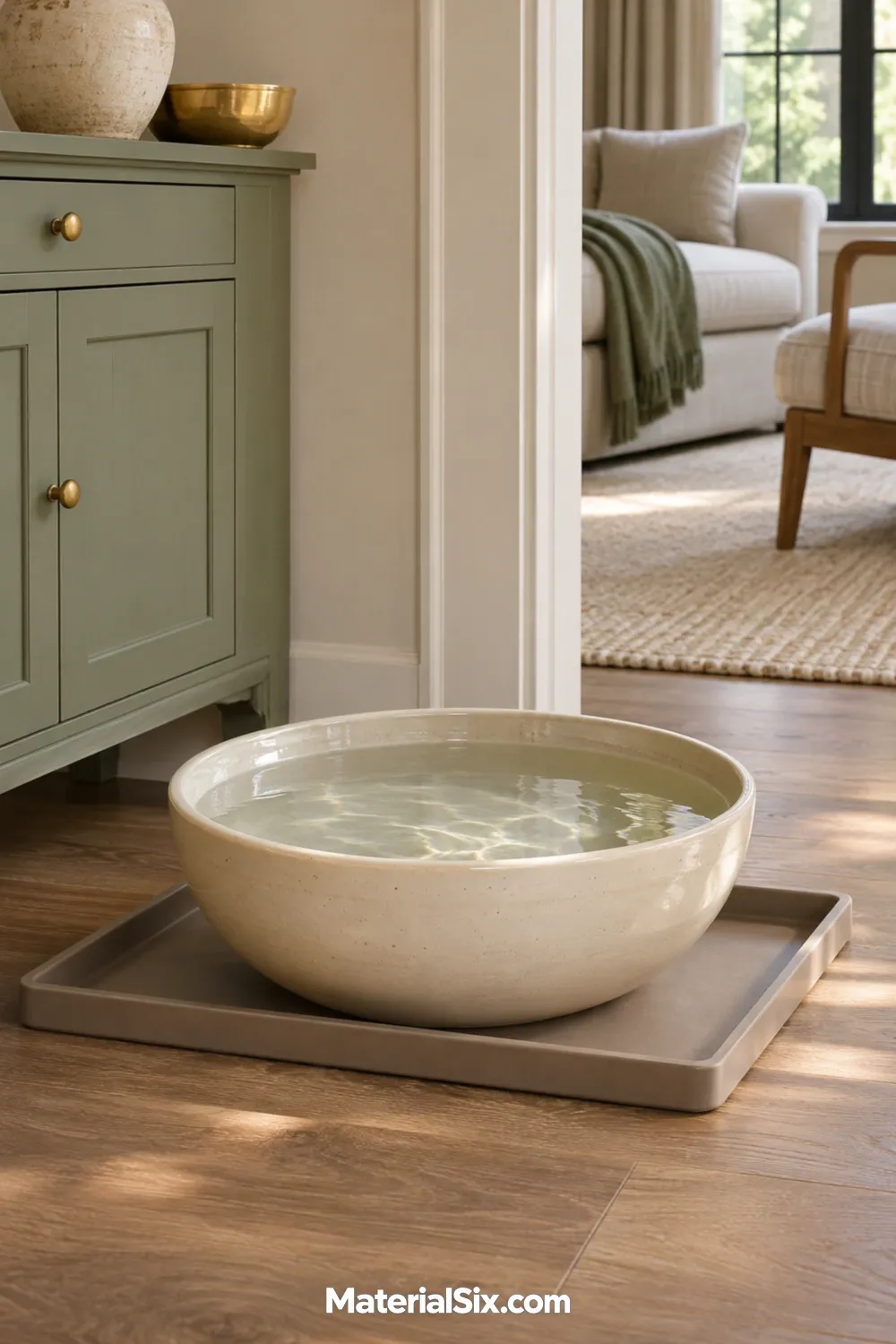
A water bowl can look considered without becoming an elaborate feeding station. Set a broad ceramic bowl on a shallow waterproof tray in a quiet corner near the living room. Choose a muted color that repeats your rug or cabinetry, and leave the bowl easy to approach.
The tray should fit the actual splash zone and stay flat on the floor. It is not a substitute for checking underneath, since trapped moisture can damage some finishes. Clean and refill the bowl regularly, following its material care guidance. Keep water away from outlets, cords, and busy walkways. For a pet with specific mobility or feeding needs, let your veterinarian’s advice guide the setup and bowl height.
18. Soften Easy-Clean Flooring With Smaller Textile Zones
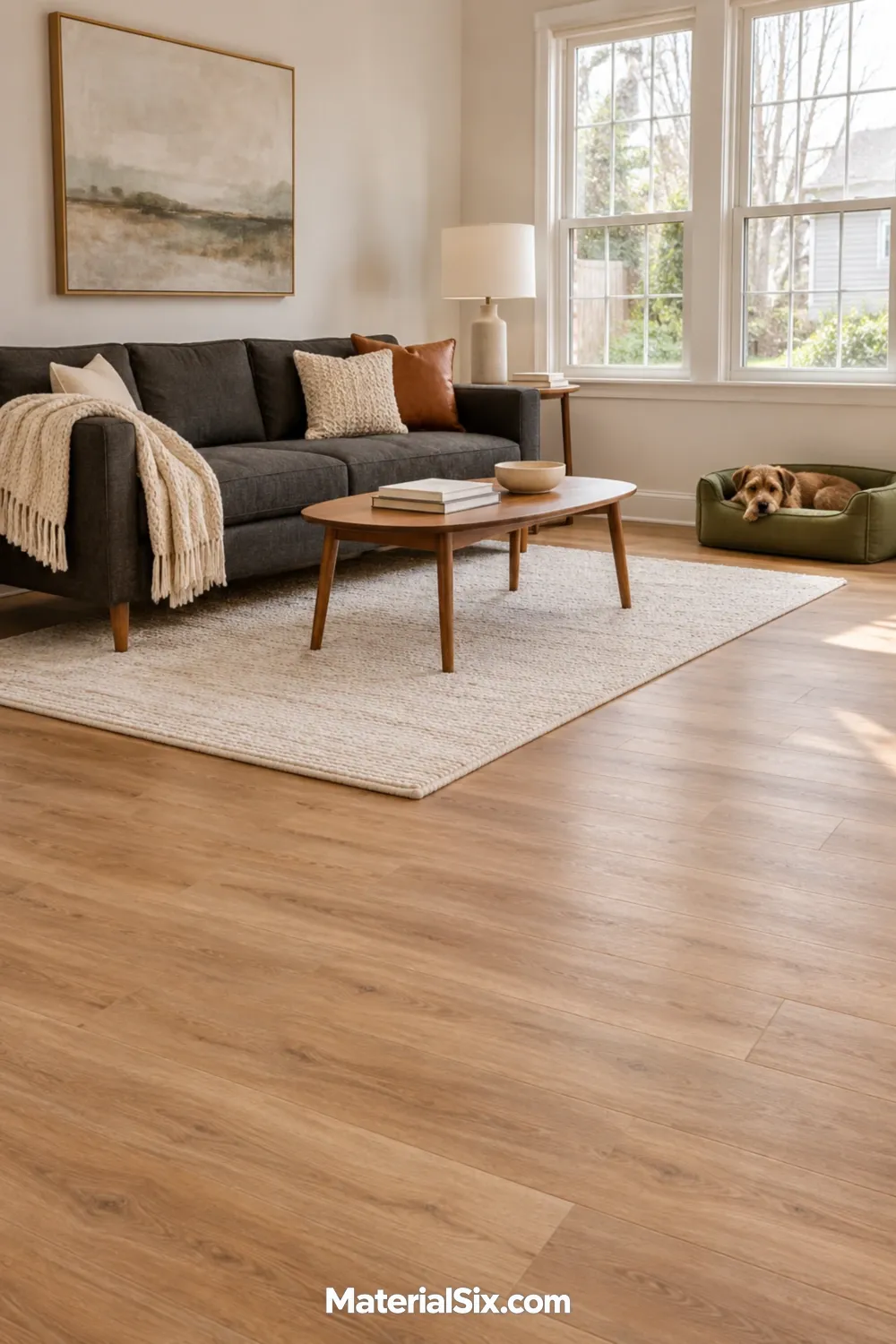
You do not need wall-to-wall softness to make a living room feel welcoming. A hard floor with a flatweave rug under the seating area and a separate cushioned pet bed can create comfortable zones. Pale wood-look tones keep the room warm while showing off darker furniture.
If you are replacing flooring, compare the actual product’s moisture limits, scratch guidance, traction, and cleaning requirements. No finish handles every pet or accident equally. Keep an existing floor if it works, and start by improving rug grip and the location of washable layers. Give your pet a comfortable route across the room, especially if smooth surfaces are difficult for them. Test samples at home before committing to a large installation.
Choose Your First Changes Around Daily Habits
Before shopping, spend a day noticing where your pet sleeps, drinks, watches the window, and leaves toys. Choose the biggest recurring inconvenience and fix that first. For a favorite sofa corner, try a washable throw. For scattered toys, give them one closed storage location.
Then connect the practical changes through two or three repeated colors. An olive bed, olive cushion, and muted patterned rug can do more for cohesion than a full matching furniture set. Keep at least one soft resting place accessible, maintain clear walking routes, and check product-specific cleaning and installation guidance. Adapt the arrangement if your pet ignores it or finds movement difficult.
Frequently Asked Questions
What sofa fabric works well in a home with pets?
Closely woven fabrics with clear cleaning instructions are a useful starting point. Compare samples for hair removal, texture, and care requirements. No fabric is immune to claws, chewing, or accidents.
Can a pet-friendly living room still have light furniture?
Yes, if the care routine suits your household. Removable covers, washable throws, and prompt spot cleaning can make pale seating more manageable. Read care labels before assuming a cover can go in your washer.
How can you make pet furniture look cohesive?
Repeat colors and materials already in the room. Match a bed to a cushion or choose a scratching post with a base that echoes your side tables. Keep the size and placement useful for your pet.
What should you change first on a small budget?
Start with placement and one washable layer. Move the pet bed to a preferred resting spot, gather toys in existing closed storage, and add a washable throw where hair collects most.
Start With the Spot Your Pet Uses Most
You do not have to solve the entire room at once. Begin with the sofa seat, window corner, or patch of floor your pet already loves. Add one useful layer or storage solution, connect it to your room’s colors, and see how it works through a normal week. A chic living room can make everyday pet life easier while still feeling personal.