
Your black leather couch may be the most comfortable piece in the room, yet everything around it can feel a little undecided. White walls make it stand out. Another dark table can make the seating corner feel heavy. Even a cushion that looked soft in the store can seem surprisingly bright against the leather at home.
Decorating around that contrast starts with choosing what you want the couch to sit beside. Ivory paint, textured fabric, warm wood, and muted color each bring out a different side of the same dark upholstery. You can keep the room light and relaxed, add an olive backdrop, or introduce a cooler blue palette without replacing your main seat.
These 15 black leather couch living room ideas focus on practical combinations you can adapt. Use them to compare materials, check proportions, and choose one change that helps your existing furniture feel more connected.
1. Warm Up the Room with Ivory Walls
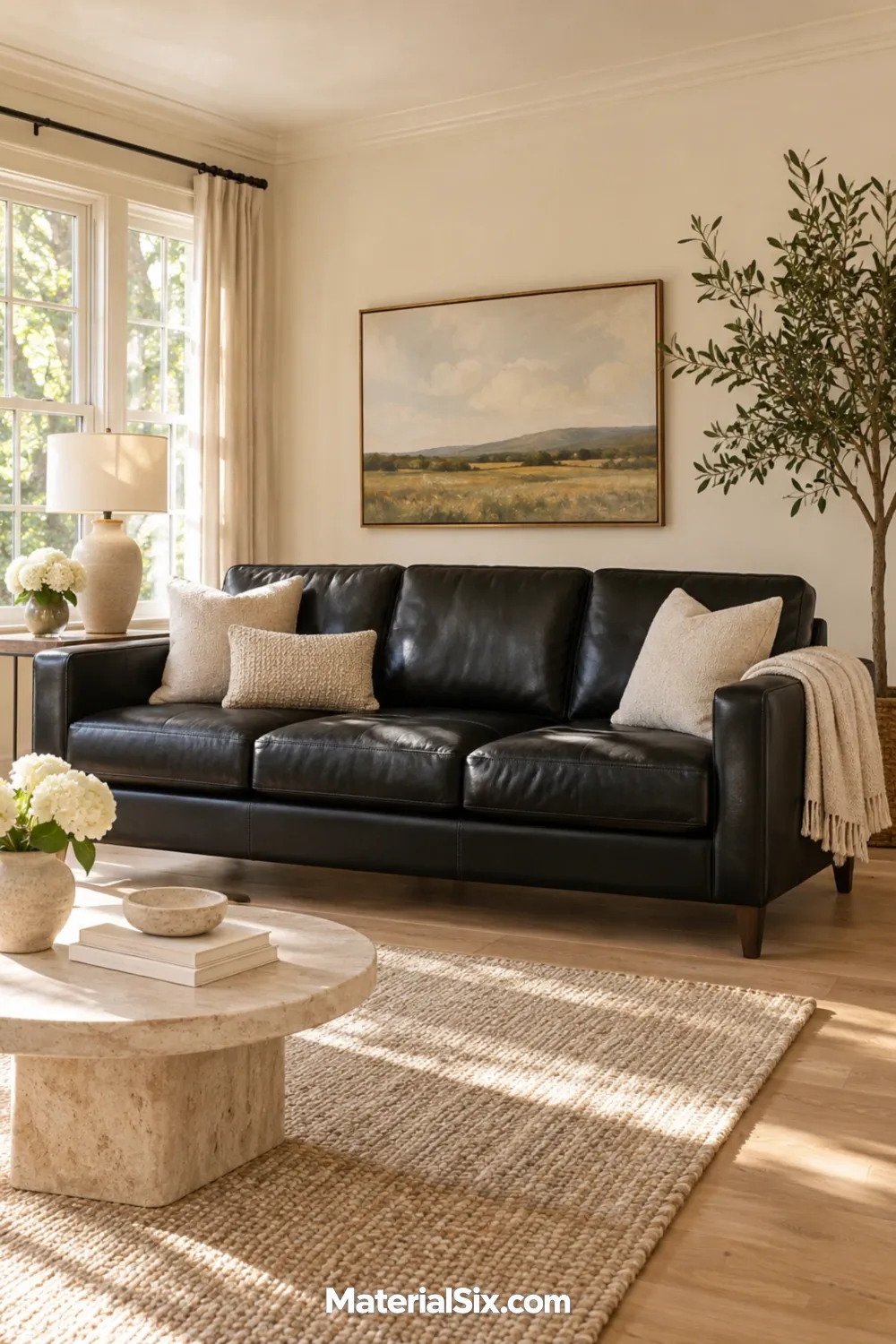
Black leather looks especially rich against an ivory backdrop. The slight warmth in the paint keeps the contrast softer than a stark white wall, while still giving the couch a clear outline. Look at your sample beside the leather, flooring, and trim before choosing a shade.
Paint a large sample board and move it around the room during the day. A creamy color can read yellow under some lamps, especially beside cool gray floors. Carry the wall color into one or two cushions, then leave enough black leather exposed for the sofa to remain the room’s anchor.
2. Anchor the Couch with an Oversized Wool Rug
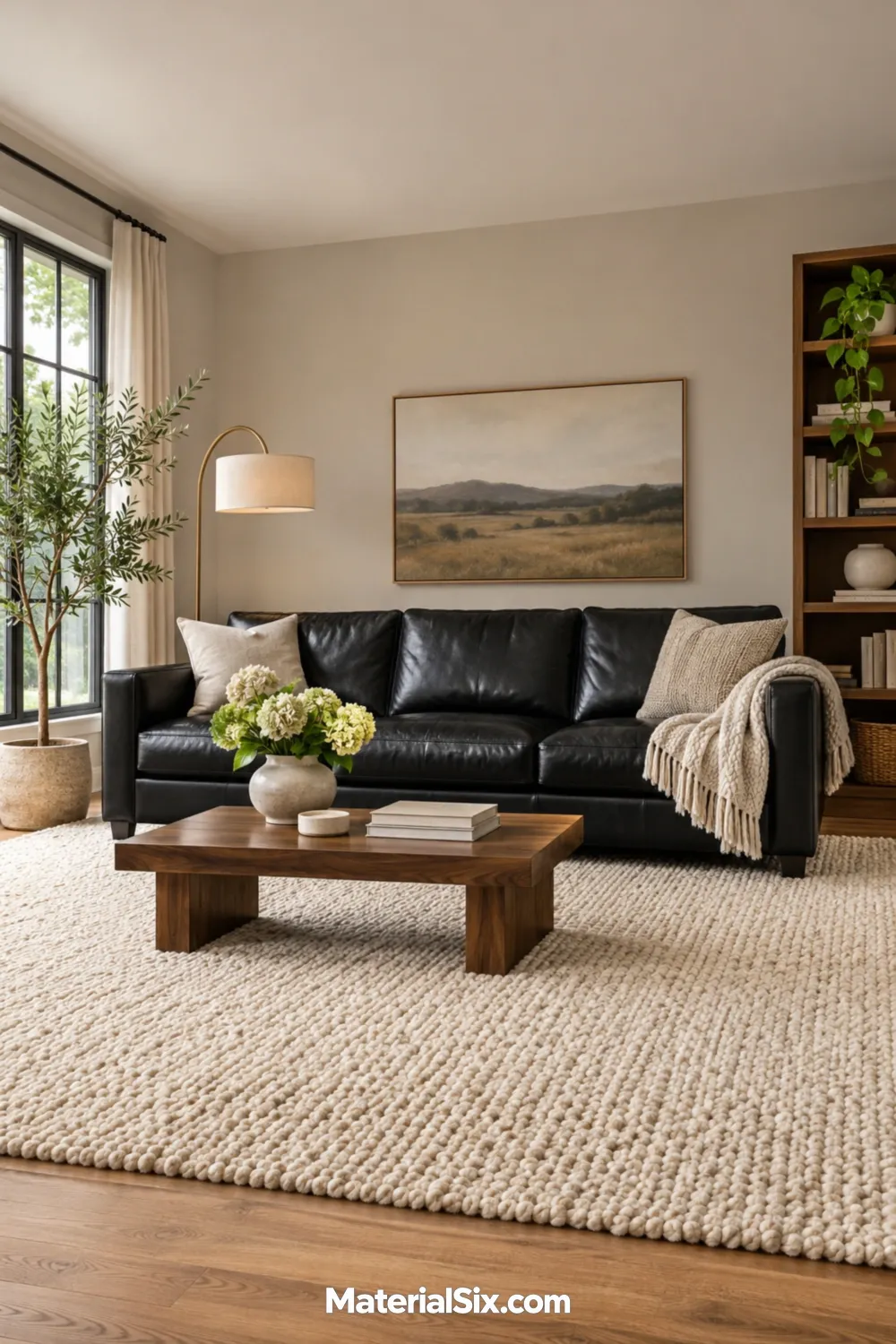
A generously sized rug gives a dark sofa a lighter base and makes the seating area feel connected. Choose a size that reaches beneath the front sofa legs and extends beyond both arms, rather than a small rectangle floating in front of the couch.
An ivory wool rug adds visible texture without introducing another strong color. Check its pile and care instructions against how you use the room; a very chunky weave may be less convenient where chairs move frequently. Before ordering, mark the proposed edges with painter’s tape. Keep the rug clear of door swings and make sure nearby seating can join the same arrangement.
3. Balance the Leather with Warm Wood
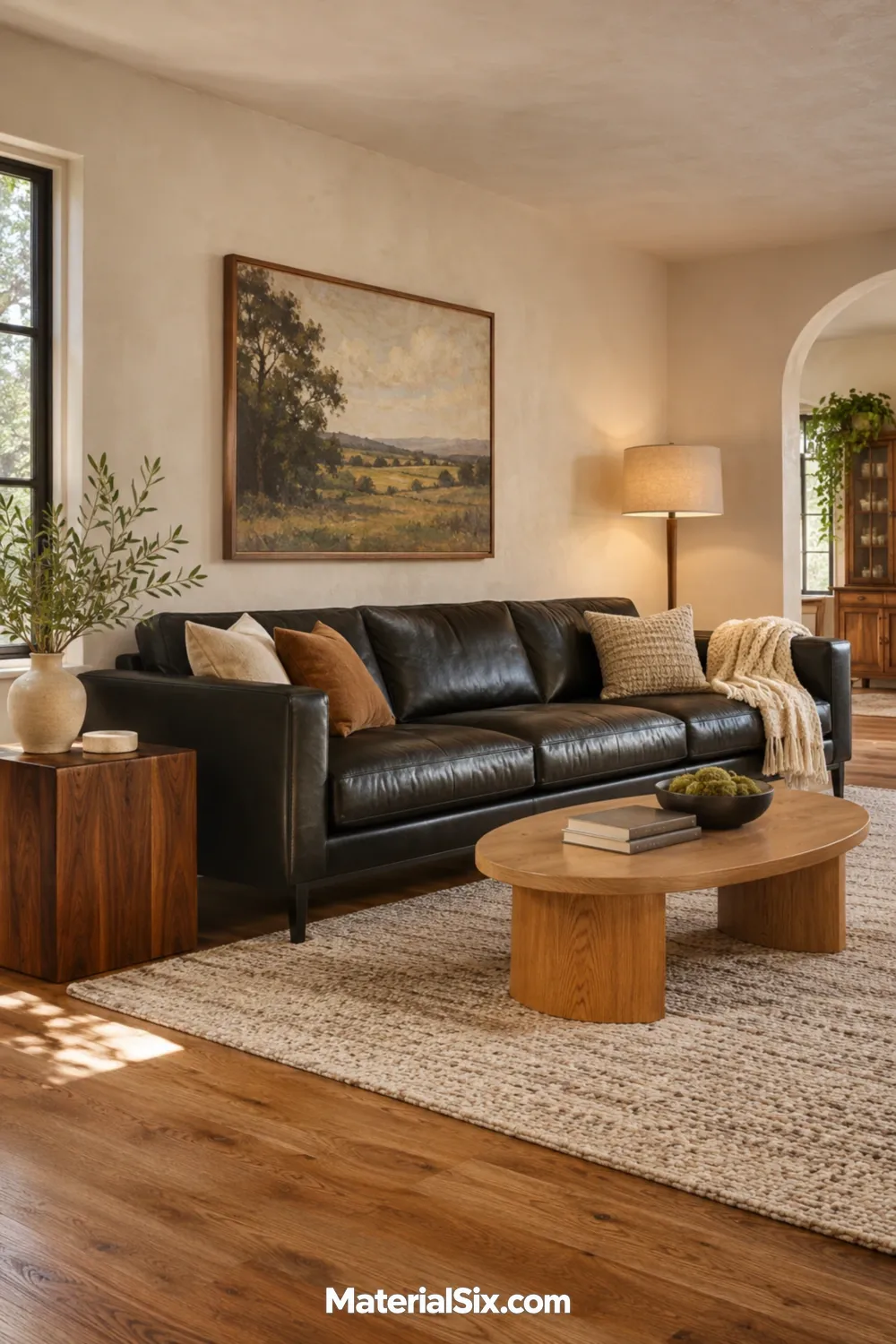
Warm wood gives smooth black leather something visibly different to sit beside. An oak coffee table brings a lighter note, while walnut adds depth without creating the same solid dark block as another black furniture piece. You can mix the two when their finishes share a similar warmth.
Start with the table closest to the sofa, where the contrast is easiest to appreciate. A rounded edge can soften a boxy couch, while a simple rectangular table suits a longer seating group. Leave a comfortable reach from the seat and enough space to move around it. Avoid filling every wood surface with accessories; let the grain do some decorating.
4. Pair Black Leather with Olive Green
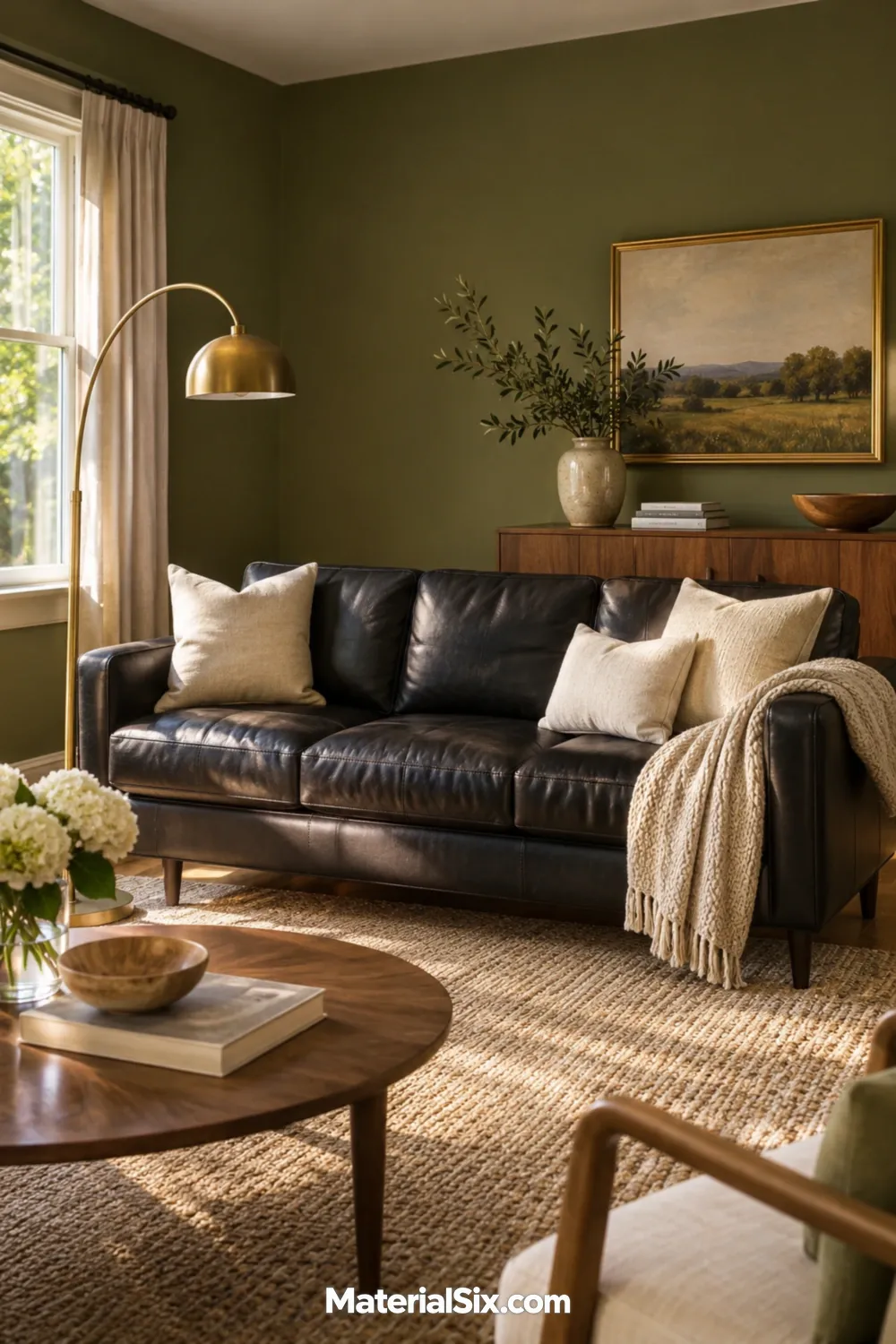
Olive green creates a quieter backdrop than a bright accent color, yet it gives a black leather couch more atmosphere than a plain neutral wall. In the pictured room, cream cushions and a warm metal lamp keep the deeper wall color from making the seating corner feel too dense.
Try olive on the wall behind the couch first if you are unsure about painting the whole room. Test the shade in daylight and after the lamps come on, since muted greens can look browner at night. Keep a substantial pale element nearby, such as curtains or a rug, so the color combination has breathing room.
5. Layer Linen and Boucle for a Softer Seat
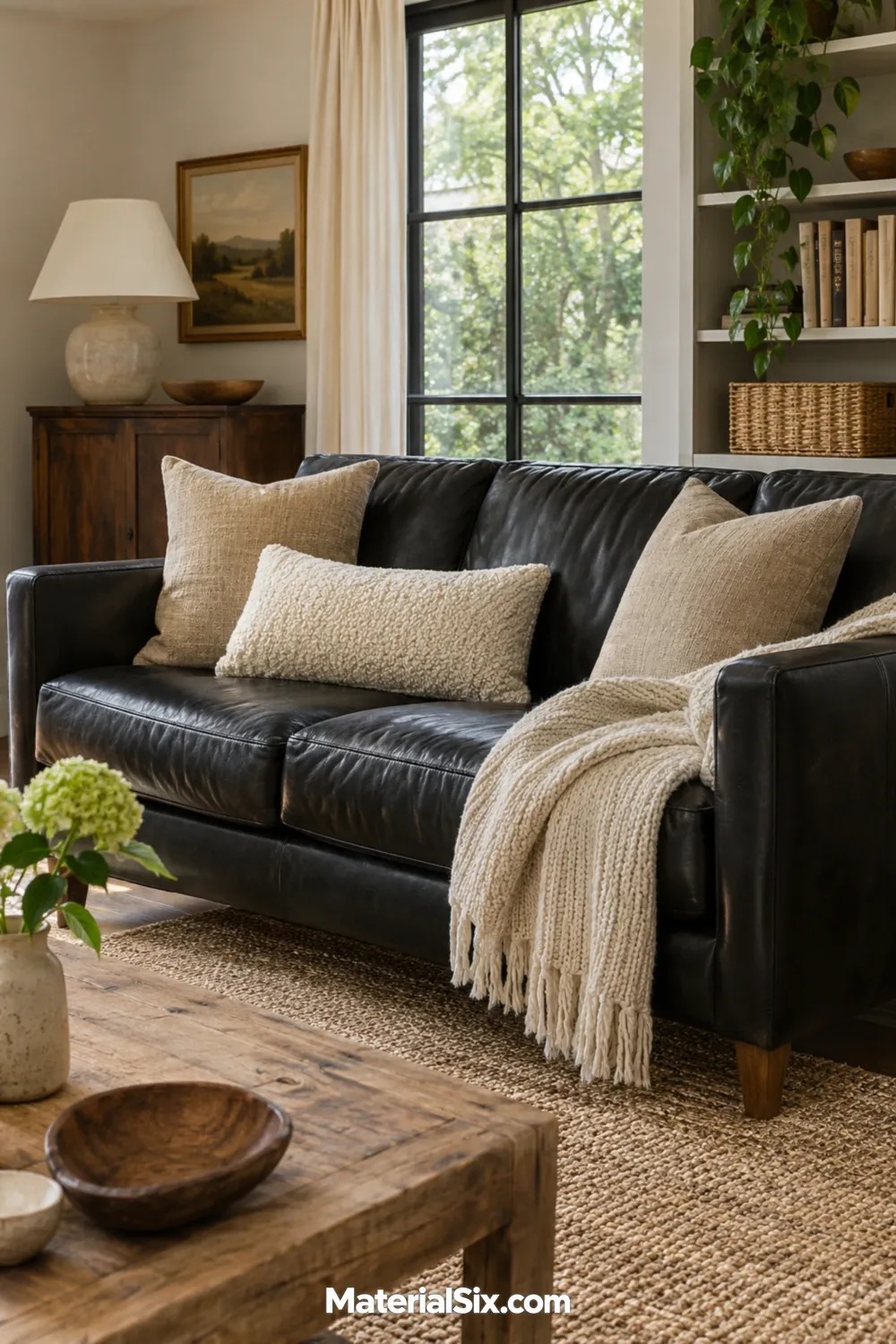
The quickest way to soften a black leather couch is to change what touches it. Oatmeal linen pillows, a nubby ivory lumbar cushion, and a knitted throw create three different textures without requiring a busy color scheme. The contrast is tactile as much as visual.
Give each piece a job: larger cushions support the ends, a smaller pillow breaks up the center, and the throw adds an informal fold over one arm. Avoid covering every seat with cushions that you immediately have to remove. If pillows slide on your particular leather finish, try less slippery covers and check the combination before buying several matching pieces.
6. Add Rust and Terracotta Accents
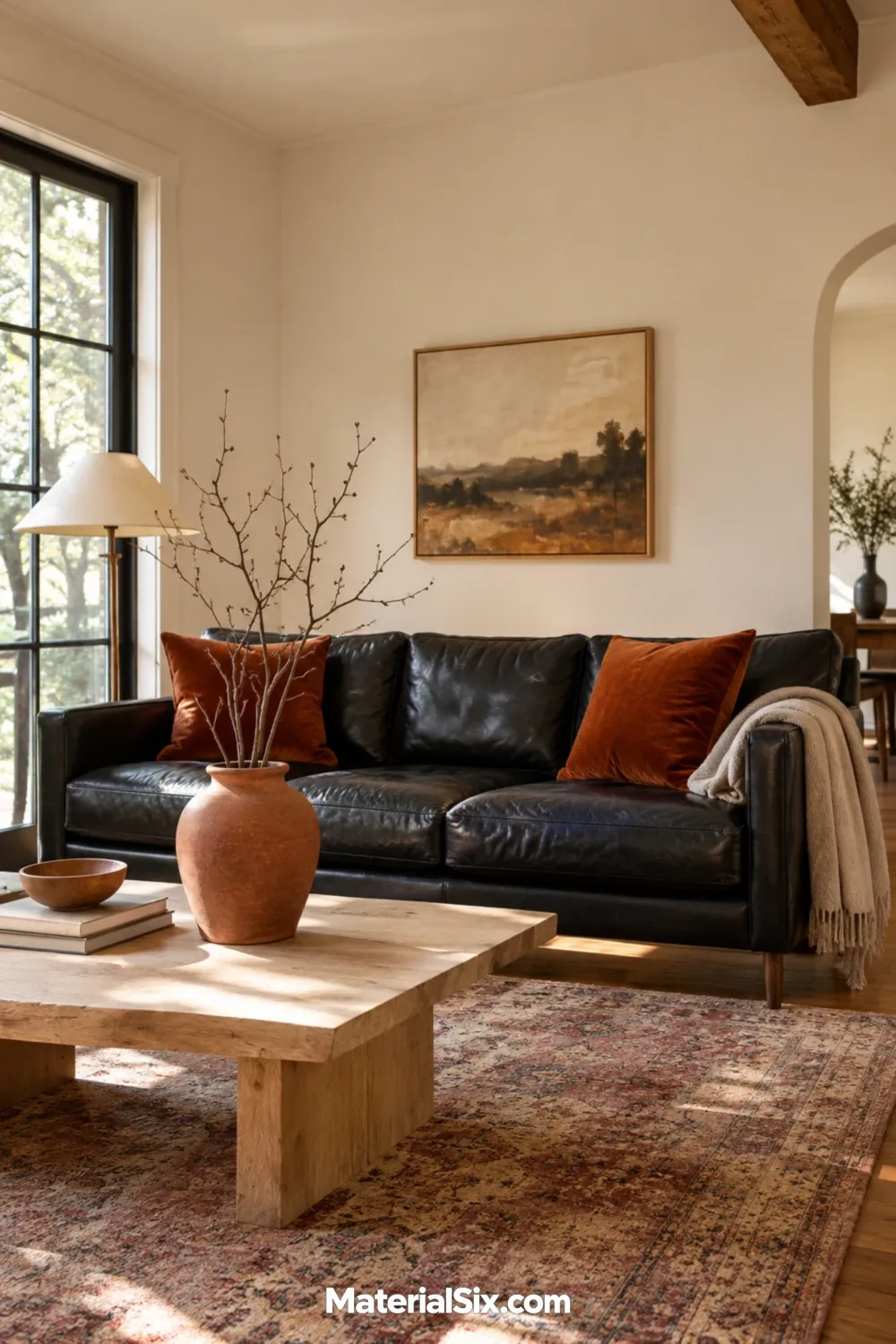
Rust and terracotta bring warmth to black leather without the strong contrast of a bright primary color. A pair of rust cushions is enough to introduce the palette; a clay-colored vase across the coffee table repeats it at a different height.
Keep the surrounding walls and large textiles relatively quiet so the orange tones feel intentional. You do not need an exact color match between fabric and pottery. Slight differences make the room feel collected. If your existing floor is already orange-toned, use smaller accents and compare them together in daylight. One cushion and a terracotta bowl may give you all the warmth the room needs.
7. Hang One Generous Piece of Art
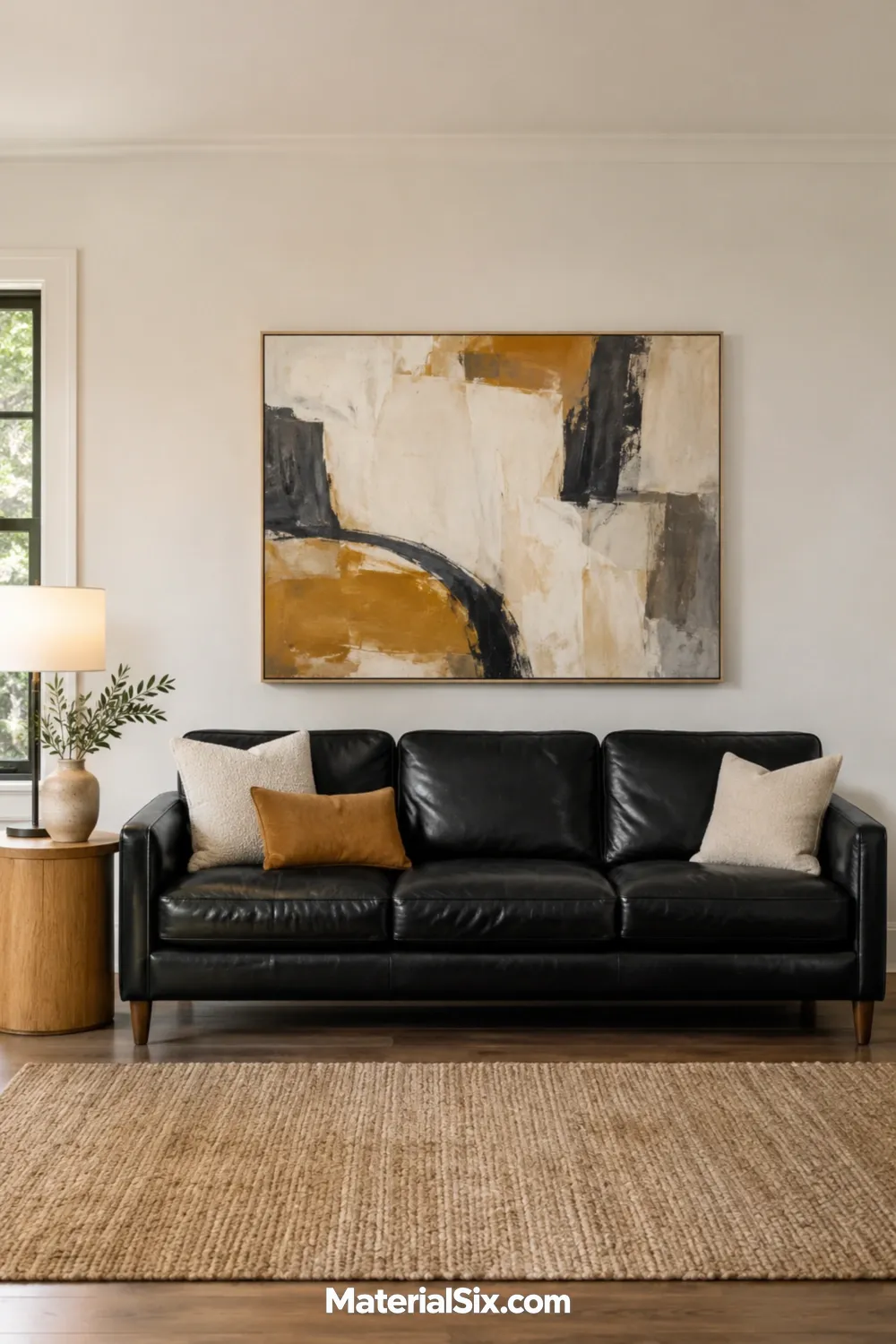
A single generous artwork can hold its own above a substantial black couch. Cream, charcoal, and ochre shapes connect the sofa to the lighter wall and nearby wood without requiring every accessory to match. The art becomes a clear focal point instead of a scattering of small objects.
As a starting point, look for a piece around two-thirds the sofa’s width, then adjust for the wall and furniture proportions. Mock up its outline with paper before making holes. Hang it in visual relationship to the couch rather than automatically centering it on the entire wall. Leave a modest gap above the back so the two feel connected.
8. Frame the Room with Airy Curtains
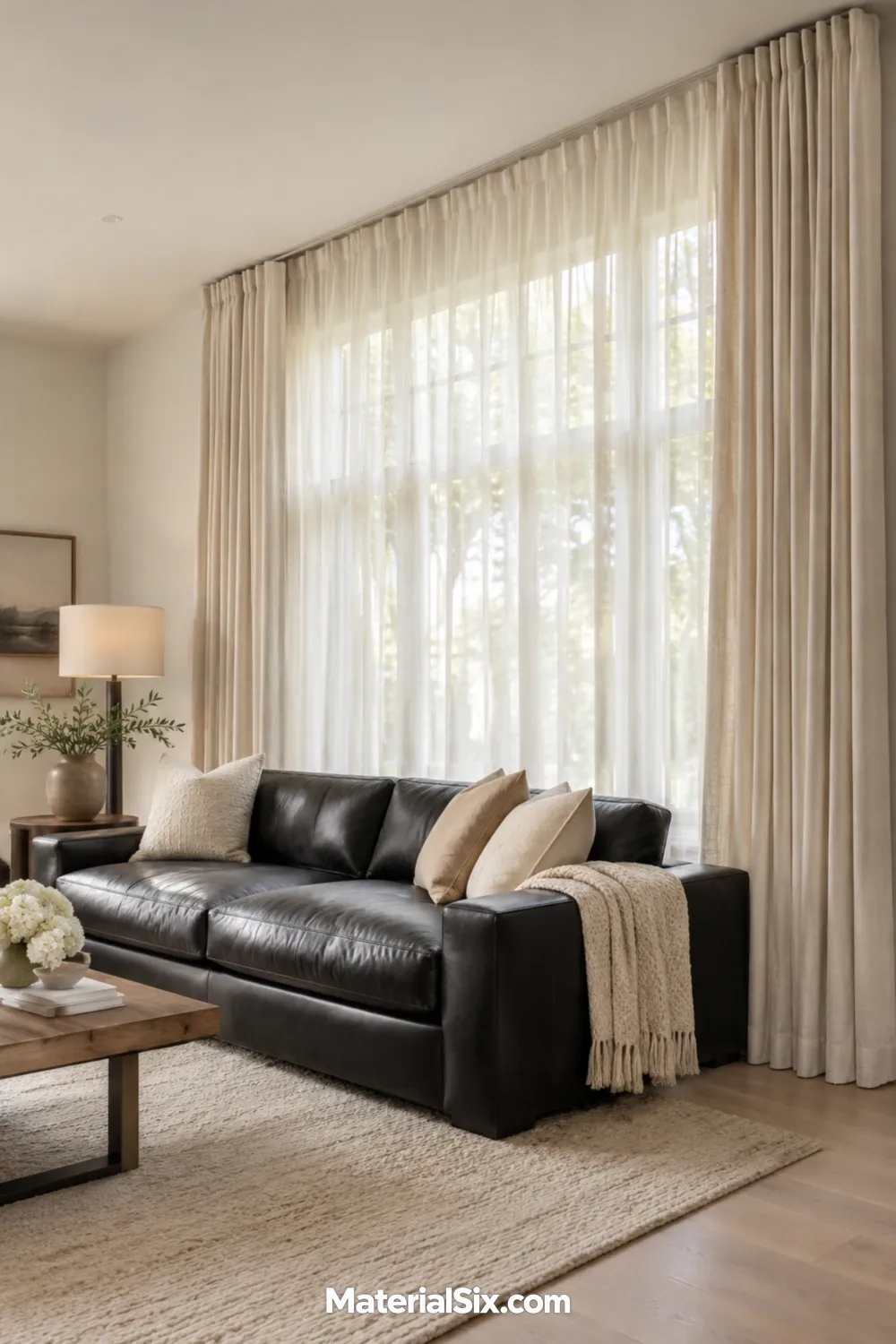
Tall, light curtains put a soft vertical line beside the couch and help balance its low, dark shape. Off-white linen or a linen-look weave lets you add texture while keeping the window area visually open. The pictured panels frame the glazing rather than piling across it.
Mount the rod with the room’s trim and ceiling in mind, and allow space for the panels to stack beside the window when possible. Choose a length that just meets the floor if you want less fabric collecting dust. Where privacy or glare matters, combine decorative panels with an appropriate shade instead of expecting an airy curtain to handle everything.
9. Build a Warm Glow with Layered Lighting
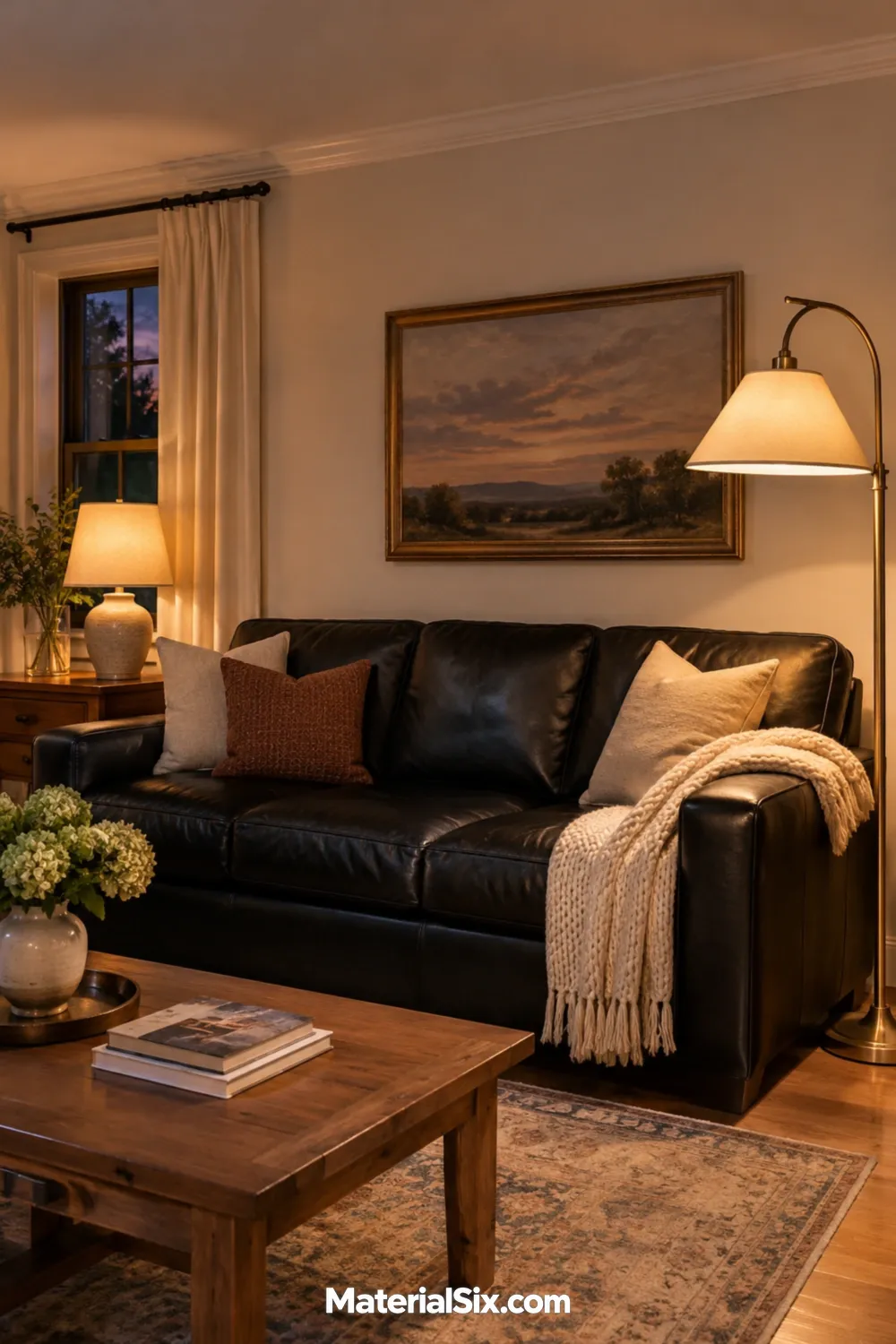
Black leather changes character under lamplight: broad, gentle highlights reveal its texture, while a bare bright bulb can make it look overly shiny. A shaded floor lamp at one end and a table lamp at the other create a more comfortable evening setting.
Aim for light at more than one height, with shades that conceal the bulb from your usual seated position. Warm brass adds a small reflective detail without demanding a whole metallic theme. Before adding another fixture, try relocating one you own and sit on the couch to check the glare. Keep cords along the room’s edges, clear of walking routes.
10. Introduce a Muted Vintage Rug
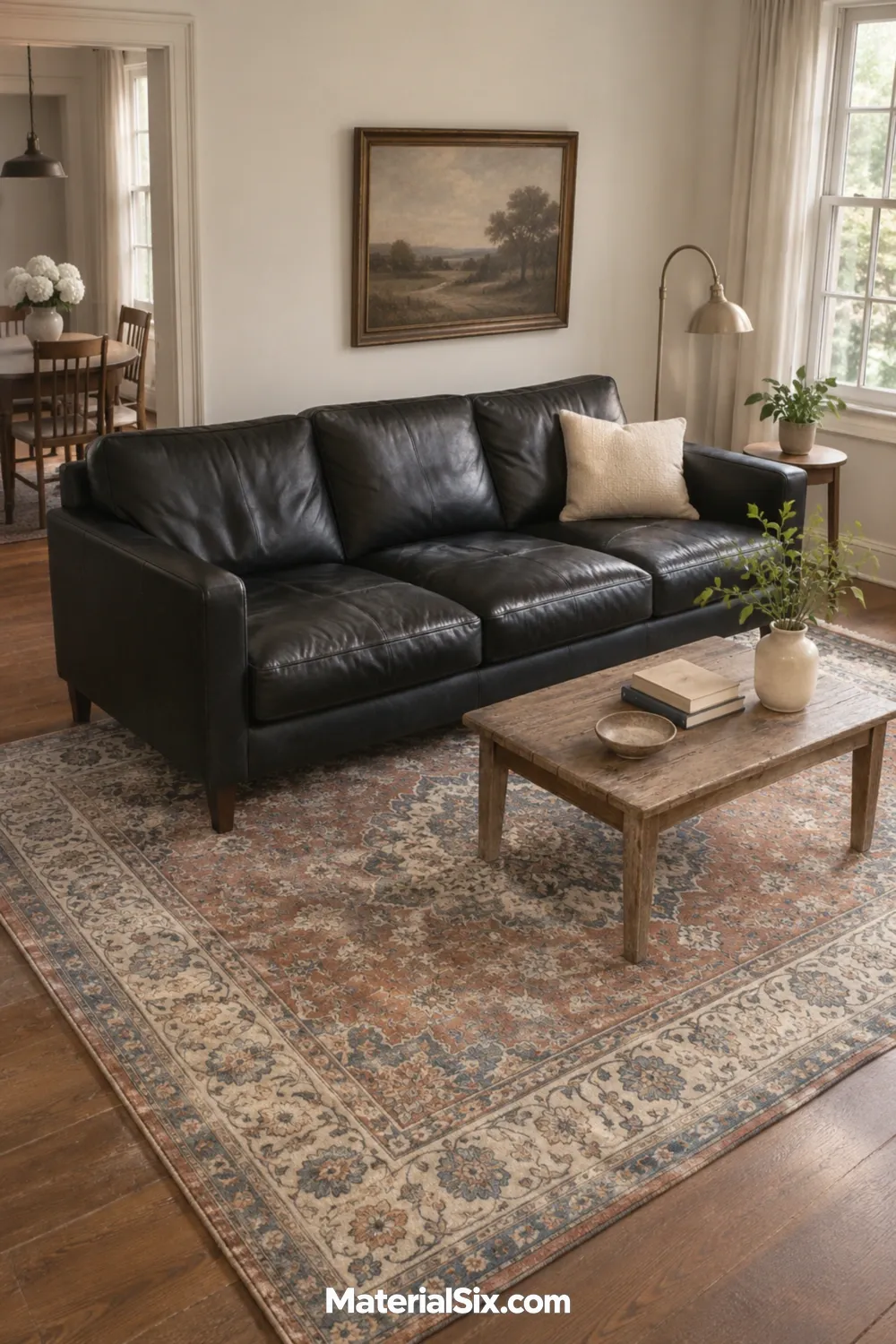
A faded traditional rug gives a sleek black couch a more relaxed companion. Look for a muted mix of cream, dusty blue, and terracotta, where the pattern reads as an overall wash of color from across the room. That softer pattern keeps the leather from feeling overly formal.
Choose the rug first, then pull one restrained accent color from it for a pillow or ceramic piece. Repeating every color can make the room feel busier than the rug itself. Check the actual measurements and close-up photos when shopping for a vintage piece. Fading, fringe, thickness, and wear vary, so consider your furniture placement before committing.
11. Lighten the Seating Group with a Cream Chair
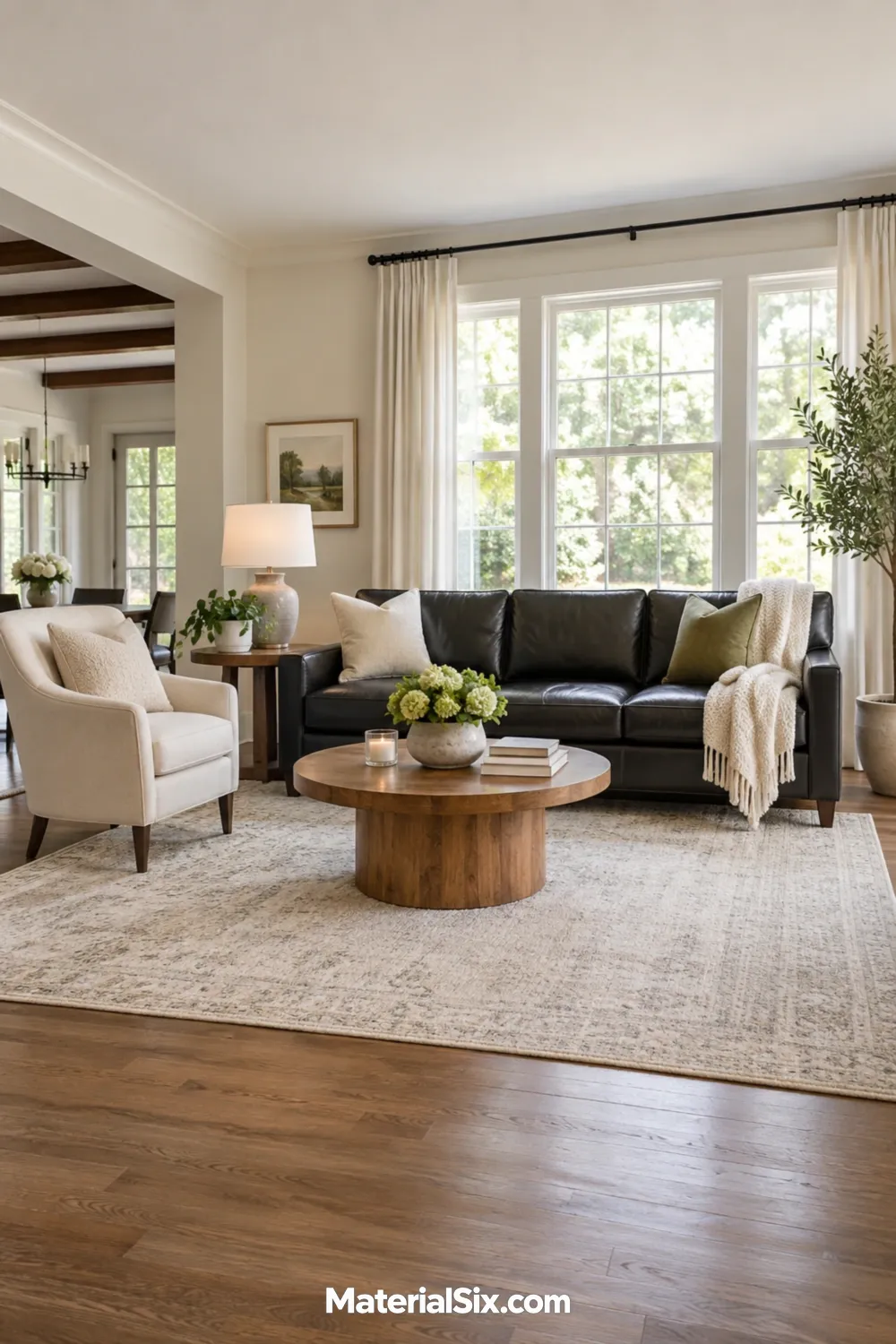
One cream accent chair can redistribute the visual weight of a black sofa. Place it at an angle or at a right angle to the couch so the room reads as a conversation area, rather than a dark couch facing a distant wall.
A chair with exposed wood legs introduces another useful texture and keeps the silhouette relatively light. Compare seat height and overall scale with your sofa; an unusually tiny chair may look lost beside a deep leather couch. Keep a usable route through the seating group. If cream upholstery worries you, consider a removable cover or a fabric with care requirements that fit your household.
12. Bring in Greenery at Different Heights
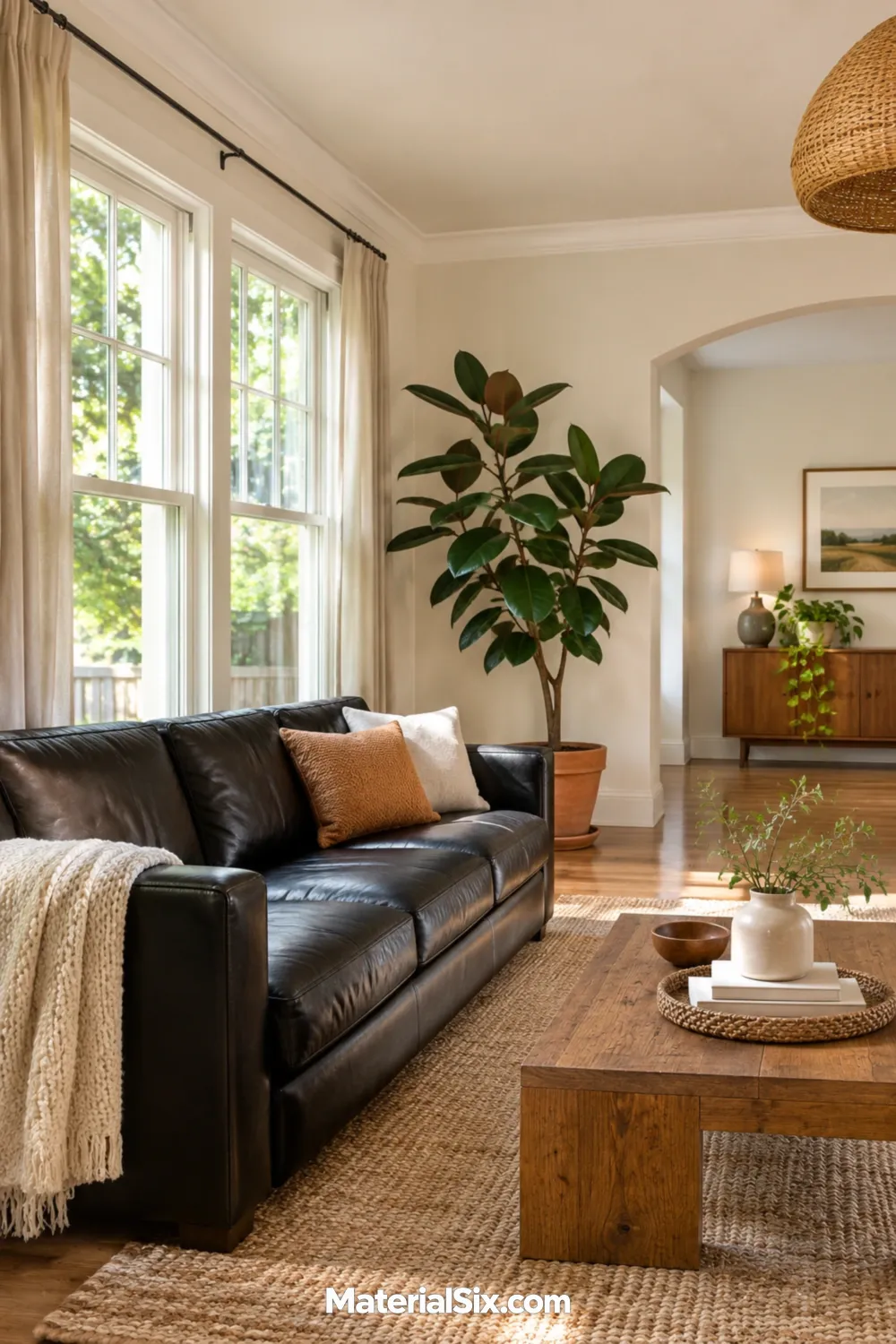
Green leaves introduce an irregular shape that contrasts with the straight edges and broad cushions of a leather couch. A tall rubber plant beside a bright window gives the seating area height, while a smaller trailing plant on a console carries that color across the room.
Choose plants for the actual available light, not just the empty corner you want to fill. Leave space between foliage and the sofa so leaves do not interfere with sitting or brushing past. Use a planter with a waterproof liner or saucer and keep watering away from the upholstery. One healthy plant usually adds more than several crowded pots struggling in a dim spot.
13. Repeat Black in a Few Slim Details
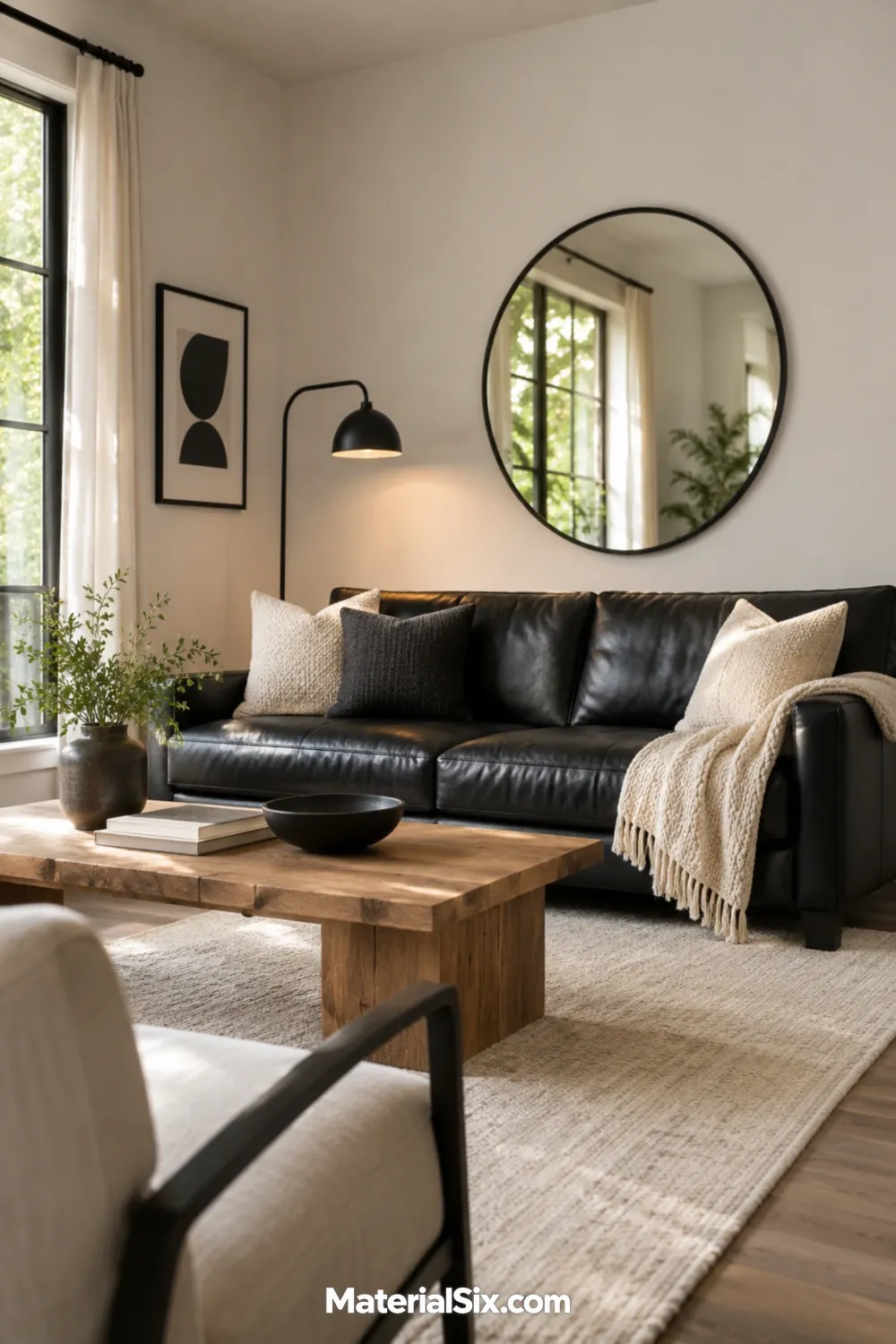
A black couch feels more connected to a light room when its color appears elsewhere in small doses. A slim floor lamp, a narrow mirror frame, and a restrained picture frame are enough to establish a rhythm without adding another large dark mass.
Distribute these details around the seating area rather than grouping them all directly above the sofa. Keep the surrounding surfaces lighter so each line remains readable. If you already have black window frames or a dark fireplace surround, count those as part of the arrangement before shopping. The goal is a few visual connections, with plenty of pale wall, textile, or wood between them.
14. Keep Nearby Storage Low and Calm
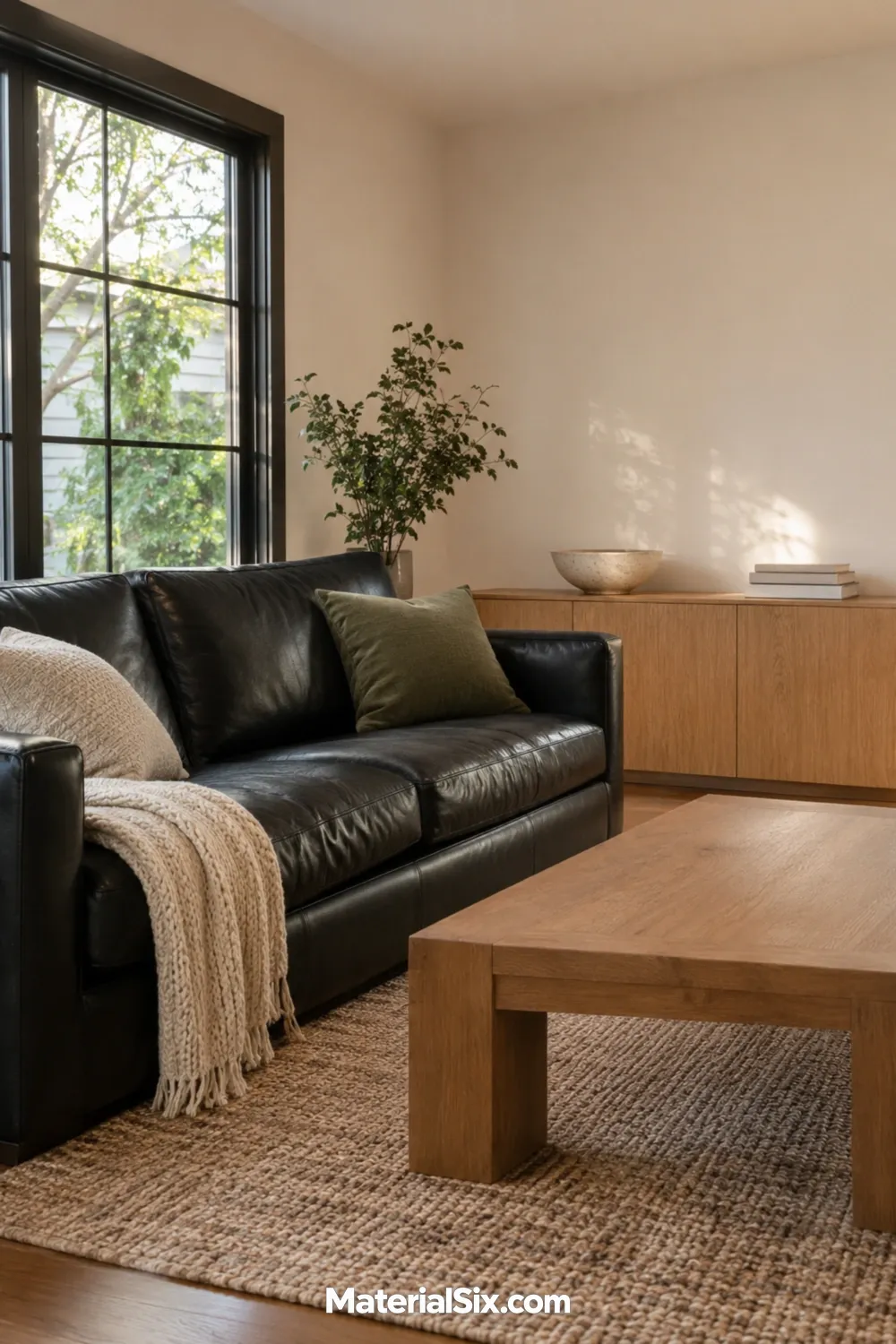
Visual clutter can make a substantial couch feel even heavier. A low oak console with closed doors gives everyday items somewhere to go and creates a quieter horizontal line on an adjacent wall. Its warm finish also keeps storage from becoming another black block.
Measure what you need to store before choosing the cabinet. Games, charging equipment, and folded throws have different depth requirements. Leave space to open doors and drawers without shifting the coffee table. Style the top sparingly with one bowl and a short stack of books, then assess the room from the couch. Clear surfaces are most useful when the storage behind them actually works.
15. Cool the Palette with Dusty Blue
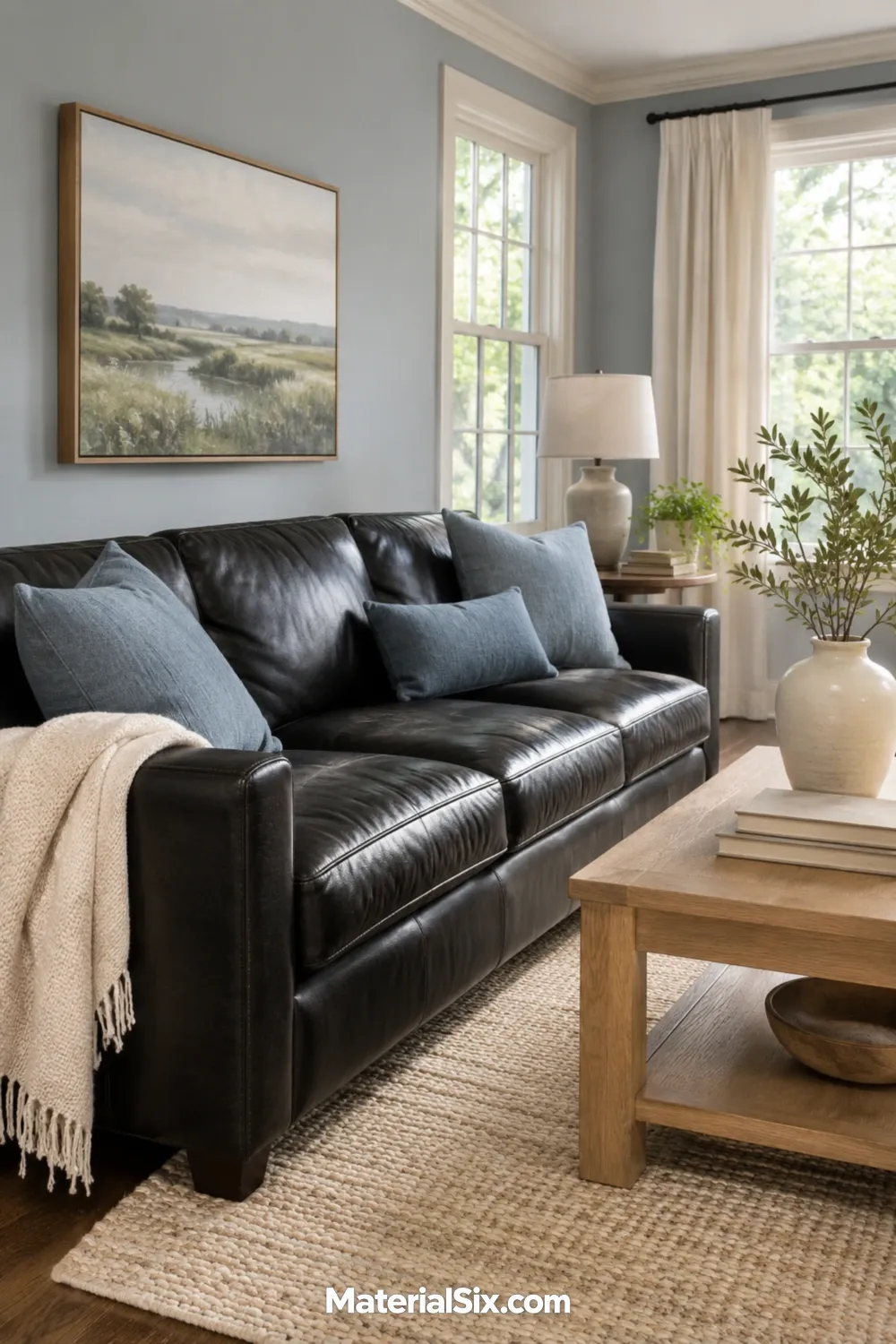
Dusty blue offers a cooler alternative to rust or olive while still feeling gentle beside black leather. A pale blue-gray wall and a pair of washed blue cushions create a restrained palette, especially when balanced with oatmeal textiles and light oak.
Choose blue with a muted finish rather than a very saturated shade if you want this quieter effect. Compare the fabric against the leather in your own light: some blues can look surprisingly vivid beside glossy black. Use a warmer rug or wood table to keep the room from feeling chilly. Start with cushion covers if repainting is unnecessary, then decide whether the larger blue backdrop adds anything.
Choose a Palette Before You Add More Accessories
Pick one light foundation, one warm material, and one accent direction. For example, ivory walls and a pale rug can support walnut furniture with olive details. A blue-gray backdrop works with oatmeal textiles and light oak. You can borrow individual ideas from either room, but repeating every palette at once makes decisions harder.
Check the largest surfaces first: walls, floor, curtains, and rug. Then place two or three fabric samples beside the couch and view them from the doorway. If the arrangement already feels busy, remove an accessory before adding another. For a smaller room, keep a clear walking route and choose furniture by measured footprint, rather than trying to make every piece visually lightweight.
Finish by sitting where you normally relax. A beautiful lamp can still create glare, and a well-styled table can still be awkward to reach. Let those everyday checks guide the final arrangement.
Frequently Asked Questions
What wall colors go with a black leather couch?
Warm ivory, muted olive, and pale blue-gray offer three different directions. Compare samples against your flooring and leather in daylight and evening light before choosing a whole-room color.
How do you make a black leather couch look softer?
Add contrasting textures such as linen cushions, a knitted throw, and a pale woven rug. Leave some leather visible so the styling feels intentional and the seats remain usable.
Can you pair a black leather sofa with wood furniture?
Yes. Oak creates a lighter contrast, while walnut adds warmth and depth. Start with one substantial wood table and repeat its tone in a smaller detail if the room needs another connection.
What rug works under a black leather couch?
An ivory textured rug lightens the seating area, while a faded patterned rug adds gentle color. Choose a size that connects the sofa and nearby chairs, then check pile, care requirements, and door clearance.
Do all the other furniture pieces need to match the couch?
No. A cream chair, wood table, and a few slim black details can create a connected arrangement. Repeat a color or material selectively instead of buying a full matching set.
Start with the Surface That Feels Unfinished
If the couch looks stranded, check the rug size. If the room feels cold, try a warm wood piece or textured cushions. If the seating corner disappears after dark, adjust the lamps. Choose one change, live with it for a few days, and use what you notice to decide the next step.