
Your living room has a comfortable sofa and a few books, but it still feels a little too bright, bare, or disconnected from the atmosphere you want. You picture somewhere to read after dinner: warm lamplight, wood with visible grain, a patterned rug, and colors that feel settled rather than stark. The challenge is getting that richness without making the room gloomy or filling it with props.
These dark academia living room ideas give you several ways to build that feeling. Some start with a larger decision, like olive walls or a bookcase wall. Others work through smaller layers, including plaid wool, vintage-style art, and a well-placed lamp. You can keep your cream walls, use the sofa you already own, and choose just a few changes that fit your space. Start with the feature you want to notice first, then let the surrounding materials and colors support it.
1. Paint the Walls a Deep Olive Green
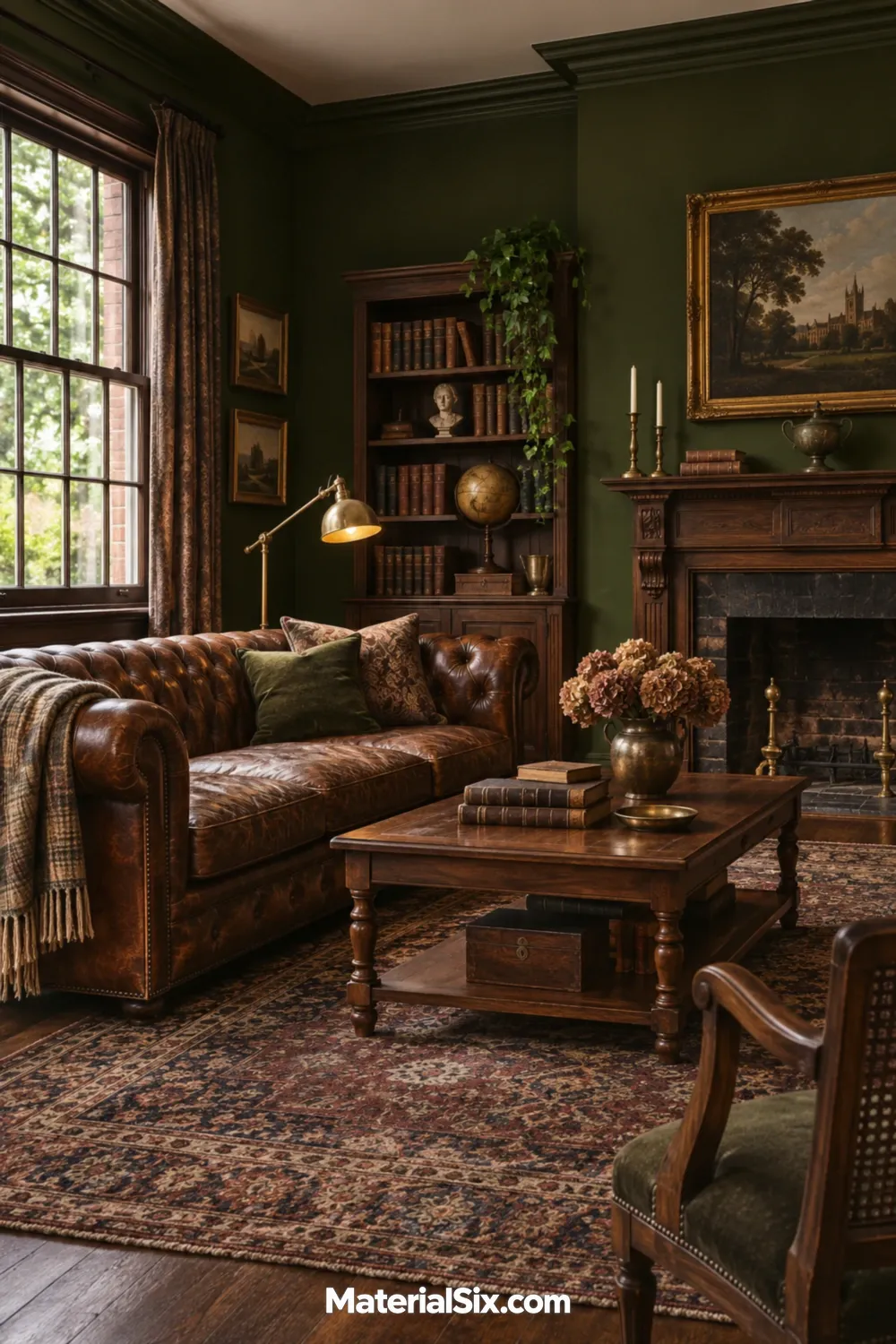
A deep olive wall gives your living room a library-like backdrop without depending on black. Look for a muted green with brown or gray undertones so it sits comfortably beside walnut furniture, aged brass, and warm leather. The goal is a rich background that lets those materials show their texture.
Try a large paint sample near the window and behind the sofa before committing. The same shade can read earthy in daylight and almost charcoal after sunset. If painting the entire room feels like too much, start with the wall behind your main seating and repeat that green in a cushion.
2. Make a Bookcase Wall the Main Feature
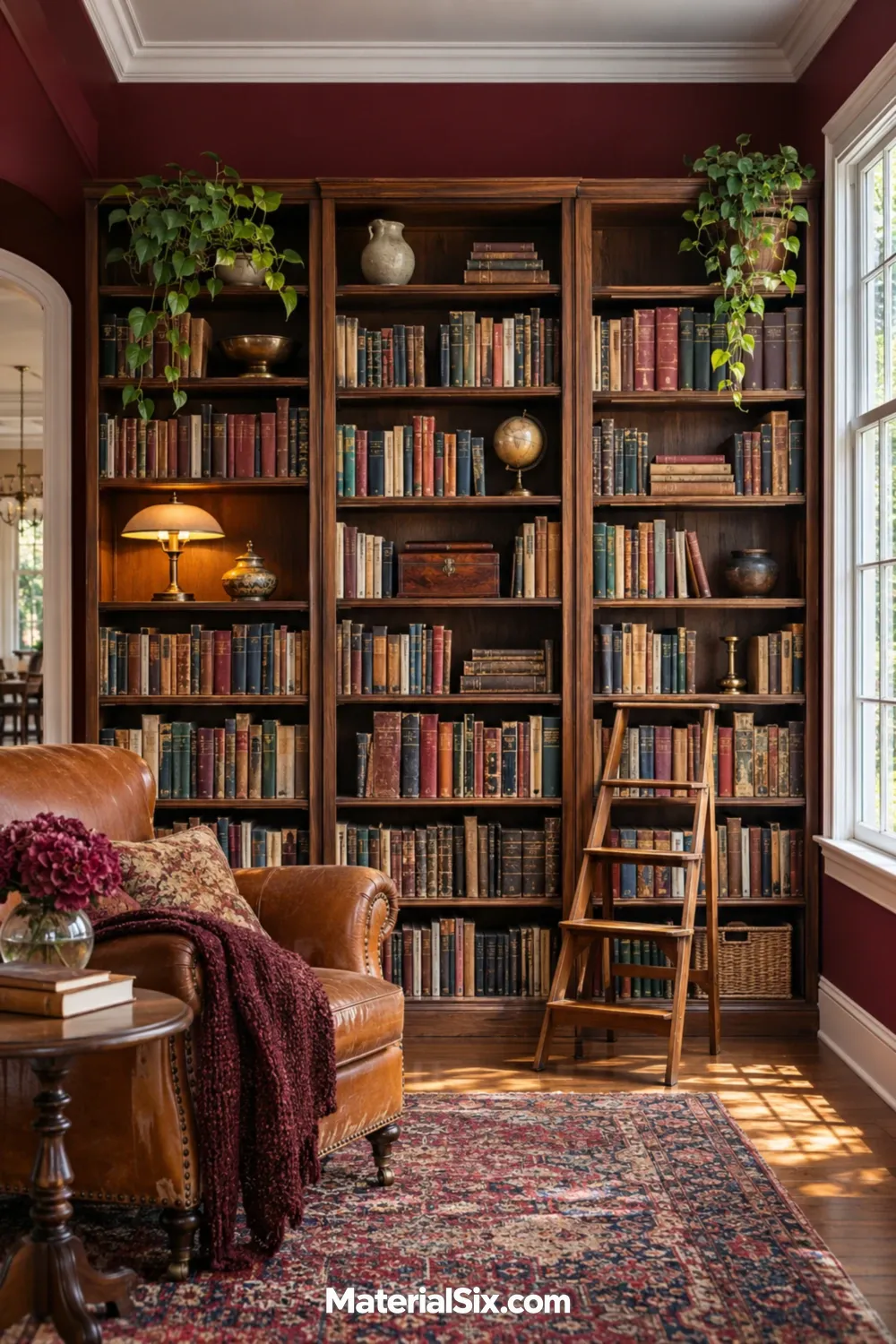
Give the books you actually read a substantial place in the room. A row of tall walnut bookcases creates the scholarly character associated with dark academia while offering useful storage. Leave a few gaps between groups of books so the wall still has a readable rhythm.
Measure the whole wall, including baseboards and nearby door swings, before choosing units. Follow the manufacturer’s anchoring instructions for tall furniture. You can get a similar visual rhythm with two matching bookcases flanking a low cabinet. Keep frequently used books within reach and reserve the upper shelves for lighter display pieces.
3. Anchor the Seating with Worn Brown Leather
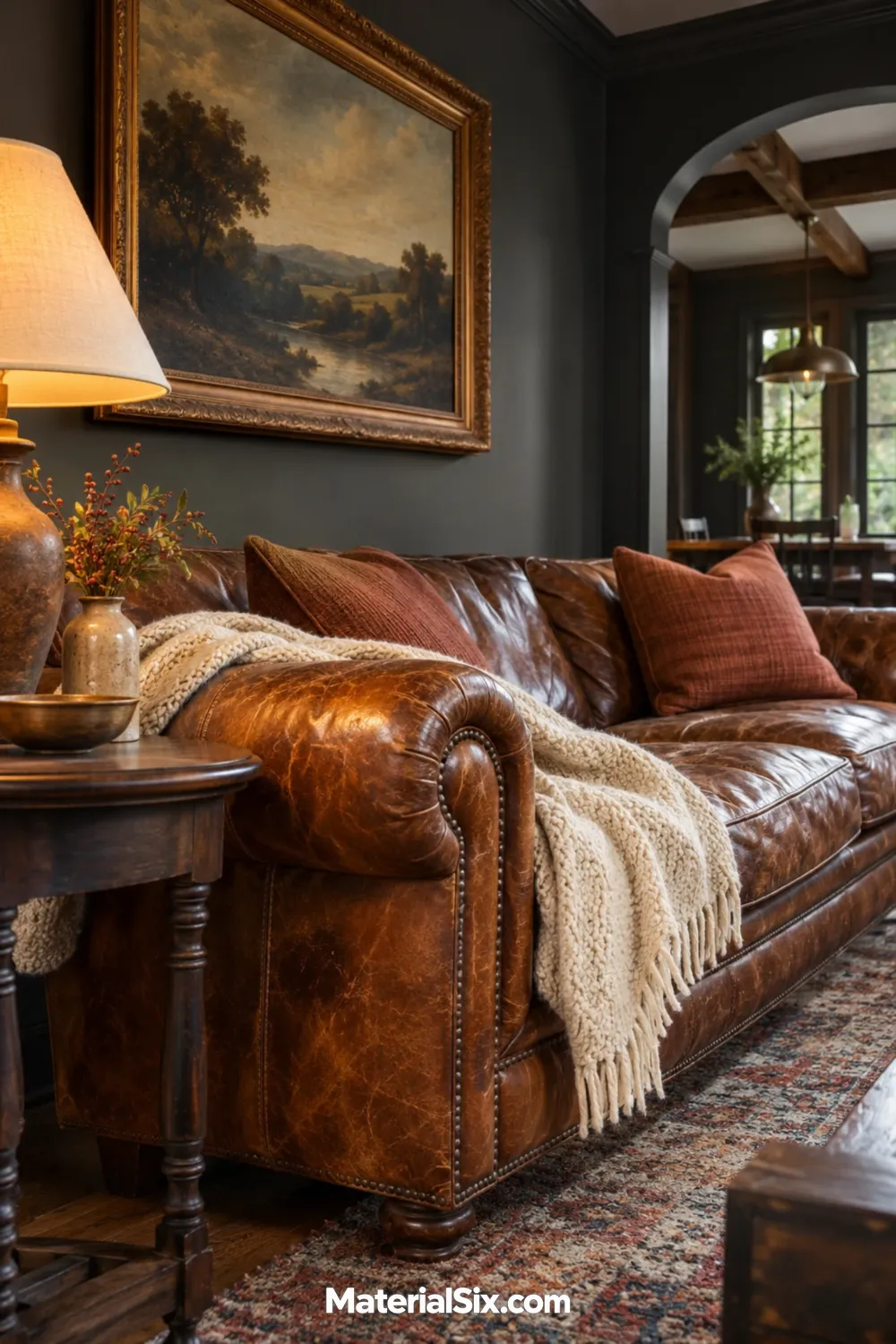
Brown leather brings a mellow, timeworn note that balances dark paint. A rolled-arm sofa feels traditional, while a simpler silhouette gives the same palette a quieter appearance. Choose a size that leaves a comfortable route through the room rather than letting an oversized sofa swallow the floor.
When shopping secondhand, inspect seams, cushions, and the underside before buying. Natural creasing adds character, but cracked finishes and sagging support deserve a closer look. Add a wool throw or a textured cushion to soften the seating. Follow the upholstery’s care instructions, and avoid placing leather where strong direct sunlight hits it all afternoon.
4. Build a Reading Corner Around a Velvet Chair
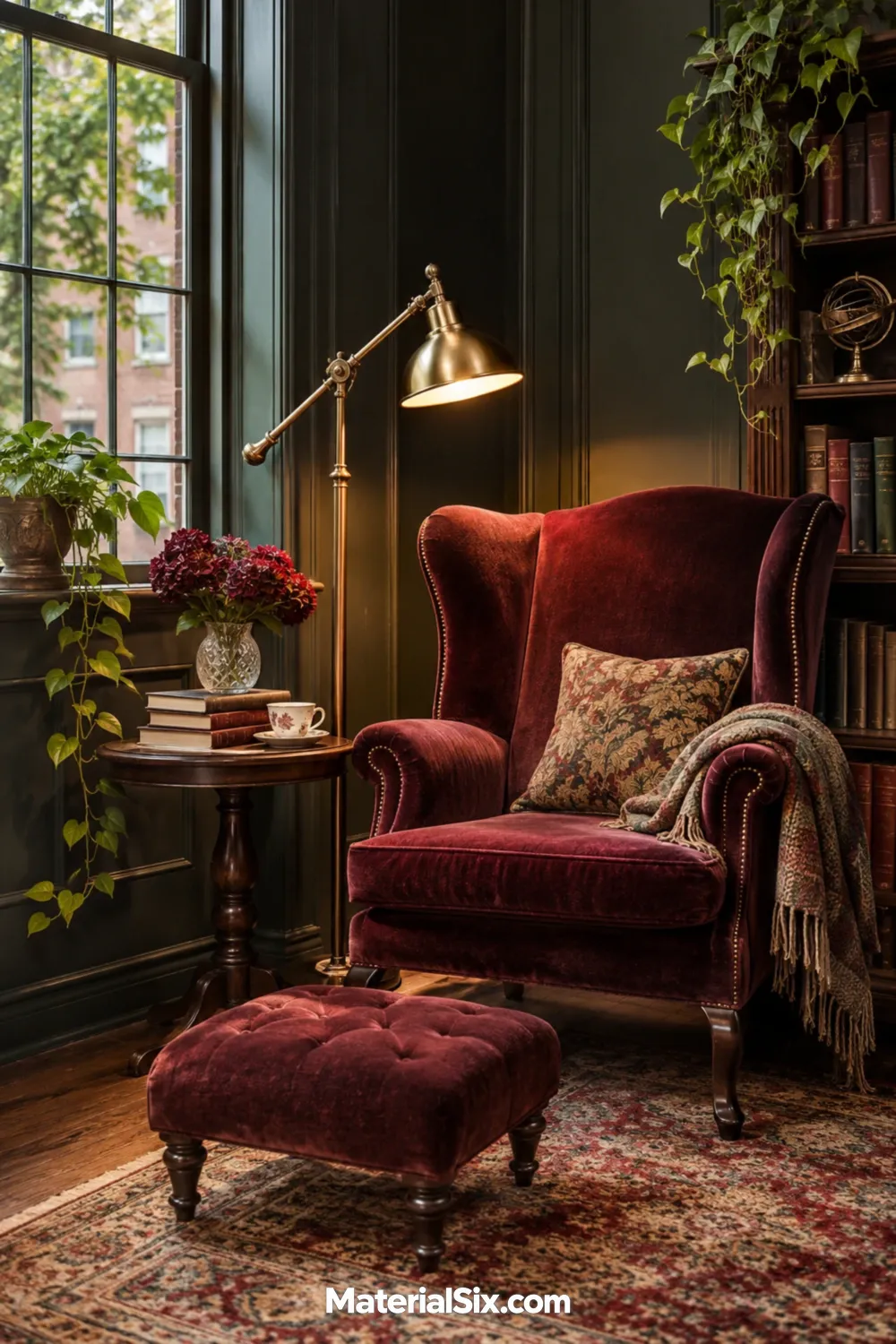
An oxblood velvet chair can turn an unused corner into a place you want to spend an evening. Give it three companions: a light directed toward your book, a small surface for your drink, and a footstool if the floor plan allows. That combination makes the corner useful beyond its appearance.
Set the chair slightly toward the room so it still belongs to the conversation area. Beside a window, keep the curtain path clear and check that daylight does not create glare on your reading page. A compact upholstered chair works just as well when a full wingback would crowd the space.
5. Ground the Room with a Faded Patterned Rug
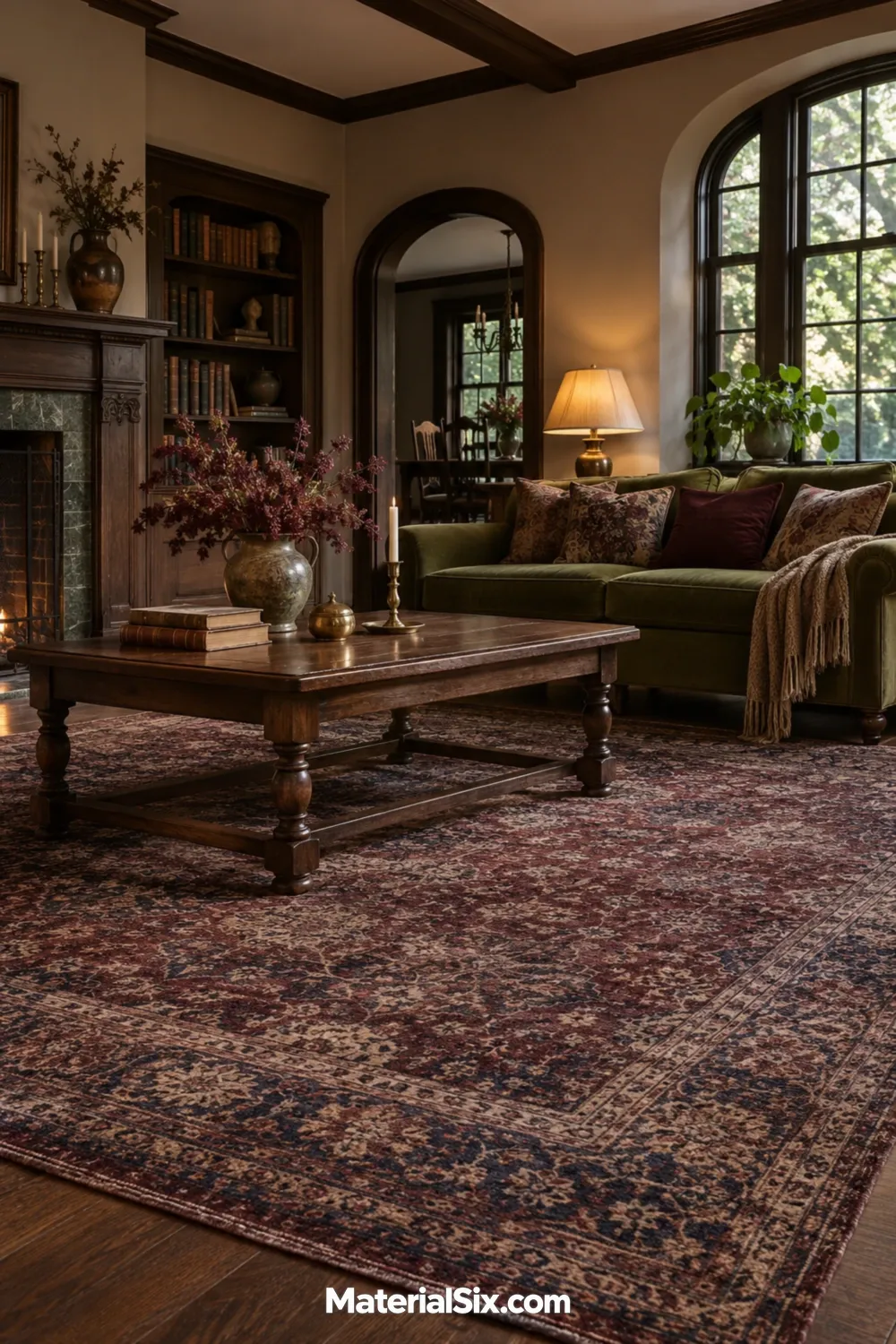
A faded Persian-style rug gives you a ready-made palette of burgundy, navy, tobacco, and cream. Use those colors as a guide for the rest of the room instead of choosing every accessory separately. The softened pattern can also make a room with several dark furniture pieces feel more connected.
Before choosing the rug:
- Measure the seating group, including the space between chairs.
- Aim to put the front legs of your main seating on the rug.
- Check the pile and cleaning guidance against your household’s needs.
A flatter weave may suit a busy room better than a thick, delicate rug.
6. Layer Warm Lamps Across the Room
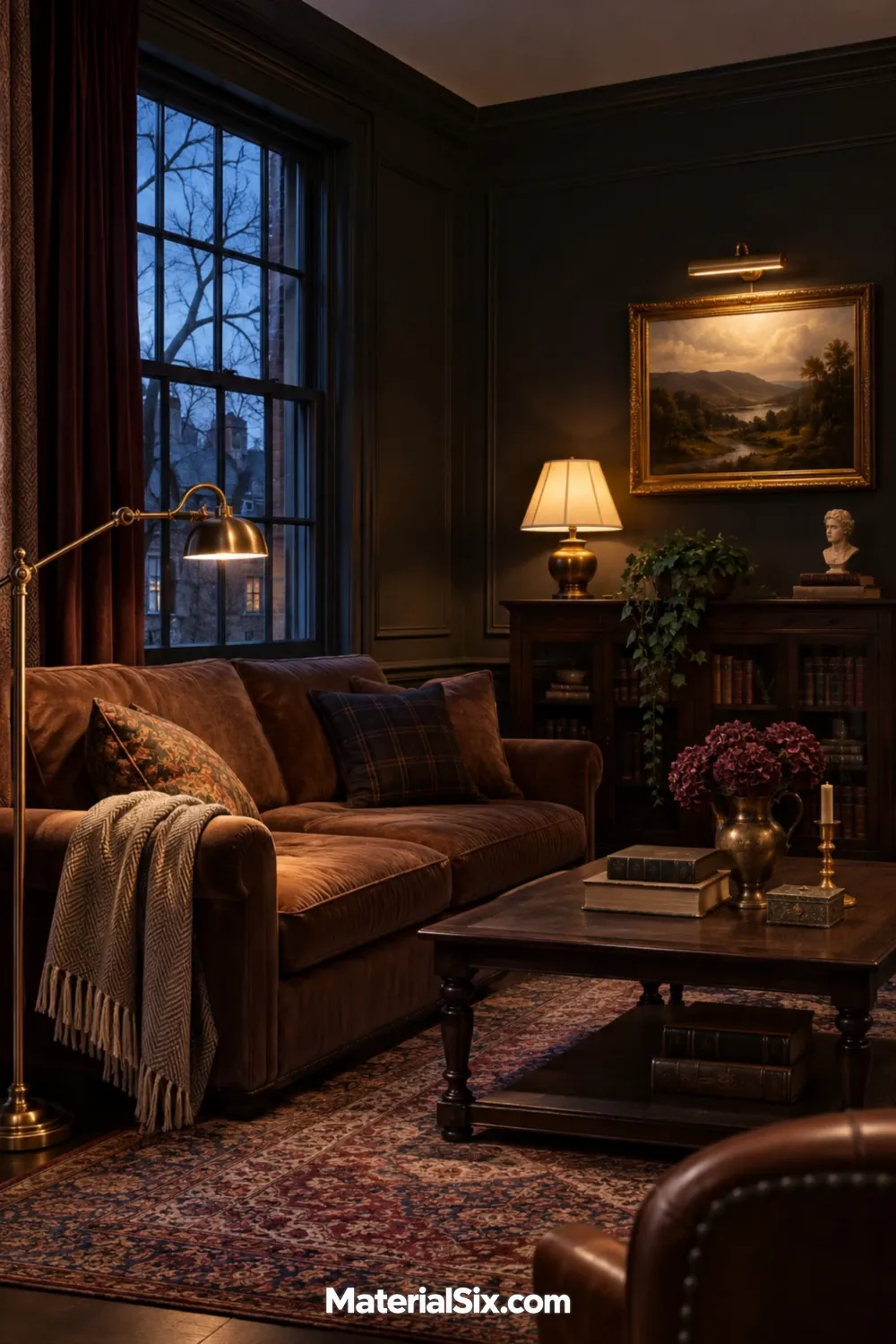
Dark walls need lighting that reaches more than the center of the ceiling. Spread shaded lamps around your seating area, then add a reading light where you use it. A picture light can draw attention to artwork and help the walls remain visible after sunset. Position each lamp where its shade blocks the bulb from your usual seated eye level.
Keep the light colors similar so one lamp does not look icy beside another. Warm-white bulbs around 2700K are a useful starting point, but check how they look with your paint and shades. Hide cords along furniture edges without running them under rugs. You can switch on fewer lamps for a quiet evening and more when guests arrive.
7. Arrange a Collected Gallery of Landscapes
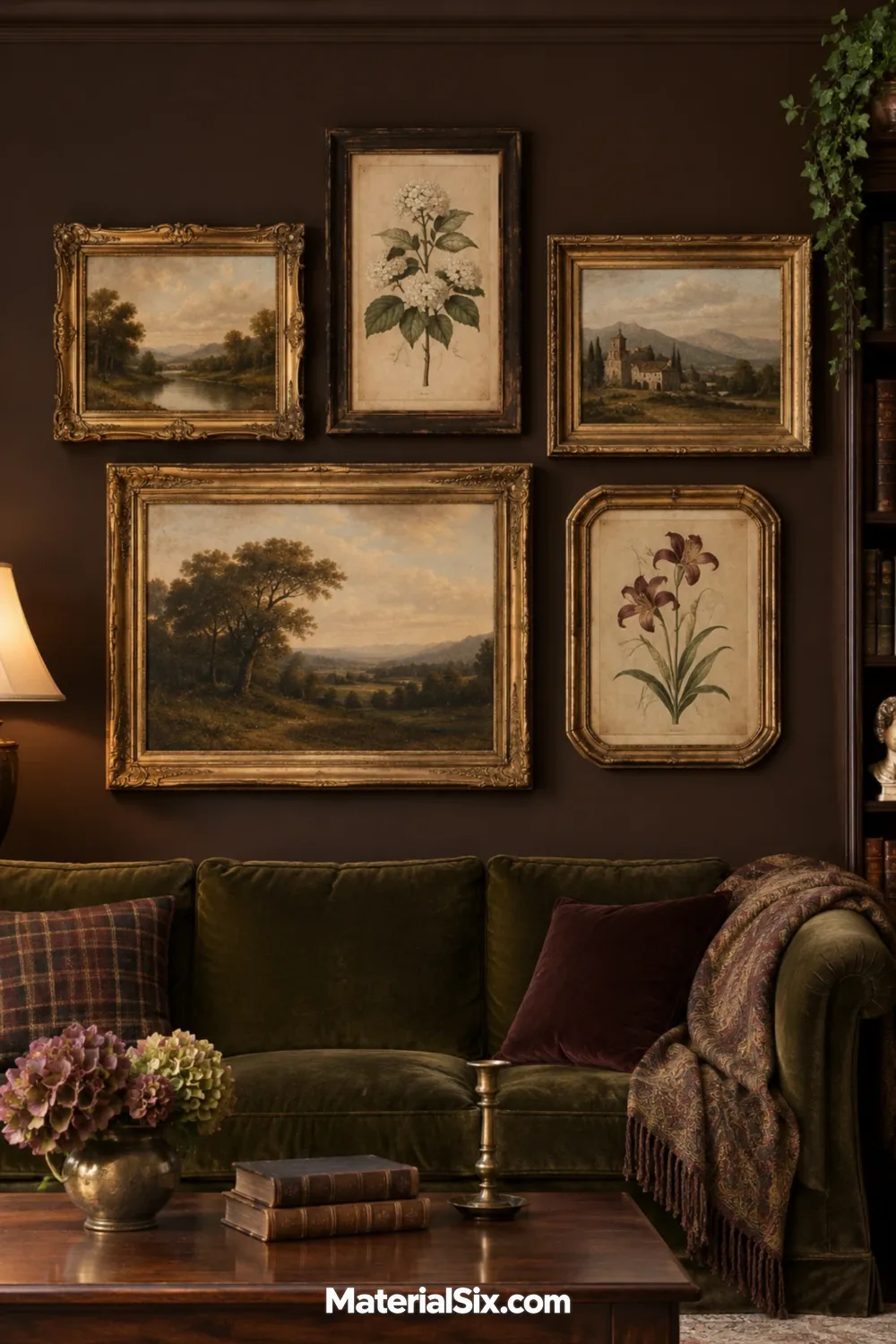
Landscape paintings and botanical prints give a gallery wall a shared language without requiring matching frames. Combine dark wood with a little aged gold, then repeat one or two colors from your rug or sofa in the art. This helps the arrangement feel collected rather than random.
Lay the frames on the floor first and photograph a few arrangements. Begin with the largest piece, then balance smaller frames around it with reasonably consistent spacing. Above a sofa, keep the group visually connected to the furniture instead of drifting toward the ceiling. Reproductions and secondhand frames can create the look without needing a collection of original paintings.
8. Frame the Windows with Oxblood Curtains
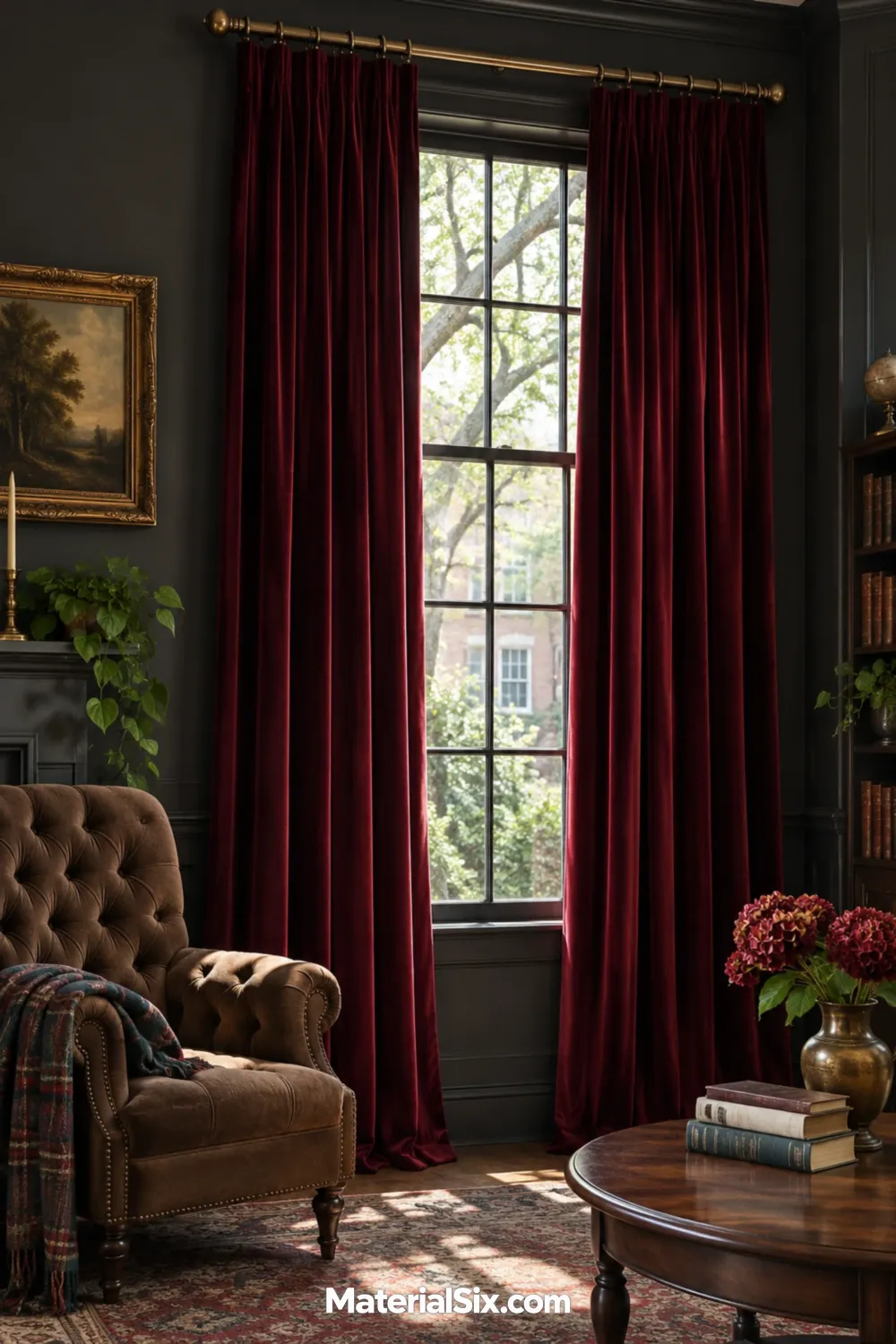
Oxblood curtains add depth even when the rest of your walls stay neutral. The vertical folds give a living room the rich textile layer that bare windows cannot provide. Velvet catches changing light beautifully, though a heavy cotton curtain can offer a less formal version of the same idea.
Measure from the installed rod to the floor, and choose panels that have enough fullness when closed. Hang them so the stack can sit largely beside the glass when open. In a smaller room, let the hem just meet the floor. Check the care label before choosing fabric, especially if the panels will need frequent cleaning.
9. Choose Dark Wood Tables with Visible Grain
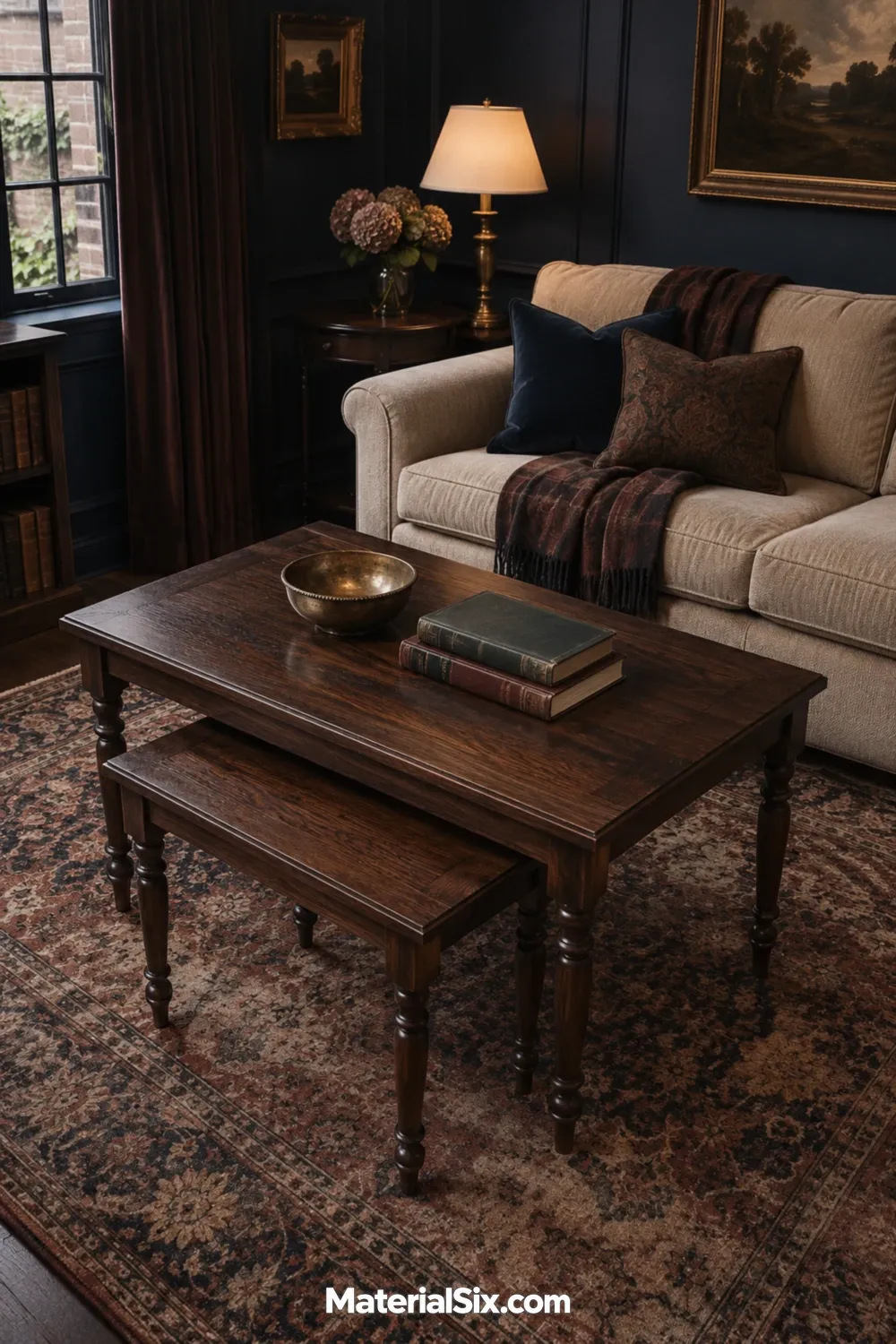
Dark wood does more for this style when you can still see its grain. A walnut coffee table, an oak side table with a deep stain, or a small pair of nesting tables adds warmth alongside charcoal and navy. You do not need every piece to match exactly; repeat a similar undertone to keep the mix intentional.
For a compact room, nesting tables give you an extra surface when needed and tuck together afterward. Leave room to move between them and the sofa.
Before refinishing a vintage find, identify the surface, since veneer needs different handling from solid wood. Coasters help protect the existing finish.
10. Bounce Daylight with an Antique-Style Mirror
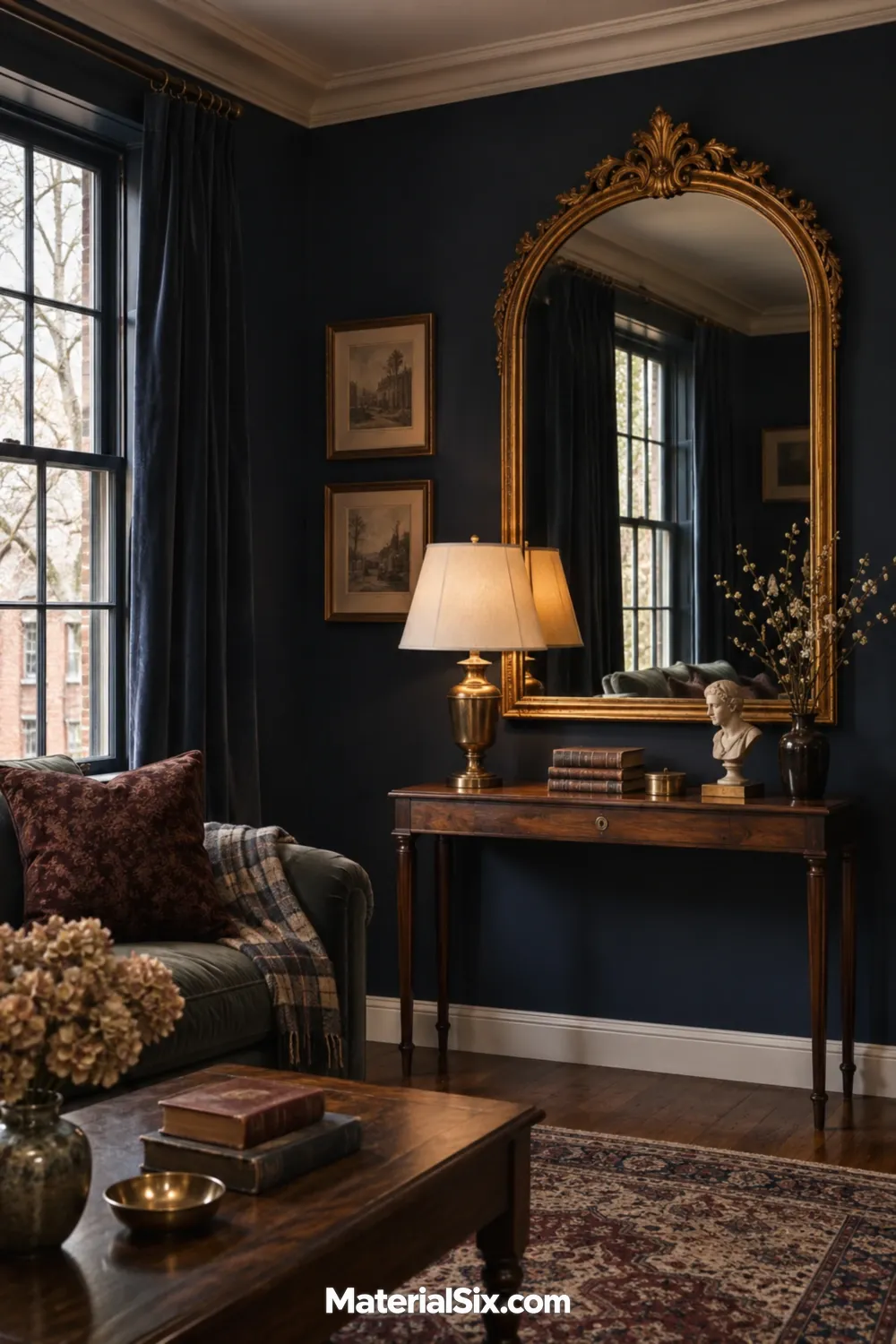
A dark room still benefits from a bright reflection. Place an antique-style mirror where it catches a window or a pleasant view across the seating area. Its aged gold frame can echo brass lamps while adding a different shape among rectangular bookshelves and paintings.
Look at the reflection from your usual sitting position before settling on placement. A mirror that mostly reflects clutter will repeat that clutter, too. Above a console, choose a frame that feels proportionate to the furniture below and secure it using hardware suited to the wall and mirror weight. One substantial mirror often has more presence than several tiny reflective accents.
11. Tuck a Writing Desk into an Alcove
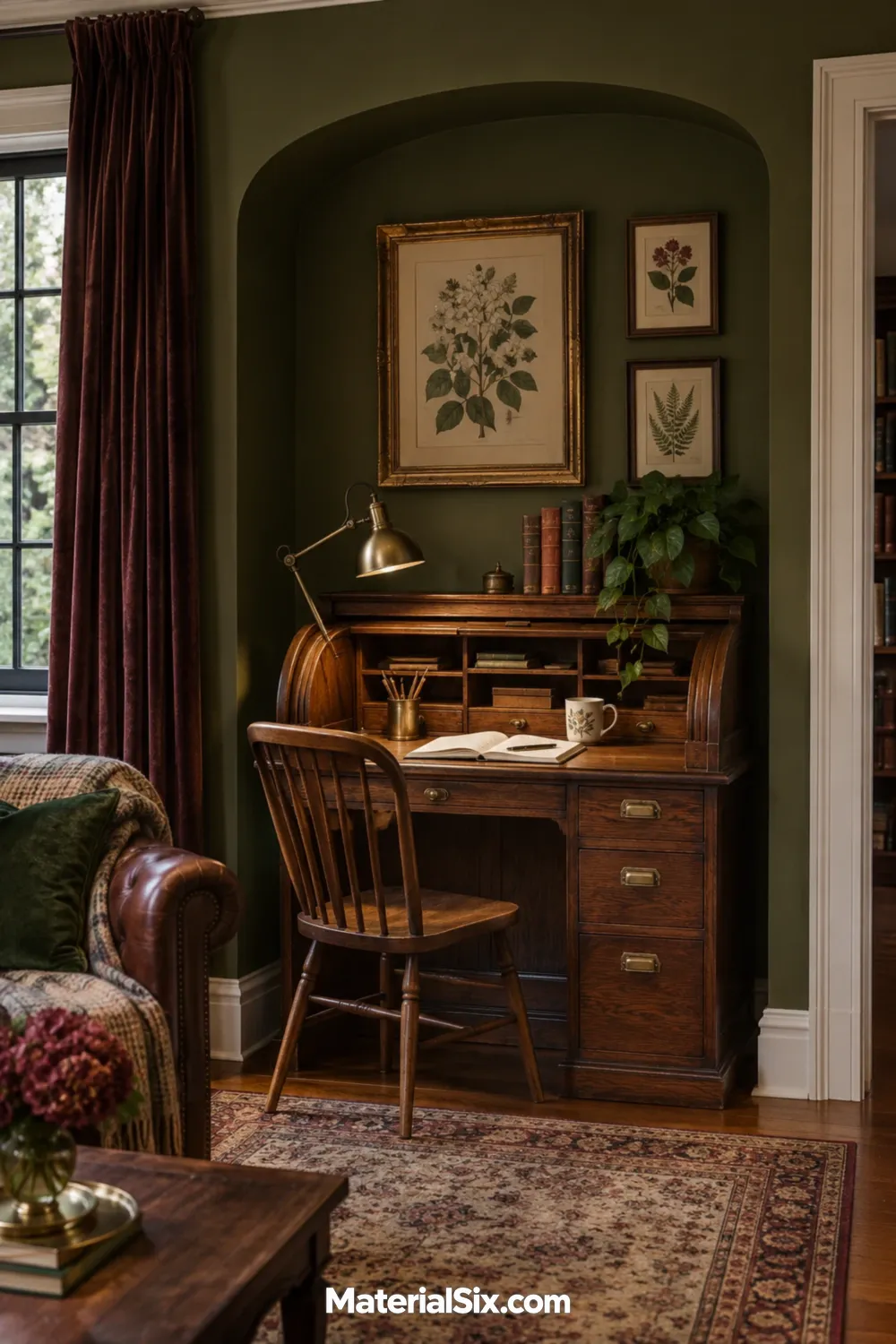
A small writing desk gives your living room a scholarly purpose as well as a mood. Tuck one into an alcove or beside a bookcase, then keep the surface ready for a notebook, letter, or occasional laptop. A rolltop design lets you close away small supplies when you want a calmer view.
Measure the desk with its chair pulled out, not just pushed in. You still need a clear route past the workspace. Add a task lamp and keep the desktop mostly open so it remains usable. If a vintage desk is too shallow for your equipment, choose a simple modern desk in a dark wood finish.
12. Mix Plaid Wool with Velvet Cushions
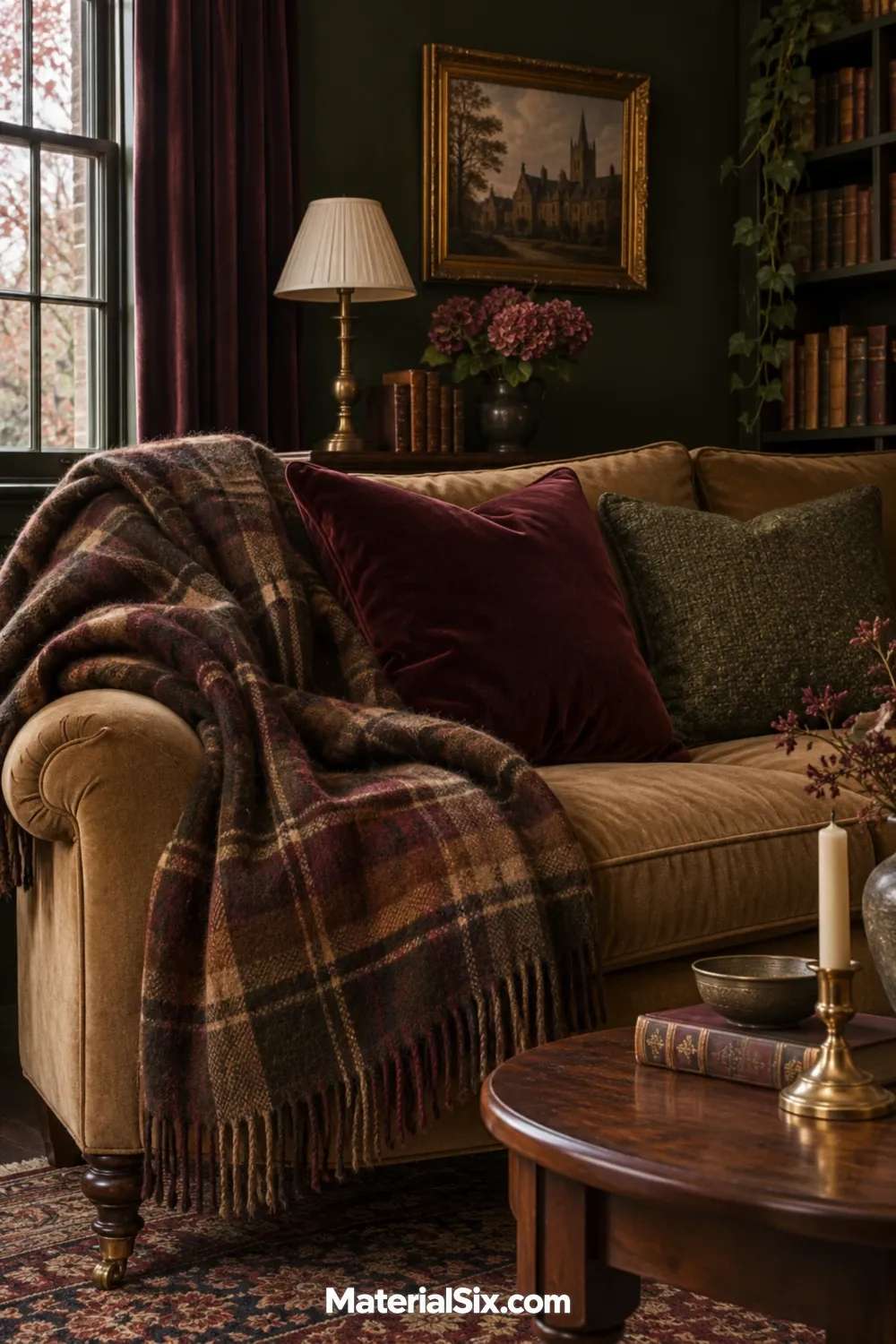
Plaid wool brings a relaxed, lived-in quality to the more polished elements of dark academia decor. Pair a brown plaid throw with an oxblood velvet cushion and a moss-colored woven pillow. Different textures make a simple sofa feel layered without needing a pile of competing patterns.
Let one pattern lead. If your rug is already detailed, choose a subdued plaid and keep the cushions mostly solid. A small sofa may need only two pillows and one throw to feel finished. Check whether wool or velvet suits your cleaning routine before buying. Removable, washable covers can make the look easier to live with in a family room.
13. Edit Scholarly Objects into One Display
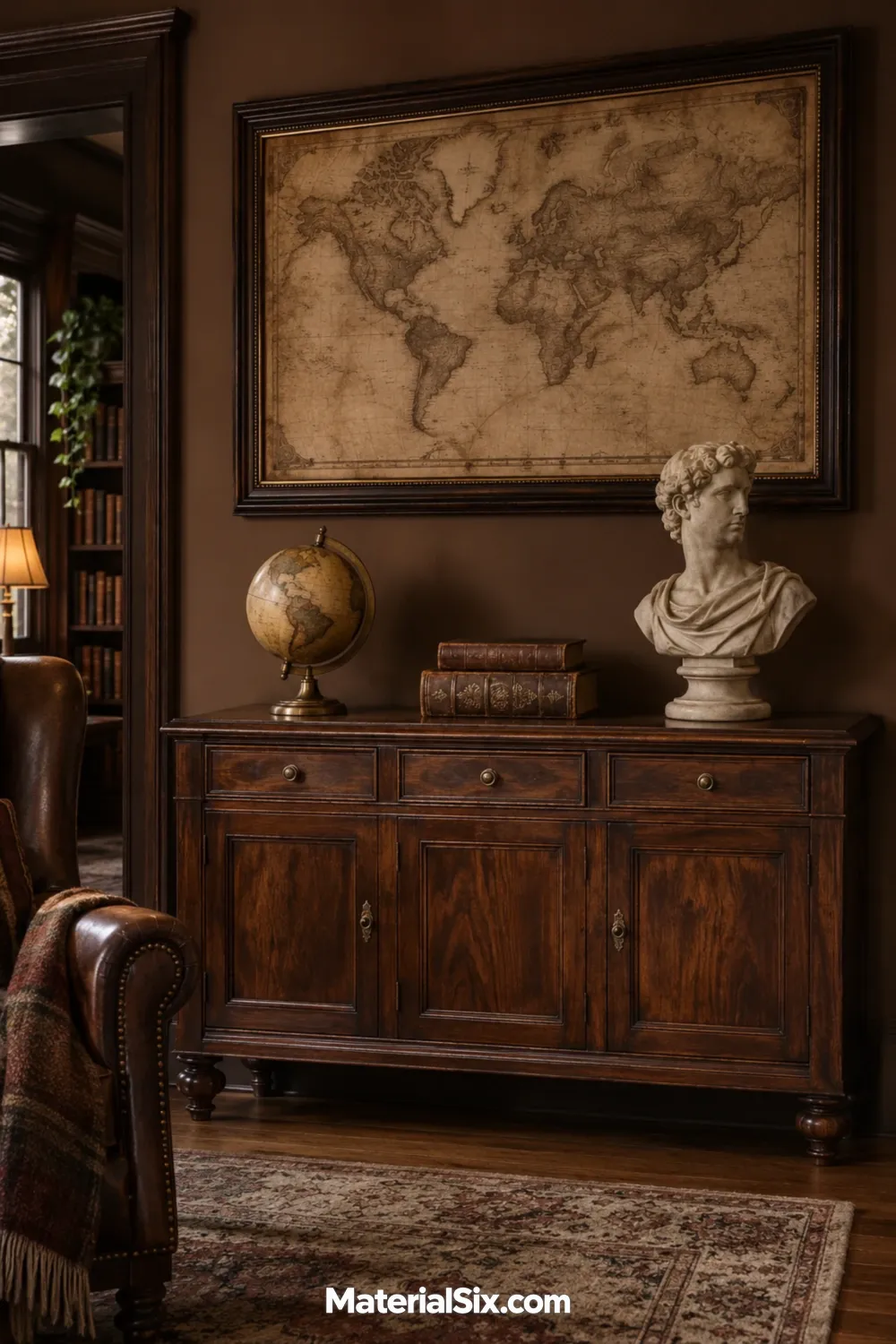
A globe, a small sculpture, and a framed map can suggest a study. Gather them on one console. Vary the heights and leave visible wood around the objects; that breathing room makes each piece easier to appreciate.
Choose items that connect to something you enjoy, such as a place you have visited or a subject you read about. You can use reproductions rather than fragile antiques. Keep the heaviest object toward the back of a stable surface, and leave your everyday coffee table available for actual drinks, snacks, and books you are currently reading.
14. Add Pattern with Wallpaper and Simple Molding
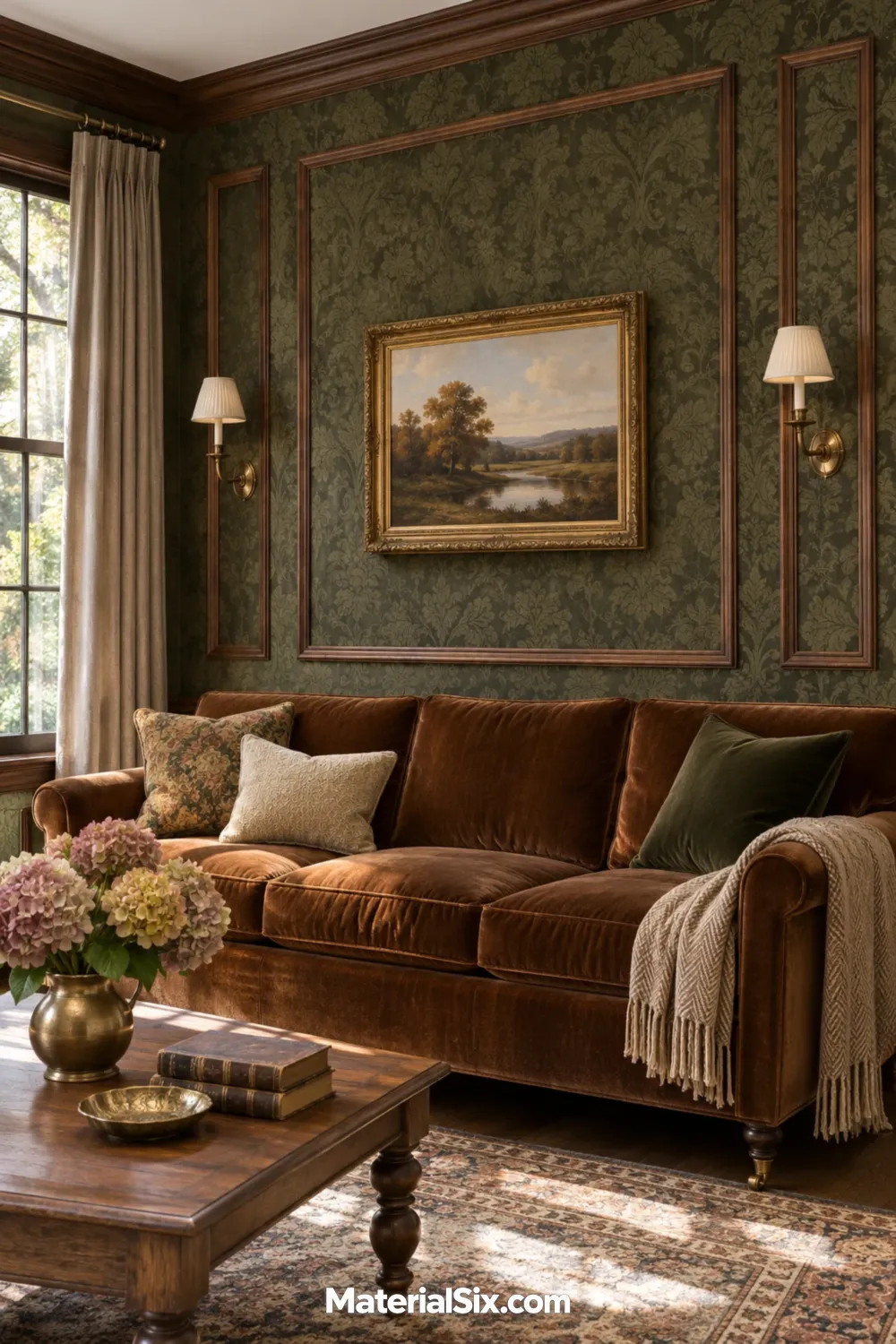
Subtle damask wallpaper adds depth to a room that needs more than a flat painted wall. A dark olive pattern with low contrast can sit behind the sofa without competing with every other detail. Simple picture-frame molding adds structure, especially when the trim and paper share a similar color family.
Try a sample at both sofa height and eye level, then view it in daylight and lamplight. High-contrast patterns become much busier across an entire wall. For a smaller commitment, paper a single feature wall and keep nearby art restrained. Check the wall preparation and removal instructions before installing any wallpaper, including products marketed as peel-and-stick.
15. Keep Cream Walls and Bring the Darkness Lower
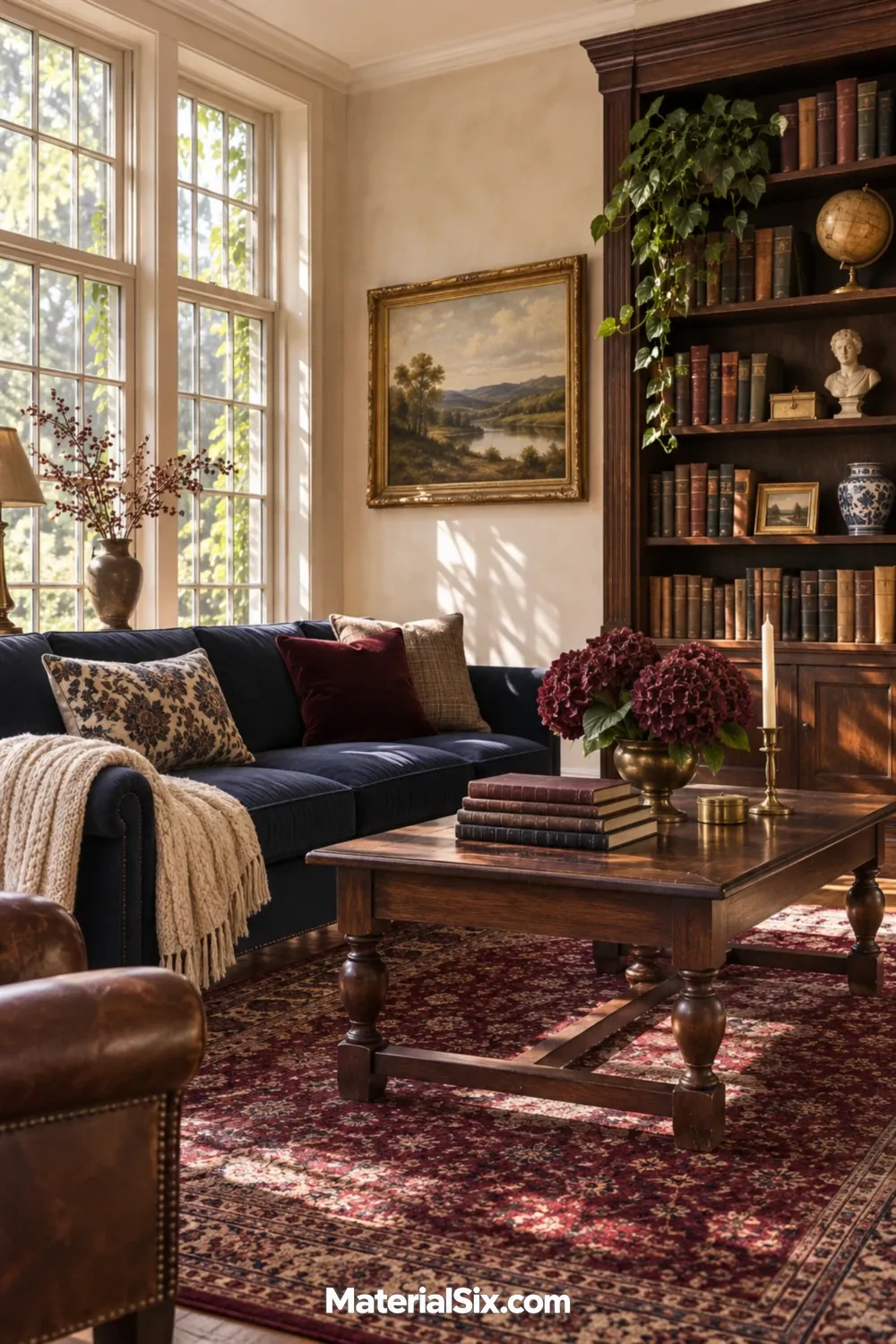
You can build a dark academia living room without painting every wall a deep color. Keep warm cream walls, then bring the richer shades into a navy sofa, a dark bookcase, and a burgundy rug. The lighter background makes the wood grain and framed art stand out while leaving the room bright in daytime.
This approach is useful when you like a literary, collected atmosphere but want a softer overall contrast. Repeat dark finishes at different heights so the furniture feels connected: a low coffee table, a mid-height sofa, and tall shelving. Add warm lamps at night to bring out the cozy side of the palette.
Choose a Starting Point That Suits Your Room
Pick one anchor before buying accessories. In a bright room with plain furniture, a deep wall color may create the biggest change. If you already have dark finishes, start with lamps or a lighter rug to make the details easier to see.
Use three decisions to keep the room coherent:
- Choose one main dark color, such as olive, navy, or charcoal.
- Repeat one warm material, such as brown leather, walnut, or aged brass.
- Add a lighter note through lampshades, cream textiles, or the wall color.
Then test the room during the hours you actually use it. A beautiful daytime corner still needs a comfortable reading light after dark. Keep doorways and paths open, and leave enough empty surface for everyday life. Build the collection gradually so your books and interests have room to shape the result.
Frequently Asked Questions
What makes a living room dark academia?
The look combines a scholarly atmosphere with rich colors, books, traditional shapes, and tactile materials. Dark wood, vintage-style art, warm lamps, and layered textiles are common ingredients. You can suggest it with a few thoughtful pieces rather than recreating an entire library.
Can you use dark academia decor in a small living room?
Yes. Choose furniture that fits the floor plan, use vertical shelving thoughtfully, and keep a clear walking route. A compact reading chair, one patterned rug, and a warm lamp can carry the style without overcrowding a small space.
Do the walls have to be dark?
No. Warm cream walls work with navy seating, walnut shelving, and burgundy accents. You can also paint just one wall or introduce depth through curtains and artwork if repainting is not part of your plan.
How do you keep the room from looking cluttered?
Group decorative objects in one or two places and leave other surfaces usable. Keep books accessible, choose art with a shared palette, and remove pieces that feel unrelated. Closed storage helps everyday supplies coexist with open shelving.
Start with the Corner You Use Most
Choose one anchor you will enjoy daily: a reading chair, better lamps, a bookcase, or a rich rug. Live with that change before adding the next layer. A room built around your reading habits, favorite colors, and useful furniture will feel more inviting than one filled all at once.