
An odd little dog portrait, a velvet sofa, and a rug with three more colors than you planned: suddenly, your small living room has a point of view. The challenge is deciding where the next layer belongs when your furniture already fits snugly and every table has a job. You want a room that feels collected and personal, with enough breathing room to sit down, set down a drink, and walk through it comfortably.
These maximalist living room decor ideas focus on places you can give more personality without continually adding furniture. Think a painted ceiling, curtains that carry the pattern, or a storage piece that doubles as the star of the room. Some changes involve paint or wallpaper; others start with the pillows and artwork you already own. Choose the ideas that suit your layout, repeat a few colors, and let one delightful detail lead the next decision.
1. Build a Jewel-Box Gallery Wall
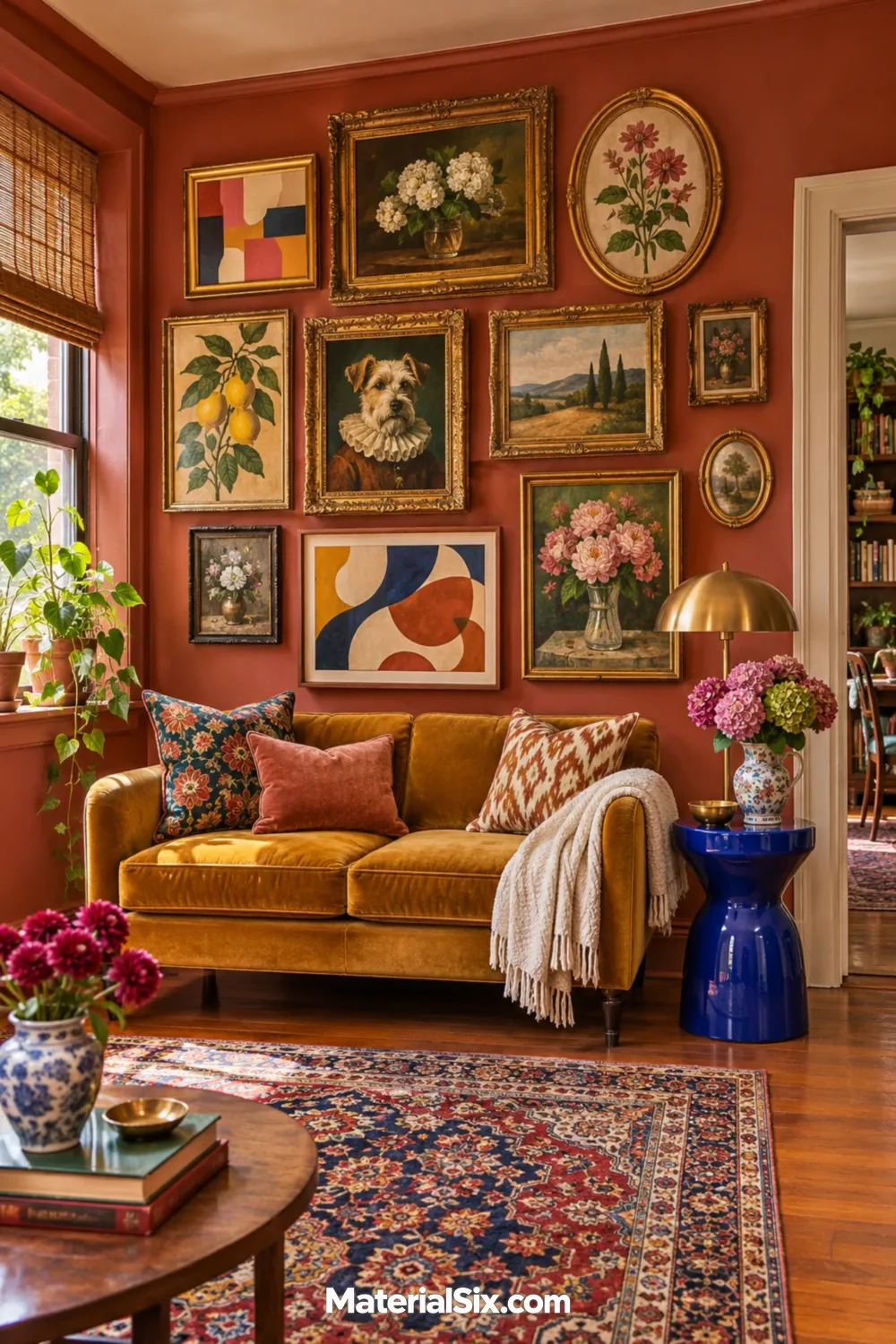
A small sofa gives a gallery wall a useful anchor. Here, gilt frames, botanical pictures, abstract shapes, and a dressed-up dog portrait turn terracotta paint into a collected backdrop. The humor keeps the arrangement from feeling too formal.
Lay your frames on the floor first and build around one larger piece. Keep the lower edge comfortably above seated heads, then let the grouping spread upward rather than beyond the sofa on every side. Repeat one frame finish or background color to connect unrelated artwork. You can add another small picture later without replacing the whole arrangement, which makes this a flexible place to show personal finds.
2. Give the Window Wall a Patterned Curtain
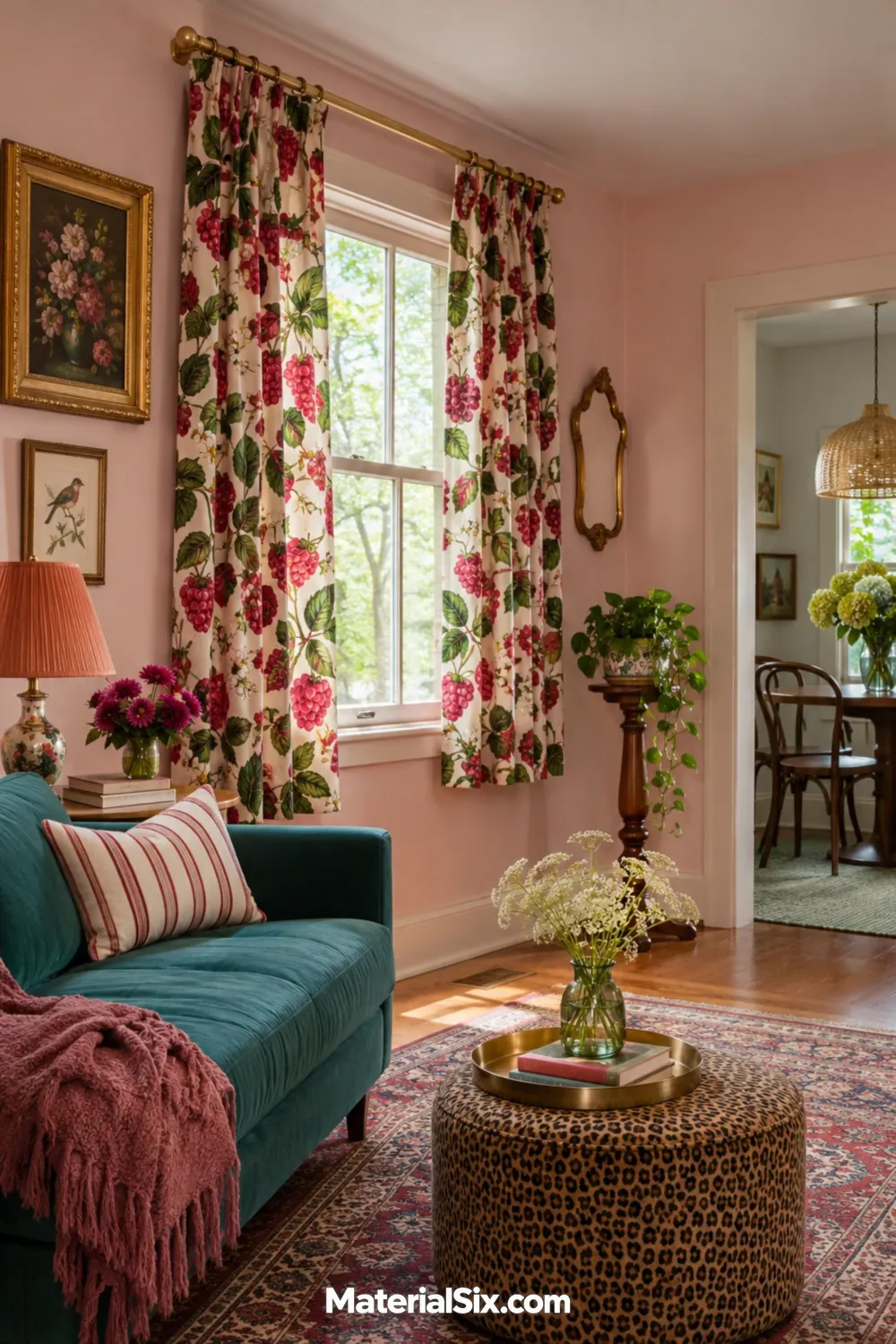
Floor-length botanical curtains can carry the room’s biggest pattern while leaving the walls available for simpler pieces. Raspberry flowers against a lighter ground bring movement beside a teal sofa, and the tall fabric panels make the window feel like a deliberate feature.
Measure the wall and rod before buying panels. Allow enough stack-back space that the fabric can sit beside the glass when open; a lovely print loses some appeal if it keeps your main daylight source covered. Choose a length that clears the floor slightly in a busy room. Pull one curtain color into a cushion or small accessory, then stop before every surface repeats the same print.
3. Turn a Narrow Bookcase Cobalt
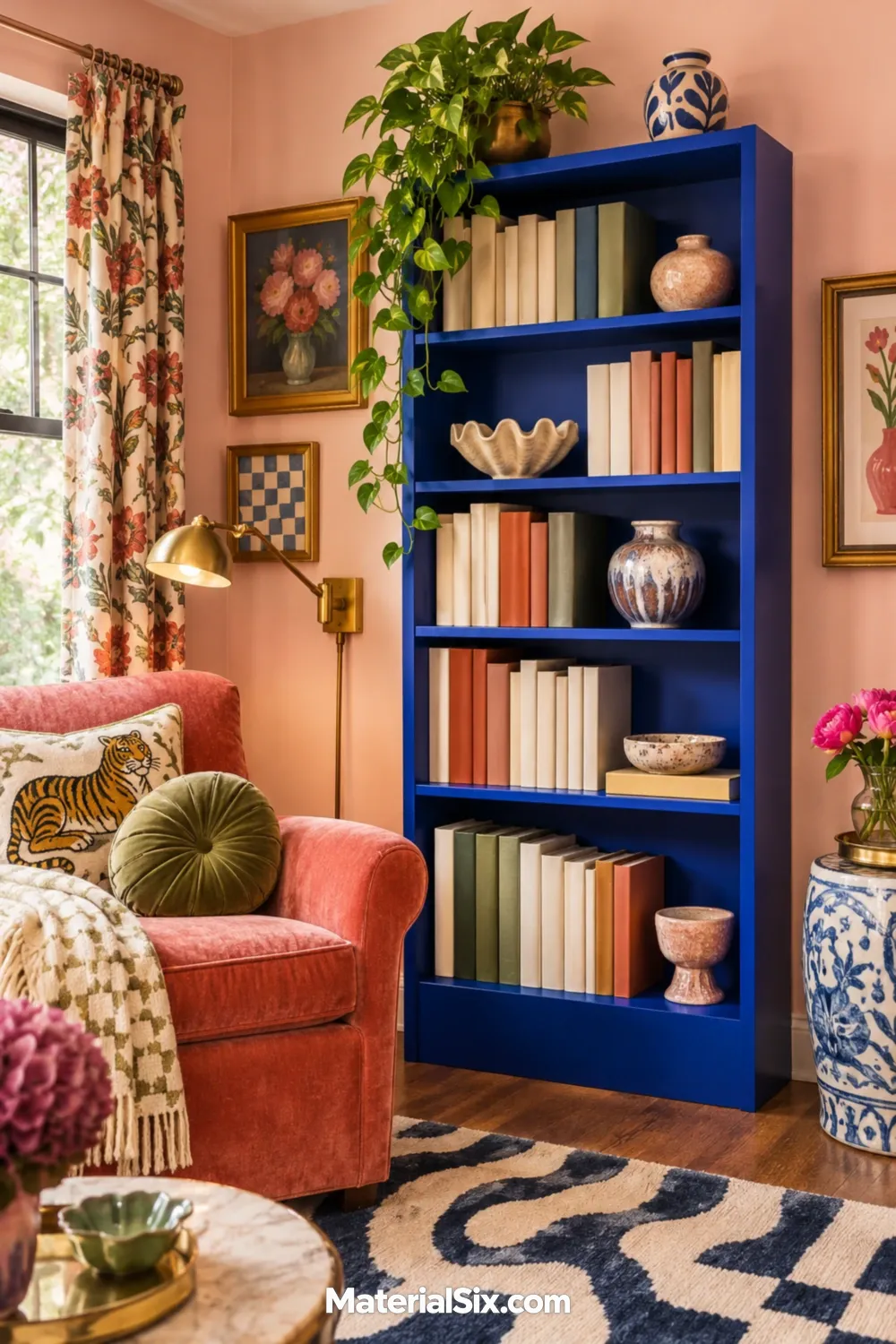
Cobalt paint turns a narrow bookcase into a strong vertical accent. The shelves in this room combine books, small bowls, and a few sculptural pieces, bringing personality to a footprint that could otherwise disappear beside the chair.
Check the shelf depth against your largest books before choosing a unit. A shallow case can suit a tight room, but it still needs to hold what you actually use. Follow the manufacturer’s anchoring instructions, and keep heavier objects lower down. Leave a few gaps around rounded pottery so the blue backing remains visible. That visible color gives the display structure even when your book sizes and objects do not match.
4. Mix Three Patterns on One Loveseat
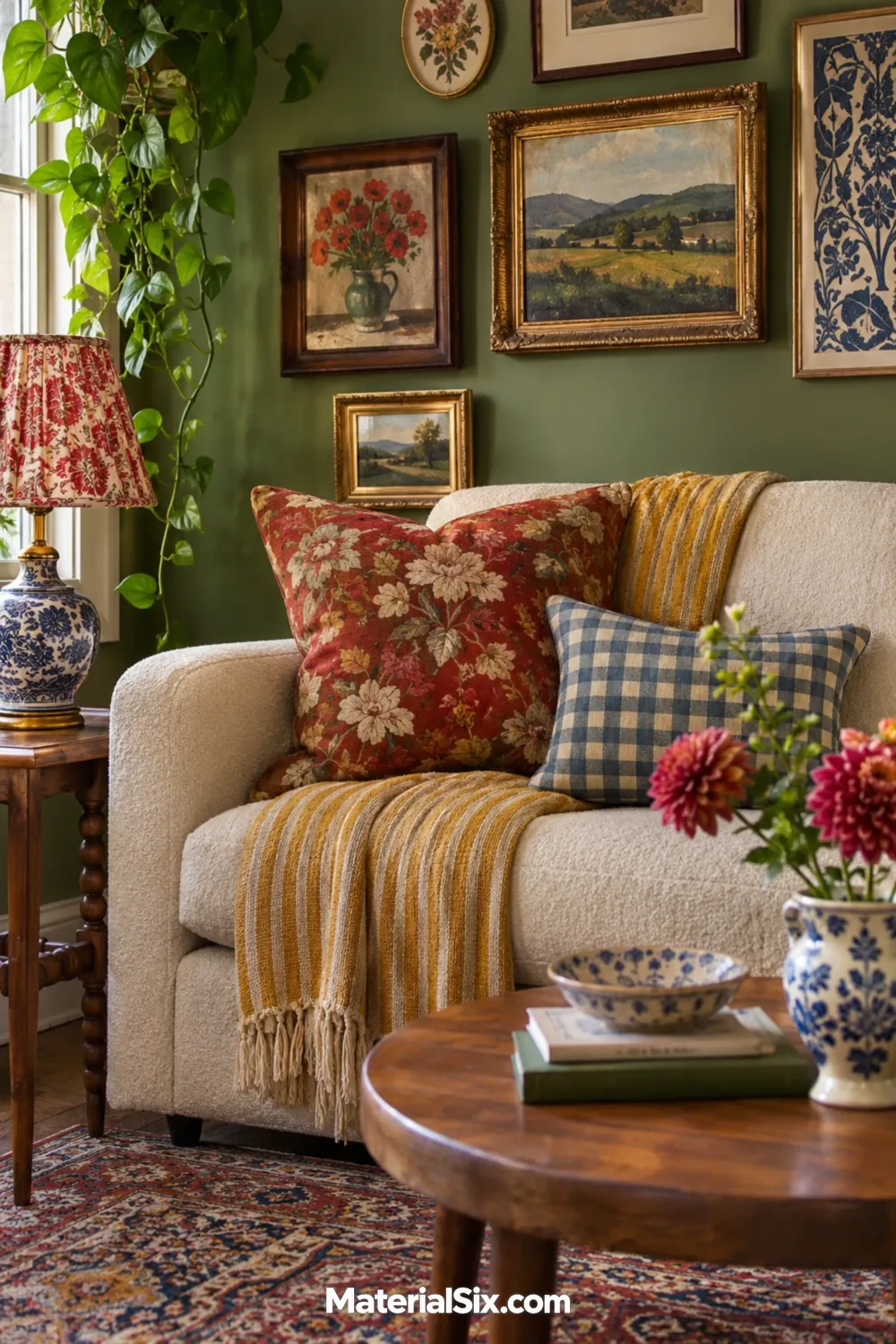
Try a large floral, a small check, and a narrow stripe together on one compact sofa. Their different scales make the mix readable: your eye can separate each pattern instead of seeing one busy patch. A plain upholstery fabric gives them somewhere to land.
Begin with a color that already appears in your room, then find that shade in two of the textiles. You do not need identical colors throughout. Spread the patterned pieces across the seat rather than piling everything into one corner, and test whether you still have room to sit comfortably. Removable cushion covers make this an easy area to rearrange when you want a different balance.
5. Choose a Scalloped Coffee Table
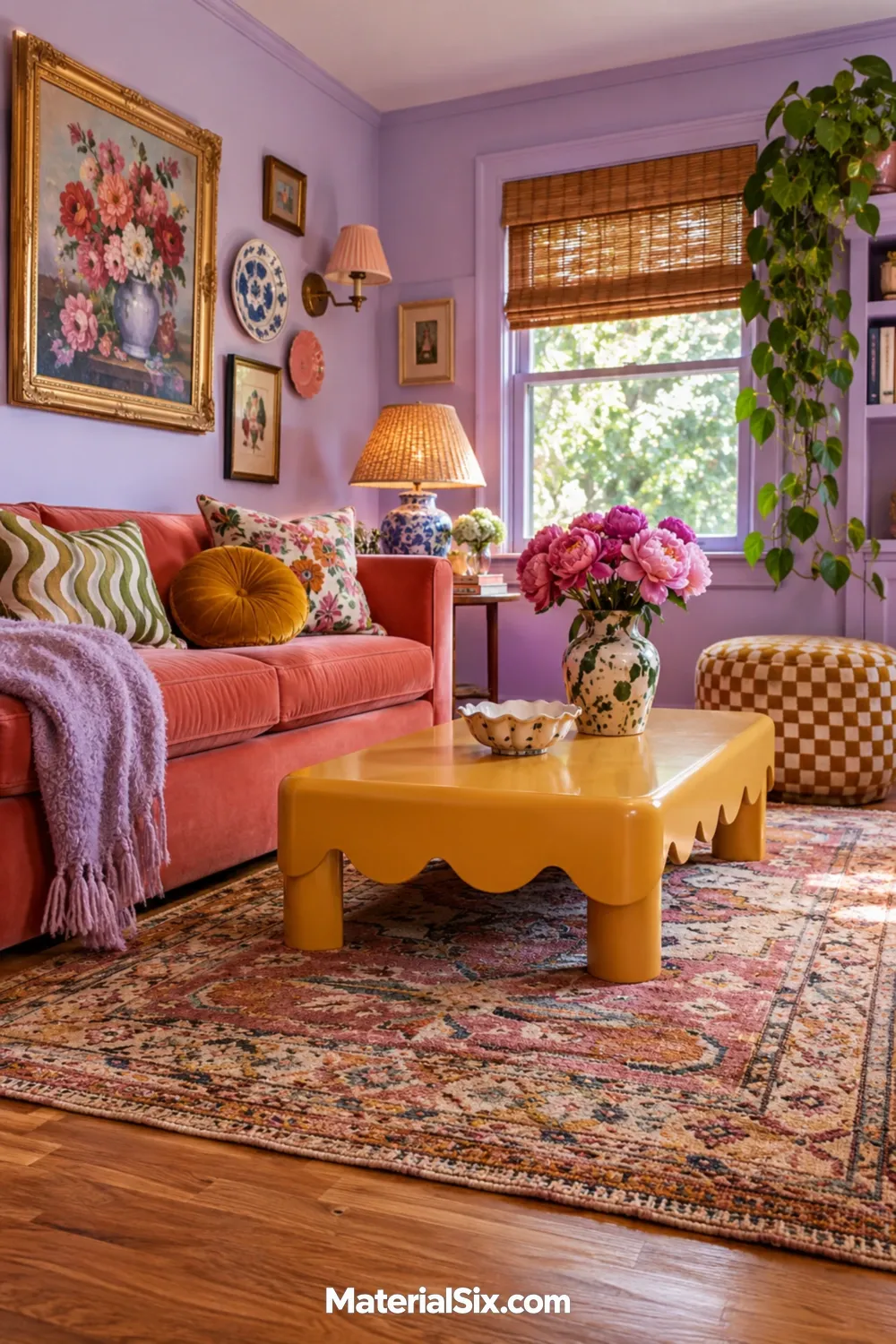
A mustard scalloped coffee table adds an unexpected outline to a room full of rectangles. Against coral upholstery and a lavender wall, the curved edge feels playful even before you put anything on top. One expressive furniture shape can do more than several tiny ornaments.
Tape the table’s footprint on your floor before committing. Walk between it and the sofa, reach toward the center, and check nearby drawers or doors. Keep the tabletop arrangement short so the scallops remain visible; a bowl and one vase may be enough. A painted finish also needs care appropriate to its coating, especially where mugs and trays will sit every day.
6. Put the Surprise Color on the Ceiling
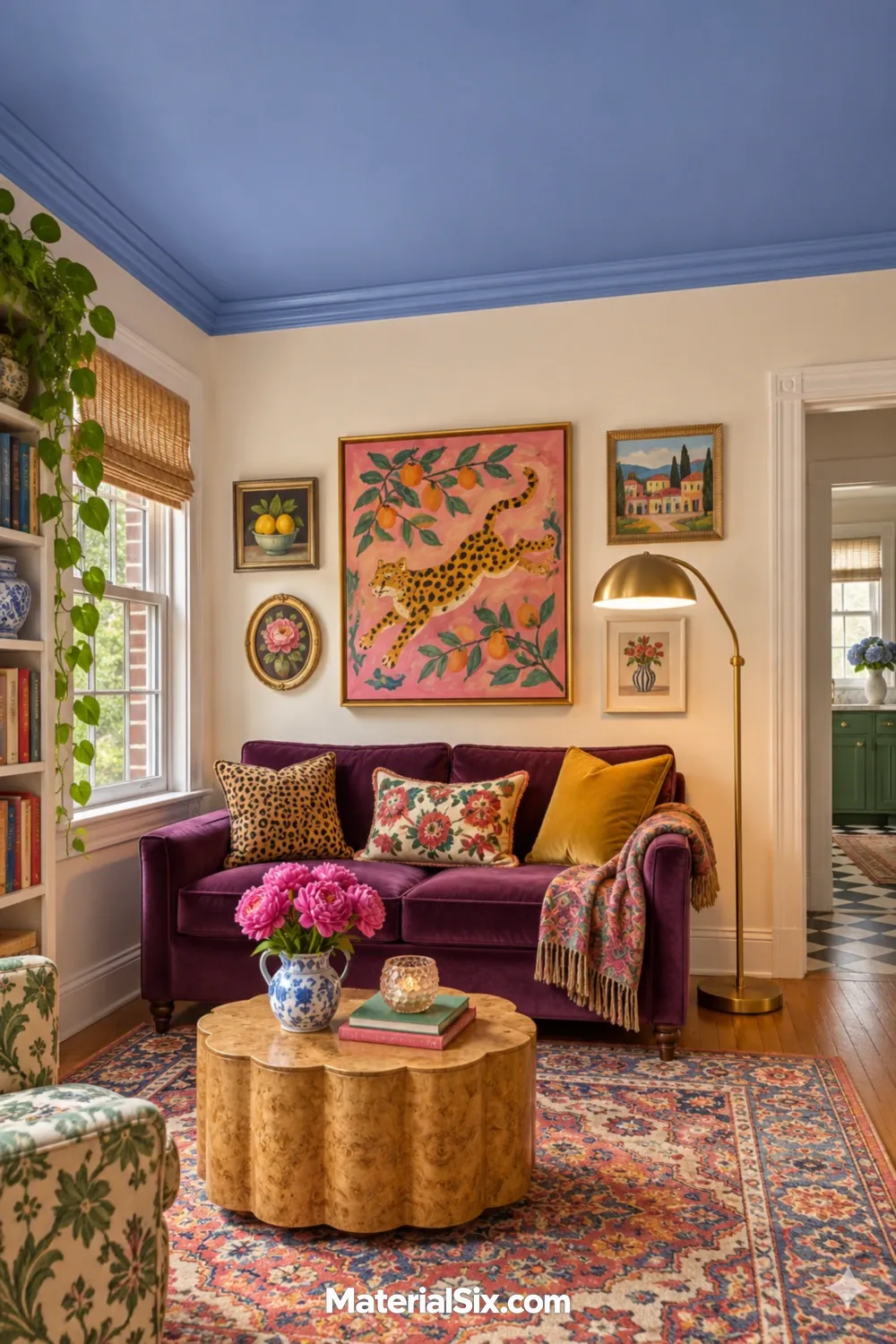
Look up when the floor plan has no room for another statement piece. A cornflower ceiling above a plum sofa brings color to an often-overlooked surface, while pale walls keep the room from becoming a single dark block.
Test a sample overhead and view it in daylight and with your evening lamps on. Ceiling color can look different from the same paint on a vertical wall. Decide whether your trim will match the ceiling or create a crisp boundary before you begin. If you rent, check your agreement first. This idea changes the room’s atmosphere without adding a single object to the route between the sofa and the door.
7. Make One Leopard Chair the Wild Card
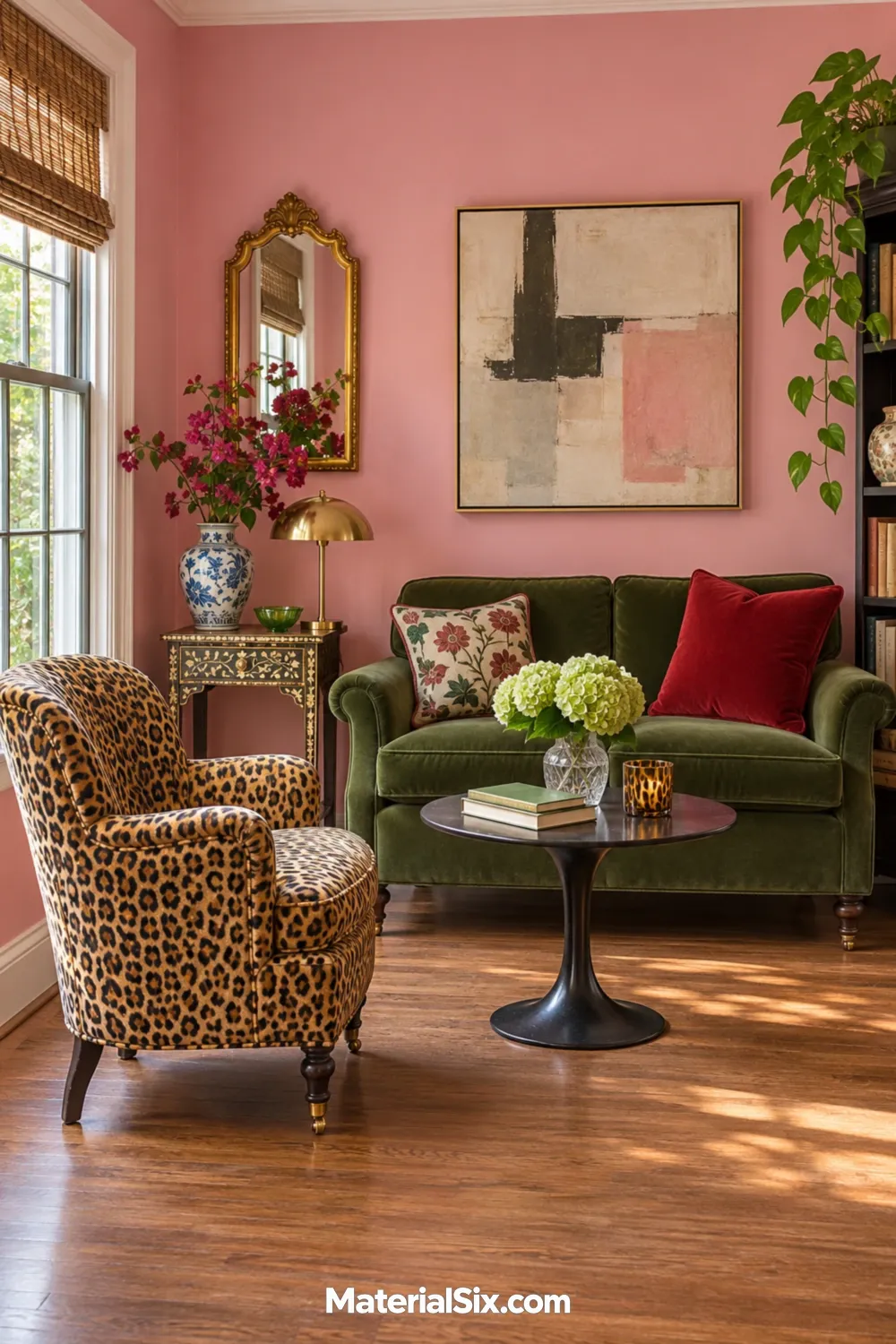
A leopard-print chair brings a different kind of energy beside a solid green sofa. Its compact shape matters as much as the pattern: you get a lively focal point and another seat without needing a large lounge chair and separate ottoman.
Compare the chair’s full width and depth with the space available, including the angle you will use for conversation. Let the print stand beside quieter upholstery so its spotted rhythm stays clear. Warm tan, black, and brown can connect naturally to wood furniture or a dark picture frame. If a whole chair feels like too much commitment, test a similarly patterned cushion before choosing upholstery.
8. Hang a Playful Plate Collection
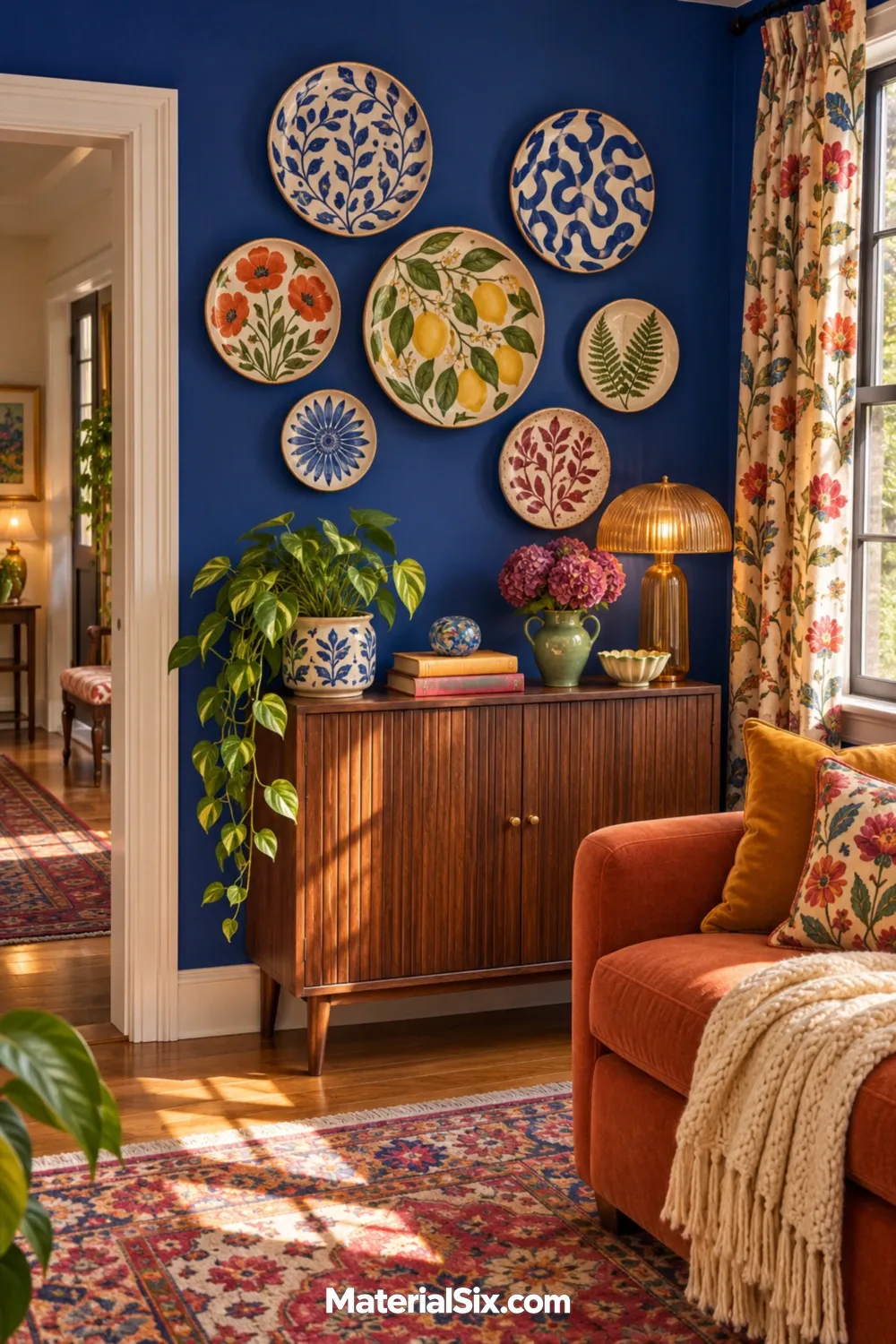
Decorative plates turn a wall into a display surface with shape as well as color. Above this narrow cabinet, floral and geometric ceramics create an irregular arrangement against cobalt paint. Their round outlines offer a change from the framed rectangles elsewhere in the room.
Use paper circles to test the spacing before making holes. Keep the grouping connected visually, with one larger plate helping smaller pieces feel intentional. Choose hangers designed for each plate’s size, weight, and material, and follow their installation directions. Save everyday serving pieces for the cupboard if removing them repeatedly would be awkward. A small collected group is easier to appreciate than plates filling every spare inch.
9. Paint Broad Stripes Behind the Sofa
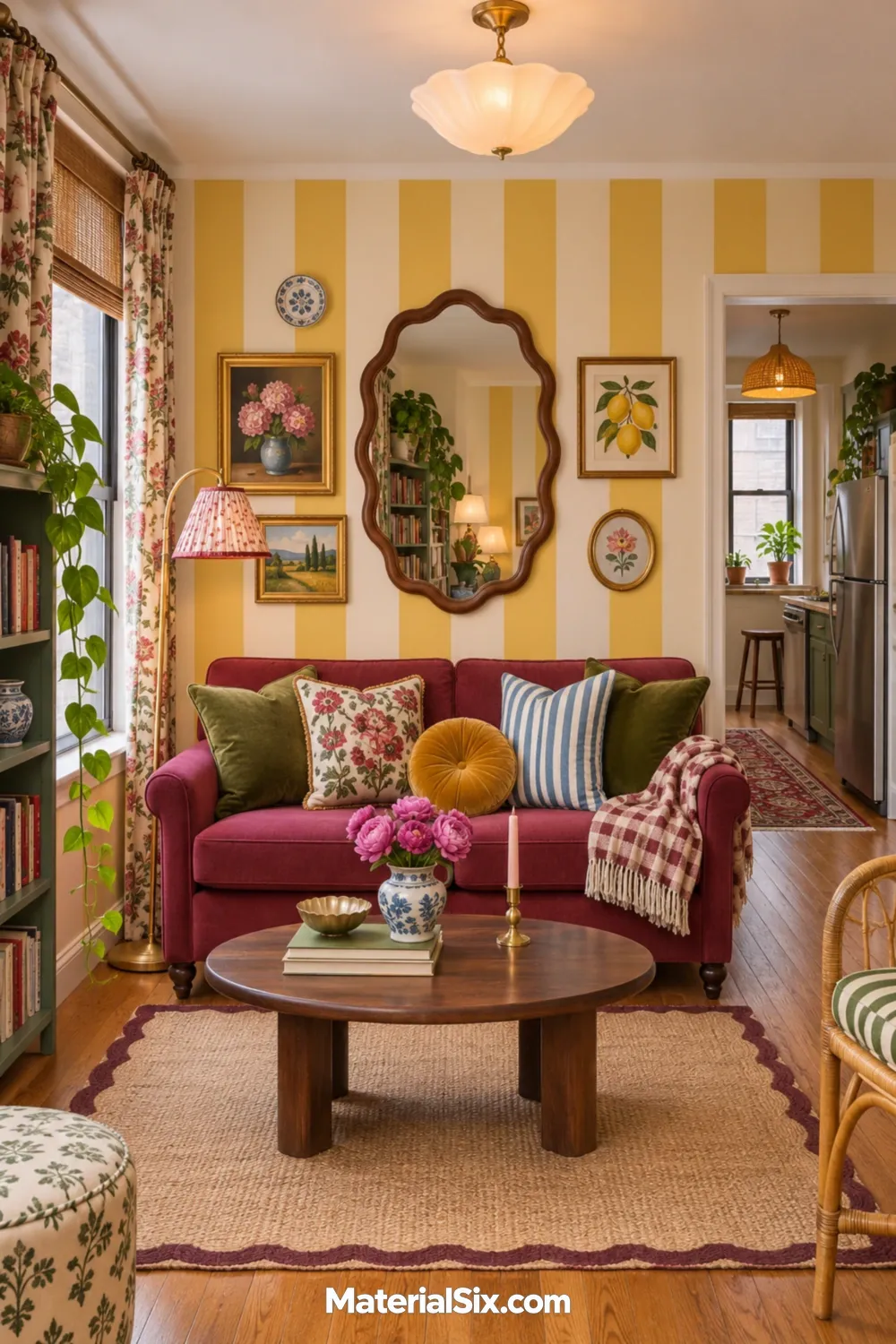
Broad butter-yellow stripes bring a cheerful rhythm to the sofa wall. Because the bands are large, they read clearly behind a berry loveseat and patterned cushions. Narrower stripes would create a busier backdrop once the artwork and textiles were added.
Work out the stripe spacing on paper, taking outlets, corners, and the sofa’s position into account. Test paint and tape on your wall finish before tackling the full area. You can keep the surrounding walls plain and repeat the yellow in a lampshade or cushion. The stripes provide the room’s architectural pattern, so an uncomplicated coffee table helps the seating area remain easy to read.
10. Use a Vintage Trunk as Hidden Storage
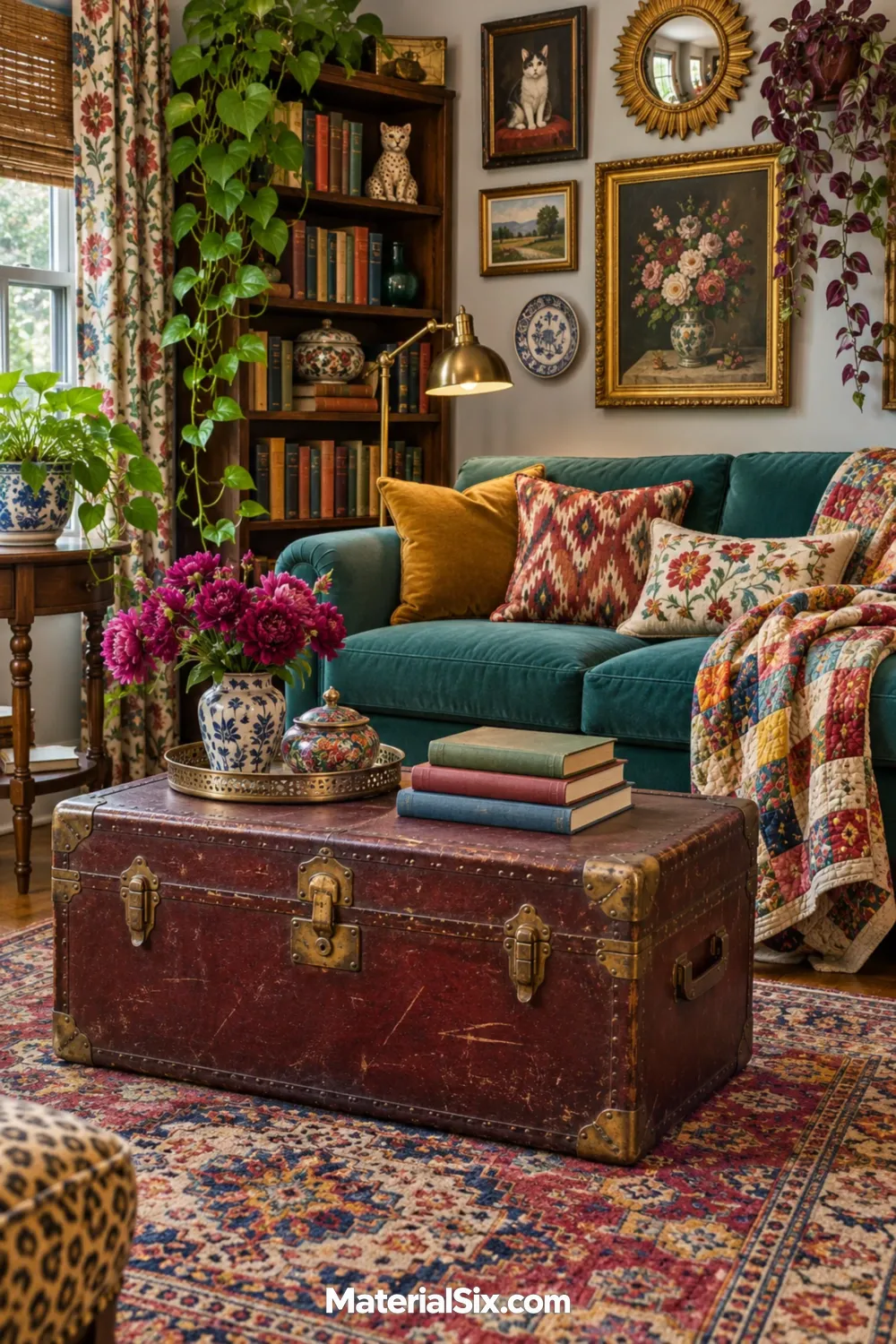
A worn oxblood trunk adds patina and enclosed storage in the spot normally occupied by a coffee table. Brass corners and aged leather-like surfaces sit comfortably with a teal sofa, a quilt, and vintage-style textiles. The storage is especially useful for things you do not need every hour.
Check the lid, hinges, lining, and base condition before bringing an old trunk home. Choose a flat, stable top at a height that works with your sofa. Blankets or seasonal cushion covers are more practical inside than daily-use remotes, since opening the lid means clearing the surface. Place drinks on a suitable tray and leave enough room to access the trunk without moving the sofa.
11. Rotate Art on a Colorful Picture Ledge
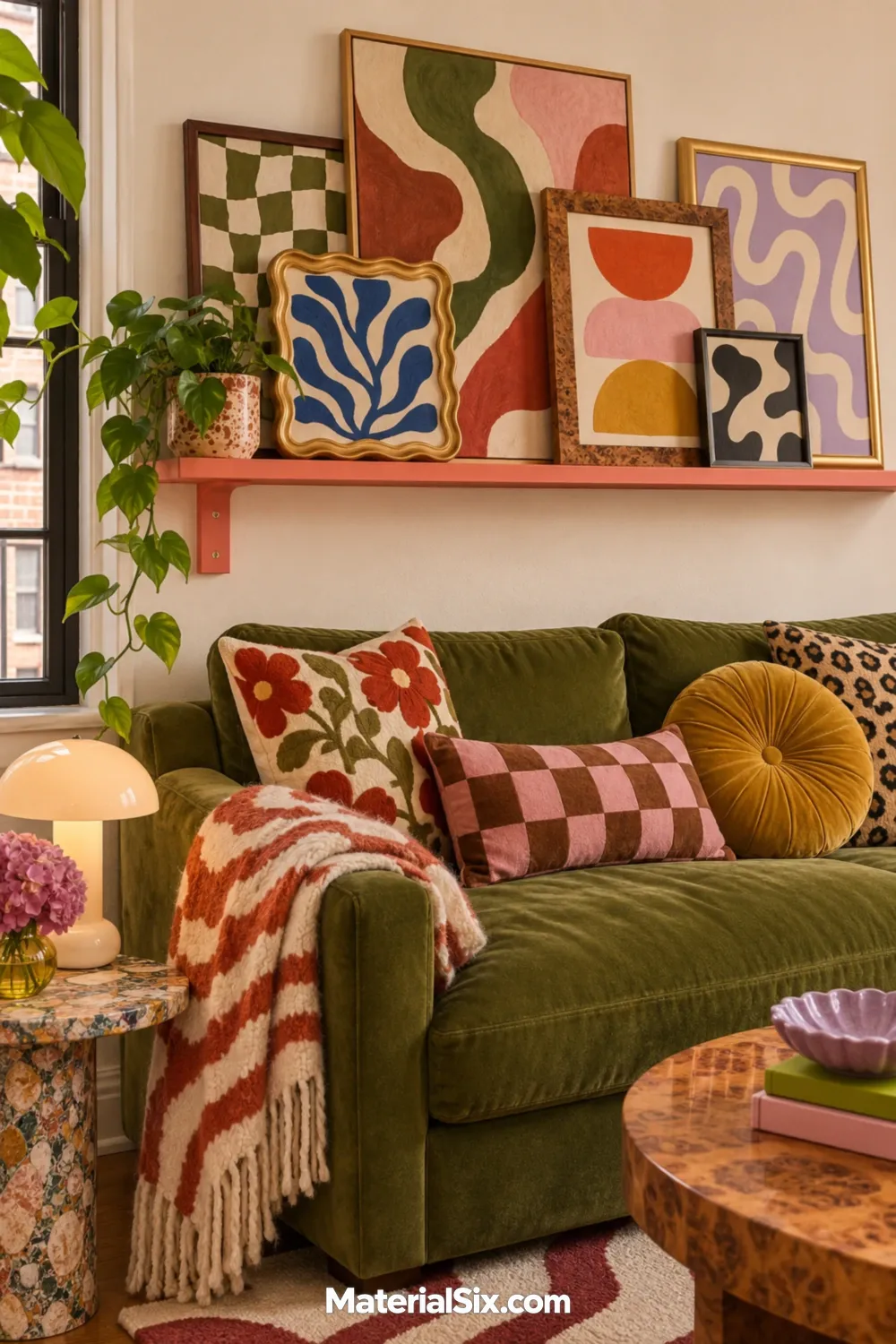
A coral picture ledge gives smaller artwork a shared base. Overlapping frames can feel collected without requiring a separate hole for every piece, and you can change the mix when a new print or photograph comes along.
Choose a ledge deep enough for your frames and install it using hardware appropriate to the wall and expected load. Keep the largest piece toward the back, with smaller works overlapping only part of its image. Above a sofa, leave space for seated heads and avoid precariously balanced objects. Repeat the ledge color somewhere lower in the room, such as a cushion, so the bright line feels connected to the furniture below.
12. Swap a Coffee Table for a Patterned Ottoman
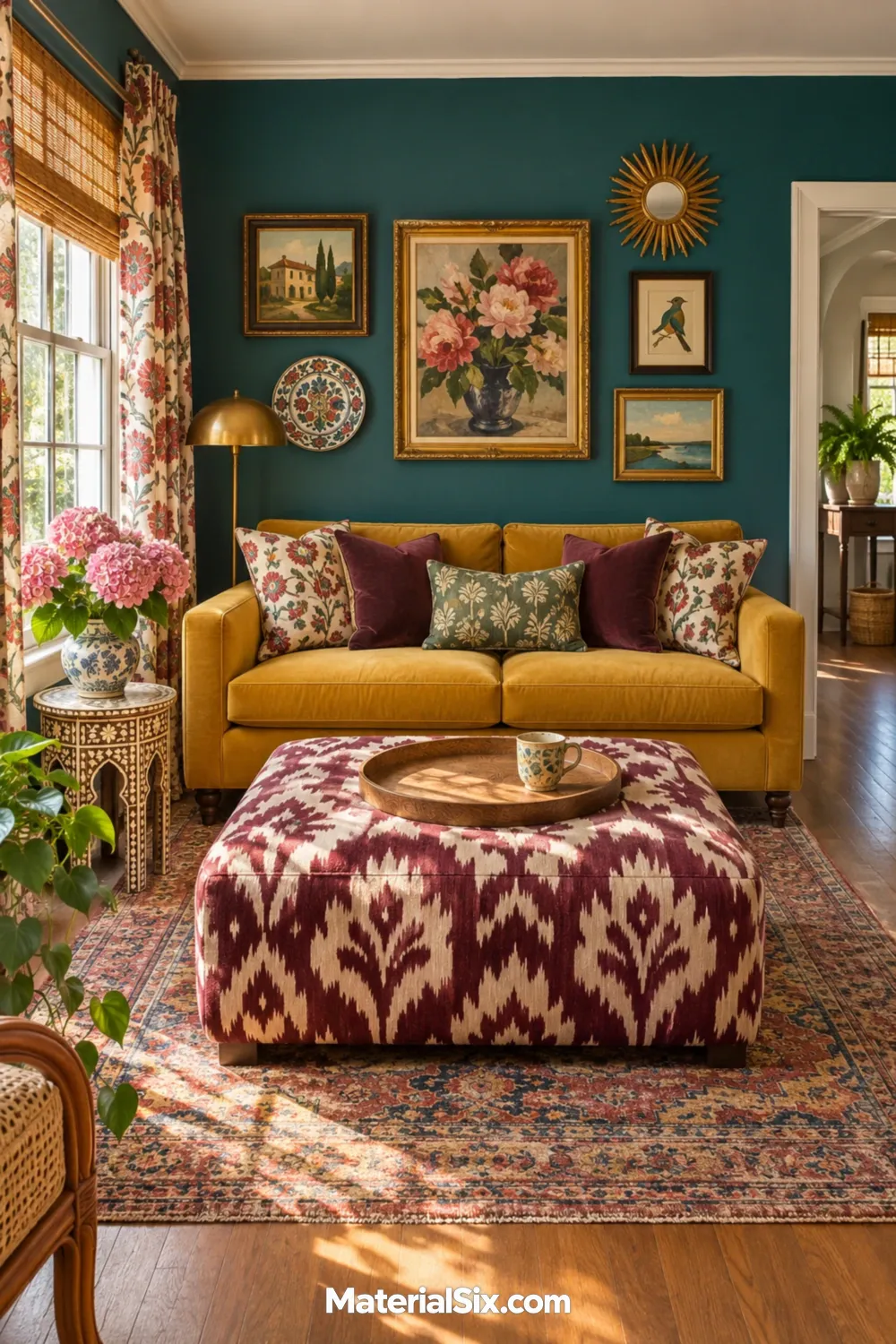
An upholstered ottoman puts a large textile pattern in the center of the room. Burgundy-and-cream ikat gives this low piece presence, while the soft-looking surface changes the mood beside a mustard sofa. It can serve as a footrest when the tray is removed.
Consider how you use your coffee table before making the switch. If you often write, play board games, or eat there, you may miss a firm surface. Choose upholstery you can care for realistically, and check the manufacturer’s guidance. A rigid tray can hold a cup on a suitably stable ottoman, but keep it level and avoid leaving drinks where a stretched-out foot could knock them.
13. Give a Table Lamp a Patterned Shade
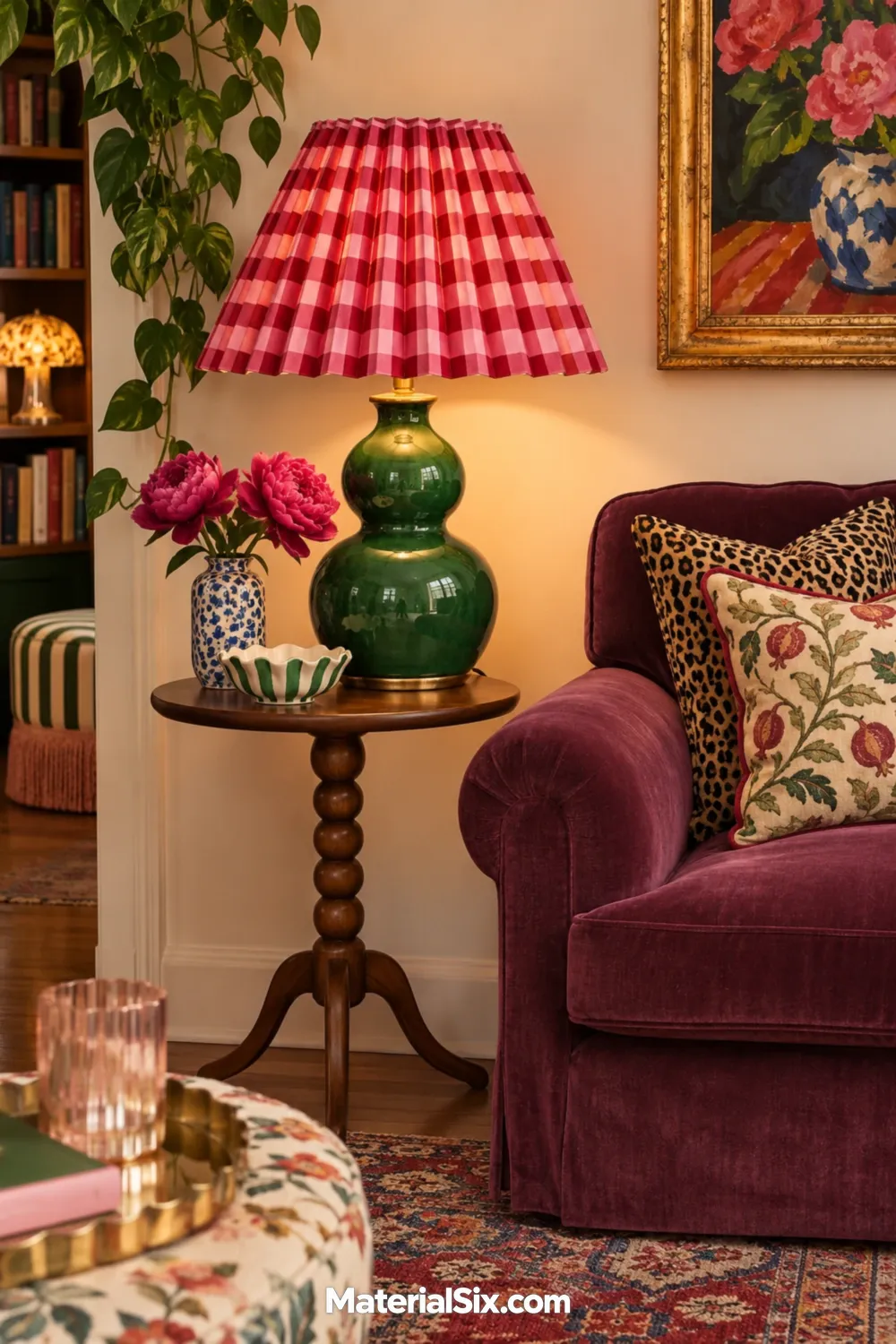
A checked, pleated lampshade makes a familiar table lamp feel more expressive. Pink and red fabric over an emerald ceramic base combines pattern, shine, and a sculptural silhouette in a relatively small area beside the sofa.
Start by checking the existing fitting and the shade proportions rather than buying by color alone. Follow the lamp and shade manufacturers’ requirements for bulb type, wattage, and clearance. View the fabric with the lamp switched on; a pale lining may give a different glow from a dark one. Keep enough space on the table for everyday use. The lamp already provides a strong decorative moment, so nearby accessories can stay small.
14. Wallpaper Just the Reading Nook
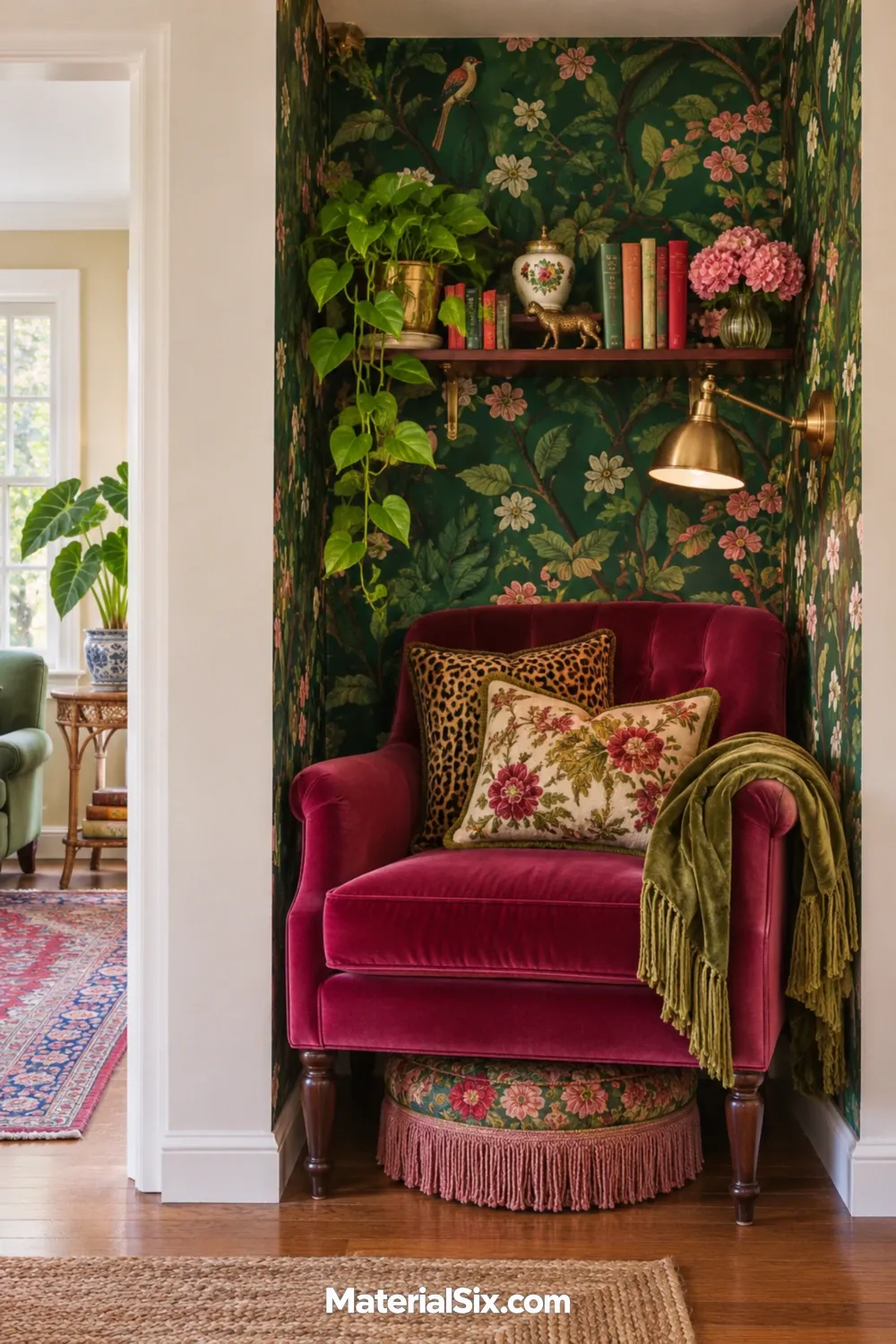
A wallpapered alcove gives maximalism a clear boundary. Dense green leaves surround a raspberry reading chair, creating a little destination within the larger living room. The adjacent plain wall helps the pattern feel framed rather than spread everywhere.
Measure the nook carefully, including returns and corners, and check the wallpaper’s repeat before ordering. A sample will show how the print looks in that pocket of light. Keep the chair comfortable enough for real reading and position a lamp where it illuminates the page. A small footstool can tuck close when unused. This approach works especially well when you want a bold print but prefer to commit one defined area first.
15. Show Collections in a Color-Backed Cabinet
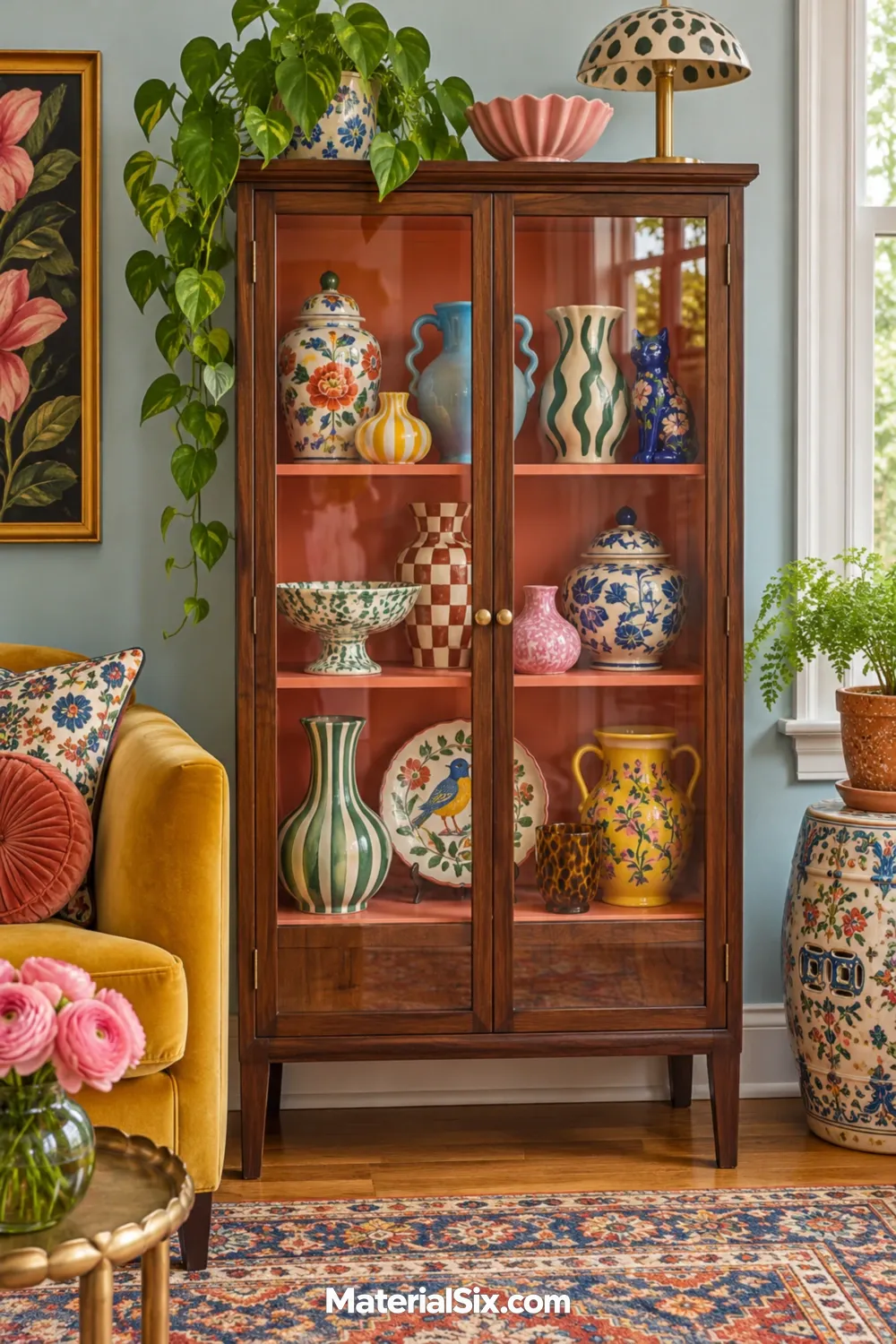
A coral backing makes colorful ceramics stand out inside a narrow walnut cabinet. Glass doors give the collection a visual boundary, which can help a small room feel more organized even when the objects themselves are wonderfully mismatched.
Measure your tallest vase and the cabinet’s internal shelf spacing before choosing a piece. Group objects loosely by shape or color, leaving enough room to lift one out without moving everything. Use suitable shelf supports and respect the cabinet’s stated load limits. Painting a removable back panel can be simpler than refinishing the whole cabinet. Glass will still need wiping, but the enclosed display can reduce how much dust lands directly on each object.
16. Layer One Small Rug Over a Larger Base
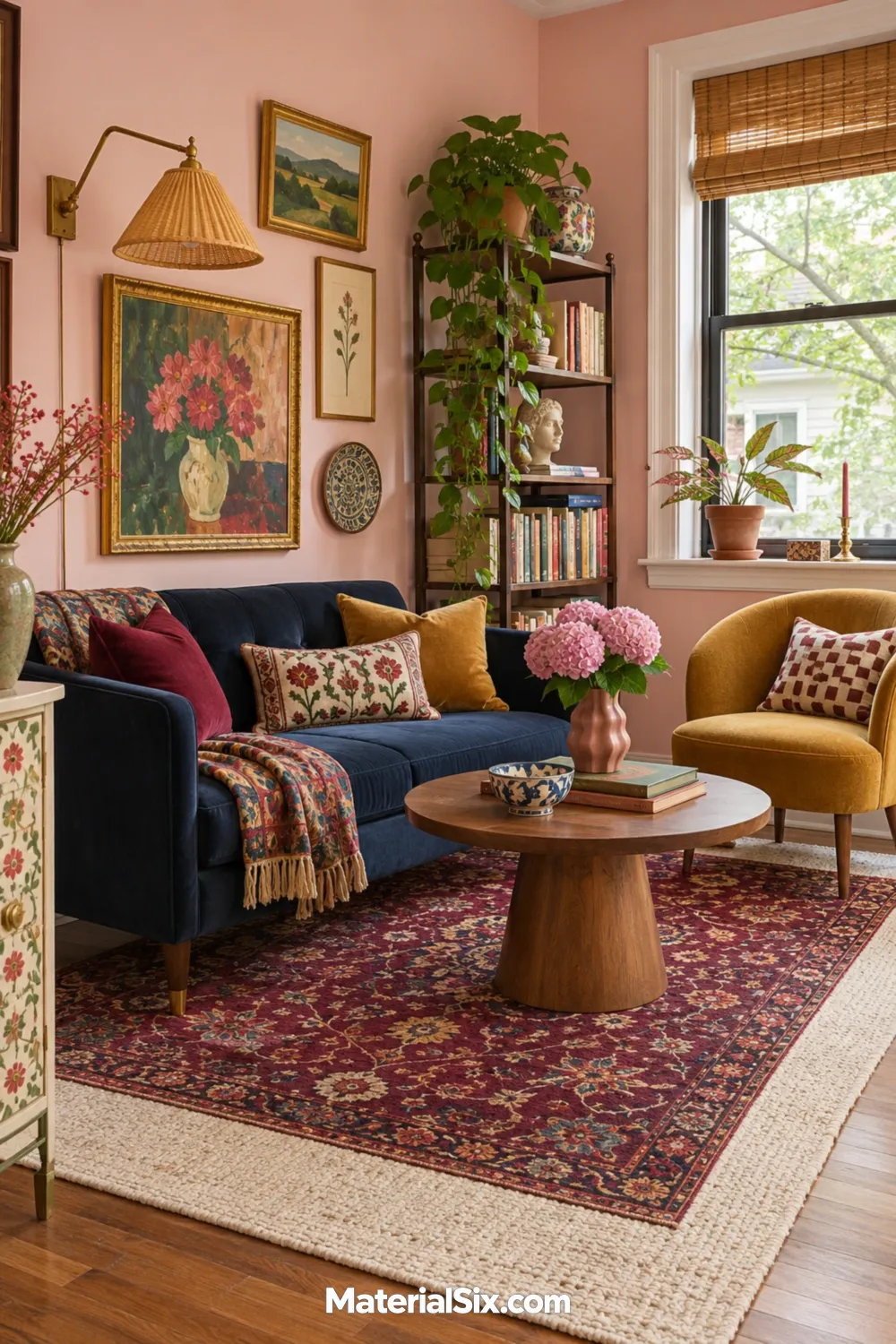
A smaller patterned rug over a larger quiet base adds another layer without needing to replace the whole seating-area rug. Here, burgundy motifs bring warmth between a navy loveseat and an ochre chair, while the cream border keeps the arrangement legible.
Use thin rugs that lie flat and check whether the combination shifts on your particular floor. Suitable rug pads may help, but follow the rug and flooring care guidance. Keep edges away from the busiest walking route and check nearby door clearance. If the overlap bunches or curls, use a single rug instead. The decorative effect should still let you walk through the room without watching every step.
17. Make an Open Shelf a Colorful Room Divider
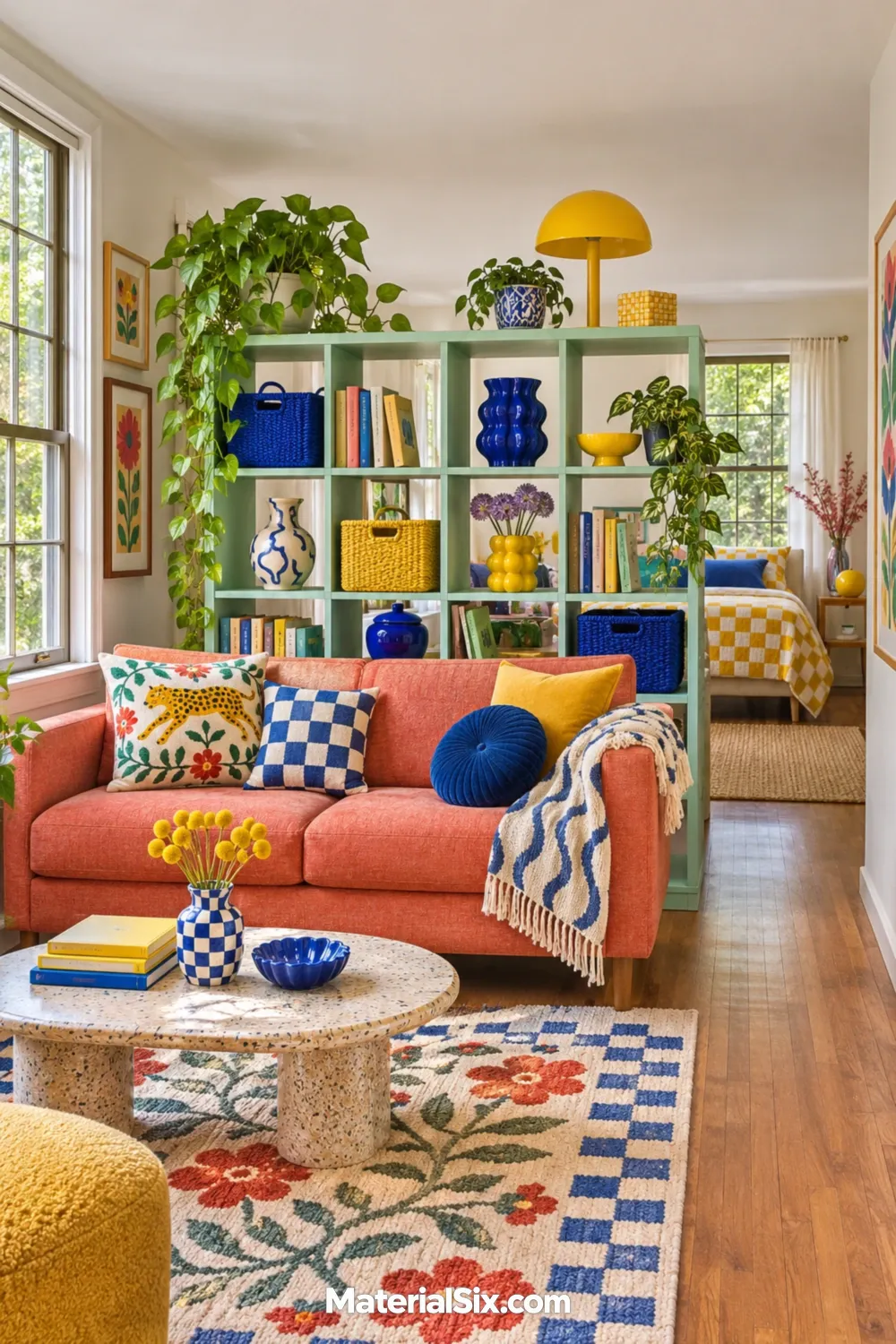
An open-backed shelf can mark the edge of a seating area in a studio without hiding the whole room beyond. Mint paint, colorful baskets, and a few ceramics give the divider a decorative role while the baskets hold everyday odds and ends.
Measure the passage beside it before choosing the unit, and check that storage can be reached from the side you intend to use. Pick furniture designed for its position and follow stability and anchoring guidance. Keep heavier belongings low and avoid balancing tall objects along the top. Repeating the sofa’s coral in one small shelf accessory can connect both sides of the arrangement without filling every cubby.
Choose Your Layers Before Adding More
Start with the furniture arrangement you need for everyday life. Walk from the entrance to the sofa and through any shared route, then check doors, drawers, and storage lids. Keep that working layout as your boundary while you add color and pattern.
Choose one lead feature: a gallery wall, a patterned curtain, or a statement seat. Pull two or three colors from it into smaller details. You can combine a floral with a check and a stripe, but vary their scale so each remains visible. Leave some plain upholstery, wall, or tabletop between the busiest areas.
Before buying, ask:
- Does this add a new function or repeat something I already have?
- Can I reach, clean, and use it in the available space?
- Is there one color or material connecting it to the room?
Photograph the room from the doorway after each change. A picture can make a crowded corner or an isolated color easier to notice. Move existing pieces first; sometimes the missing layer is already elsewhere in your home.
Frequently Asked Questions
Can a small living room work with maximalist decor?
Yes. Focus on color, pattern, artwork, and useful furniture rather than continually adding pieces. Keep the route through the room clear and measure furniture before introducing another large item.
How do you mix patterns without losing the room’s focus?
Choose patterns in different scales and repeat a color across them. A broad stripe, a smaller check, and a large floral are easier to distinguish than three equally dense prints. Give them a plain background somewhere nearby.
Where should you start if your sofa is neutral?
Use the sofa as a quiet base for patterned cushions, a colorful throw, or artwork above it. Choose one textile or picture you love, then repeat a color from it in a lamp, curtain, or small table.
What can renters try before painting or wallpapering?
Try cushion covers, curtains on an existing suitable rod, rugs that lie securely, and freestanding furniture arranged according to its installation guidance. Check your lease before drilling, repainting, or using adhesive products; removable does not guarantee damage-free removal.
Start With One Detail You Want to Keep
Choose the piece that makes you smile, whether it is a dog portrait, a checked lampshade, or a boldly colored shelf. Give it a useful place in the room, then repeat one of its colors in a second detail. Build from there slowly enough to notice what the space needs. A small living room can hold plenty of personality while still supporting the way you sit, store, read, and move through it.