
You switch on the ceiling light, straighten the cushions, and still notice the same thing: your living room has no natural focal point and a few corners seem to disappear. Without windows, the usual decorating advice about sheer curtains or furniture facing a view simply does not apply. You need a plan built around the light, surfaces, and sightlines you actually have.
That can mean a lighter sofa and a generous rug, but it can also mean deep olive walls with carefully placed lamps. There is room for both approaches. The useful starting point is deciding how you want the space to feel when you sit down, rather than trying to imitate daylight at all costs.
These ideas for decorating a living room with no windows cover small styling changes, furniture choices, and a few more involved improvements. Pick the options that suit your layout and the way you spend time there, then combine them gradually.
1. Choose Warm White Walls That Still Have Depth
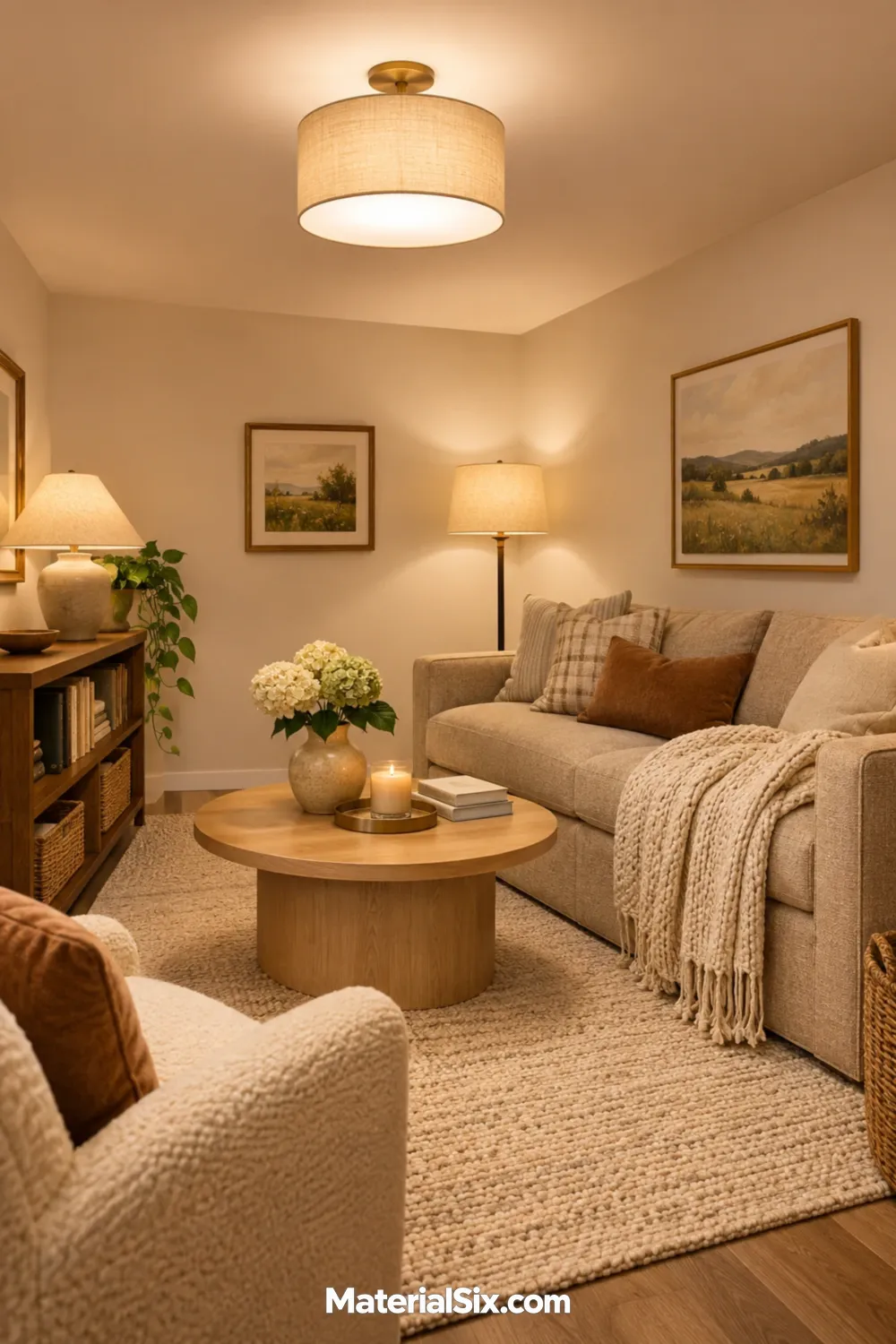
White paint can look surprisingly gray in a room that never receives daylight. Instead of choosing from a tiny swatch, try warm white or soft ivory on several large sample boards. Move them around the room and look at them with the lamps you actually use.
The oatmeal sofa and pale wood in this room give the wall color something warm to relate to. You can repeat that balance with linen cushions, a light rug, and one darker accent. Avoid assuming the whitest paint will do all the work: without enough artificial light, even a pale room can feel dim.
2. Build Three Layers of Light
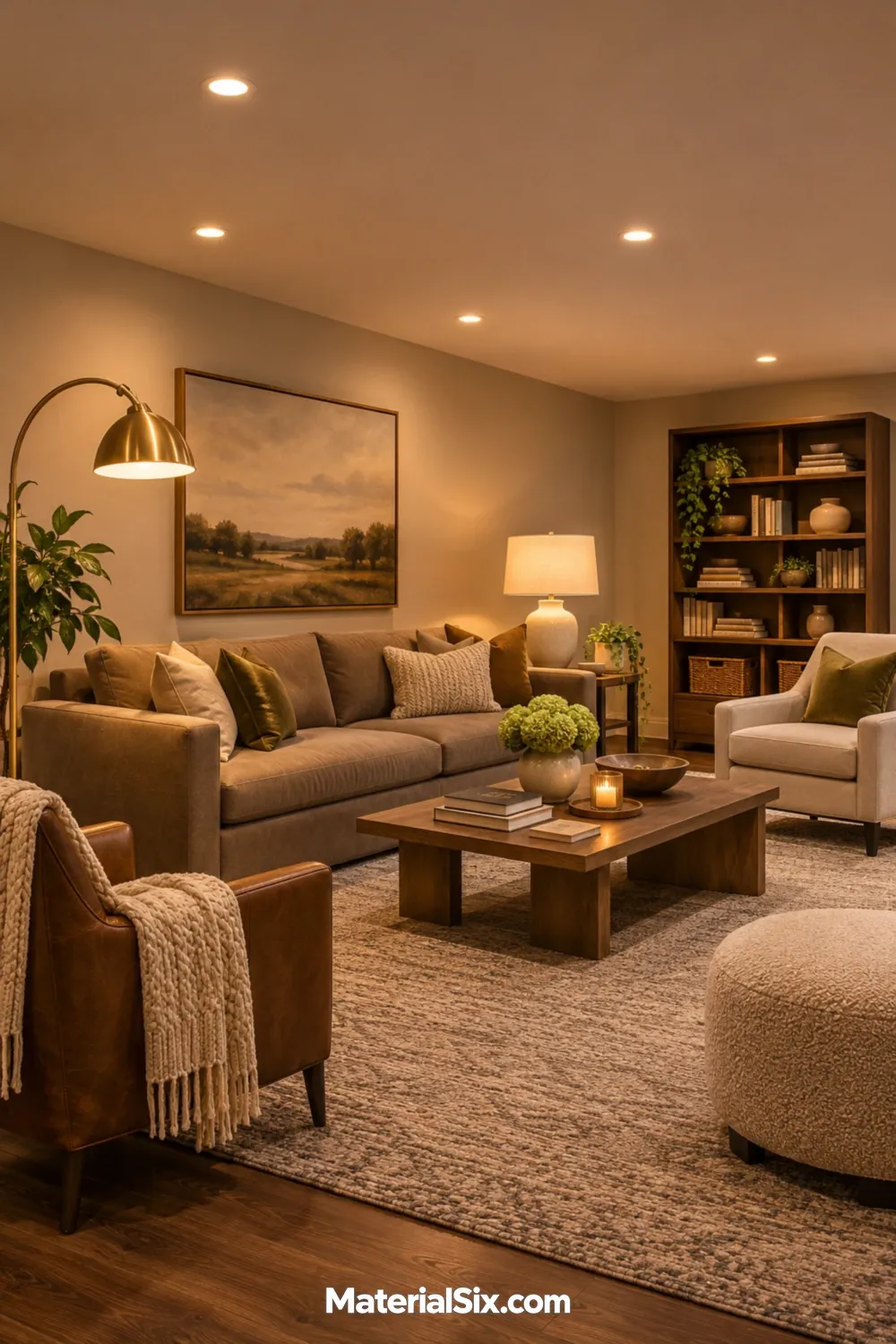
One ceiling fixture often leaves a bright center and shadowy edges. Give your windowless living room lighting more range by combining general illumination, a lamp beside a seat, and a softer accent light elsewhere. The separate pools of light make the room feel inhabited rather than uniformly flooded.
Try this starting arrangement:
- Ceiling lighting for moving around and everyday tasks.
- A shaded floor lamp beside your reading chair.
- A table lamp on the opposite side of the seating group.
Keep the light color reasonably consistent across fixtures. Then adjust individual lamps to suit reading, conversation, or watching a movie.
3. Let a Large Mirror Repeat Your Lamplight
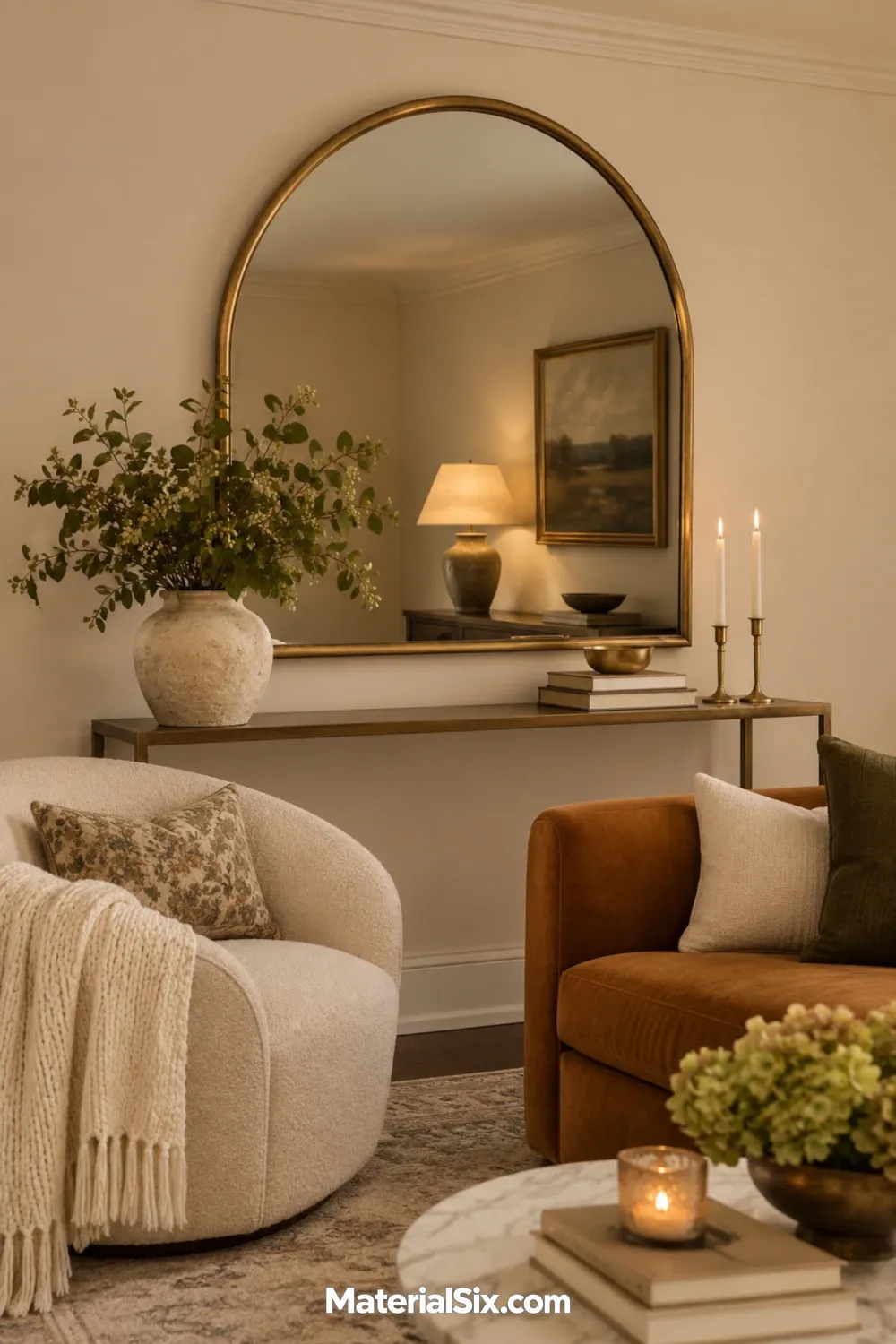
A mirror cannot supply missing daylight, but it can repeat the light and attractive details already in your room. Here, an arched mirror above a slim console catches a shaded lamp and a framed picture. That reflection adds another visual layer to a solid wall.
Before deciding where to hang yours, check the reflection from the sofa and the doorway. You want to see a lamp, artwork, or a pleasing part of the room rather than clutter or an exposed bulb. Choose a size that feels connected to the console below, and follow the mirror’s mounting instructions for your wall type.
4. Give Dark Corners Their Own Glow
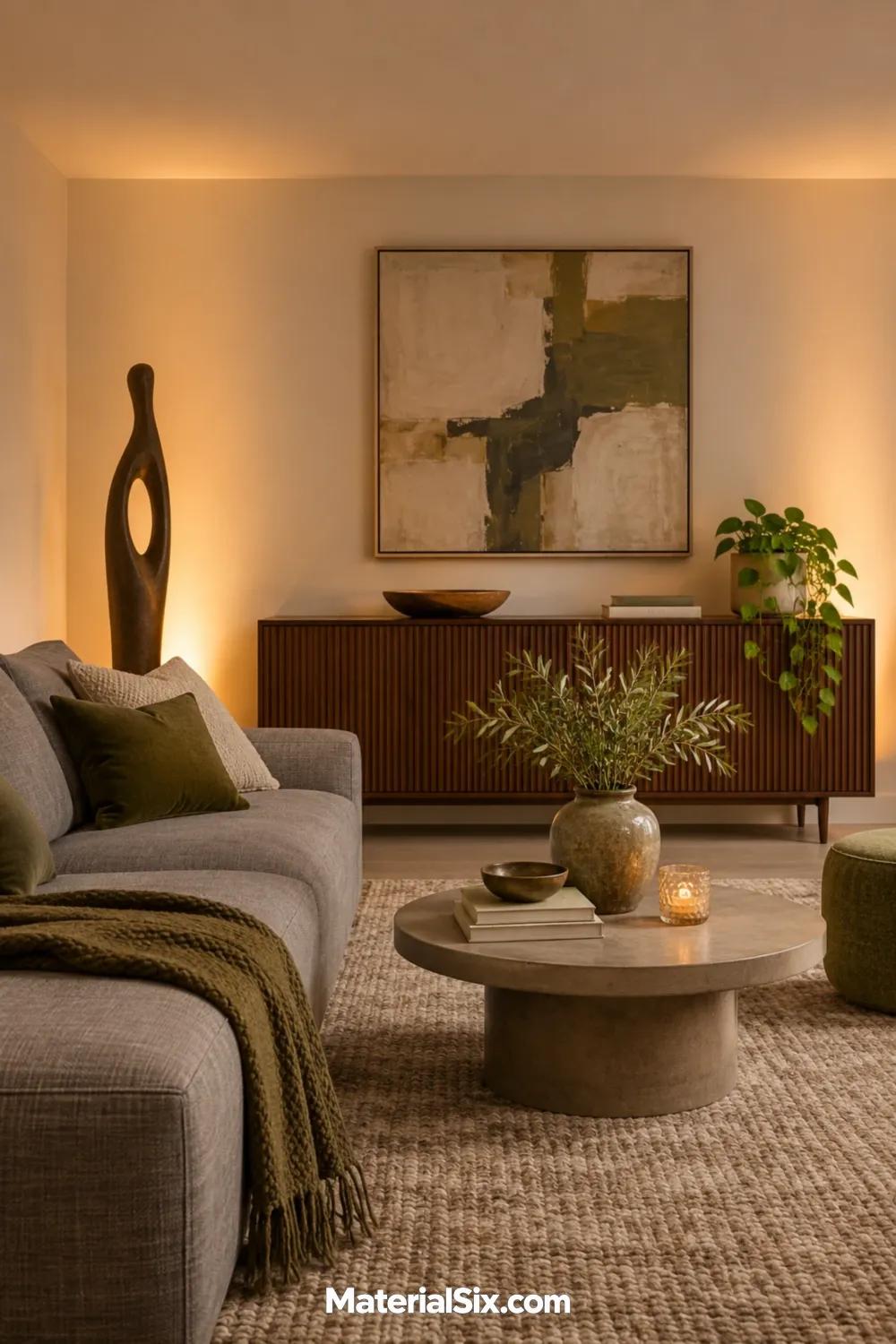
The corner behind a sideboard can disappear even when the rest of the room feels comfortable. A discreet uplight changes that by sending a soft wash up the wall. In this arrangement, the glow outlines a tall sculpture and gives the wood cabinet a more intentional backdrop.
Place the light where the fixture and its cord can stay out of the walking route. Start with a low setting, then increase it until the corner feels connected to the seating area. Check the view from your favorite chair too; the effect should be reflected light on the wall, without a bright source shining into your eyes.
5. Keep the Biggest Furniture Visually Light
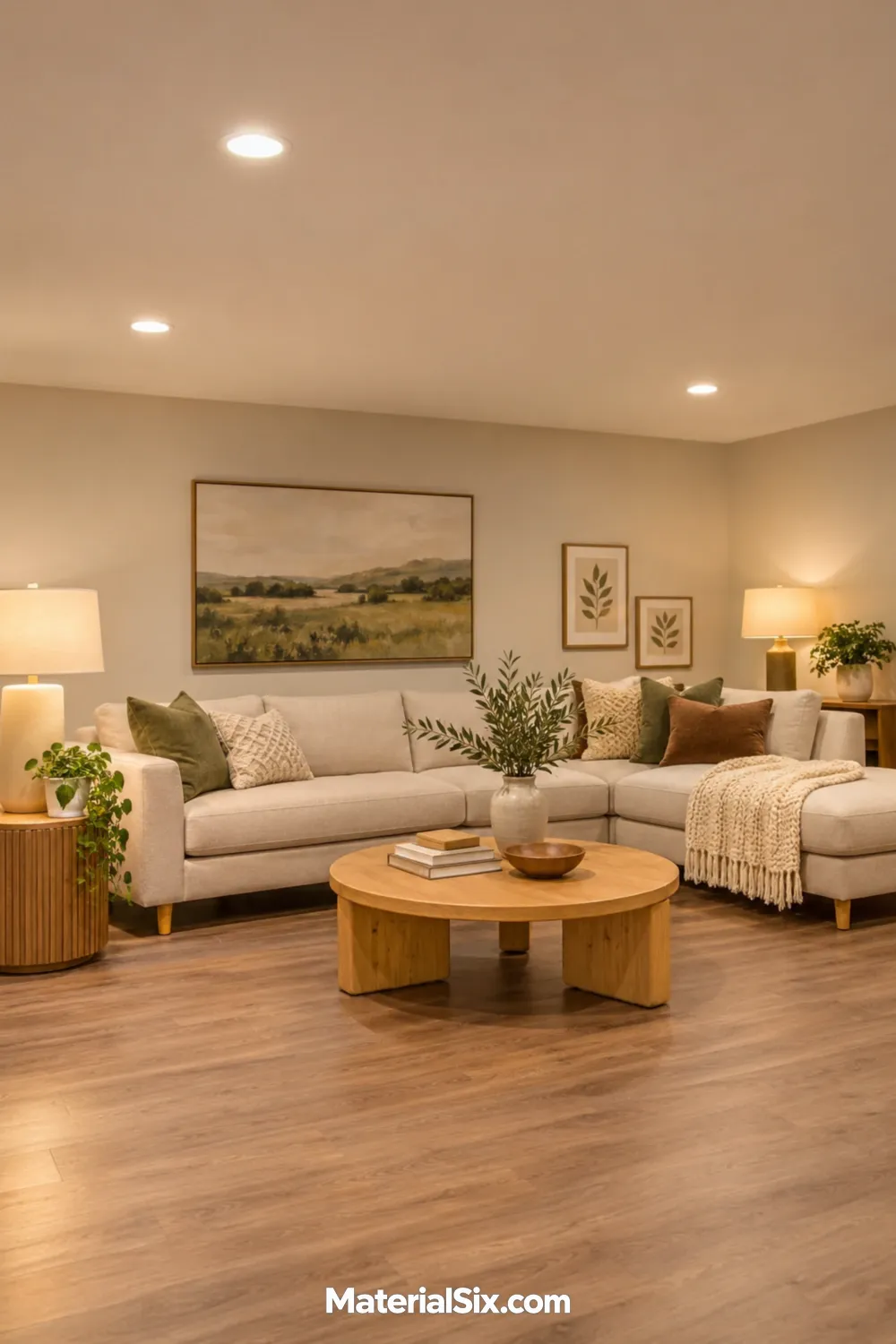
A large sofa occupies more visual space than almost anything else in a living room. Pale upholstery, a low back, and visible legs can make that volume feel less heavy. This cream sectional keeps the seating generous while leaving a clear view across the wood floor.
Measure your route through the room before choosing a sectional, especially near doors and cabinet fronts. If the space is narrow, a smaller sofa and one movable chair may serve you better. Light fabric also shows marks, so compare care instructions and removable-cover options. A washable throw on the most-used seat can make daily life simpler.
6. Use a Generous Light-Colored Rug
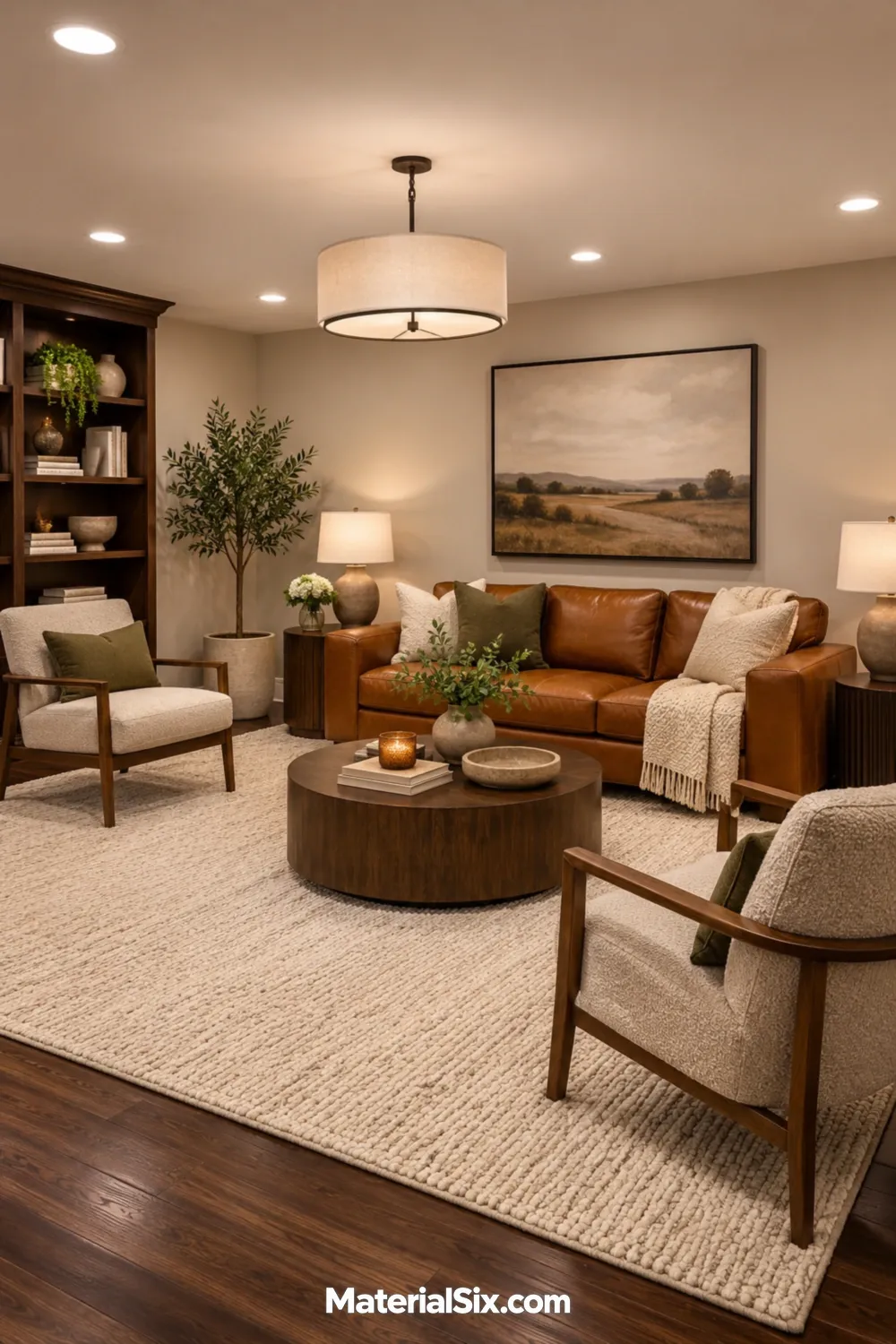
Dark flooring does not have to dictate the whole room. A large cream rug creates a lighter surface through the middle of this seating group, while the wood remains visible around its edges. The cognac sofa still brings depth, but it no longer carries the room’s entire color story.
Tape out a proposed rug size before ordering. Aim for an arrangement where the front legs of the main seats connect to the rug, rather than gathering around a small floating rectangle. In a busy family room, consider a subtle pattern or heathered weave. Those variations can be more forgiving than a completely plain pale surface.
7. Choose a Coffee Table You Can See Through
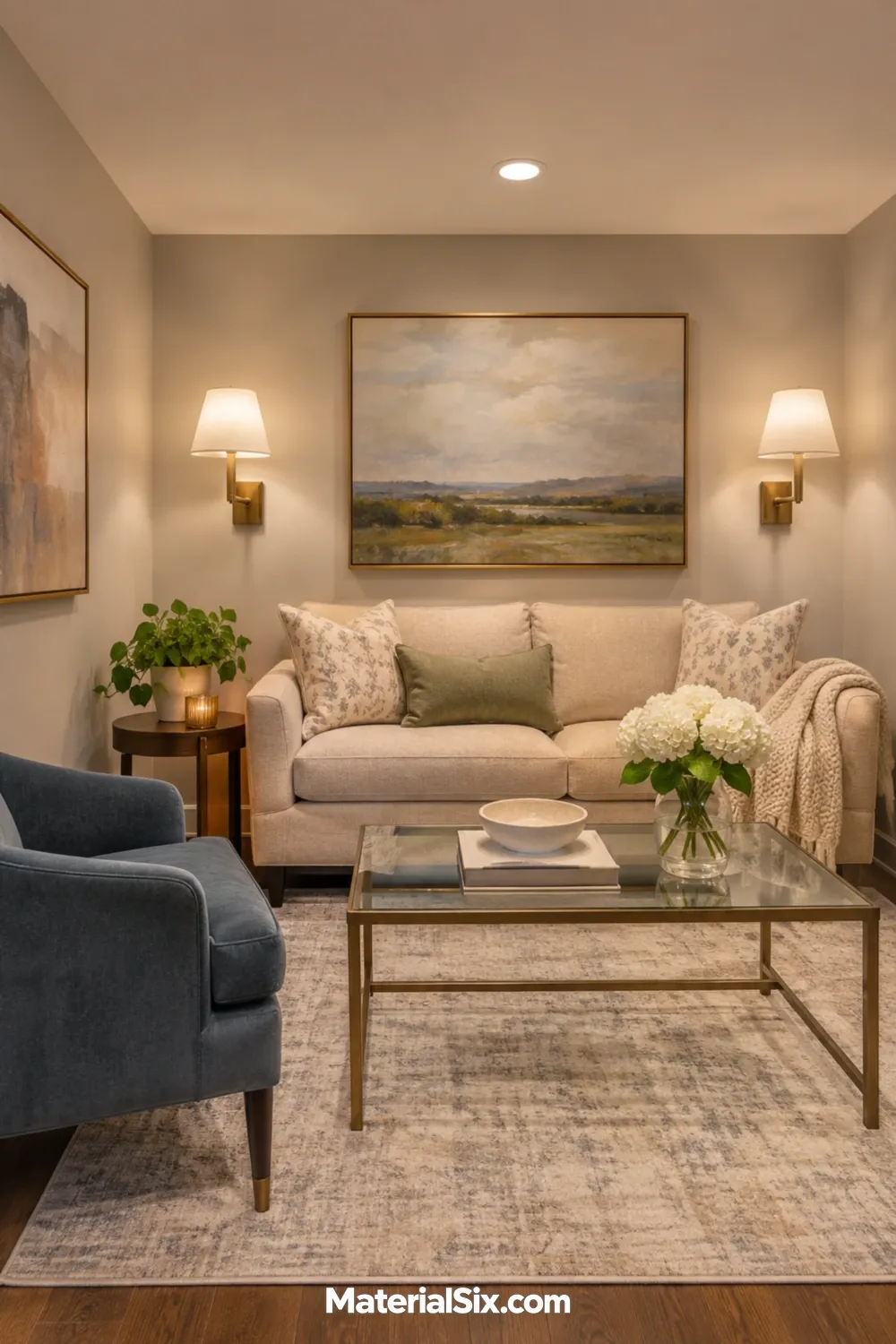
A solid coffee table can make a compact seating area feel crowded, particularly when it hides most of the rug. Clear glass lets the floor pattern remain visible and gives this small lounge a more open center. The slim metal frame adds definition without introducing another bulky block.
Look at the table from your usual sitting position before choosing its height and size. Leave comfortable access around the seating, and keep tabletop accessories limited so the clear surface can do its job. Glass also shows fingerprints and needs regular wiping. If that tradeoff would annoy you, a small open-base wood table offers a similar sense of space.
8. Layer Texture Within a Quiet Color Palette
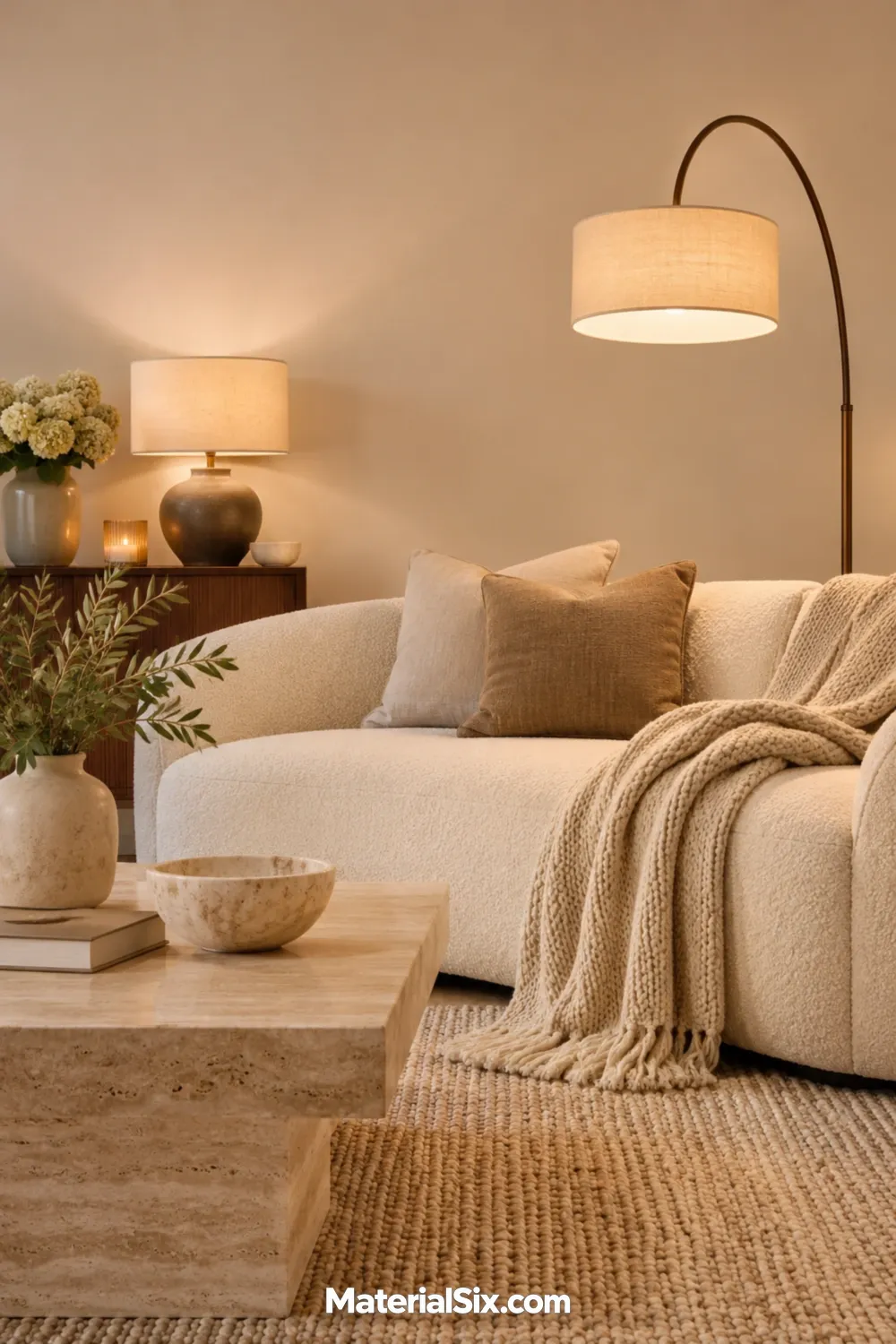
A quiet room does not need to be a flat room. The boucle sofa, linen pillows, knitted throw, and stone table here stay close in color, yet each catches lamplight differently. That variation gives you detail to enjoy without filling every surface with decoration.
Choose two or three textures you like touching, then repeat one elsewhere in the room. A woven rug can echo a basket, for example, while smooth ceramic keeps the combination from becoming overly fuzzy. Think about care as well as appearance. If the sofa gets daily use, reserve a more delicate textile for a cushion or throw you can move easily.
9. Hang One Large Piece of Lighter Artwork
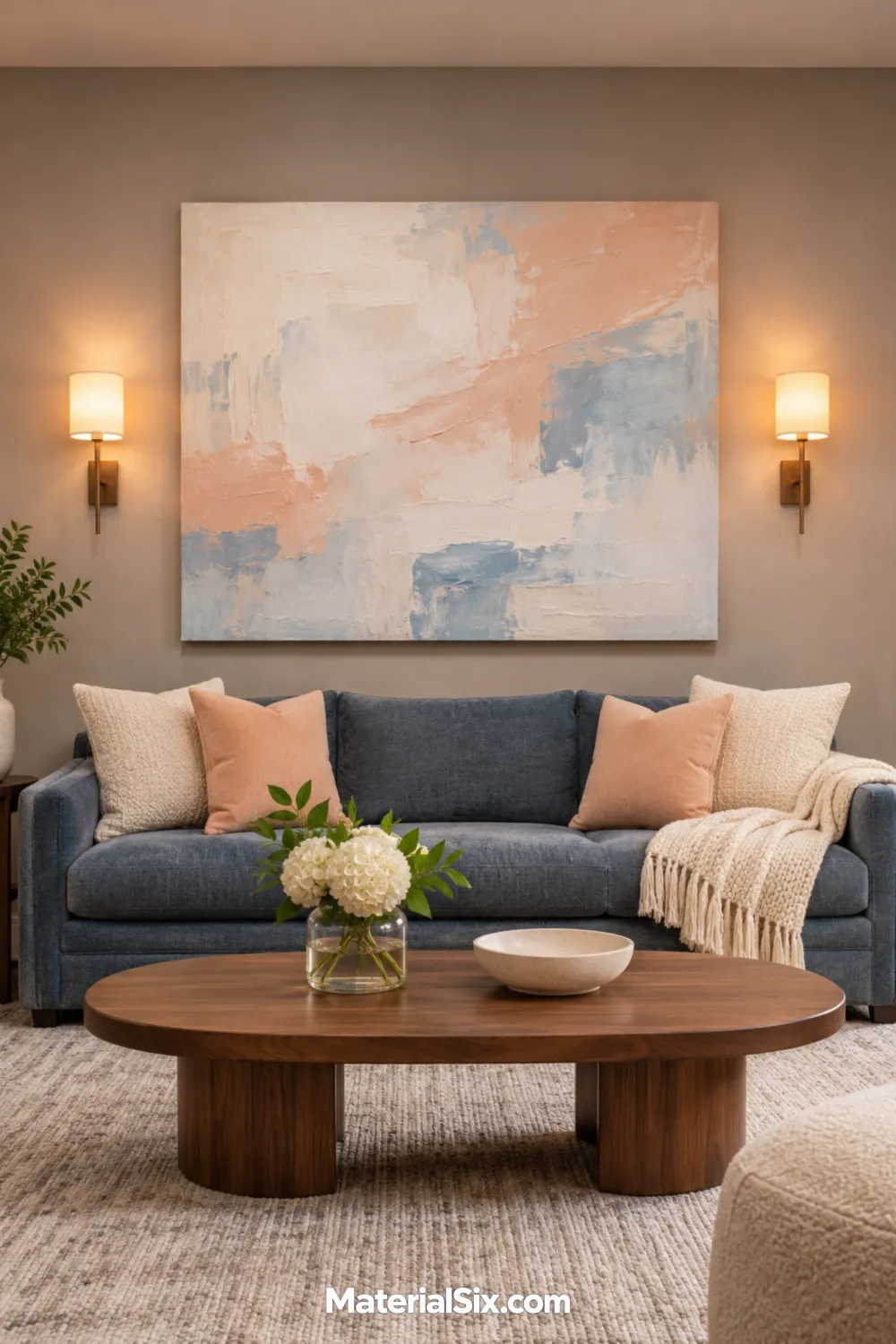
Without windows, a long sofa wall can feel like an uninterrupted blank. One generous piece of artwork gives your eyes somewhere to settle. This pale abstract painting brings chalky white, soft peach, and blue into the room, linking the darker sofa to the surrounding light wall.
You do not need a scenic view or a picture that pretends to be a window. Choose a subject you enjoy, then check its scale with paper taped to the wall. Hang it in relation to the furniture rather than automatically centering it between ceiling and floor. A restrained frame keeps attention on the art and its lighter color areas.
10. Put Light on the Walls
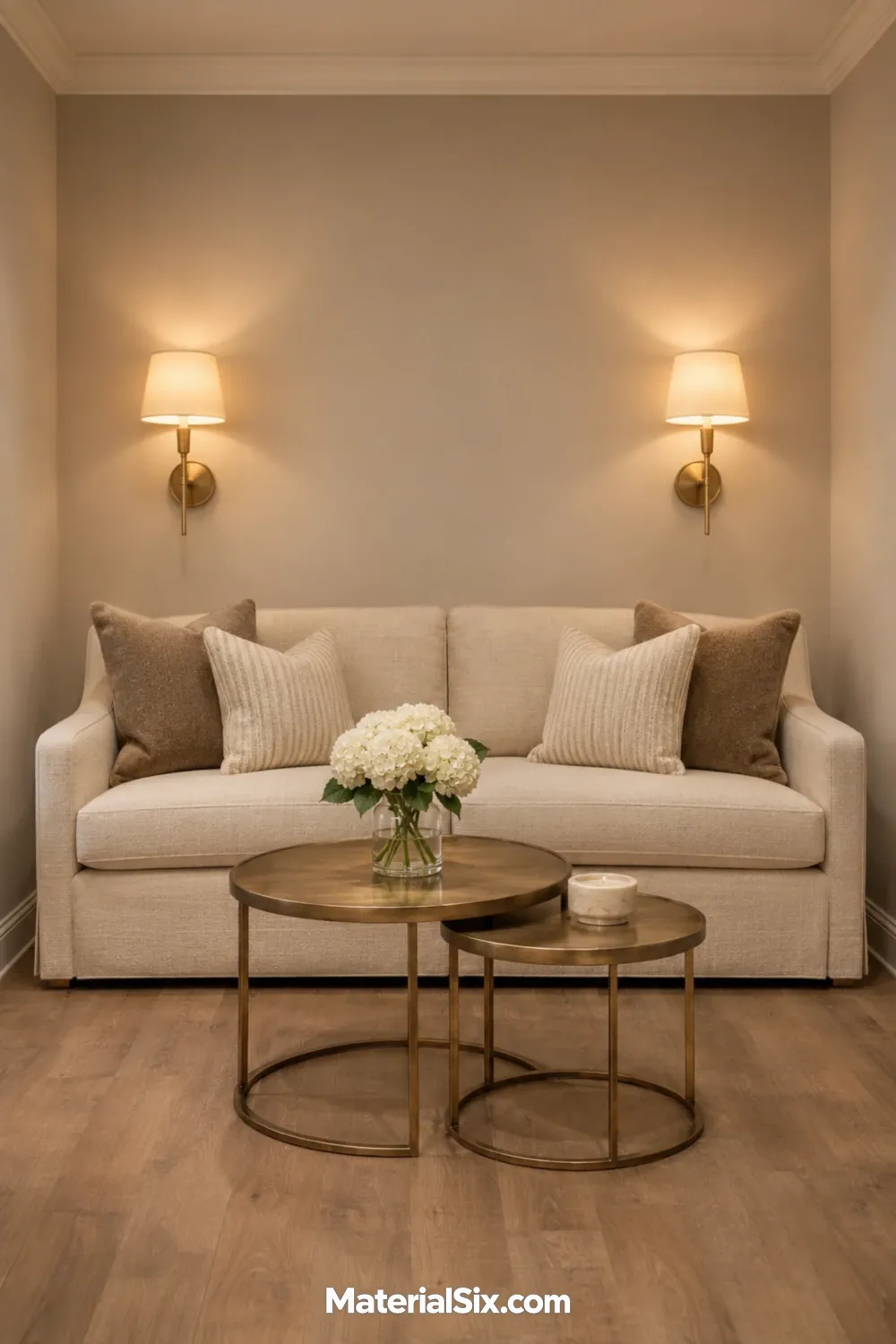
Wall sconces put light where a ceiling fixture may not reach, while keeping side tables available for books and drinks. The matching pair in this narrow sitting area frames the cream sofa and gives the plain wall a gentle rhythm.
Work out fixture placement from the furniture layout first. Check how the shade looks when you are seated, and avoid positioning a visible bulb directly at eye level. Plug-in fixtures may suit a simpler update where outlets are available; hardwired versions involve more planning. Keep any visible cords tidy and away from circulation routes. A soft shade usually feels calmer here than a sharply exposed lamp.
11. Add a Soft Glow Around the Ceiling
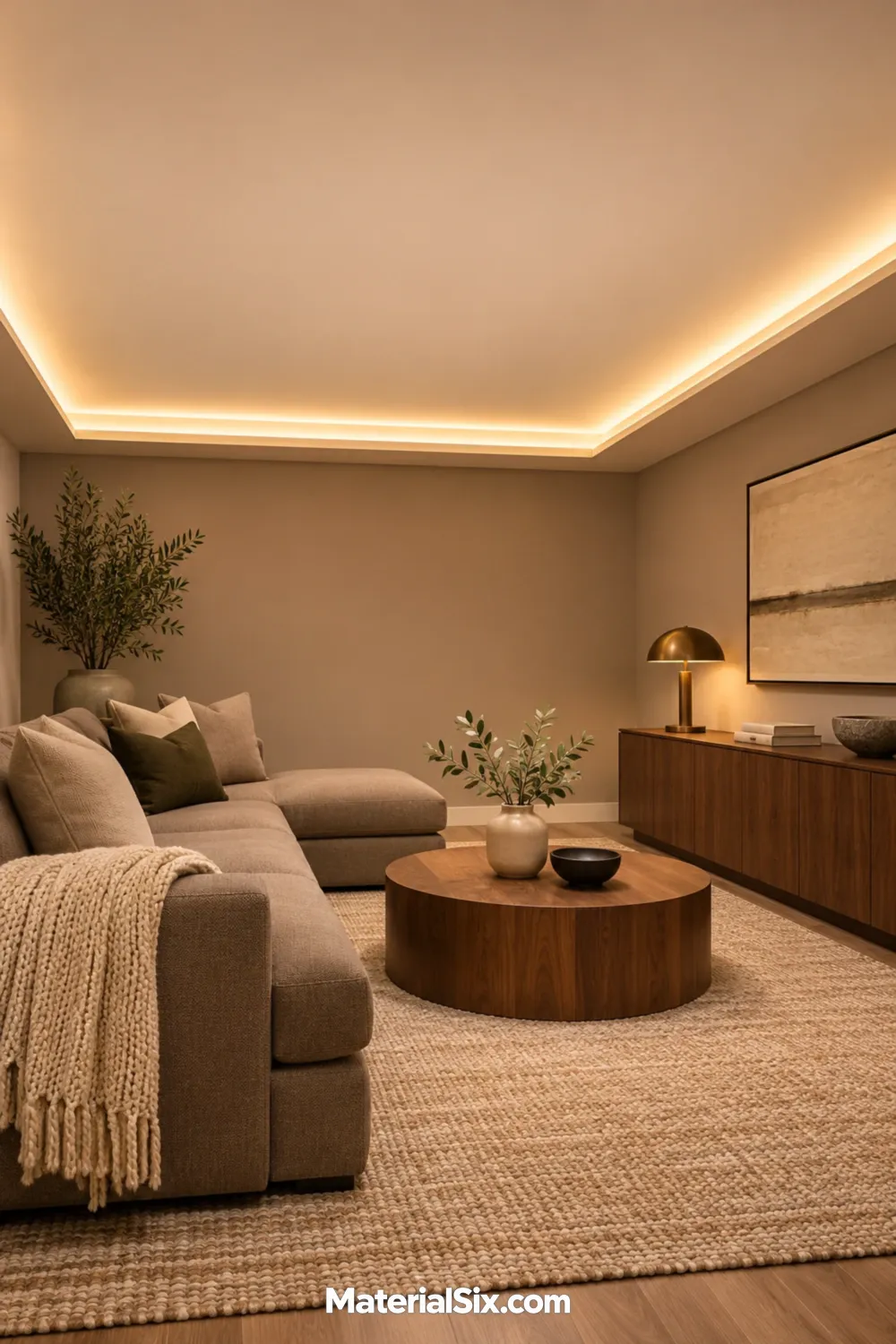
A softly lit ceiling edge gives a windowless room another sense of depth. In this lounge, concealed lighting follows the ceiling perimeter while table lamps bring the light back down to the seating. The result feels more considered than relying on a single bright overhead source.
This is a more involved idea than adding a floor lamp. Plan the recess, power access, and location of controls before committing to trim or cabinetry. You want a continuous glow with the light source hidden from normal seated views. Keep the intensity adjustable so the ceiling can support the room instead of becoming its brightest and most distracting feature.
12. Borrow Light Through an Interior Glass Door
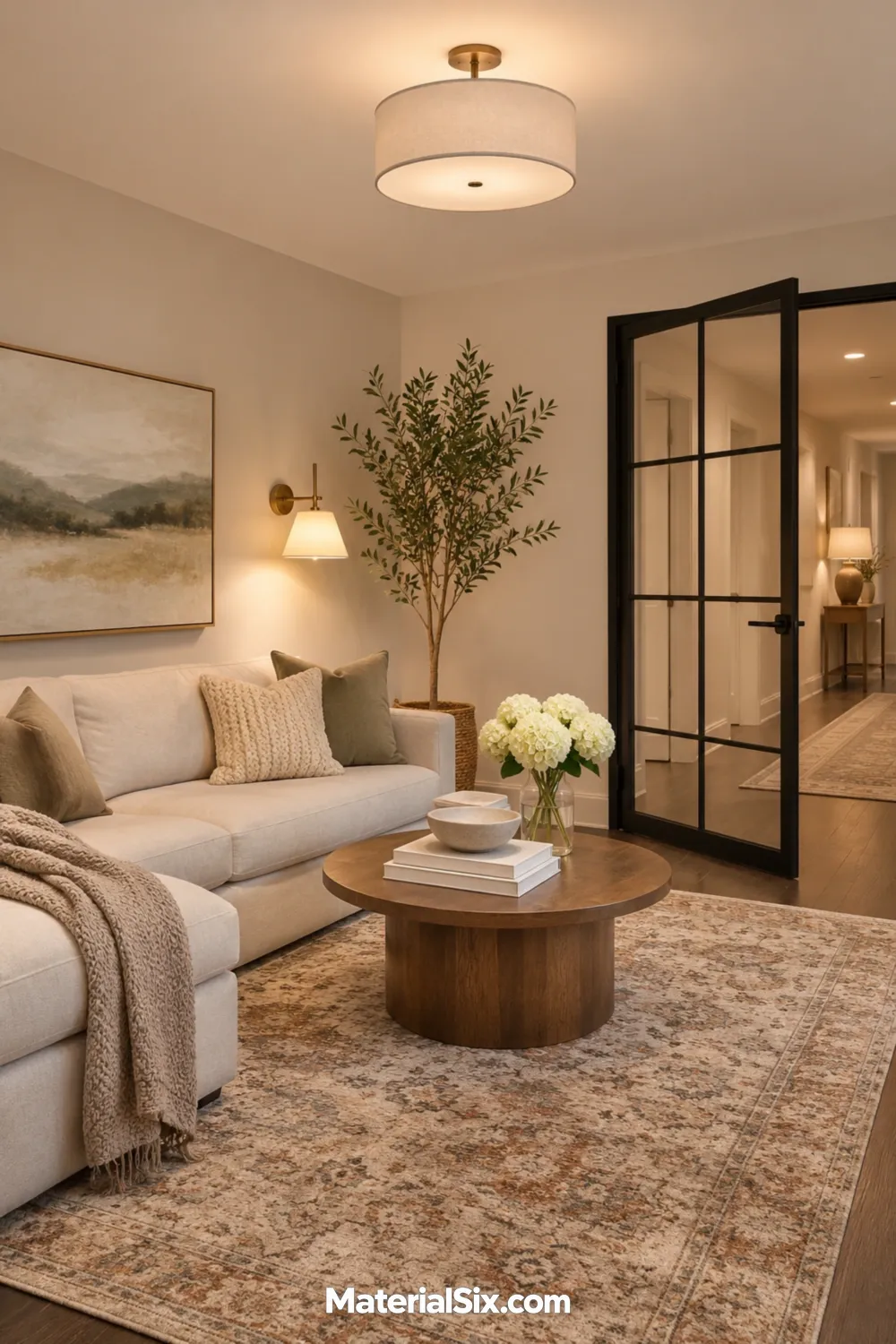
An interior glass door can make the boundary to the next room feel less closed off. Here, a slim black frame connects the living area to an illuminated hallway without introducing an exterior window. If the adjoining space receives daylight, some of that light may also reach the living room.
The useful question is what lies beyond your door. A dark storage room offers little borrowed light, while a brighter hall may help. Clear glazing also reduces visual privacy, so consider whether that suits how you use both spaces. Treat a door replacement as a planned home improvement, with suitable glazing, clearances, and installation for the opening.
13. Bring in Color Through Smaller Accents
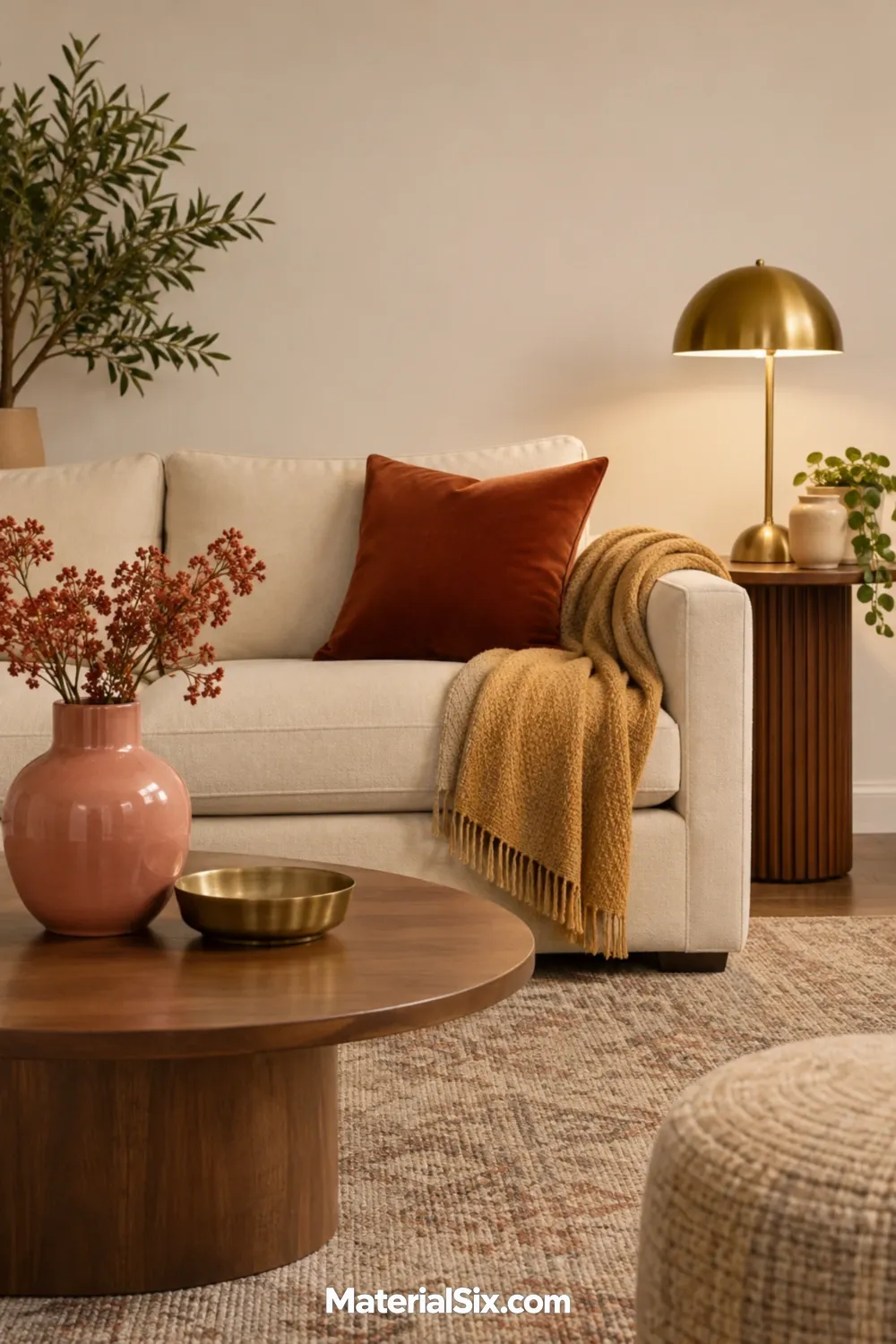
If an all-neutral scheme feels too quiet, start with color in objects you can move. A rust cushion, ochre throw, and dusty rose vase add warmth to this cream seating area without covering every wall in a strong hue. The limited accents feel connected because they share a softened, earthy quality.
Choose one main accent and let the others play smaller roles. Then view the combination under your evening lighting before buying more. Colors can read differently under different bulbs, and a shade you loved in a store may feel stronger at home. Repeating one accent across two small objects is often enough to tie the grouping together.
14. Use Greenery That Does Not Depend on Sunlight
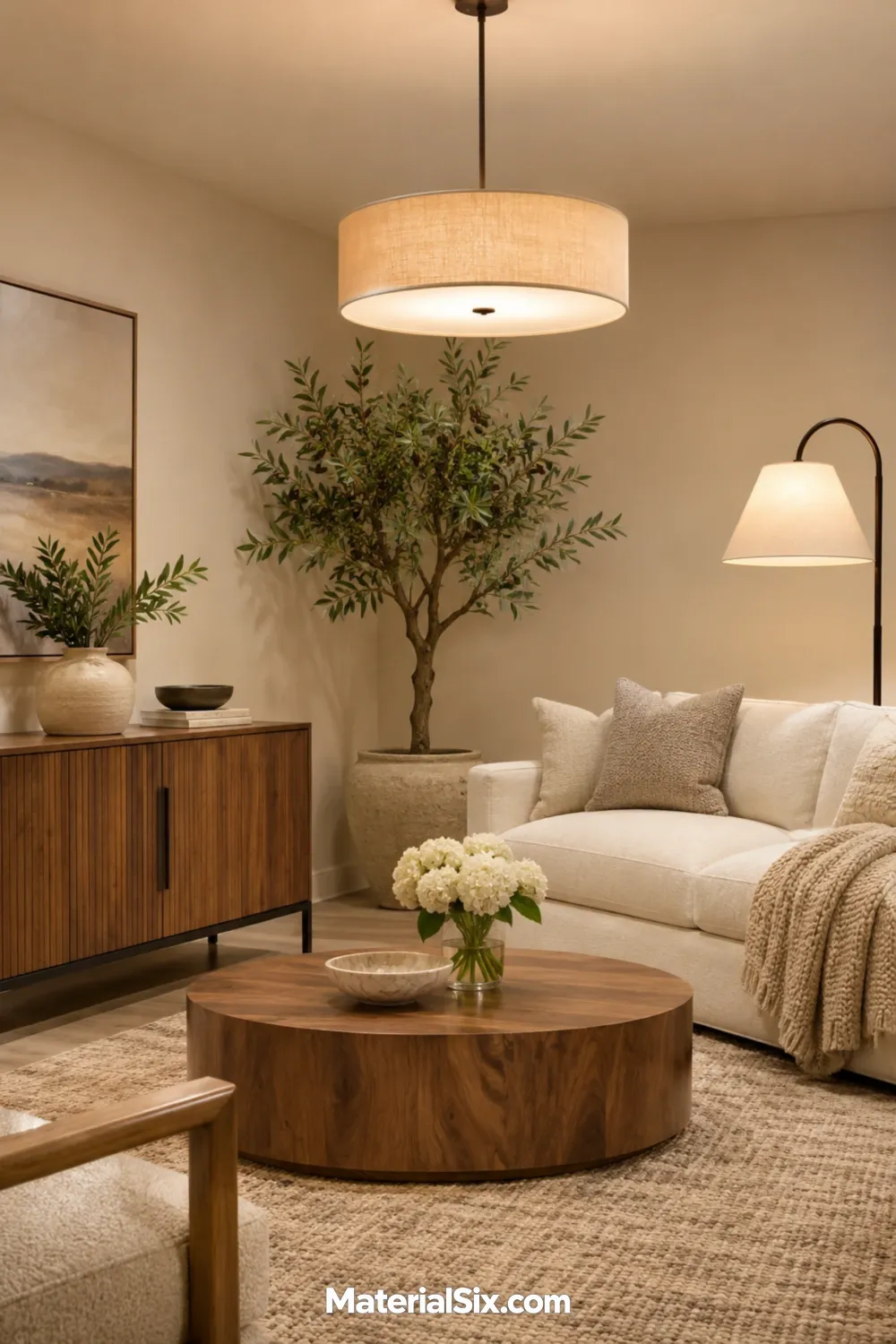
You can enjoy the shape of greenery without asking a living plant to cope with a sunless corner. A realistic artificial tree gives this room height beside the sofa, and its stone-look planter relates to the other natural textures. The branches soften the meeting point of two solid walls.
Check the tree from across the room before deciding on its position. A sparse, uneven silhouette often looks less stiff than a tightly packed ball of identical leaves. Leave room around the shade of a nearby lamp and keep branches out of your route. Dust the leaves regularly so the greenery stays part of a cared-for room.
15. Make a Dark Palette Feel Deliberately Cozy
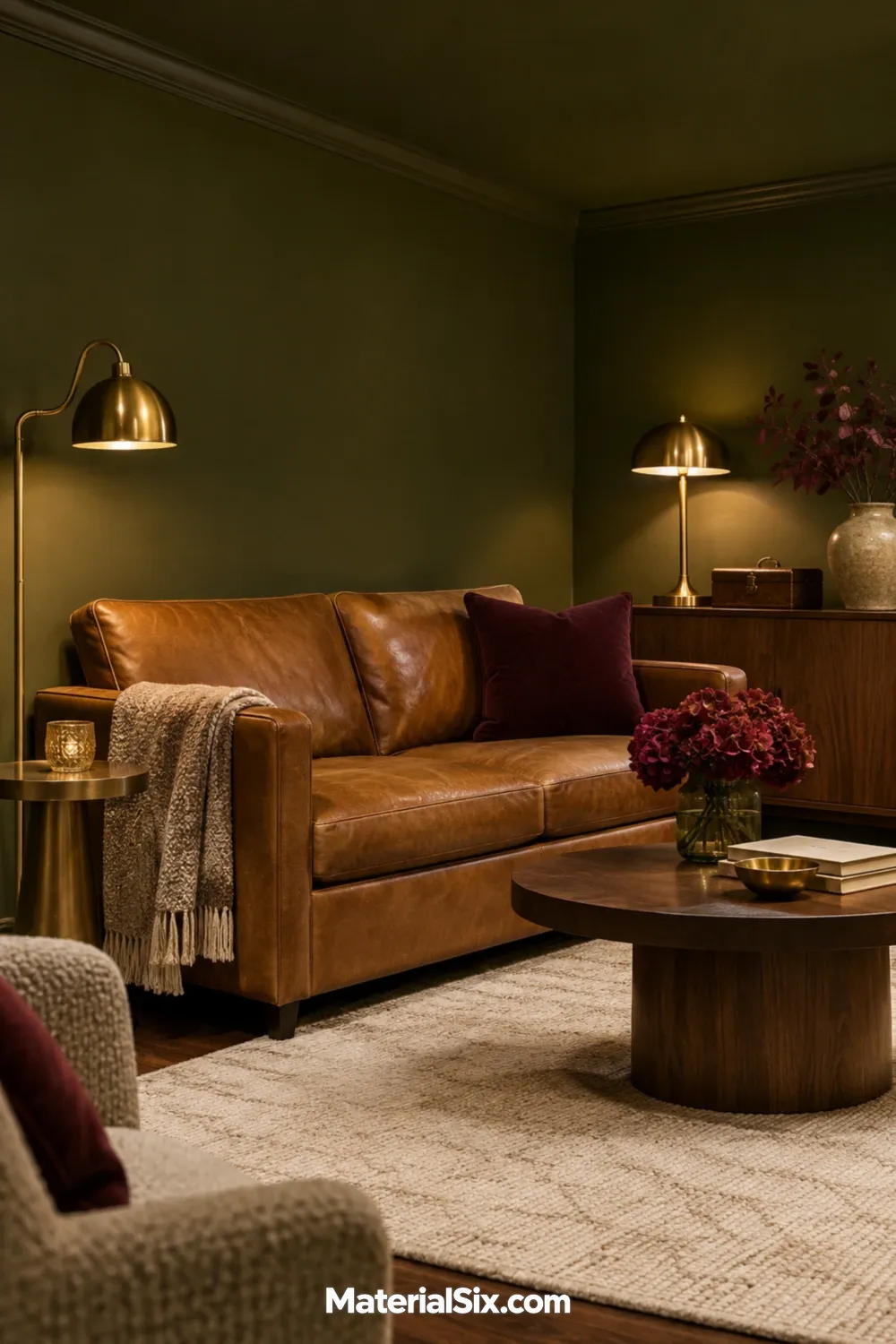
Sometimes the most satisfying choice is to lean into an enclosed room’s evening character. Deep olive walls, caramel leather, and brass lamps give this lounge a deliberate mood. The pale rug prevents the lower half of the room from becoming one continuous dark mass.
Try a large painted sample before committing to the full palette, including the ceiling. You will need light near the seats and in the room’s corners, rather than expecting dark paint to create coziness on its own. Keep a few contrasting surfaces in view, such as a cream throw or light artwork. Those differences help the furniture remain distinct when the lamps are dimmed.
Build Your Room Around the Way You Use It
Choose a direction before changing several things at once. For a light, open feeling, combine a warm pale wall color, visible floor space, and a generous rug. For an evening lounge, use a deeper palette with separate lamps near the seating. Both approaches benefit from texture and one clear focal point.
Start with the existing furniture layout. Walk from the entrance to each seat, and note where light is missing. Add or reposition a lamp before deciding that the wall color needs replacing. Then test one surface change, such as a rug, artwork, or mirror, from your usual seated view.
If you rent, movable lamps, cushions, a freestanding side table, and art installed with an approved method may offer the most flexibility. Save door changes, new wiring, and built-in cove lighting for a more involved project. The photos illustrate possible combinations; you do not need every object in a room to use its main idea.
Frequently Asked Questions
What color should I paint a living room with no windows?
Warm white, ivory, and pale greige are useful starting points for a lighter look. A deep olive or another rich color can also suit a cozy evening room. Test large samples with your actual lamps, since there is no daylight to balance the result.
Will a mirror make a windowless room brighter?
A mirror reflects existing light; it does not create more light. Place it where it reflects a lamp or a pleasant view within the room. Check the reflection while seated so it does not put an exposed bulb in your line of sight.
Can I use plants in a room with no windows?
Artificial greenery is the simpler decorative option when there is no daylight. Living plants need suitable light, so a genuinely windowless room would require an appropriate grow-light setup and care for the particular plant. A decorative lamp alone is not a substitute.
How do I make the room feel less closed in?
Keep routes through the furniture clear, add light beyond the center of the ceiling, and choose one larger focal point instead of many small decorations. A light rug or an open-base coffee table can also reduce the sense of a crowded middle.
Choose One Change You Will Notice Every Evening
Start with the part of the room that bothers you most. If the corners disappear, move a lamp. If the seating feels heavy, test a lighter rug or a clearer table silhouette. If the room lacks character, try larger artwork or a deliberate accent color. A windowless living room can feel inviting when its lighting and furnishings support the way you actually use it.