
You bring home a wood side table with beautiful grain, set it beside the sofa, and suddenly the newer pieces around it look a little more interesting. That is the appeal of decorating with secondhand finds. A worn frame, a substantial lamp, or an old rug can give a living room the depth that matching furniture alone sometimes misses.
The tricky part is choosing what deserves space. Too many small bargains can crowd a shelf, while one well-proportioned cabinet can make the whole room feel more settled. The expensive-looking effect comes from scale, condition, and thoughtful combinations, rather than the age of every object.
These thrifted and vintage living room decor ideas focus on pieces you can use, from art and lighting to storage and textiles. You will find ways to connect different finishes, mix old furniture with modern seating, and make room for character without losing everyday comfort. Start with the area that feels unfinished, then build around one find you really like.
1. Let a Gilded Mirror Anchor the Room
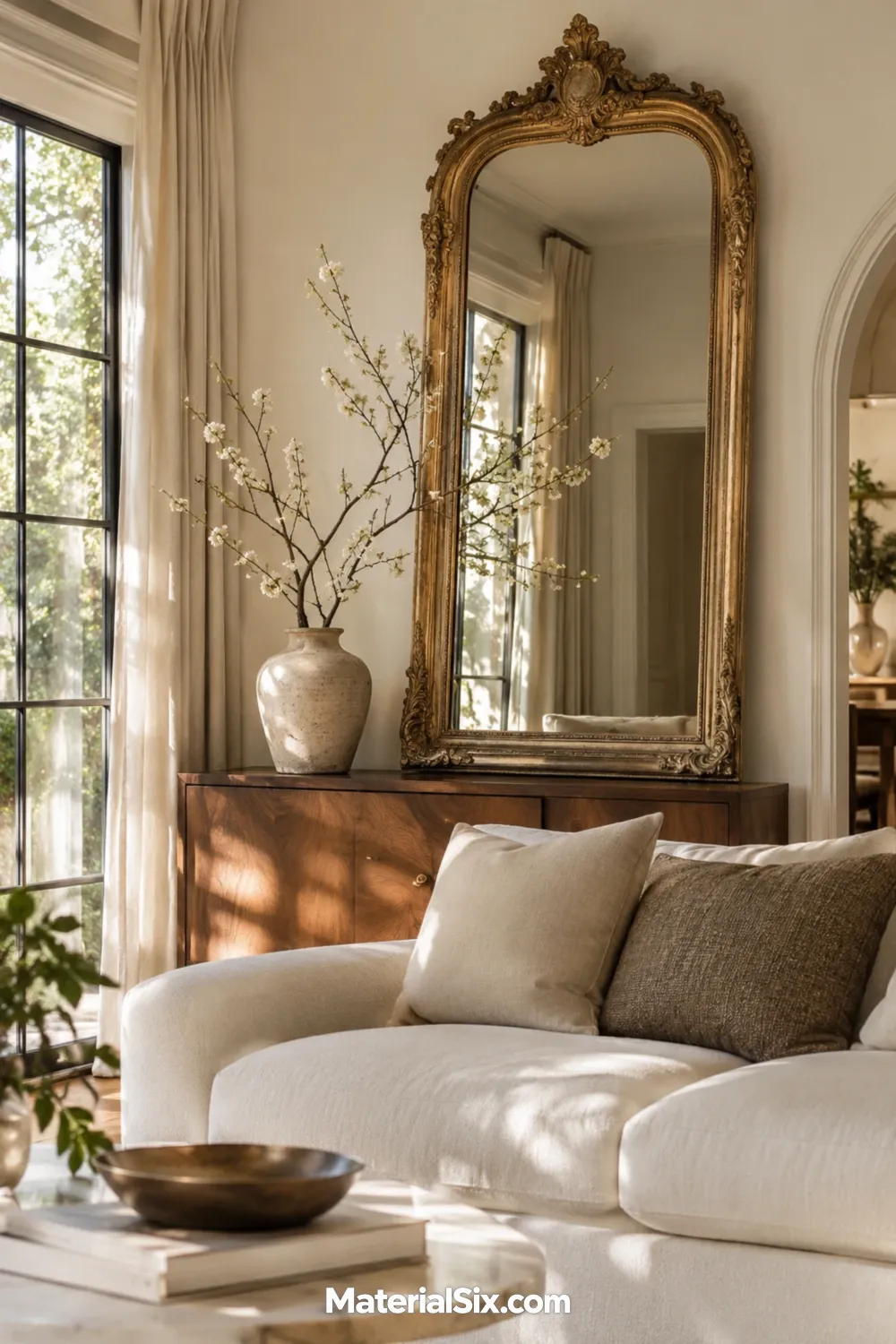
A tall mirror with a worn gold frame gives a plain wall an architectural focal point. Its curved crest and softened finish add detail without requiring a room full of antiques. Place it above a console where the reflection catches a window, artwork, or an attractive corner.
Measure the frame against the furniture below before you buy. A narrow mirror can look lost over a wide cabinet, while an oversized one needs visual breathing room. Check the glass and backing, then use mounting hardware suited to the mirror and wall. Keep nearby accessories simple so the frame remains the main event.
2. Ground the Seating with a Faded Vintage Rug
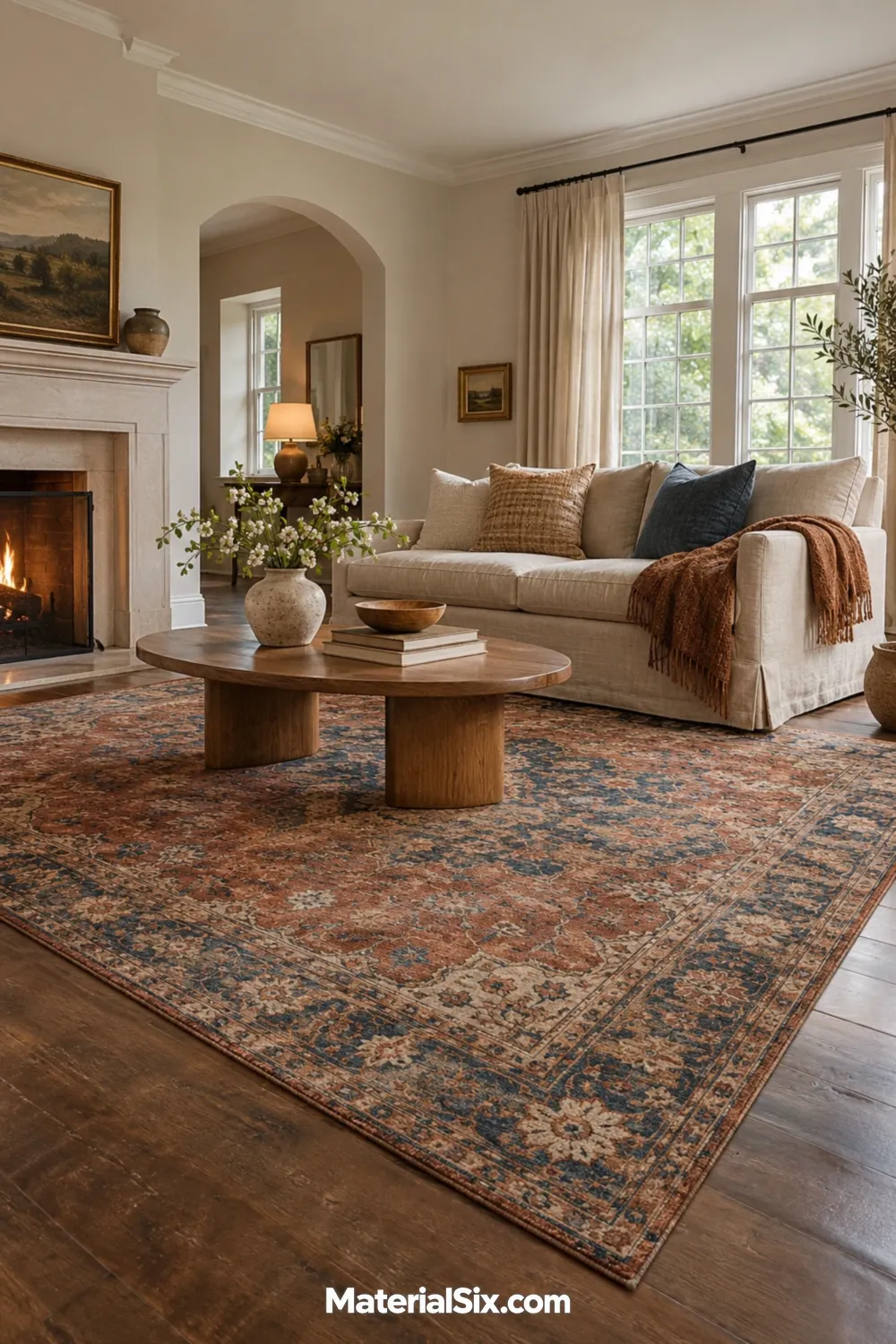
Start at floor level if your furniture feels disconnected. A faded patterned rug can tie a sofa, armchair, and coffee table together through repeated rust, blue, or olive tones. The softened pattern also gives newer upholstery a less showroom-like setting.
Choose a size that reaches beneath the front legs of your main seating rather than a small rectangle floating between pieces. Before purchasing secondhand, inspect the underside, edges, and worn areas, and factor cleaning into your budget. Add a suitable rug pad for your floor. If the rug is visually busy, let your largest upholstery pieces stay relatively quiet.
3. Choose One Substantial Wood Cabinet
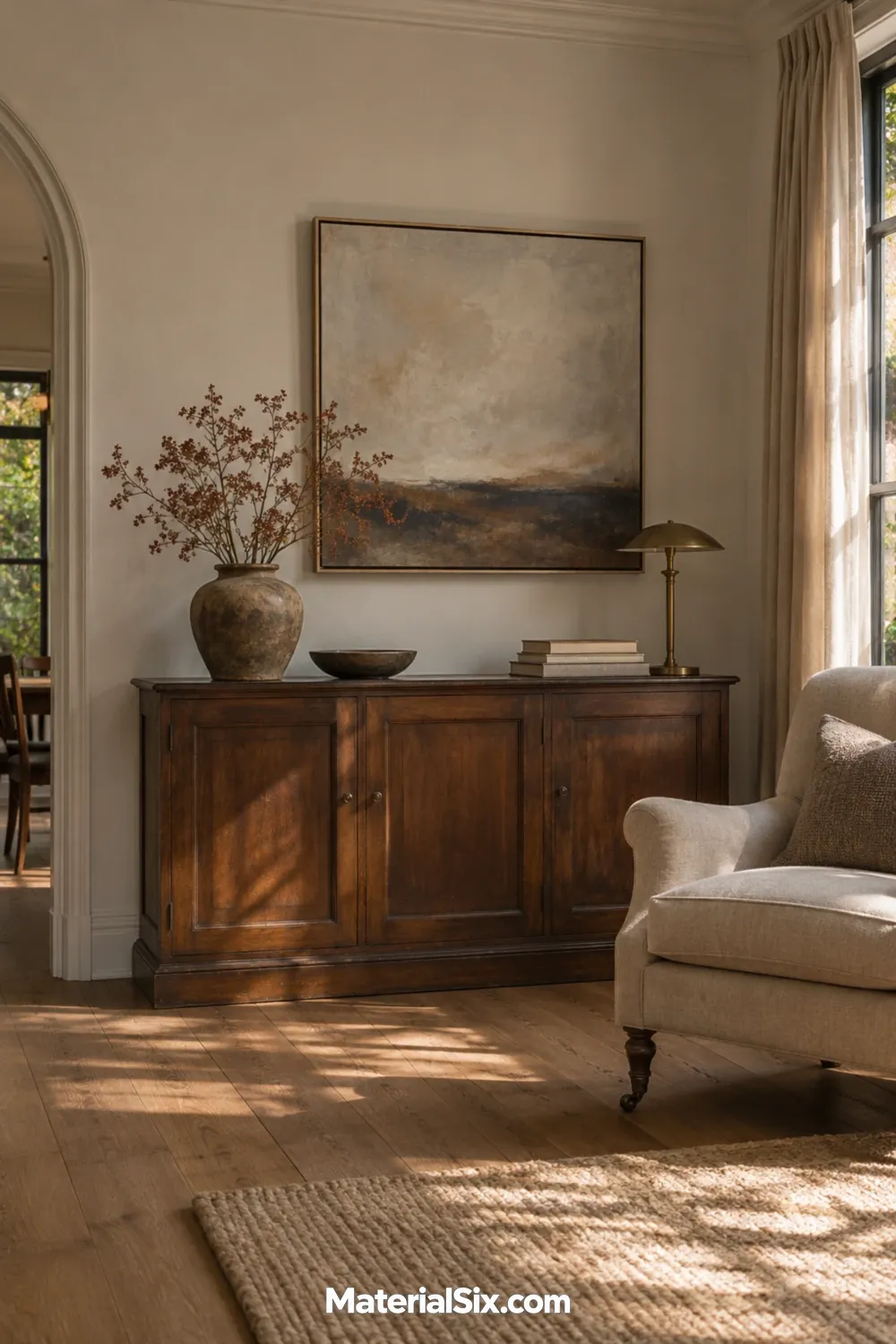
One substantial wood cabinet can do more for a living room than a shelf full of little finds. Look for attractive proportions, readable grain, and doors or drawers you will actually use. A dark finish gives pale walls and upholstery a useful point of contrast.
Open everything before committing. Check whether drawers slide, doors align, and the piece will fit through your entry. Account for delivery and any repairs in the total cost. At home, leave some of the top visible instead of covering the grain with accessories. A single large artwork above it helps the arrangement feel settled rather than crowded.
4. Build a Collected Gallery with Mismatched Frames
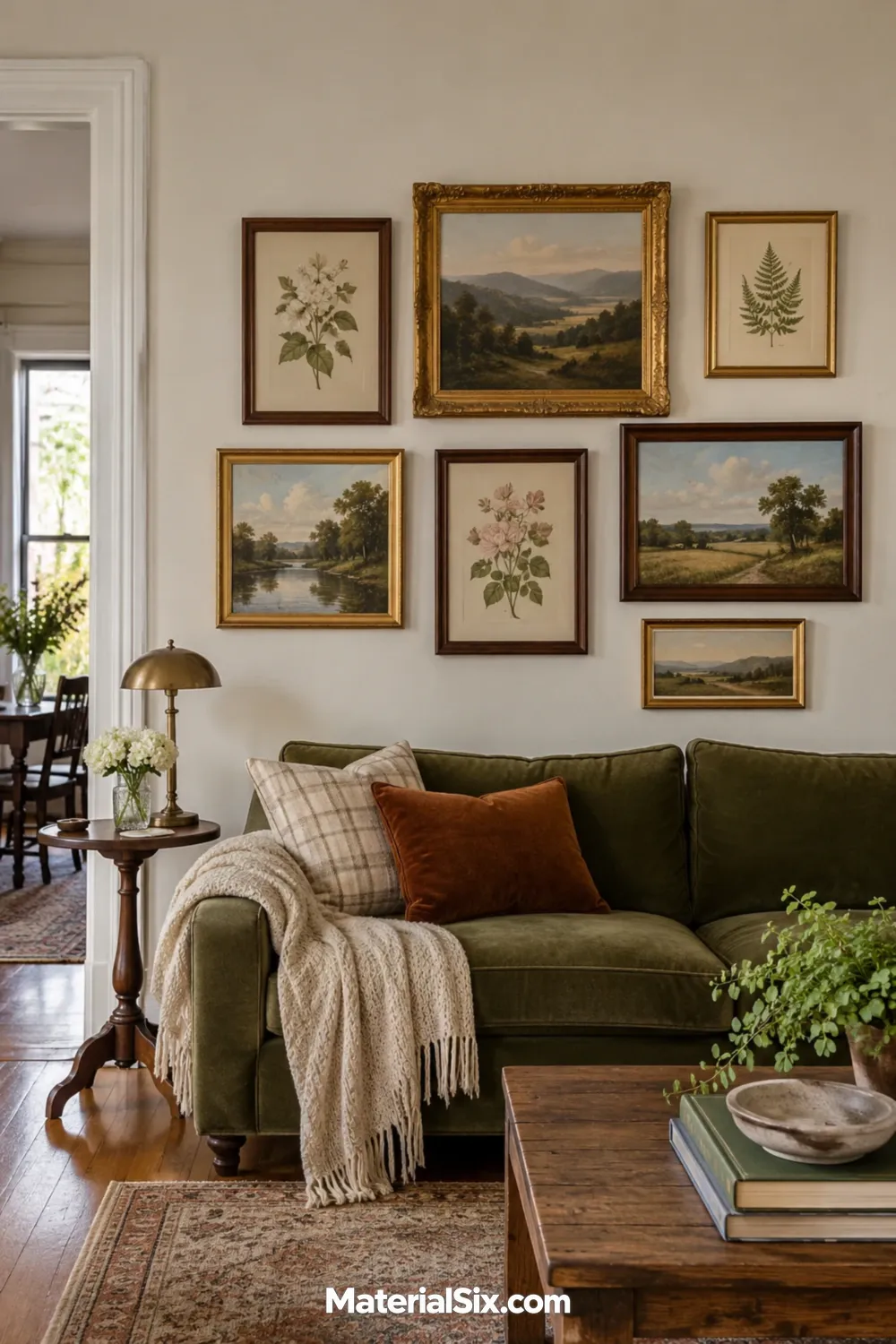
Matching every frame is unnecessary when the artwork shares a gentle palette. Combine a landscape, botanical studies, and a small drawing in wood and aged gold frames. Repeating those two finishes gives the collection a connection while keeping its individual character.
Arrange the group on the floor first, using your sofa width as a guide. Keep the spaces between frames reasonably consistent, then use paper templates to test the layout on the wall. If a thrifted frame contains artwork you dislike, consider the frame separately. Check the glazing, backing, and hanging points before deciding whether the find is worth updating.
5. Give a Ceramic Lamp a Tailored Shade
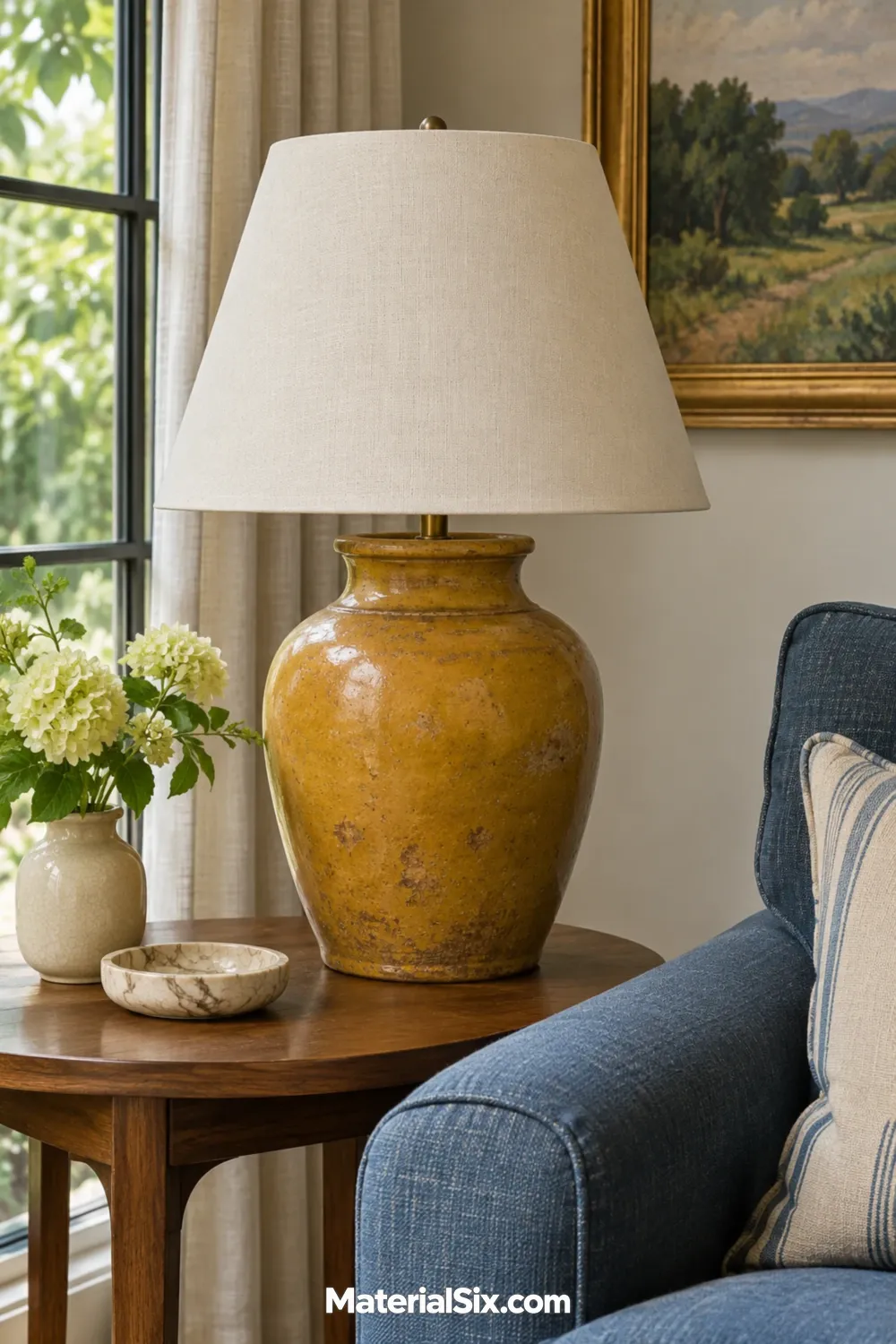
A sculptural ceramic lamp often needs less decoration around it than a tiny accent light. An ochre, cream, or muted green base brings color and texture to an end table, while a fresh linen shade can make the whole piece feel more considered.
Bring the base measurements when shopping for a shade and check the fitter type. The shade should cover the socket area without swallowing the base. Examine secondhand electrical components and have questionable wiring checked before use. Pair the lamp with one small object or a short book stack, leaving enough table space for the things you reach for every evening.
6. Repeat Aged Brass in Small Doses
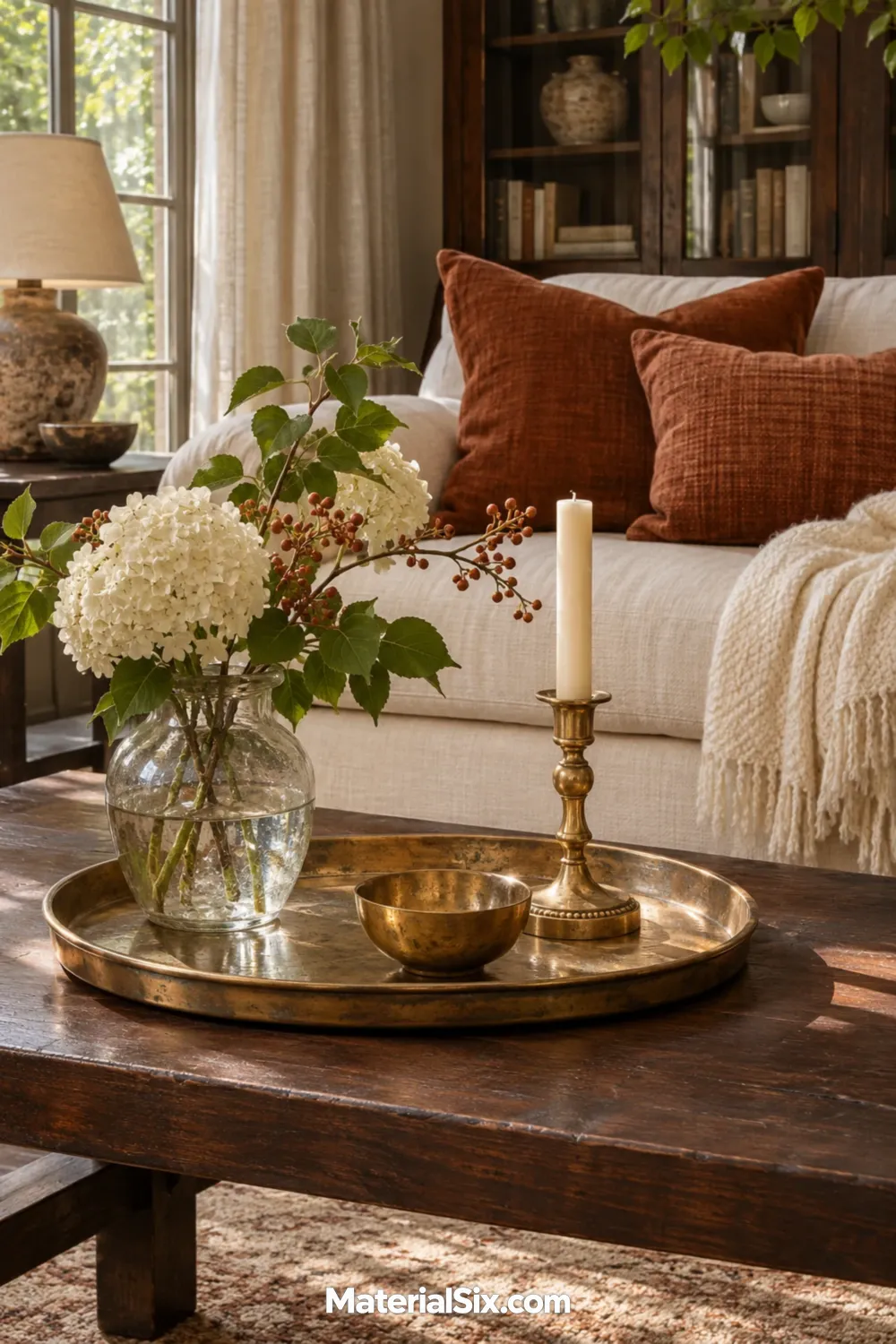
A little aged brass can connect otherwise unrelated thrifted pieces. Try a tray on the coffee table, a candlestick on a shelf, and a small bowl near the sofa. Their shared warmth creates a visual rhythm without turning every surface into a metal display.
Look at the finish before reaching for polish. Some pieces are plated or lacquered, and aggressive cleaning can change their appearance. If you like the patina, a gentle dusting may be enough. Balance reflective accents with wood, linen, or ceramic, and leave gaps between groupings. The contrast makes each small metallic detail easier to appreciate.
7. Recover a Vintage Accent Chair
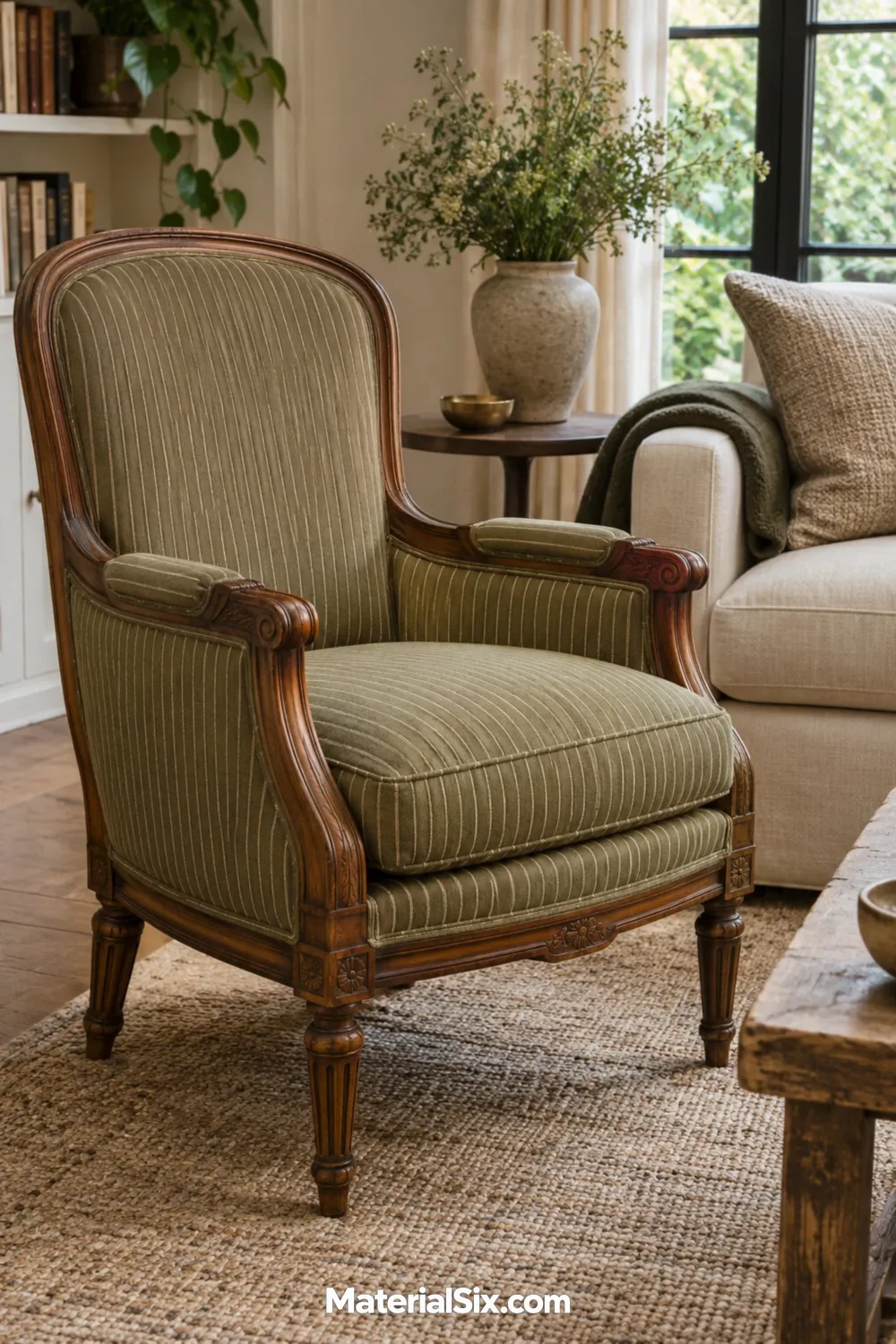
An older chair with a distinctive wood frame can bring a shape that newer seating lacks. A restrained stripe keeps carved arms and legs visible without making the chair compete with every pattern in the room. Olive upholstery also sits comfortably beside cream, walnut, and faded red.
Before buying, sit in the chair and examine its joints, springs, and upholstery condition. Get a reupholstery estimate before assuming the project will be inexpensive. Fabric, padding, and skilled labor can change the calculation. Choose a chair you like for its proportions, then place it where the frame can be seen from more than one angle.
8. Layer Small Art on a Picture Ledge
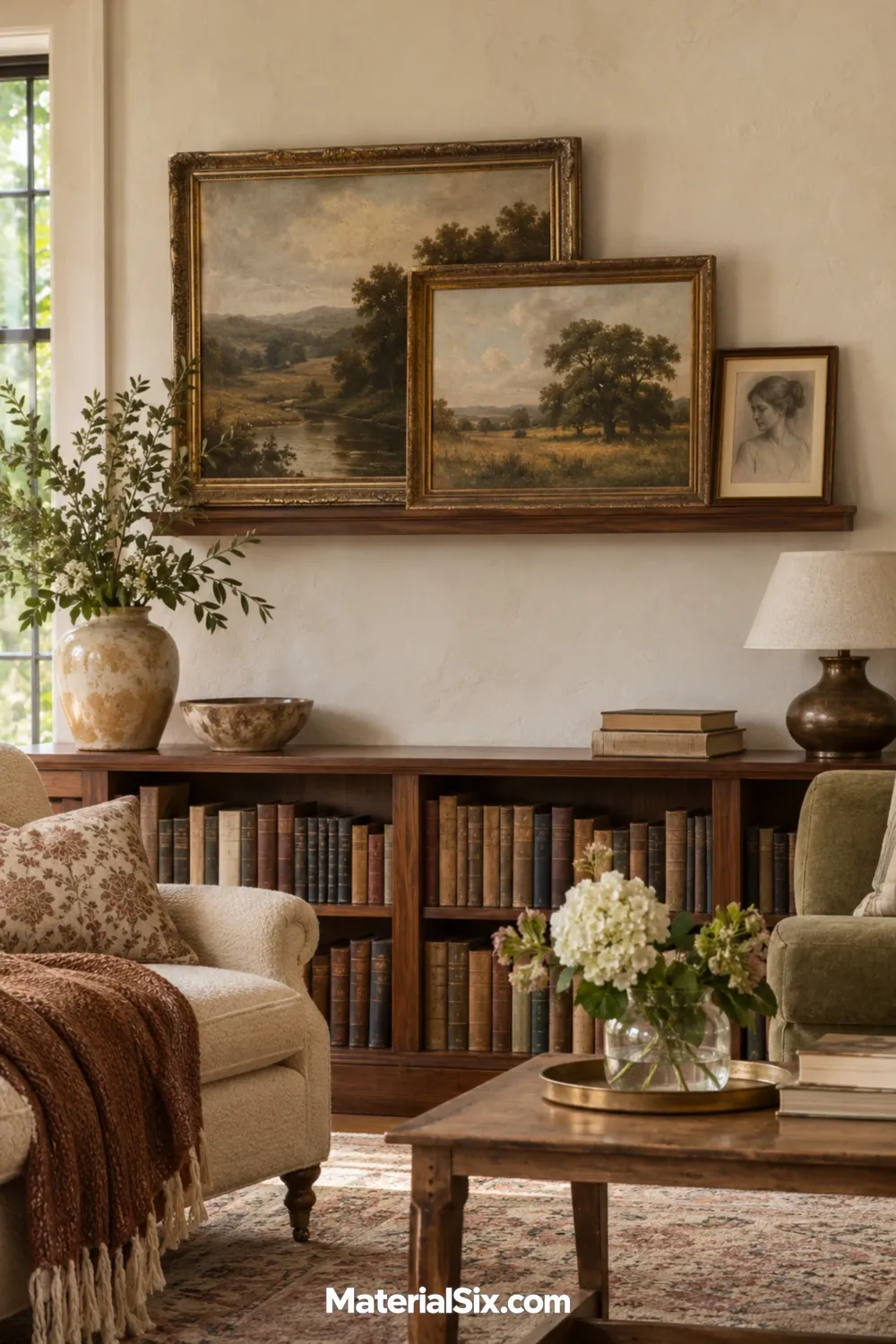
Small paintings can look stranded when hung alone on a broad wall. A picture ledge lets you group them into one composition, with a larger landscape behind and a smaller drawing or portrait in front. Keep the overlap shallow enough that each subject remains recognizable.
Use a ledge rated for the weight and depth of your frames, and secure it appropriately. Try a limited palette of muted greens, browns, and cream to connect varied subjects. Leave empty space at an end instead of filling the shelf from edge to edge. This arrangement also makes it easier to rotate finds as your collection grows.
9. Use a Flat-Topped Trunk as a Coffee Table
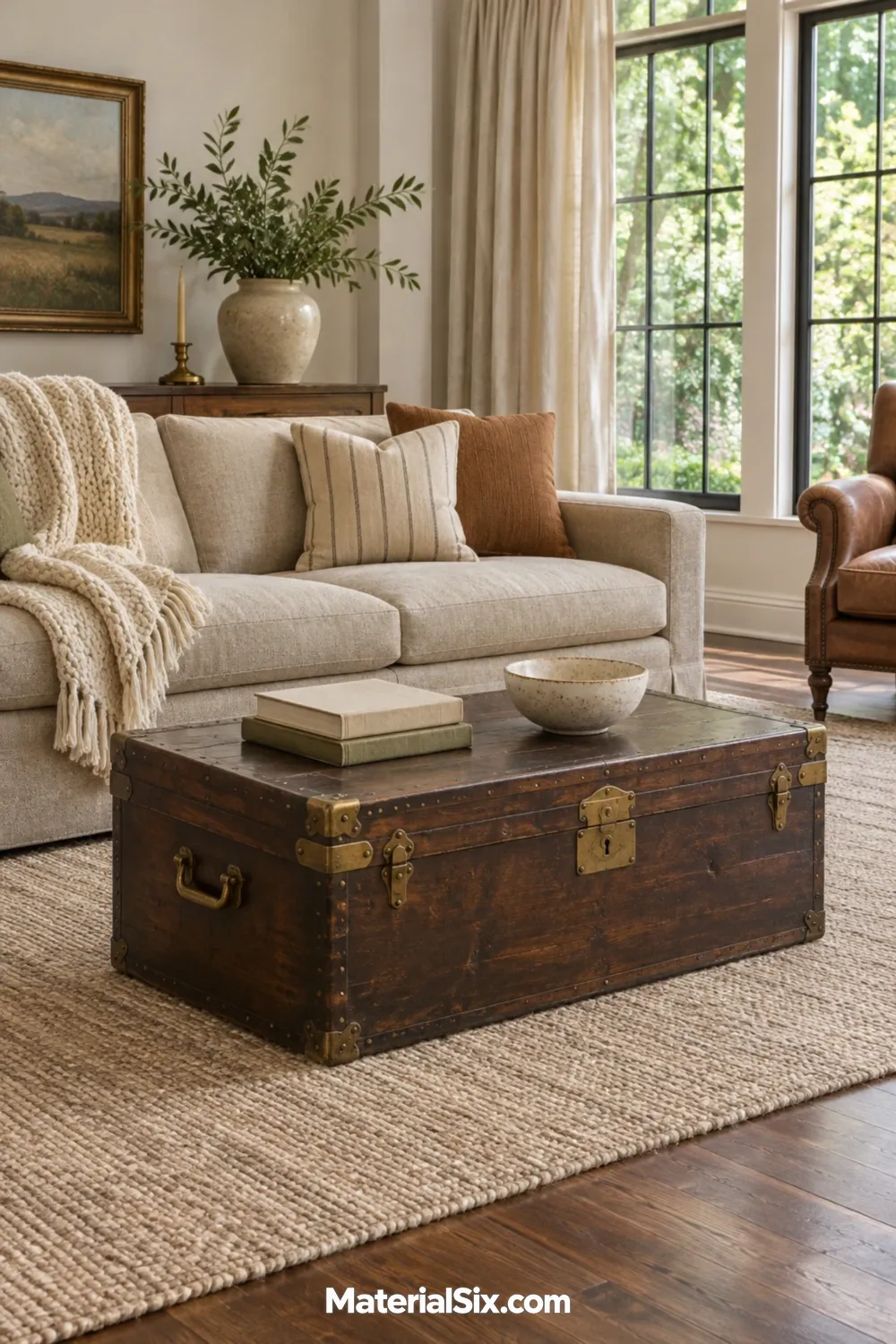
A flat-topped trunk gives a seating area storage and a strong block of wood texture. Worn hardware and darker edges supply the decorative detail, so you can keep the top simple with a bowl and a couple of books. Choose one low enough to use comfortably from your sofa.
Check that the top is level and the base is stable before bringing it home. A trunk with fragile covering or a strongly curved lid is less practical for daily use. Consider how often you need to open it, too. Store occasional-use textiles inside rather than items that require clearing the tabletop several times a day.
10. Add Vintage Textile Pillow Covers
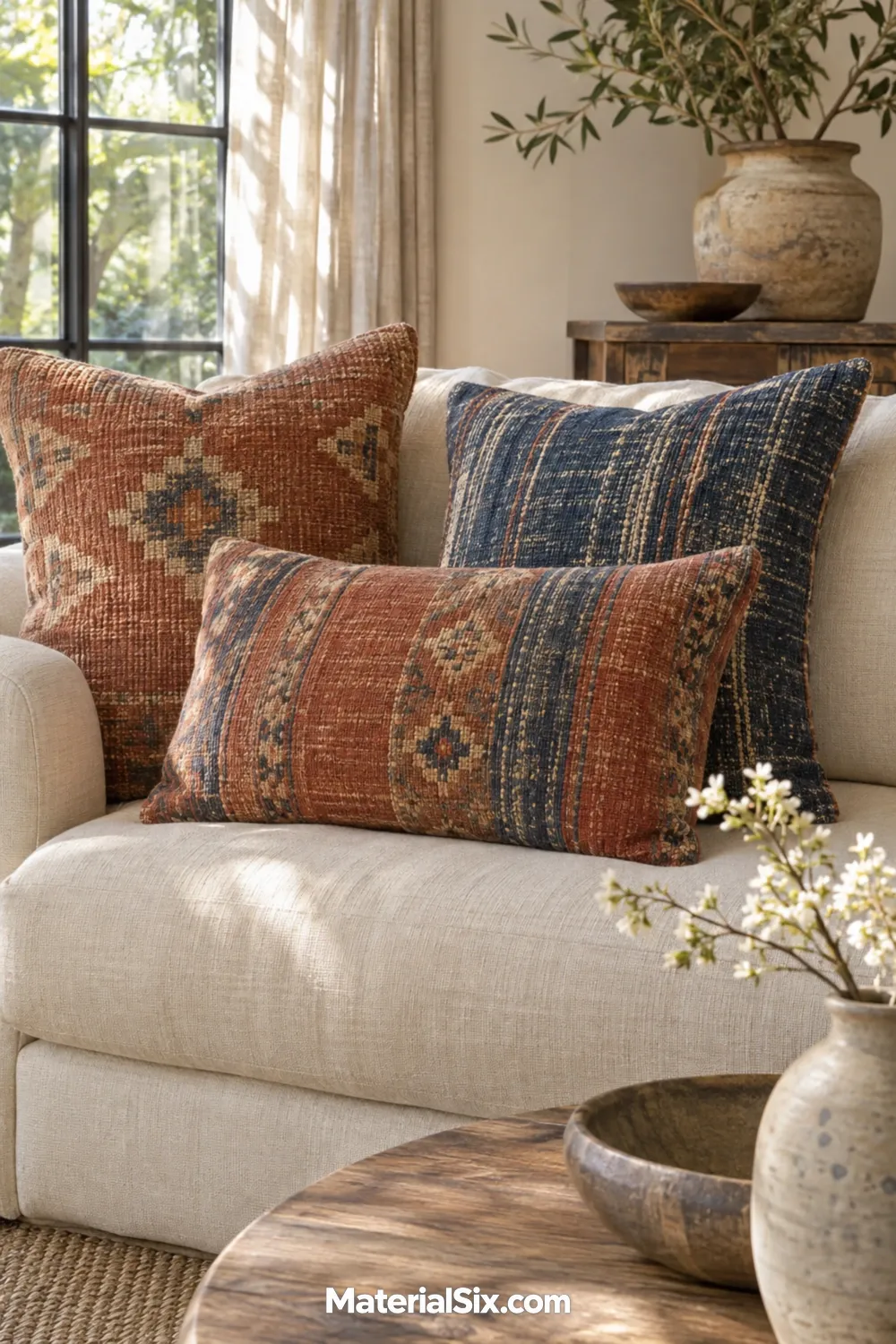
You can introduce vintage texture without replacing the sofa. Pillow covers made from older woven textiles bring softened color, irregular threads, and small-scale pattern to plain upholstery. Terracotta and indigo work especially well when one of those colors already appears in your rug or art.
Inspect the fabric for weak spots, loose seams, and fading before choosing a cover. Vintage material can need gentler care than your everyday washable cushions. Use inserts that fill the corners without straining the seams. Start with two patterned covers and keep another cushion solid, giving the eye a place to rest between the different weaves.
11. Group Vintage Glass by Color
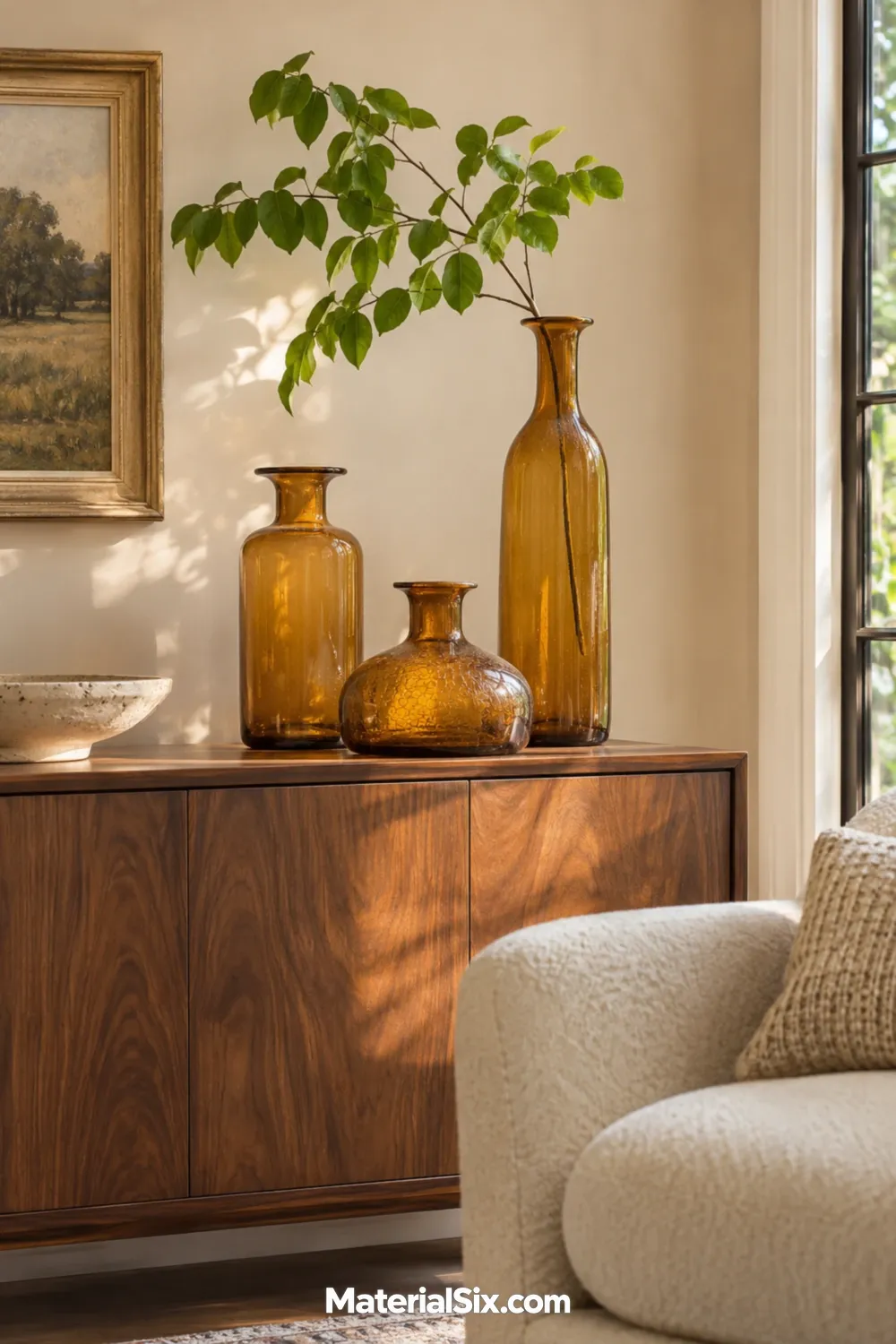
Three amber vessels can look more intentional than a mixed assortment scattered across the room. Choose different heights and silhouettes, then group them on a wood cabinet where daylight can pass through the glass. The shared color does the coordinating work for you.
Keep the tallest vessel toward the back and let the smaller shapes overlap slightly from your main viewing angle. One branch is often enough; every vase does not need flowers. Examine rims and bases for chips, and use a liner if an older vessel’s ability to hold water is uncertain. Leave the neighboring surface clear so the translucent shapes remain visible.
12. Style Secondhand Books as Useful Objects
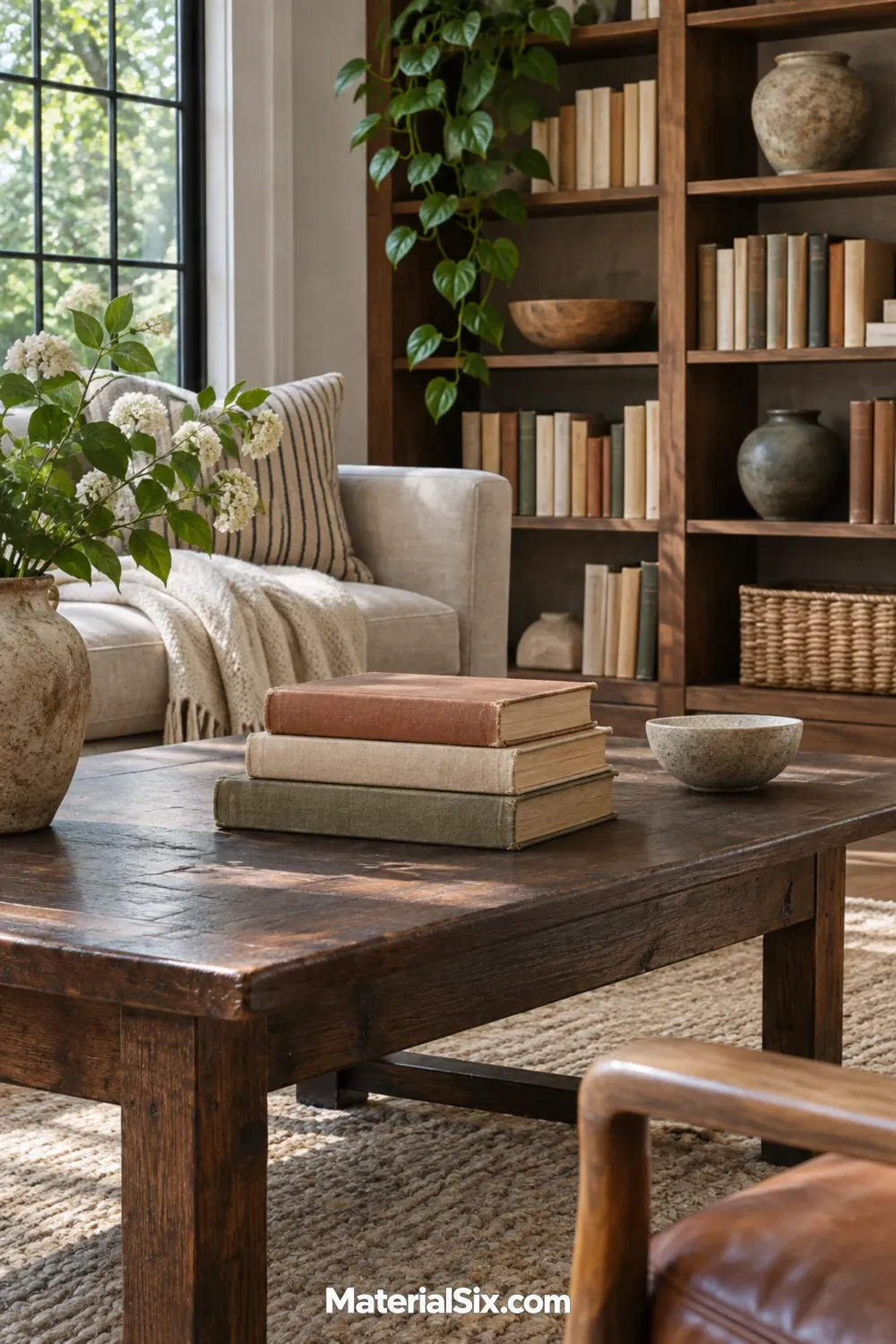
Books add scale and a softer texture to hard surfaces, but choose titles you would enjoy opening. Worn cloth covers in muted colors can connect a coffee table to the shelves behind it. A small stack also gives a low bowl or object a little extra height.
Keep the stack short enough to move with one hand when you need the table. Stand most books upright on shelves so the room still functions as a reading space. Check secondhand books for moisture damage and persistent odors before buying. You do not need matching spines; a few related tones and visible breathing room are enough.
13. Swap a Generic Side Table for a Pedestal
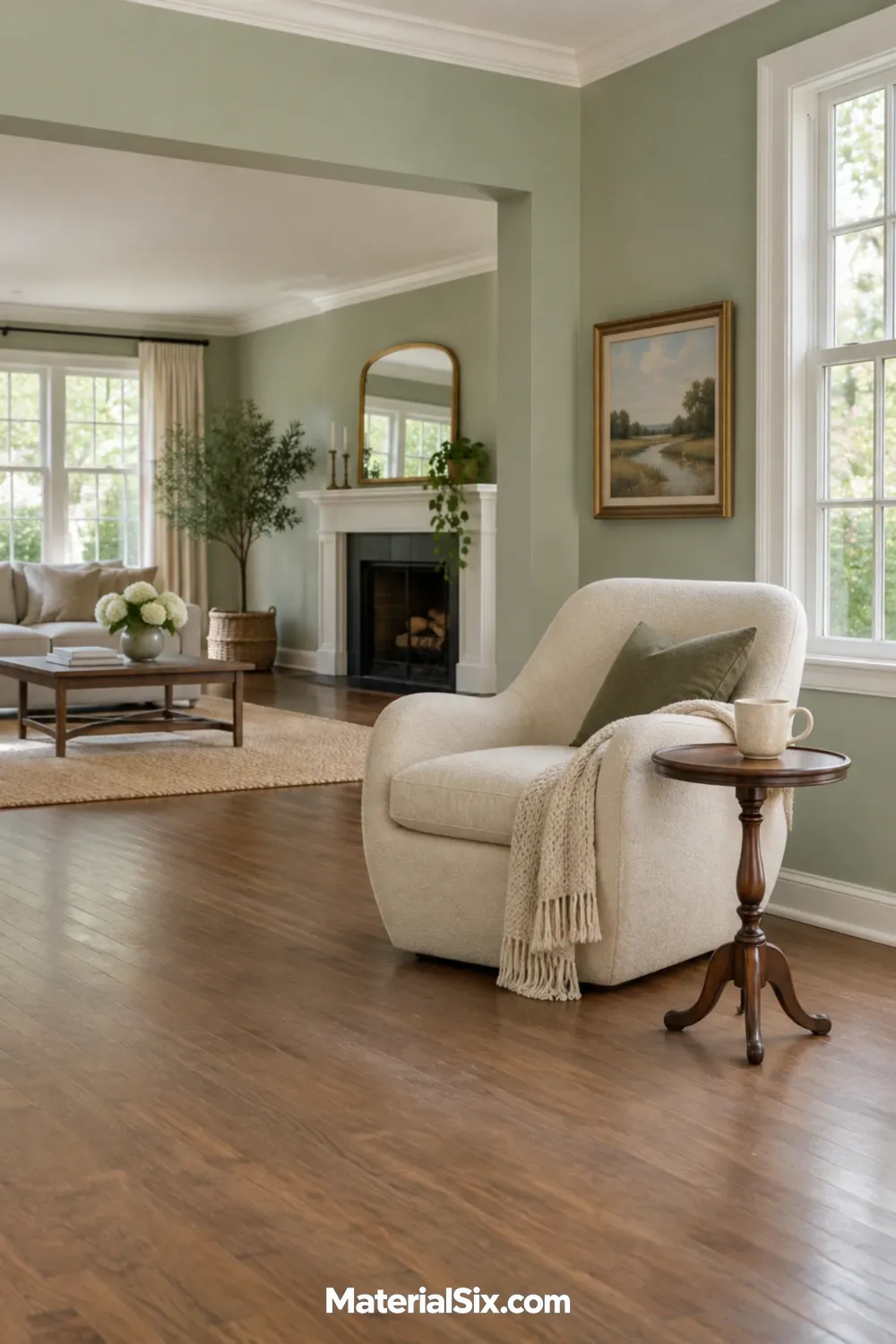
A small pedestal table brings a curved silhouette into a room dominated by straight sofa arms and rectangular cabinets. Its narrow base can also leave more visible floor around an armchair, helping a reading corner feel less packed.
Measure the chair arm height before shopping. A table that is awkwardly high or far below the seat is less useful, however attractive its turned base may be. Check for wobble and make sure the top has space for your usual drink or book. Let the pedestal shape show by keeping the tabletop lightly styled, and use a coaster to protect an older finish.
14. Hide Everyday Clutter in a Vintage Basket
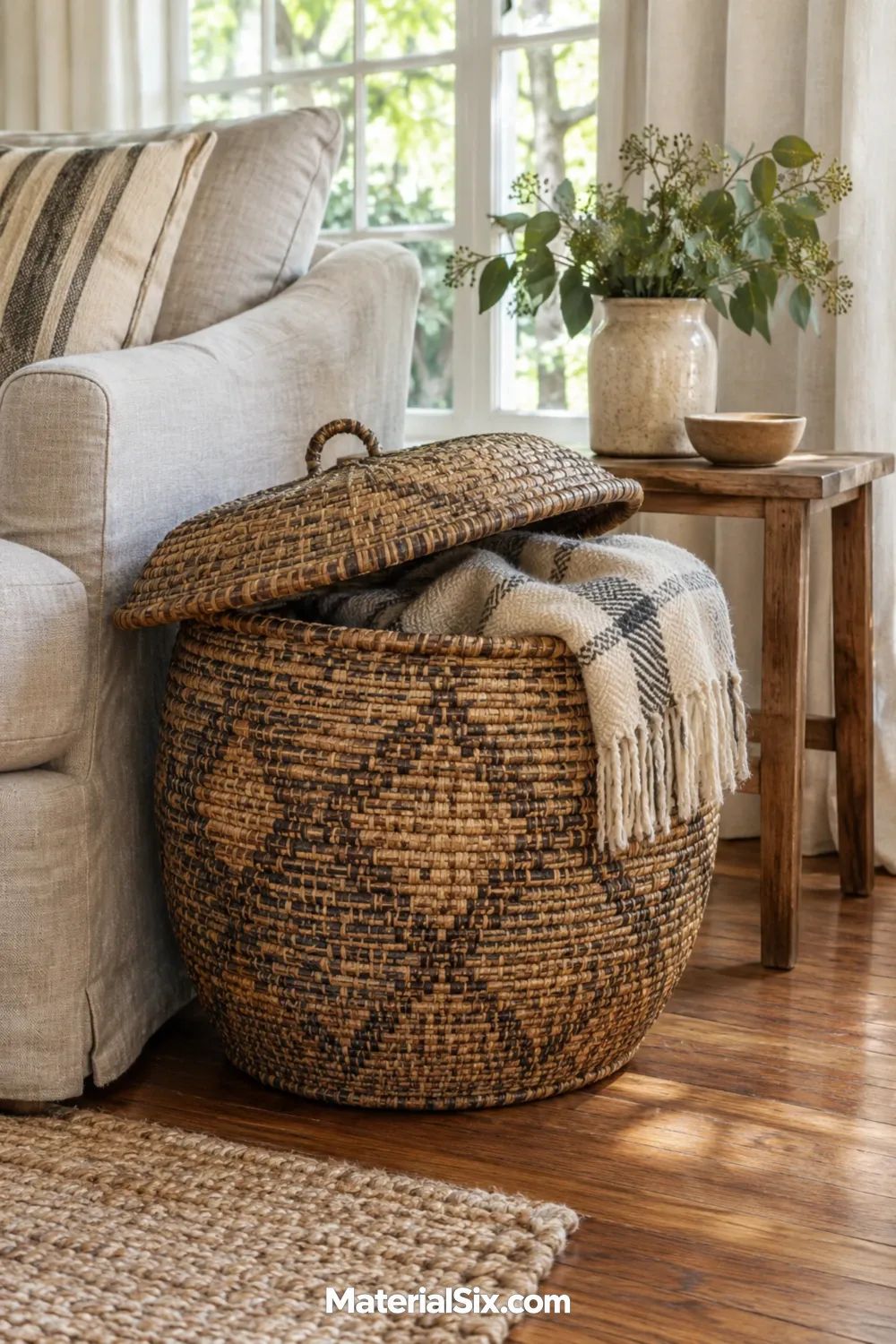
A large woven basket gives blankets and loose living room items a destination while adding another material to the room. Look for a lid if you want the contents out of sight, or choose an open shape for throws you use every evening.
Run your hand carefully around the rim and inspect the base for broken weaving. An attractive basket that snags fabric will create more work than it solves. Size it for a specific spot beside the sofa, keeping walking routes clear. A washable liner can separate delicate textiles from rough fibers, while an occasional gentle vacuum helps remove dust from the weave.
15. Hang One Oversized Secondhand Landscape
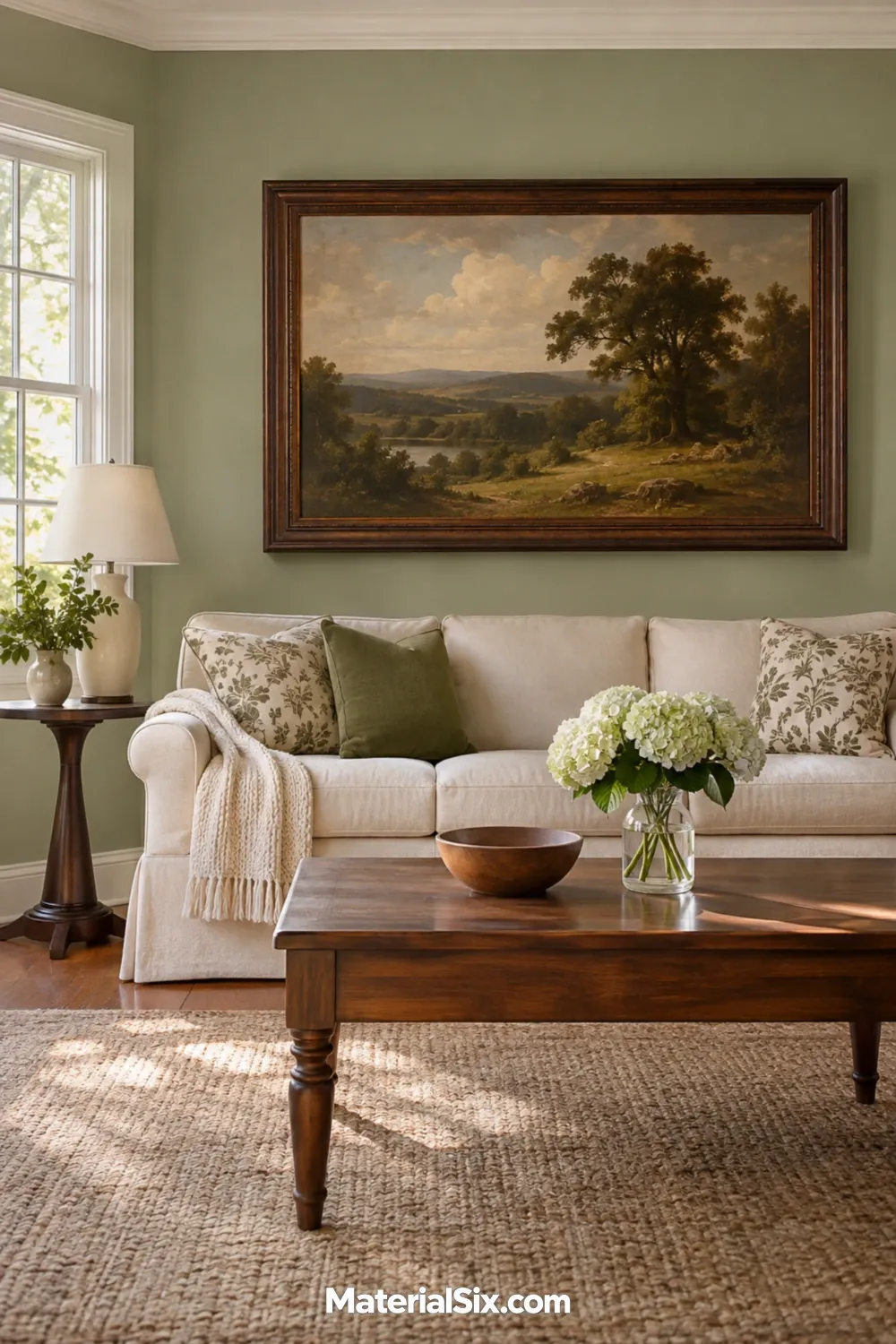
One large landscape can establish the mood of an entire seating area. Muted trees, sky, and earth tones give you several colors to repeat in pillows or a rug without needing a strict theme. A substantial frame also gives the wall a clear focal point.
Compare the artwork’s width with the sofa and leave visible wall around it. Hold a paper template in place before choosing the hanging height. Look closely at the painting and frame for damage you are comfortable living with; repairs can be specialized. Keep adjacent wall decor quieter so the large piece has space to carry the composition.
16. Give a Tarnished Silver Tray a New Job
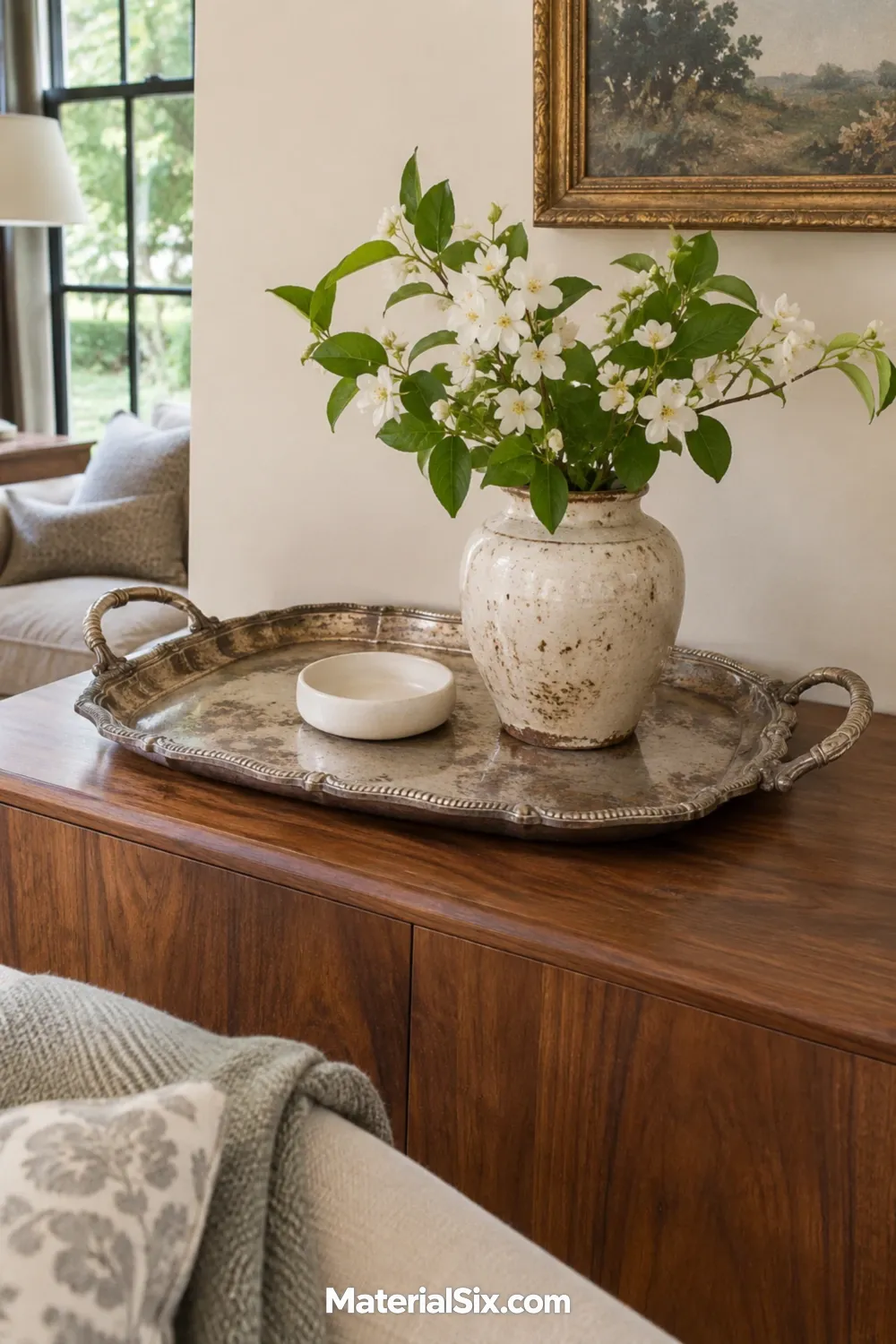
A silver serving tray does not have to stay in a dining room. On a living room console, its raised edge gathers a vase and a small catchall into one arrangement. Tarnish can provide a muted finish that feels comfortable beside worn wood rather than overly formal.
Choose a tray with a stable base and enough depth for the objects you plan to use. Put felt pads underneath if the underside could scratch your furniture. Identify the material before cleaning, since plated pieces need different care from solid silver. Keep the grouping practical by leaving room for keys, reading glasses, or another item you actually use.
17. Bring in a Small Vintage Stool
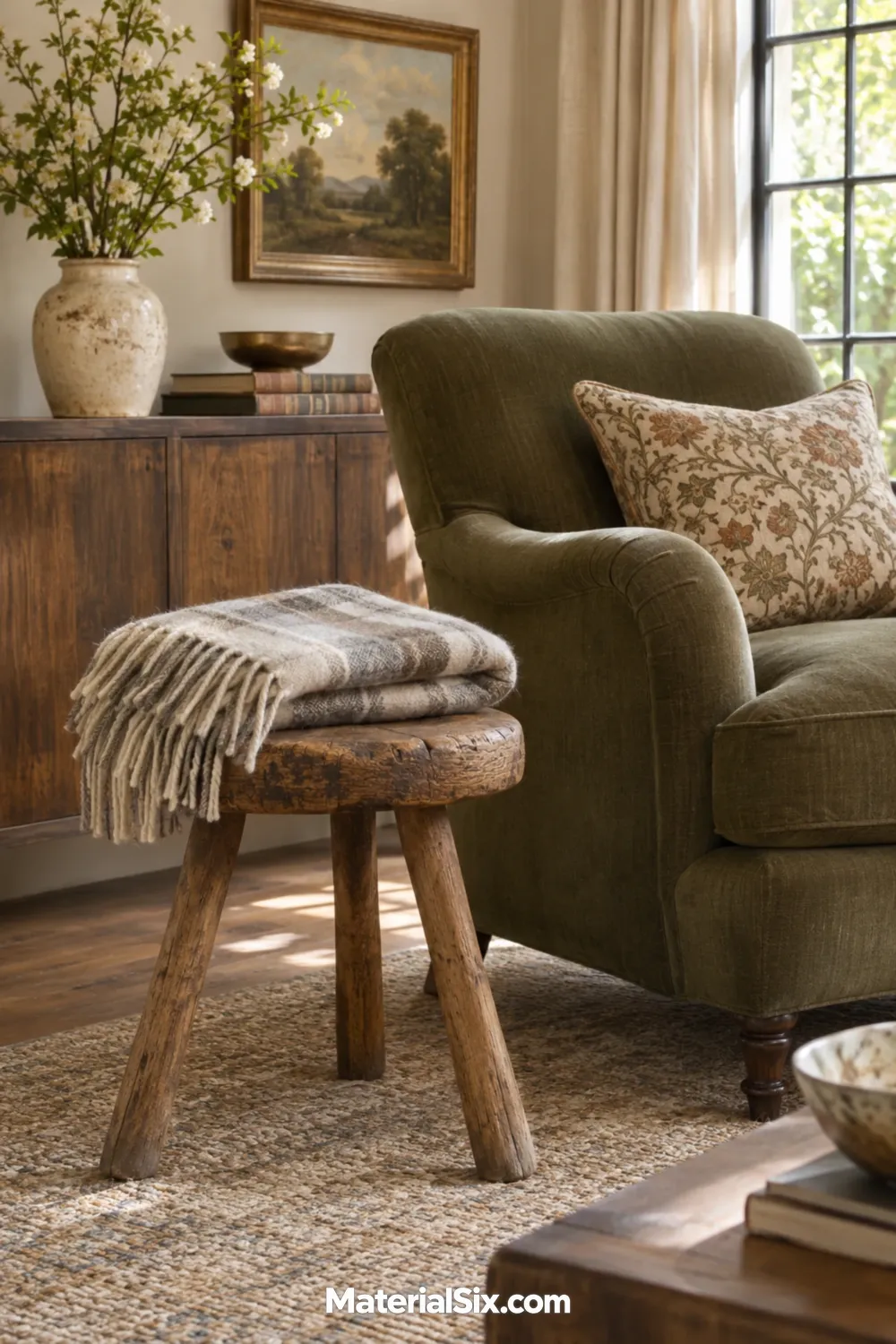
A low wood stool can fill an awkward little gap beside a chair without the bulk of another cabinet. Its worn seat and simple legs offer a rustic counterpoint to upholstered furniture. Use it as a display perch for a folded throw or a small stack of reading material.
Check its stability and condition rather than assuming an old stool is suitable for sitting or standing. For decoration, a level top and secure joints still matter. Keep it outside the main path through the room, where its low height is easier to notice. One compact piece can add character without asking you to rearrange the whole seating group.
18. Display a Small Piece of Architectural Salvage
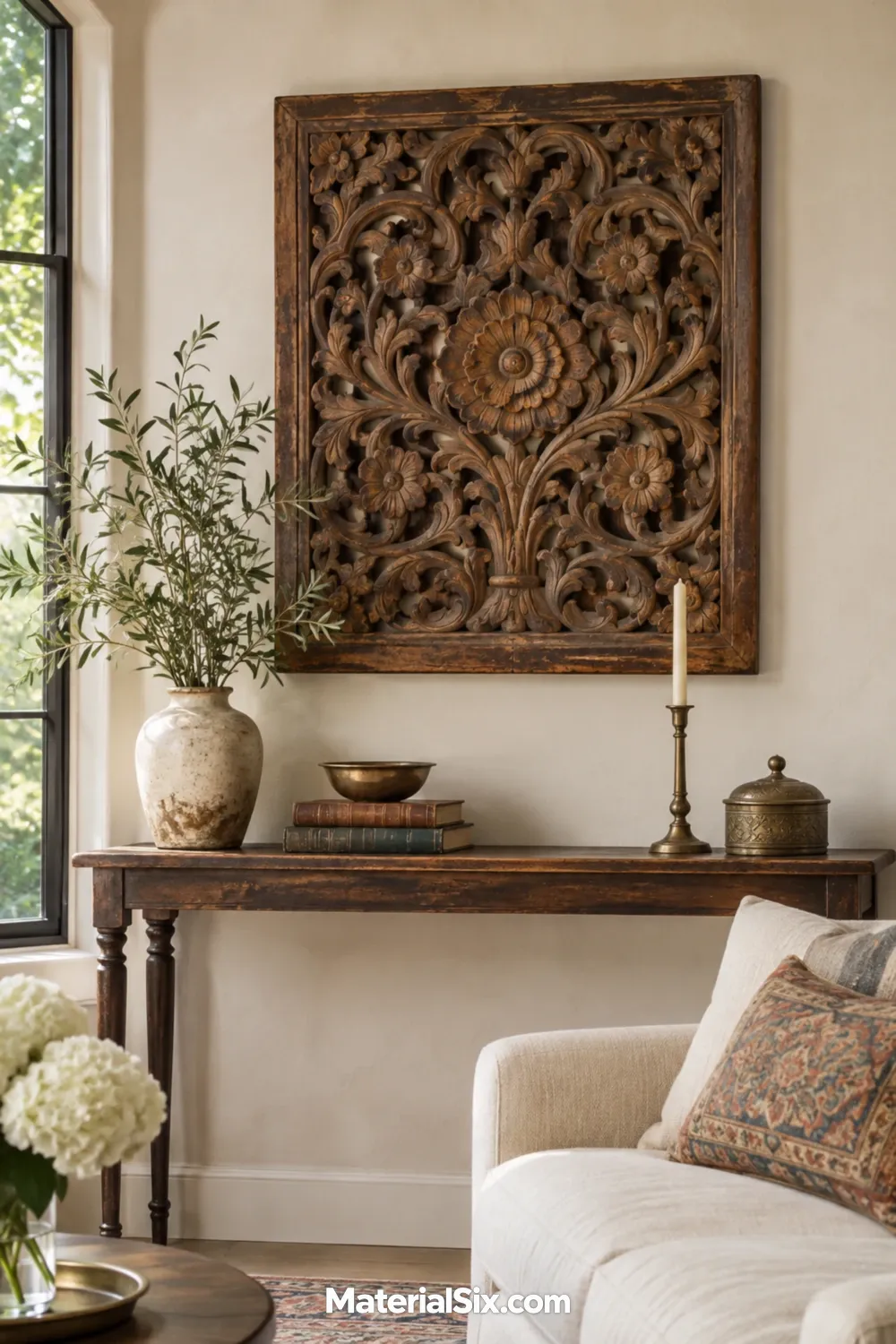
Carved wood salvage introduces relief and shadow that a flat print cannot. A single decorative panel above a narrow console can serve as wall art, especially when its aged wood connects with a nearby table or cabinet. Give the carving a plain backdrop so its outline reads clearly.
Choose a manageable size and inspect the condition, finish, and mounting options before purchasing. Avoid loose or deteriorating material that would need more restoration than you want to undertake. Have substantial pieces mounted with suitable support. Keep the console arrangement low and sparse, allowing the carved panel to remain the focus instead of competing with tall accessories.
19. Introduce One Vintage Pattern at a Time
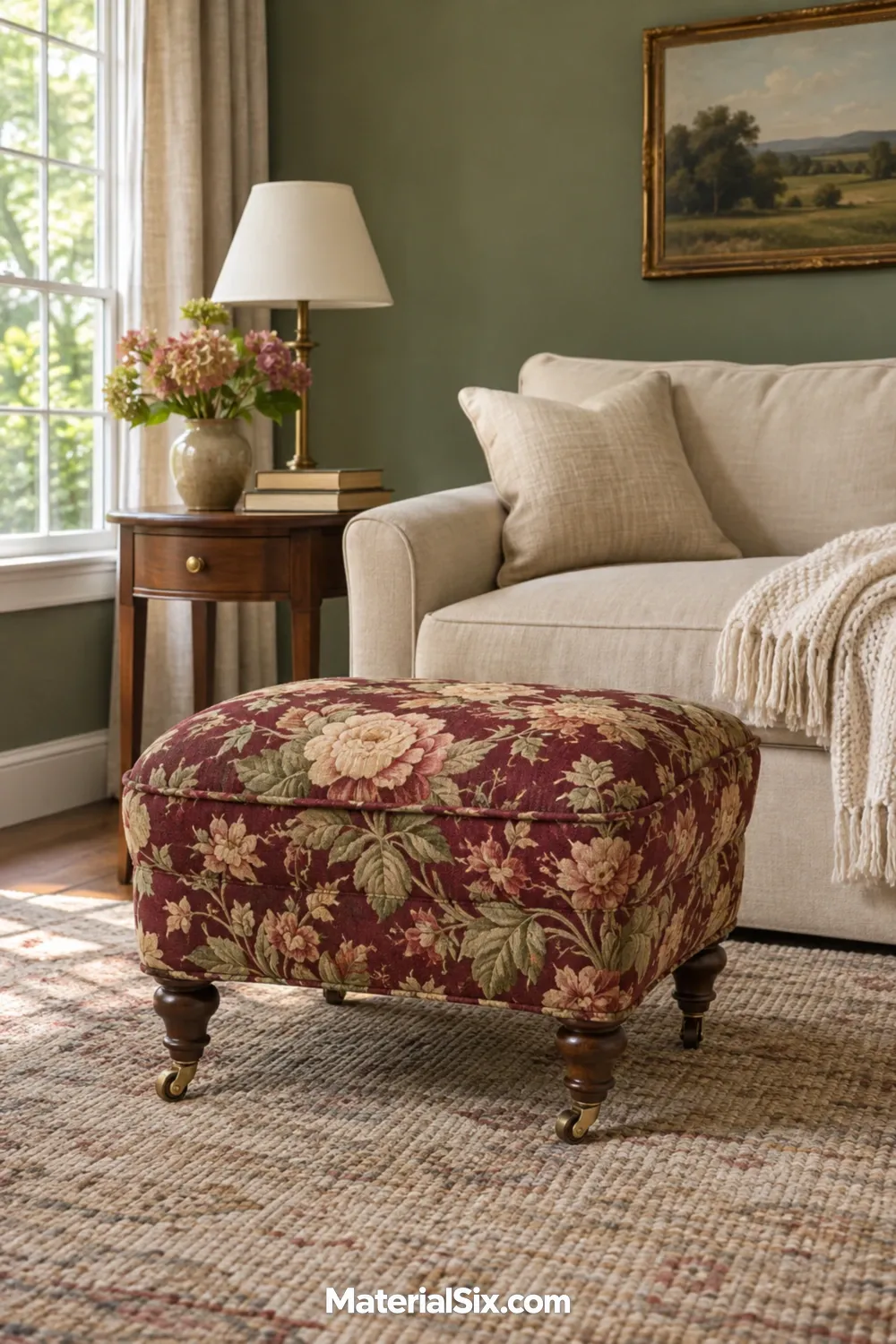
A floral ottoman is a useful place to try a stronger vintage pattern. It sits below eye level, brings color into the center of the seating area, and can echo a wall or pillow color without covering a large sofa. Burgundy and sage look calmer when surrounded by oatmeal upholstery and wood.
Check the ottoman’s size against the space between your seats and allow comfortable room to pass. Inspect upholstery, legs, and any casters before buying secondhand. Start with this as the room’s main floral element. If you later add another print, choose a different scale and repeat one existing color to keep the combination connected.
20. Make Different End Tables Feel Related
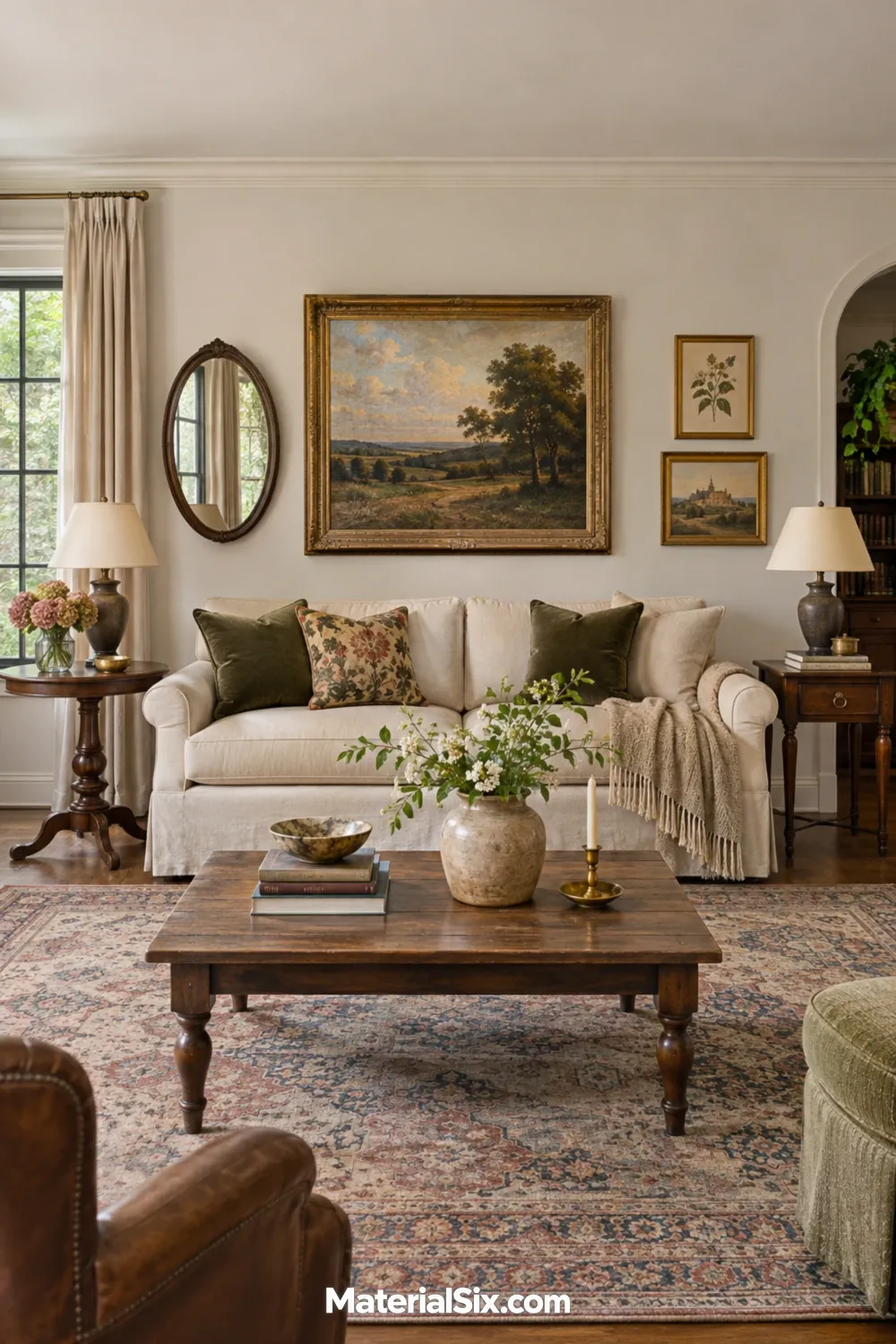
Your end tables can have different shapes and still feel like a pair. Look for similar height, visual weight, and wood tone rather than matching drawer fronts. A round pedestal on one side and a square table on the other can make a sofa arrangement feel collected over time.
Use lamps with related proportions to bring the two sides together. If one table has a drawer and the other is open, distribute accessories so neither side becomes noticeably heavier. Measure the available width beside each sofa arm before shopping. Function comes first: the table should remain easy to reach and leave your usual route through the room open.
21. Finish with a Vintage-and-Modern Mix
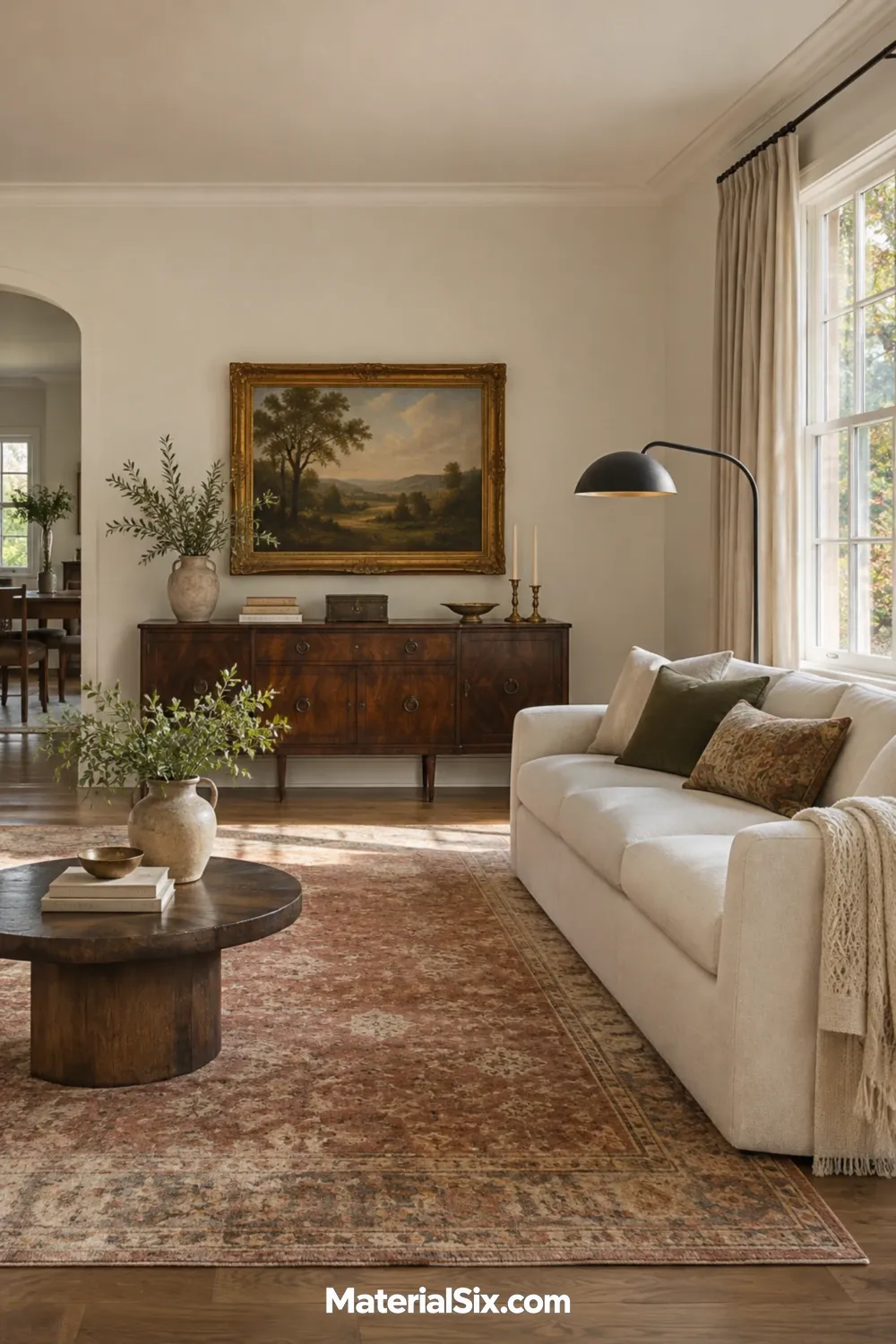
The final layer is deciding where to stop. A contemporary sofa and a clean-lined floor lamp give antique wood furniture, a faded rug, and older artwork room to feel distinctive. You do not need to furnish the entire room from the same decade to create a coherent result.
Step back from the doorway and notice where your eye lands first. Keep one main focal point, then repeat a wood tone or color in smaller amounts elsewhere. Remove an accessory if every surface feels equally busy. This is where thrifted living room decor looks more considered: useful pieces, interesting materials, and enough space to appreciate what you chose.
How to Choose Finds That Work Together
Before your next secondhand shopping trip, photograph the room in daylight and measure the space you want to fill. Keep those measurements, your sofa arm height, and a few color references on your phone. A piece can be lovely in the shop and still be too deep for your walkway.
Use a short buying filter:
- Give the find a specific job or location before bringing it home.
- Check the condition in good light, including undersides, backs, joints, and fabric seams.
- Add cleaning, repair, transport, and replacement parts to the purchase cost.
- Repeat one or two finishes, then vary the shapes and textures.
- Leave some surfaces empty so your strongest finds can stand out.
Thrifted describes how you found something; vintage describes an older style or period. Neither automatically proves quality or value. Buy for the piece’s usefulness and appearance in your room, and ask for more information when age, material, or condition affects your decision.
Frequently Asked Questions
How do you make thrifted living room decor look expensive?
Pay attention to proportion and restraint. One substantial wood piece, well-sized art, and a rug that connects the seating can look more considered than many small accessories. Repeat a few colors and leave visible space around your favorite finds.
Can you mix vintage furniture with a modern sofa?
Yes. A simple modern sofa gives older furniture a calm setting. Connect the pieces through a wood tone, upholstery color, or metal finish, while letting their shapes remain different.
What should you inspect before buying secondhand decor?
Look for instability, damage, odors, missing parts, and signs of moisture. Check upholstery seams, frame joints, drawer movement, and glass edges as relevant. Consider what cleaning or repair would involve before deciding whether the piece suits your budget.
Do all the wood finishes in a living room need to match?
No. Related undertones or repeated finishes can connect different woods. Try repeating your darkest wood in two places, then use a rug or upholstery color to bridge the rest of the room.
Start with One Useful Find
Choose the idea that solves an actual gap: a rug to connect the seating, a cabinet for storage, or art for an empty wall. Let that piece settle before buying more. A room with a few useful, distinctive finds has room to grow with you, and each addition will be easier to judge against what is already working.