
You bring home a cream sofa, clear the coffee table, and paint the walls white, but the room still feels a little unfinished. The missing piece may be texture, proportion, or a warmer undertone rather than another decorative object. Modern organic style gives clean-lined furniture a softer setting through wood grain, stone, woven fibers, and shapes that feel comfortable to live with.
These 25 modern organic living room ideas cover both small updates and larger design decisions. You can begin with flax curtains or a textured pillow mix, then consider a wood table, a curved sofa, or a quieter fireplace surround when those pieces need replacing. The goal is a neutral, earthy vibe with enough contrast to keep everything from blending together. Use the examples as a menu: choose a few materials that work with your light and daily habits, repeat them thoughtfully, and leave some open space for the room to breathe.
1. Wrap the Room in Warm Limewash
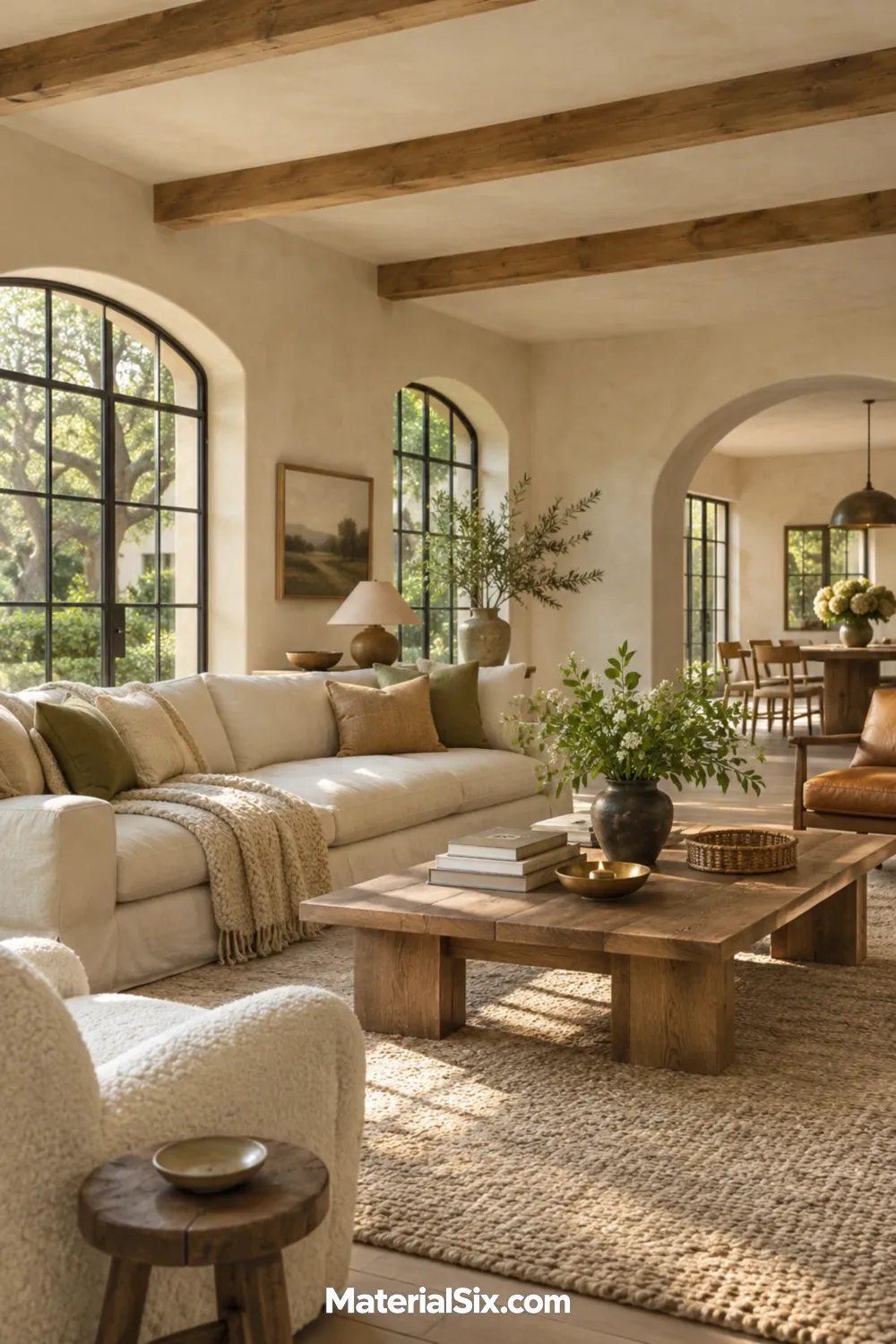
Warm ivory limewash gives a plain wall subtle movement without adding a busy pattern. Its cloudy surface catches daylight differently across the room, creating depth behind a simple sofa and wood table. Choose a sample that sits comfortably beside your flooring; a yellow cream can feel quite different next to pinkish oak than it does beside brown walnut.
Try the finish on a sample board and move it between walls before committing. Product preparation and compatible surfaces vary, so follow the manufacturer’s directions. Keep nearby textiles relatively quiet to let the wall texture register. If you rent, a warm matte paint offers a simpler route to the same overall palette.
2. Anchor the Seating Area with White Oak
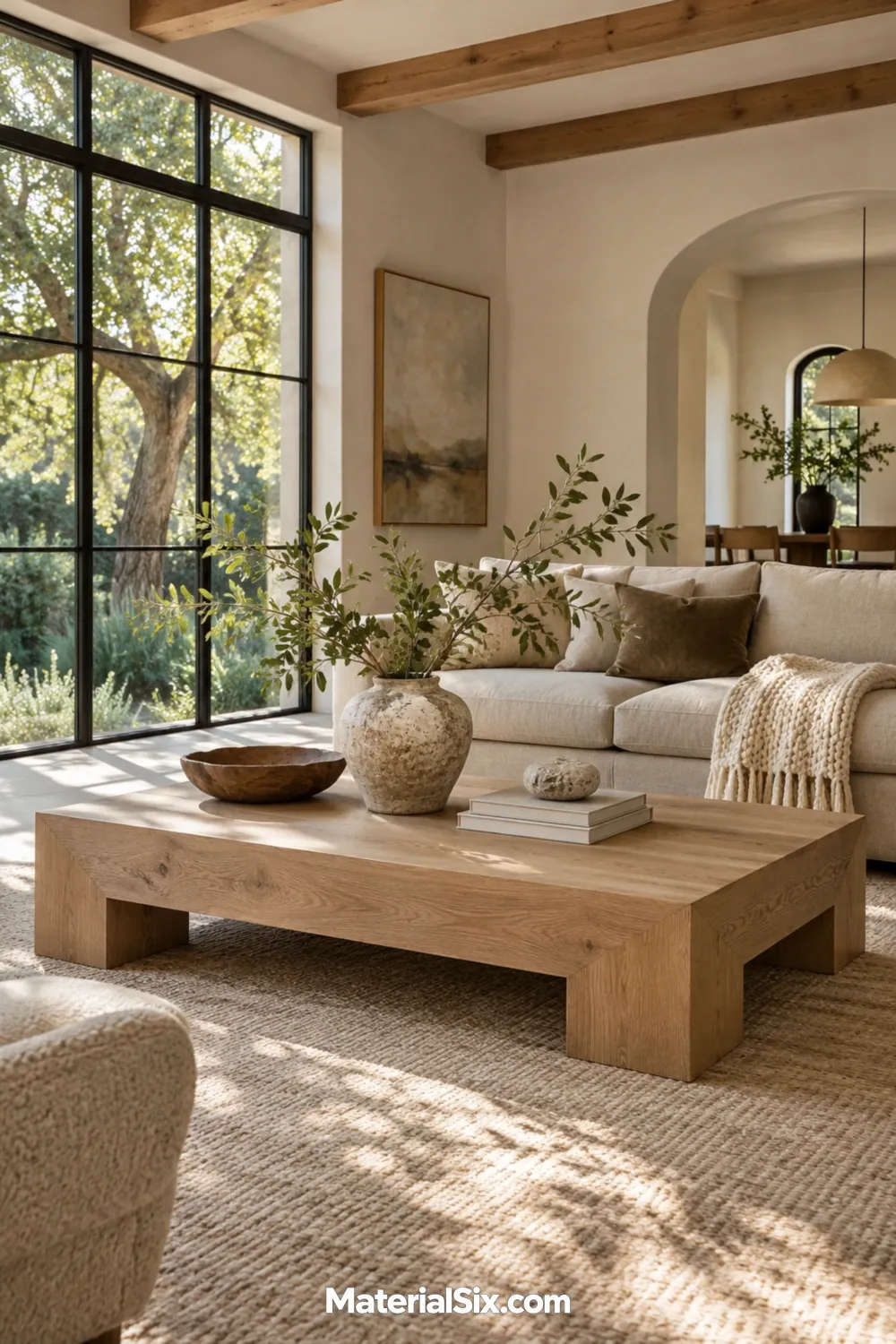
A substantial white oak table can do much of the decorating for you. Visible grain and a broad, low silhouette give pale upholstery a grounded center, while the wood’s warm color stops the room from feeling washed out. Look at the table’s proportions alongside your seating, rather than selecting it from a close-up product photo.
Tape its footprint on the floor and test the route around it before buying. Leave enough space to sit down and reach the tabletop comfortably. With a strong wood piece, a shallow bowl and a small book stack may be all the styling you need. Use coasters and follow the finish’s cleaning instructions. A matte finish can keep the grain prominent without adding noticeable glare.
3. Soften the Layout with a Curved Sofa
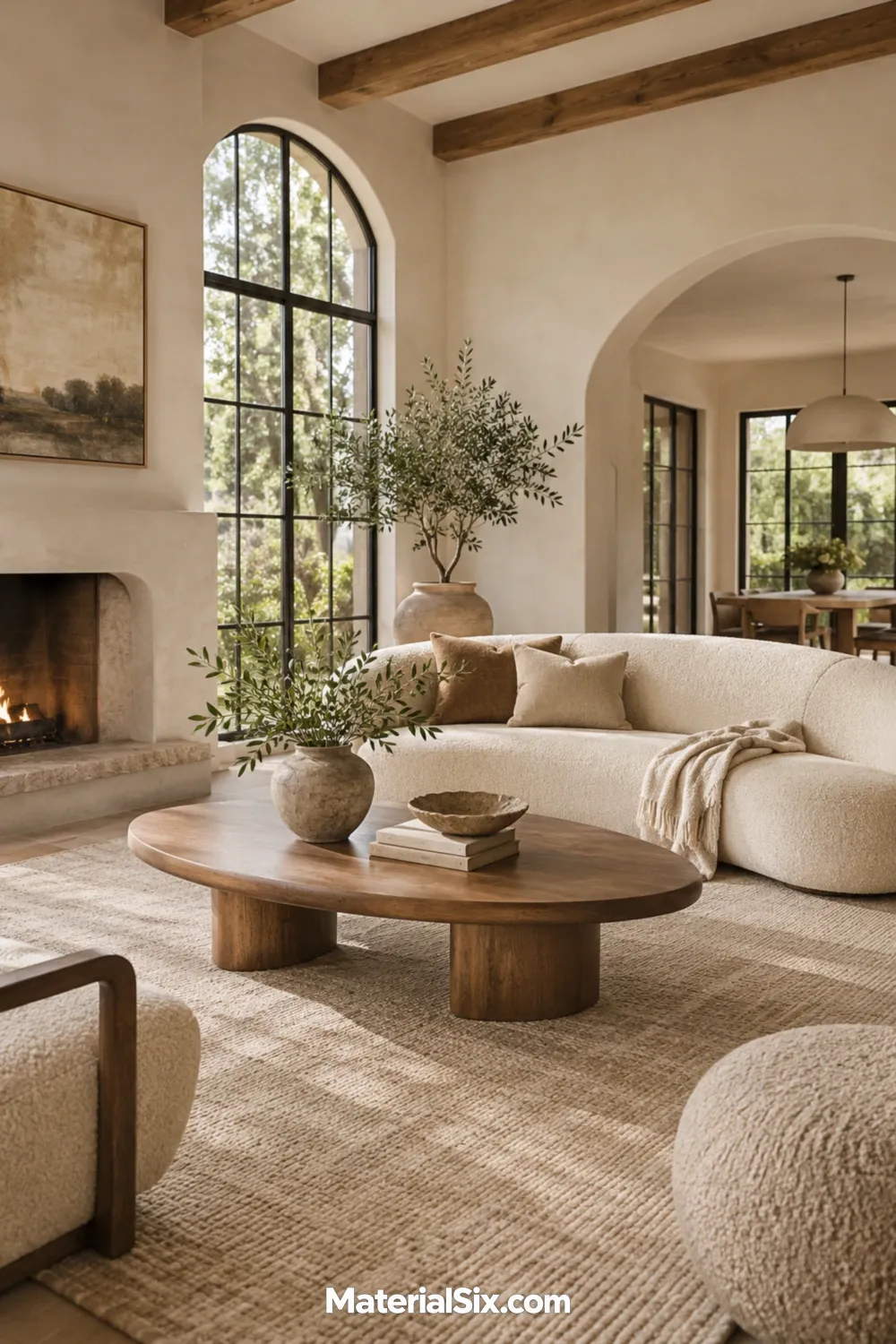
A curved sofa breaks up the straight lines of windows, shelving, and rectangular rooms. In a warm cream fabric, the shape feels relaxed without requiring lots of decorative pillows. Pair it with an oval or round table so the center of the seating group follows the same gentle rhythm.
The tradeoff is usable floor space: a curved back may leave a gap when pushed against a flat wall. In a larger room, float the sofa slightly away from the wall and keep a clear path behind it. A straight-lined chair can add a useful counterpoint.
4. Layer Flax Linen at the Windows
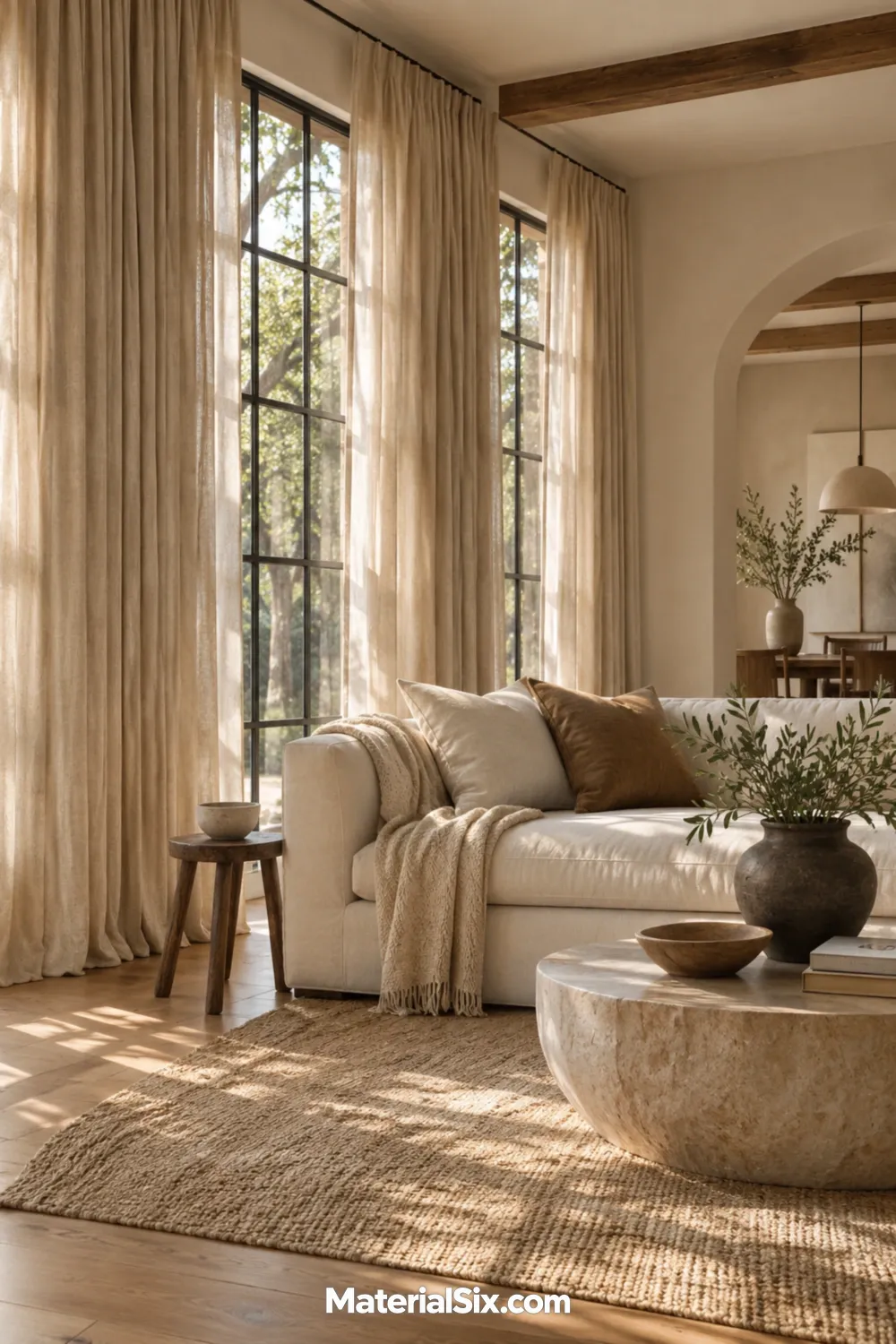
Flax-colored linen curtains filter bright windows and introduce a texture you can notice from across the room. Their natural variation works well against smooth walls, particularly when the upholstery is another shade of cream. Mount the rod with enough room for the panels to stack beside the glass when open.
Measure from the installed hardware before ordering the finished length. A floor-skimming hem looks relaxed while staying easier to manage than a puddled panel. Linen alone may not provide the privacy or light control you need, so consider a separate lining or shade. Repeat the flax tone once in a pillow or chair seat to connect the windows with the furniture.
5. Define the Room with an Oversized Jute Rug
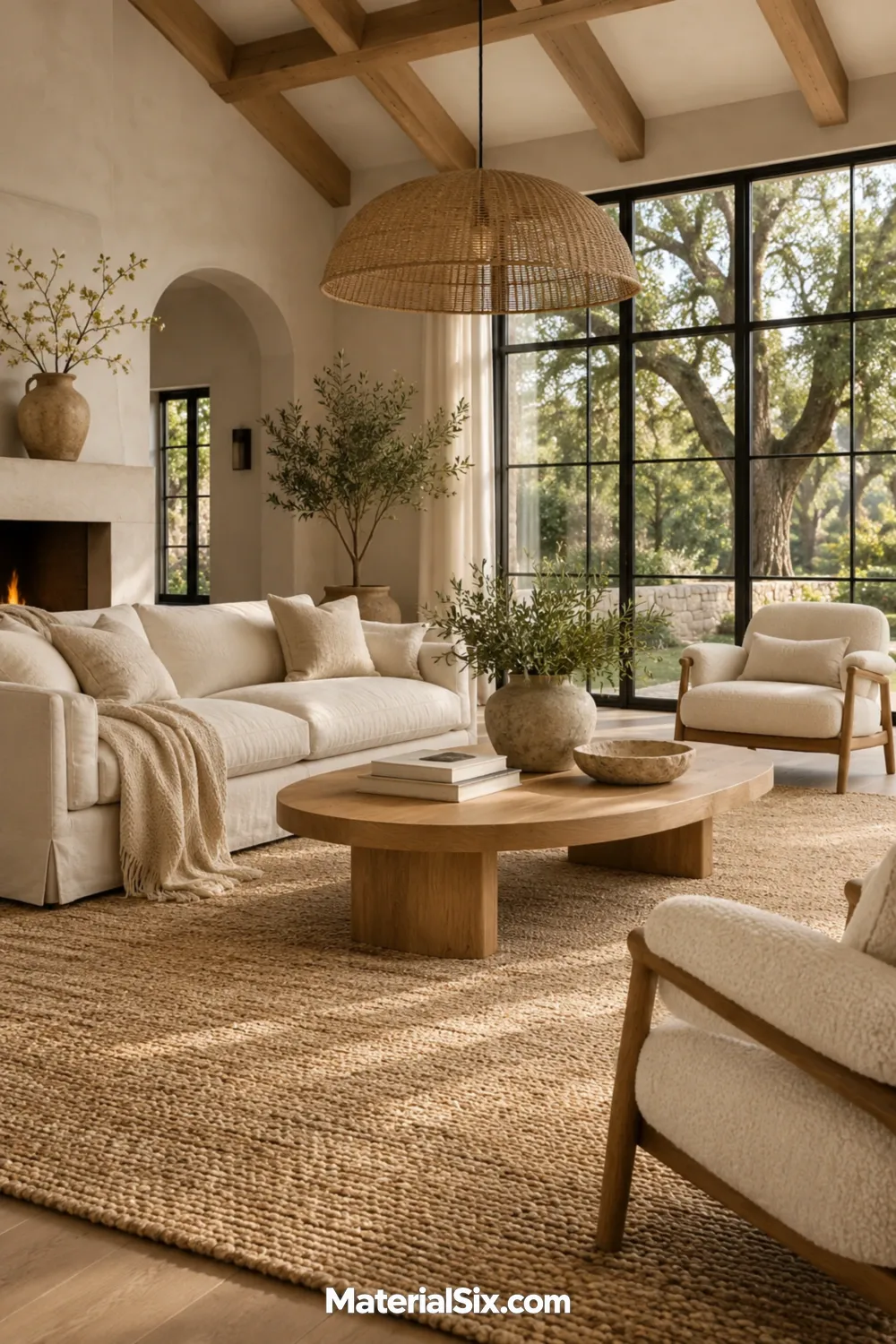
A generous jute rug draws the seating group together and adds a sandy, woven surface beneath smooth furniture. Aim to place at least the front legs of the sofa and chairs on it, rather than leaving a small rectangle stranded beneath the table.
Jute has a firmer, rougher feel than many wool rugs, and moisture can mark natural fibers. Consider how you use the room before choosing it, especially if children play on the floor or spills are frequent. A suitable rug pad helps with grip and cushioning. Choose quieter upholstery so the rug remains noticeable.
6. Add a Honed Travertine Coffee Table
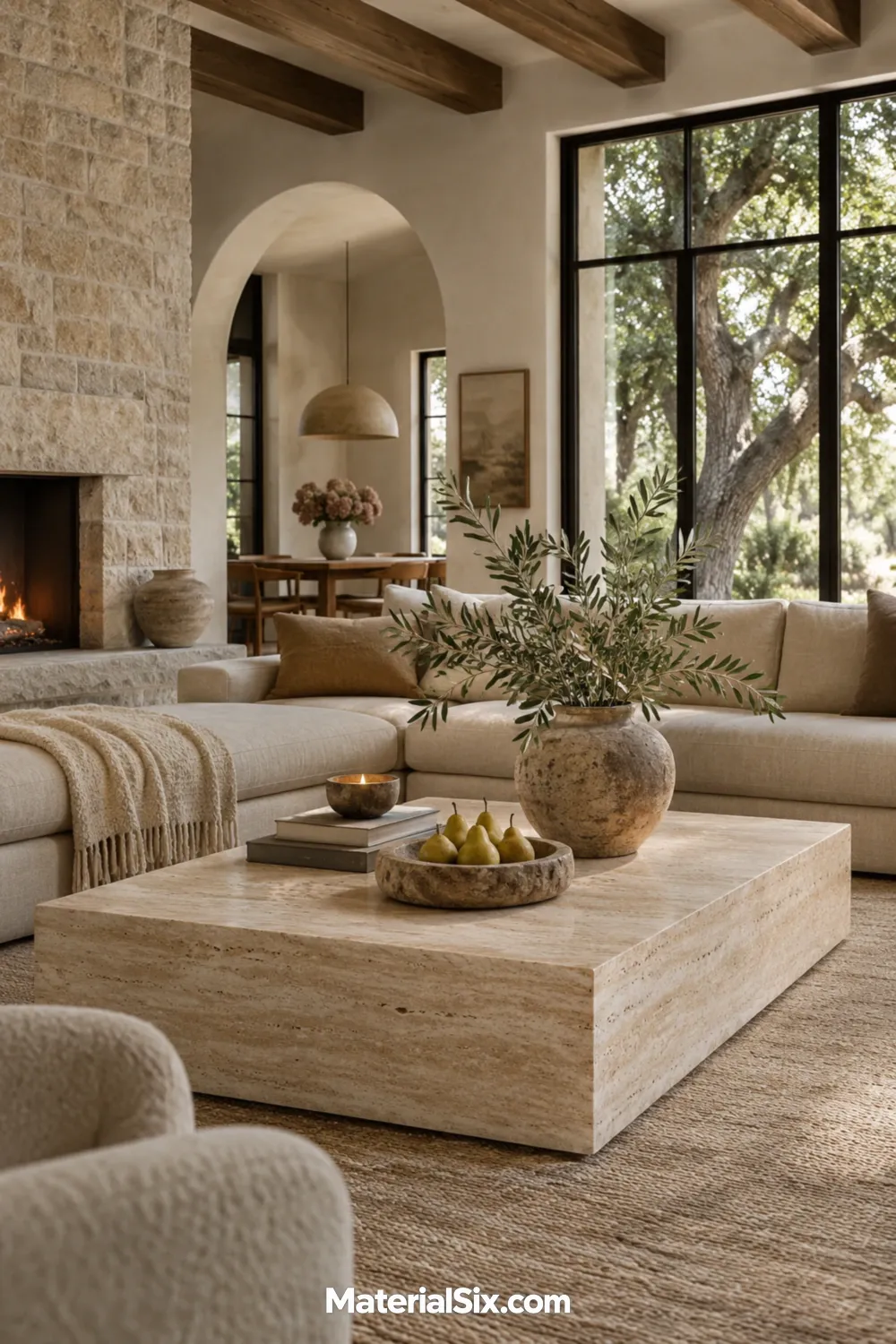
Honed travertine introduces pale stone without the shine of a polished surface. Its pores and tonal changes create visual interest in a room built around simple upholstery. A low rectangular table feels substantial, so balance it with softer seating and at least one lighter-looking piece nearby.
Check the table’s weight, edge profile, and delivery access before ordering. Natural stone can be sensitive to spills and acidic cleaners; follow the supplier’s care and sealing guidance. A large table does not need a crowded display. Try one low bowl or a short book stack, leaving usable room for everyday items. The contrast between stone and linen does the work. Request a material sample if the seller offers one.
7. Bring Height with a Potted Olive Tree
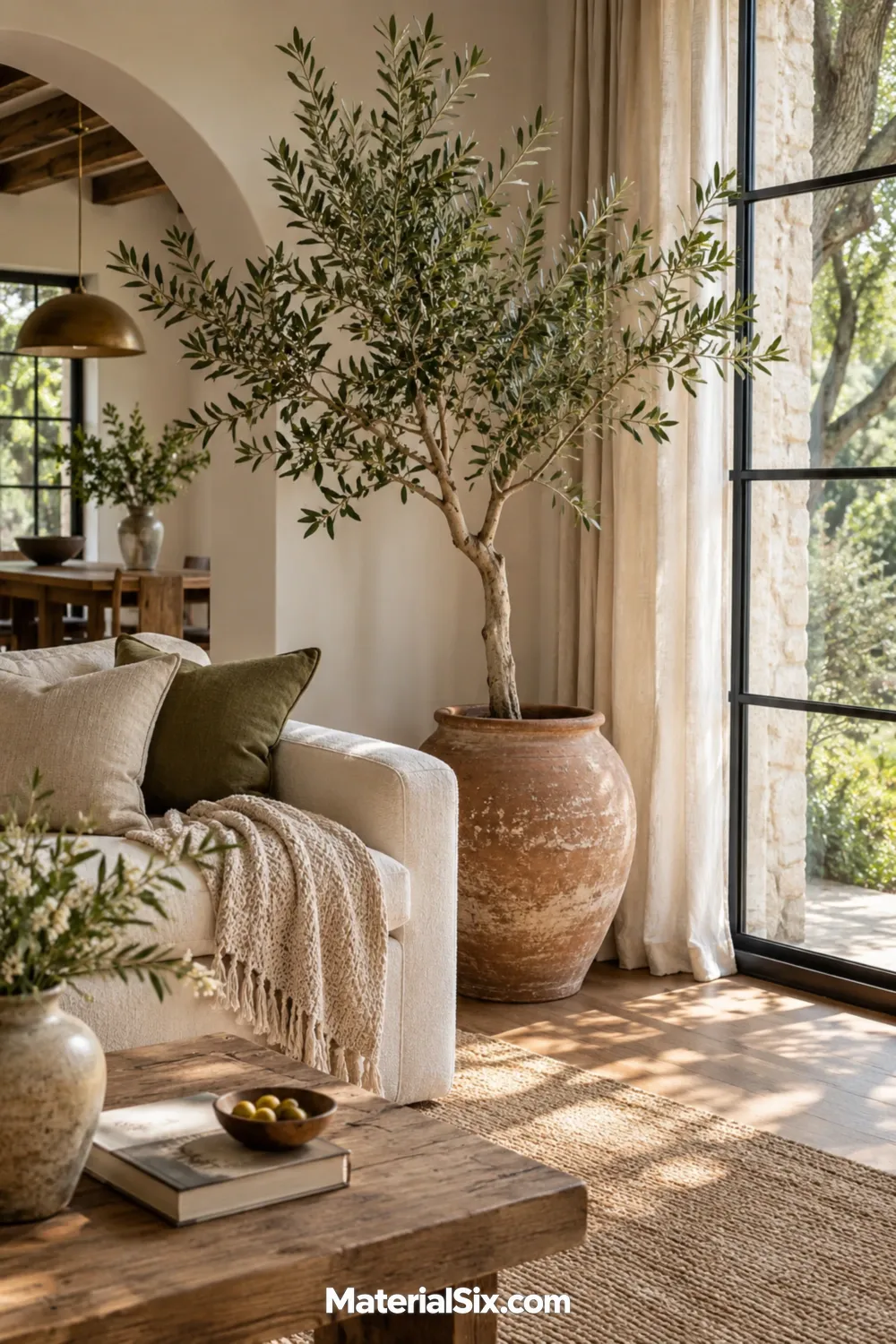
An olive tree gives a neutral living room a loose, branching outline instead of another solid piece of furniture. Place it where the leaves can catch the window light and where the canopy will not block a doorway. A simple clay planter keeps the focus on the tree’s shape.
Before choosing a living specimen, check whether your window conditions meet its light needs. Use a container with drainage and protect the floor beneath it. If the room cannot support the plant, a carefully chosen faux version can provide the silhouette without requiring a growing setup.
8. Create Rhythm with a Slatted Wood Wall
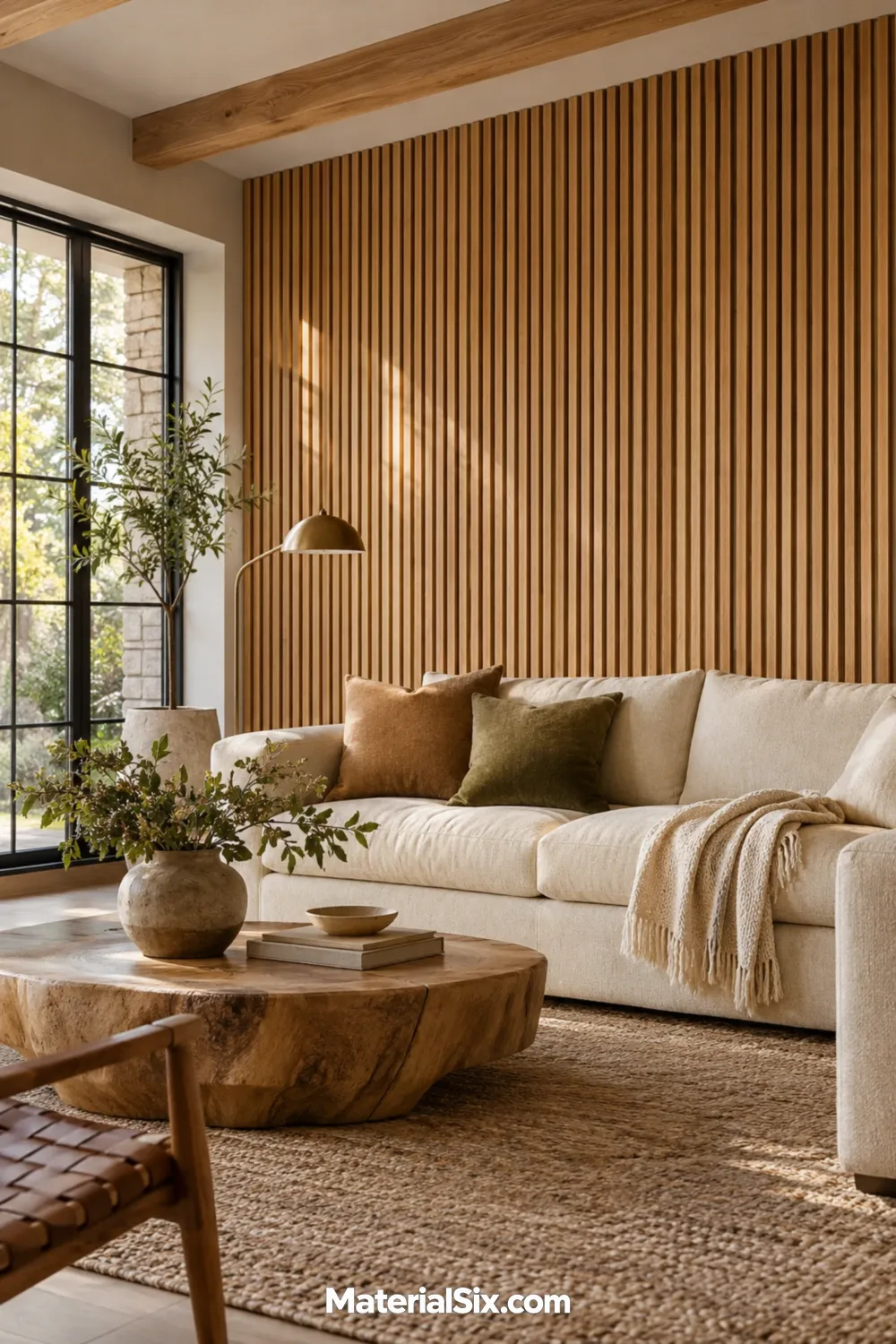
Vertical oak slats add a repeating line that looks especially clear behind a low, simple sofa. The natural grain supplies warmth while the spacing creates a little shadow and depth. Use the treatment on one defined surface so it reads as a considered feature rather than a finish repeated everywhere.
Work out the edges, outlets, and transitions before installation. A small sample will help you compare the wood tone with your existing floor. Decorative slats are not automatically an acoustic solution; evaluate any sound-control claims separately. Keep nearby art and accessories restrained, and let a plain woven rug balance the stronger wall pattern. Regular dusting will help maintain the narrow gaps.
9. Keep the Profile Low with Modular Seating
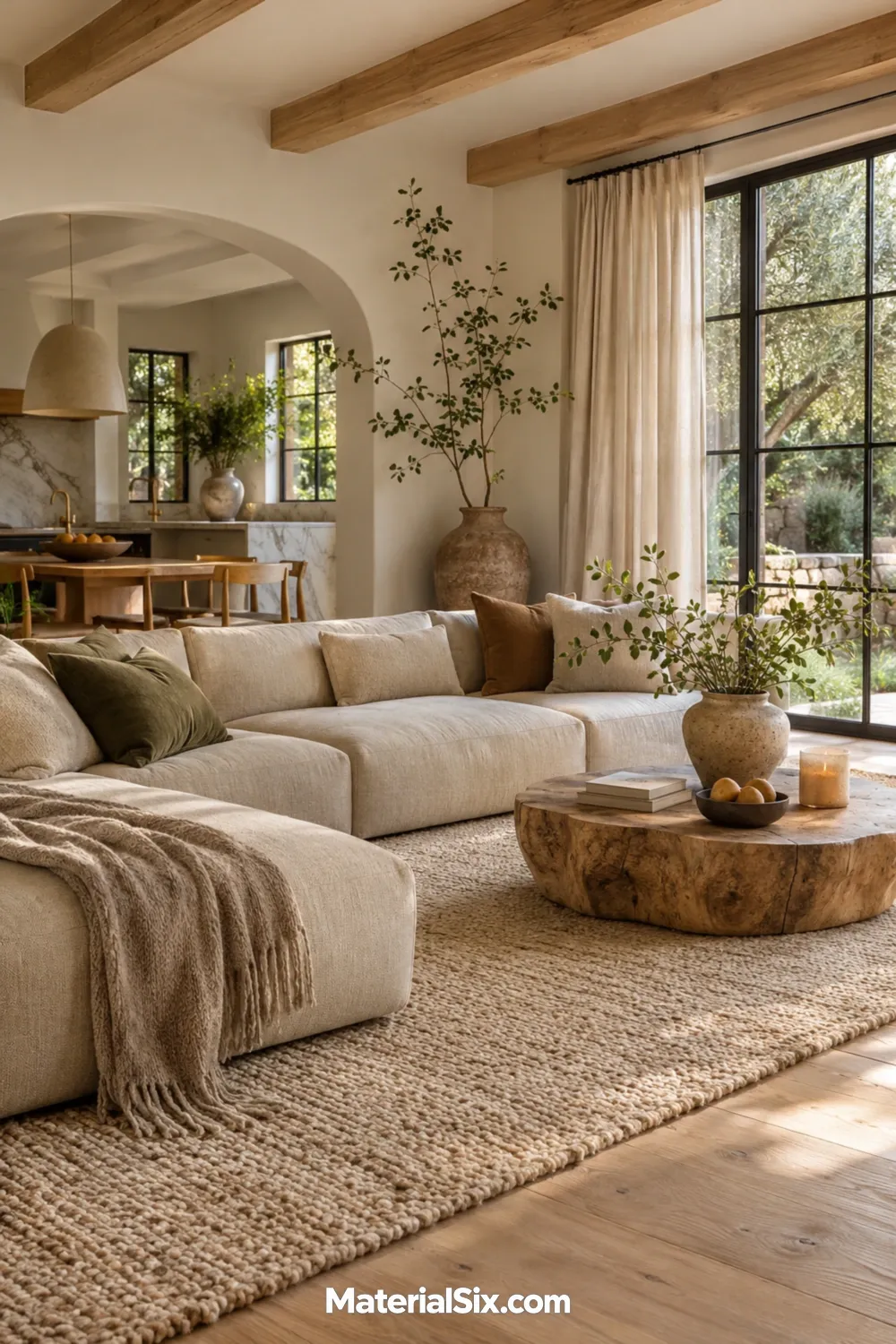
Low modular seating gives the room a broad, relaxed horizon. Oatmeal upholstery keeps a large sectional from appearing too stark, especially when paired with a pale wood table and a textured rug. Arrange the modules around how you actually sit, watch television, and talk rather than filling every available wall.
Measure the assembled layout, including corners and chaise sections, before ordering. Very low seats may be uncomfortable for some family members, so try the seat height when possible. Leave a clear route through the room and keep side tables within reach. A taller lamp or plant can bring back vertical balance without making the furniture group feel crowded.
10. Warm the Palette with Clay Accents
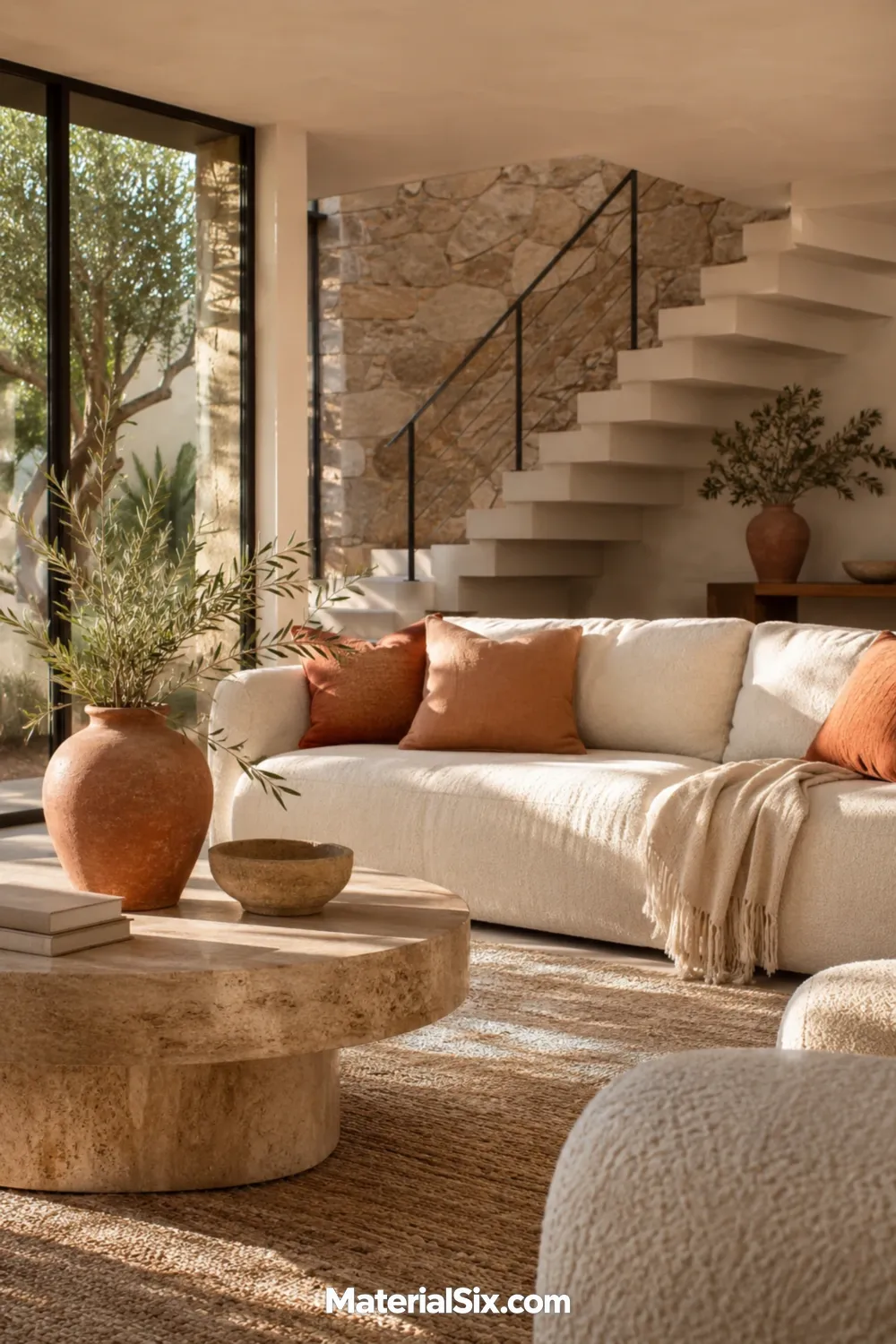
Muted terracotta creates warmth in an otherwise pale living room without turning the entire palette orange. Try a clay-colored pillow near a ceramic vase, with some distance between the two. That repetition makes the accent feel deliberate while leaving cream, sand, and wood as the main colors.
Look for dusty, brown-based shades if bright rust feels too strong. Compare the color in your actual light first. Keep the number of accent objects modest. You can change removable pillow covers before investing in a larger upholstered piece, and test whether the color still appeals after several days.
11. Style a Small Group of Sculptural Ceramics
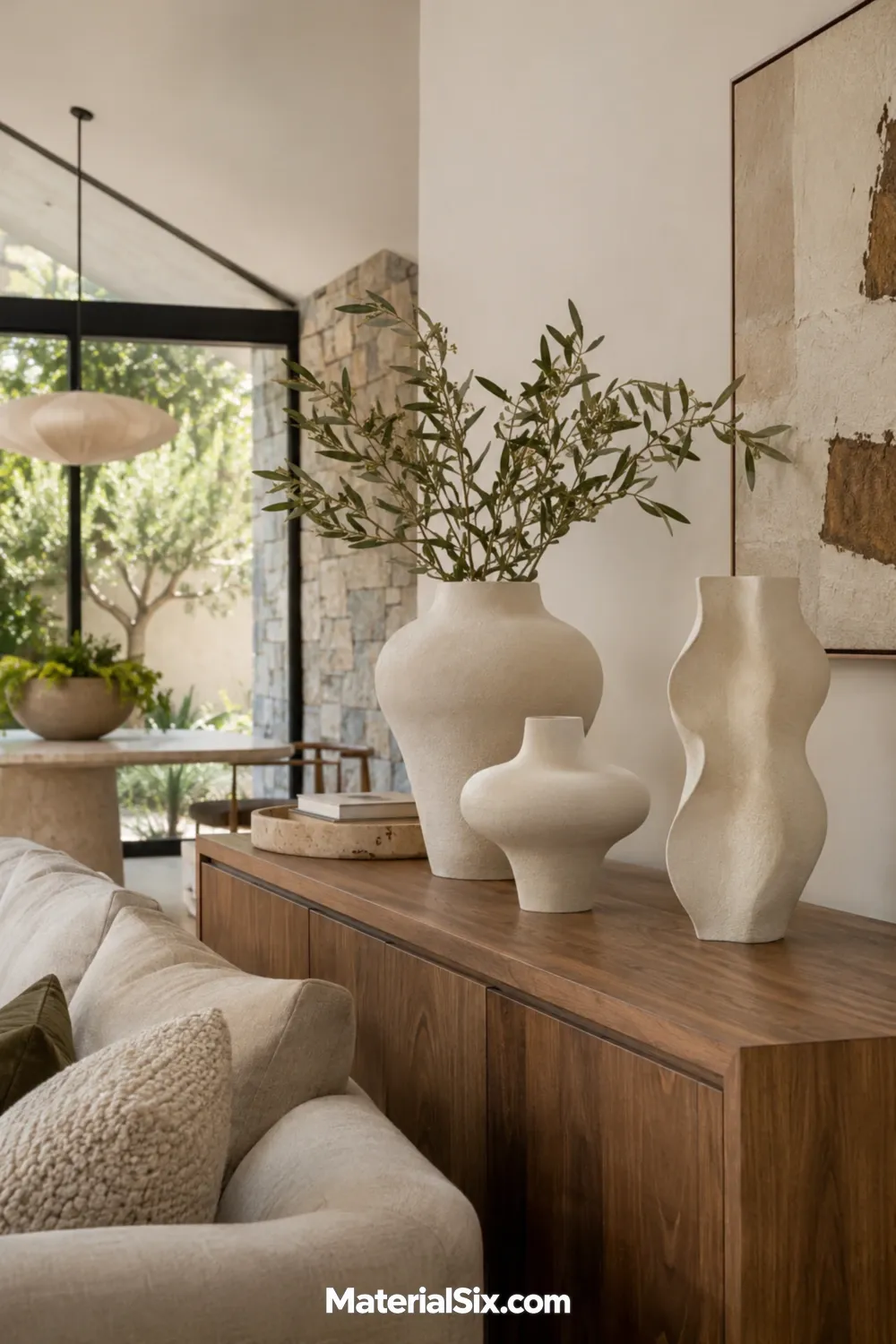
A small cluster of sculptural ceramics creates a focal point on a wood console without covering the whole surface. Combine different profiles, such as one broad vessel, a taller vase, and a low bowl. Similar off-white finishes let the shapes stand out without introducing another color story.
Give the pieces some uneven spacing and leave the other end of the console mostly clear. If everything is the same height, the arrangement can look like a row of products. Choose stable bases for places people pass frequently. These objects also collect dust, so fewer pieces make upkeep easier.
12. Balance Upholstery with a Woven Lounge Chair
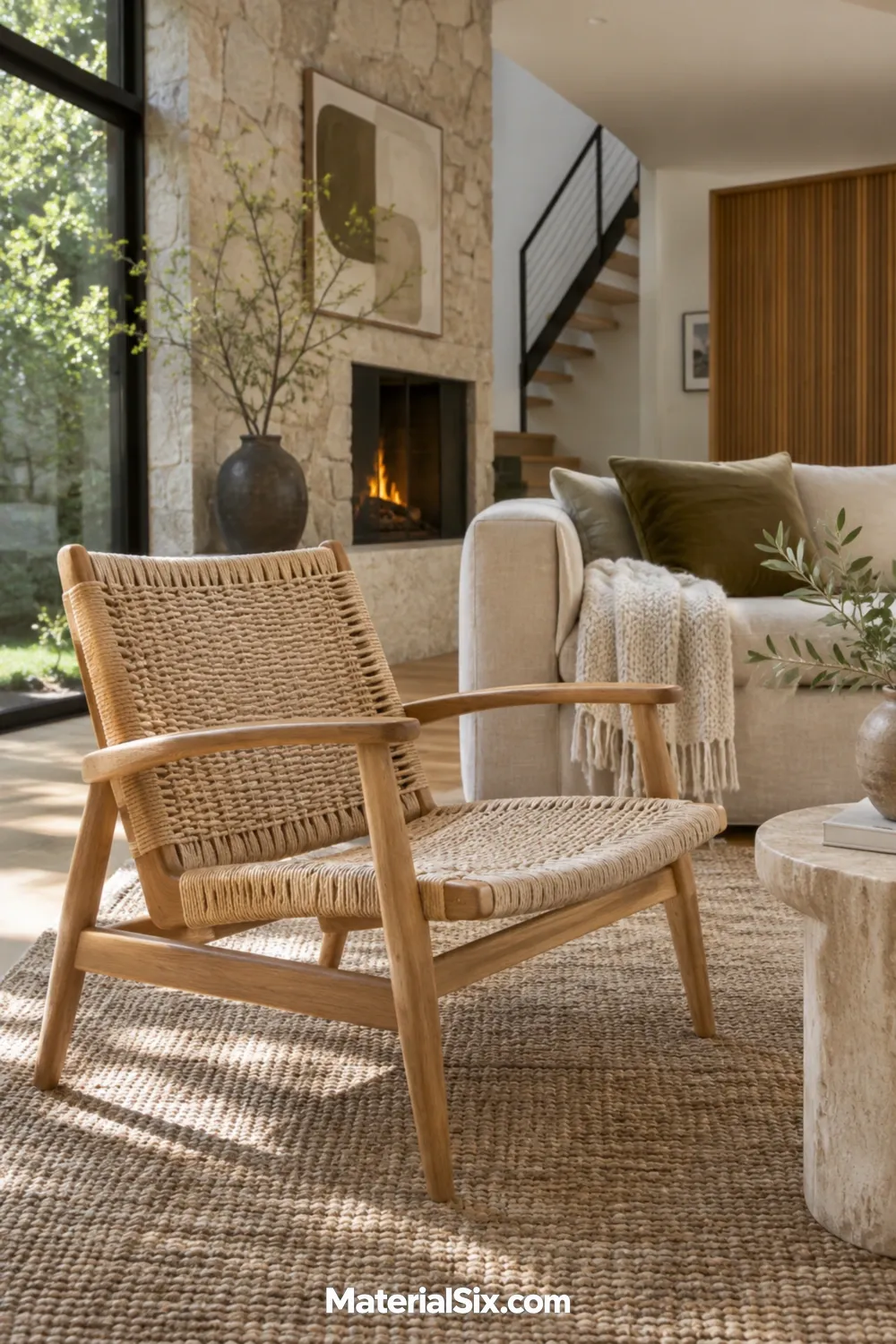
A woven lounge chair introduces an open, airy surface beside a solid upholstered sofa. An oak frame and cord seat add texture at a different scale from pillows or curtains, helping a neutral room feel layered. Angle the chair slightly toward the sofa to make it part of the conversation area.
Check the seat’s comfort and weight rating rather than choosing by appearance alone. Some woven seats feel firm and benefit from a small cushion. Keep the chair away from sharp table corners and give its arms enough room. If you already have several wood tones, relate the chair to one existing piece instead of adding another unrelated finish. A nearby textile can echo the woven seat without matching it.
13. Give the Fireplace a Quiet Plaster Finish
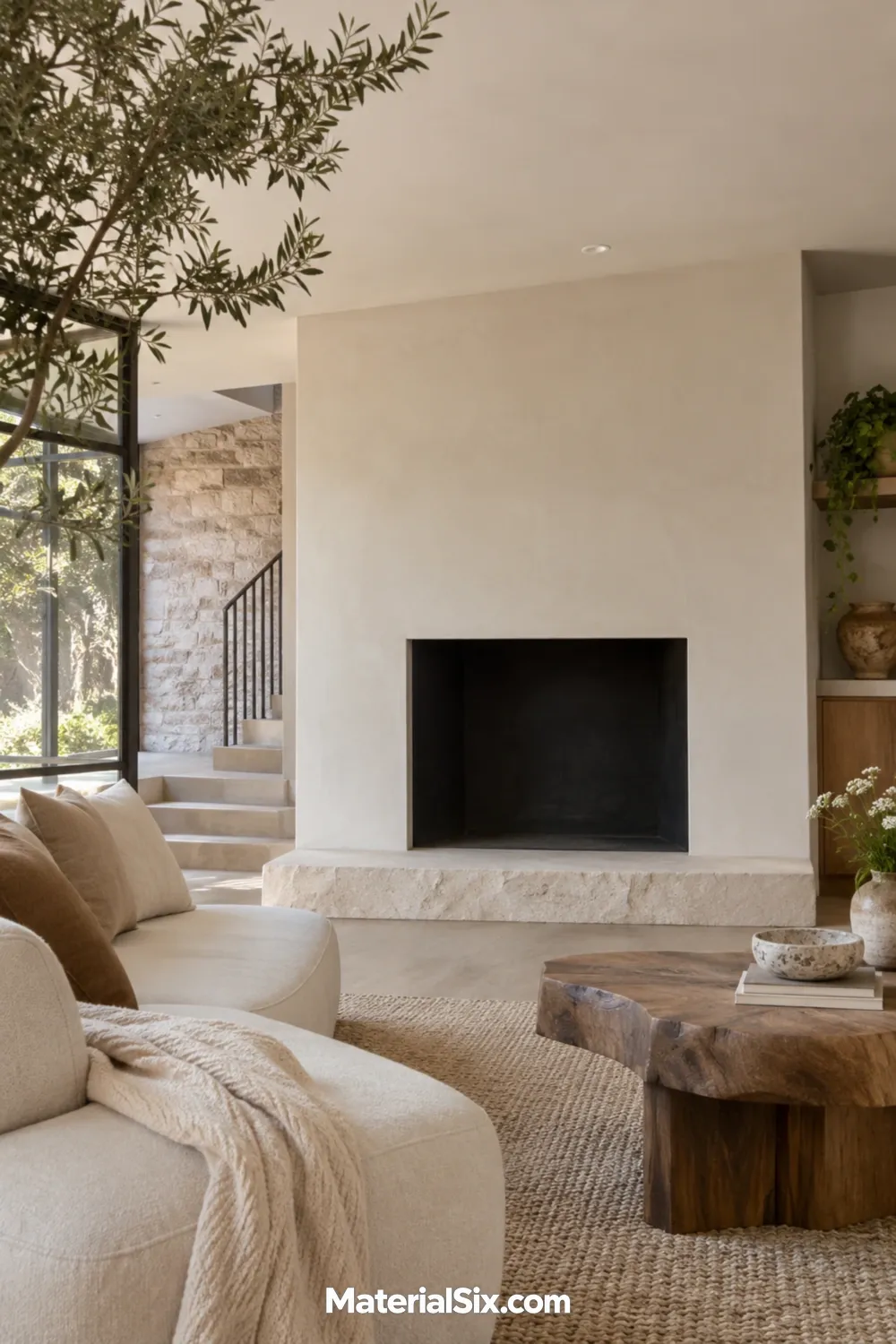
A simple plaster fireplace surround can become a quiet architectural feature. Without a heavy mantel or a busy tile pattern, the wall’s shape and soft finish lead the eye. Pair it with a pale stone hearth and comfortable upholstery to keep the room warm in both color and mood.
Treat any fireplace alteration as a building detail, not just a decorating project. Confirm suitable materials, clearances, and installation requirements with qualified help for your particular unit. The photographed opening is unlit, allowing the surround to stand out. Keep decorative objects away from the firebox and required clearance areas. A nearby basket can hold throws without crowding the hearth.
14. Mix Tonal Pillows with Different Weaves
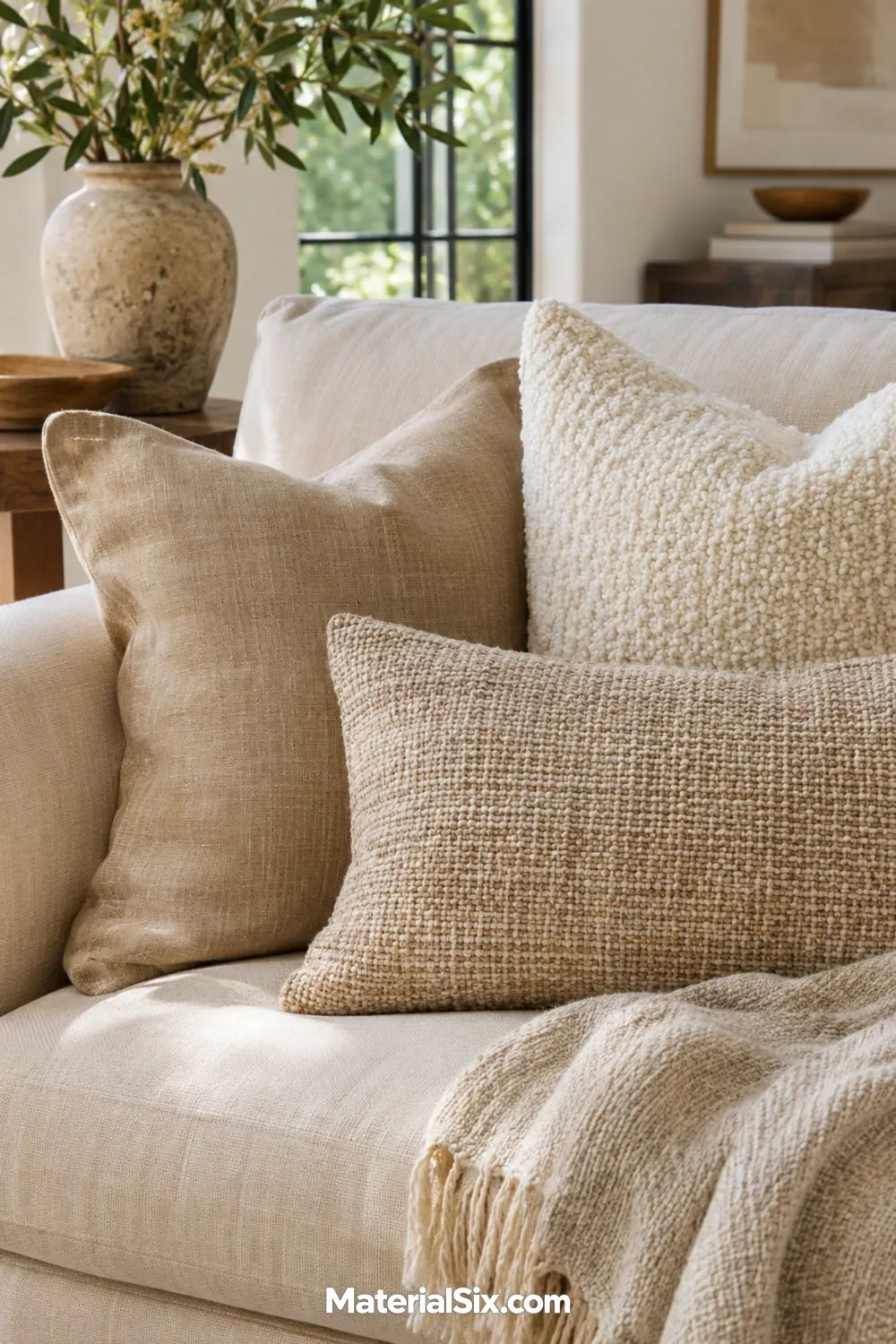
Cream, oatmeal, and sand pillows can feel distinct when their weaves change. Put smooth linen beside nubby boucle or a heavier woven cover, letting texture provide the variation that a bright print usually would. Choose a limited number of pillows so your sofa still has comfortable seating space.
Start with the largest pair and add a smaller accent only if the arrangement needs it. Compare the undertones in daylight: gray-beige and yellow-beige can look unexpectedly different together. Removable covers make cleaning and seasonal changes simpler. Check care labels before combining fabrics, since one cover may tolerate washing while another needs a different approach. A loosely draped throw can complete the group.
15. Choose One Earthy Abstract Artwork
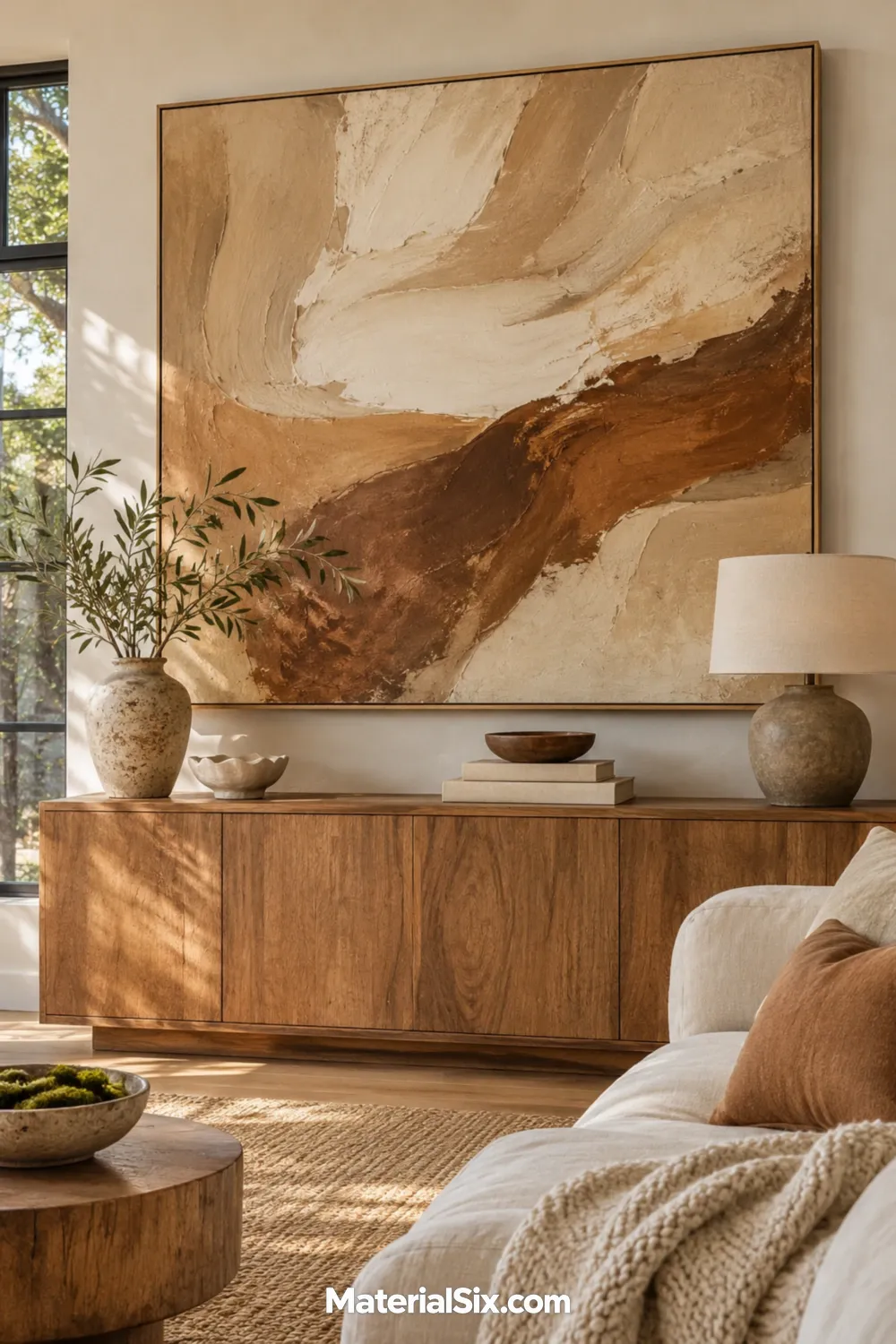
One large abstract canvas can give a neutral wall more presence than a collection of small decorations. Choose broad areas of cream, sand, and brown that connect with the room’s furniture, while leaving the artwork’s shapes loose enough to offer contrast. A thin wood frame keeps the presentation quiet.
Use painter’s tape to test the artwork’s footprint before purchasing. Judge the size against the console or sofa below it, and view it from the room’s entrance as well as up close. Avoid hanging it so high that it feels detached from the furniture.
16. Introduce Natural Character with Ceiling Beams
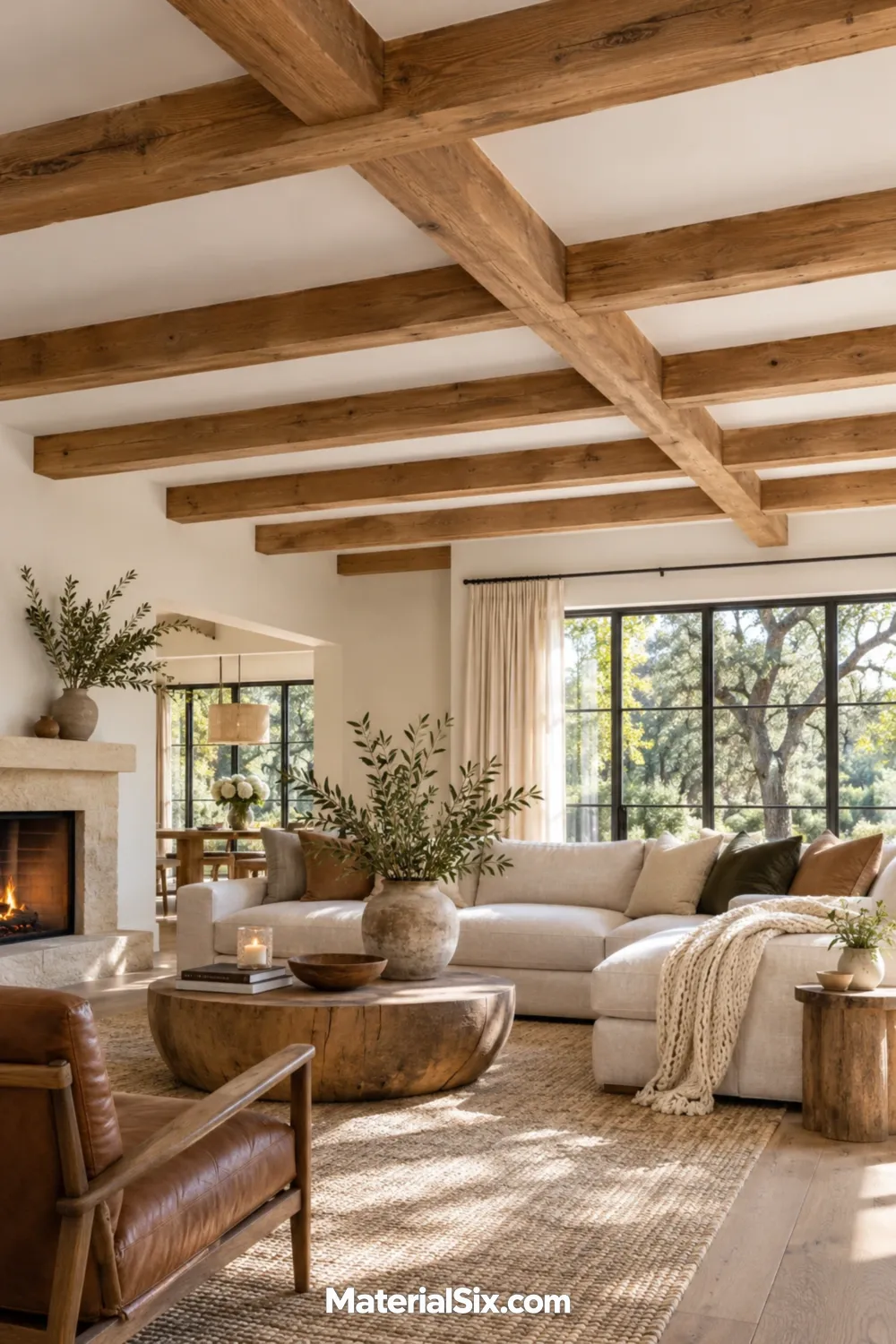
Natural wood ceiling beams give an airy room an upper layer of texture. Their long lines can echo the floorboards and help a large space feel more settled. With that much wood overhead, plain walls and uncluttered window treatments keep the room from looking visually heavy.
Existing beams should be assessed according to their actual structure and finish. If you are considering decorative additions, check attachment, weight, and any building constraints with an appropriate professional. Do not assume a ceiling can accept a heavy timber element. For a smaller update, repeat the look through furniture instead. A warm oak table and a few visible grain details can suggest similar character at a different scale.
17. Use Rounded Side Tables to Ease Tight Corners
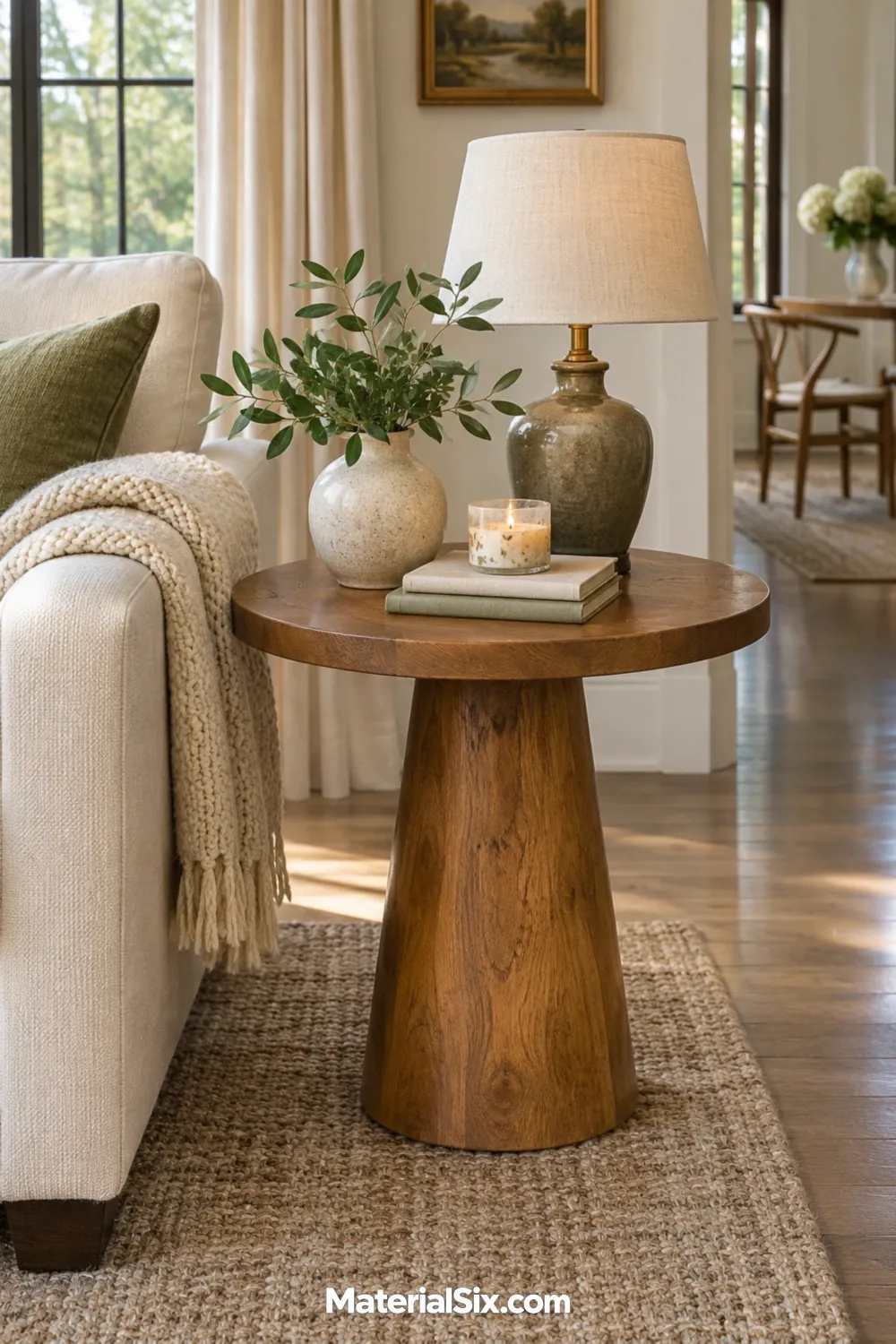
A rounded side table softens the point where a sofa meets a walkway. The shape can be useful in compact seating groups, where a square corner might feel awkward to pass. A simple wood finish also gives upholstered furniture a small but noticeable natural companion.
Place the table close enough to reach from the seat, then check that it does not narrow your normal route through the room. Match its height to your sofa arm and the way you use it. A broad, stable base matters more than an interesting silhouette if it will hold drinks.
18. Build a Warm Evening Lighting Layer
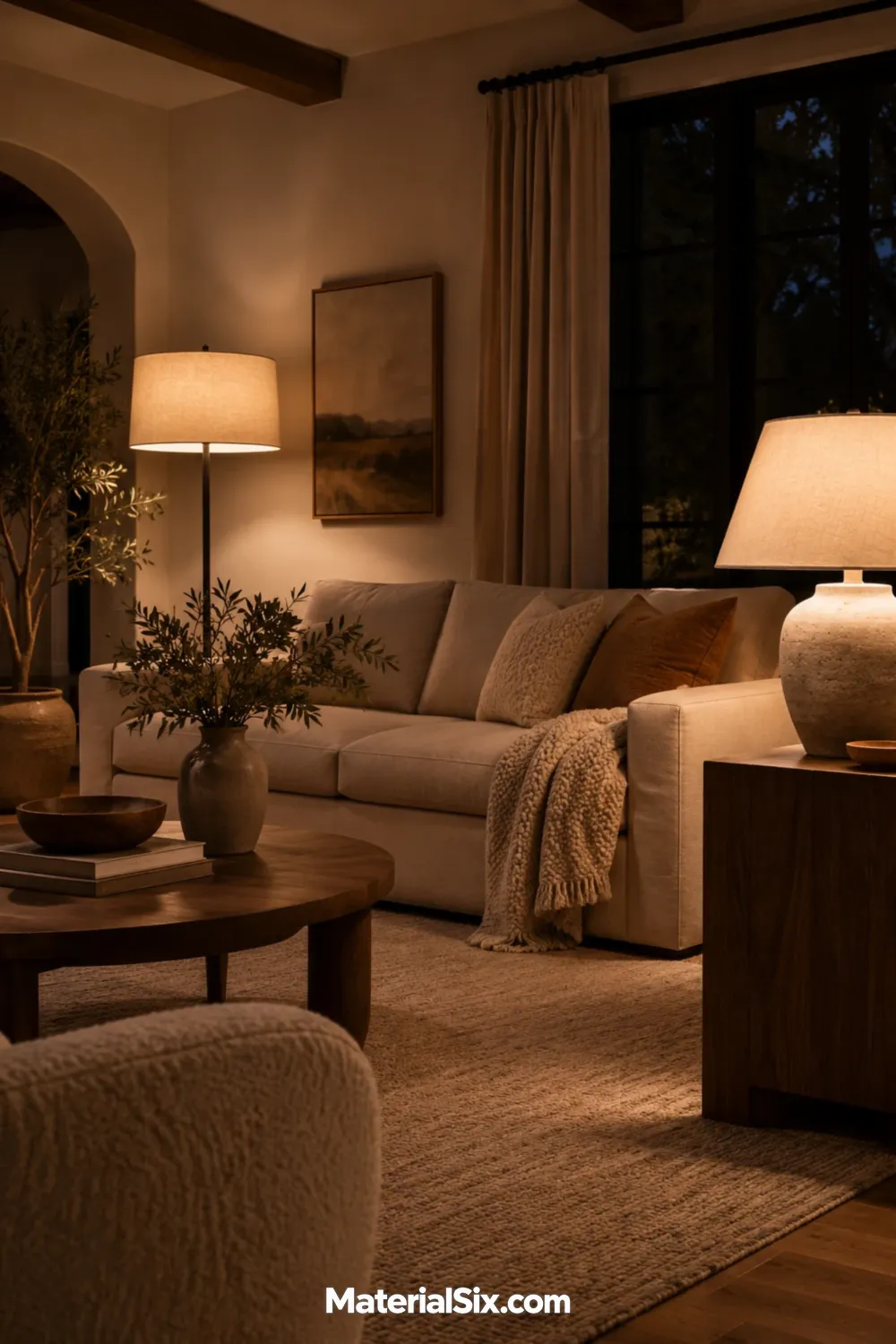
Evening light changes how a neutral room feels. A shaded floor lamp near the sofa and a ceramic table lamp across the room create separate pools of light, giving the space depth after the windows go dark. The lamps themselves also introduce fabric, clay, or wood textures during the day.
Choose compatible bulbs with a warm appearance and enough output for the task. A reading seat needs useful light at the page, not just a glowing shade nearby. For a practical setup:
- Check bulb and dimmer compatibility before buying.
- Route cords away from walking paths.
Before adding another decorative lamp, switch on the existing ones and see where the room actually feels dim.
19. Leave Breathing Room on Open Shelves
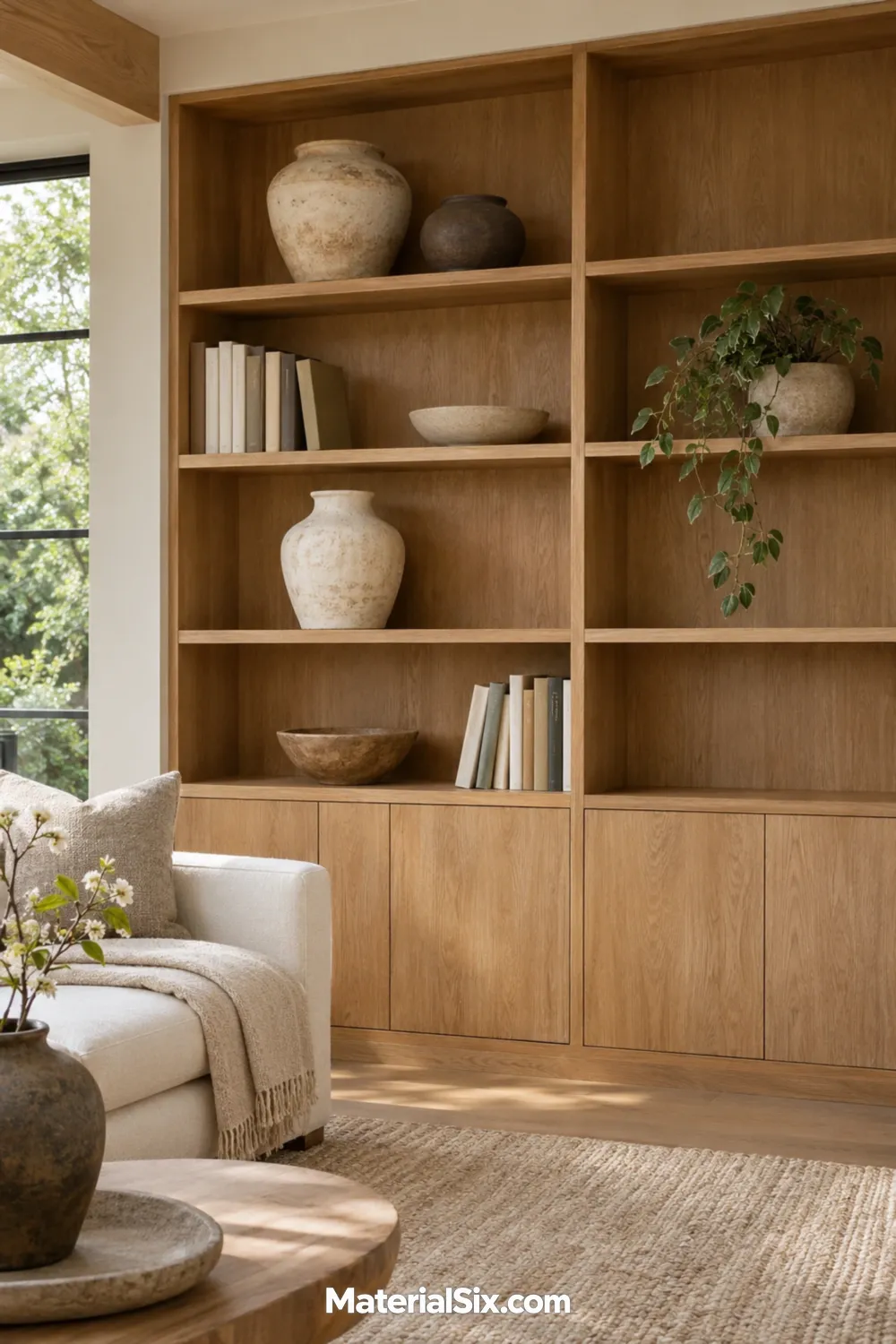
Open shelves look calmer when objects have room around them. Leave some sections partly empty, then combine books, a low bowl, and a few substantial ceramic pieces. Oak shelving brings warmth on its own, so you do not need to fill every opening to make it feel finished.
Vary the height of arrangements while keeping the overall palette connected. Store everyday clutter in closed cabinets if available, and reserve the open sections for items you enjoy seeing. Put heavier pieces on appropriate shelves and follow the unit’s load guidance. Step back after styling: if every shelf competes for attention, remove a few objects before buying anything else. Negative space is part of the arrangement.
20. Ground Pale Neutrals with Soft Black Details
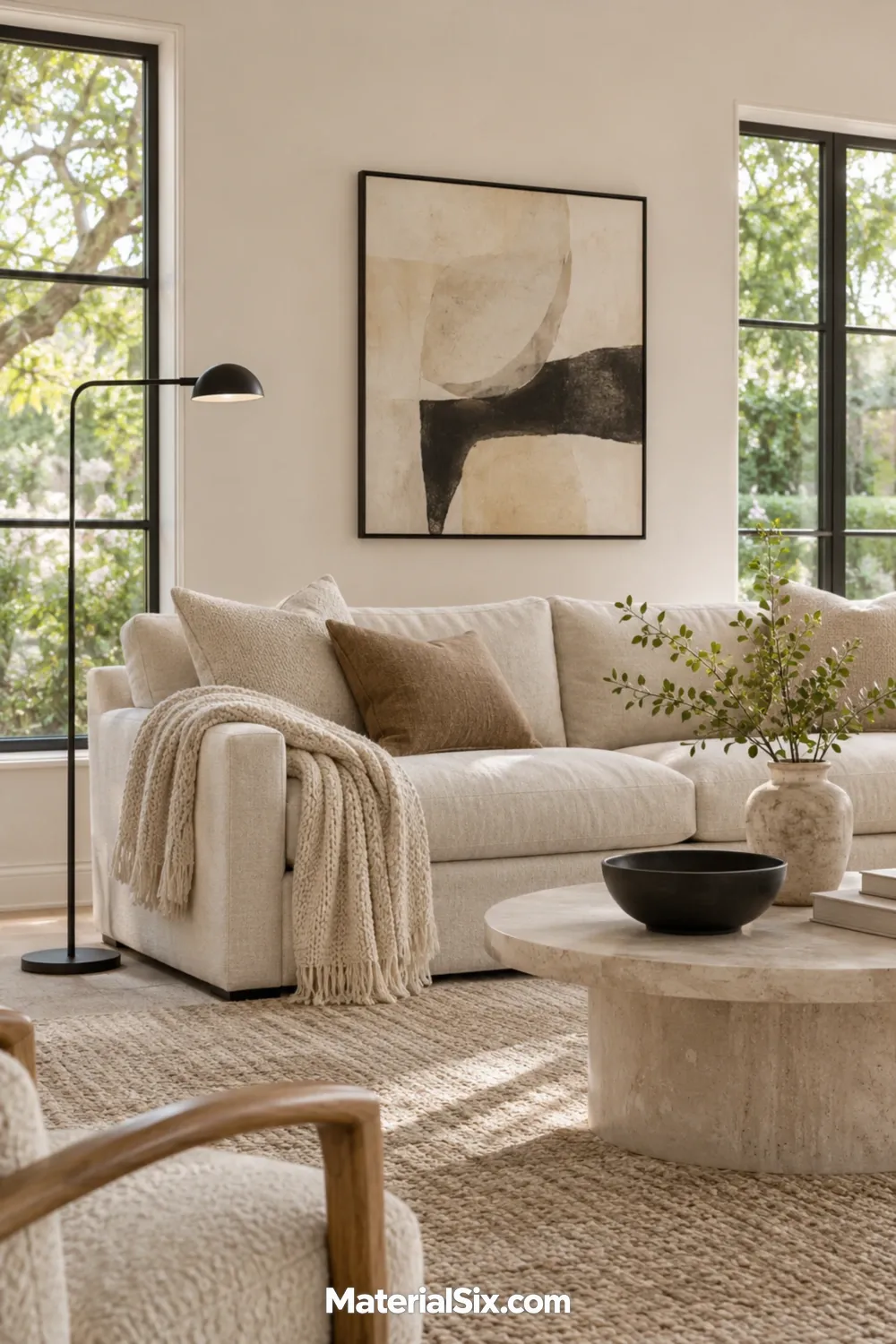
Soft black details give a pale room a clearer outline. A slender floor lamp, a narrow picture frame, and a dark bowl can be enough to connect the look across the space. The effect works because the dark pieces are distributed, rather than grouped into one visually heavy corner.
Choose matte or lightly textured finishes if glossy black feels too sharp beside linen and wood. You do not need every metal finish to match, but a repeated shape or tone helps the room feel coherent. Begin with one item you already own and test a second accent nearby.
21. Make a Soft Foundation with a Wool Rug
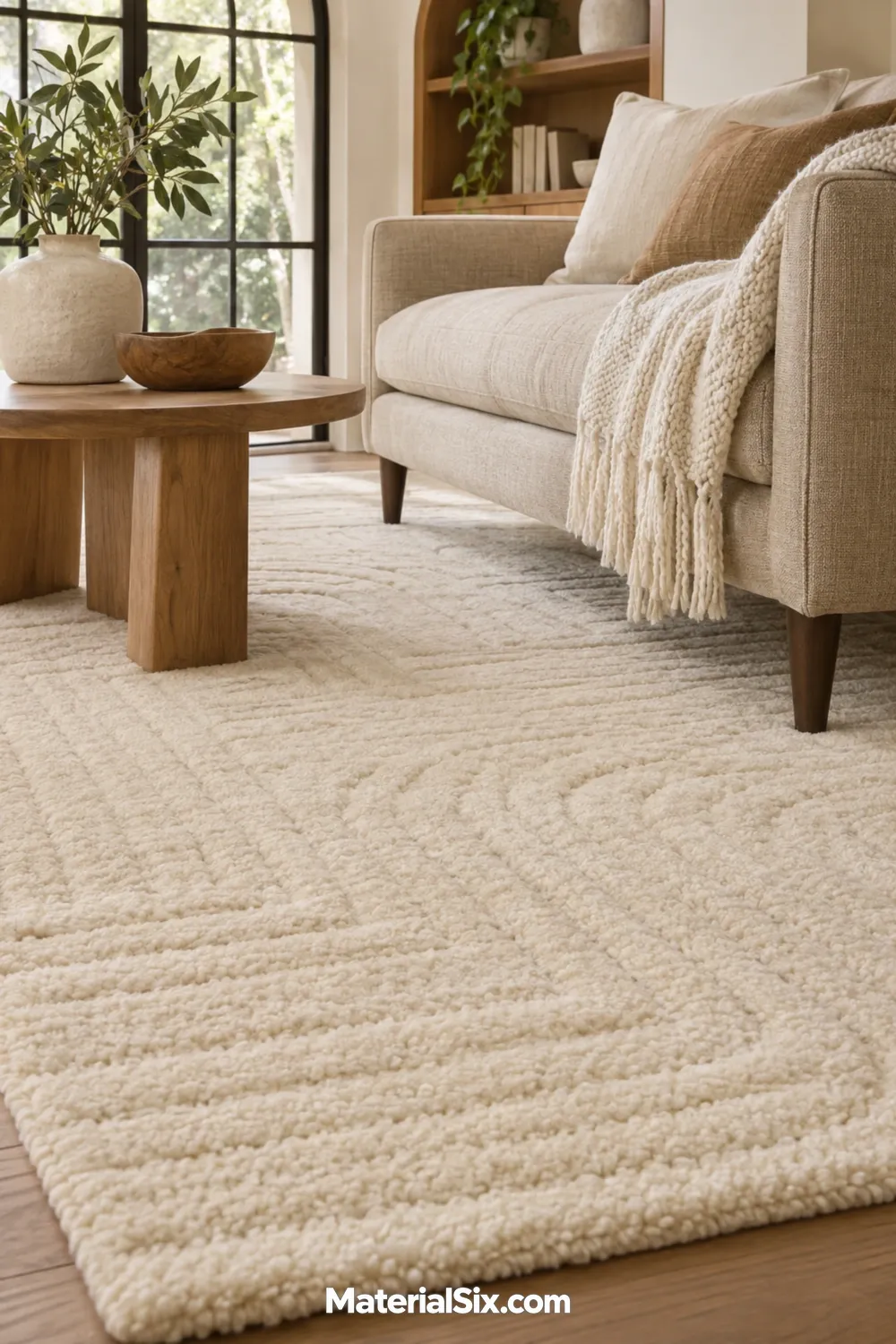
A cream wool rug adds a softer foundation than a coarse natural-fiber weave. A subtle raised pattern gives the floor some interest without competing with furniture or art. In a modern organic living room, that quiet variation can be especially helpful when the sofa and curtains are also pale.
Check the pile height against door swings and the way your chairs move. Follow the rug maker’s cleaning guidance and consider your household’s spill patterns before choosing a light color. Use an appropriate pad beneath it. Size the rug for the seating group, not just the coffee table, and compare a sample with your upholstery so the whites feel related rather than accidentally mismatched.
22. Add Depth with One Vintage Wood Piece
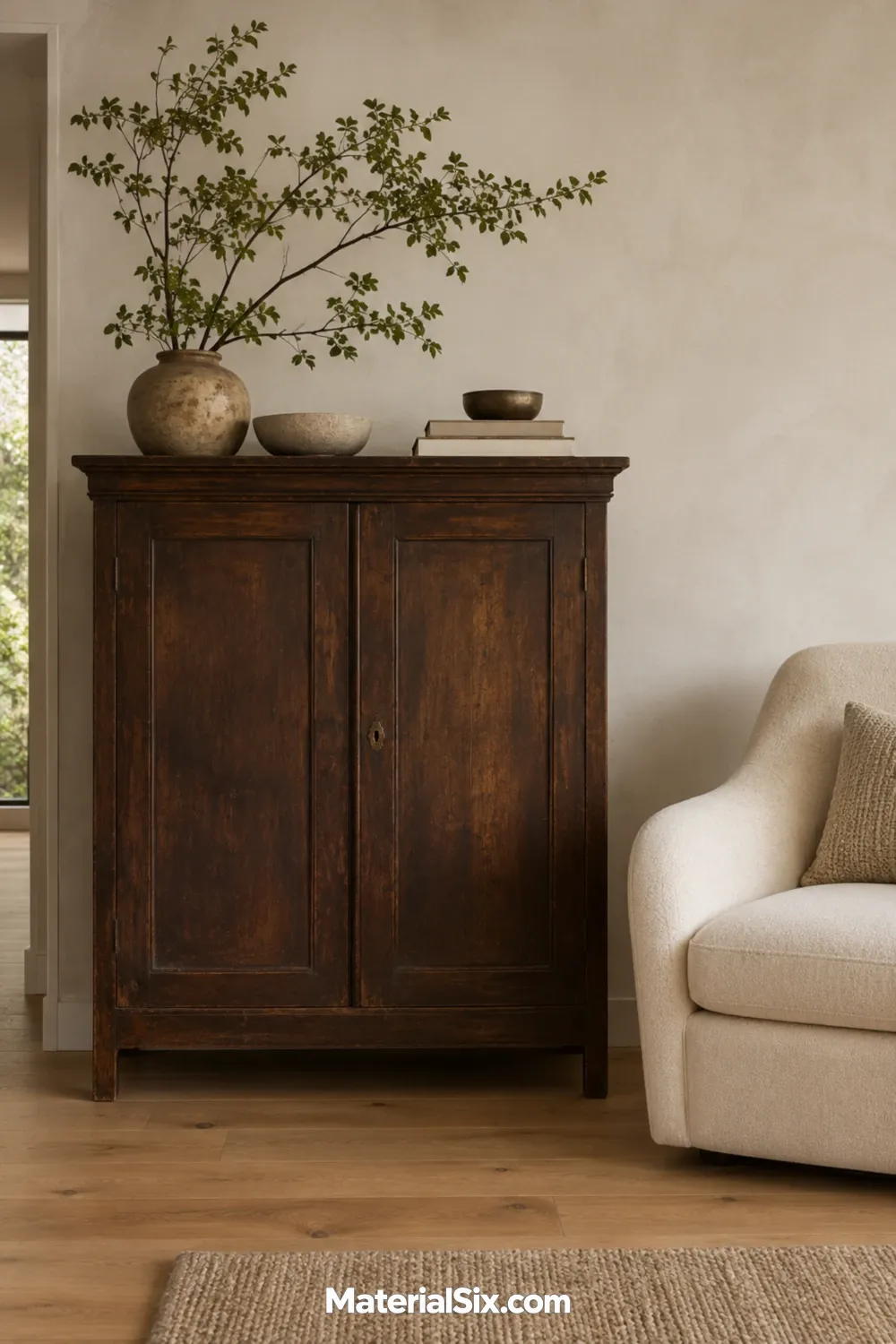
One vintage wood cabinet can bring a deeper color and a less uniform finish into a modern room. Against pale walls and clean-lined seating, its aged grain becomes a feature without requiring a rustic theme. Choose a piece that offers useful storage as well as visual character.
Inspect the doors, drawers, stability, and condition before buying. Measure the route into your home, including turns and stairways. A darker cabinet often works best with some clear wall around it, letting the silhouette read. Resist adding several distressed pieces just to match it. Repeat its warmth in a small wood object while allowing newer furniture to keep the room feeling current.
23. Use Branches as a Sculptural Centerpiece
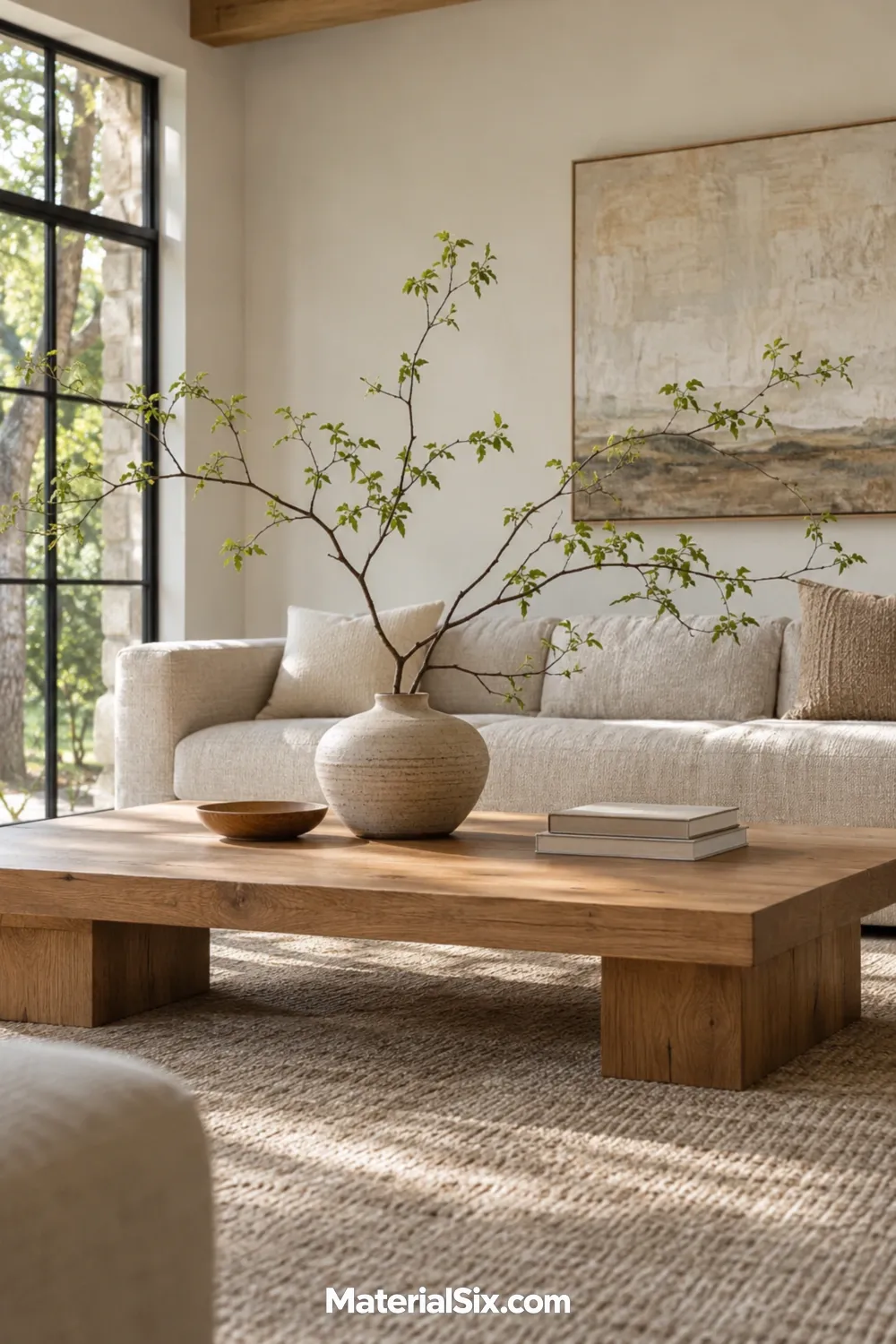
A few long branches make a coffee table arrangement feel more like a loose drawing than a dense bouquet. Their irregular lines suit a room full of clean furniture, and the simple silhouette gives you height without a cluster of small accessories. Use a stable ceramic vessel sized to support the stems.
Keep the arrangement low or open enough that people can see each other across the seating group. Check for sharp ends and position it away from the main reach for drinks or remotes. You can use purchased branches or suitable cut stems, but avoid bringing unknown plants indoors. Leave the rest of the tabletop mostly open to emphasize the shape.
24. Scale the Look for a Small Living Room
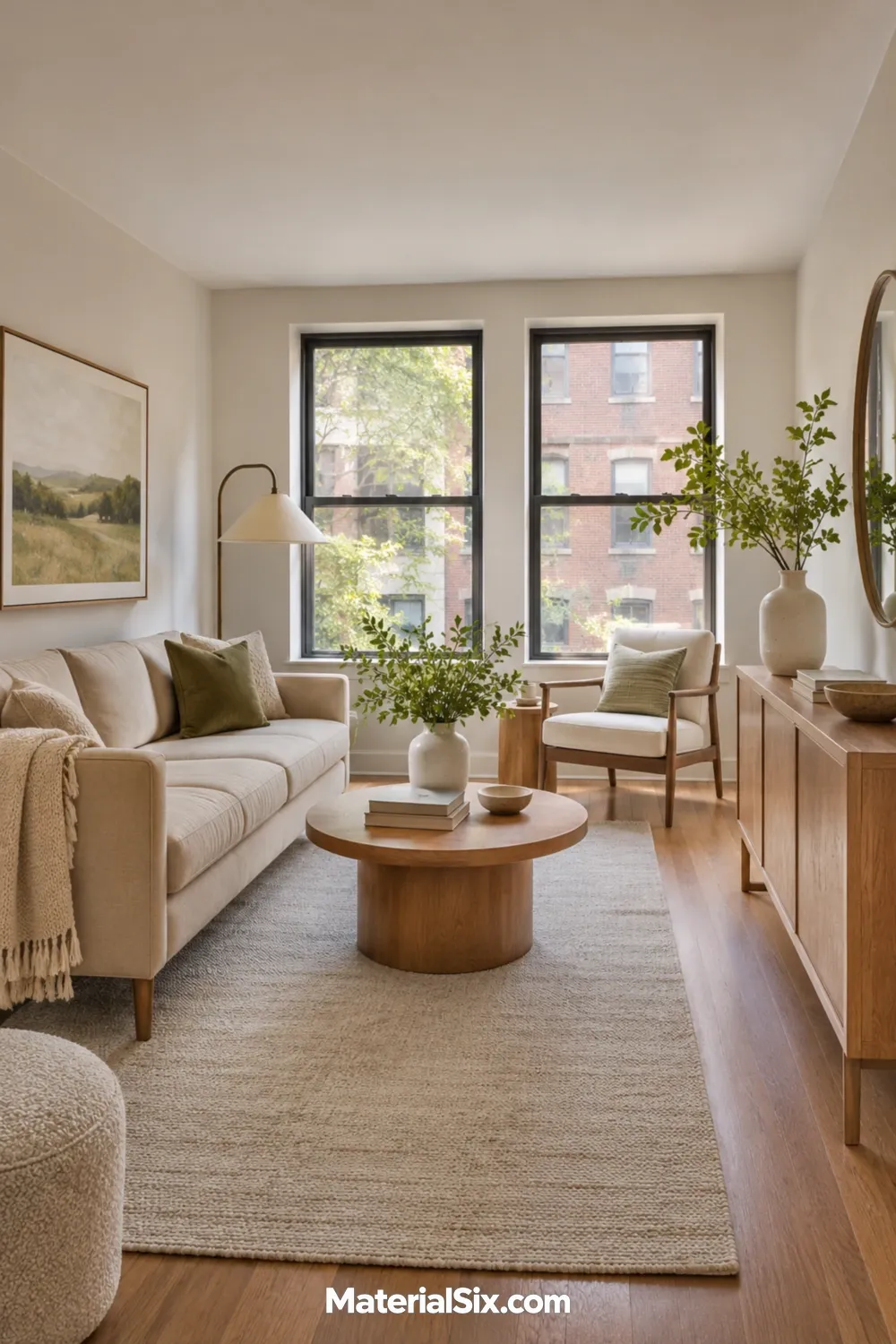
A small living room can use the same materials with fewer, better-scaled pieces. Start with a slim beige sofa, a rounded table, and a pale rug that connects the seating. A narrow console can provide a landing place without occupying the floor area of a deep cabinet.
Measure the walking routes before adding an accent chair. Wall color, curtain fabric, and upholstery can sit close together in tone, while the wood table supplies contrast. Choose storage for the items that otherwise gather on visible surfaces. Keep taller pieces near the perimeter when possible. The aim is a workable layout first; a room with clear paths will feel calmer than one filled with small decorative furniture.
25. Finish with a Texture-Rich Reading Nook
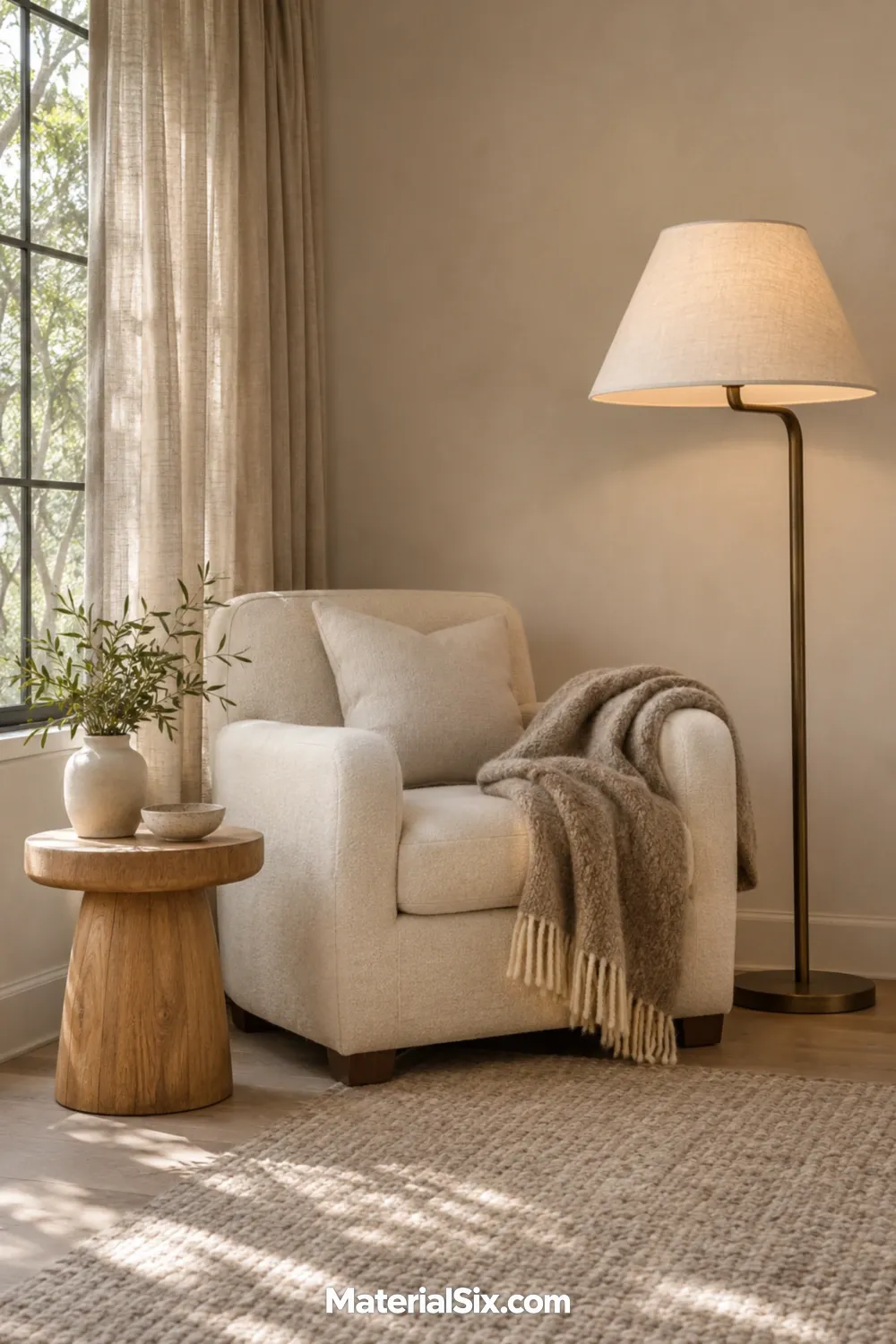
A reading nook adds a second way to enjoy the room without changing the whole layout. Combine a cream upholstered chair, a small oak stool or table, and a shaded floor lamp. A linen curtain behind it and a wool throw give this corner its own mix of soft textures.
Sit in the chair before deciding on lamp placement. Check that the light reaches your book and that you can set down a mug without stretching. Leave room to get in and out of the seat comfortably. If the living room is small, let this chair also serve the main seating group. One useful corner can be more satisfying than another purely decorative vignette.
How to Combine the Materials Without Making the Room Feel Busy
Choose one starting point: your existing sofa, the flooring, or a rug you plan to keep. Hold wall and fabric samples beside it in morning and evening light. Warm neutral living room colors work best when you can see their undertones together.
Build the room in three passes:
- Establish the largest surfaces, such as walls, seating, and the rug, in related neutral tones.
- Add two or three natural materials with different surfaces, such as oak, linen, and honed stone.
- Introduce a little contrast through a dark frame, clay accent, or deeper wood cabinet.
You do not need every material in every corner. Repeat a few finishes at different heights, then stop and live with the arrangement before adding more. For purchases, prioritize the pieces you touch and use daily. A comfortable sofa and a practical table matter more than matching decorative objects.
Frequently Asked Questions
What makes a living room modern organic?
The look combines relatively simple furniture with natural materials, tactile finishes, and softer shapes. Wood, stone, linen, and woven fibers often appear together, usually within a restrained, earthy palette.
Can I use gray in a modern organic living room?
Yes. A warm gray can work beside oak, ivory, and taupe. Compare samples with your existing finishes, and add texture so the room does not rely on paint color alone.
Does all the wood need to match?
No. Choose a dominant wood tone, then add another with a shared undertone or a clear contrast. Repeating each tone somewhere in the room can help the combination feel intentional.
How can I start without replacing my sofa?
Work with its color and shape. Try a better-sized rug, linen curtains, a simpler coffee table arrangement, or textured covers that relate to the upholstery. Remove competing small objects before adding new ones.
Start with the Piece Your Room Needs Most
Choose one change that solves a real issue: softer light at the window, a table that suits the seating, or storage that clears the surfaces. Then add texture and contrast gradually. A modern organic living room feels inviting when its natural materials support a comfortable, usable layout.