
The sofa is where you read bedtime stories, fold a basket of laundry, and finally sit down after dinner. The same floor might host a block tower in the afternoon and a board game that evening. A room doing that much work needs more than attractive cushions, but you shouldn’t have to give up the colors, materials, and furniture shapes you enjoy.
The most useful family-friendly living room ideas make everyday habits part of the design. That might mean putting toy storage within reach, choosing upholstery with a care routine you can manage, or leaving enough open floor for everyone to move around comfortably. Small decisions can change how the whole room feels.
These 21 ideas cover seating, storage, layout, lighting, and the finishing touches that help a shared space feel considered. Choose the ones that solve your household’s actual frustrations, then repeat a few colors and finishes so the practical pieces look like they belong.
1. Choose a Sofa with Removable Slipcovers
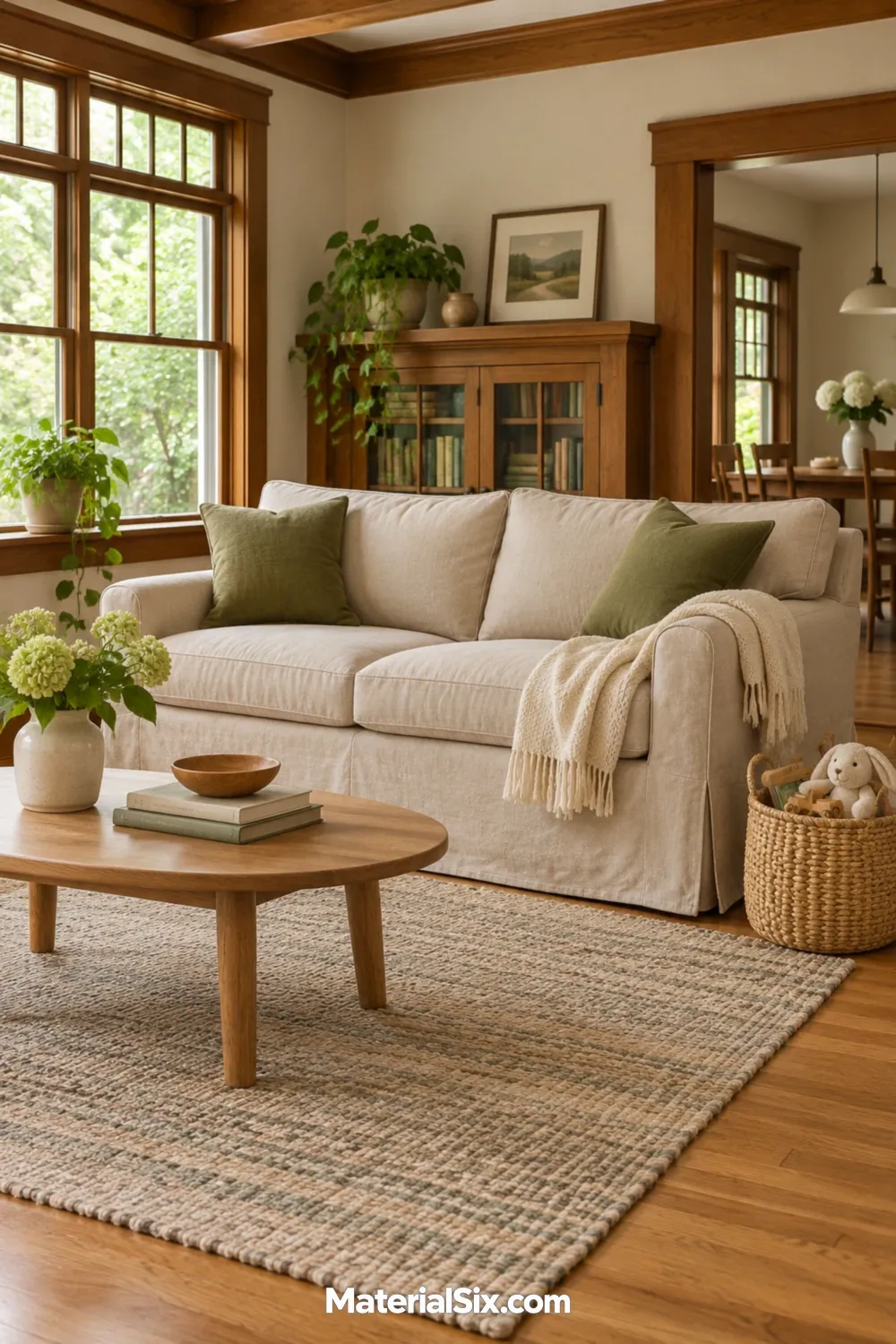
An oatmeal slipcovered sofa brings softness to a room without making every spill feel like a decorating disaster. Its relaxed fabric suits wood floors, baskets, and the books that gather around family seating.
Before choosing one, read the care instructions for the specific fabric. Removable doesn’t automatically mean machine washable, and some covers need air drying or professional cleaning. Check how easily the largest cover comes off and whether it fits your washer. A spare compatible cover can be useful if your budget allows. Keep the silhouette simple, then add character with olive pillows or a textured throw.
2. Round Off the Center with an Upholstered Ottoman
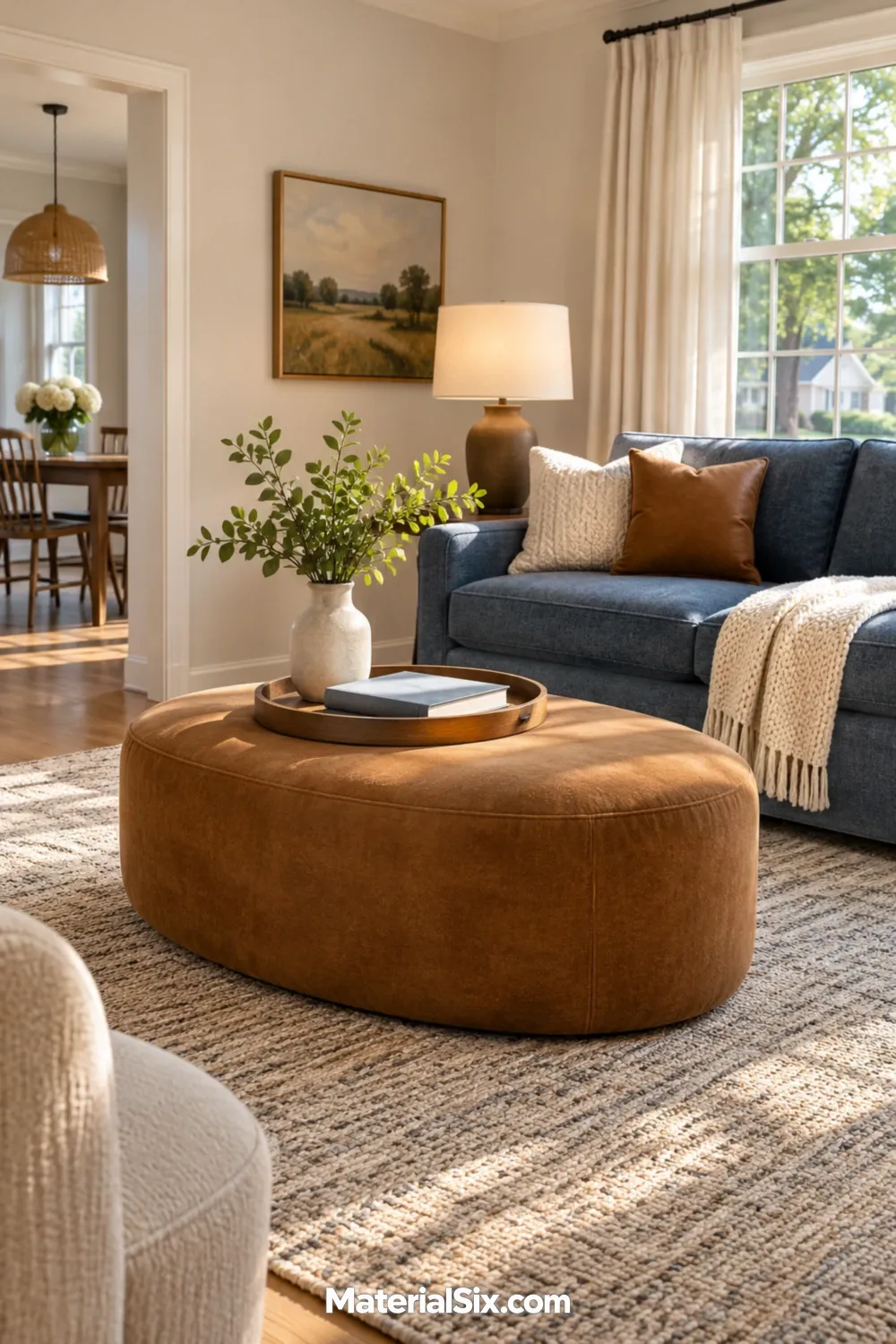
A generously scaled upholstered ottoman changes the feel of the seating area. Instead of a hard rectangular table defining the middle, you get a rounded, cushioned surface that visually connects the sofa and chairs. The caramel tone here adds warmth without demanding bright accessories.
Measure the space around it before buying, including the route people use to reach the sofa. An ottoman can still crowd a small room, even with curved edges. Use a removable tray when you need a level spot for a book or remote, and lift it away before putting your feet up. Check the upholstery’s cleaning guidance and the piece’s intended uses.
3. Hide Toys in a Low Closed Cabinet
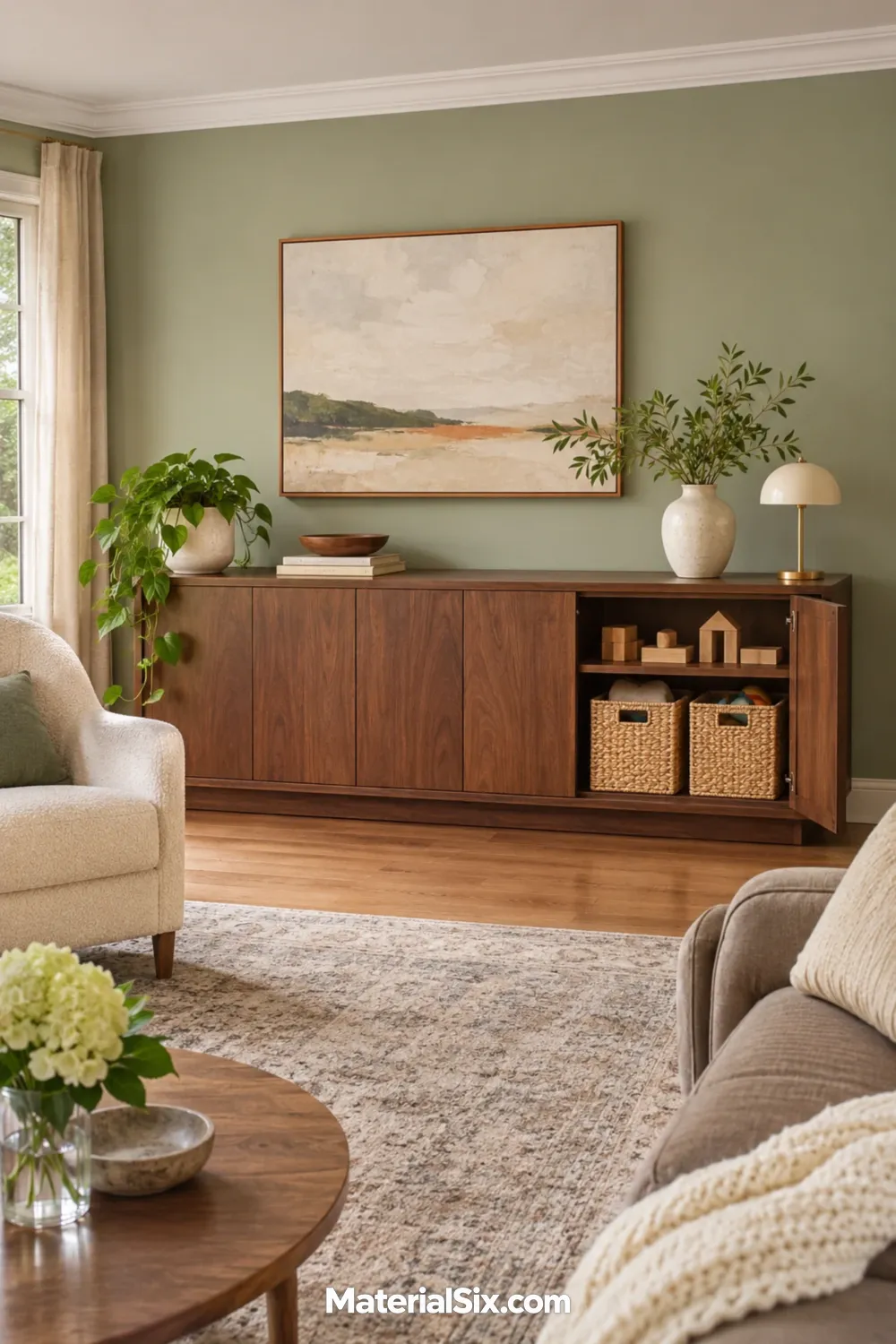
A walnut cabinet can hold building blocks and toy cars while looking like a deliberate part of your furniture collection. Closed fronts quiet the view, especially in a living room that opens onto the kitchen or entry. Matching bins inside keep small pieces from spreading across every shelf.
Assign each compartment a broad category rather than creating a complicated sorting system. Leave enough clearance for the doors to open fully, and check the manufacturer’s anchoring instructions. Low furniture still needs appropriate installation. Use the top sparingly: one large artwork and a lamp are easier to maintain than a row of little ornaments that must move every time you clean.
4. Anchor Seating with a Patterned Low-Pile Rug
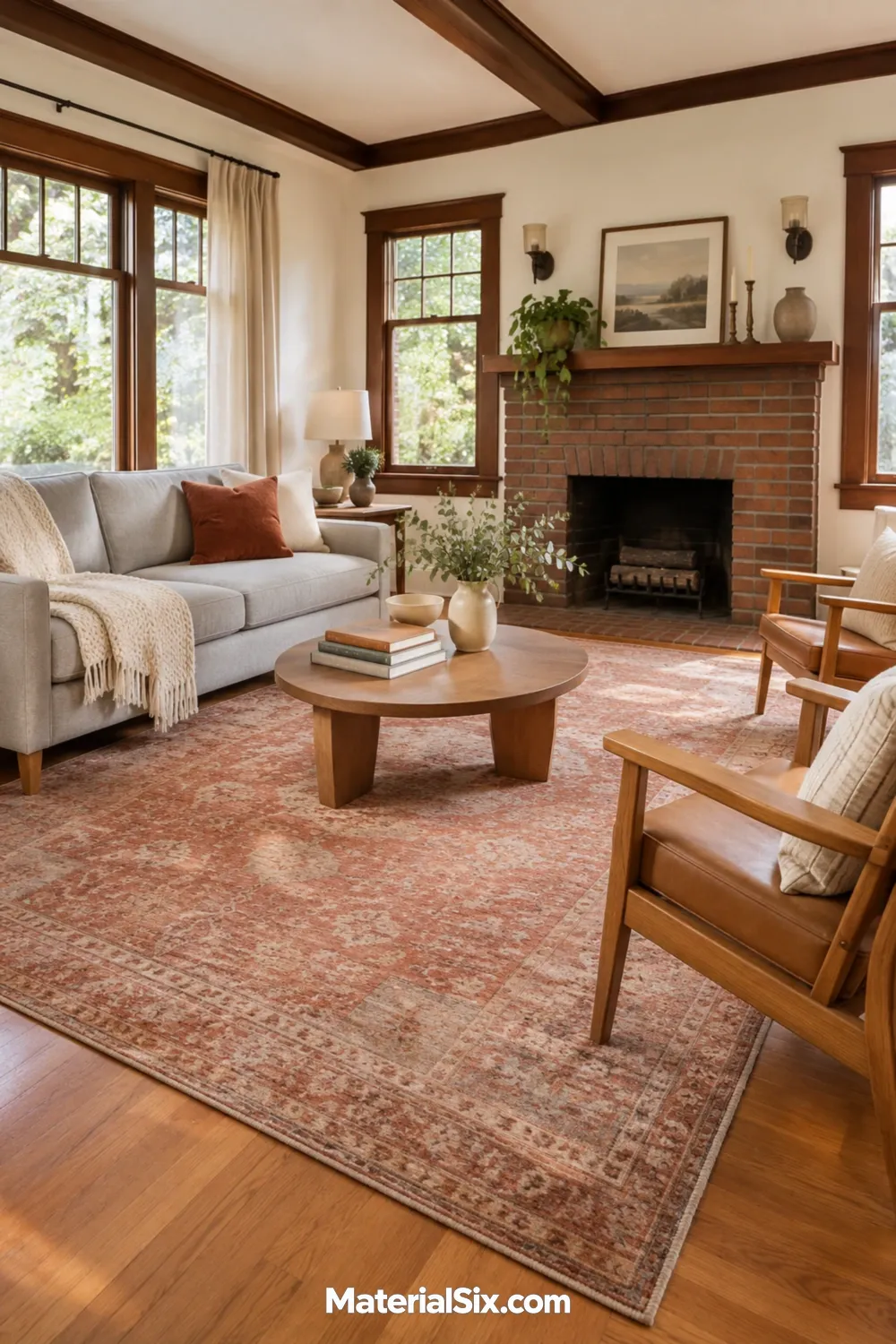
A faded terracotta pattern gives the seating area definition and adds interest beneath neutral furniture. A low pile can make small toys easier to spot than a deeply shaggy surface, while its varied pattern adds visual interest.
Choose the size by furniture placement, not just the empty floor measurement. Let the front feet of the main seats overlap the rug. Compare the fiber, backing, and cleaning instructions before deciding; a patterned rug isn’t automatically washable. A compatible rug pad helps the rug sit properly, and vacuuming under the edges keeps the surrounding floor easier to maintain.
5. Turn a Window Seat into Useful Storage
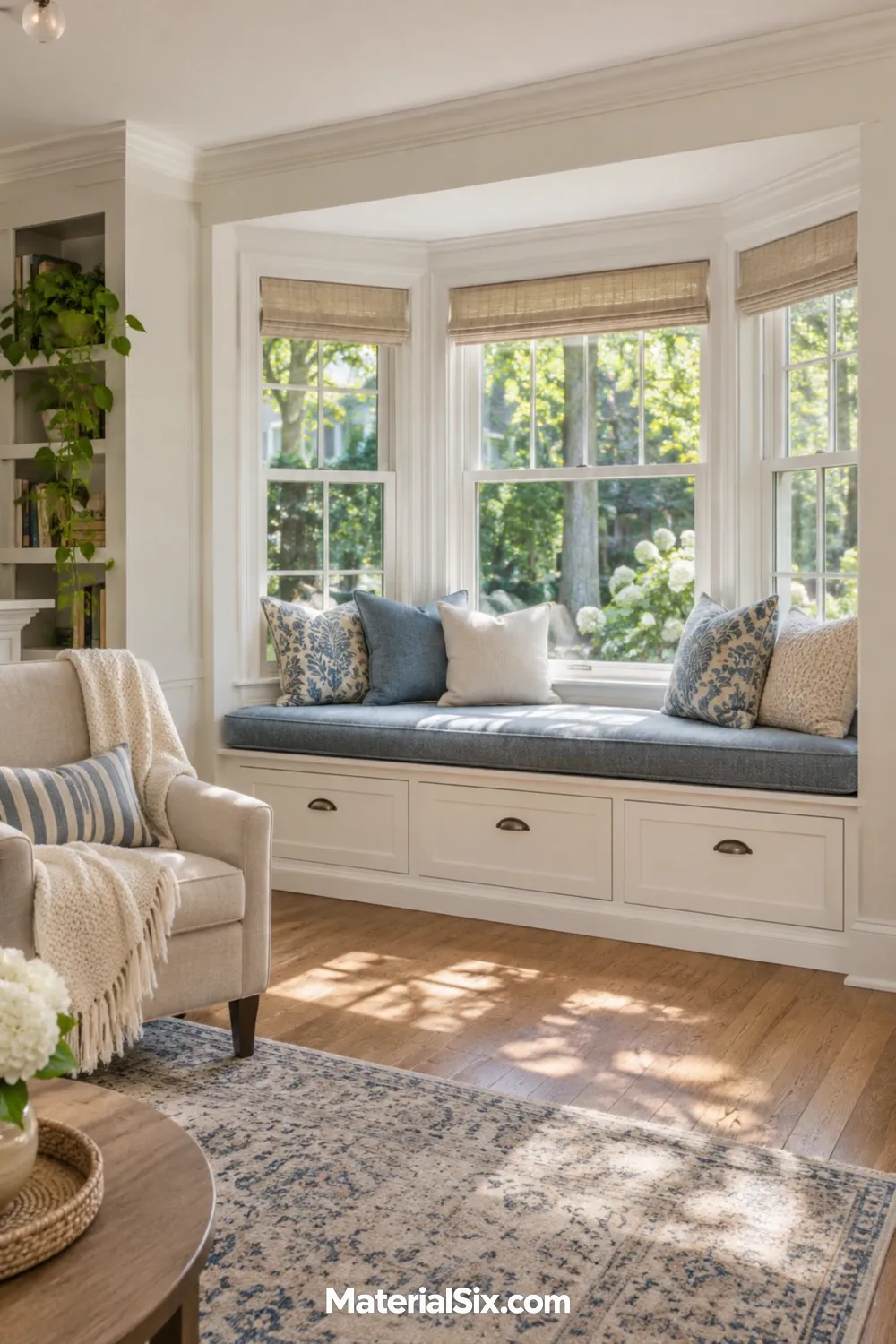
A window seat with drawers creates a reading perch and a home for the items that otherwise collect on the sofa. The blue cushion makes this built-in feel like upholstery rather than a cabinet, while simple white fronts connect it to the window trim.
Plan the drawers around what you will store: larger compartments suit blankets, while shallower ones work for drawing pads or puzzles. Check that they open without hitting nearby seating. If you’re commissioning a bench, account for heating outlets, window operation, and the finished cushion height. A removable cushion cover makes upkeep more manageable. Keep the window area usable rather than filling the seat with decorative pillows. Consider a firmer cushion if you expect adults to sit here often.
6. Keep a Clear Route Behind the Sofa
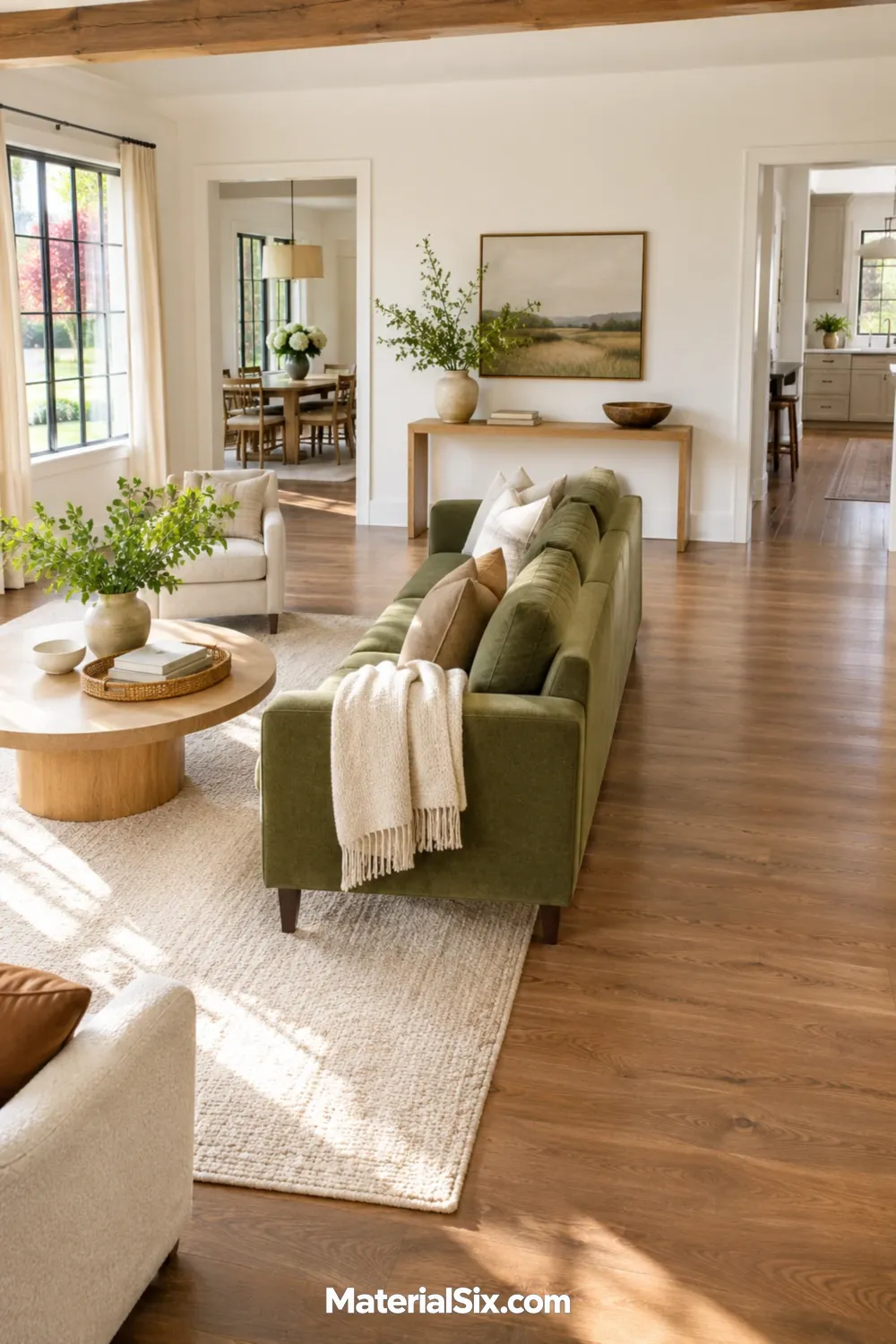
Watch how your family crosses the room before moving any furniture. If the shortest route runs between the television and the sofa, a different arrangement may make everyday use feel calmer. Floating a sofa can create a passage behind it and keep movement outside the conversation area.
Use painter’s tape to test the footprint, then walk through carrying laundry or a tray. Allow for door swings and the space needed to stand up from each seat. There isn’t one layout that suits every home. In a narrow room, pushing seating closer to a wall may work better. Keep the chosen route free of baskets, floor lamps, and occasional stools.
7. Give Kids a Reading Corner That Belongs
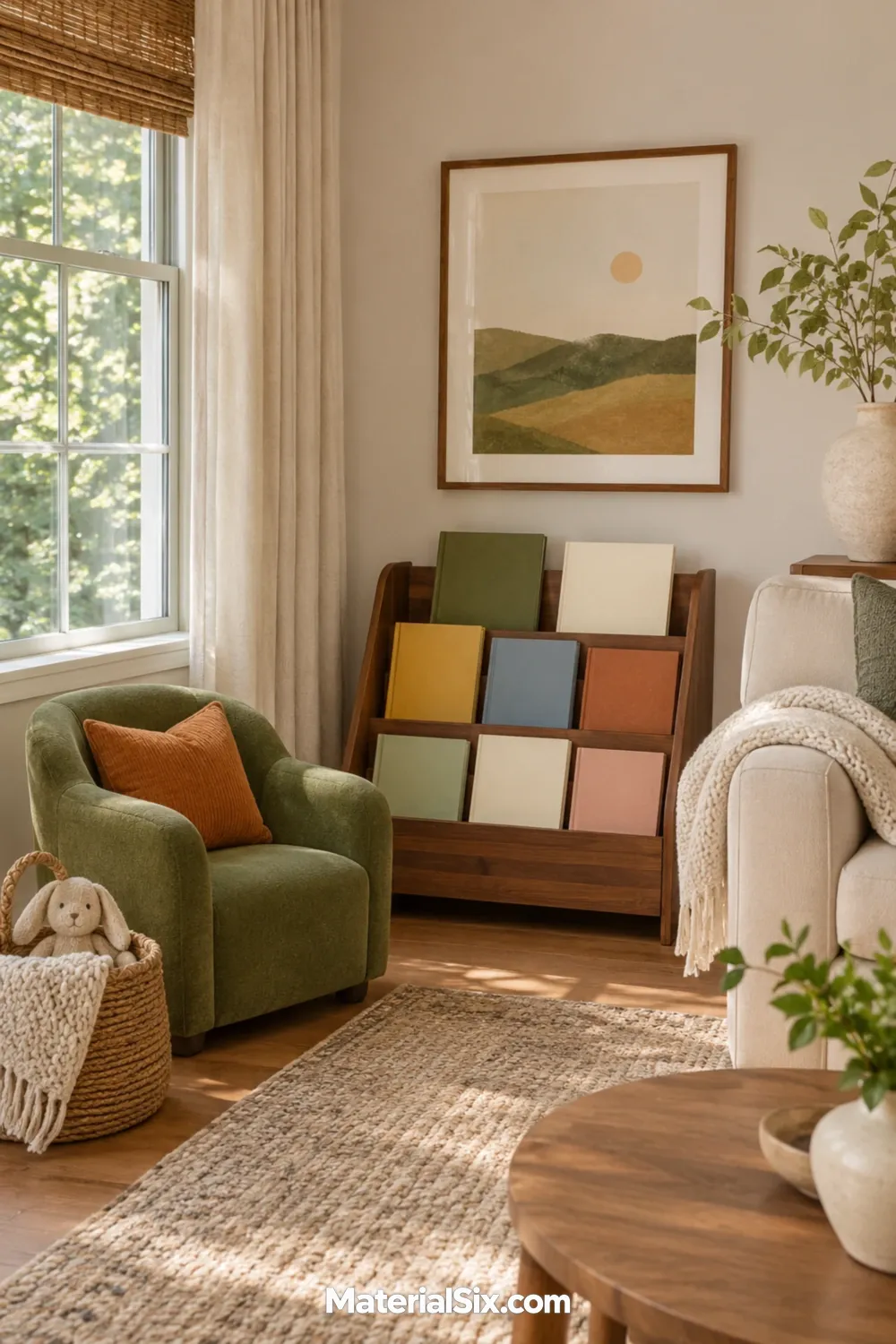
A child-size moss-green chair and a low book display give young readers a place in the room without introducing a completely different decorating scheme. Repeating the green in an adult cushion or artwork helps the corner feel connected to the larger seating area.
Keep the book selection small enough that the covers remain visible. Rotate titles rather than trying to display the entire collection, and leave a place for returning books independently. Position the corner where a seated adult can comfortably share a story. Avoid squeezing it into the main walkway. As reading habits change, the same footprint can hold a larger chair and a compact side table.
8. Choose a Sectional That Matches How You Lounge
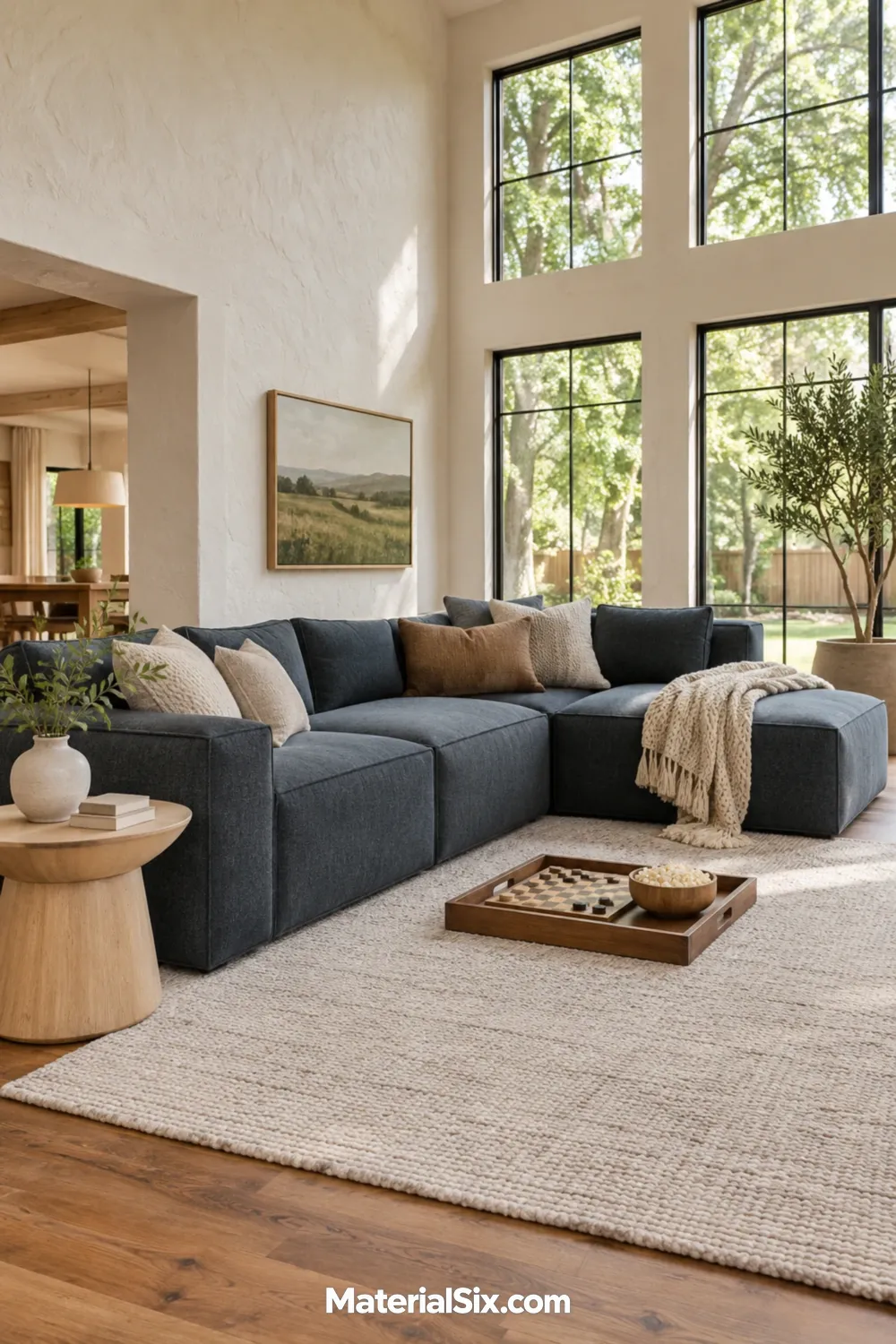
If everyone gravitates to the same sofa, generous shared seating may serve you better than several decorative chairs. A blue modular sectional gives this bright room a strong anchor, with enough depth for relaxed evenings and a chaise that makes the lounging function clear.
Start with the room dimensions and the people who use it. Check delivery access, module connections, seat depth, and which configurations the manufacturer actually supports. Modular pieces aren’t always interchangeable in every direction. Leave space for side tables so drinks don’t have to balance on cushions. If a sectional overwhelms your floor plan, a standard sofa with an ottoman offers some of the same flexibility.
9. Tuck Extra Stools Under a Console
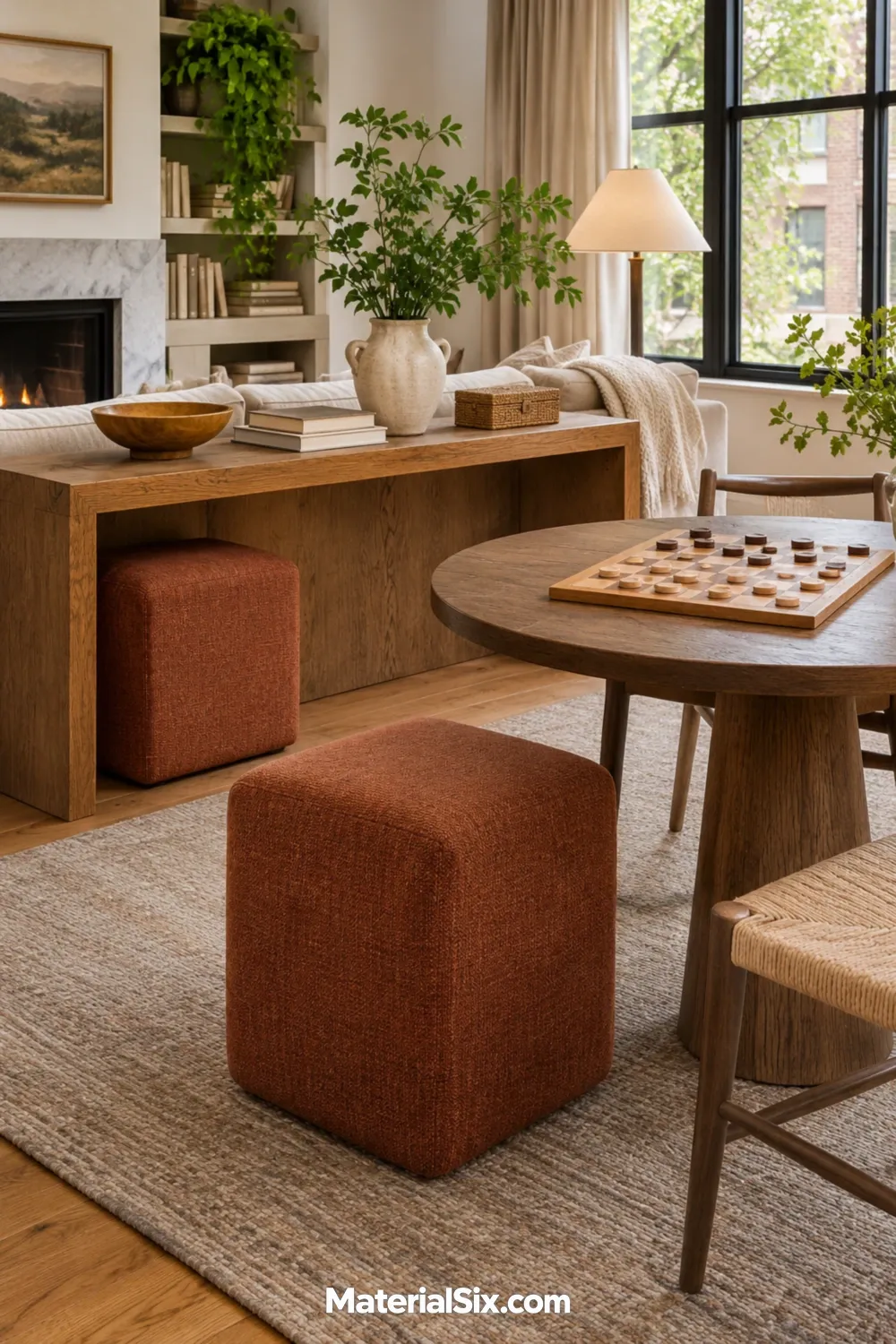
Compact upholstered stools can join the conversation or a game, then slide back under a console when the floor is needed. Rust fabric gives these small pieces a decorative role, so the extra seating doesn’t look like something borrowed from another room.
Before choosing your stools:
- Compare their full width and height with the console opening.
- Allow enough space to grip and pull each stool out.
Choose pieces rated for seating rather than decorative footrests if that’s how you plan to use them. In a smaller room, start with one. Several stools can become obstacles if there isn’t a clear place to put them away.
10. Make Space for Drawing Along One Wall
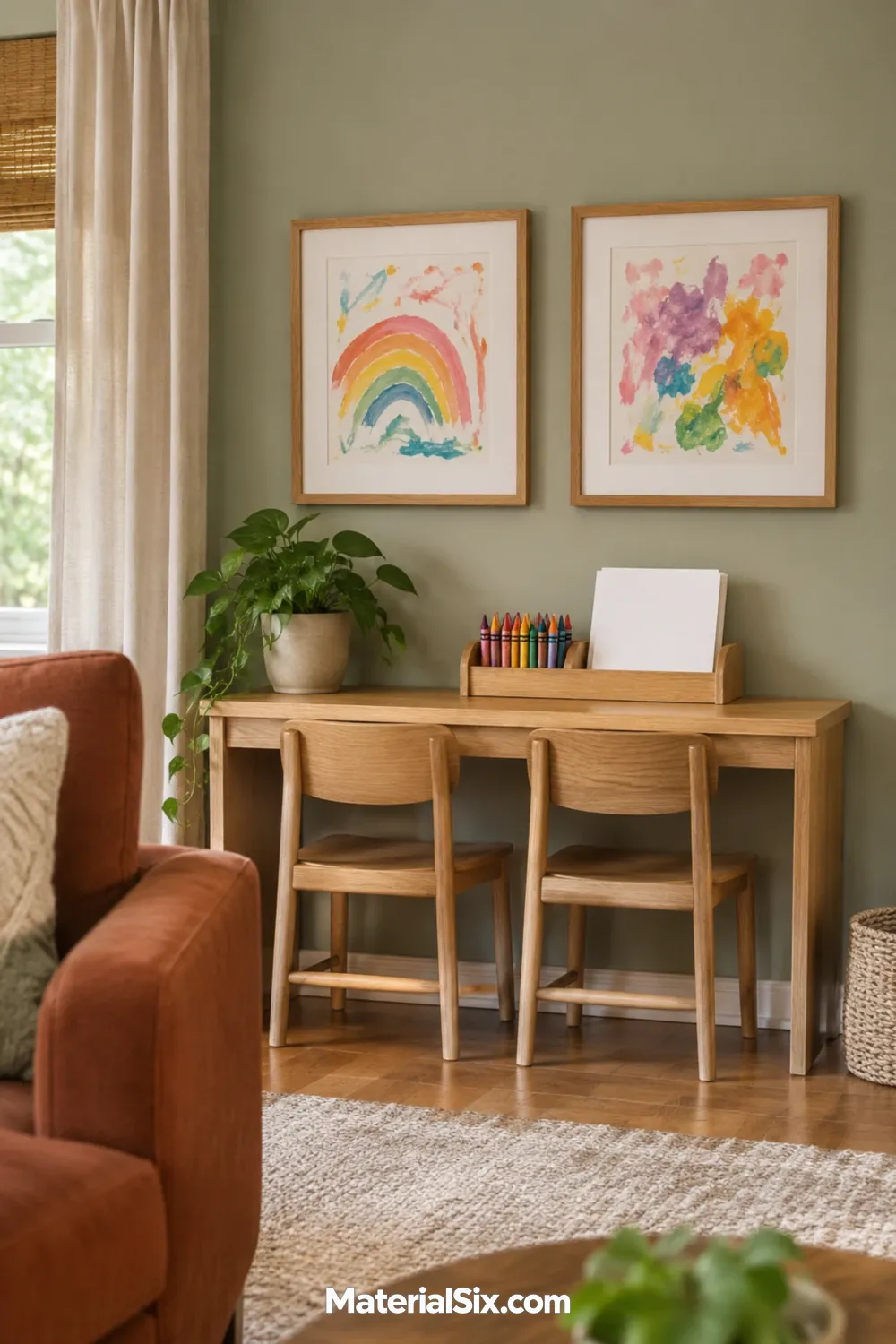
A slim desk along one wall gives crayons and paper a destination beyond the coffee table. Oak furniture, tucked-in chairs, and matching frames help the activity station read as part of the living room instead of a temporary project spread across it.
Keep only the supplies used most often in a shallow caddy. Store messy materials elsewhere if the room’s finishes can’t handle them, and use a removable protective surface for drawing sessions. Check chair height against the desk and leave space to pull seats out. You don’t need a long workspace for this idea; one small table can be enough when the supplies have a consistent home.
11. Frame Children’s Art as a Real Gallery
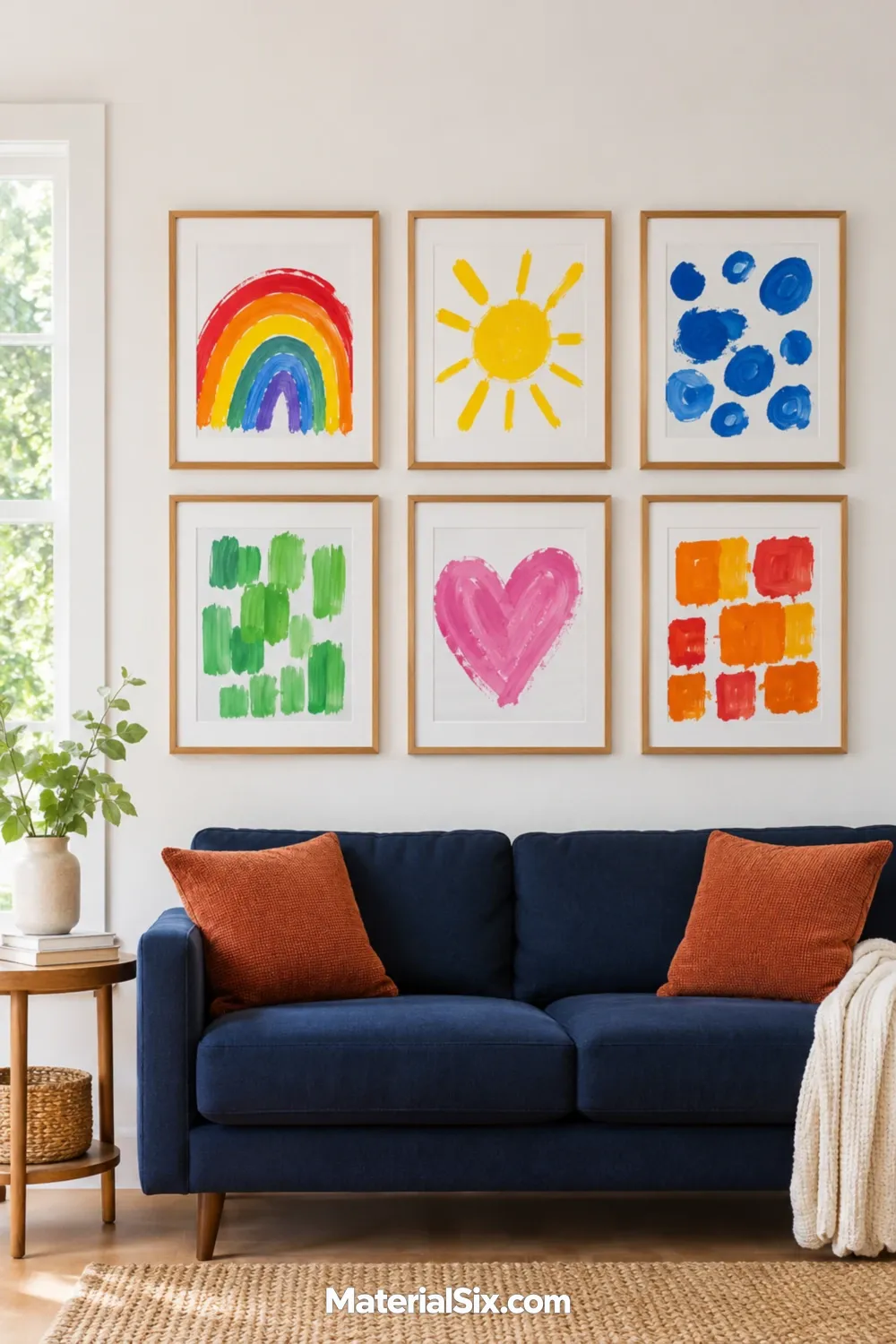
Children’s artwork can carry the color in a living room when you give it a consistent presentation. Matching oak frames and broad white mats turn different paintings into a coherent gallery, even when the subjects range from rainbows to simple brushstrokes. A navy sofa beneath them grounds the brighter colors.
Lay the arrangement out on the floor before hanging it. Keep the gaps consistent and align the group with the sofa rather than automatically centering it on the entire wall. Choose suitable hanging hardware and frame materials for the location. Rotate the contents a few times a year, storing the remaining originals flat so the gallery stays manageable.
12. Layer Lighting for Reading and Relaxing
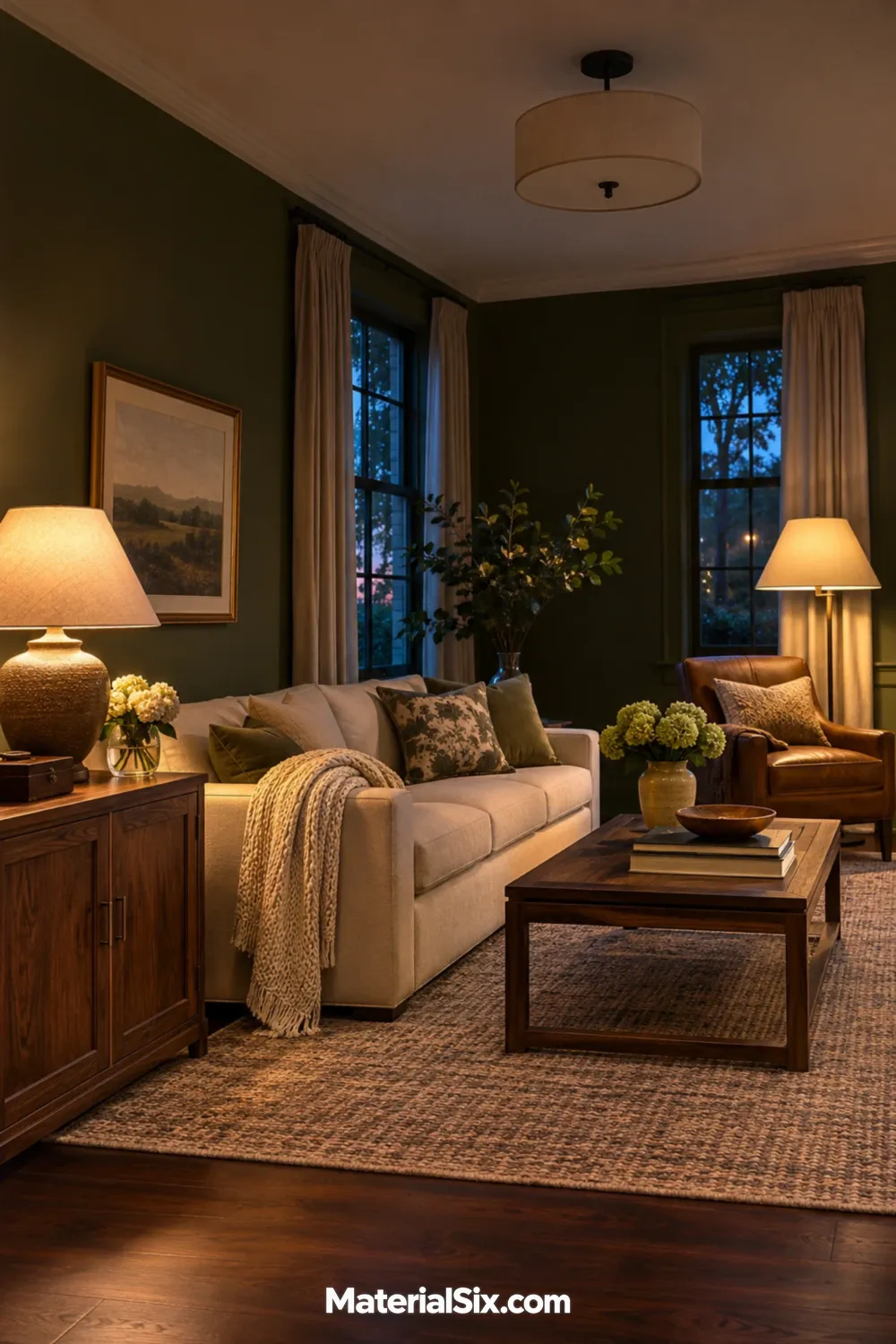
One bright ceiling light rarely creates the atmosphere you want for both reading and winding down. A shaded lamp near a chair and another beside the sofa let you light the places people actually use. In this olive room, separate pools of warm light make the seating feel inviting after sunset.
Plan outlets and cord routes before choosing lamp positions. Keep cables out of walking paths and away from places where they could be pulled. A reading lamp needs enough useful light at the page, so judge it from the seat rather than across the room. Check bulb compatibility and shade size, and add adjustable brightness where the fixture supports it.
13. Repeat a Calm, Forgiving Color Palette
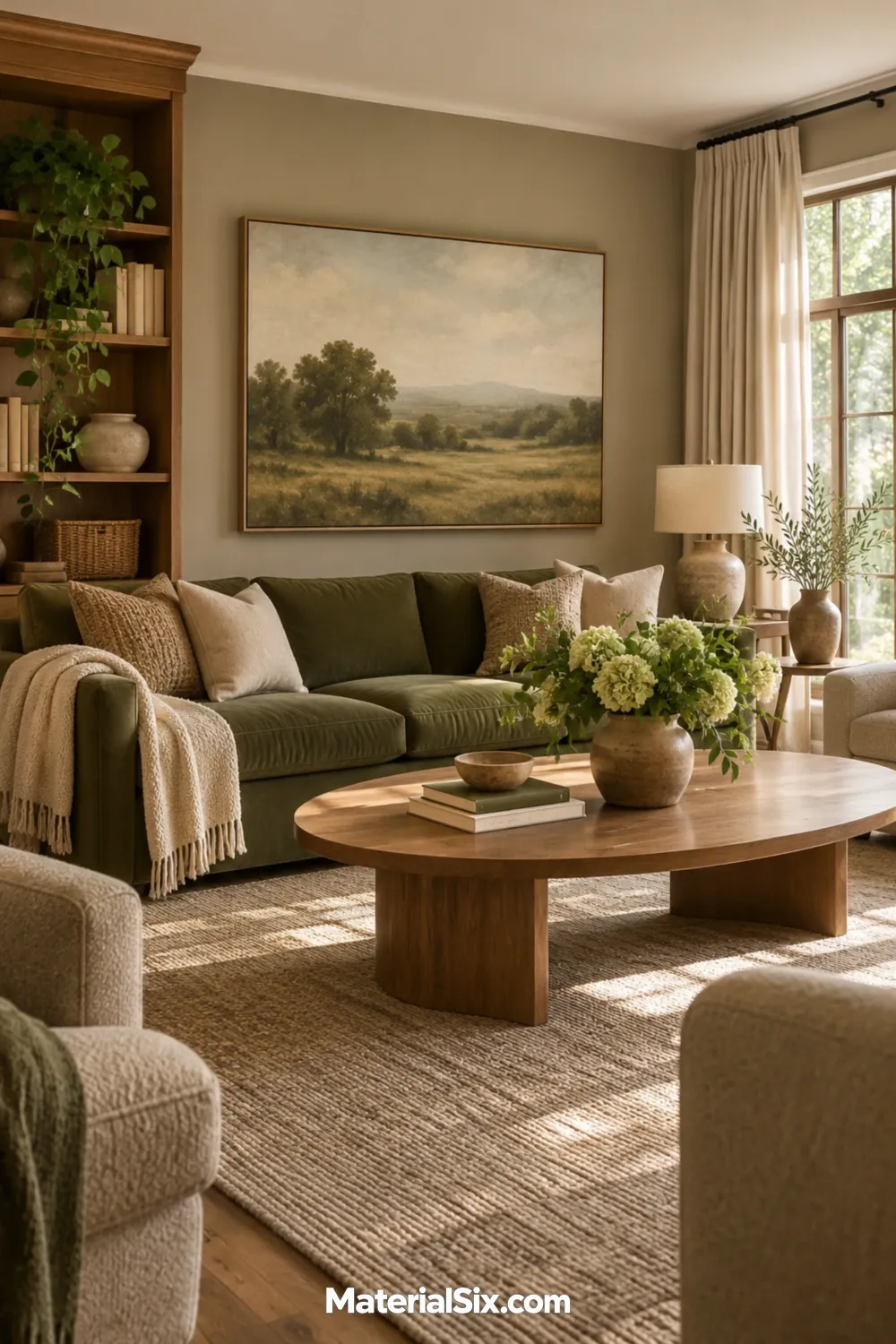
Olive, oatmeal, and medium-toned oak make a useful starting palette because they offer contrast without making each object compete. The room can accommodate a basket, a throw, and a stack of books while still feeling visually connected. Repeating these tones across large pieces does much of the decorating work.
Choose two main colors and one wood tone from items you already own. Add a smaller accent if the space feels too quiet. Test fabric and paint samples in your room’s changing light before committing. Midtones and textured weaves may soften the appearance of everyday marks, but care requirements still depend on the particular material and finish.
14. Leave an Open Patch for Floor Play
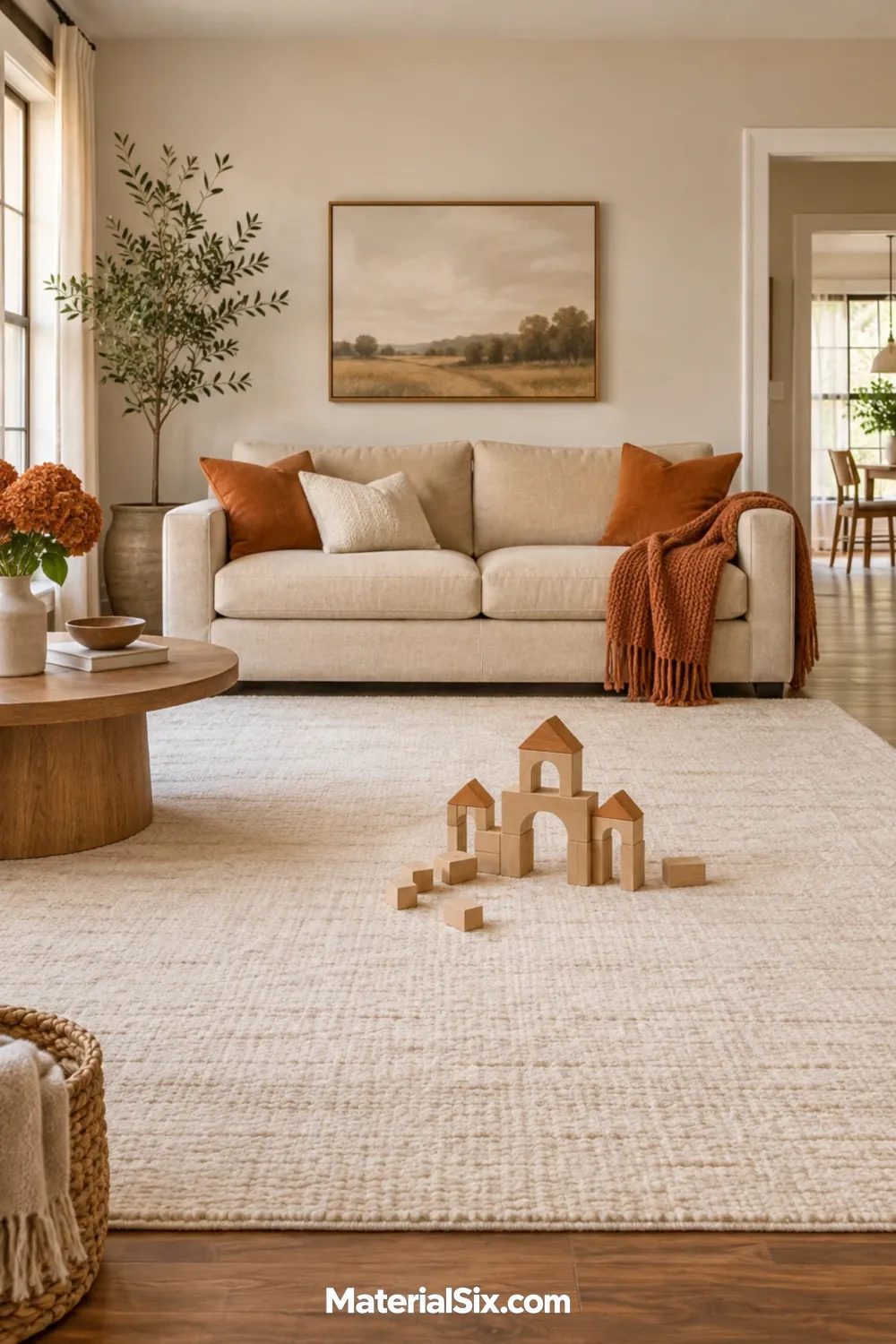
Sometimes the most useful addition is an area you leave empty. An open patch of rug lets a block tower, train track, or stretching session happen without moving half the room. A coffee table placed slightly to one side can support that flexibility when the seating arrangement allows it. Decide where floor activities will fit, then test whether adults can still reach every seat comfortably. Keep the main passage separate from the play patch. Use a small basket for the current activity rather than putting every toy nearby. When play is over, the same open space makes the room feel lighter. You can adapt this idea without buying new furniture.
15. Balance Open Shelves with Closed Storage
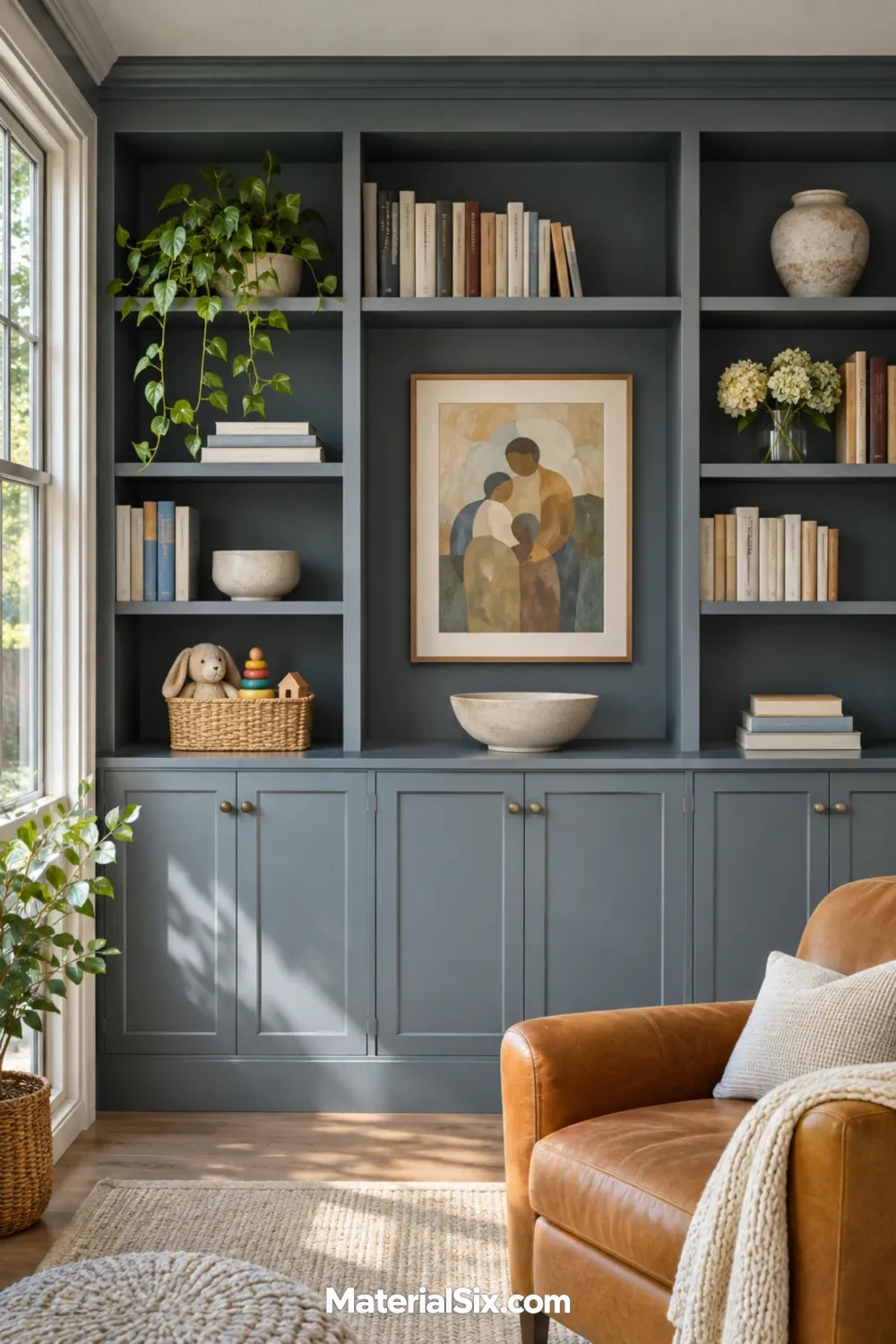
Open shelving brings personality, but it also exposes everything placed on it. Pairing a few display shelves with closed lower cupboards gives you room for both favorite objects and the less photogenic belongings that make a family room work. Slate-blue cabinetry adds depth around books and pale ceramics.
Reserve open shelves for objects you enjoy seeing and can maintain. Put overflow, spare accessories, and bulky supplies behind doors. Leave some breathing room instead of filling every opening. If you’re adapting a freestanding unit, check its installation and anchoring requirements. Matching baskets can help, but buying more containers won’t solve storage that is already packed beyond comfortable access.
16. Give Board Games Their Own Cabinet
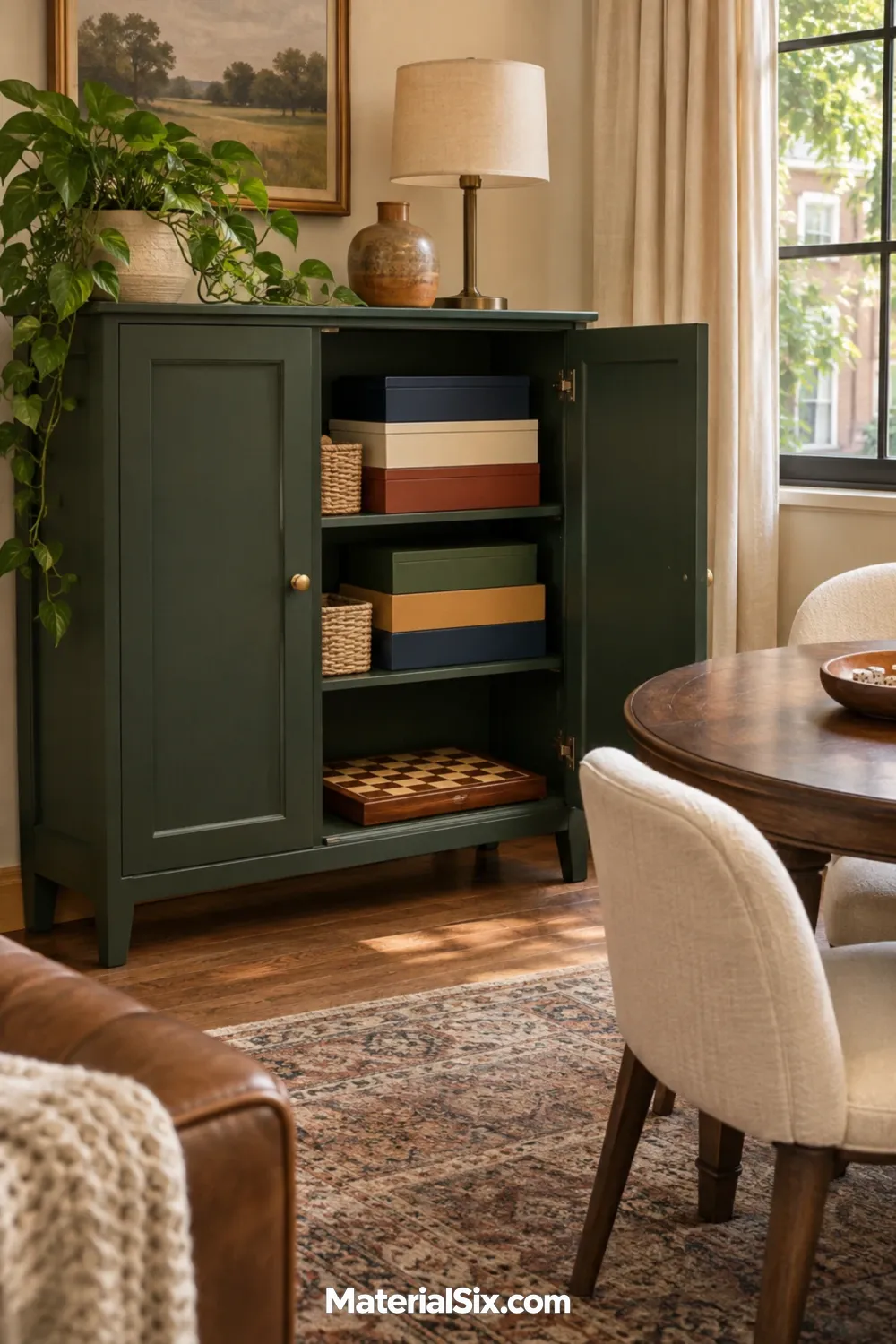
A dedicated game cabinet makes it easier to start a shared activity and put it away afterward. Deep-green doors give the storage a furniture-like presence, while adjustable shelves can accommodate boxes that rarely share the same dimensions. A nearby table provides a natural place to play.
Measure your largest games before choosing the cabinet depth. Store heavy boxes low and keep frequently used games accessible. Small pieces belong in their own pouches or original inserts inside the box, especially in households with younger children. Leave a little empty shelf space for returns. A cabinet crammed tightly from side to side makes cleanup much more frustrating than it needs to be.
17. Use Nesting Tables to Adjust the Floor Space
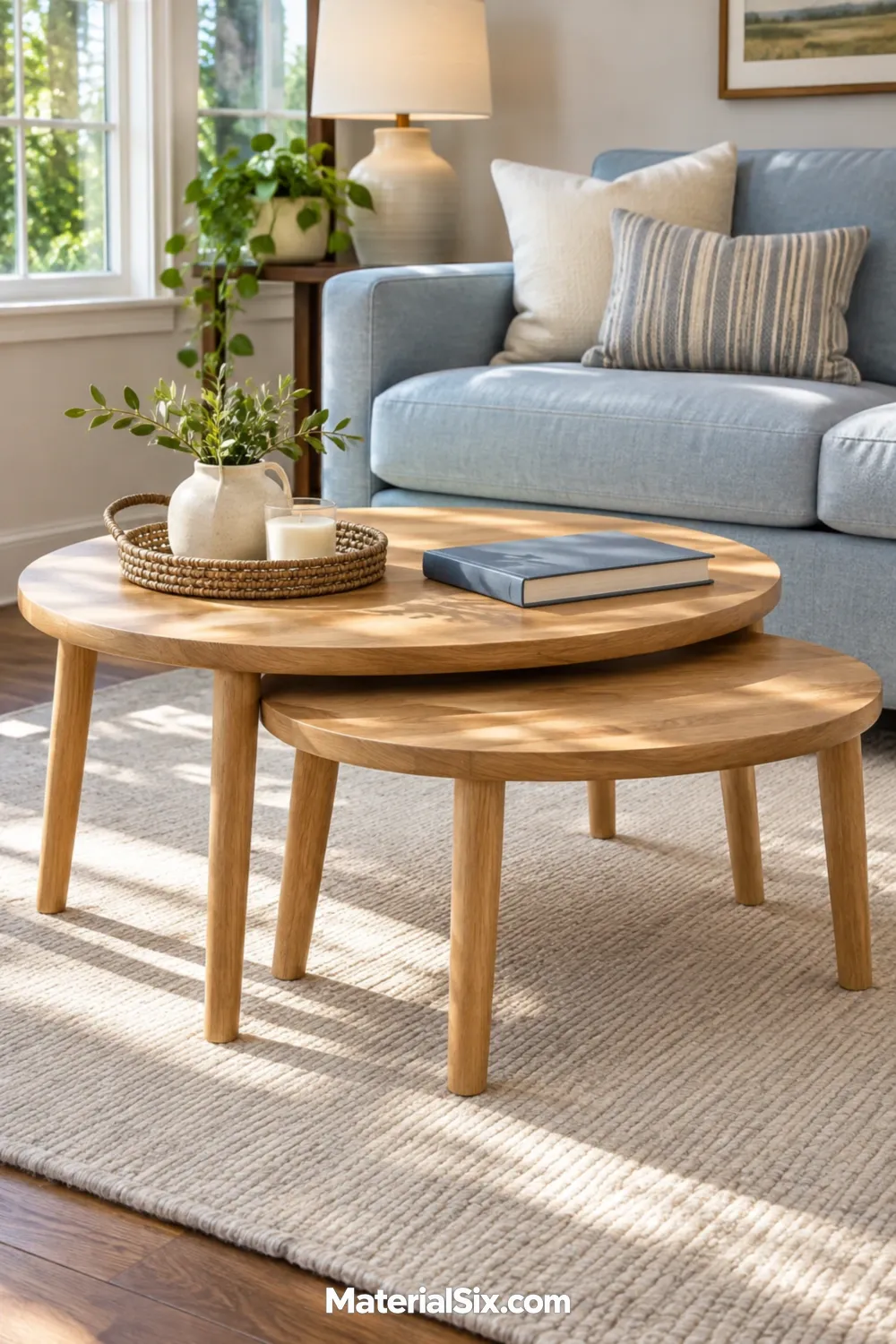
Nesting tables offer separate surfaces when you need them and a smaller footprint when you don’t. Rounded oak tops keep the arrangement visually light beside a compact loveseat. Unlike a single large coffee table, the smaller piece can move closer to a chair for reading or a shared snack.
Check the actual nesting clearance and how stable each table feels on your flooring.
Some sets overlap only partly, so measure the stored footprint as well as the extended one. Keep both pieces out of the main route through the room. Treat them as tables rather than seating, and choose a finish with a care routine that fits your household.
18. Layer Washable Throws Where You Actually Sit
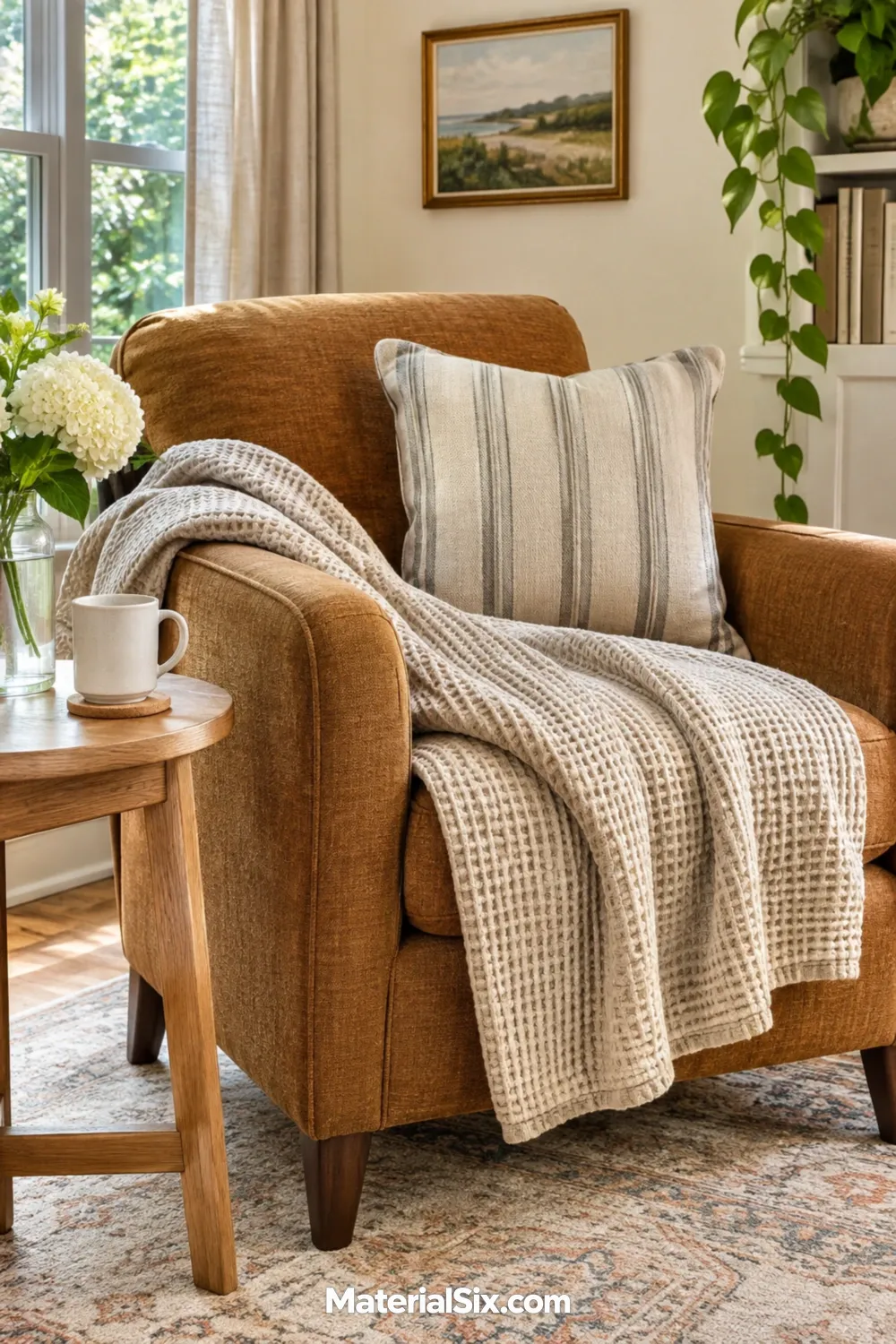
A textured cotton throw makes a favorite chair feel inviting without adding much visual clutter. Draping it over the area you use gives the layer a purpose beyond styling. The oatmeal fabric and striped cushion echo the room’s warm tones.
Read the laundering label before assuming a blanket can handle your usual wash cycle. Consider the size, drying method, and whether loose fringes suit your household. Keep a spare close to the seating if throws are used daily. More layers aren’t always more comfortable: one useful blanket can work better than a stack that constantly slides onto the floor.
19. Simplify the Media Wall and Conceal Cords
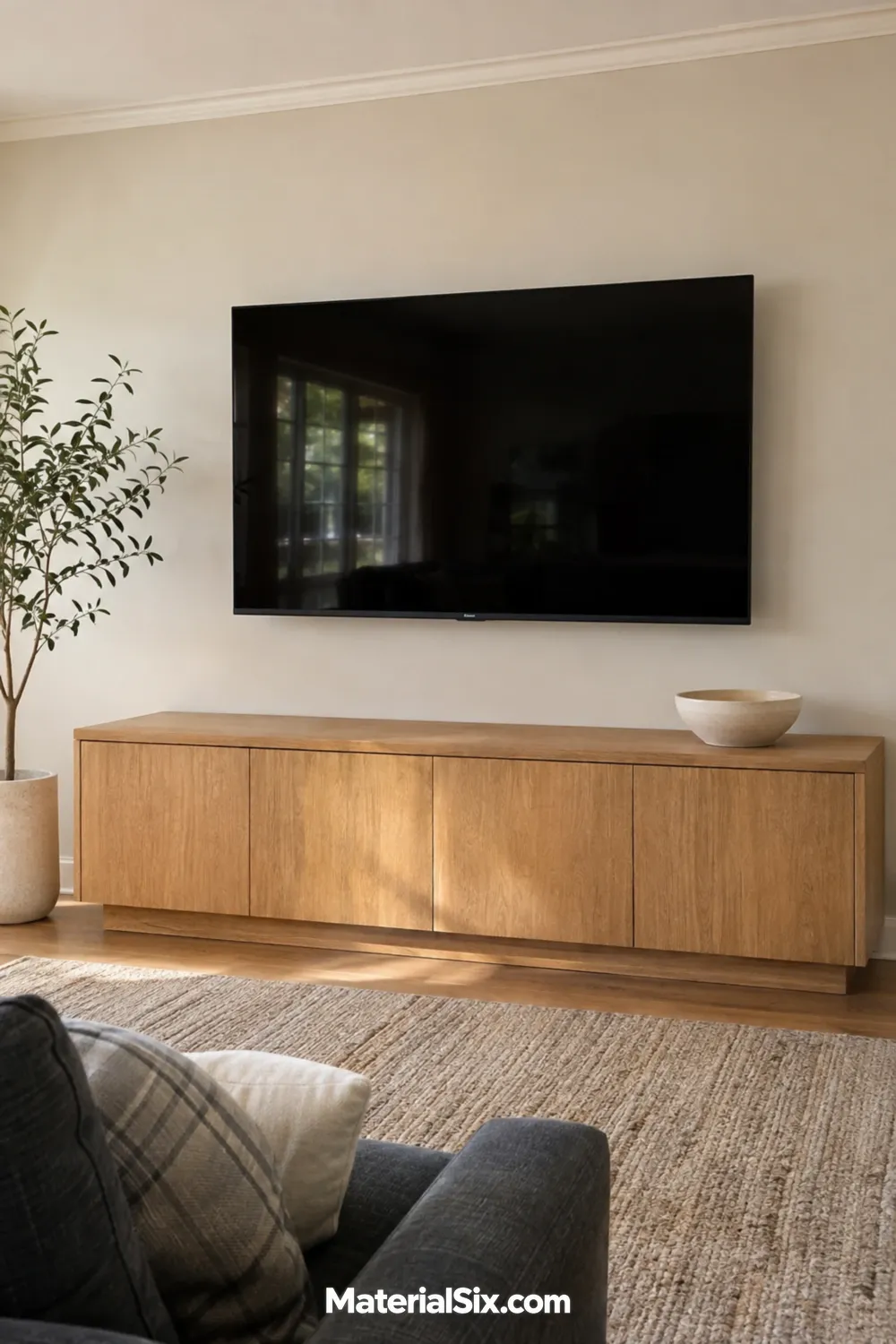
A simple media wall gives your eyes a resting place in a room with plenty of activity. A long oak console can hold remotes, accessories, and equipment behind closed fronts, while a restrained display keeps the television area from becoming another crowded shelf.
Plan cable access and ventilation around the equipment you actually own. Follow the devices’ clearance requirements rather than sealing everything inside a cabinet. Use suitable cable-management products, and have any in-wall wiring handled appropriately. Check mounting instructions for the television and furniture. Before deciding on screen height, sit in your usual spot and test the view; a clean-looking wall still needs to be comfortable to use.
20. Make a Pet Spot Fit the Room’s Palette
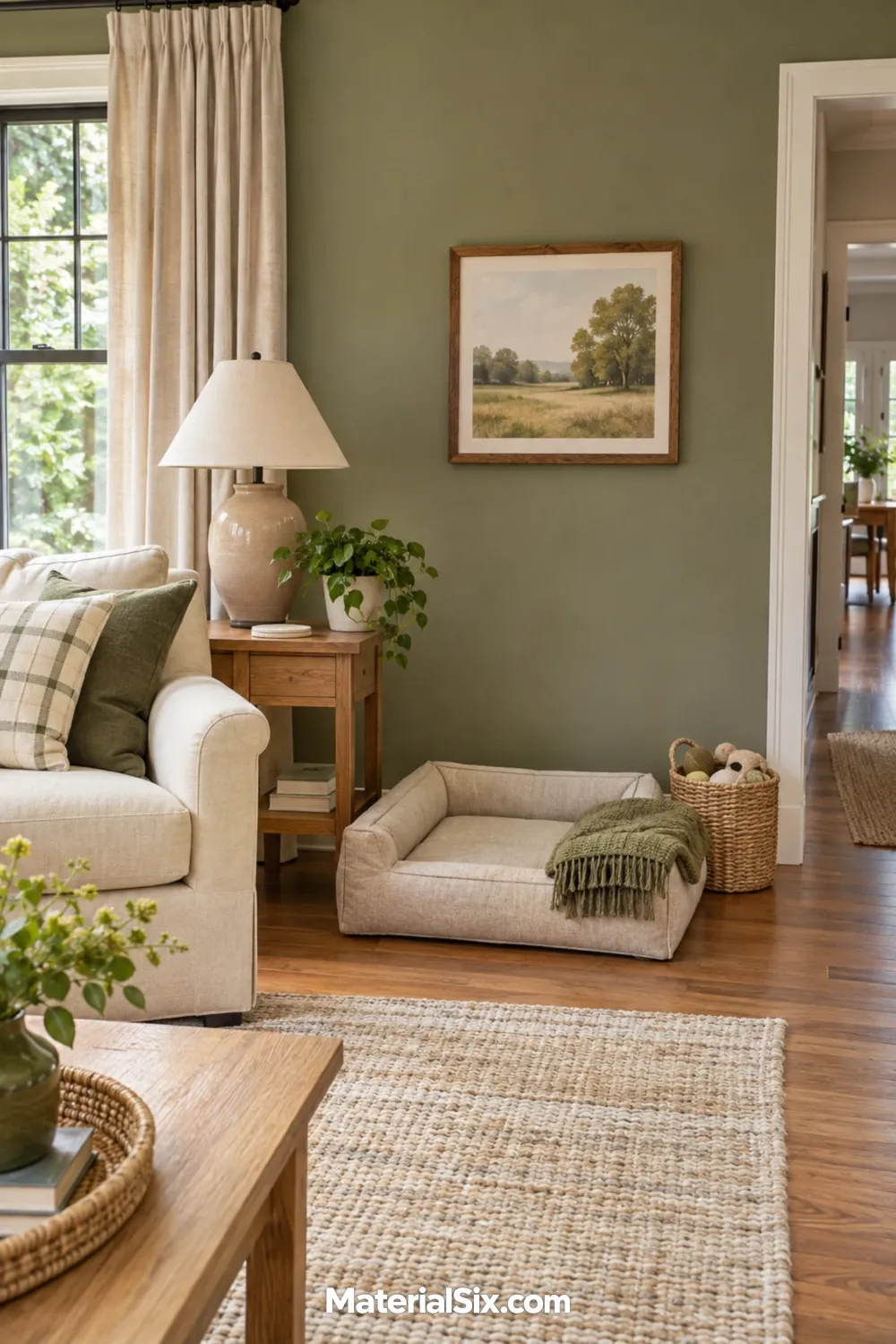
A pet bed can feel like part of the room when its color and texture relate to the upholstery. An oatmeal bed beside a cream sofa creates a quieter visual effect than an unrelated bright pattern. The olive throw connects the corner to the cushions and wall color.
Choose the size and construction for your pet first, then narrow the finish choices. Place the bed where your animal likes to rest while preserving door clearance and walking routes. Check which parts are removable and how they should be cleaned. Keep toys in a nearby container, and revisit the location if the bed becomes something everyone has to step around.
21. Finish with One Basket for Quick Resets
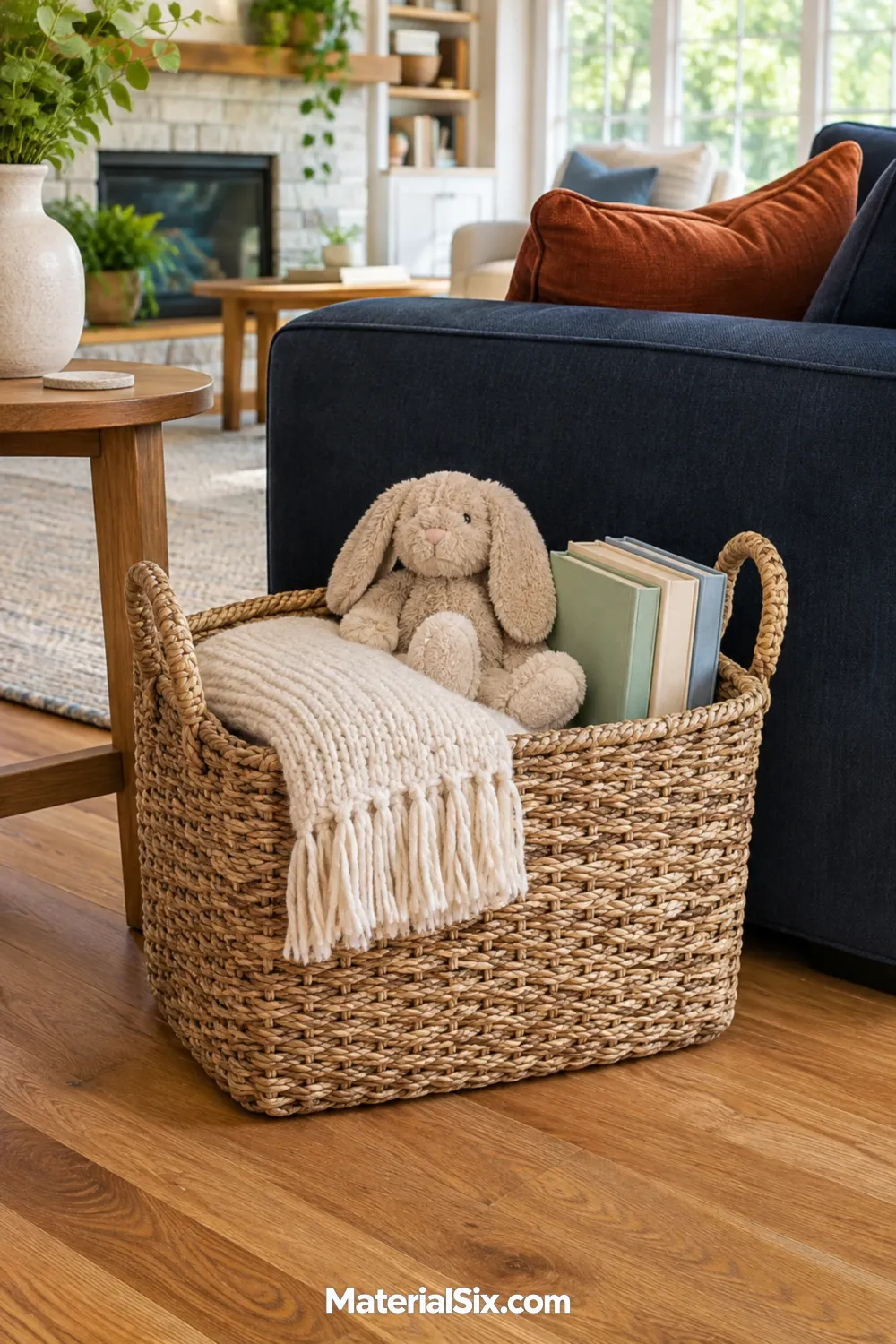
One generously sized basket beside the sofa gives stray books, a blanket, and a favorite soft toy somewhere to land. Its woven texture looks deliberate against a dark sofa, so the temporary collection doesn’t read as a pile abandoned in the corner.
Treat this as a reset basket, not the permanent home for everything in the room. Empty and sort it regularly, returning objects to their proper storage before it overflows. Choose handles and a size you can comfortably lift when filled. Leave it outside the walkway and avoid filling it with small loose pieces. The goal is a simple habit that helps the room recover after a busy day.
Choose Three Changes That Work Together
Start with the moment that creates the most friction. If cleanup is the problem, combine the low toy cabinet, a small accessible book display, and the reset basket. If the room feels crowded, test the walking route, nesting tables, and an open patch of rug before ordering a larger sofa. For evenings spent reading and playing games, pair comfortable seating with localized light and nearby game storage.
Keep the combination visually connected by repeating one wood finish and two colors. You can do that with existing furniture; matching every item isn’t necessary. Sketch the arrangement, measure door and drawer clearance, and try the layout with what you have before making a purchase.
After a week of normal use, notice what still ends up on the floor and which surfaces remain crowded. Adjust the storage location or quantity of belongings before adding more furniture. A family living room should respond to your routines as they change.
Family Living Room FAQs
How do you make a living room family-friendly without making it look like a playroom?
Use furniture-scale storage, repeat the room’s existing colors, and give a few daily activities defined locations. A low cabinet, coordinated reading chair, and framed children’s art include family life in the design without letting every surface become toy storage.
Can a light-colored sofa work in a family living room?
Yes, if the specific upholstery and care requirements suit your habits. Check the cleaning instructions, replacement-cover availability, and how removable covers are handled. Light fabric needs realistic maintenance expectations; color alone doesn’t determine how manageable a sofa will be.
What should you change first in a small family living room?
Test the layout and remove obstacles from the route people actually use. Then find a home for the belongings that gather most often. Rearranging an existing table or moving storage closer to the activity may help before you buy anything.
How much toy storage should stay in the living room?
Keep enough for the activities your household uses there regularly, with room to return items easily. Rotate the rest if you have storage elsewhere. If every bin is overflowing, reduce the selection before adding another cabinet.
Start with the Everyday Bottleneck
Choose one change you can feel during an ordinary evening: a clear route to the sofa, a home for the current toys, or a comfortable place to read. Add a second change that supports it, then use color and texture to connect the pieces. A stylish family living room grows from the way you actually live in it.