
From the sidewalk, porch columns can make a front door look wider, taller, or tucked away. Up close, they shape how you walk to the door and what you see from a porch chair. A pair of slim posts might be all a compact entry needs, while a deep bungalow porch can carry broad columns and brick bases without looking crowded.
The front porch column ideas below cover both kinds of decisions: how to give your existing posts a different look and what to consider when planning a porch with a new layout. Look at the roofline, steps, and front door together as you compare them.
1. Frame the Entry With Square White Columns
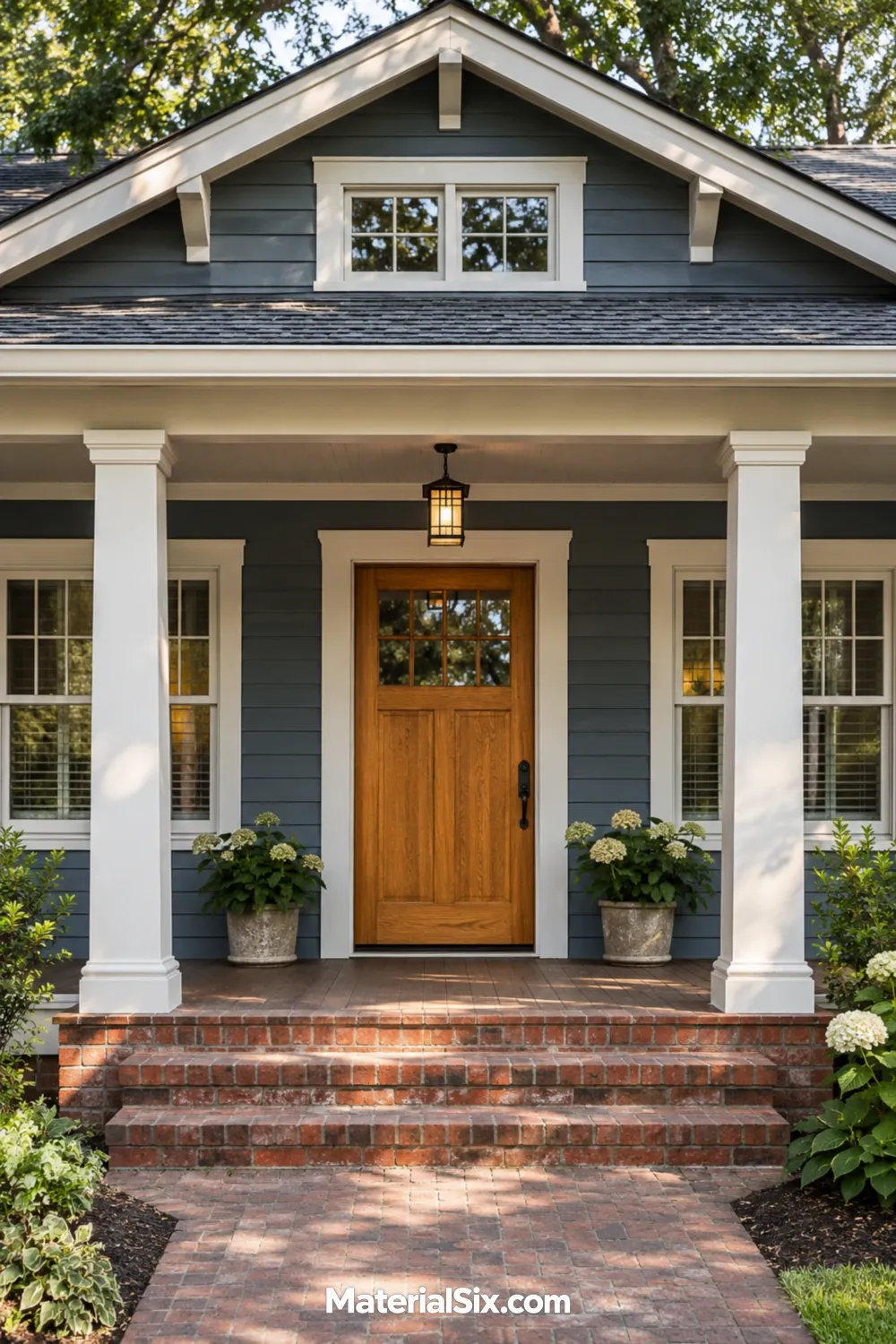
Square white columns give a blue clapboard house a crisp outline and leave room for a natural wood door to draw your eye. Repeat the window-trim white on the columns, then choose a simple stepped cap and base. A modest profile suits a low porch beam and keeps the brick steps from competing with a second set of heavy visual details.
2. Set Tapered Columns on Brick Piers
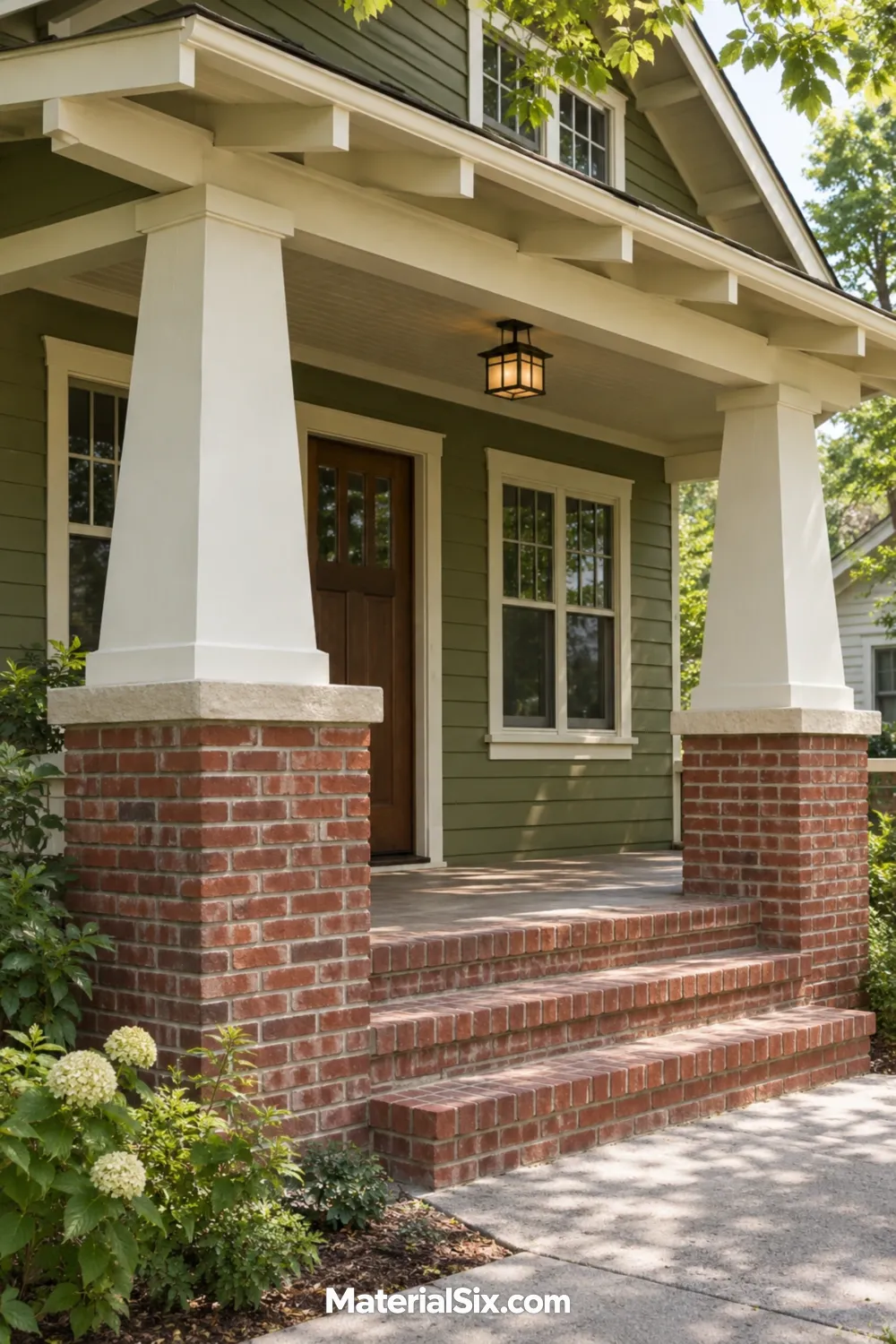
A tapered shaft has a wider base and a narrower top, giving it a pronounced silhouette. Set it visually above a brick pier and the heavy part of the composition moves closer to the ground. On a low bungalow, that can make the entry feel connected to a broad run of brick steps.
Compare brick and mortar samples against your steps before settling on a pier finish. If the existing brick has several shades, you can repeat one of its quieter tones instead of chasing an exact match. A pale cap is an easy way to carry the color of the painted shaft into the masonry.
3. Use Round Columns for a Traditional Entry
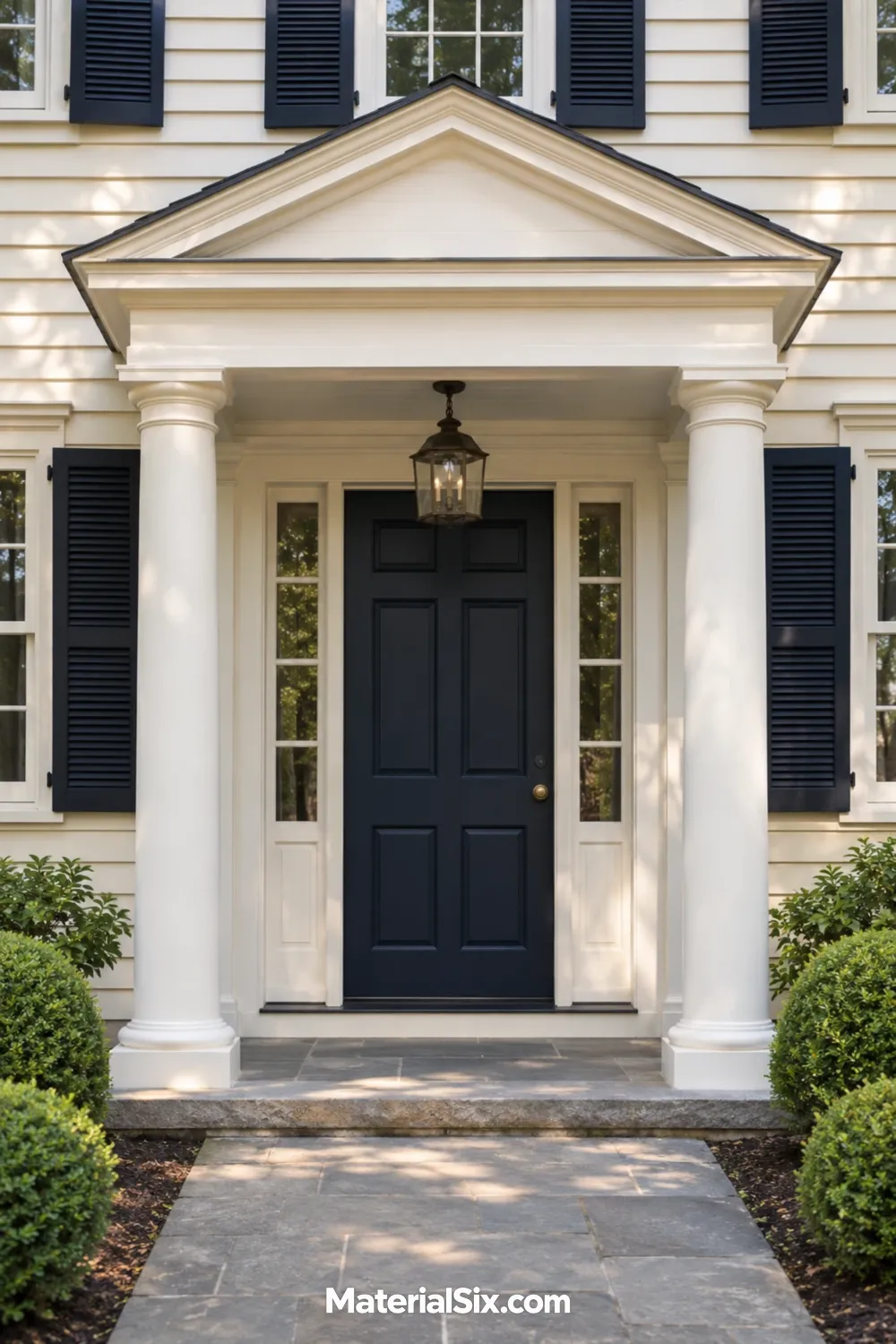
Round white columns suit a traditional entry with a centered door and a shallow roof. Choose a restrained Doric-style capital if the door already has sidelights, a fanlight, or other trim worth showing off. The smooth shafts give those smaller details space to read from the walk.
4. Add Shadow Lines With Fluted Columns
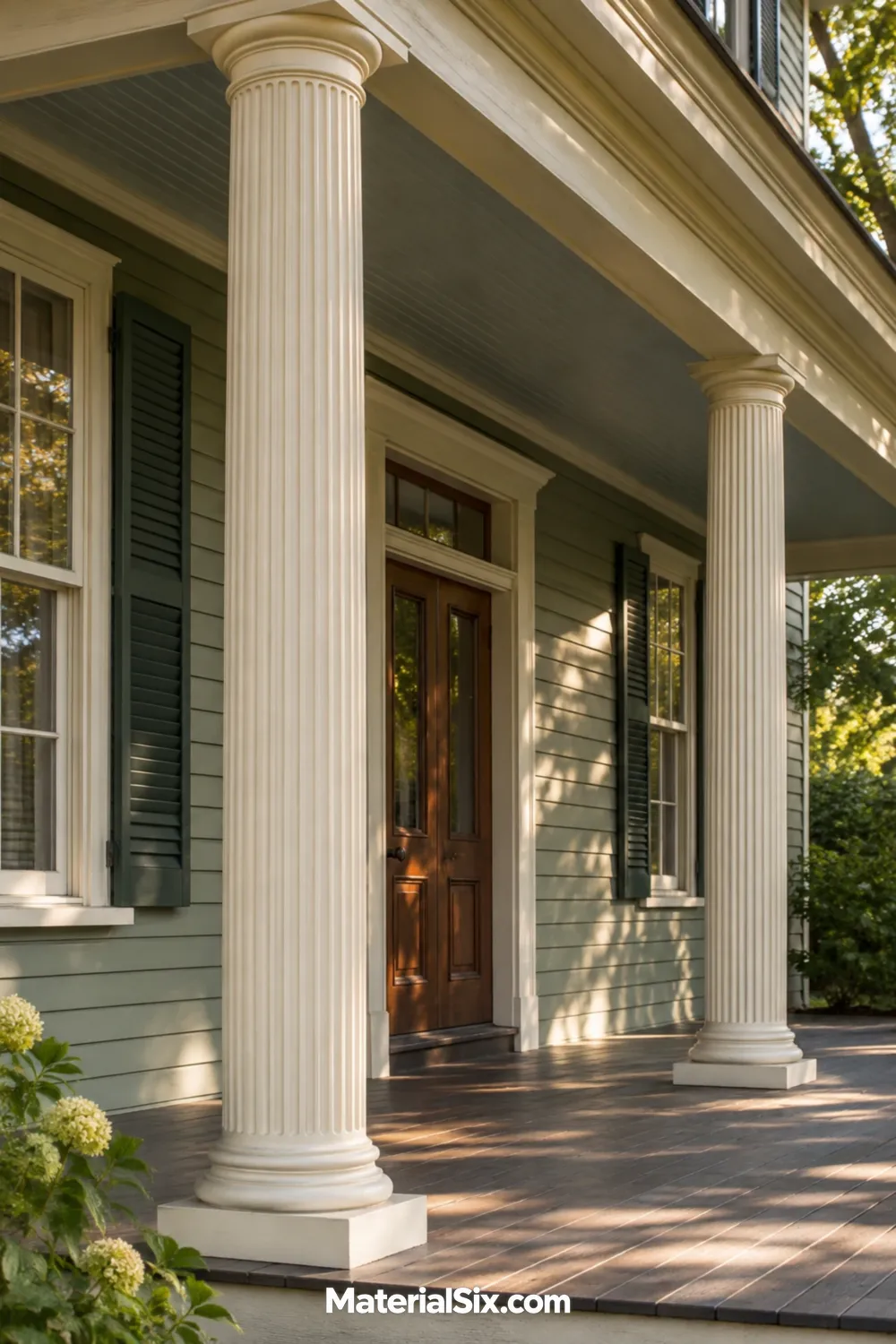
Fluting gives a painted column texture within a single color. The grooves are especially easy to see when light reaches the porch from the side. On a shaded porch, bring a sample home and look at it at the hour you usually arrive. Very shallow flutes can read as a smooth shaft from the curb.
5. Warm Up Dark Siding With Stained Cedar Posts
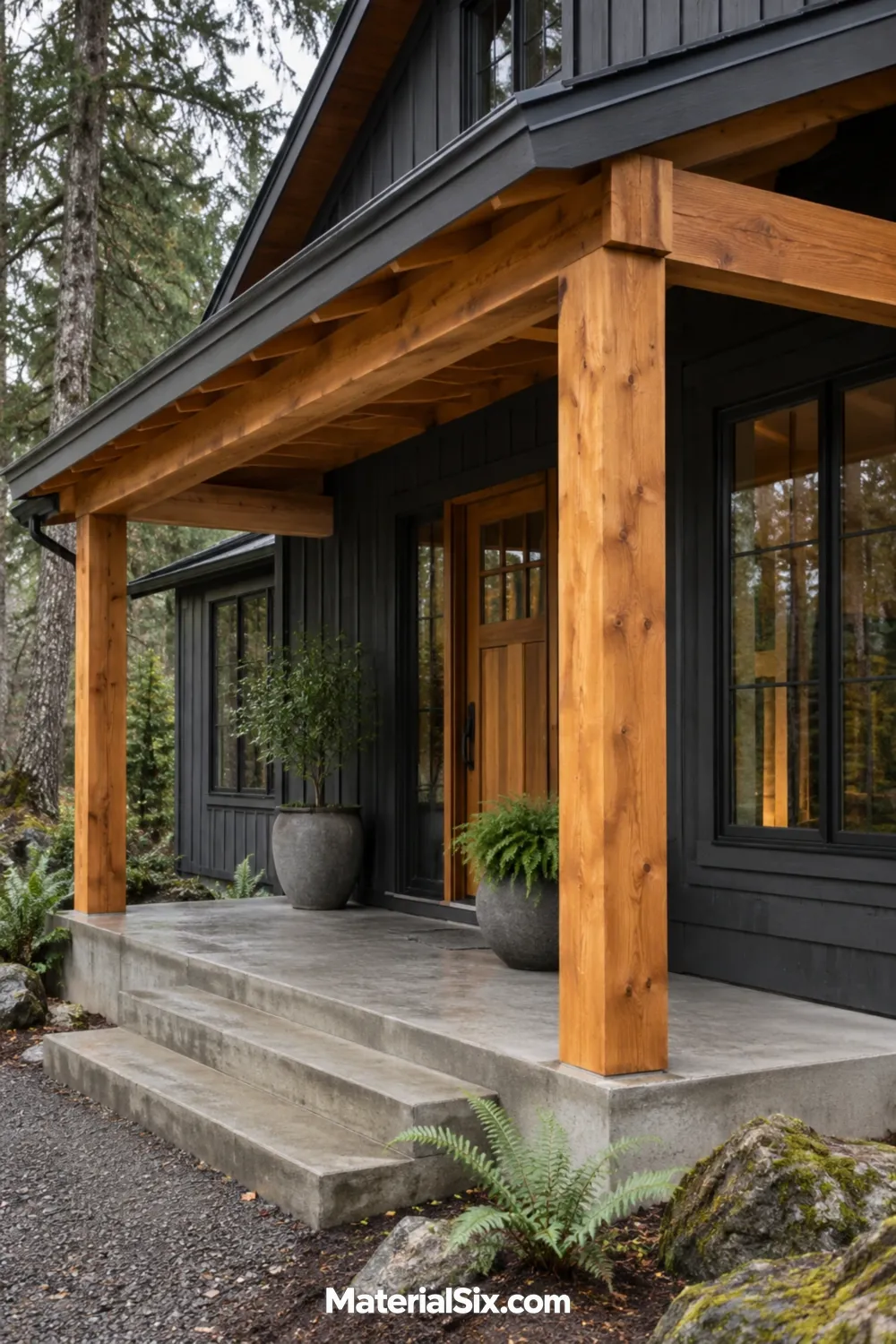
Stained cedar gives charcoal siding a warm note where you’d otherwise see another dark surface. Try a stain sample on a scrap of the same wood and hold it next to the siding in both sun and shade. If the siding is almost black, a lighter honey or amber tone picks up the grain and makes the posts easier to see at dusk.
You can repeat the wood at the door or on the underside of the porch roof. One repeat is usually enough on a compact entry.
6. Keep the View Open With Slim Steel Posts
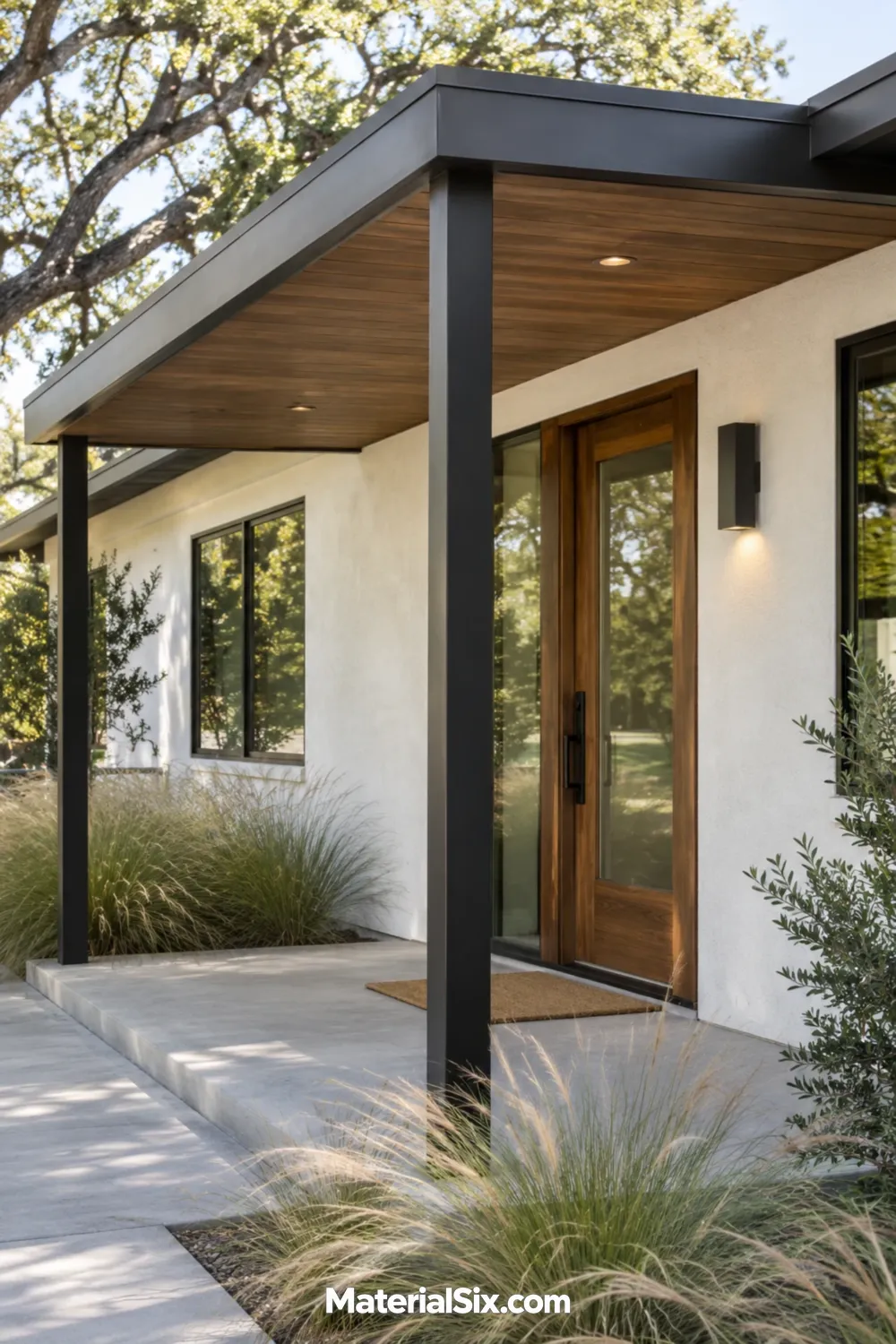
Matte black steel posts make sense visually when your porch has a flat canopy, broad glass, or simple window frames. The dark outlines can tie those elements together while leaving a clear view across the porch. Look at the proposed posts from the seating area as well as the sidewalk. A post that frames the door from the street can still interrupt the view from your chair.
7. Ground Wood Posts With Stone Pedestals
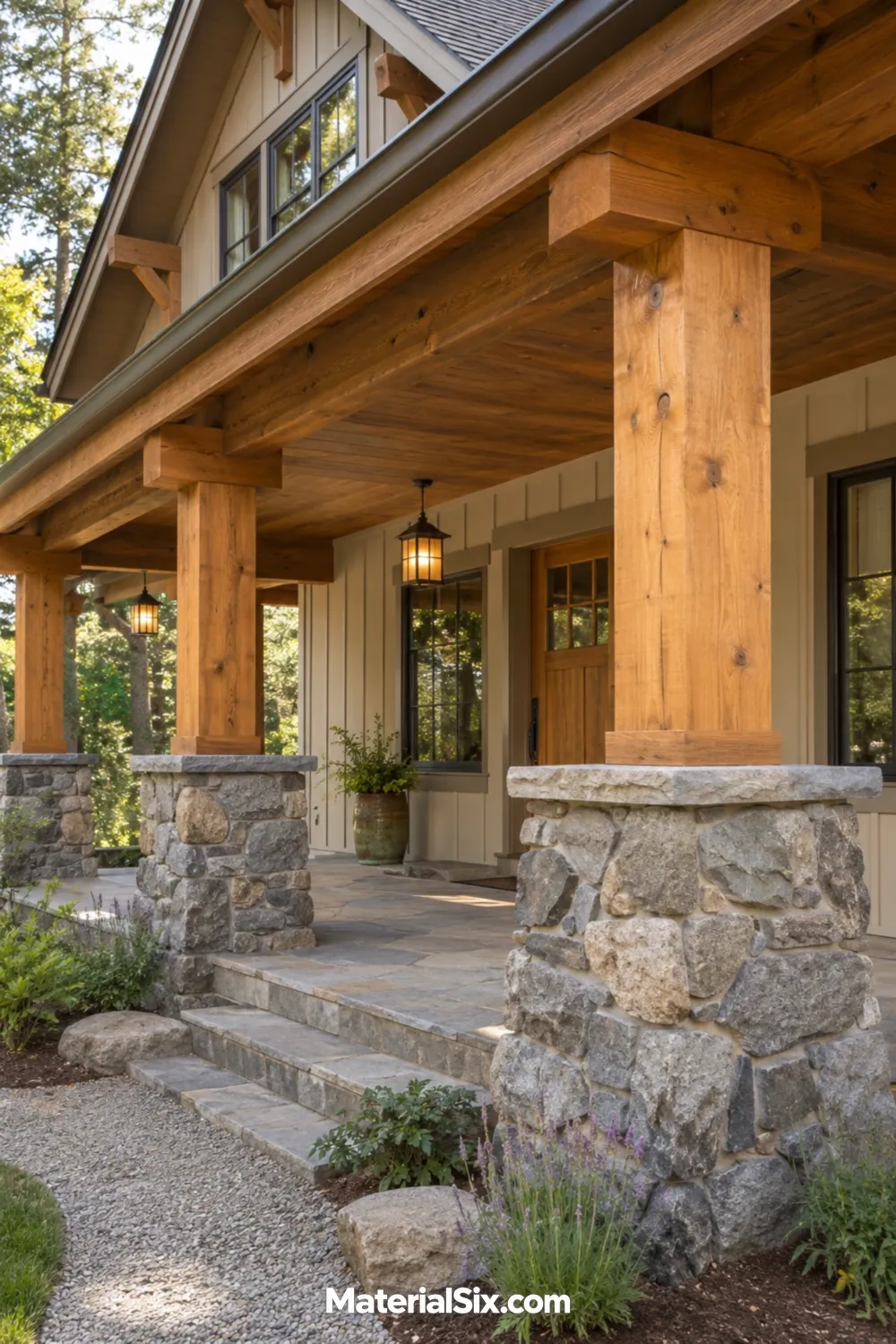
Use rough fieldstone at the base of timber posts if the porch needs a stronger visual connection to a stone path or foundation. A simple, flat cap between the stone and the wood gives your eye a clean stopping point.
The stone is likely to be the busiest surface at the entry. Keep adjacent trim quiet and give the base room on the landing, especially on the side where you turn toward the front door. Comparing the full footprint of the pier with the clear walking area will tell you more than looking at the post width alone.
8. Give Plain Posts a Boxed-In Look With PVC Wraps
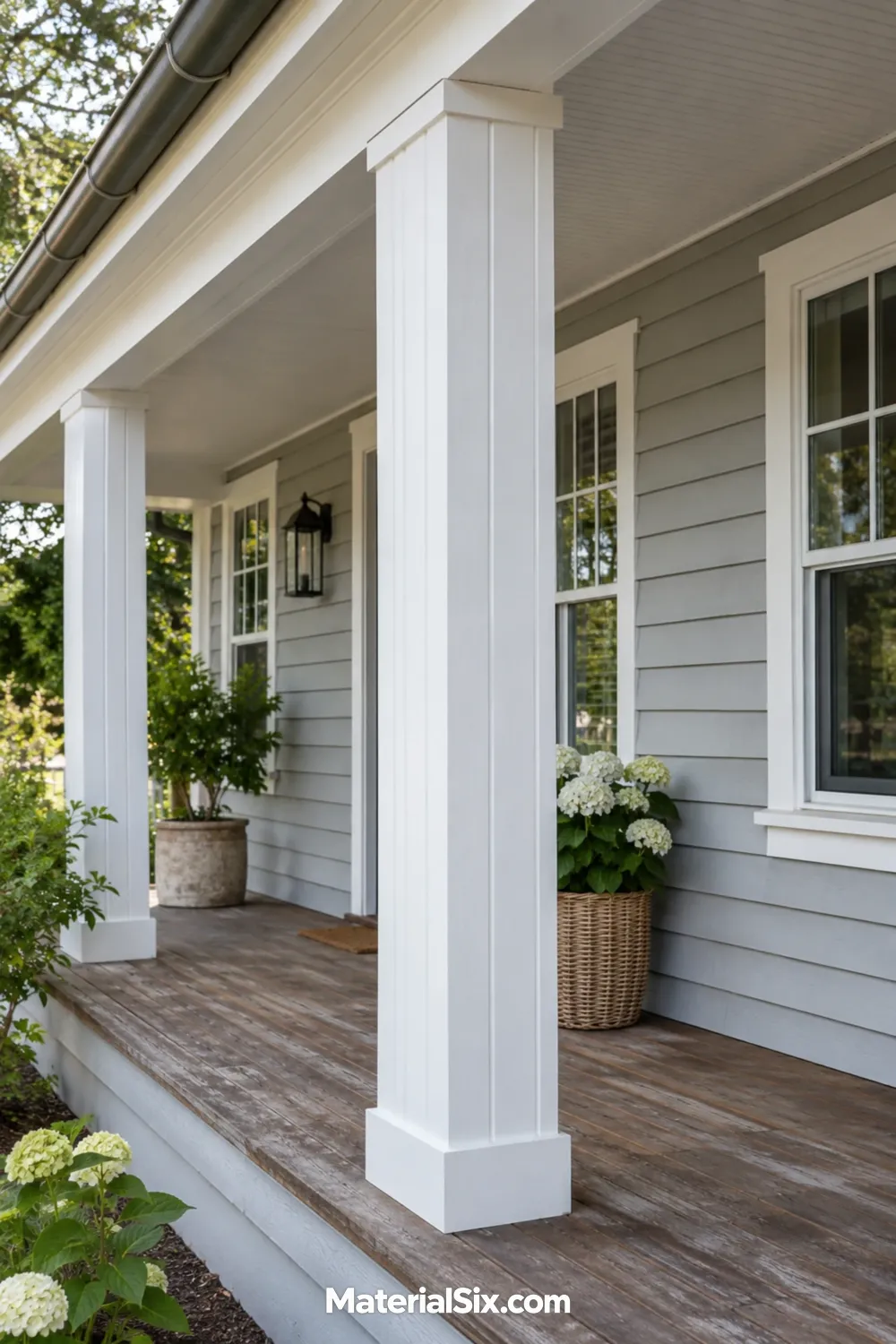
A boxed PVC wrap can give a plain post a square, painted profile with enough depth for a cap and base. Start by having the existing post checked. Then compare the wrap’s finished outside dimensions with the space beside railings, steps, or a nearby wall.
Look at how the pieces meet at the corners and how the base fits the porch floor. Those are the details you’ll see first when you walk up the steps. A simple flat base looks especially clean beside lap siding.
9. Add Texture With a Slatted Column Wrap
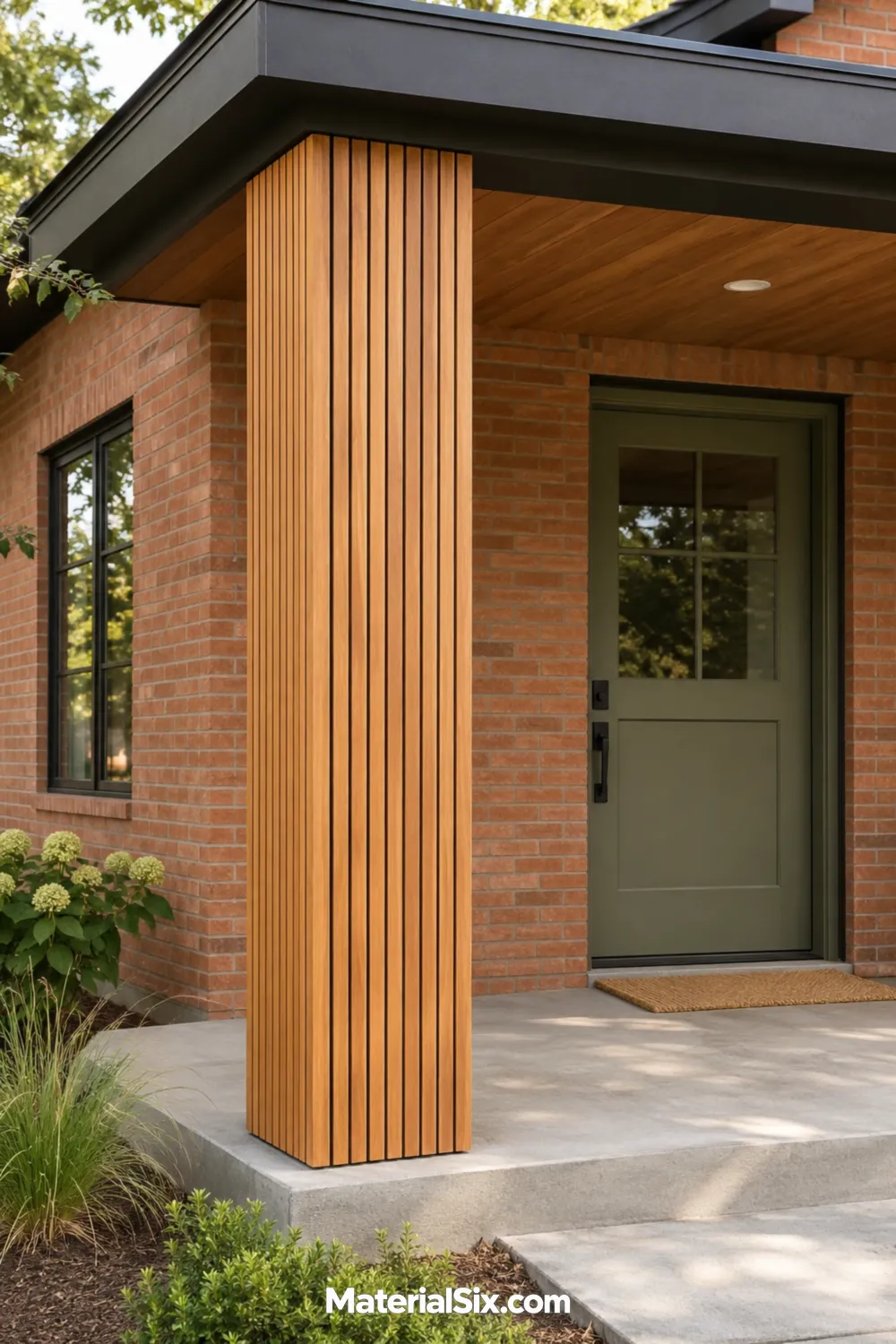
Narrow vertical cedar slats bring fine texture to a wide column. The effect is easiest to read against a quiet backdrop such as flat brick or plain siding. Use the slats on one prominent column near the door and repeat their wood tone in a bench or door frame if the rest of the porch already has strong lines.
10. Pair Posts at the Corners of a Wide Porch
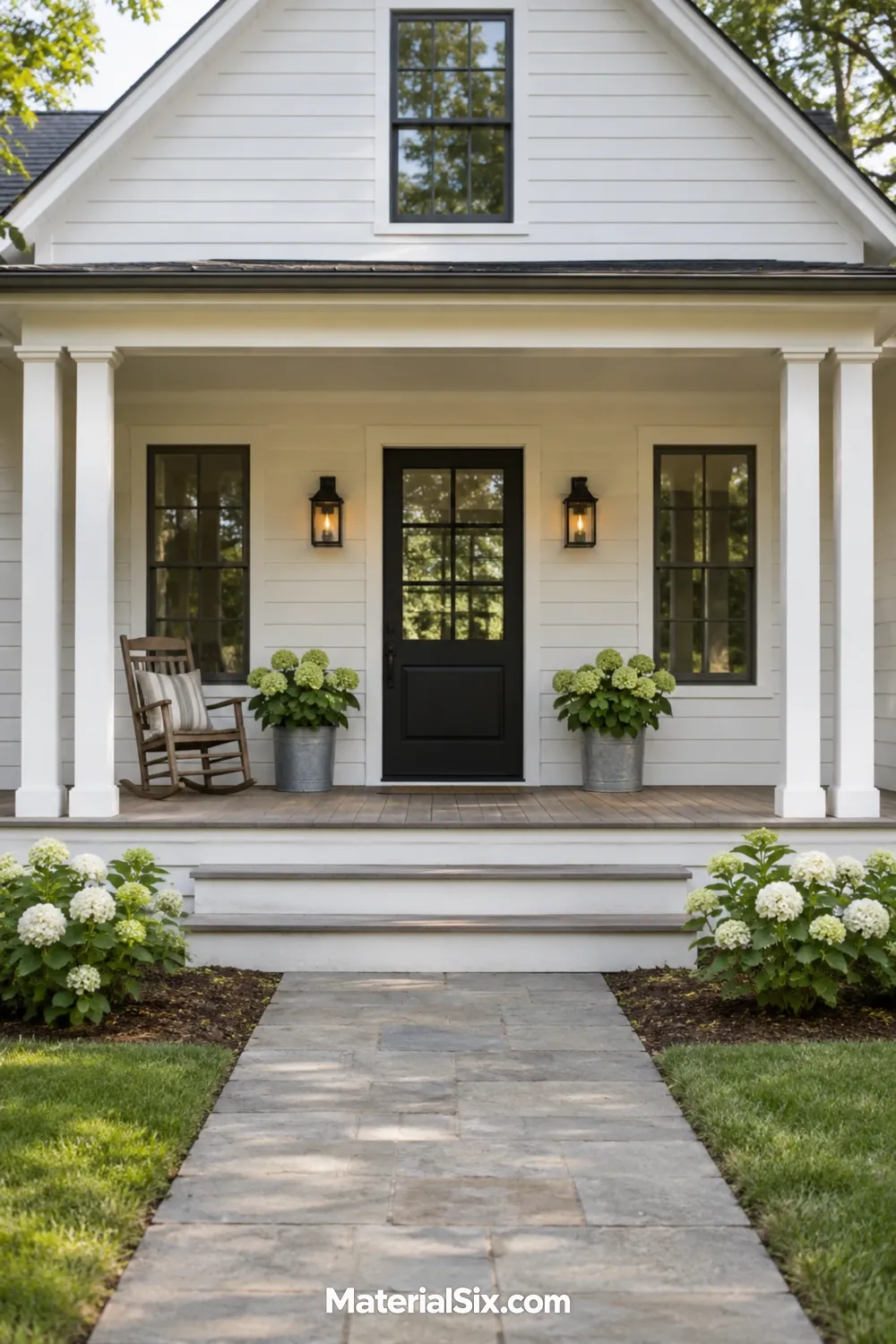
Grouping two slim posts at each outer corner gives a long porch a distinct rhythm. From the walk, the space between each pair makes the corners feel lighter than a block of trim. The wide center reads as a single opening.
Sketch the four posts on a straight-on photo before committing to the look. Try a few visual spacings and check that each pair still looks intentional from an angle. If rails meet the posts, include the rail ends in your sketch so the corners don’t become a cluster of competing lines.
11. Give Square Posts Character With Knee Braces
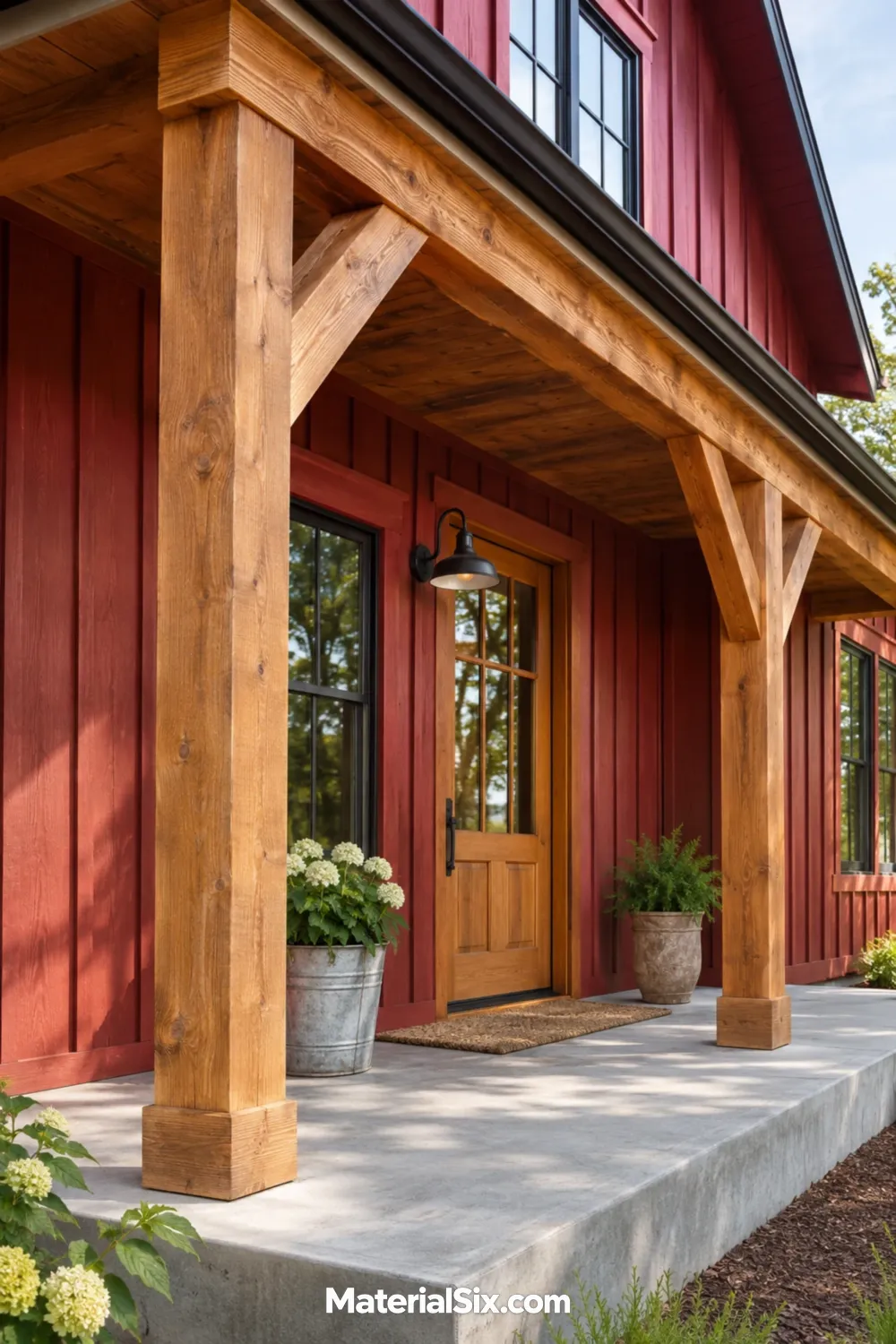
Diagonal knee braces draw attention to the joint between a post and the beam. Their triangular shape suits a porch with exposed timber and gives a plain square post more character. Try repeating the angle of a gable or another visible roof detail, then keep the rest of the trim restrained so the diagonal remains easy to read.
12. Bring Back Turned Posts on a Victorian Porch
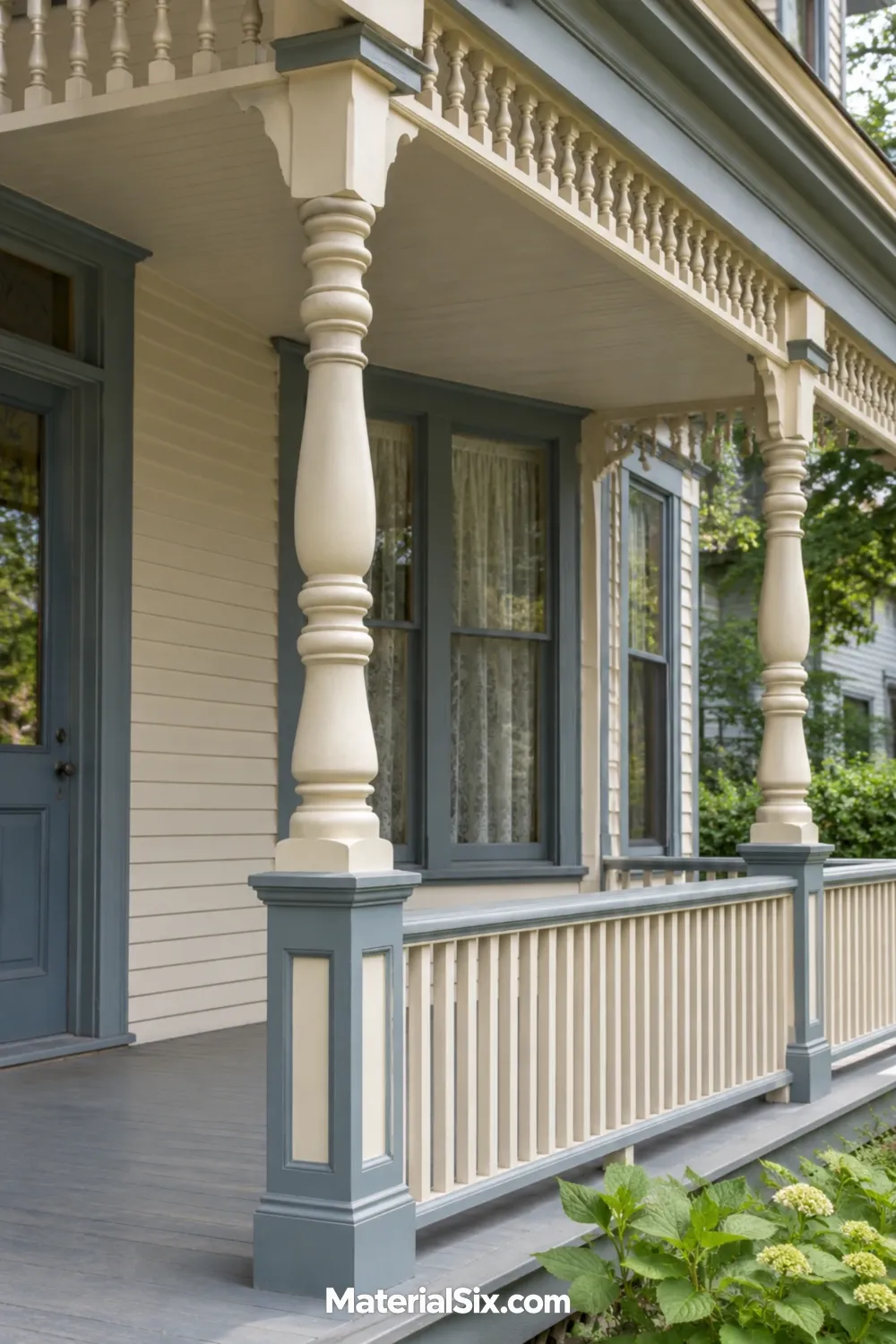
On an older Victorian porch, the turned portion of a wood post can be as distinctive as the spindles or brackets around it. If you have one original post in sound condition, photograph and measure its profile before asking a carpenter about repair or matching work. Pay attention to where the turned shape begins above the square base and how that line relates to the top rail.
Where repair is practical, retaining original wood preserves details that can be hard to reproduce. A painted finish close to the surrounding trim will let the silhouette do most of the work.
13. Highlight Column Bases With a Second Color
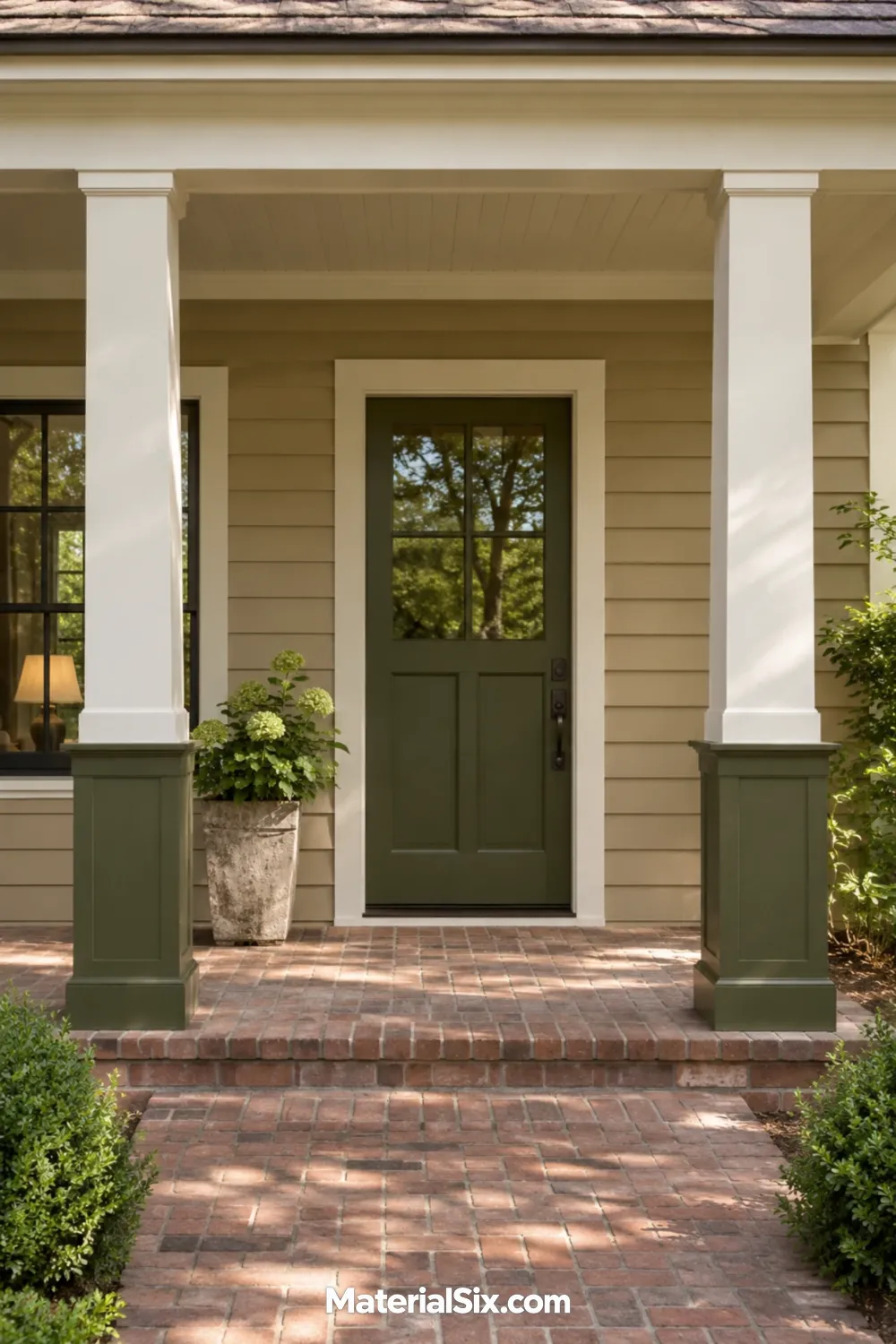
Paint the base trim of a plain square column a second color and you can change the look without adding another molding. Pull dark olive, brown, or slate from the front door or shutters. Keep the color break at an existing trim joint so it reads as part of the column when you see it from the sidewalk.
14. Carry the Brickwork Up Into Full-Height Columns
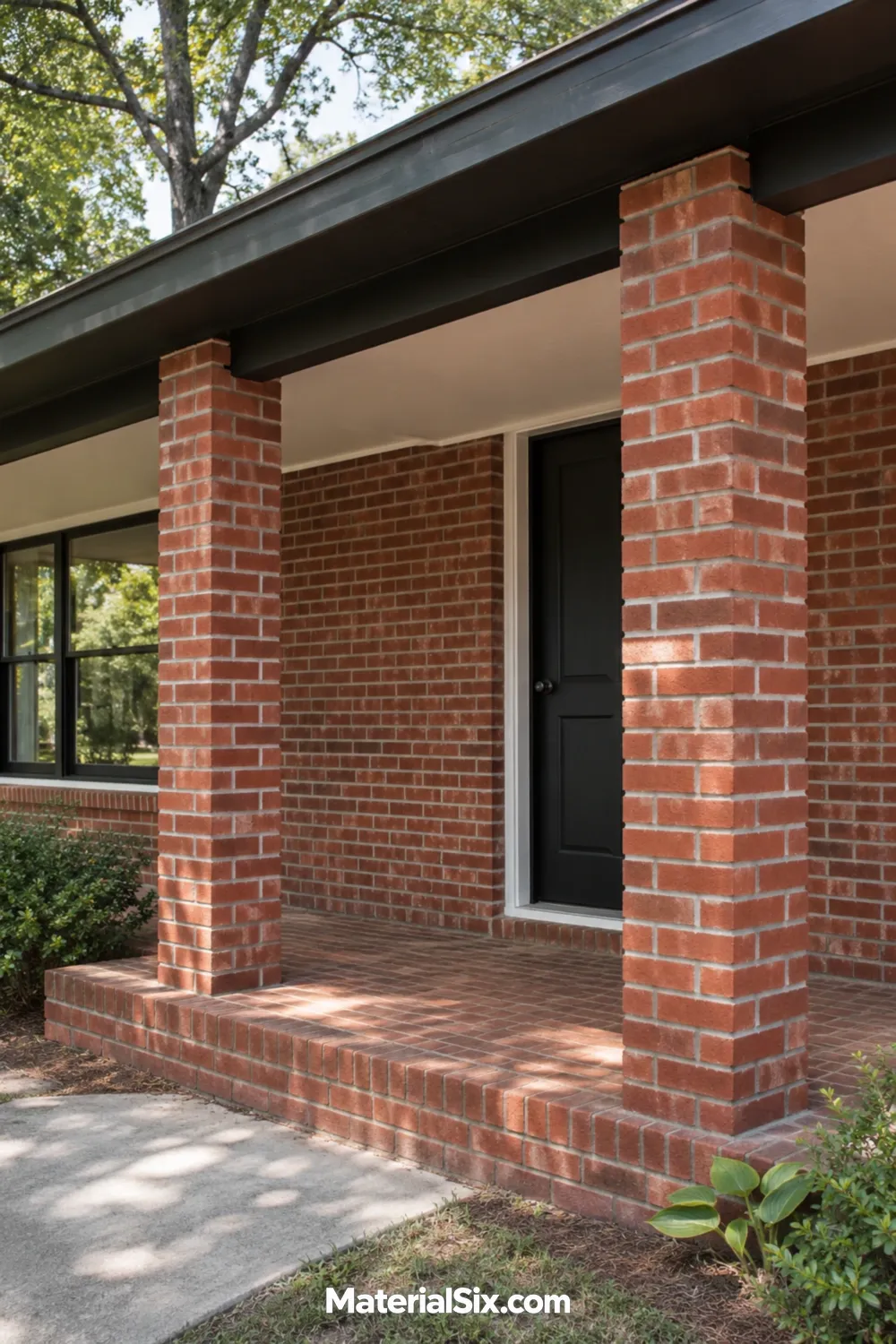
Full-height brick columns can give a low ranch porch a sheltered feel that continues the masonry of the house. The columns make a stronger visual boundary than brick piers with painted shafts above them, so think about how much daylight and view you want between those solid faces.
Use the house brick as your first color reference. Where matching is difficult, a related tone in a similar brick size can look more deliberate than a close color match paired with a visibly different pattern.
15. Keep the Walk to the Door Clear
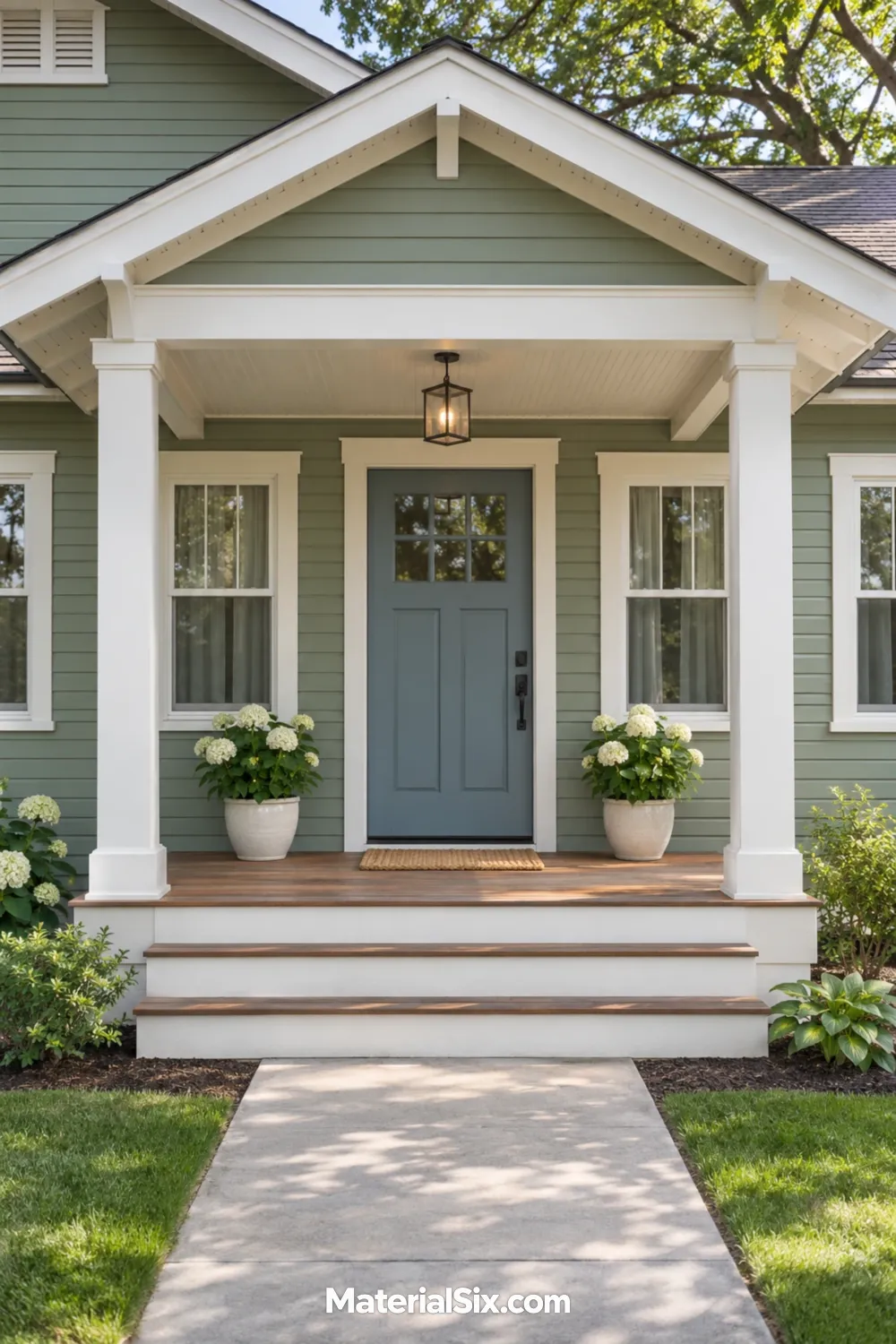
On a small porch, the simplest layout may be the one that gives your feet the clearest route. Picture a roof with its posts at the outer edges and the front steps lined up with the door. You’ll see the entrance as soon as you hit the walk, with room to carry a package through the middle.
Trace that route from the sidewalk and from the driveway. If most people approach at an angle, remember to check the space around the nearest post, where a railing or planter can make the turn feel tighter.
16. Try an Offset Post for a Side-Entry Canopy
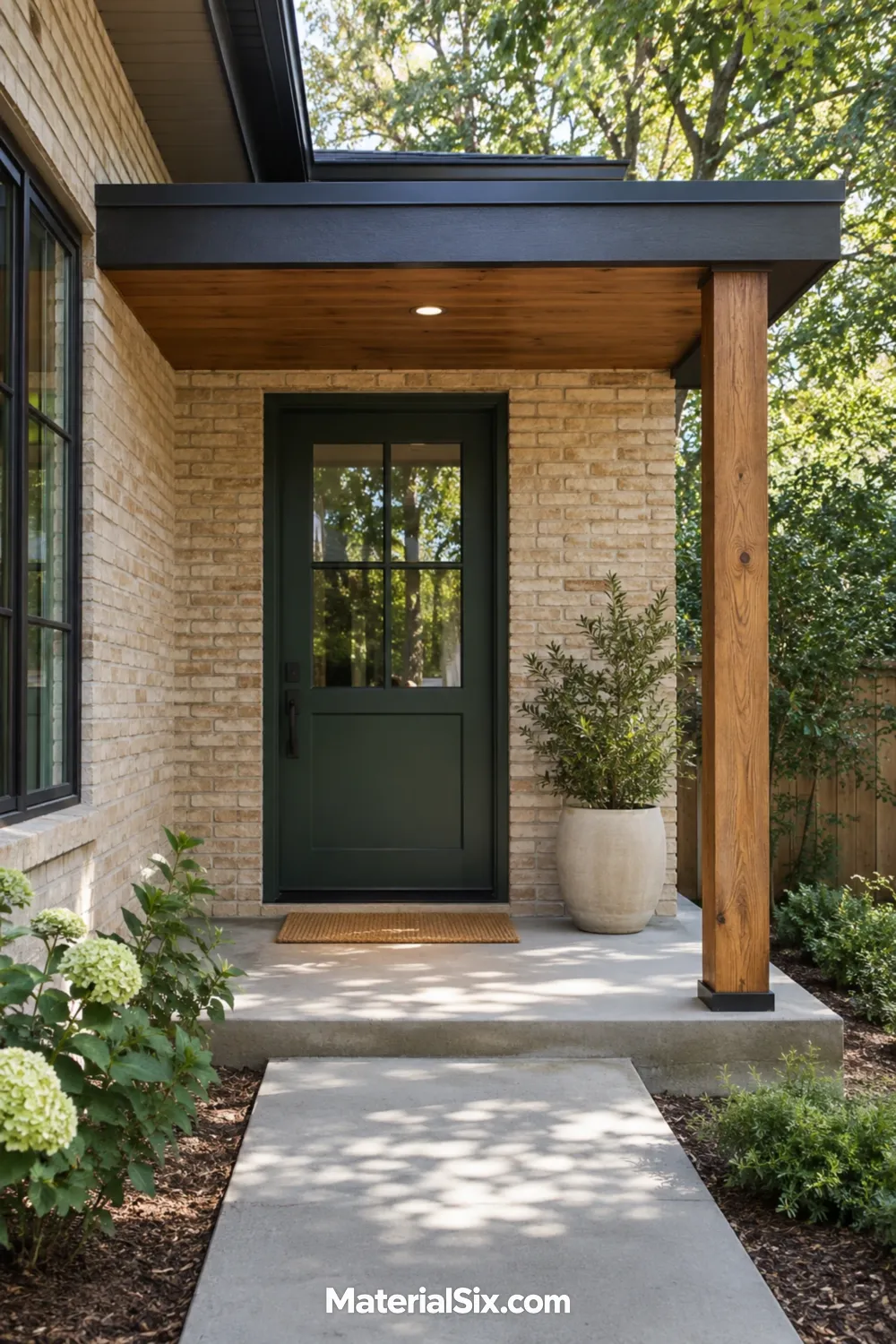
A shallow canopy over a side-entry door can look balanced with a single visible post at the far outside corner. This works as a design direction when the steps lead toward the house at an angle and a post next to the door would crowd the approach. Echo the post finish in the door surround or canopy soffit to link the off-center pieces visually.
Take both a front photo and a photo from the route you normally walk before sketching the canopy. The best location in one view may be right in the path in the other.
How to Choose a Column That Fits Your Porch
Start with two views of your own entry: one straight on from the sidewalk and one from the direction you walk up most often. On each photo, sketch the outside edges of the new column or wrap. Add its base and cap, since those may take up more visual and physical space than the shaft.
- Check what can stay. A sound post in a good position may only need a finish update or a wrap. Have a qualified professional assess the structure before changing, moving, or removing supports.
- Compare the clear space. Look at where you carry groceries, pass another person, or turn toward the door. Include rail ends, planters, chairs, and the widest part of a proposed base when you compare layouts.
- View finishes by the house. Hold the sample against your siding, then beside your steps. Check it in front of the house and again in the shade beneath the porch roof.
Pick the Detail You Want to Notice First
If your front door already sets the tone, give it a quiet pair of columns and room to stand out. If the porch feels undefined from the street, a recognizable post profile or a substantial masonry base can give it a clearer shape. Sketch the simplest version that makes the difference you want, then decide whether the entry needs anything more.