
An open doorway can make a home feel bright and connected, but it is not always practical. A bedroom may need more privacy, a home office may need fewer distractions, or an open closet may simply need a cleaner appearance. Fortunately, you do not have to install a traditional swing door to make the opening feel more private or finished.
The best way to cover a doorway without a door depends on what you need most. A ceiling-track curtain is a versatile choice for everyday privacy, while a tension rod curtain works well for renters. For stronger separation, consider a magnetic doorway curtain or retractable accordion partition. Decorative options such as wood slats, woven shades, and Japanese fabric panels can define the opening without making the room feel closed in.
Below are 14 practical and creative doorway cover ideas, including no-drill, space-saving, decorative, and high-privacy options.
Doorway Cover Ideas at a Glance
| Doorway cover | Privacy | Installation | Best for |
|---|---|---|---|
| Tension rod curtain | Medium to high | No drill | Rentals and standard openings |
| Ceiling-track curtain | High | Track mounted | Bedrooms and wide openings |
| Double-layer acoustic curtain | High | Rod or track mounted | Home offices and shared rooms |
| Magnetic insulated curtain | High | Adhesive or hook-and-loop mounting | Drafty openings and casual spaces |
| Sliding fabric panels | High | Track mounted | Modern interiors and wide openings |
| Retractable accordion partition | High | Track mounted | Frequent daily use |
| Roll-up woven shade | Medium | Mounted above opening | Closets and occasional access |
| Cane or rattan folding screen | Medium | Freestanding | Renters and flexible layouts |
| Freestanding wood slat divider | Low to medium | Freestanding or anchored | Open-plan homes |
| Reeded acrylic privacy panel | Medium | Custom mounted | Rooms that need natural light |
| Rolling storage divider | High | Freestanding on casters | Studios and multipurpose rooms |
| Pass-through bookcase surround | Low | Freestanding or built in | Display and extra storage |
| Plant trellis divider | Low | Freestanding | Bright rooms and decorative transitions |
| Japanese noren panels | Low to medium | Rod mounted | Kitchens, closets, and relaxed interiors |
Before You Choose a Doorway Cover
Start by deciding whether you want to close, conceal, or simply soften the opening.
- To close off a bedroom or office, choose an opaque curtain, magnetic curtain, fabric panel track, or accordion partition.
- To conceal a closet or laundry area, consider a woven shade, folding screen, or decorative fabric panel.
- To visually separate connected rooms while preserving light and airflow, use wood slats, reeded acrylic, open shelving, or plants.
Also think about how often people walk through the opening. A roll-up shade may look beautiful over a closet that is opened twice a day, but it can become frustrating in a busy hallway. Likewise, a freestanding screen is easy to install but may not be ideal around energetic children or pets unless it is stable and positioned away from the walking path.
1. Hang a No-Drill Tension Rod Curtain
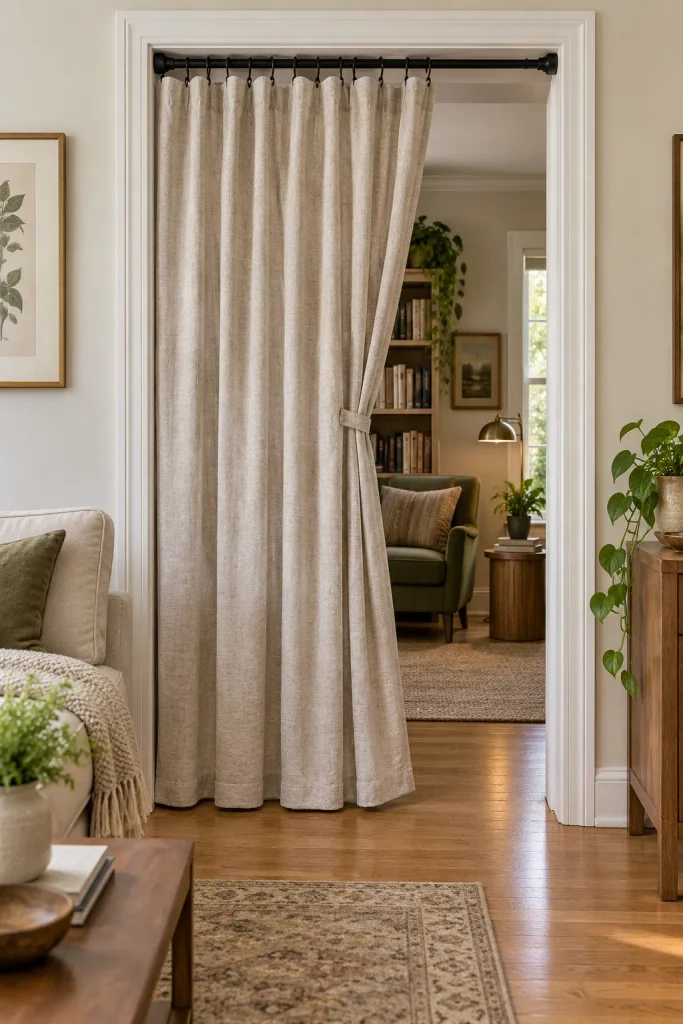
A tension rod and curtain panel are among the easiest ways to cover a doorway without making permanent changes. The rod presses against the inside of the door frame, so you do not need screws, brackets, or wall anchors. This makes it especially useful in a rental or in a room where you may want to restore the opening later.
For better coverage, use a curtain that is slightly wider than the doorway so the fabric gathers instead of hanging completely flat. An opaque or blackout panel offers more privacy, while linen-look fabric creates a lighter separation between living spaces. A tieback can keep the curtain neatly to one side during the day.
This adjustable tension rod fits openings from 28 to 48 inches and supports curtains up to 13 pounds within the recommended size range. Its non-slip, pressure-mounted design makes it easy to cover a doorway without drilling.

Tension rods have weight limits, so they are better suited to light and medium-weight panels than very heavy drapery. Check the rod’s recommended width and load capacity before buying, particularly for a wide doorway.
Best for: Rentals, closets, bedrooms, and standard-width doorways.
2. Install a Ceiling-Track Curtain
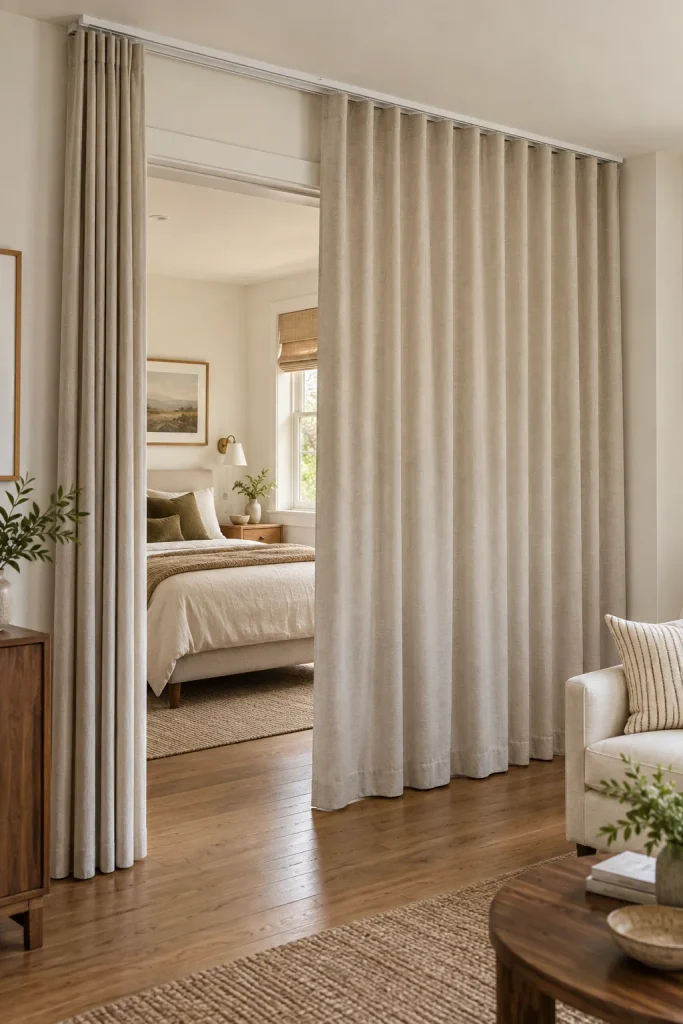
A ceiling-mounted curtain track gives a doorway cover a cleaner, more intentional appearance. Instead of placing a short rod inside the frame, mount the track above the opening and let the fabric extend nearly from ceiling to floor. The extra height makes the room look taller and helps reduce gaps around the doorway.
This approach works particularly well across an arched opening or a wide passage between rooms. A single panel can stack on one side, while two panels can open from the center. Curved tracks can also wrap around an awkward corner or create privacy around a sleeping nook.
Choose fabric with enough body to hang neatly, but make sure the ceiling hardware is appropriate for its weight. When possible, fasten the track into framing or use anchors rated for the ceiling material.
Best for: Bedrooms, studio apartments, wide openings, and polished interiors.
3. Use a Double-Layer Acoustic Curtain
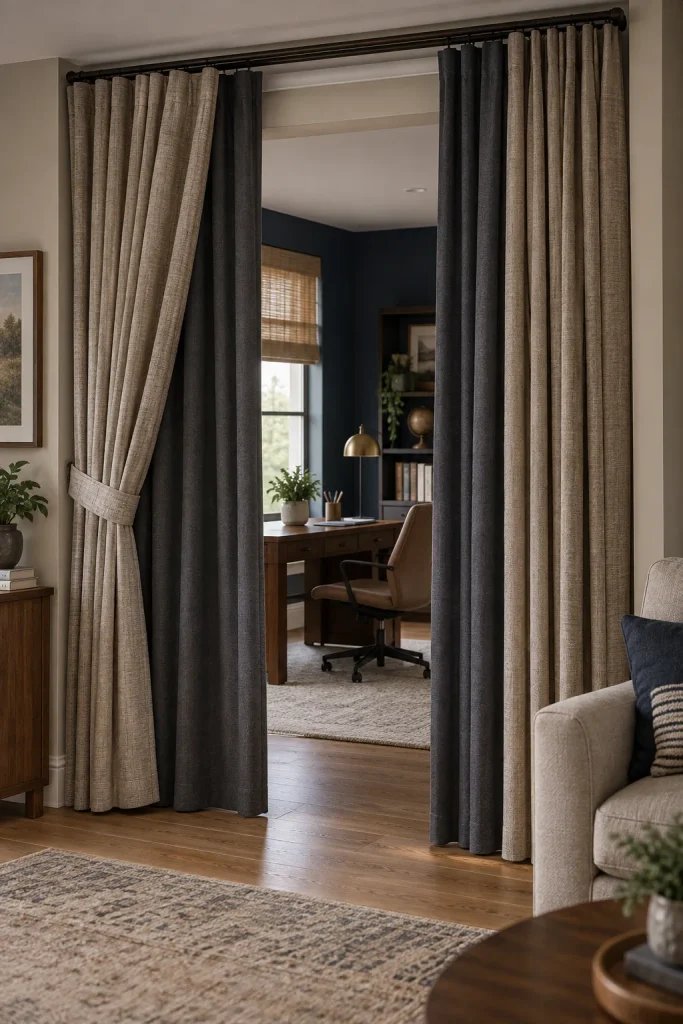
If the open doorway connects a bedroom, nursery, or home office to a noisy room, use layered drapery instead of one thin curtain. A decorative front panel can face the main room, while a dense lining or second curtain faces the quieter space. Overlapping the fabric beyond both sides of the opening also helps limit direct gaps.
Heavy curtains may soften voices, reduce echoes, and block more light than standard fabric, but they will not soundproof a room like a solid, sealed wall and door. Treat this as a sound-dampening solution rather than complete acoustic isolation.
Because layered panels can be heavy, use a properly anchored rod or ceiling track rather than a lightweight tension rod. A double-track system makes it easier to open or clean each layer separately.
Best for: Home offices, bedrooms, nurseries, and media spaces.
4. Add a Magnetic Insulated Doorway Curtain
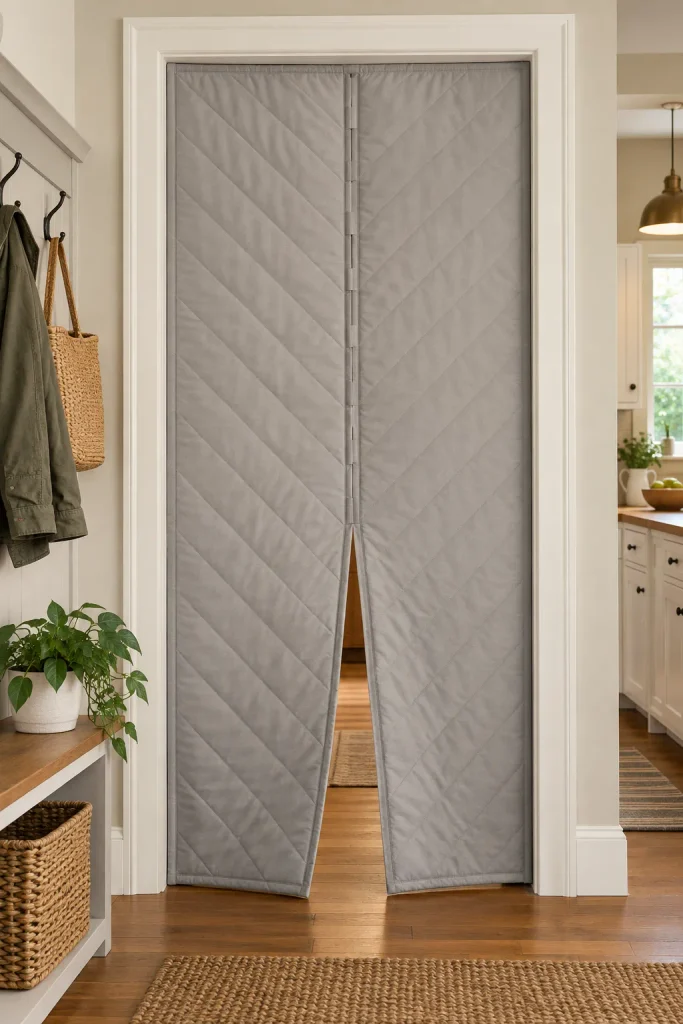
A magnetic doorway curtain is a practical option when you want the opening to close again automatically after someone passes through. Magnets along the center seam separate as you walk through and reconnect behind you. Most versions attach around the frame with hook-and-loop strips, although some kits include optional tacks for a stronger hold.
For a hands-free option, a fitted magnetic doorway curtain can provide privacy while closing itself after each use.
Designed for doorways up to 36 by 80 inches, this insulated curtain combines Oxford fabric with a padded interior. Its center magnets close automatically after you walk through, while hook-and-loop strips allow straightforward installation.

Opaque insulated styles can add visual privacy and help reduce drafts between rooms with different temperatures. They are particularly convenient when your hands are full or when family members frequently forget to close a curtain.
The trade-off is appearance. Many magnetic curtains are designed for function rather than formal interiors, so look for a neutral fabric finish and carefully match the dimensions to the doorway. Confirm that the center opening moves freely and does not create a tripping hazard at the bottom.
Best for: Drafty doorways, laundry rooms, workshops, basements, and casual living areas.
5. Try Sliding Fabric Panel Tracks
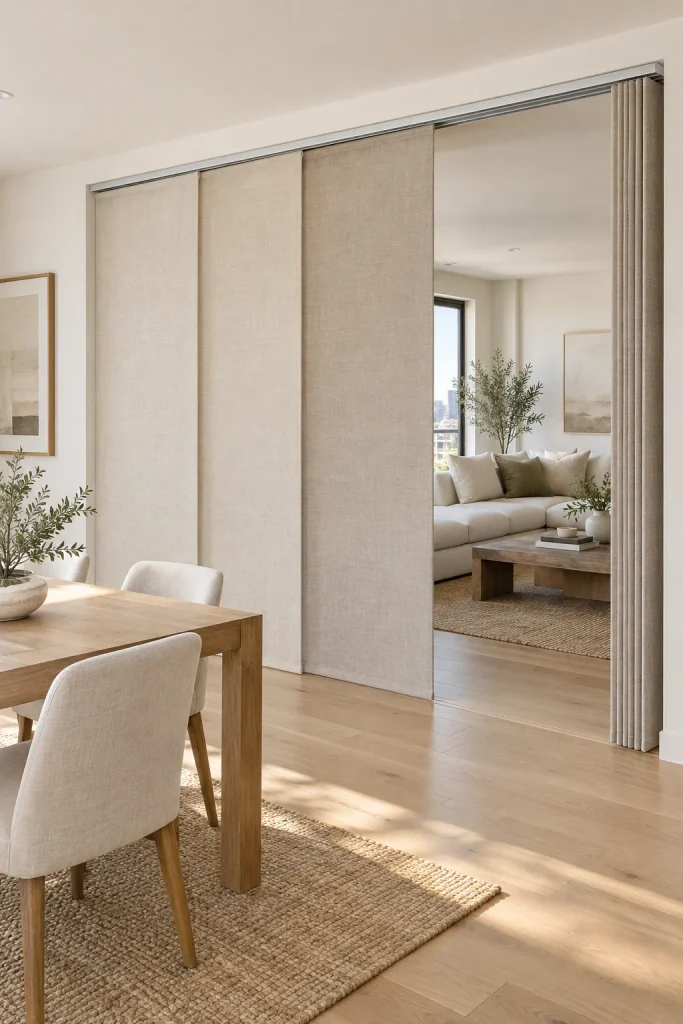
Panel-track blinds offer the softness of fabric with a more structured appearance than regular curtains. Several wide panels glide along a ceiling- or wall-mounted track and overlap slightly when closed. When open, the panels stack compactly at one or both sides of the doorway.
This system is especially useful for a wide opening where a long curtain might look bulky. Choose opaque panels for privacy, light-filtering panels to preserve brightness, or woven panels for added texture. Since each panel hangs flat, patterns and natural materials remain easy to see.
Before installing the track, measure the stacking space beside the opening. If there is no clear wall on either side, select a configuration that divides the panels between both ends.
Best for: Wide doorways, contemporary homes, offices, and open-plan living areas.
6. Install a Retractable Accordion Partition
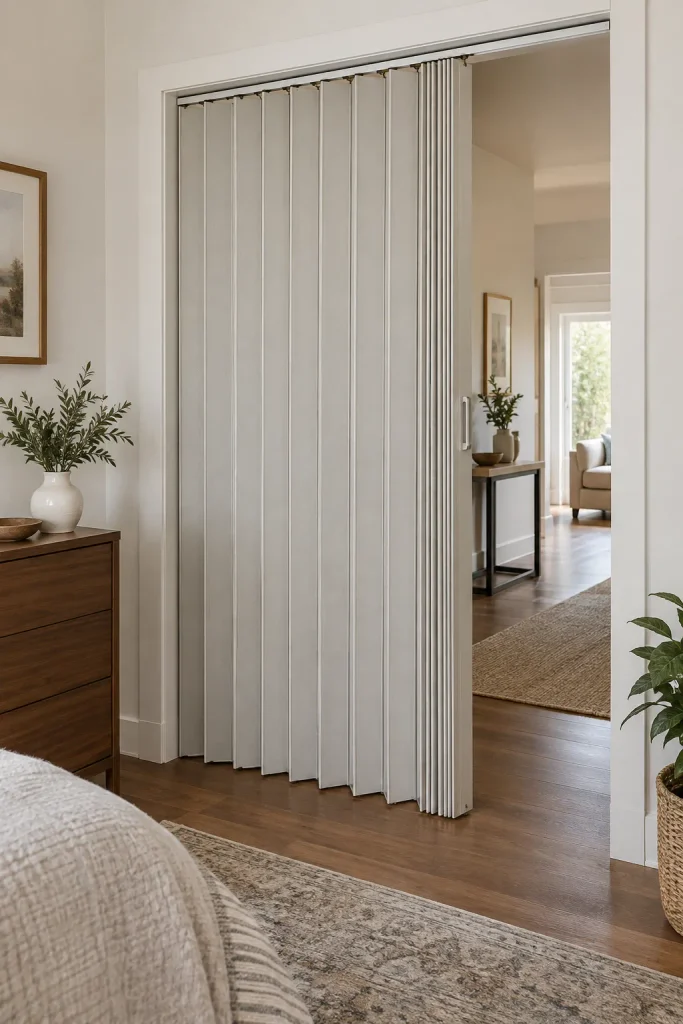
A retractable accordion partition creates stronger visual separation while using very little floor space. The connected panels slide along a track and fold into a narrow stack when the opening is not being covered. Unlike a freestanding screen, the partition stays aligned with the doorway and does not have to be moved out of the way.
Fabric and vinyl partitions tend to be lighter and more affordable, while rigid finishes can look closer to built-in millwork. Some systems include a latch or magnetic closure at the far side, which helps keep the partition closed.
This is one of the more involved options because the track must be installed straight and securely. Check the finished stack width before ordering so it will not reduce the usable opening more than expected.
Best for: Frequently used openings, shared bedrooms, home offices, and multipurpose rooms.
7. Mount a Roll-Up Woven Bamboo Shade
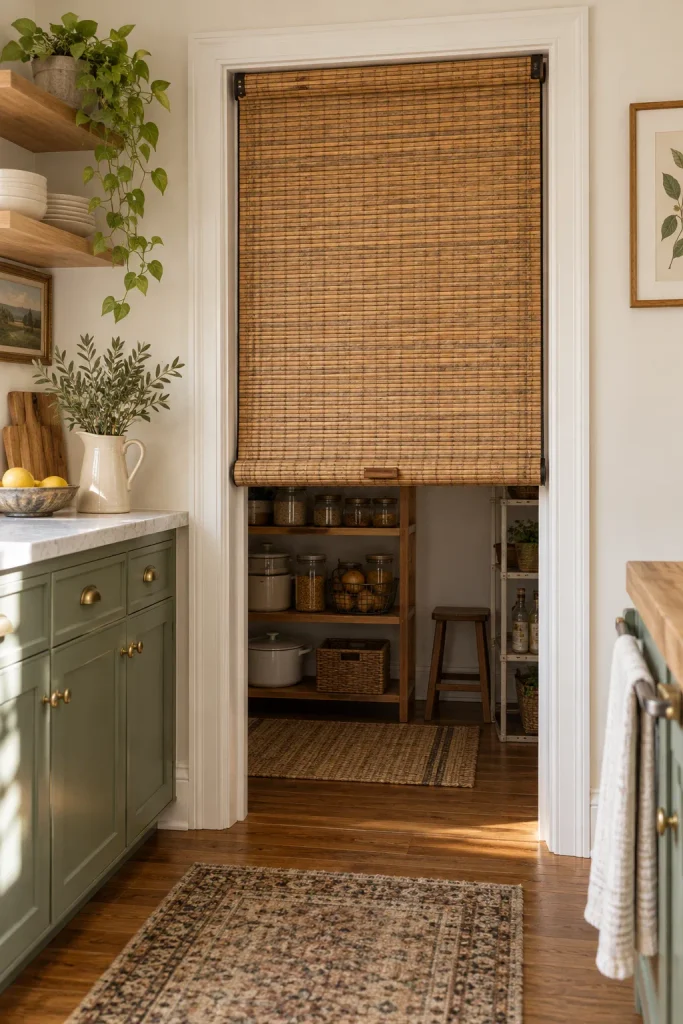
A woven bamboo or reed shade adds warmth and texture while hiding a closet, pantry, or utility area. Mount it above the opening and lower it when you want to conceal the space. When raised, the shade forms a compact roll that leaves the floor and sides of the doorway clear.
This solution works best for an opening that does not need to be crossed constantly. Raising a full-length shade every time you enter a busy room would quickly become inconvenient. It is much better suited to a closet, storage alcove, or infrequently used doorway.
Choose a cordless design or secure any operating cords according to the manufacturer’s instructions, especially in homes with children or pets. A privacy liner can be added behind loosely woven material if the stored contents remain too visible.
Best for: Closets, pantries, storage areas, and warm natural interiors.
8. Place a Cane or Rattan Folding Screen in Front
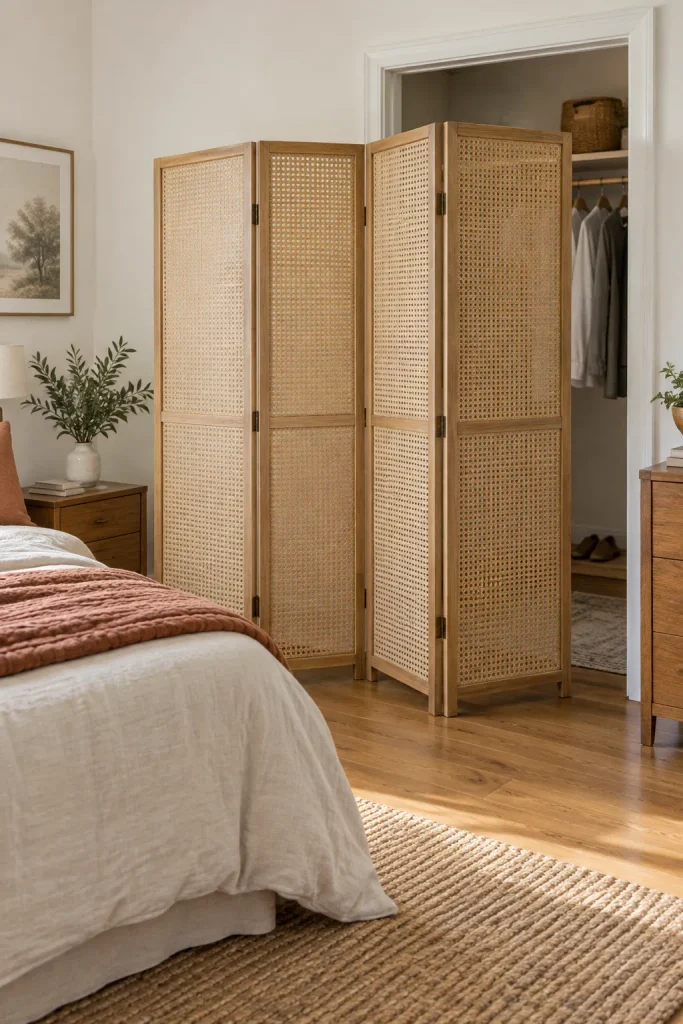
A folding screen can hide an open doorway in minutes without attaching anything to the walls. Cane, rattan, or woven panels add texture while allowing some light and air to pass through. Upholstered or solid wood panels provide more coverage.
A four-panel screen usually provides better coverage than a narrow three-panel model while remaining easy to reposition.
This freestanding divider uses four handwoven bamboo panels to add privacy without permanent installation. Two-way hinges let the panels fold in either direction, making the screen easier to position or store when not in use.

Instead of centering the screen tightly inside the opening, position it slightly in front and angle the panels for stability. You can fold one section back when access is needed or move the entire screen to another part of the home later.
Measure the available floor area as well as the doorway. A folding screen needs enough depth to stand securely, and a lightweight model may tip if placed in a busy walkway. Select a wider, sturdier screen or add manufacturer-approved anti-tip support when necessary.
Best for: Renters, guest spaces, open closets, and temporary room layouts.
9. Define the Opening with a Wood Slat Divider
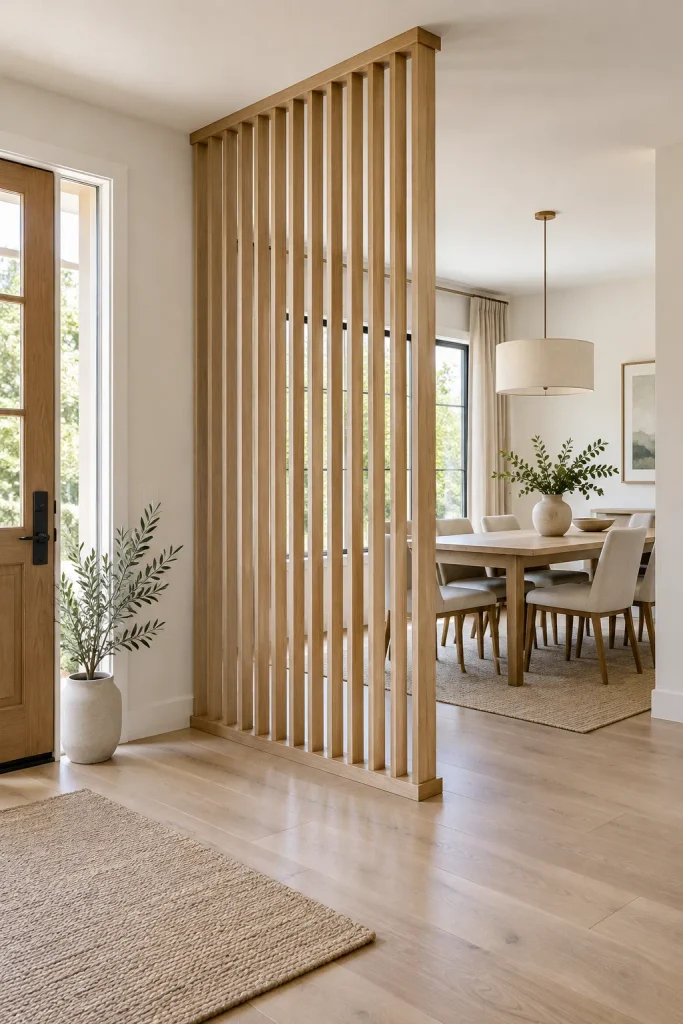
Vertical wood slats can make a plain doorway feel architectural without completely closing the rooms from one another. Install a narrow slatted panel beside the opening, or use two panels to frame a wider passage. The repeated lines partially screen the view while allowing daylight and airflow to continue through the space.
For a less permanent version, use a freestanding slatted divider with a stable base. A rotating-slat design offers more control: turn the slats open when you want a clear view and angle them when you want additional separation.
This is primarily a visual divider, not a solution for bedroom-level privacy or noise. It works best when the goal is to define an entry, dining room, or home office zone while preserving an open feeling.
Best for: Modern interiors, entryways, dining rooms, and open-plan homes.
10. Use a Reeded Acrylic Privacy Panel
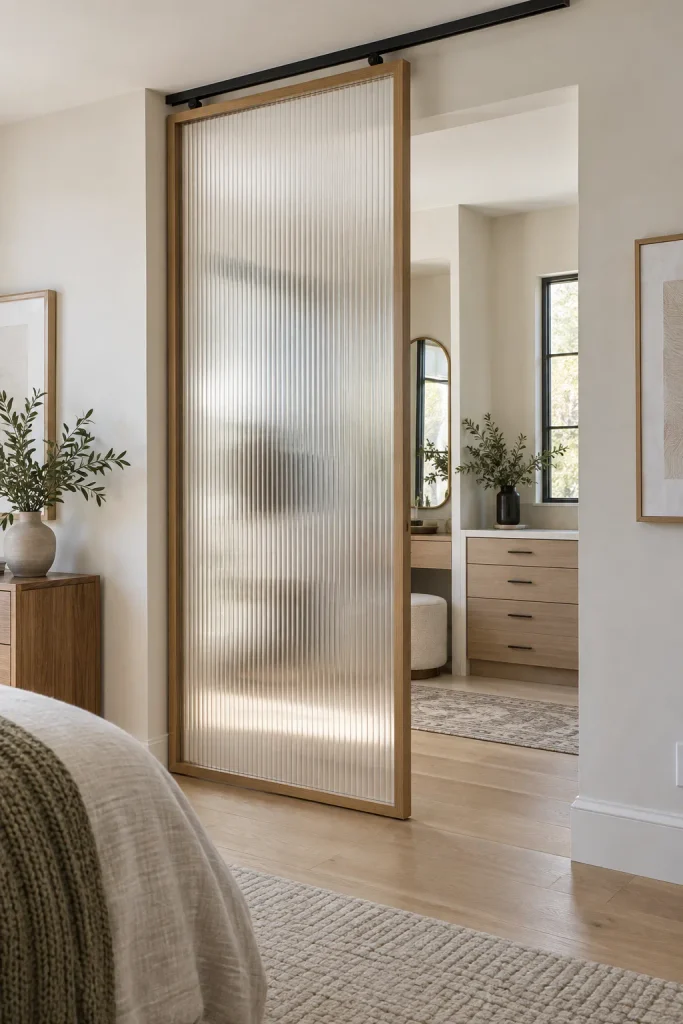
Reeded or fluted acrylic is useful when you want to blur the view through a doorway without losing natural light. The textured surface distorts shapes on the other side, while the translucent material keeps the transition from feeling dark or heavy.
The panel can be incorporated into a freestanding frame or suspended from a properly rated track. A framed panel generally looks more finished and protects the edges of the acrylic. For a softer look, pair a light wood frame with warm white or smoke-colored material.
This type of divider usually requires a custom or carefully planned installation. Do not place a rigid panel where it narrows an important exit route, and make sure any suspended system uses hardware rated for the panel’s size and weight.
Best for: Home offices, dressing areas, bathrooms outside the wet zone, and light-filled interiors.
11. Build a Rolling Storage Divider
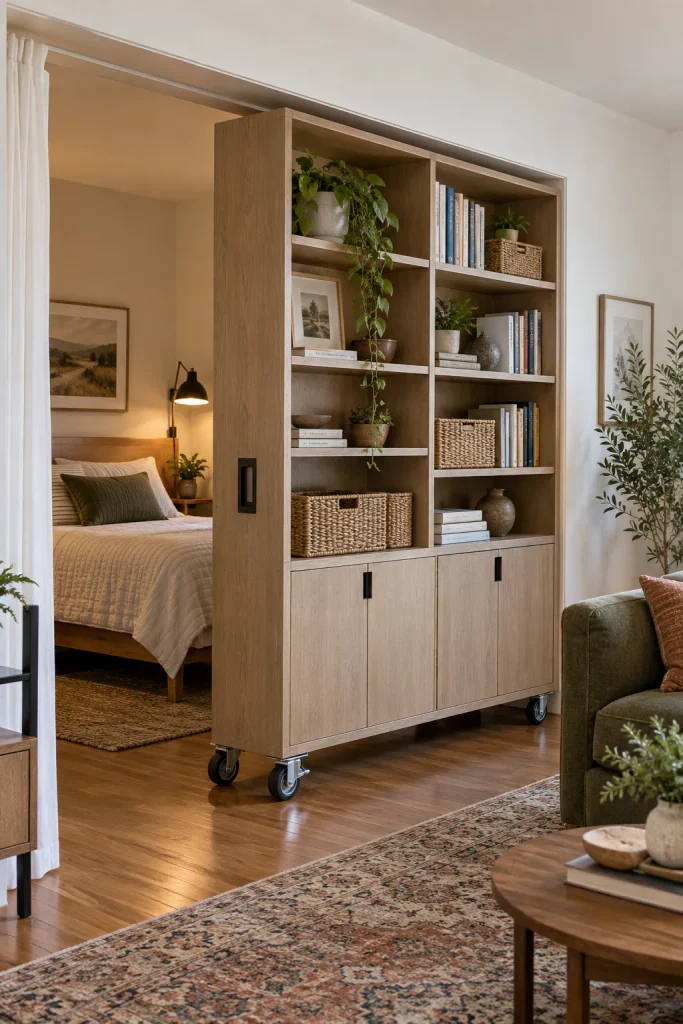
A rolling storage unit can cover an opening and give the room a useful place for books, baskets, craft supplies, or office equipment. Unlike a bookcase permanently set in the doorway, the entire divider moves aside on casters when access is needed.
Use finished panels on both sides so the unit looks intentional from either room. Shallow shelving keeps the divider from becoming unnecessarily heavy, and recessed pulls make it easier to move without protruding handles. Locking casters help keep it stationary once positioned.
This idea is best for a large opening with ample floor space. It should never block a required exit, and a tall unit must be designed to remain stable while moving. If you are unsure about the proportions or hardware, have a carpenter plan the structure.
Best for: Studios, craft rooms, home offices, and large multipurpose spaces.
12. Frame the Doorway with Pass-Through Bookcases
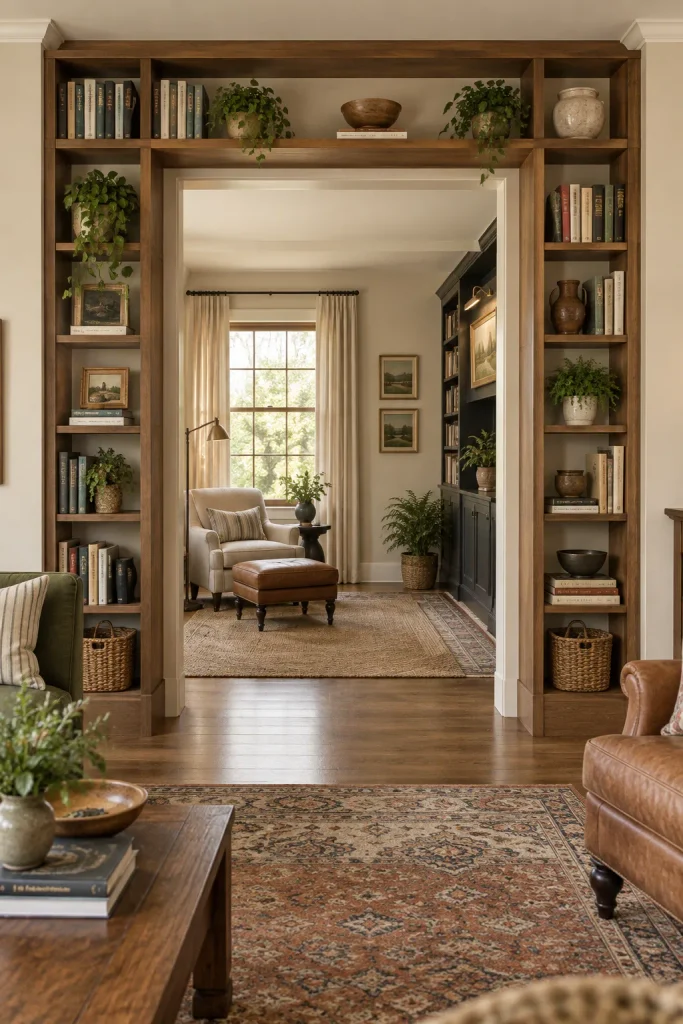
If you want to make an open doorway look more purposeful rather than fully private, surround it with shelving. Two narrow bookcases placed on either side can frame the opening, while a shallow shelf or bridge above creates a built-in library effect.
Open-backed shelving preserves sight lines and shares light between the rooms. Closed lower cabinets can hide clutter, and the upper shelves can display books, pottery, or baskets. Painting the units the same color as the walls helps them look integrated into the architecture.
Secure tall furniture to appropriate wall framing to reduce the risk of tipping. Also maintain a comfortable clear passage through the center instead of forcing large shelves into a narrow opening.
Best for: Living rooms, dining rooms, reading rooms, and homes needing more storage.
13. Create a Living Plant Divider
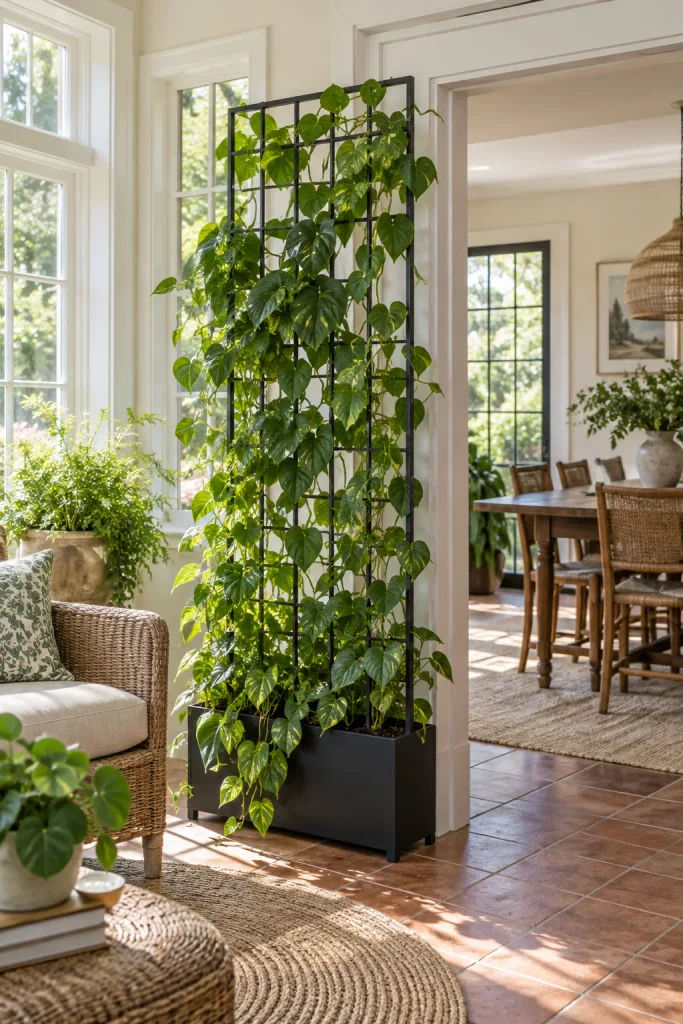
A narrow plant stand or freestanding trellis can soften the view through a doorway while creating a natural transition between rooms. Use trailing plants across the upper portion, fuller foliage near eye level, and open space near the bottom to keep the arrangement from looking too heavy.
This 71-inch-tall metal planter combines a raised garden bed with a 35-inch-wide trellis privacy screen. Its drainage holes support climbing plants and vines, making it a practical divider for patios, balconies, sunrooms, and other water-safe areas.

This works best near a bright doorway where the selected plants can receive appropriate light. Faux foliage is an alternative for darker spaces or households that want less maintenance. Choose a planter or stand with a stable base and protect nearby flooring from moisture.
A plant divider provides atmosphere rather than full privacy. It is a good choice when you want connected rooms to feel distinct without making either side feel enclosed.
Best for: Sunrooms, living rooms, dining areas, and biophilic interiors.
14. Hang Japanese Noren or Textile Panels
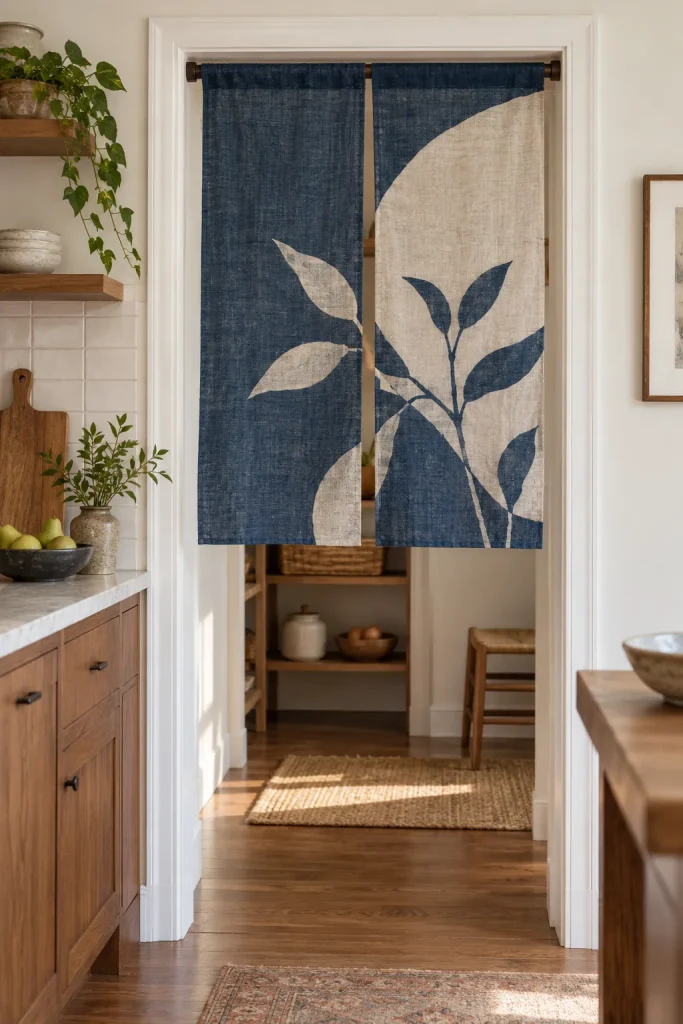
Japanese noren are split fabric panels traditionally hung across entrances. The center opening makes them easy to pass through, while the fabric adds color, pattern, and a modest visual screen. They can be hung from a small tension rod or mounted rod near the top of the doorway.
A longer split-panel design provides more concealment than a traditional short noren while remaining easy to walk through.
This split-panel Japanese noren features a Great Wave and Red Fuji design that adds partial privacy without blocking the passage. The fabric is machine washable and includes a top sleeve for installation with a tension rod.

Traditional noren cover only part of an opening, but longer textile panels offer more concealment. A pair of coordinated panels can also create a relaxed alternative to a full curtain. Look for washable fabric if the panels will be used near a kitchen, pantry, or busy hallway.
Because the panels separate in the center and may not reach the floor, they are not the strongest choice for sound control or complete bedroom privacy. Their strength is creating a decorative threshold without blocking circulation.
Best for: Kitchens, pantries, closets, reading nooks, and casual interiors.
How to Choose the Best Doorway Cover
The right solution depends on the room, the amount of privacy required, and whether you can make permanent changes.
For the Most Privacy
Choose an opaque ceiling-track curtain, overlapping fabric panels, a magnetic insulated curtain, or a retractable accordion partition. Extend fabric beyond the doorway edges whenever possible to reduce sight lines around the sides.
For a Rental
A tension rod curtain or freestanding folding screen is usually the easiest place to start. Both can be removed without leaving major changes behind. Always confirm the rental rules before using adhesive strips, tacks, or wall anchors.
For Better Sound Control
Use dense, floor-length fabric with generous width and minimal gaps. A layered curtain may reduce echoes and soften sound transfer, but an open doorway cannot be fully soundproofed without a solid, sealed barrier.
For a Wide Doorway
Consider a ceiling track, sliding fabric panels, or an accordion partition. These systems can span a wider opening while stacking to the side when not in use.
For a Small Room
Avoid dividers that require a large footprint. A ceiling-mounted curtain, magnetic curtain, woven shade, or panel track keeps the floor clear and does not need swing space.
For Style Without Full Privacy
Wood slats, reeded acrylic, doorway shelving, plants, and noren panels can make the transition between rooms more interesting while maintaining an open feeling.
How to Measure a Doorway for a Curtain or Divider
Measure before ordering any rod, track, curtain, or partition. Do not rely only on the nominal size of the opening.
- Measure the width in three places. Check the top, middle, and bottom of the opening. Older frames may not be perfectly square.
- Measure the height on both sides. Use the shorter measurement when fitting something inside the frame.
- Decide where the hardware will sit. An inside-mounted tension rod needs the interior frame width. A wall- or ceiling-mounted track must cover the opening plus any overlap and stacking space.
- Allow extra curtain width. Fabric normally needs additional fullness so it does not hang flat or leave gaps when closed.
- Check floor clearance. A curtain should nearly reach the floor for privacy without dragging where it could collect dirt or cause someone to trip.
- Locate studs or suitable supports. Heavy tracks and partitions need hardware appropriate for the wall or ceiling material.
Also open nearby cabinets, drawers, and furniture before choosing a system. Make sure the new cover will not interfere with switches, vents, trim, or the normal walking path.
Frequently Asked Questions
What is the easiest way to cover a doorway without a door?
A tension rod with a curtain is usually the easiest solution for a standard doorway. It requires minimal installation, is relatively affordable, and can be removed later. Use a properly sized rod and a curtain light enough for its weight rating.
How can I cover a doorway without drilling?
Use a tension rod curtain, freestanding folding screen, stable plant divider, or appropriately installed removable magnetic curtain. Keep in mind that some adhesive mounting systems can still mark paint or finish, so test them in an inconspicuous area and follow the product instructions.
What can I use instead of a bedroom door?
For visual bedroom privacy, consider an opaque ceiling-track curtain, overlapping panel-track blinds, or a retractable accordion partition. A heavy layered curtain can also soften some noise, although it will not provide the security, sound isolation, or sealing of a solid door.
How do I cover a wide doorway between two rooms?
Ceiling-mounted curtains, sliding fabric panels, and track-mounted accordion partitions are practical for wide openings. Measure the full opening, add side overlap, and account for the space the material will occupy when stacked open.
Can a curtain help soundproof an open doorway?
A dense curtain can reduce echoes and soften some sound, especially when it overlaps the opening and reaches the floor. It cannot fully soundproof the doorway because sound can still travel through fabric and around the edges.
How can I make a doorway curtain look intentional?
Mount it high, choose enough fabric for gentle fullness, and let it fall close to the floor. Coordinate the material with the room’s upholstery or wall color, and use a tieback or track system that keeps the panel neat when open.
Which doorway covers are safest around children and pets?
Wall- or ceiling-mounted systems keep more of the floor clear than freestanding screens. Avoid loose cords, unstable furniture, sharp panel edges, and fabric that pools on the floor. Follow the manufacturer’s installation and child-safety instructions for the specific product.
Conclusion
You can cover a doorway without installing a traditional door, but the best solution is the one that matches how the opening is actually used. A tension rod curtain is a simple renter-friendly fix, while a ceiling-track curtain looks more finished and provides better everyday coverage. Magnetic curtains and accordion partitions are practical when the opening needs to close frequently, and sliding fabric panels work especially well across wide doorways.
If privacy is not the main goal, consider a wood slat divider, reeded acrylic panel, doorway bookcase, plant screen, or Japanese textile panel. These options define the transition between rooms while keeping the home bright and connected.
Before choosing, measure the opening carefully, think about the walking path, and compare privacy, installation, and daily convenience. The result should not only hide the doorway when needed but also feel like a natural part of the room.