
You clear the porch, add a few things to make it welcoming, and somehow it starts looking busy again. A second doormat, extra flowerpots, seasonal signs, and chairs nobody uses can crowd even a generous entry. What you wanted was a calm place to come home to, with enough room to unlock the door without shuffling anything aside.
These minimalist front porch ideas focus on that everyday feeling of ease. Think fewer objects, useful furniture, simple shapes, and a little breathing room around the pieces you keep. The look can work with brick, siding, stucco, or a small concrete stoop; you do not need a modern house or an entirely new set of furnishings.
Use the ideas as alternatives, rather than a shopping list to combine all at once. A single planter might be enough for a tiny landing, while a deeper porch can support a quiet seating corner. Start with how you actually use the space, then let everything else earn its place.
1. Start with One Sculptural Planter
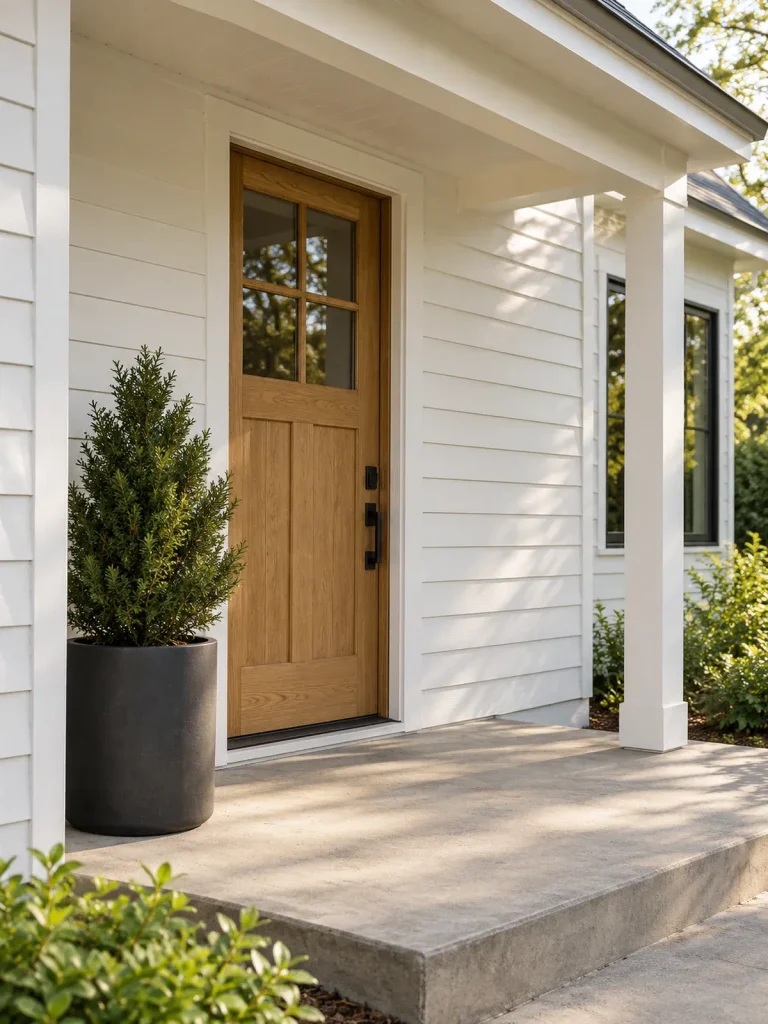
A single substantial planter gives your entry a focal point without scattering little pots across the floor. Look for a simple cylinder or gently tapered shape that feels proportionate to the door. Charcoal, soft gray, and natural clay are easy starting points.
Place it on the side with more room, outside the door swing and walking route. An upright evergreen or another plant suited to your light and climate keeps the silhouette readable. Choose a container with drainage and protect the surface underneath as needed. On a small porch, this one planted accent can replace several accessories while still making the entrance feel cared for.
2. Keep the Palette Warm and Tonal
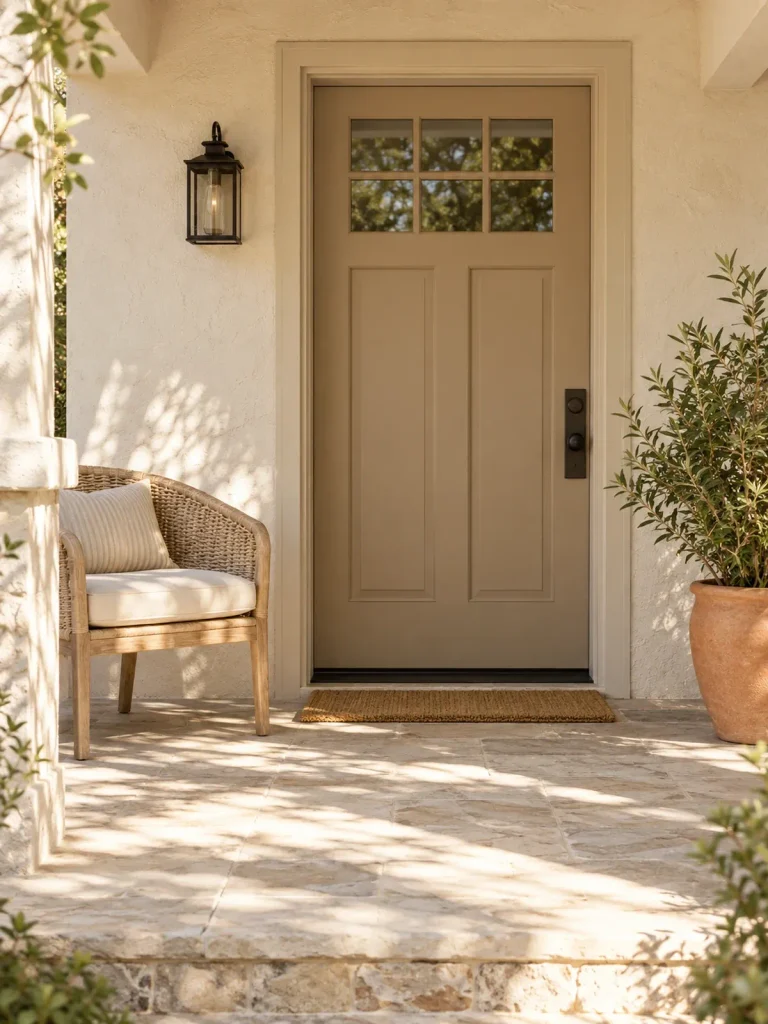
Cream, sand, oatmeal, and pale wood can make a minimalist entry feel soft rather than stark. The key is keeping the colors close enough that your eye moves through the space without stopping at every object. Existing stucco or light brick may already supply most of the palette.
Work with those fixed finishes before buying anything. Add a chair cushion or planter in a related shade, then use small differences in texture for interest. Warm neutrals can shift pink or yellow against certain siding, so check samples outside. You can create a neutral porch decor scheme gradually, keeping useful pieces and replacing only what clashes most.
3. Use a Slim Bench Instead of a Seating Set
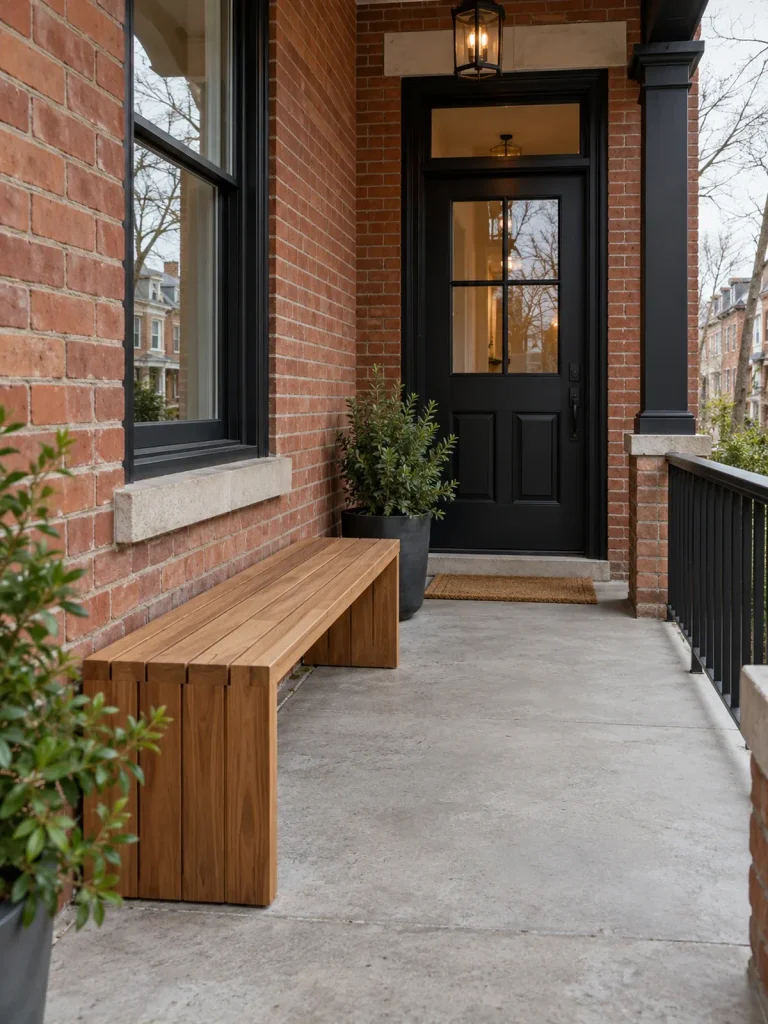
A narrow backless bench gives you somewhere to set a bag or sit while putting on shoes, with less visual weight than a full conversation set. Its long horizontal line works especially well against a brick wall or along the side of a compact porch.
Measure the usable floor depth before choosing a bench, including space for someone sitting on it. Keep the route to the door comfortable and unobstructed. Simple outdoor wood or powder-coated metal suits the clean look; skip extra cushions if they create another chore. A bench is useful only when the layout supports it, so a tight landing may be better left unfurnished.
4. Hide Daily Extras in a Storage Bench
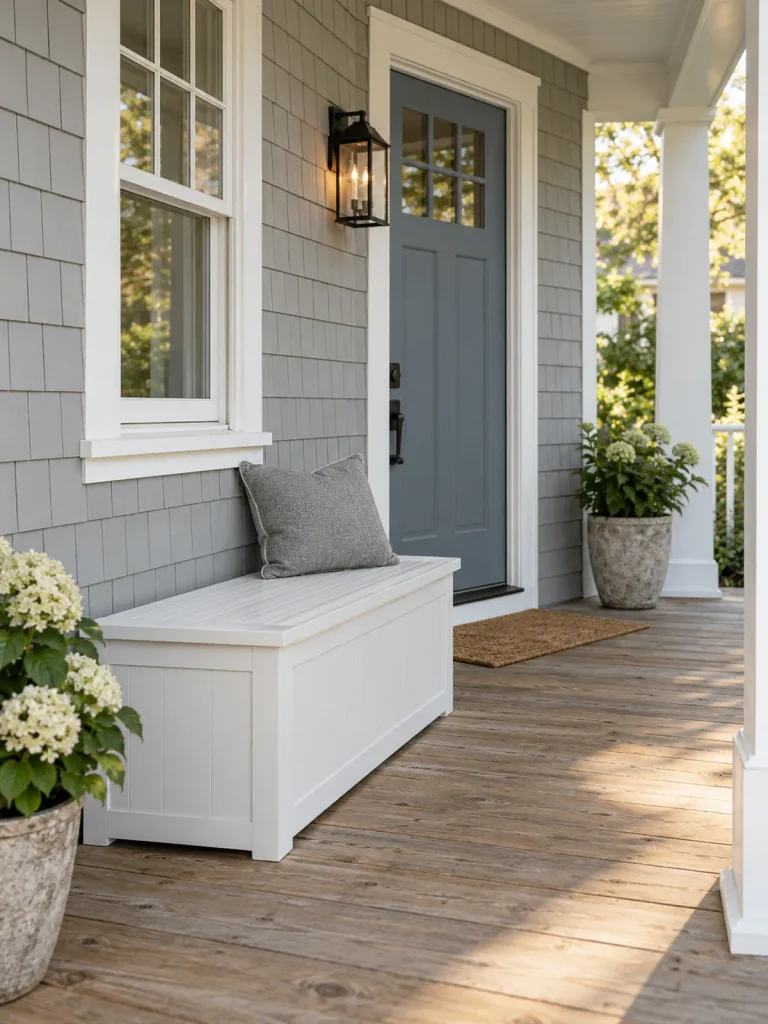
Closed storage can make the difference between a porch that looks tidy for a photo and one that stays manageable through the week. A storage bench combines seating with a home for a few outdoor essentials, keeping the visible arrangement simple.
Choose a model intended for outdoor use, and check how its lid opens before placing it near a wall or railing. Store only items suited to the conditions inside; outdoor storage is not automatically watertight or pestproof. Let damp belongings dry before putting them away. Limit the contents to things you use nearby, so hidden storage does not become a reason to keep more clutter.
5. Give the Front Door Room to Stand Out
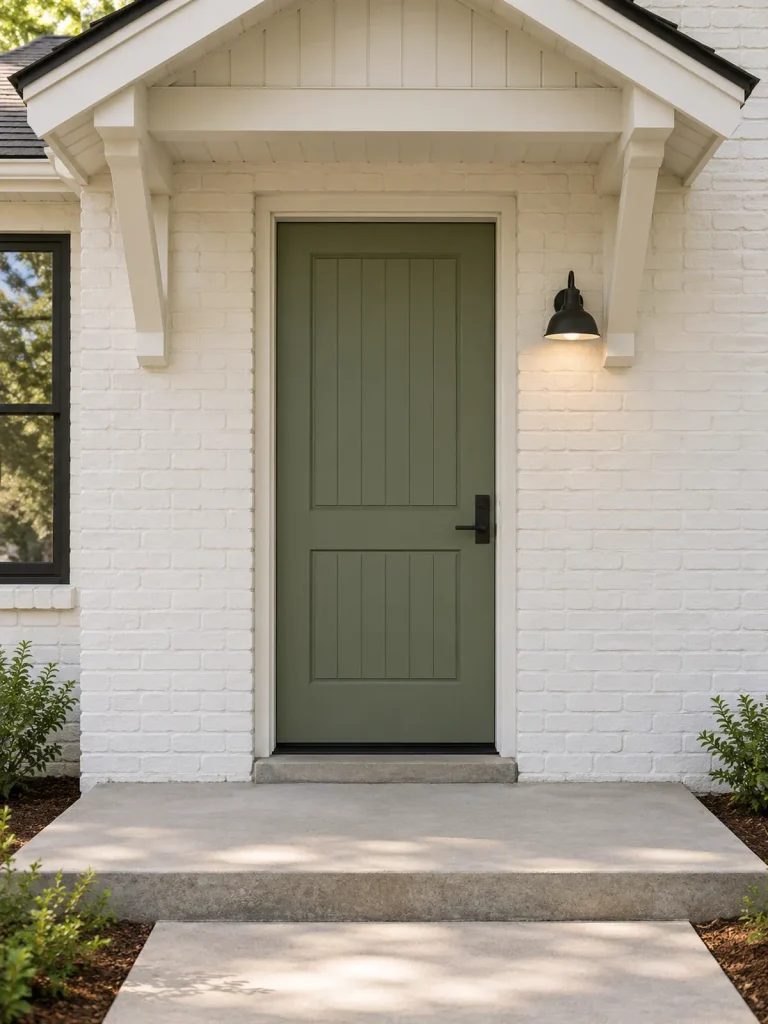
A front door in muted sage, deep navy, or a natural wood finish can carry the entire composition. With that clear focal point, you may need little beyond a working light and a clean landing. This approach is especially useful when there is no room for furniture.
Choose a color that relates to the siding, masonry, and roof rather than selecting it in isolation. Look at a sample in your porch’s shade and daylight before committing. For painting, follow the coating manufacturer’s surface preparation and material guidance. Keep required house identification visible, and resist filling the empty space beside the door just because it is available. Benjamin Moore
6. Repeat Two Matching Planters for Easy Order
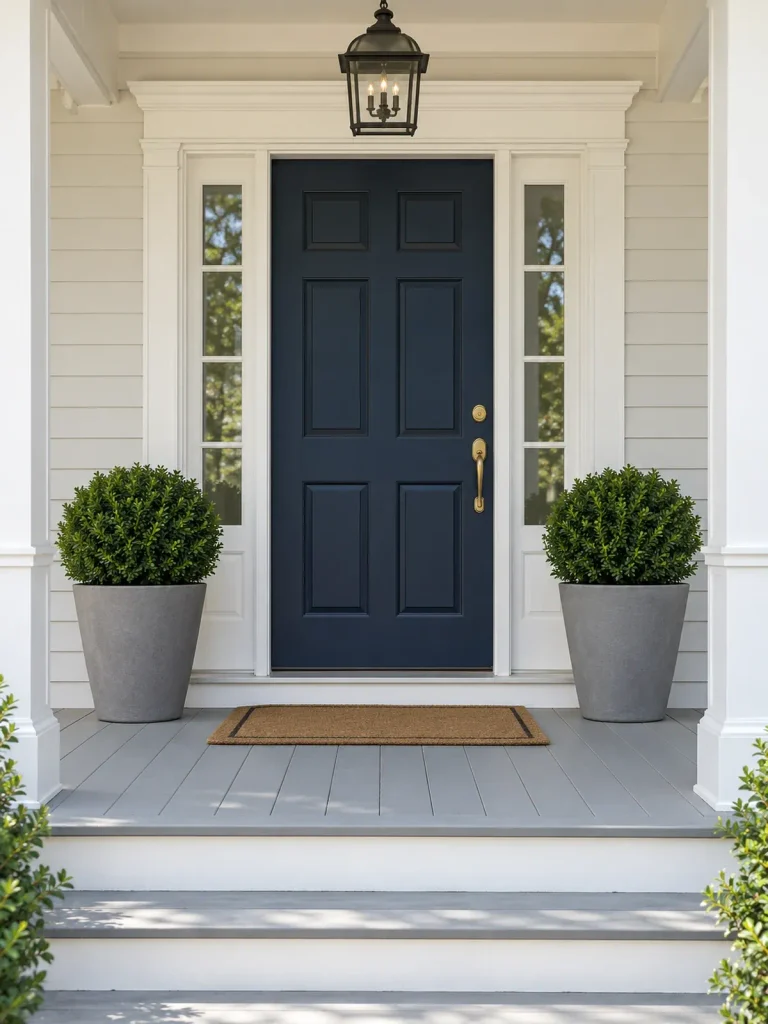
Two matching planters create a deliberate rhythm that suits a centered doorway and a reasonably wide landing. Repeating the container shape, finish, and plant form gives you a composed entrance without needing additional decorations between them.
Set the pots far enough apart to leave the doorway and approach clear, and allow room for the plants’ mature spread. Compact shrubs can provide structure, but choose varieties for your climate and actual sun exposure. Matching containers do not require plants trimmed into identical shapes every week. If one side receives much less light, an asymmetrical single-planter arrangement may be easier to maintain than forcing a balanced pair.
7. Choose One Flat, Quiet Doormat
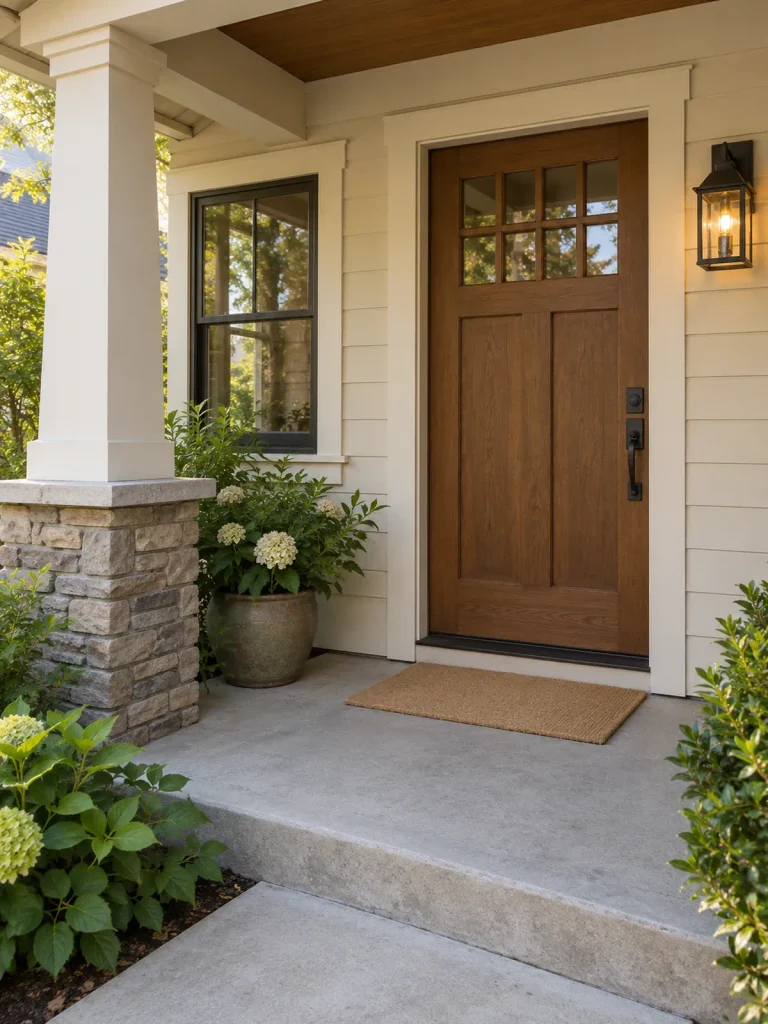
One flat doormat can anchor the doorway without the visual layers of a patterned rug beneath it. A restrained tan, charcoal, or muted gray mat makes the threshold look finished while keeping the floor easy to read.
Choose a size that sits comfortably within the landing and does not interfere with the door. Look for an outdoor-suitable material and backing appropriate for your porch surface. Check that the edges stay flat, especially after rain, and lift the mat regularly to clean underneath. Skip slogans and oversized patterns if you want a quieter entry. On an exposed stoop, prioritize drainage and drying over the look of a sheltered-porch setup.
8. Make a Single Chair the Whole Seating Area
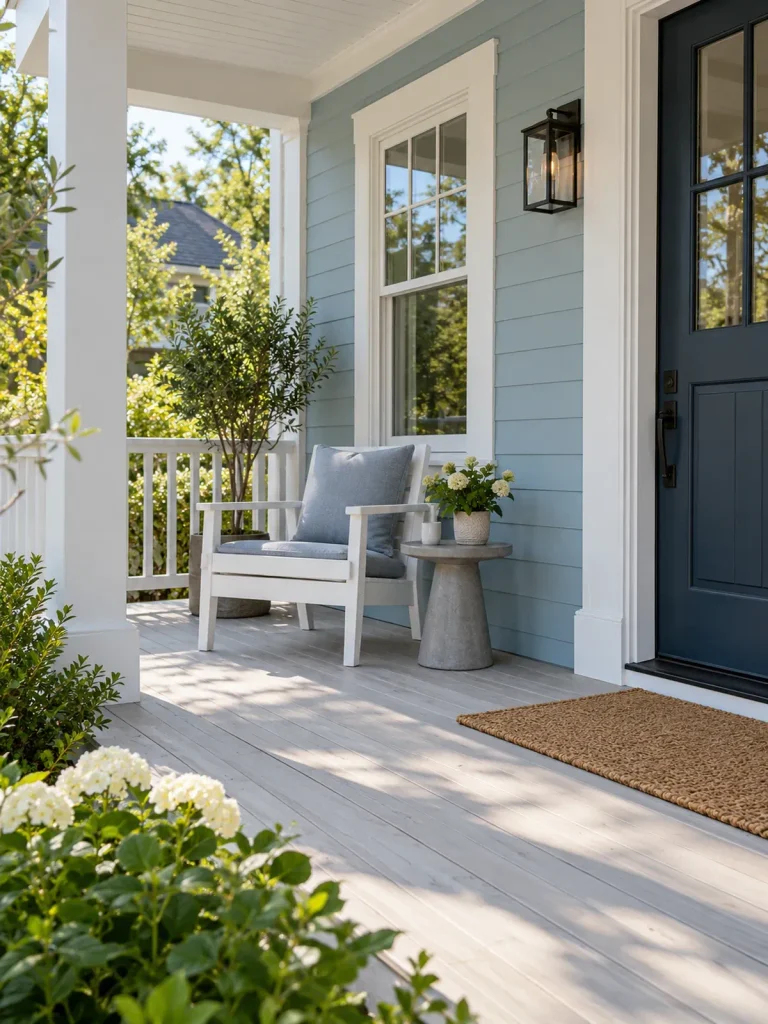
A single outdoor chair can turn an unused corner into a place for coffee without suggesting a whole entertaining area. Pick a shape you enjoy looking at from indoors, too, since it may be visible through a front window all day.
Keep the chair out of the entry route and position a small table within reach only if you will use it. One plain cushion is often enough to soften the arrangement. Check the seat depth and arm height rather than judging comfort from appearance. For a porch exposed to wind-driven rain, choose furniture suited to that exposure and have somewhere to put the cushion away.
9. Add Privacy with a Simple Slat Panel
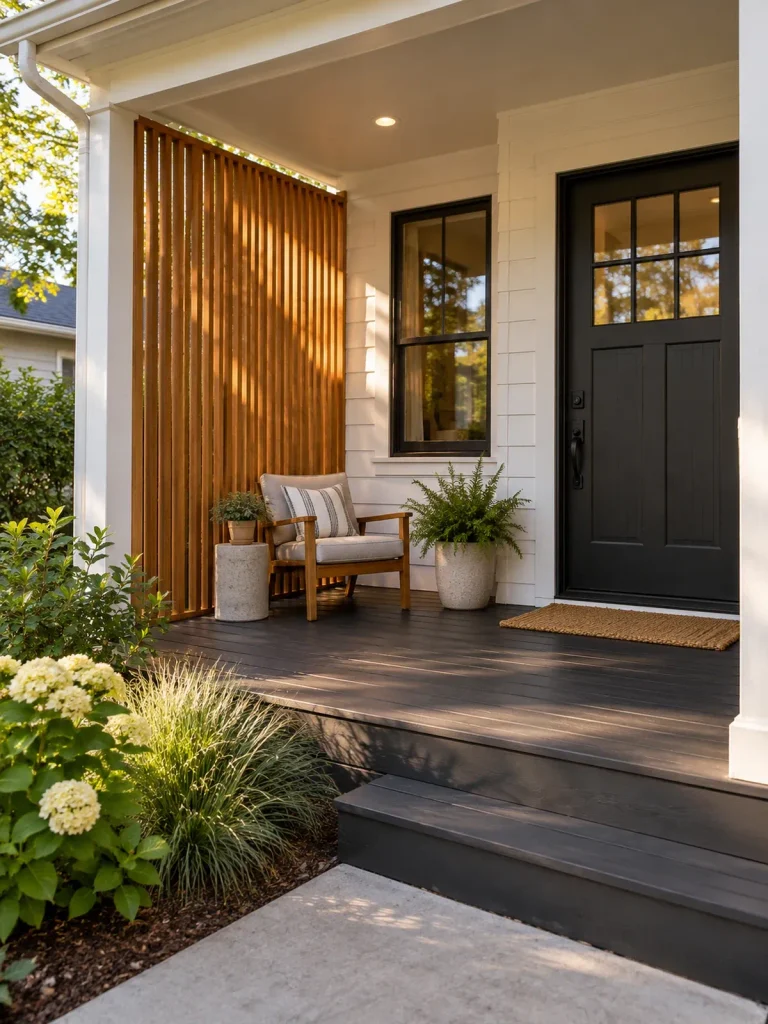
A simple slat panel can give a seating corner a quieter backdrop while screening part of the view from a nearby sidewalk or neighbor. Straight, evenly spaced boards bring order to the scene without adding several layers of decor.
Use the panel along one side of the porch rather than enclosing the whole entrance. Leave the door, steps, and approach open, and remember that gaps between slats provide only partial privacy. Treat the image as design inspiration: mounting, wind exposure, local requirements, and rental or HOA rules need checking before installation. A freestanding decorative screen also needs appropriate stability; light weight alone does not make it suitable outdoors.
10. Let One Outdoor Light Define the Entry
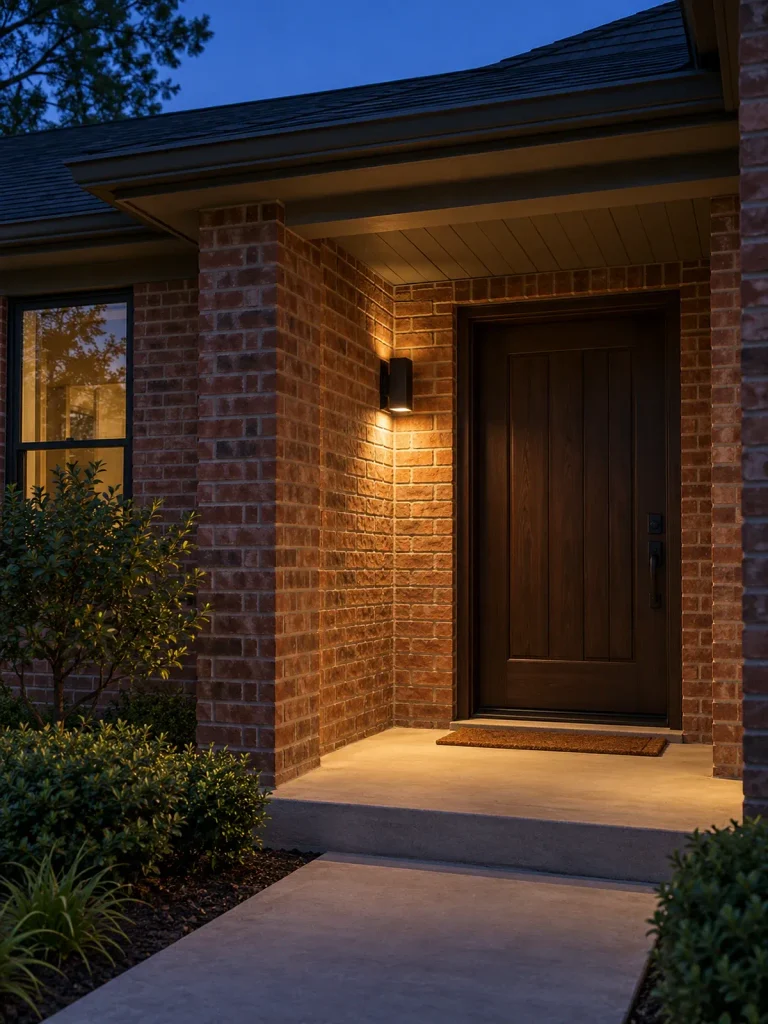
One well-chosen wall light can do more for a quiet entry than several decorative lanterns. A simple rectangular fixture or restrained sconce gives the doorway definition, with less daytime visual clutter than a mix of competing lighting styles.
Choose a fixture rated for its actual location and exposure, and size it to the wall area beside the door. Warm light can support the calm mood, but the landing and steps still need useful visibility after dark. Review the space at night before deciding one fixture is enough. Have electrical changes handled by a qualified professional, and avoid adding floor lanterns where they narrow the route inside.
11. Soften the Space with One Natural Texture
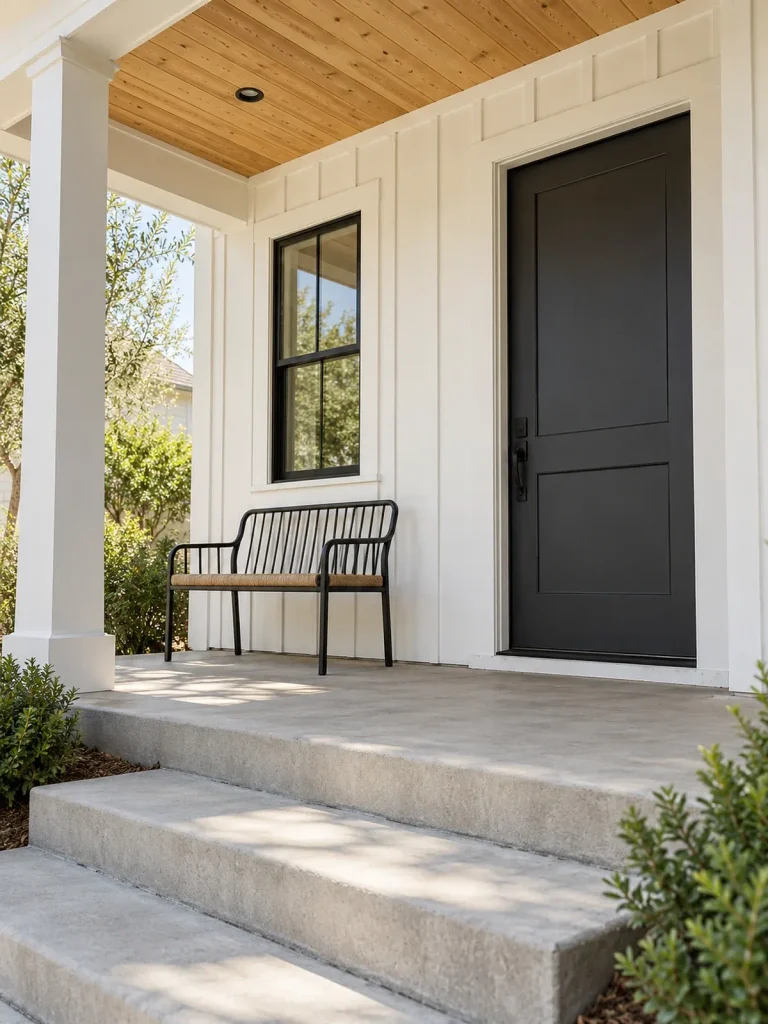
Minimalist does not have to mean smooth surfaces everywhere. A woven outdoor seat, a wood ceiling, or a plain clay pot can bring depth to a restrained porch without relying on lots of small accessories. Pick one texture to lead and let the others stay quiet.
For example, a bench with a woven seat can provide the decorative detail that several pillows would otherwise supply. Check that the weave and frame are designed for outdoor conditions; indoor natural-fiber furniture may not tolerate a damp porch. Keep the surrounding palette simple so the material remains noticeable. This works particularly well when your existing siding and floor already have strong patterns.
12. Use a Corner Shelf for a Tiny Plant Display
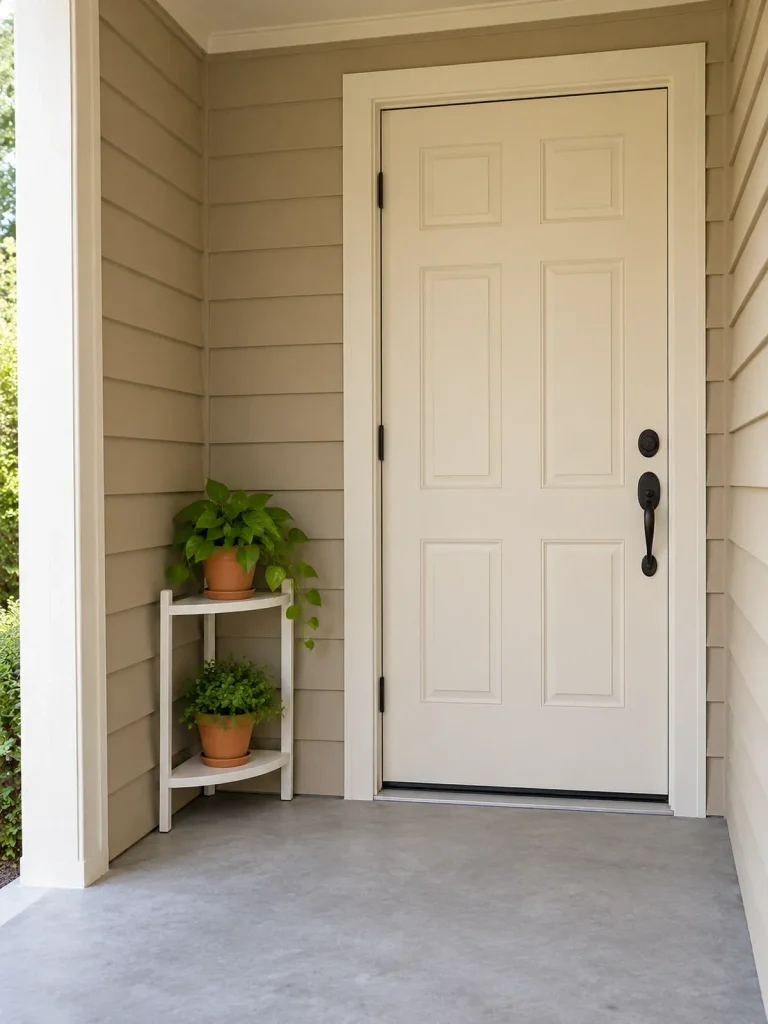
A small corner shelf can gather two favorite plants into one contained display instead of letting pots spread across the landing. Choose a restrained shape that fits fully into a sheltered corner, with enough space between tiers for the foliage.
Use similar containers to keep the grouping calm, and leave some shelf surface visible. The display should feel intentional rather than packed. Check the shelf’s outdoor suitability, load limits, and any anchoring requirements, placing heavier pots lower down. Keep drainage from pooling on the shelves or porch floor. This is a useful option for a protected entry, but skip it where gusts, narrow clearance, or uneven flooring make placement awkward.
13. Keep a Small Porch Visually Open
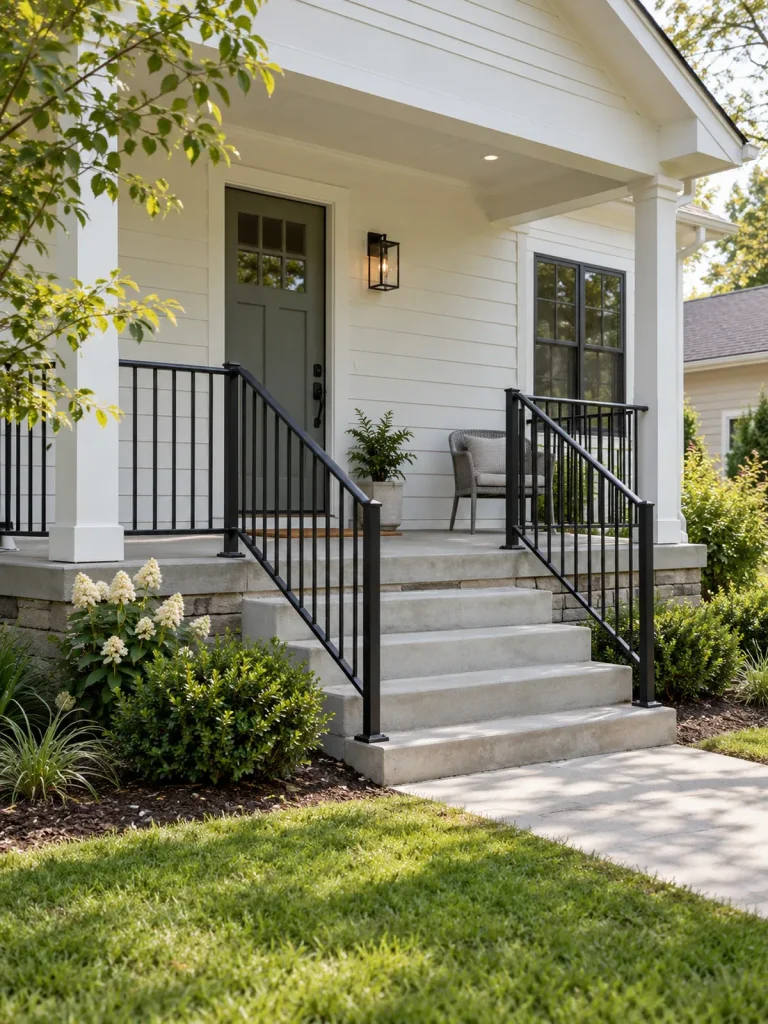
On a small porch, open floor space and visible sightlines can be the strongest design features. Start by removing hanging accessories, bulky furniture, and objects lined up along every edge. You may find that the existing railing looks cleaner once everything around it is simplified.
Where a railing replacement is already planned, slender vertical elements can offer a lighter visual effect than heavy decorative infill. Appearance is only one consideration: required height, openings, attachment, and other local requirements must guide the final design. Keep existing protective barriers in place while planning. A petite chair tucked against the house may be all the furnishing the finished space needs.
14. Bring Calm to a Deep Porch with Defined Zones
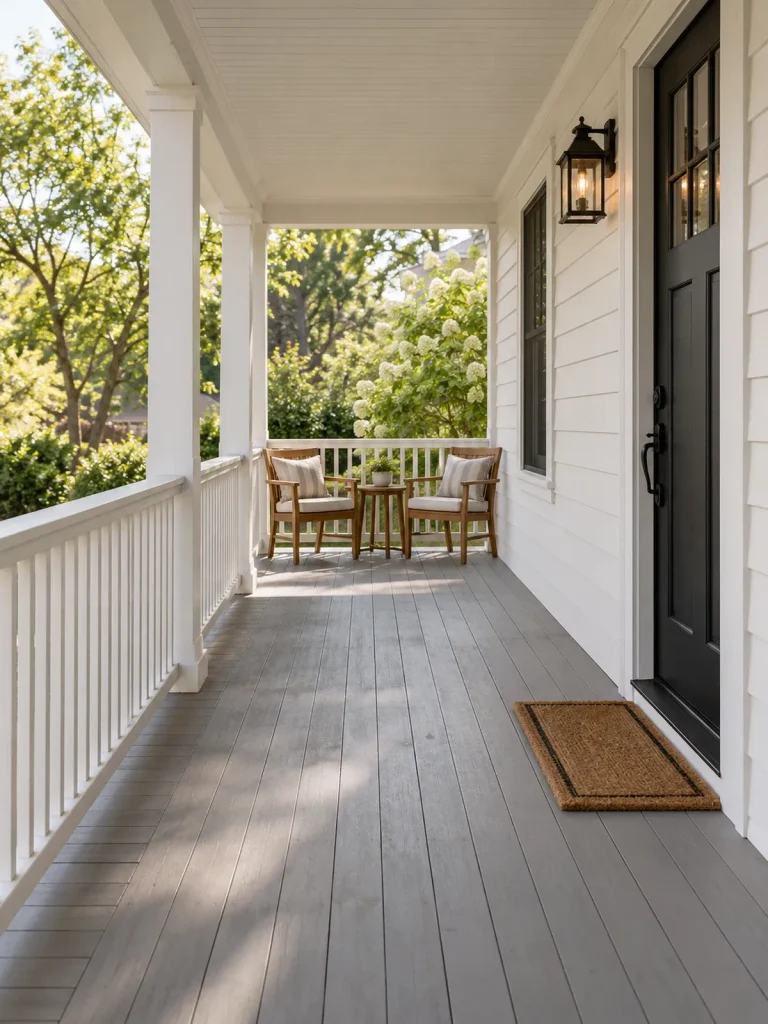
A long porch can feel scattered when chairs, tables, and planters are spaced evenly along its entire length. Instead, give it one clear seating zone and let the entrance remain a separate, quieter area. That contrast makes the arrangement easier to understand.
Group a pair of chairs and a small table at one end, with a direct walking route past them. Use the doorway’s mat to define the entry without adding a second furniture group. Before settling the layout, check windows, door swings, and access for deliveries. You do not need to fill the stretch between the zones; the open floor is what keeps a deeper porch from feeling overfurnished.
15. Make the Steps Part of the Minimalist Look
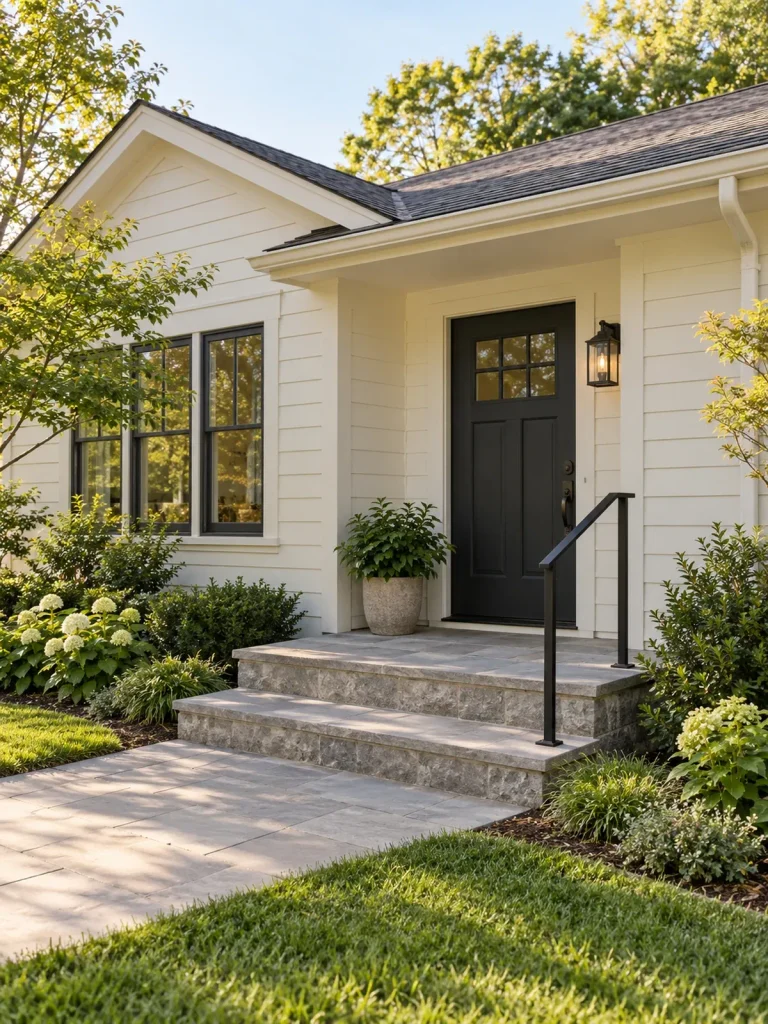
Bare, well-kept steps create a calm approach before you even reach the door. Rather than lining each tread with pots or seasonal objects, move greenery into beds beside the stoop. The contrast lets the shape and material of the steps become part of the design.
Sweep regularly, keep drainage routes clear, and address loose surfaces or other repair needs appropriately. Avoid treating the stairs as display shelves, even when the objects look small. Low planting beside the approach can soften concrete or stone without occupying the walking surface. Keep foliage from spreading onto treads and preserve handrail access, especially where a modest entry has little room to spare.
Build a Calmer Porch with What You Already Own
Before buying anything, take everything movable off the porch and put back only what you use. Notice where packages land, where the door swings, and whether anyone actually sits outside. Those habits should shape the arrangement.
Next, choose one main feature: a planter, a door color, or a seating corner. Add a second element only when it serves a clear purpose. A closed storage bench may solve a daily problem; another decorative basket may simply give you something else to move when sweeping.
For an inexpensive refresh, clean the surfaces and edit what is already there first. Keep a small indoor spot for seasonal accessories, then swap one item rather than layering new pieces over the old arrangement. Leave enough open floor to make weekly sweeping straightforward.
Frequently Asked Questions
How do I make a minimalist porch feel welcoming rather than empty?
Keep one inviting feature, such as a comfortable chair, healthy plant, or warm wood finish. Clean surfaces and useful lighting help the space feel cared for. You can add softness through texture without adding more objects.
Can a colorful front door work with minimalist porch decor?
Yes. Let the door be the main color statement and keep nearby objects restrained. A muted green or blue is one option, but a stronger color can work when the surrounding finishes are simple.
What should I put on a very small front porch?
Start with a flat doormat and useful entry lighting. Add one planter only if the door and walking route stay clear. Furniture is optional, and a tiny landing does not need a seat to look finished.
How can I decorate for the seasons without creating clutter?
Swap one existing accent instead of adding a new collection. Change the plant in a container or replace one cushion cover, then store the outgoing item indoors. Keep the steps and door swing clear throughout the year.
Does every piece of furniture need to match?
No. A limited palette and related shapes can connect pieces you already own. Pay more attention to scale, outdoor suitability, and how many items the porch can comfortably hold than to buying a matching set.
Choose One Change to Start
A clean, calm porch begins with a useful edit. Clear the walking route, choose the one feature you most want to enjoy, and give it room. That might mean a single planter on a stoop or two chairs at the far end of a deeper porch. Live with the simpler arrangement before adding anything else; the space you leave open is part of the finished look.