
Your fireplace can feel out of step with the room even when the furniture and paint already work. Tile gives you several ways to change that focal point, from a quiet surround that blends into the wall to a patterned hearth that adds character underfoot.
These fireplace tile ideas cover classic layouts, handmade textures, stone looks, and larger architectural treatments. You’ll find options for traditional living rooms, modern spaces, and electric fireplace installations, with practical details to help you compare them.
Start by deciding where you want the tile to stand out: around the opening, across the hearth, or up the entire fireplace wall.
1. Frame the Firebox With Classic Subway Tile
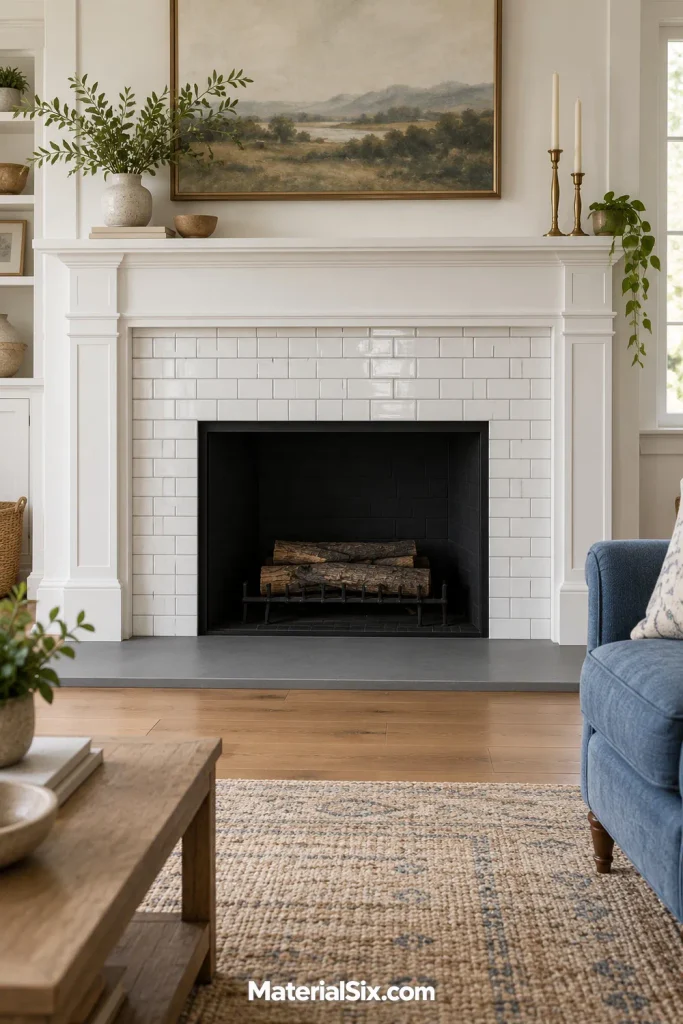
White subway tile gives a detailed mantel a quieter backdrop. A running-bond layout adds a familiar rhythm without competing with the trim, making it a useful starting point if you want the fireplace to work with several decorating styles. Light gray grout outlines each rectangle while keeping the overall effect soft.
Before ordering, map the courses around the firebox opening so the top row and side pieces feel balanced. Avoid leaving a skinny strip directly beneath the mantel if you can adjust the layout. A plain gray hearth adds a separate horizontal base and keeps the surround from looking overly busy.
2. Add Movement With a Herringbone Surround
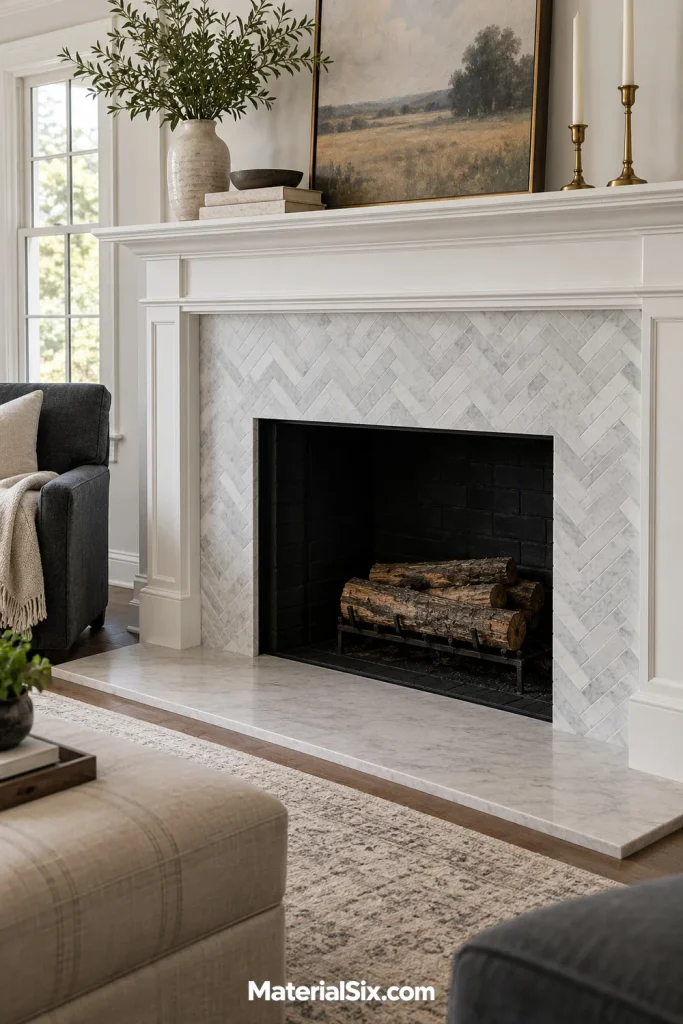
Herringbone brings movement to a fireplace without relying on a strong color. Narrow pale gray tiles create a zigzag that reads as texture from across the room and becomes more detailed as you move closer. Pair the pattern with a simple mantel so the angled layout remains easy to see.
Ask your installer to center the pattern on the fireplace opening, rather than starting from one outside edge. Preview where the diagonal cuts will land at the mantel legs and upper corners. Keeping the hearth plain gives your eye a resting place and avoids a second pattern competing with the surround.
3. Use Handmade Tile for a Soft, Uneven Glow
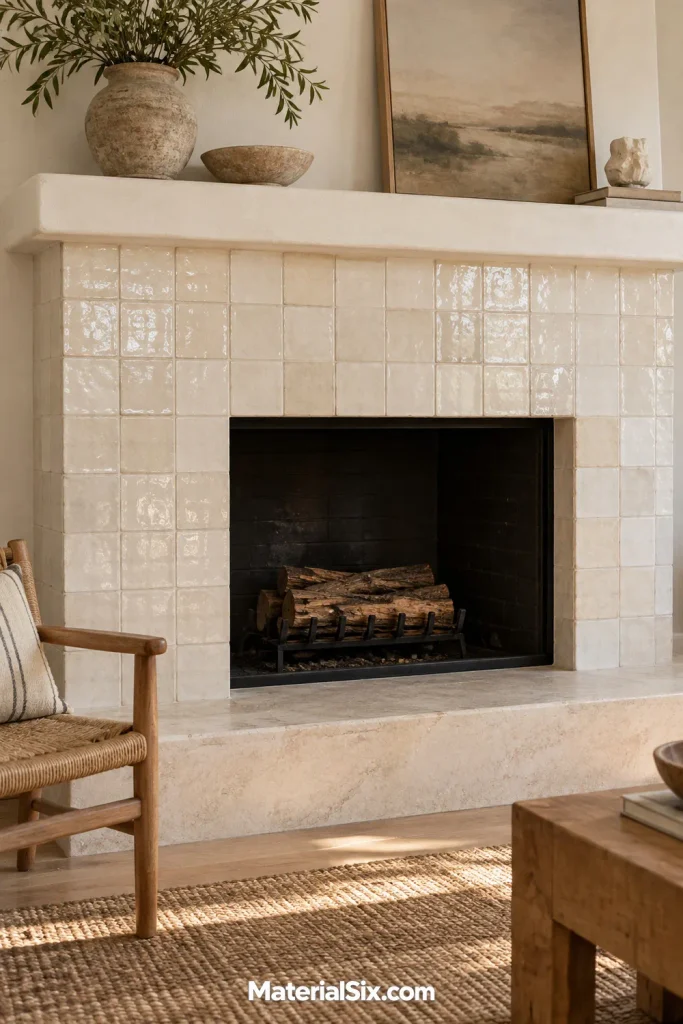
An ivory handmade tile fireplace surround can add depth even when the room stays mostly neutral. Small square tiles with varied glaze and gently irregular edges catch daylight differently, giving the surface a softer character than a uniform grid of glossy white tile. A simple plaster mantel lets that variation take the lead.
View several samples together before choosing, since a single tile cannot show the full range of tones. True handmade tile and handmade-look ceramic have different installation requirements, so confirm the product details with your installer. Choose a compatible edge treatment for the firebox opening instead of leaving unfinished tile bodies exposed.
4. Create Broad Veining With Marble-Look Porcelain
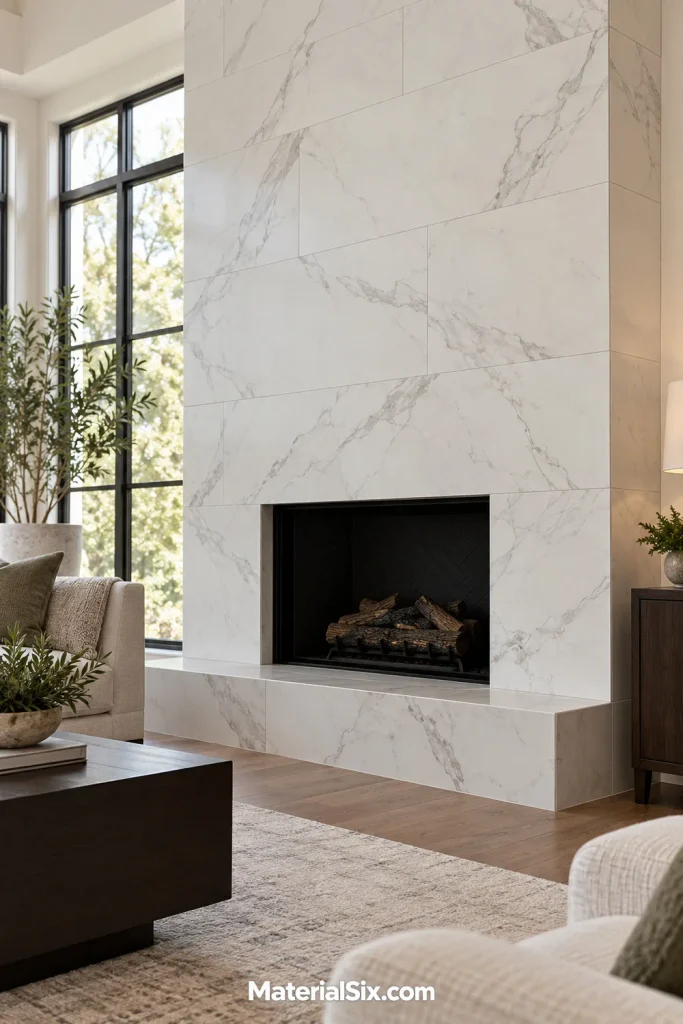
Large marble-look porcelain tiles give a fireplace the sweep of veined stone while still reading as a tiled surface. White tile with restrained gray veining works especially well when you want the surround to feel substantial without adding a dark block to the room. A matching hearth keeps the composition connected.
Lay out the tile faces before installation so the veins do not repeat awkwardly or stop in distracting places. Decide where the grout joints will sit in relation to the opening. For a mantel-free design, finished outside edges matter as much as the front face, so plan those details before the tiles are cut.
5. Ground the Room With Textured Slate Tile
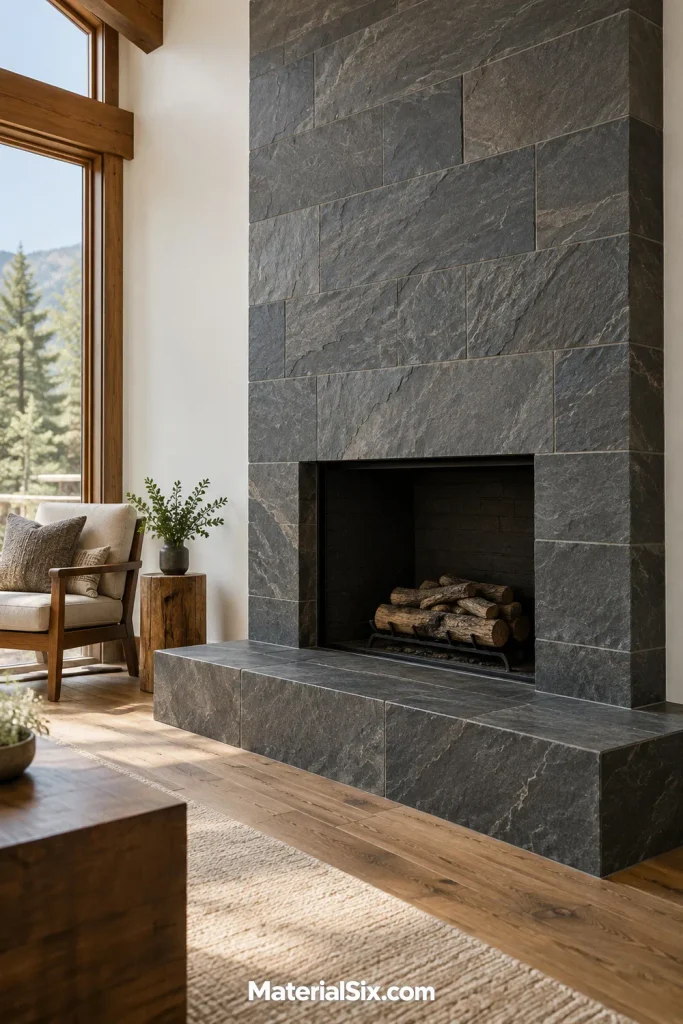
A slate fireplace introduces a darker, more tactile surface that suits rooms with wood furniture and soft fabrics. Rectangular slate tiles laid horizontally keep the texture orderly, while natural shifts between charcoal and gray prevent the surround from feeling flat. White walls help the darker tile remain a clear focal point.
Look at the slate’s surface variation and thickness, not just its color. A strongly cleft finish will read differently from a smoother tile and may need more attention when cleaning crevices. Ask the supplier about the selected stone’s care and sealing requirements. Carrying the slate onto the hearth gives the design a grounded base.
6. Get Cottage Texture With White Brick-Look Tile
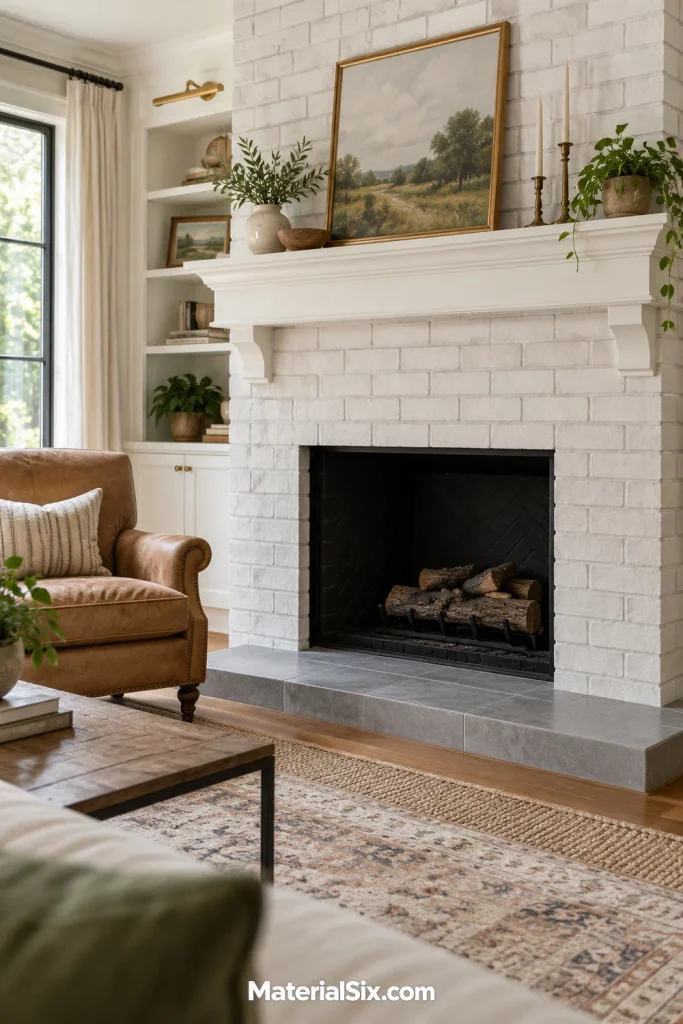
Brick-look tile gives you the scale and rhythm of a brick fireplace with a ceramic finish. Choose white rectangular tiles with a lightly textured face for a cottage-style surround that still feels bright. Warm gray grout brings out the individual shapes without creating a sharp checkerboard of lines.
The distinction from smooth subway tile is the surface: look for subtle irregularity rather than a flat, polished rectangle. Check how the product finishes at corners and around the opening. A simple painted mantel and a plain hearth keep the texture in focus. Repeat warm white elsewhere in the room so the fireplace feels connected to its surroundings.
7. Make the Surround a Mediterranean Pattern Feature
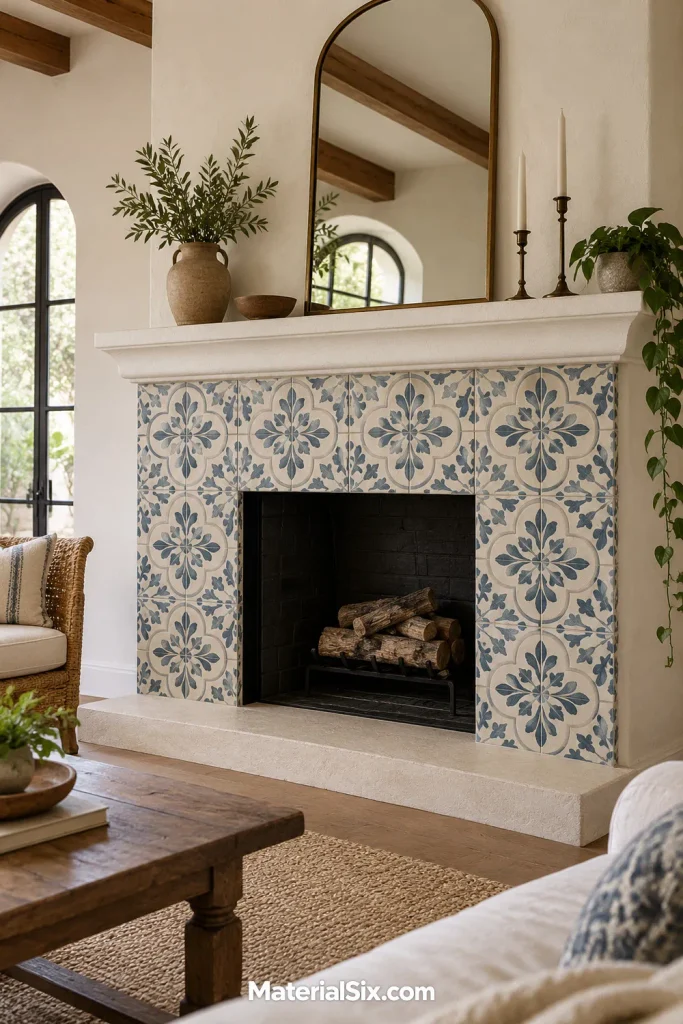
Blue and cream patterned tile gives a plain fireplace a Mediterranean feel without changing the whole room. An encaustic-look porcelain design can create the appearance of a decorative panel around the opening. Keep the mantel and adjacent wall simple so the repeated motif remains readable.
Check how many tiles are needed to complete one full pattern before planning the surround width. A large motif can lose its shape when most of it becomes narrow cuts. Dry-lay the pattern around a template of the firebox to see the result. A solid cream hearth and restrained furnishings help this bold tile hold its place in the room.
8. Stack Green Rectangles Vertically for a Midcentury Look
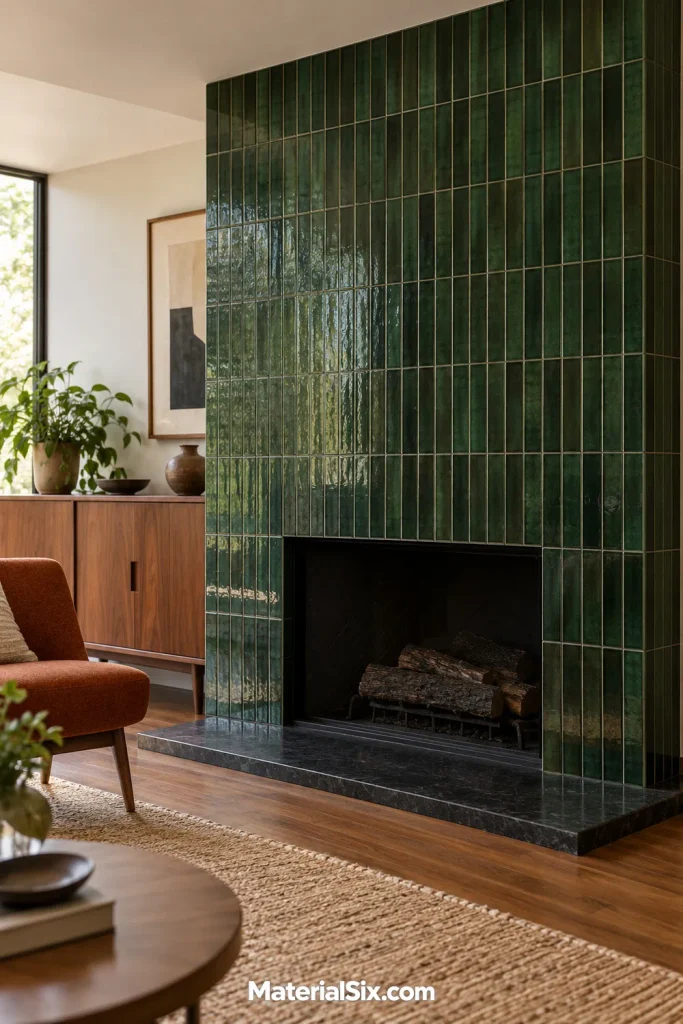
Deep green tile and a vertical stacked layout bring a crisp rhythm to a midcentury family room. The straight columns make the surround feel taller, while the glossy finish adds variation as daylight moves across it. Walnut furniture and rust-colored upholstery give the green a warm setting.
Choose the rectangle’s proportions with the opening in mind. Slender tiles create many closely spaced lines; wider rectangles look calmer. Use grout close to the tile color if you want the vertical direction to dominate rather than every individual joint. Finish with a plain dark hearth so the green surround remains the strongest feature in the seating area.
9. Bring Depth to Black Tile With a Ribbed Surface
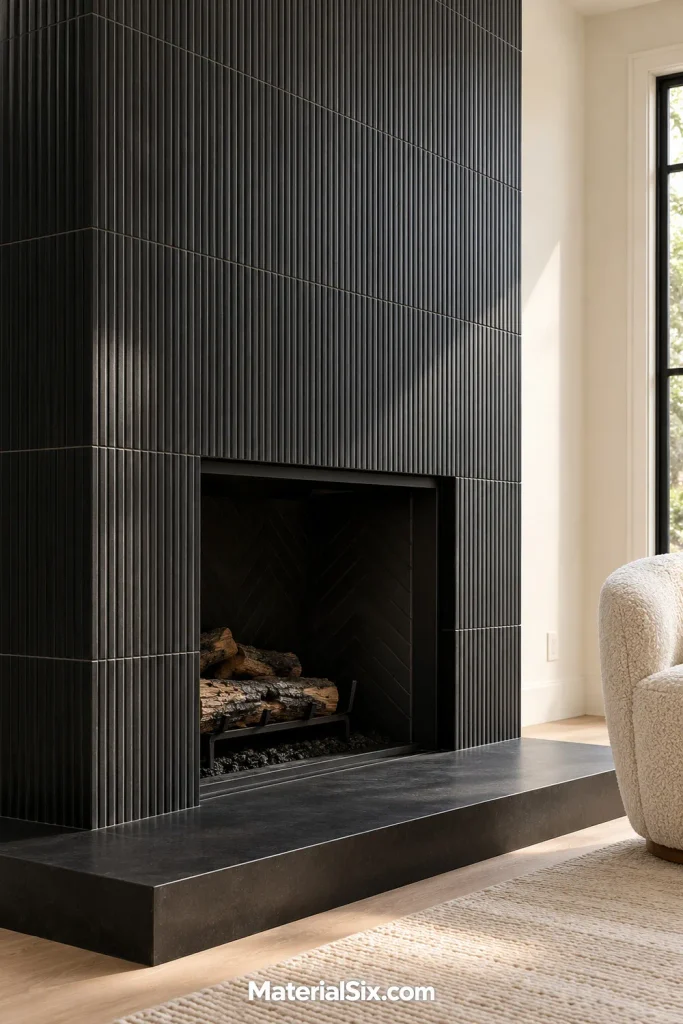
Black tile can feel richly textured when the surface has fine vertical ribs. Side lighting catches the raised lines, creating a shifting pattern of highlights and shadows across a dark fireplace surround. Pale upholstery and light walls keep the room from feeling heavy around that strong central feature.
Ask to see a large sample in daylight, since a small swatch may hide how pronounced the relief looks. Plan how ribs and tile seams will align at corners and beside the firebox. Keep the hearth flat and visually quiet. A simple rectangular opening lets the texture add interest without needing an ornate mantel or another decorative border.
10. Add Retro Character With Terrazzo-Look Tile
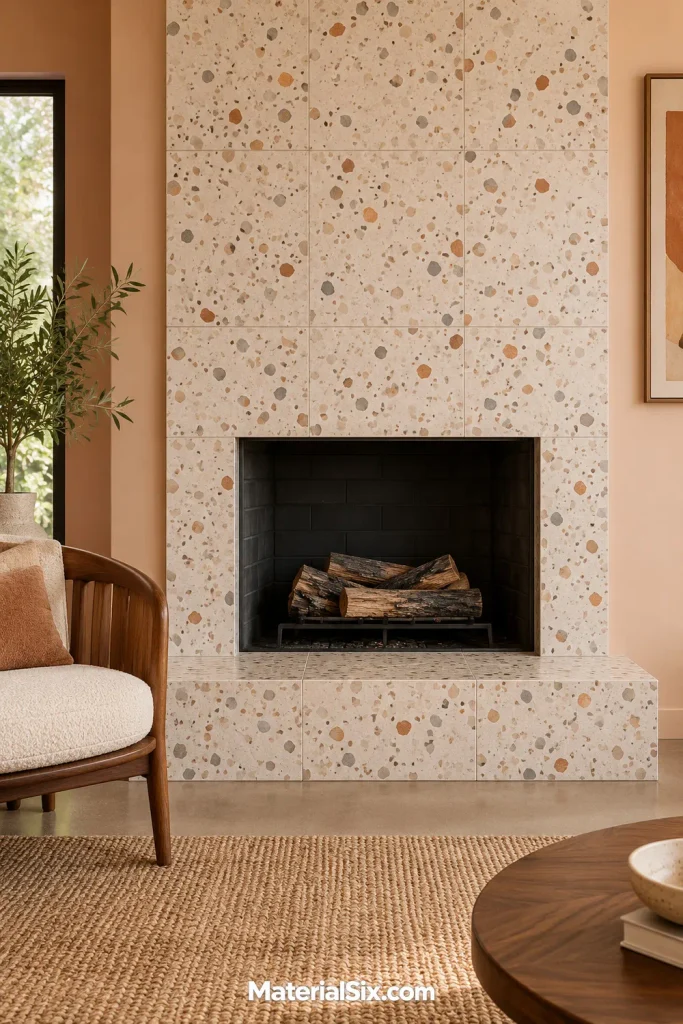
Terrazzo-look tile brings small flecks of color into a fireplace without committing to one large, solid hue. A cream base with rust, taupe, and gray chips can tie together a room with mixed wood finishes and warm upholstery. Larger tile sizes allow the scattered pattern to read as one broad surface.
Check the chip scale from several feet away before making your choice. Tiny speckles can blend into a neutral texture, while large fragments make a more graphic statement. Pull one muted chip color into a nearby chair or cushion. Keeping the hearth in the same tile makes the fireplace feel like a single deliberate architectural element.
11. Fit Fine Detail Into a Narrow Surround With Hexagon Mosaic
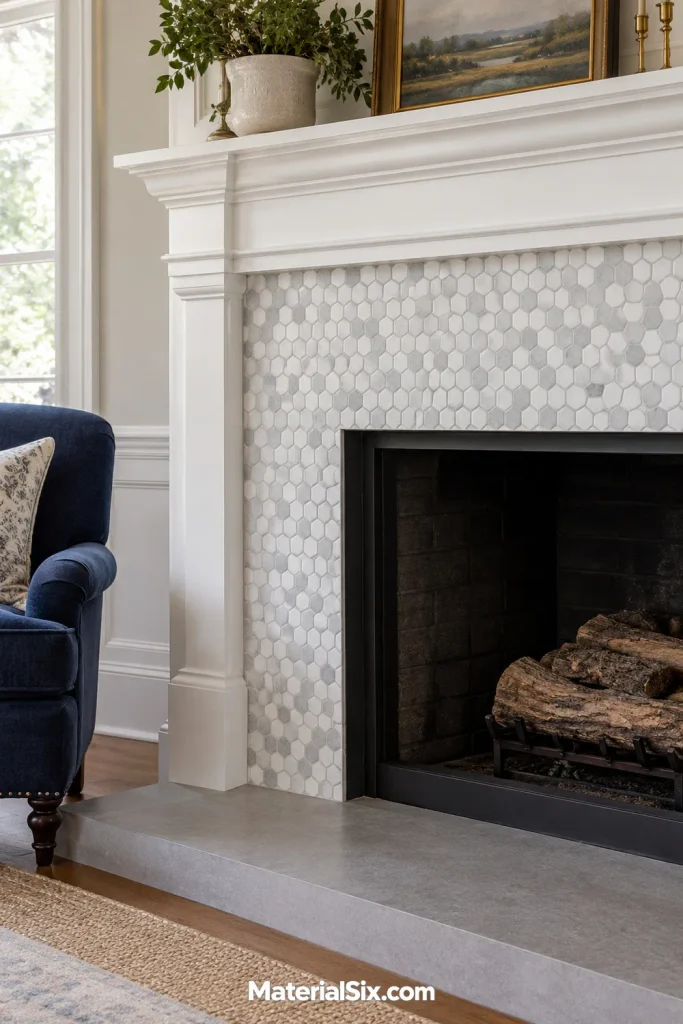
Small hexagonal mosaic tile works well when the area around the firebox is too narrow for a large decorative motif. White and dove-gray pieces create detail at a compact scale, especially inside a traditional painted mantel. The shape adds interest while the quiet palette keeps the fireplace from feeling crowded.
Check the mosaic sheets together before installation so the seams between sheets do not form a visible grid. Also plan the cut edges beside the opening, where partial hexagons can look uneven. A solid hearth helps balance the many grout lines. Bring home a sample sheet to see how the pattern reads from your sofa.
12. Choose Fan-Shaped Tile for an Art Deco Accent
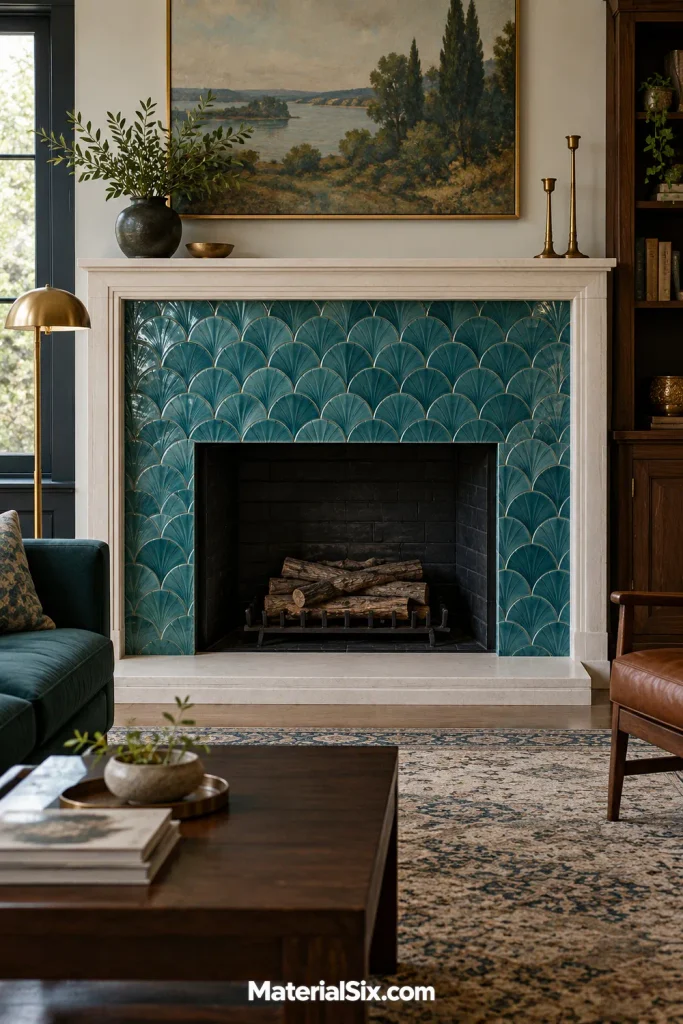
Fan-shaped tile creates a curved, repeating pattern that feels different from the straight lines of most fireplace designs. A blue-green glaze adds an Art Deco note, especially when paired with dark wood furniture and a small touch of brass elsewhere in the room. Simple outer trim keeps the scalloped shapes easy to appreciate.
Decide which direction the fans will face before the layout is finalized. Their orientation changes the overall movement of the pattern. Center the arrangement above the firebox and review the side cuts for balance. With such a distinct tile shape, a plain hearth and restrained mantel profile are usually enough to complete the composition.
13. Warm Up White Walls With Terracotta-Look Squares
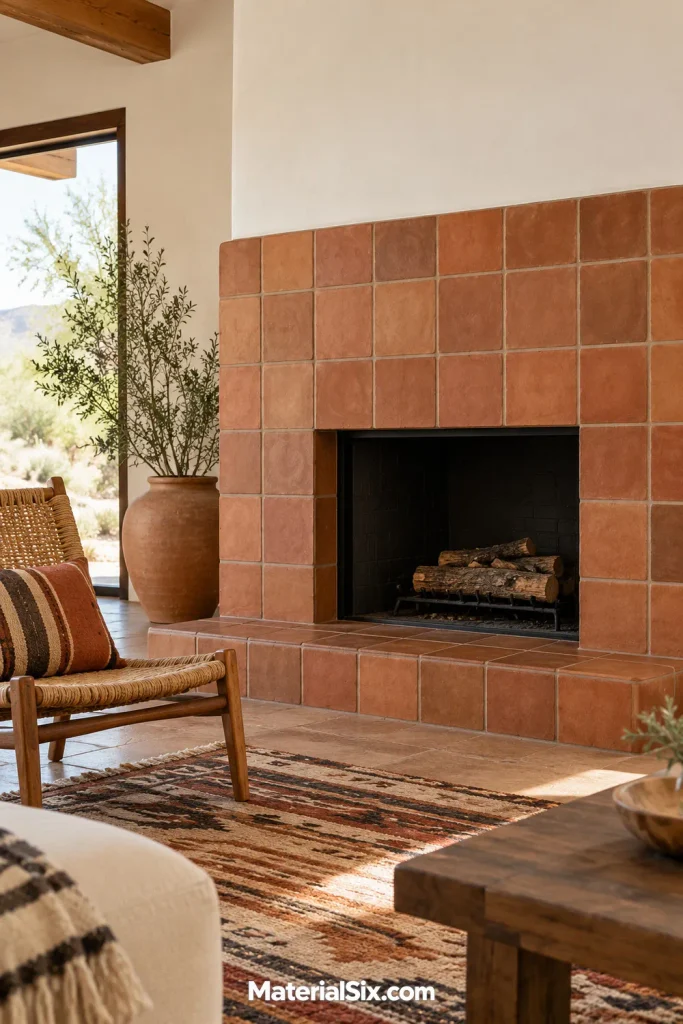
Clay-colored square tile gives a white plaster room warmth without relying on a large wood mantel. Terracotta-look porcelain offers a way to bring that earthy color and slightly varied appearance into a tiled fireplace surround. A simple square layout suits Southwestern and Mediterranean-inspired spaces, especially alongside woven seating.
Compare the tile to your flooring before committing, since orange-red clay tones can look quite different next to honey-colored oak or cool gray finishes. Wider-looking grout lines are part of this visual style, but the actual joint width must suit the selected tile. Carrying the same color onto the hearth creates a low, grounded platform.
14. Keep the Fireplace Quiet With Limestone-Look Tile
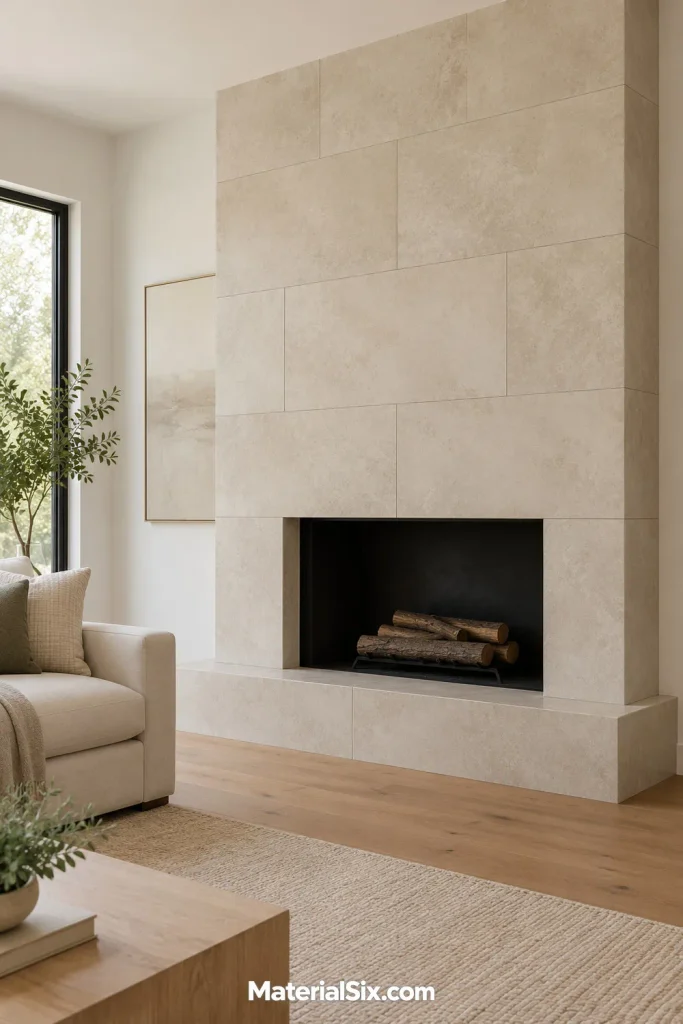
Limestone-look porcelain gives you a softly mottled stone appearance without the strong veining of marble. Broad beige tiles can make a minimalist fireplace feel warmer and more connected to linen upholstery or pale wood floors. This approach works when you want the fireplace to anchor the room without becoming its loudest feature.
Look for subtle variation across several tile faces so the wall does not show an obvious repeated print. Choose a grout color that sits close to the tile background and review the joint placement around the opening. A matching low hearth and a mantel-free profile keep the material, rather than added trim, at the center of the design.
15. Run Concrete-Look Tile From Floor to Ceiling
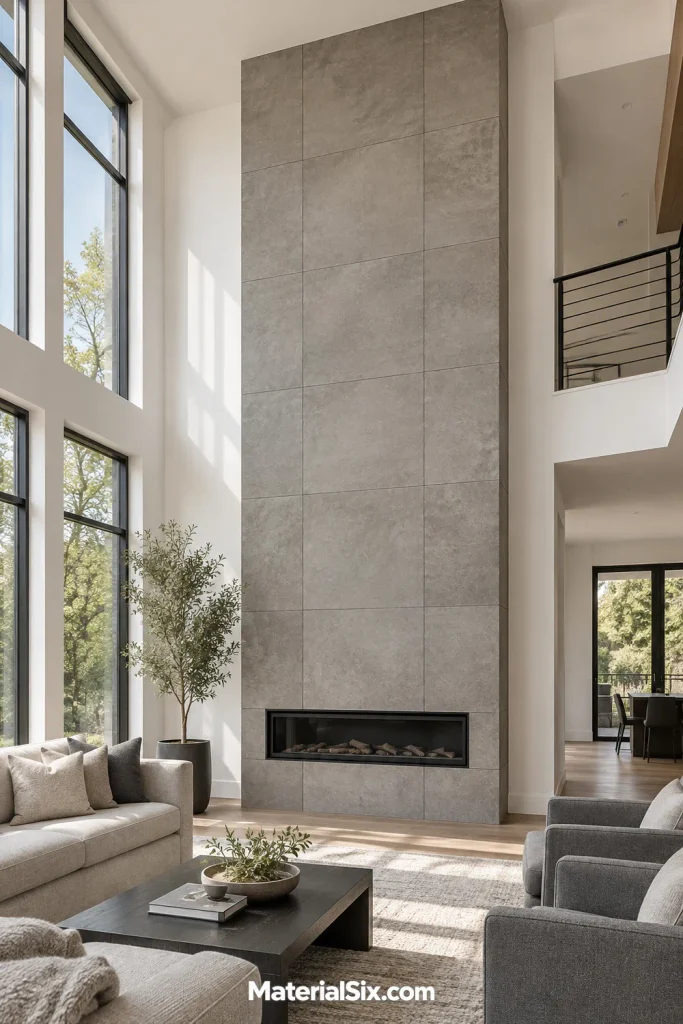
A floor-to-ceiling tile fireplace turns the chimney wall into an architectural feature. Large concrete-look porcelain rectangles suit a wide linear fireplace because both use clean, horizontal lines. In a tall room, the full-height column gives the opening a clear setting rather than leaving it floating on a large blank wall.
Draw the entire wall elevation before selecting tile sizes. The ceiling line, column width, and firebox position all affect where cuts will land. Keep the grid aligned and avoid an accidental narrow band at the top. A mantel-free wall lets the tile continue uninterrupted, while nearby white walls give the tall feature room to stand out.
16. Reserve the Pattern for the Hearth
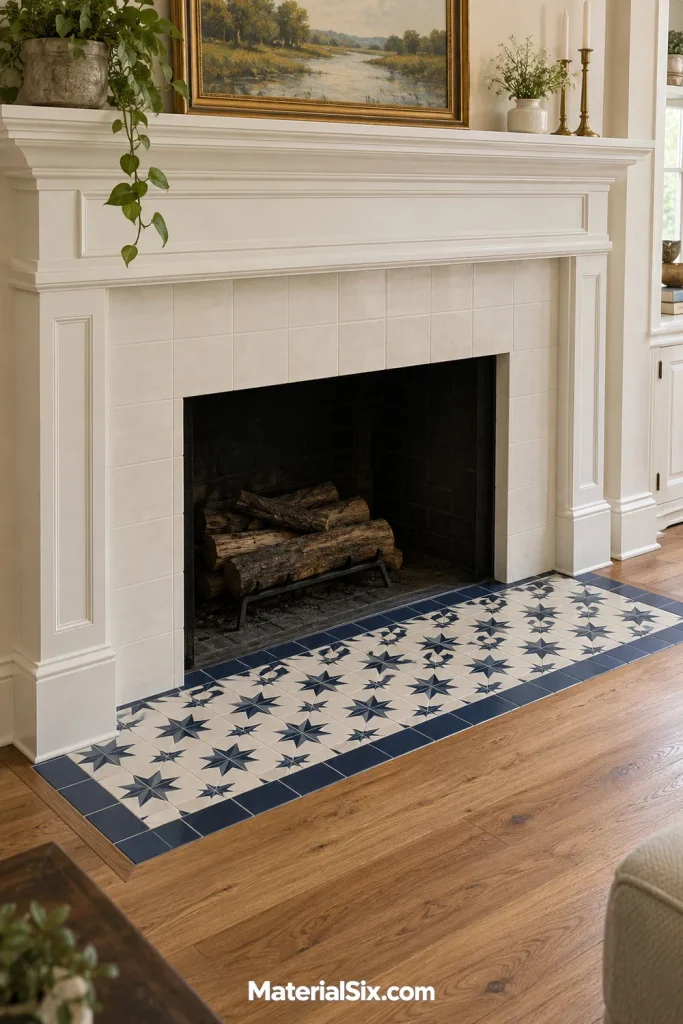
You can add personality to a fireplace without making the whole surround patterned. Navy and cream star tiles on the hearth create a small decorative field beneath a plain ivory surround and white mantel. The effect is especially useful when the upper wall already has artwork or detailed trim.
Choose tile approved for the hearth’s intended use, including foot traffic where applicable, rather than assuming a decorative wall tile will work. Plan a solid border to give the patterned area a clean endpoint against the floor. Check the layout from the room’s entrance as well as from above, since the horizontal surface reads differently from each angle.
17. Wrap Tile Around an Electric Fireplace Column
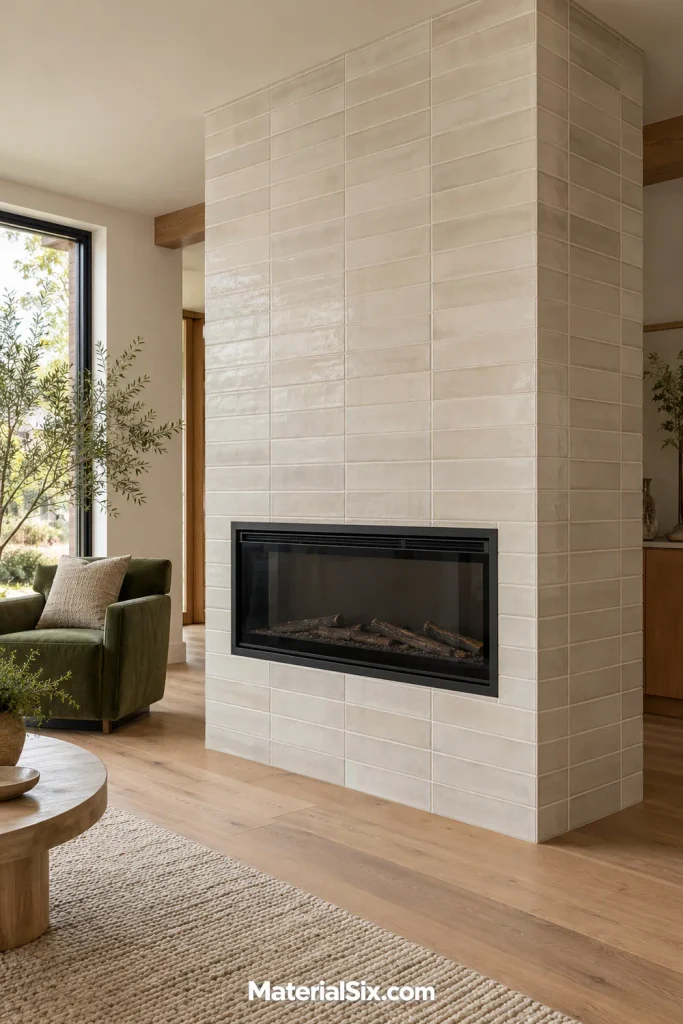
An electric fireplace tile design can feel more built-in when the tile continues around the sides of a projecting column. The return makes the feature look finished from neighboring seating areas, rather than treating it as a flat decorative panel. Warm off-white rectangular tile keeps the shape clear without adding another bold pattern.
Plan the corner treatment before framing and tiling are finalized so the side return does not end in a thin, awkward strip. Follow the electric insert’s instructions for framing, clearances, ventilation, and service access. Keep required vents visible and accessible. Matching the front and side layout gives the column a consistent appearance from multiple viewpoints.
What to Check Before Choosing Fireplace Tile
Decide whether you are updating the surround, the hearth, or a larger wall. These are different surfaces with different demands. Decorative surround tile is not a substitute for a firebox lining; Daltile distinguishes these areas in its fireplace tile guidance. [1]
Use your specific fireplace’s installation manual to confirm permitted facing materials, clearances, hearth construction, and access requirements. Check that the selected tile, setting materials, and substrate are suitable together for that location. The Heat & Glo NORTHSTAR manual illustrates how detailed and model-specific these requirements can be, including the finishing materials and hearth assembly. Do not copy its dimensions to a different fireplace. Keep any required vents and service access clear. [2]
If the project involves tiling over an existing brick fireplace, have the surface, its condition, and the proposed assembly assessed before covering it. A new finish should not conceal a repair or access problem. For color decisions, compare a sample board with your flooring and mantel in daylight and evening light before ordering.
Choose the Tile Treatment That Fits Your Room
Choose the tile treatment that suits both the room and the amount of visual change you want. A quiet surround can support an existing mantel, while a patterned hearth or full-height column can become the main feature. Save your favorite fireplace tile ideas, compare real samples, and settle the fireplace-specific installation details before the project begins.