
You picture a backyard full of oversized leaves, soft palm fronds, and a shady place to sit, but your current view may be mostly lawn, fence, or bare patio. The challenge is making that lush tropical feeling work in a real residential yard, with its particular sunlight, winter temperatures, available space, and maintenance needs.
These tropical garden landscaping designs offer 35 distinct ways to build that atmosphere. Some focus on complete layouts, such as leafy courtyards and modern planting grids. Others give you a smaller starting point: a container grouping, a shaded bench, or a border that makes an ordinary fence disappear into greenery.
You do not need a huge property or a resort budget. What matters is combining bold foliage with clear spaces for walking and relaxing. Use the designs as visual inspiration, then select plants for your local growing conditions. In colder regions, a seasonal display can deliver the same summer mood with a different winter plan.
1. Build Depth With a Layered Tropical Border
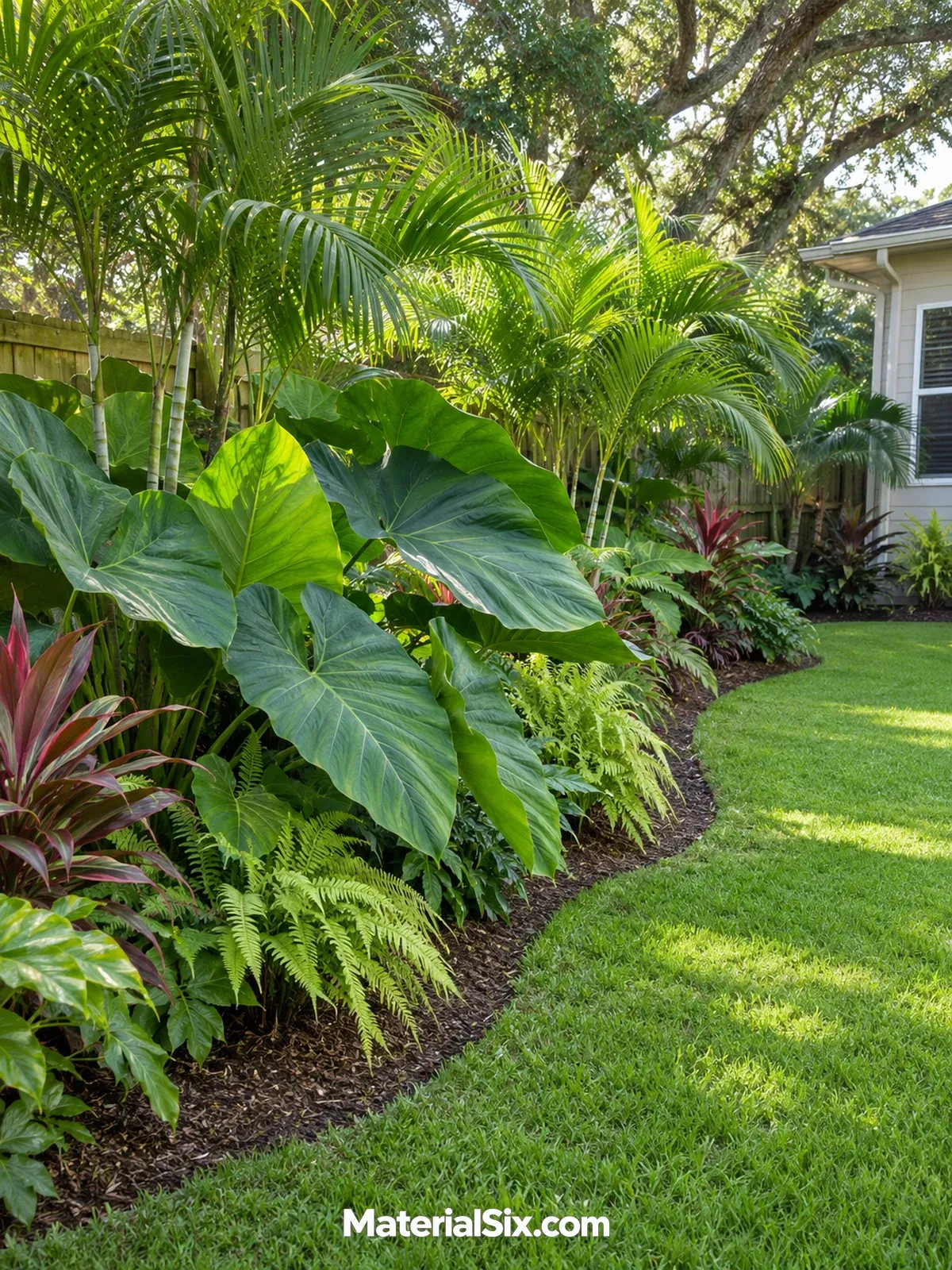
A lush border feels more convincing when you can see several layers of foliage. Place appropriately sized palms or tall shrubs toward the back, broad leaves through the middle, and lower plants along the lawn. The contrast between feathery fronds and substantial leaves gives the planting its tropical character without requiring constant flowers.
Start with a bed deep enough for the plants’ mature spread, rather than squeezing everything against the fence. Repeat a few compatible varieties along its length to make the arrangement feel connected. Keep mulch away from trunks and crowns, and leave room to reach plants for pruning without stepping through the entire border.
2. Let a Curving Path Reveal the Garden Gradually
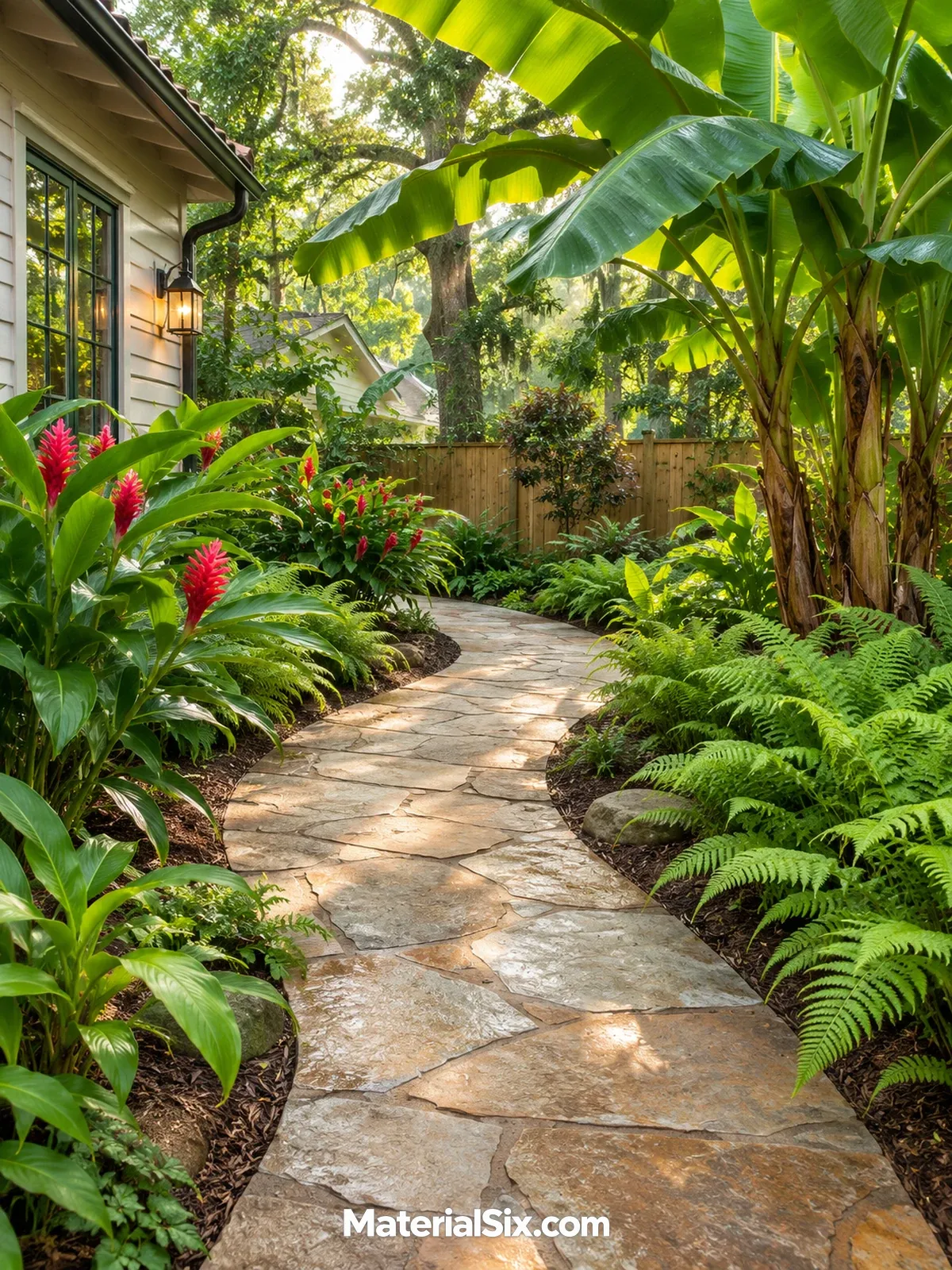
A gently bending path makes a tropical garden feel immersive because the whole yard does not reveal itself at once. Broad foliage can frame the view at each turn, while lower plants soften the edges without covering the walking surface. Textured flagstone brings an earthy contrast to glossy leaves.
Draw the route around places you actually need to reach, such as a gate, bench, or patio. Keep the walking surface stable and comfortable, with enough clearance for mature foliage and garden tools. Avoid exaggerated curves in a tiny yard; one generous bend usually looks more natural and leaves more usable space for planting on either side.
3. Center a Small Courtyard Around One Statement Palm
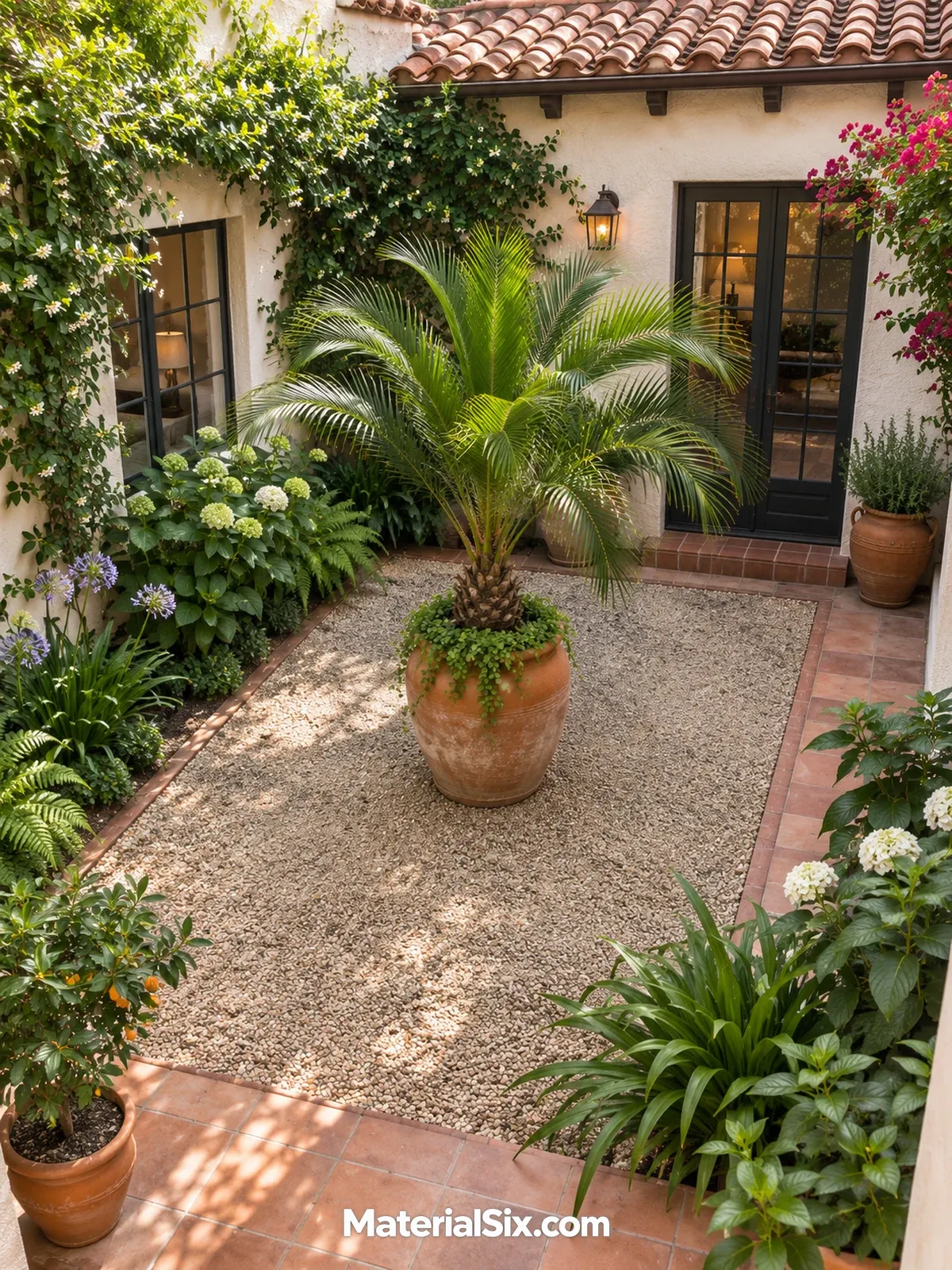
An enclosed courtyard can feel leafy without becoming crowded. Use one statement palm in a substantial container as the focal point, then arrange lower foliage around the perimeter. Pale stucco walls bounce light through the space, while gravel and terracotta add texture without competing with the greenery.
Choose a palm whose mature size works with the enclosure and available light. Position its pot where fronds can spread without blocking a door or brushing every visitor. Leave a simple open area around the centerpiece so the courtyard still feels like a room. Containers need drainage, and the underlying surface should carry excess water away from the building.
4. Frame a Pool With Set-Back Foliage Beds
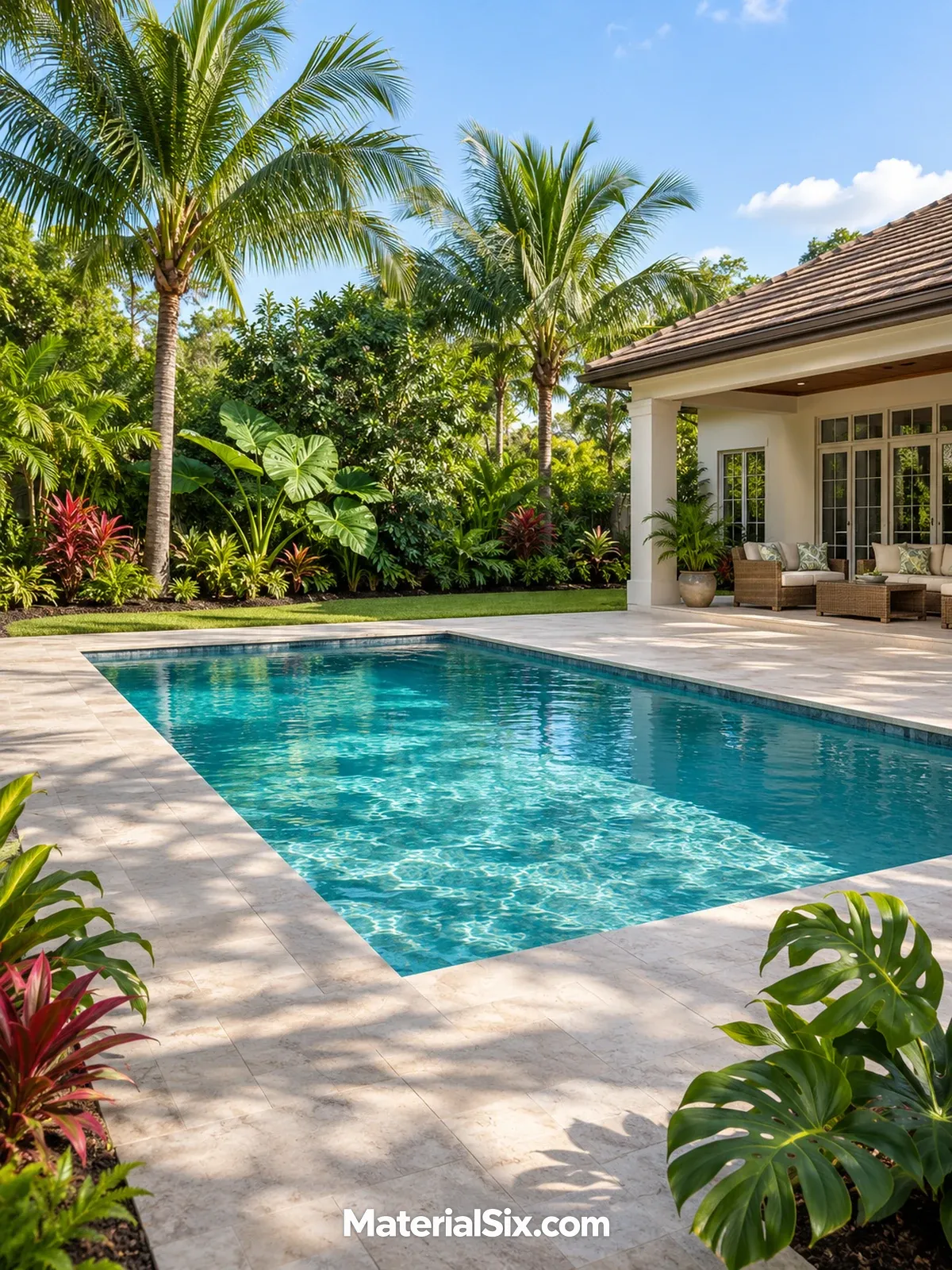
Tropical pool landscaping works best when the plants frame the water and the deck remains easy to use. Concentrate leafy beds beyond the main circulation zone instead of crowding foliage against the coping. Palms and broad leaves provide a strong backdrop, while a restrained plant palette keeps the pool area visually calm.
Consider mature roots, falling leaves, and maintenance access before choosing locations. Keep planting and furniture clear of required pool barriers, gates, and equipment. Local pool requirements should guide the layout. A small bed viewed across the water can make a stronger impression than plants packed around every edge, especially in a modest suburban backyard.
5. Turn a Narrow Side Yard Into a Green Passage
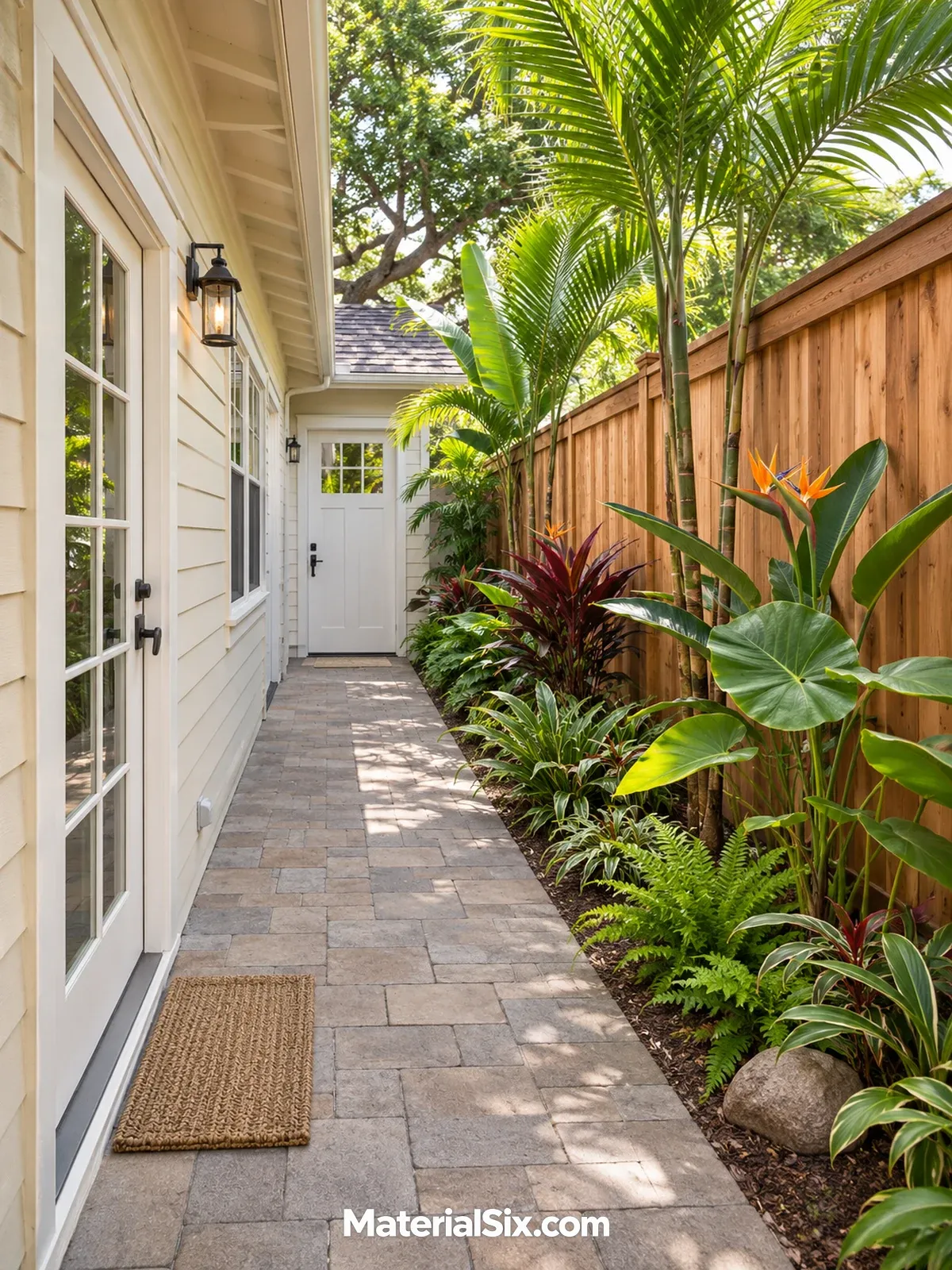
A narrow side yard calls for disciplined planting rather than an overhead tunnel of leaves. Run a clear paver path between the house and fence, then concentrate tropical foliage in a slim border on the brighter side. Upright forms keep the passage open, while a few broader leaves add the lushness you want.
Measure the available width after accounting for mature growth, utility access, and door swings. Avoid thorny or sprawling plants beside a frequently used route. Where the bed is too shallow, use a few appropriately sized containers at wider points. The goal is an inviting connection between spaces that remains practical for everyday trips through the yard.
6. Give a Ranch-Style Entry a Tropical Frame
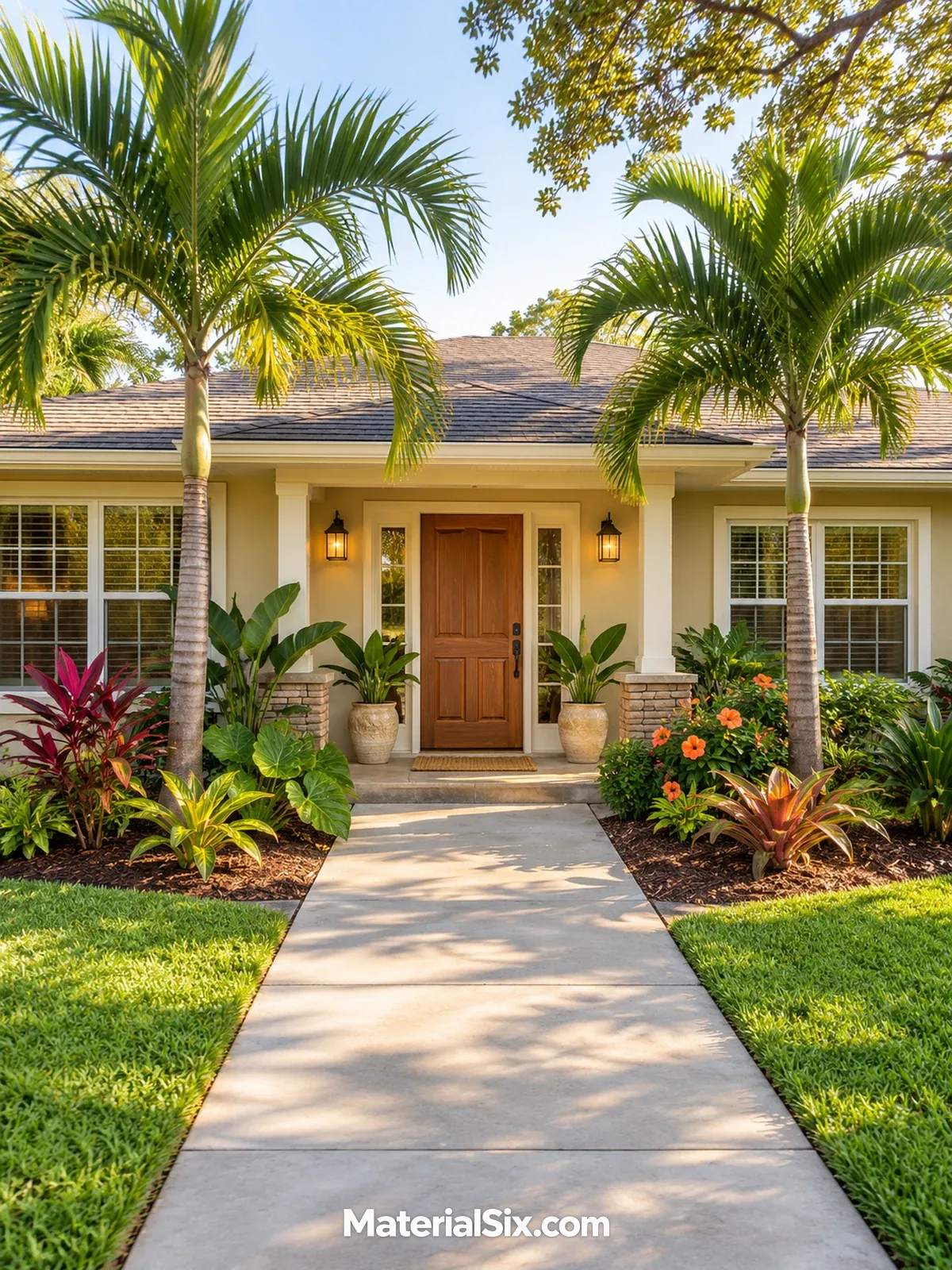
A pair of modestly scaled palms can give a straightforward ranch home a tropical presence without hiding its architecture. Use them to frame the approach, then carry lower foliage across the foundation beds. A broad, unobstructed walkway makes the entrance readable from the street and balances the softness of the planting.
Place trees according to their mature canopy, roots, and relationship to the roof, not the size of their nursery pots. Keep windows visible and avoid planting directly against siding. Repeating foliage colors on both sides creates continuity even when the beds are not symmetrical. Check sightlines near the driveway before adding any taller front-yard plants.
7. Define a Patio With Raised Tropical Planters
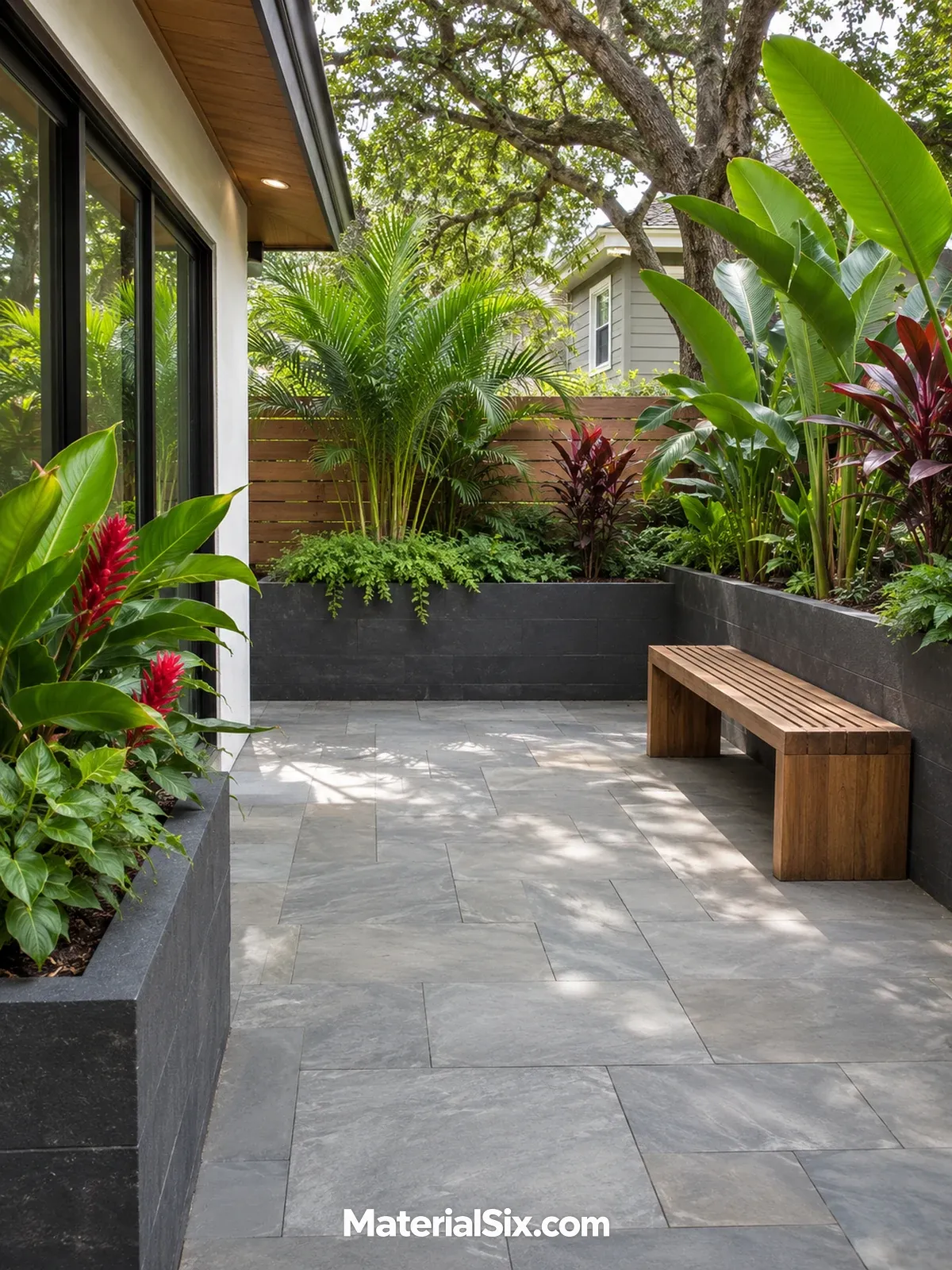
Raised planters give tropical foliage a crisp outline and help a small patio feel deliberately arranged. Charcoal masonry provides a quiet background for green leaves, while a simple wood bench warms up the composition. Keep the planters around the edges so the center remains available for seating and movement.
Select plants whose roots and mature size suit the available soil volume. Raised beds still need suitable drainage; they should not trap water against a wall or foundation. Treat substantial masonry as a designed landscape feature rather than a casual stack of blocks. For a lighter approach, use freestanding planters that create a similar outline without permanent construction.
8. Group Containers for a Portable Tropical Patio
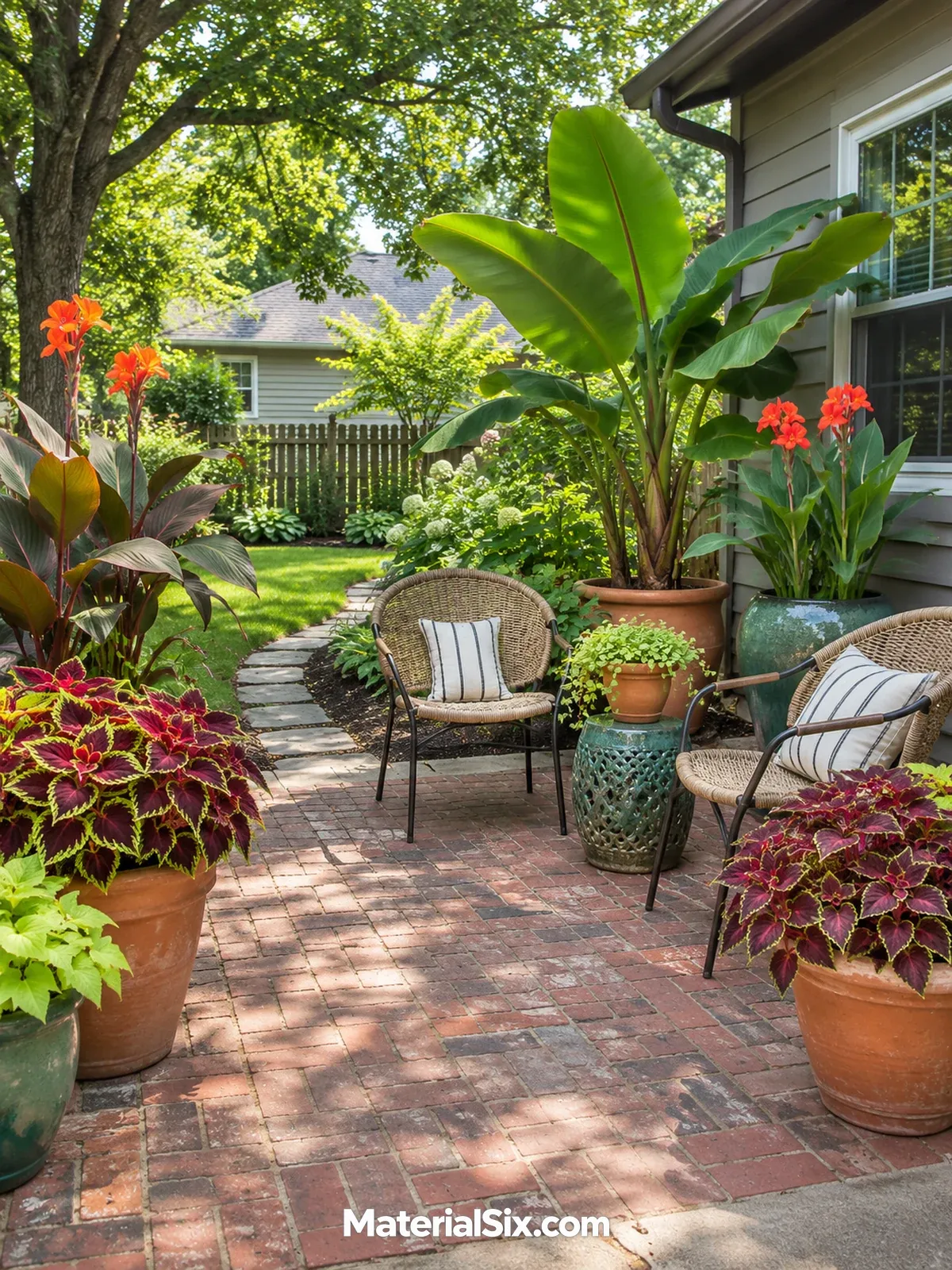
Grouped containers let you build a tropical garden where there is no planting bed. Combine a tall focal plant with medium foliage and lower color, then repeat one pot material to keep the collection cohesive. Brick paving and woven chairs make the display feel relaxed and approachable rather than like a plant showroom.
Arrange pots in clusters near patio edges, leaving a clear route between the door and seating. Match each plant to the light it will receive, and use containers with drainage holes. In colder regions, decide which plants you can overwinter before buying oversized specimens. Large containers also become difficult to move once filled and watered.
9. Make a Fern-Filled Shade Retreat
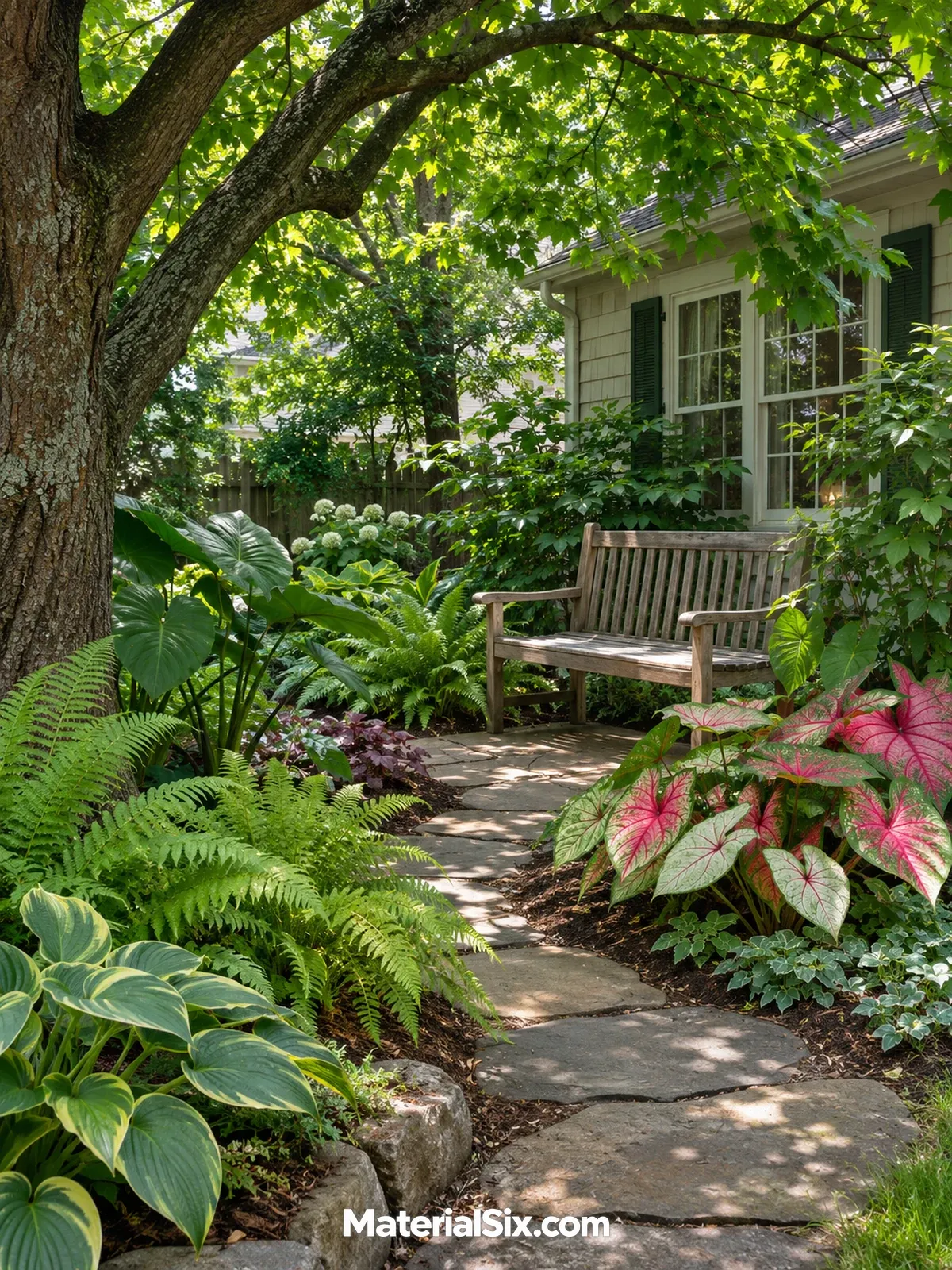
Dappled shade can support a quieter tropical mood built around texture. Combine locally suitable ferns with broad foliage and a few patterned leaves, then tuck a straightforward bench where you can enjoy the contrast. Keeping the palette mostly green makes the space restful and helps the different leaf shapes stand out.
Assess the actual shade and soil moisture before selecting plants, since a shady spot is not automatically damp. Around established trees, avoid adding deep soil or disturbing major roots. Set the bench on a stable surface with a clear approach. A little open space around the seat keeps the retreat usable as surrounding plants fill out through the season.
10. Brighten a Sunny Fence With Cannas
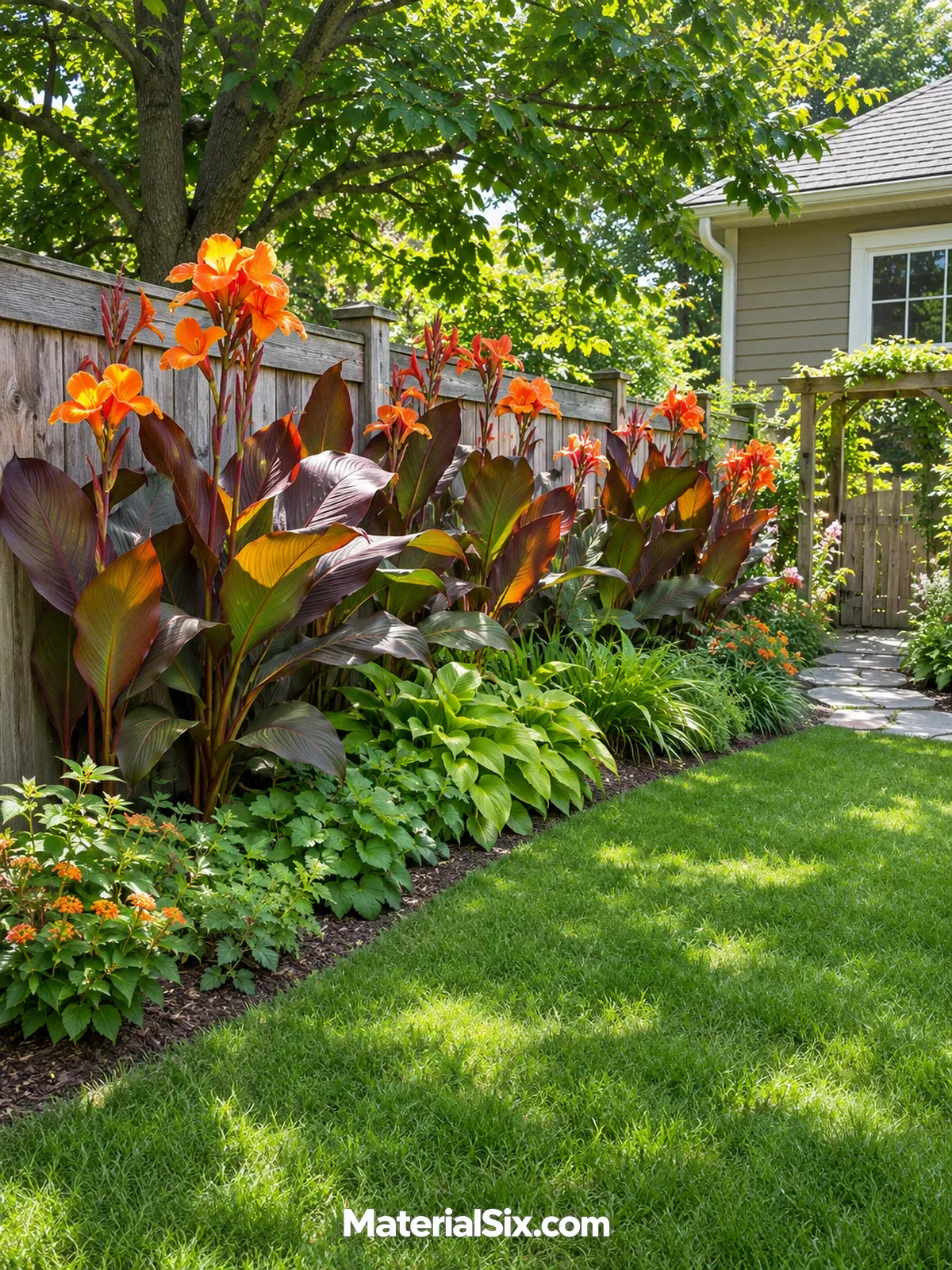
Cannas combine broad leaves with upright flower spikes, making them useful for a tropical-looking summer border. A repeated band along a sunny fence gives the garden a strong background without needing dozens of unrelated plants. Bronze foliage and orange blooms create a warm palette that looks especially striking against a simple green lawn.
Check the mature height of the cultivar you choose so it stays in proportion to the fence and neighboring plants. Give the border enough width for healthy growth and maintenance access. In cold climates, plan for seasonal dieback and appropriate rhizome storage if you want to keep plants for another year. Avoid treating every canna as winter-hardy.
11. Use Burgundy Leaves as a Color Anchor
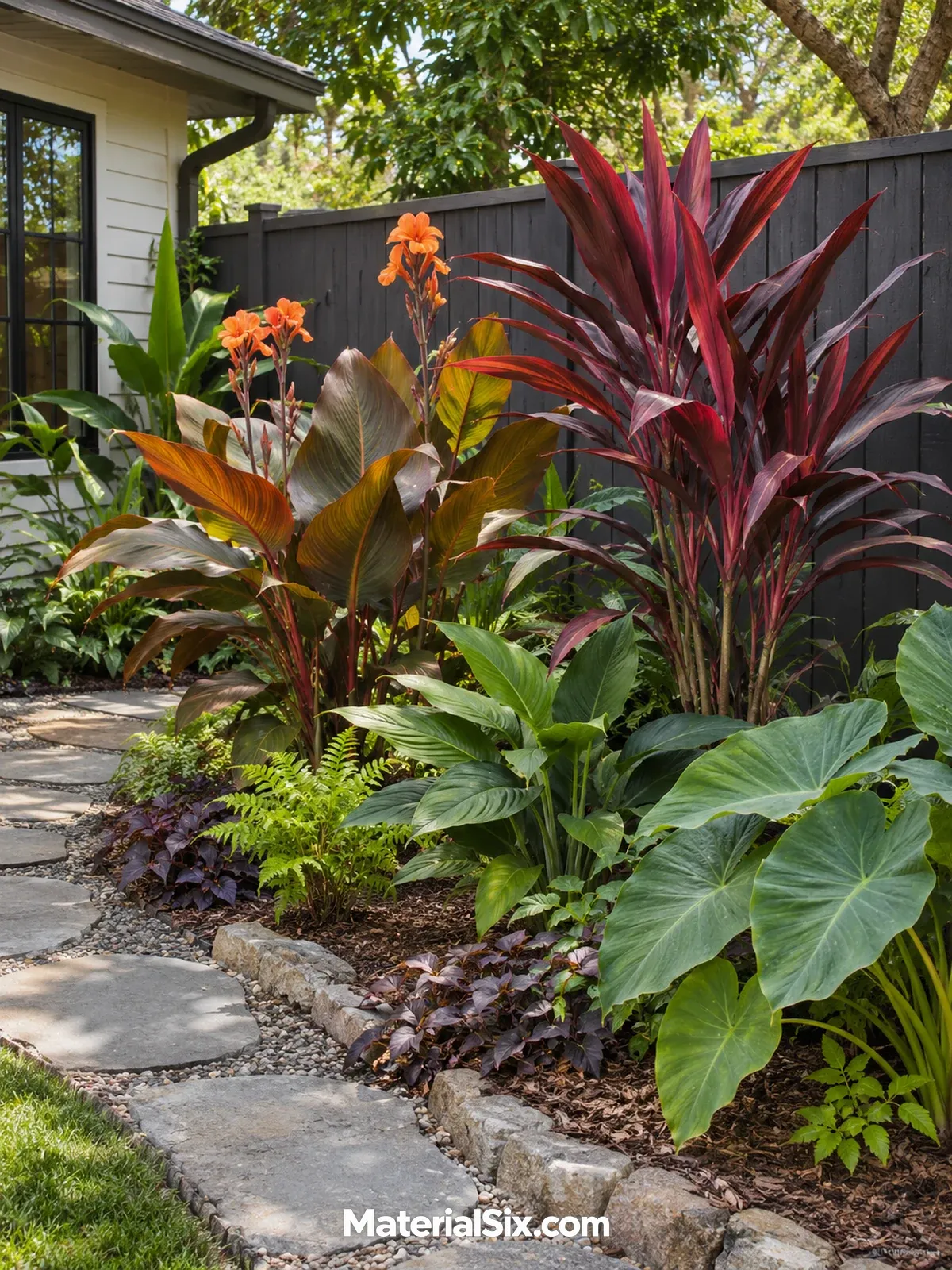
Deep burgundy foliage adds definition to a tropical bed even when nothing is flowering. Use it as a repeated accent among green leaves rather than filling the entire garden with dark plants. Upright foliage introduces a different silhouette, and a dark fence can make the surrounding greenery look especially vivid.
Choose the actual species for your climate and exposure; similar-looking plants may have very different cold tolerances. Repeat the burgundy color in two or three places so it feels intentional. Keep enough bright green nearby to prevent a shaded bed from looking heavy. A limited foliage palette often looks more cohesive than mixing every colorful tropical plant available at the nursery.
12. Keep a White-and-Green Garden Calm
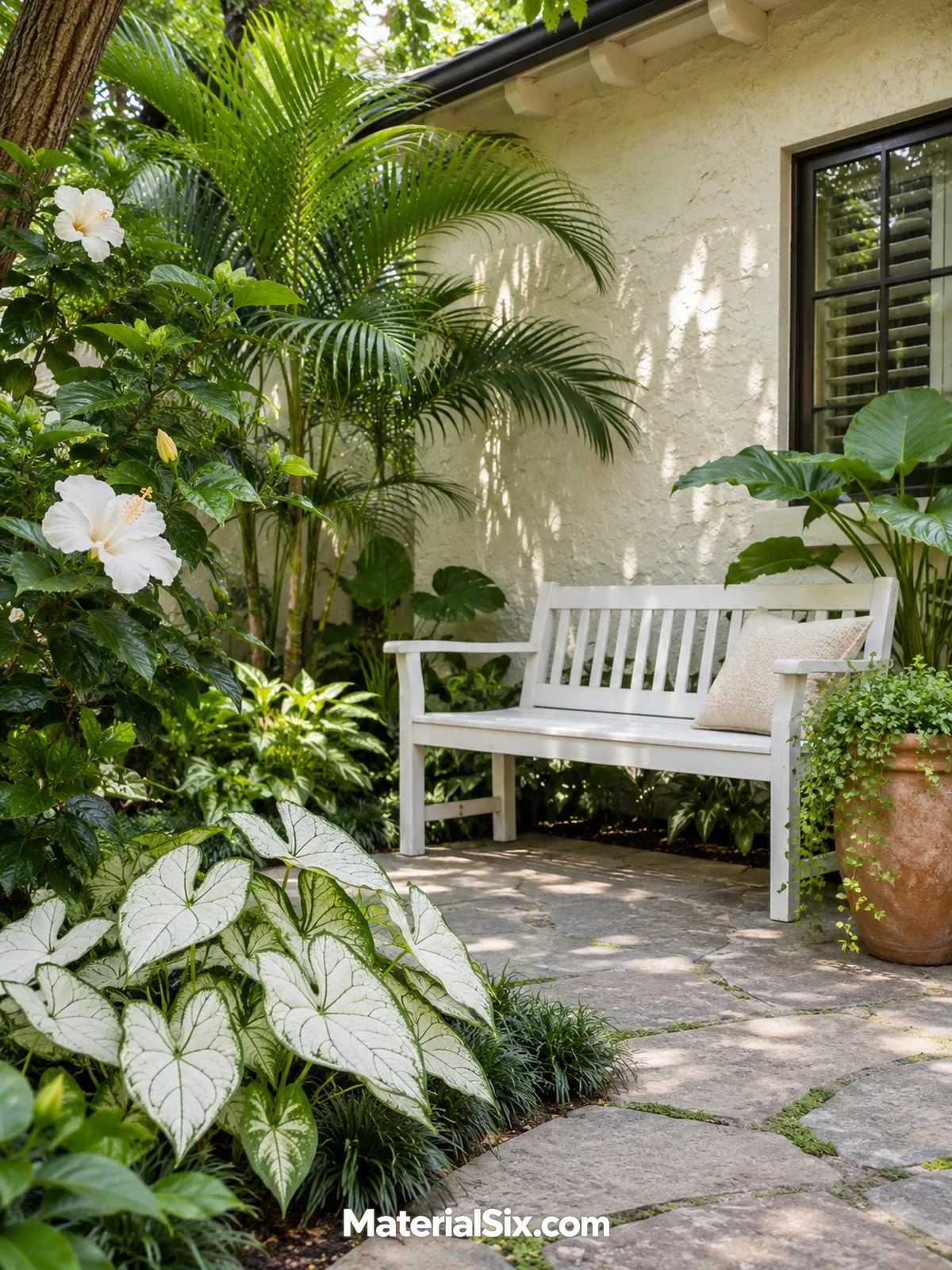
White flowers and pale patterned leaves give a tropical courtyard a softer personality. Combine a few white blooms with abundant green foliage, allowing the leaf shapes to provide most of the interest. A simple white bench repeats the light accents and gives your eye a clear resting point within the planting.
Group plants by compatible light and moisture requirements rather than color alone. White caladium foliage and flowering shrubs may need different positions within the same courtyard. Keep lighter accents near the seating area where their details can be appreciated. This approach works well when you want a lush outdoor space that feels quiet instead of intensely colorful or visually busy.
13. Nestle Bromeliads Among Weathered Stones
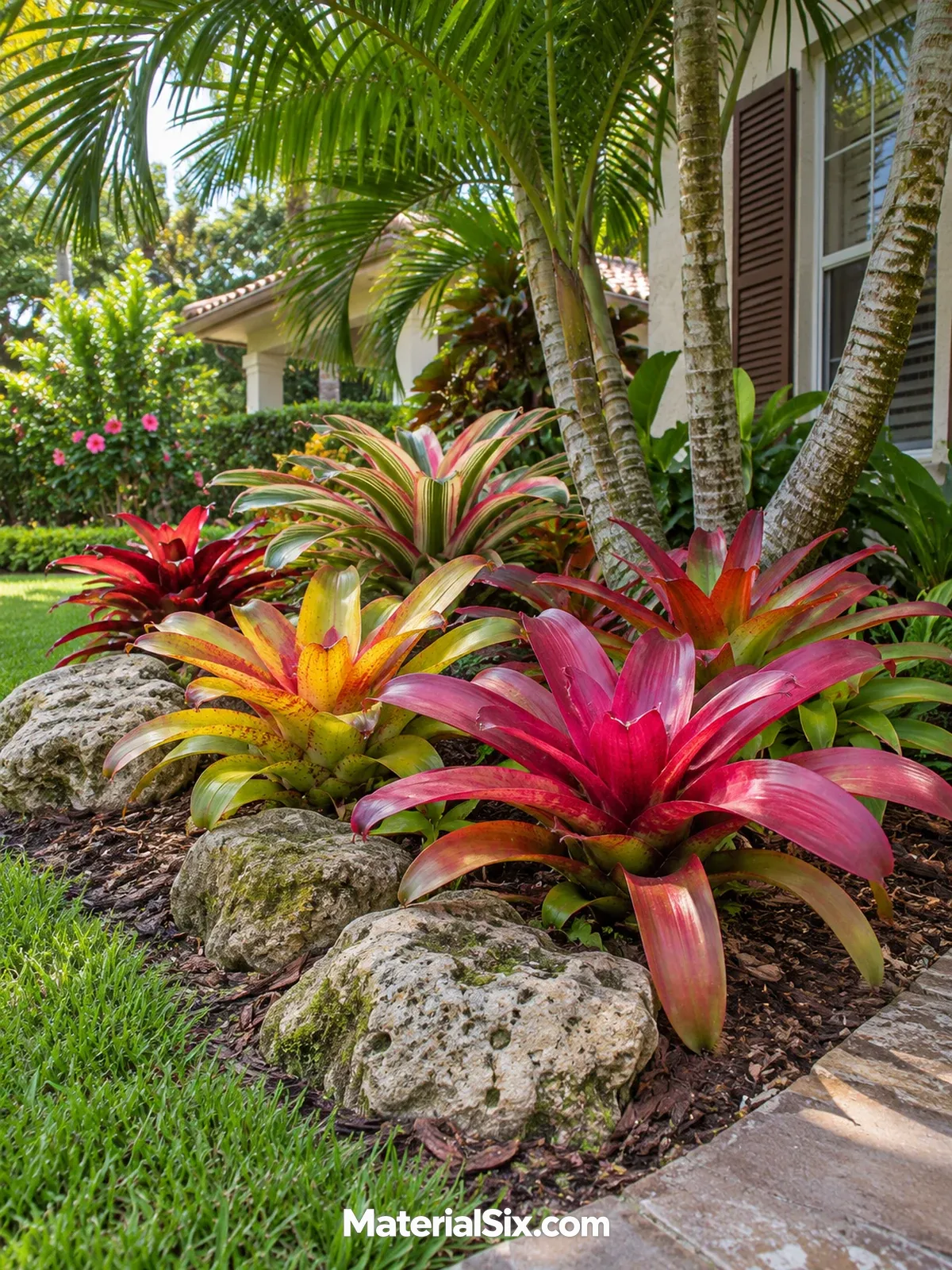
A low bromeliad bed brings tropical detail closer to eye level when viewed from a chair or nearby path. Their rosettes contrast with rough stones, while taller foliage behind the bed supplies a leafy background. Use a few repeated colors so the arrangement reads as a garden composition rather than scattered ornaments.
Choose varieties suited to the site’s light and local temperatures, and prepare the growing medium for their specific needs. Do not assume every bromeliad wants the same exposure. Set rocks securely and leave plants room to expand. Where foliage holds water, follow local mosquito-prevention guidance and inspect the planting regularly instead of ignoring the small pockets of trapped water.
14. Add a Small Recirculating Water Bowl
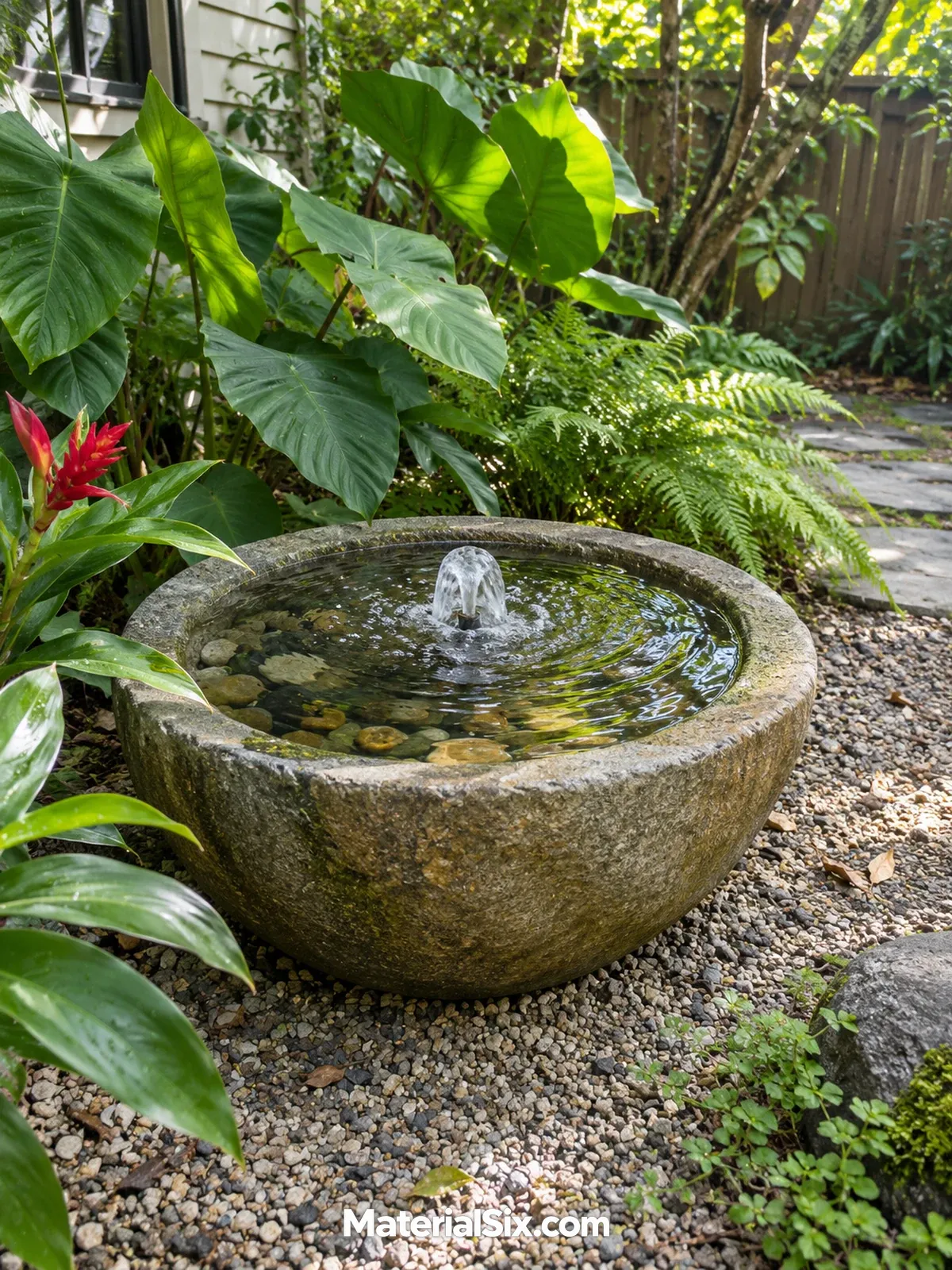
A recirculating water bowl can give a small tropical garden a focal point without the footprint of a pond. Position it where you can see it from the patio, with leafy planting behind it and a clear gravel or paved margin around its base. A gentle bubbler suits an intimate garden better than a dramatic spray.
Choose equipment intended for outdoor use and arrange electrical work according to applicable requirements. Plan access for cleaning, pump maintenance, and refilling. Recirculation does not eliminate upkeep, and the bowl should not become neglected standing water. Keep the feature out of narrow circulation routes and consider child and pet access when selecting its location and depth.
15. Give a Rain Garden a Tropical-Looking Palette
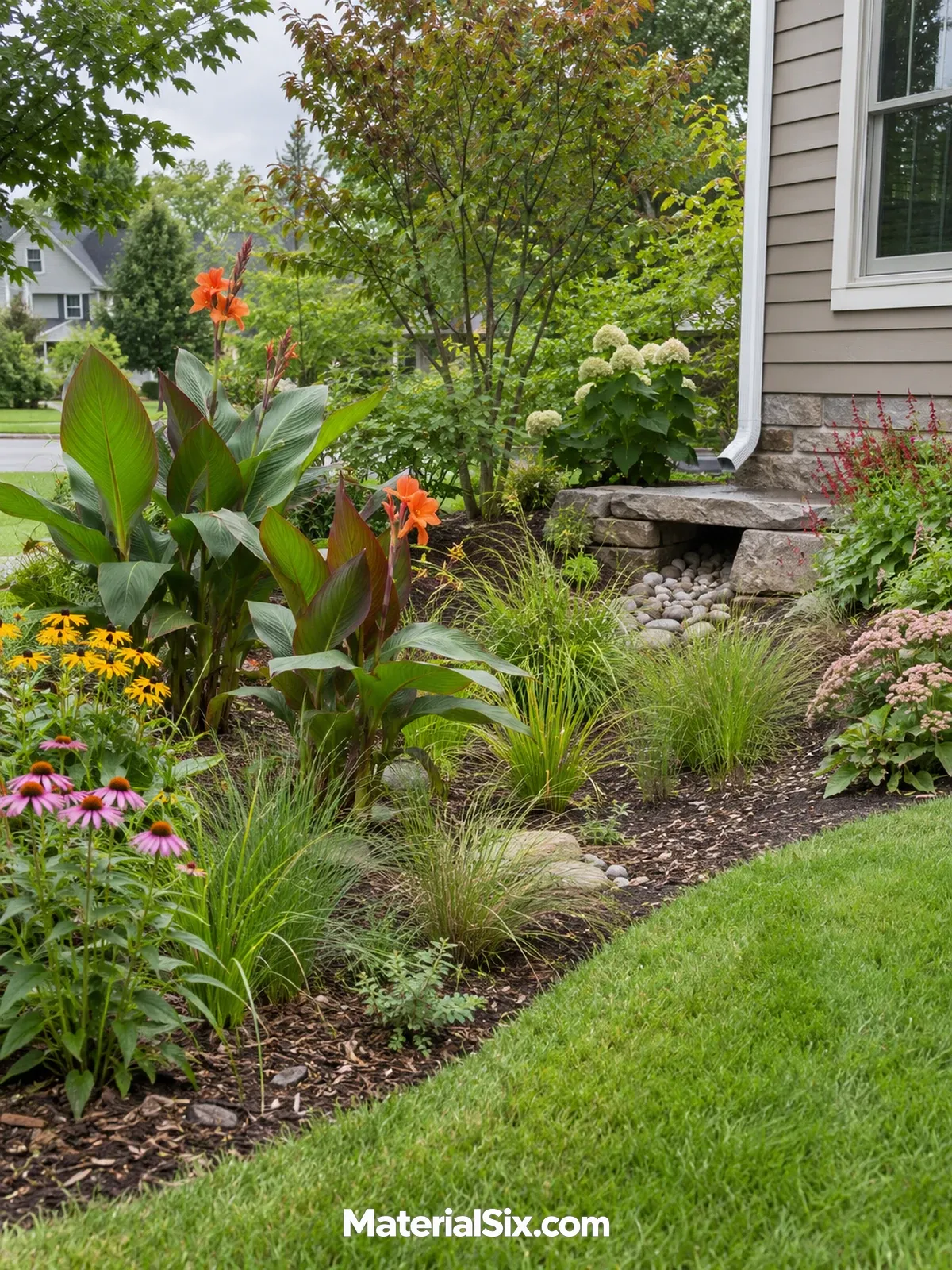
A rain garden can look lush while serving a site-specific drainage purpose. Broad foliage paired with sedges creates a tropical impression around a shallow planted depression. A defined edge and visible stone inlet help the area look intentional when it is dry, which is how a functioning rain garden should appear between suitable rain events.
Start with an assessment of soil, slope, drainage, and local guidance rather than digging an arbitrary low spot. Select locally appropriate plants that tolerate the expected wet and dry cycles. Keep runoff away from foundations and neighboring properties. Tropical appearance is the design goal here; the planting still needs to suit the actual rain garden conditions.
16. Soften a Fence With a Layered Privacy Border
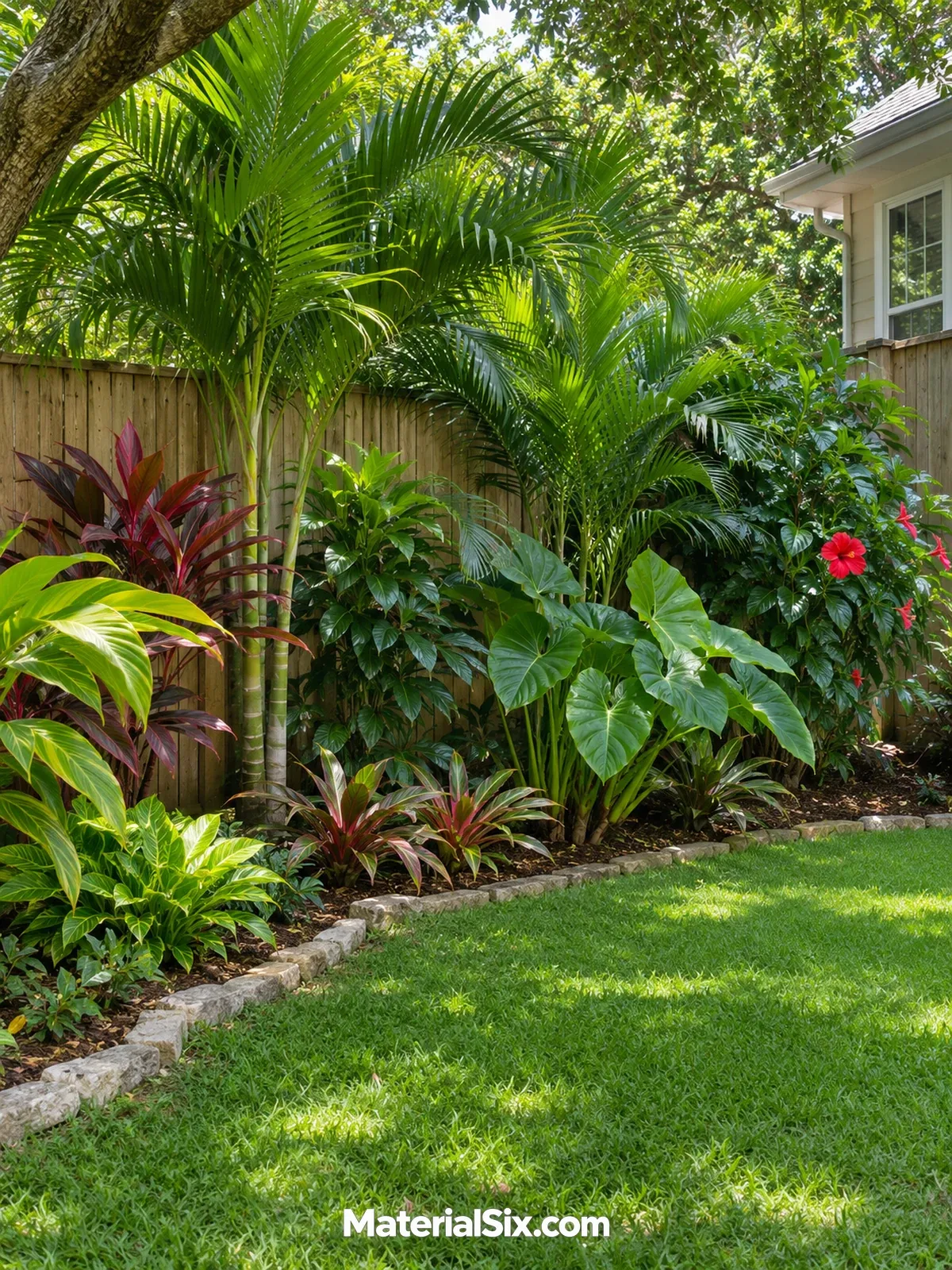
A fence provides the boundary, while layers of foliage make the enclosure feel like a garden. Combine taller plants behind medium shrubs and lower leaves so the planting has depth from the ground upward. The result is a softer view from the patio and a green backdrop for a small lawn.
Choose mature heights carefully and leave enough separation for pruning and fence repairs. Plants may improve visual screening, but gaps and seasonal changes affect how much privacy you actually get. Avoid aggressive spreaders chosen only for fast growth, and check local invasive-plant guidance. A well-placed cluster often works better than forcing a continuous hedge into a bed that is too narrow.
17. Pair a Slatted Screen With Bold Leaves
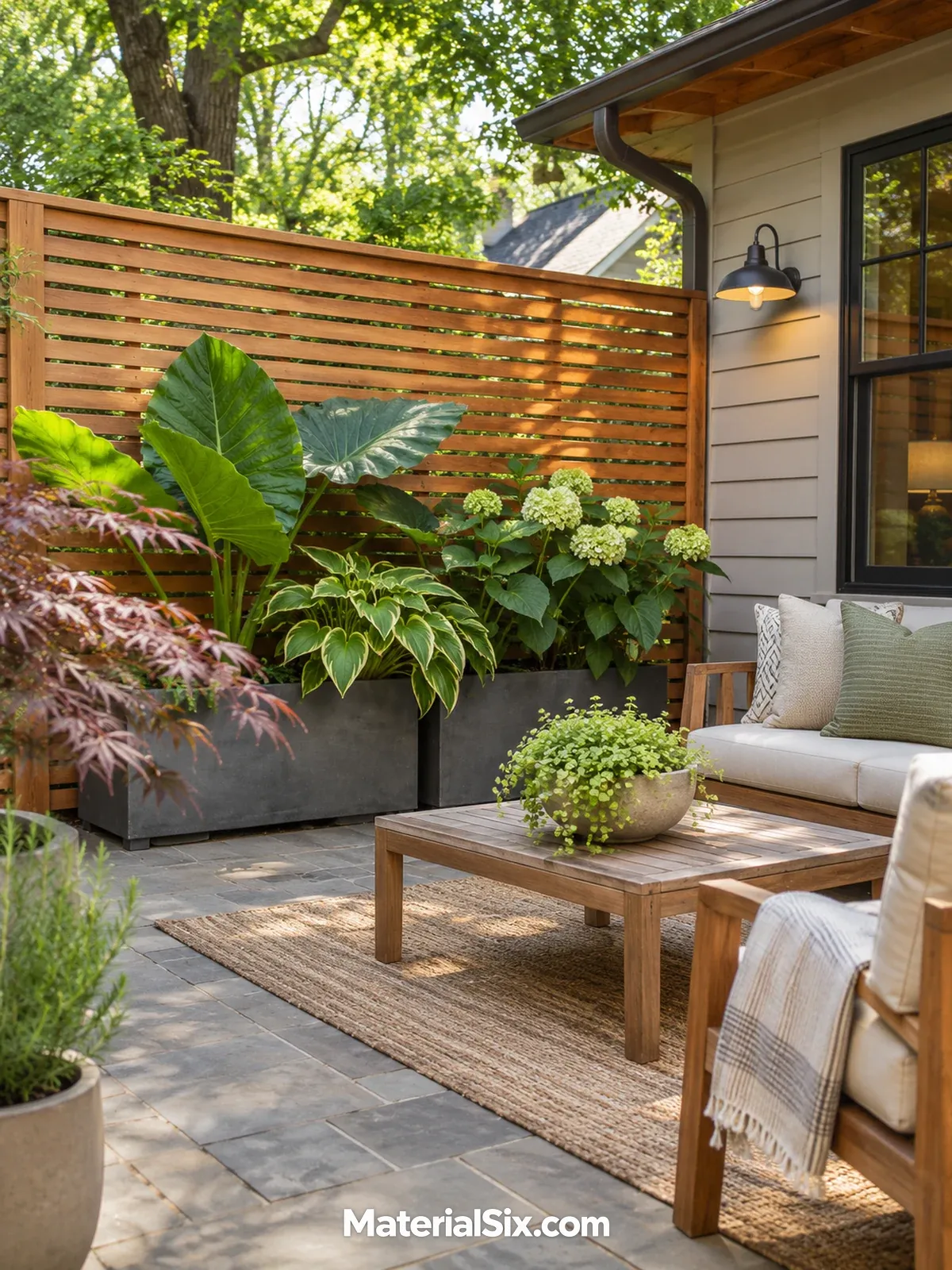
A slatted screen can address one awkward view without enclosing the entire yard. Place broad foliage in front of the timber so the leaves cast soft patterns across its straight lines. Rectangular planters reinforce the structure and work especially well beside a compact contemporary patio.
Identify the view you want to interrupt from a seated position before deciding the screen’s height and location. Slats still allow partial views, so spacing matters. Permanent screens may need local approval and appropriate anchoring for wind exposure. Leave room around the planters for watering and cleaning, and keep the screen separate from gates or other access points that need to operate freely.
18. Create a Leafy Garden Room Under a Pergola
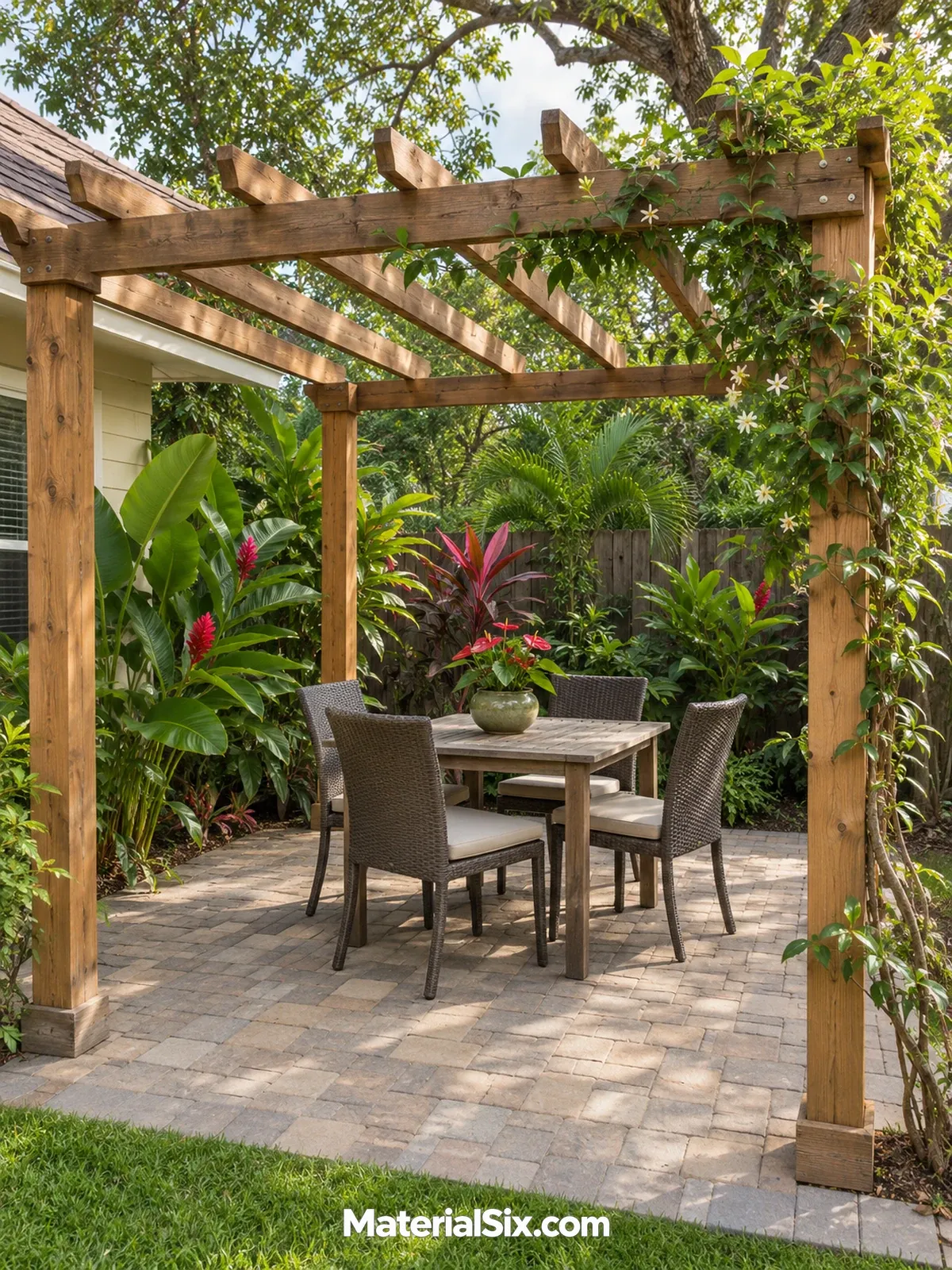
A simple pergola gives tropical planting an architectural partner. Use its posts to define the outdoor room, then place foliage beds beyond the main seating area. Broad leaves soften the timber without swallowing the structure, and a modest table makes the setting feel like an extension of everyday living space.
Keep climbing plants limited enough that you can still inspect the structure and maintain comfortable headroom. Plant growth, shade, and structural loads need consideration before adding a vigorous vine. Check the layout with chairs pulled out, not just tucked under the table. A clear route through the pergola makes the room easier to use and prevents plants from becoming obstacles.
19. Wrap an Outdoor Dining Terrace in Greenery
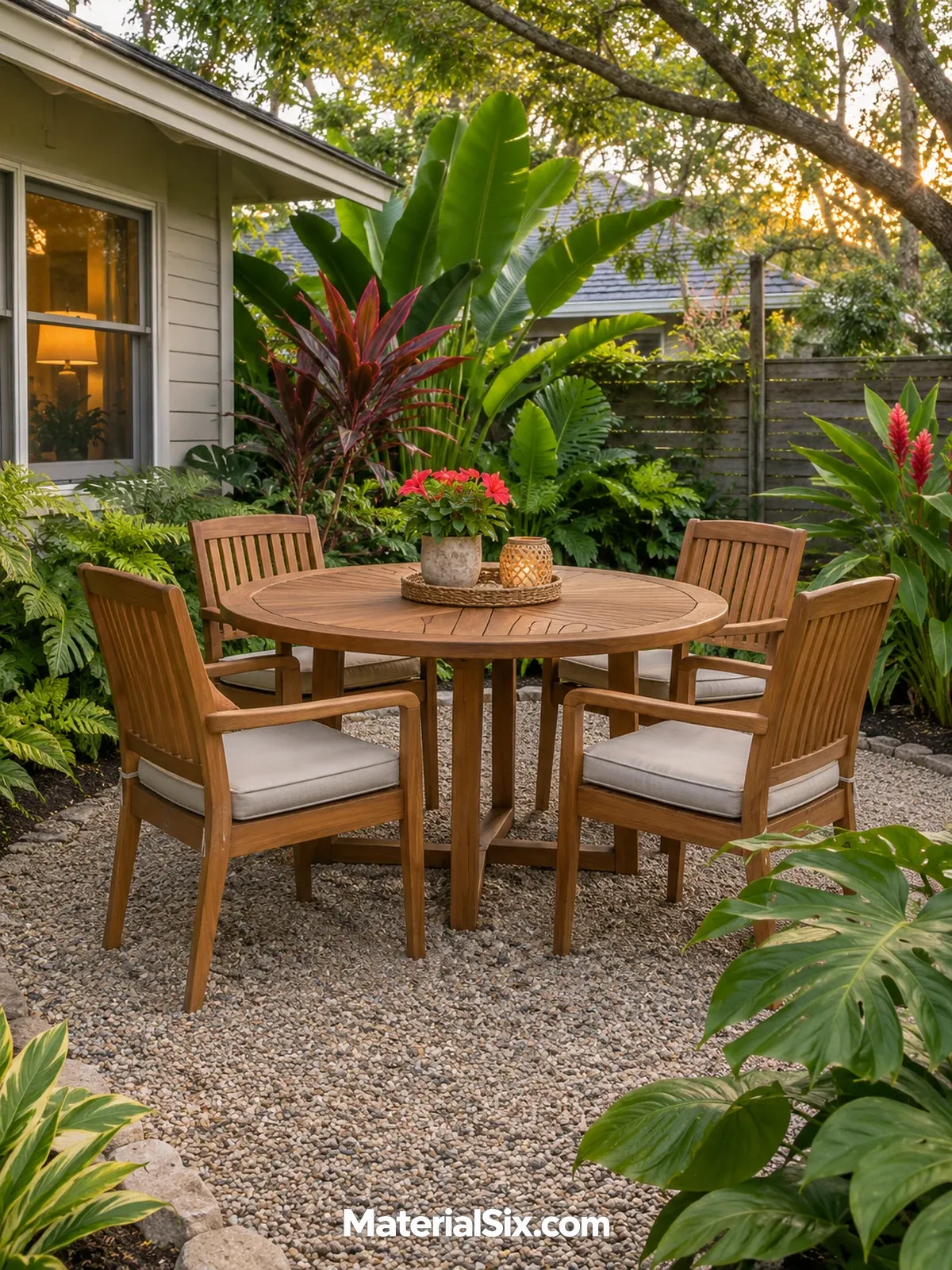
A dining terrace surrounded by planting feels more intimate than a table placed in the middle of an open lawn. Round furniture softens the arrangement, while tropical foliage creates a leafy perimeter. Gravel adds a relaxed texture, although a properly prepared, stable surface matters more than its decorative appearance.
Allow comfortable space for chairs to pull back without catching leaves or sinking into loose material. Place the table where carrying food from the house stays convenient. Keep messy fruiting or heavily shedding plants away from the dining surface. Repeating a few foliage shapes around the terrace gives the seating area continuity without requiring dense planting along every single edge.
20. Tuck a Bench Into a Leafy Alcove
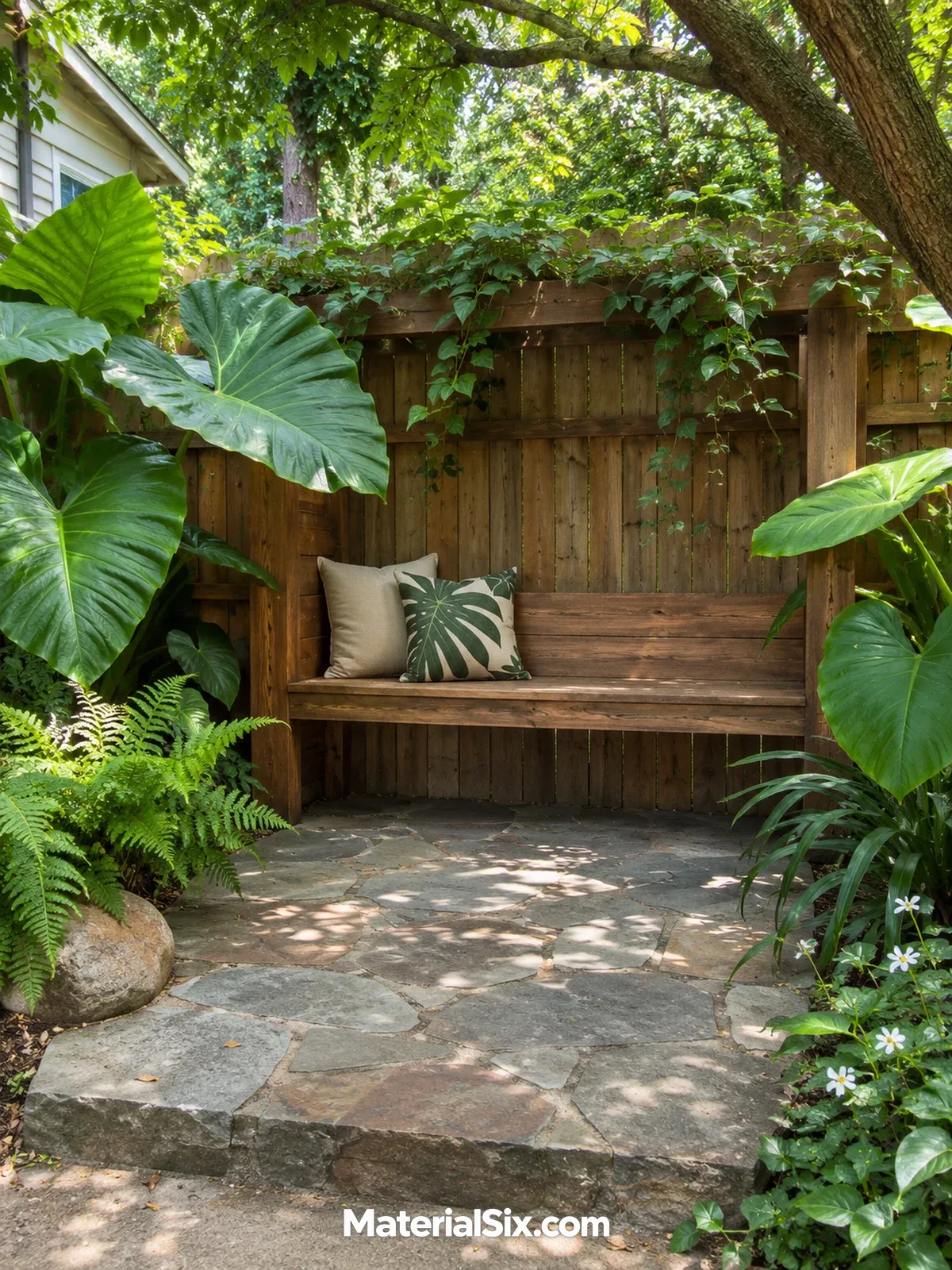
A bench alcove turns an underused garden edge into somewhere you want to pause. Set a straight wood seat against a simple fence and frame it with large leaves on either side. A clear stone landing in front makes the nook feel connected to the garden rather than hidden inside an inaccessible planting bed.
Check how much room mature leaves will occupy around your shoulders and above the seat. Avoid plants that drip sap or create an uncomfortable brushing surface. Keep the landing stable and easy to sweep. The alcove can be small, but it should still allow you to sit down and stand up without stepping into the surrounding soil.
21. Place a Freestanding Hammock in a Palm Garden
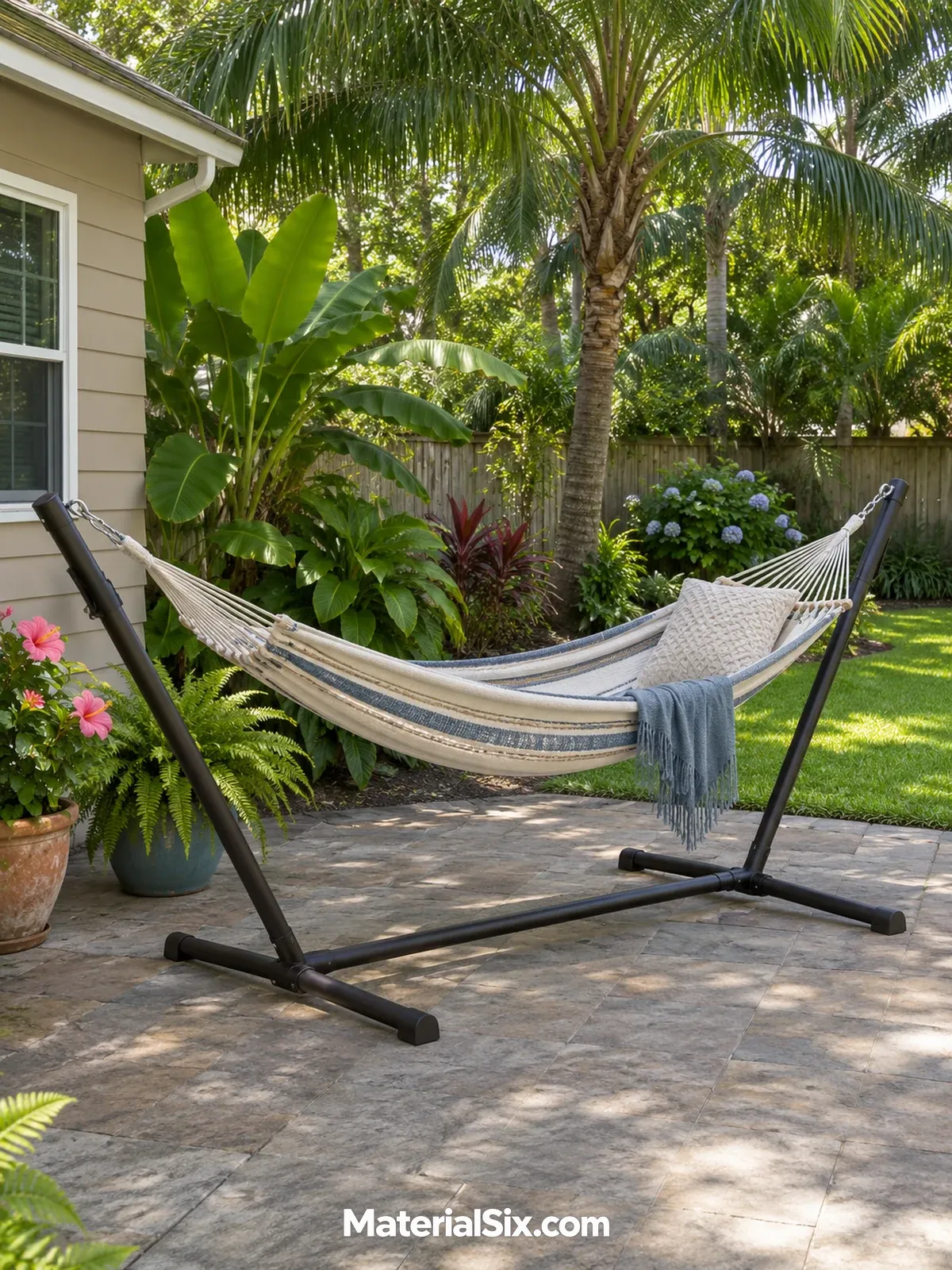
A freestanding hammock introduces a relaxed tropical mood without depending on the spacing or suitability of trees. Place the stand on a level area and let palms or broad foliage form the background. The open space beneath and around the hammock keeps the arrangement visually light, even when the planting behind it is dense.
Follow the stand’s instructions for its supporting surface, loading, assembly, and operating clearance. Leave space for movement and getting in and out, rather than fitting it tightly between pots. Choose a position that receives comfortable shade during your usual lounging time. Removable fabric also makes it easier to protect the hammock when weather changes.
22. Break Up a Large Lawn With a Tropical Island
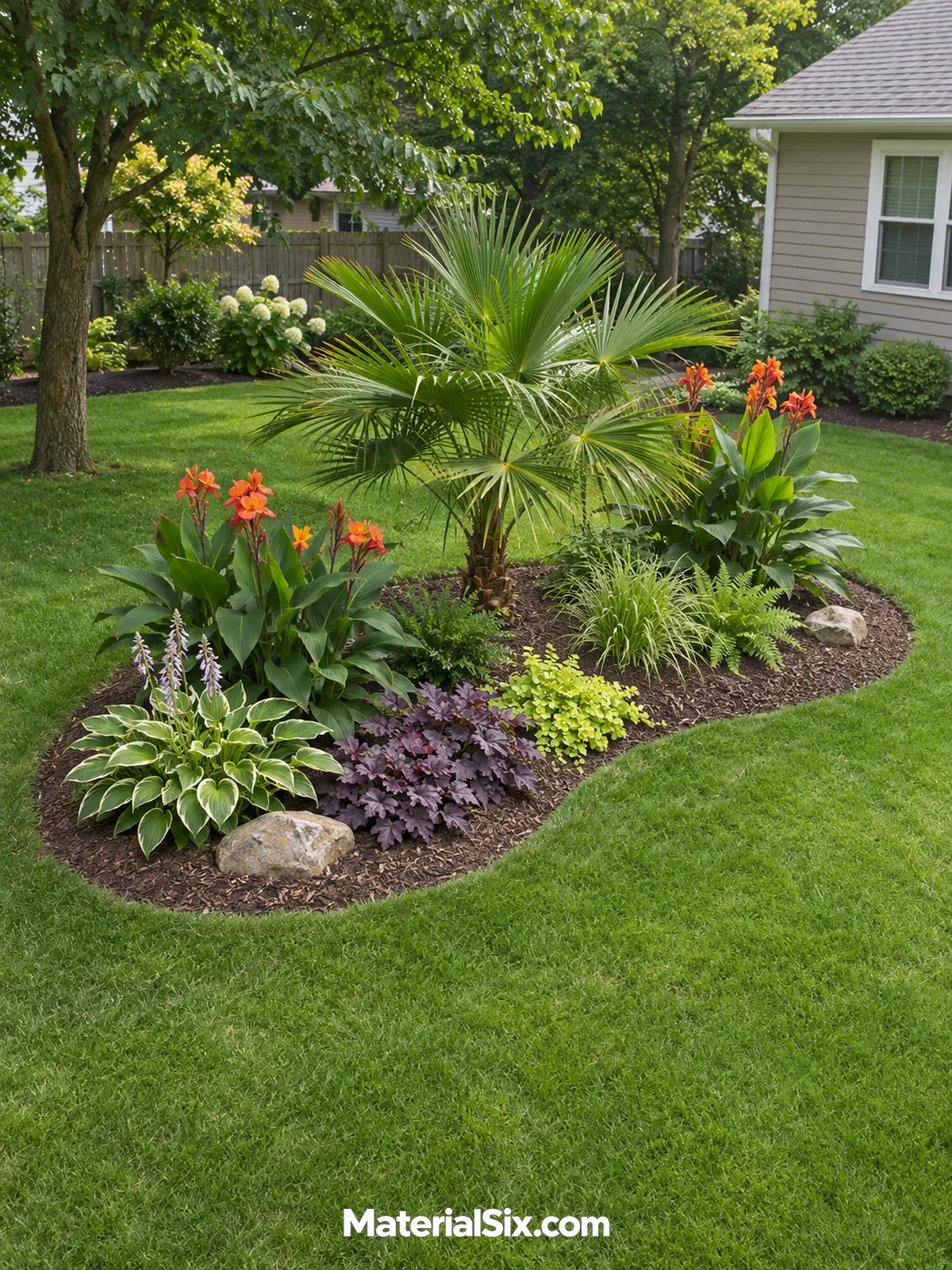
An island bed brings tropical foliage into the center of a yard instead of leaving every plant along the fence. A compact palm can anchor the composition, with medium leaves and lower planting arranged around it. A gently curved outline makes the bed feel connected to the surrounding lawn rather than like an isolated square.
Look at the island from the house, patio, and main walking routes before finalizing its position. Keep sufficient lawn around it for comfortable movement and mowing. Because the bed is visible from several sides, avoid a single unfinished back edge. Plan the mature plant sizes so the centerpiece does not overwhelm the yard or shade everything beneath it.
23. Replace a Tiny Lawn With an Open Gravel Courtyard
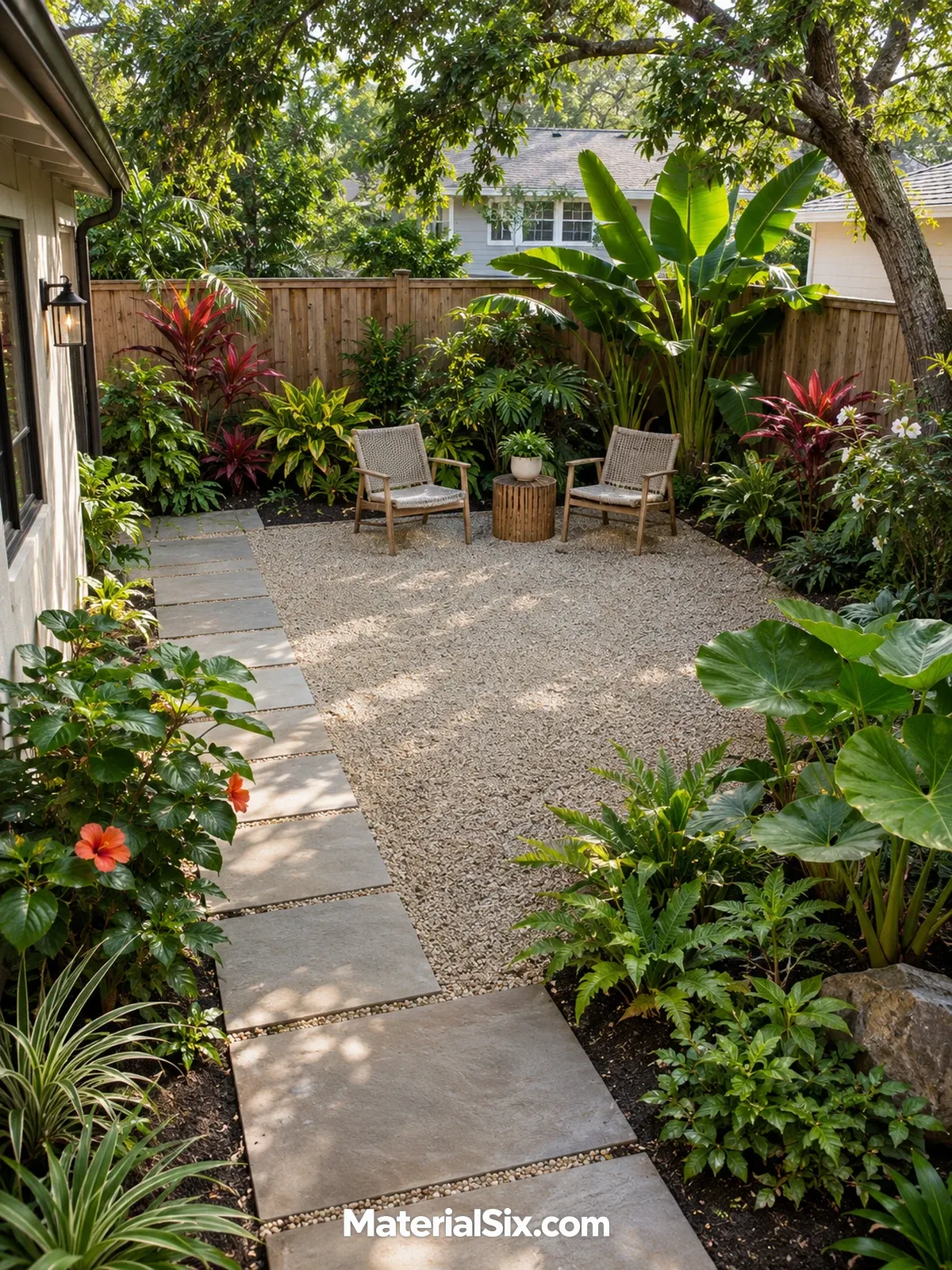
A very small lawn can feel more like a maintenance strip than usable outdoor space. Replacing it with a properly prepared gravel courtyard creates room for seating while preserving generous planting around the edges. Broad pavers provide a clearer route through the garden and break up the texture of the gravel.
Check drainage, surface stability, and local requirements before changing the yard. Gravel still collects leaves and needs occasional maintenance, so do not treat it as a maintenance-free finish. Keep the center visually open and place tropical plants in defined beds. This balance gives a small yard a lush outline without sacrificing the space you need to move and relax.
24. Use Straight Lines for a Modern Tropical Garden
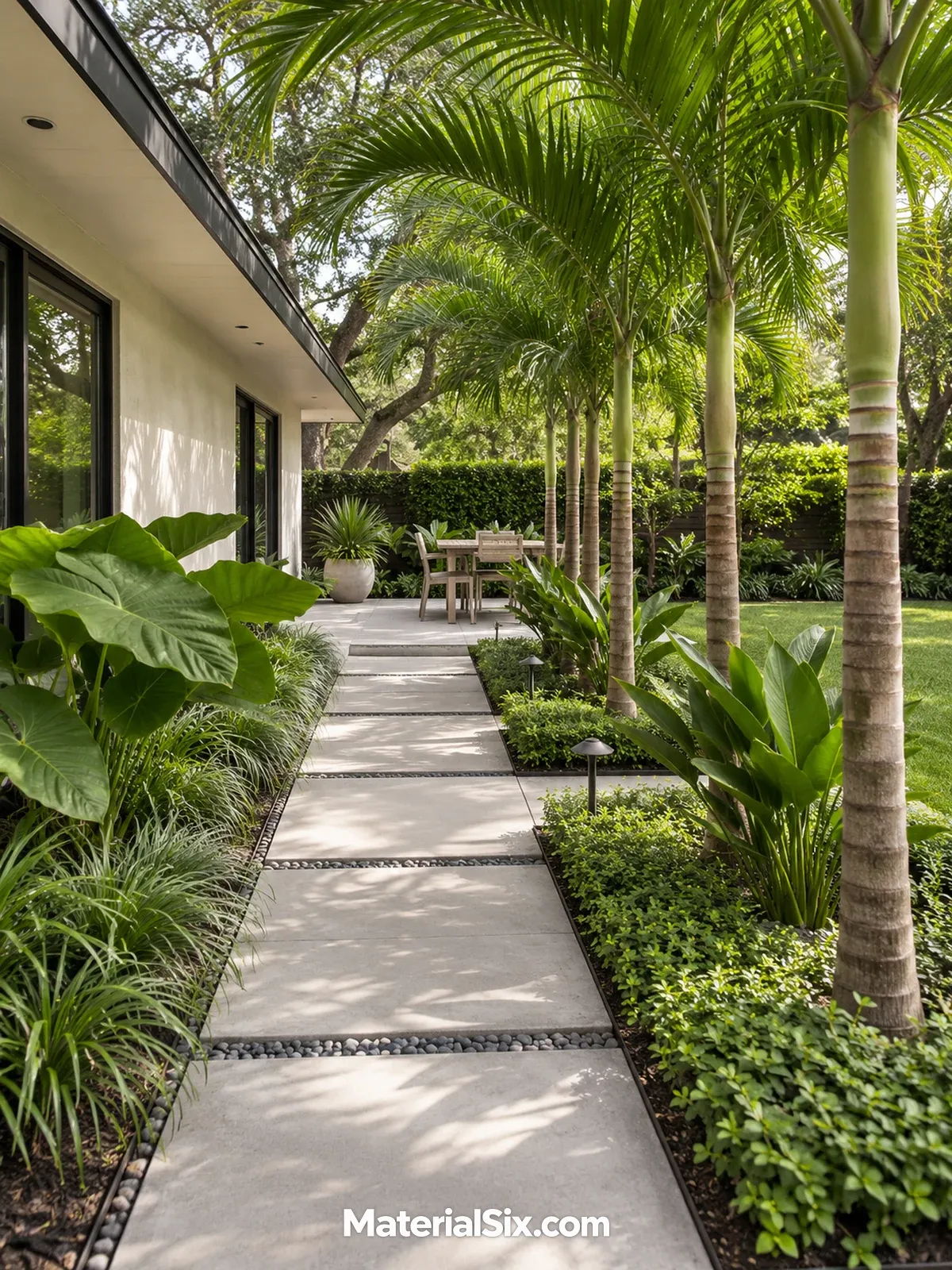
Tropical planting does not have to mean winding paths and informal beds. Straight concrete pavers, rectangular borders, and repeated plant forms create a modern version of the style. The architecture supplies the order, while large leaves and palm fronds add movement and softness.
Limit the number of plant varieties so their repetition remains visible. Choose one dominant foliage shape and one contrasting texture, then carry them through several beds. Precise edges need room for plants to grow without constantly spilling across the paving. Keep the hardscape proportionate to the yard; a narrow planting strip filled with oversized foliage will quickly lose the clean geometry that makes this design work.
25. Mix Tropical Leaves Into a Cottage Garden
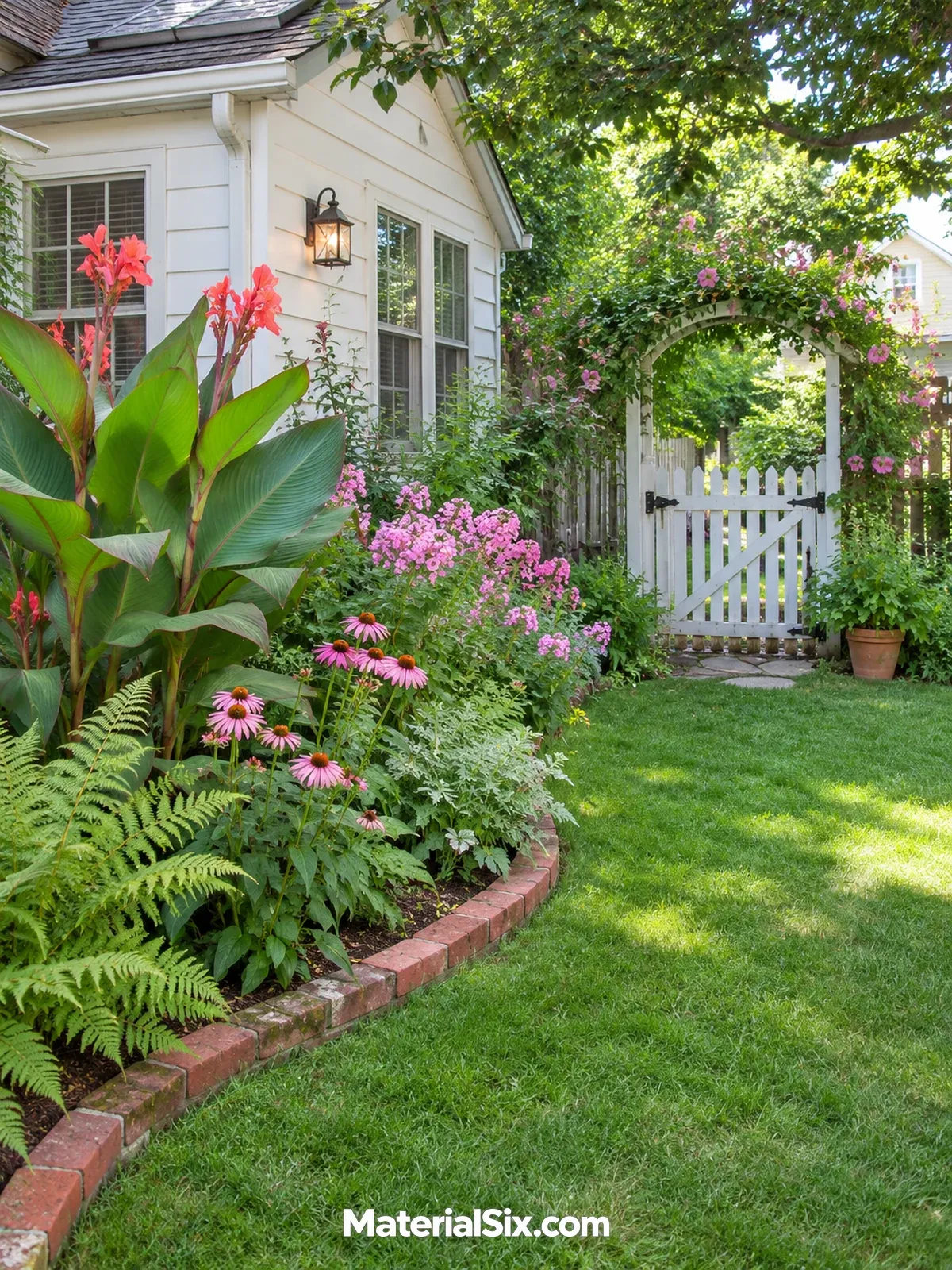
You can introduce tropical character without replacing an entire cottage-style garden. Broad canna leaves create contrast among softer flowers and fine foliage, making the existing planting feel fuller. A curved brick edge and a simple gate keep the composition grounded in the home’s familiar, informal style.
Repeat a limited flower palette so the larger leaves look integrated rather than dropped into unrelated beds. Check that neighboring plants share suitable growing conditions and will not be overwhelmed by the tropical additions. Place the boldest foliage where it can be seen from a path or window. Seasonal tropicals can also fill selected summer gaps while the longer-lived garden framework remains in place.
26. Give a Coastal Yard a Relaxed Tropical Mood
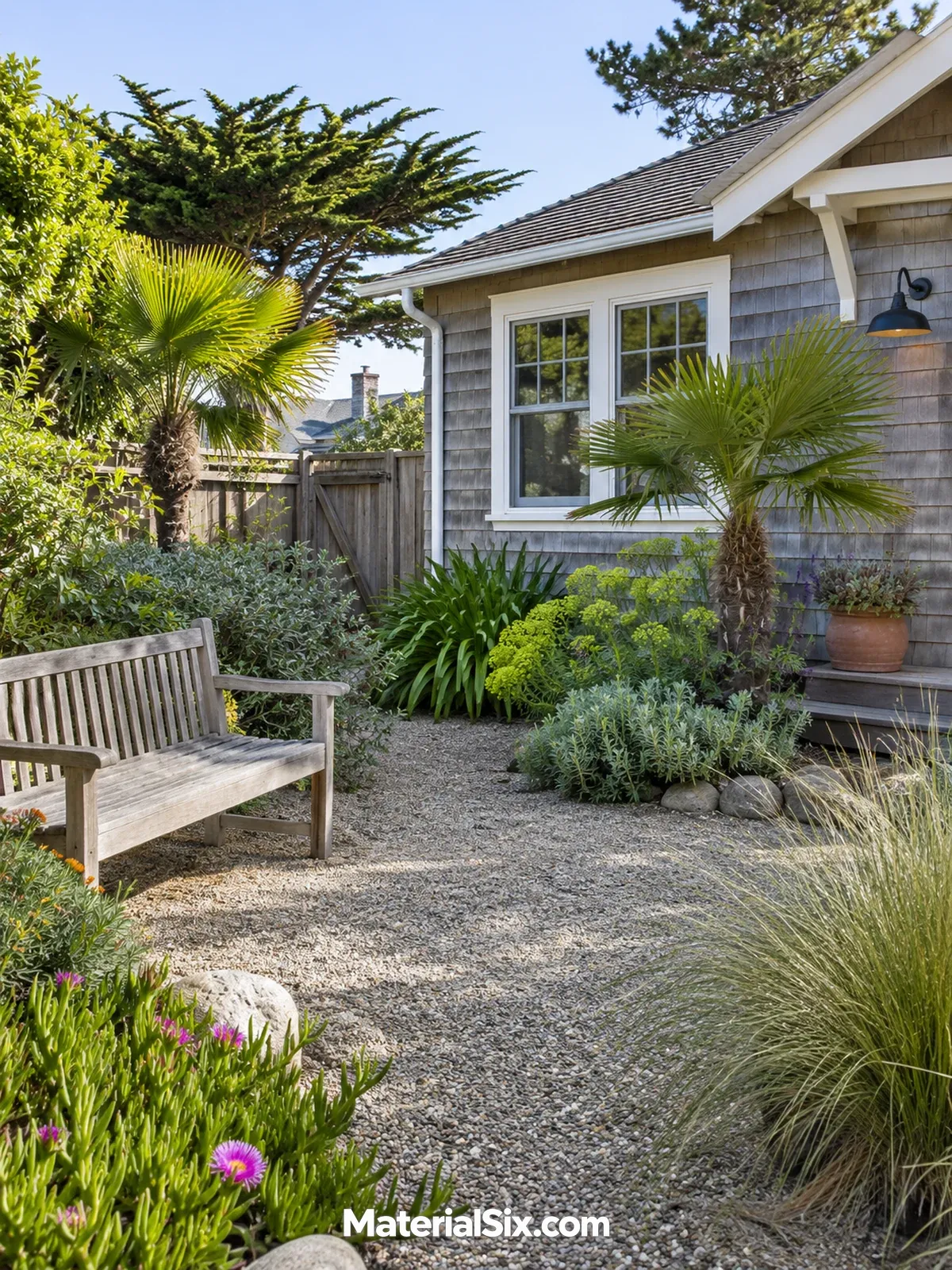
A coastal tropical garden can feel relaxed through a combination of palms, simple gravel, and weathered wood. Keep the forms broad and uncomplicated, with a bench that allows the planting to remain the main attraction. A modest bungalow setting benefits from a few well-scaled plants rather than a resort-sized landscape.
Coastal conditions vary considerably, so choose species for the site’s actual wind, salt exposure, soil, and temperature range. A plant that works near one shoreline may struggle at another. Protect the most delicate foliage in sheltered positions, and secure outdoor furnishings appropriately. Leaving some space between plant groups helps the garden feel open while providing access for clearing windblown debris.
27. Suggest the Tropics With Dry-Climate Silhouettes
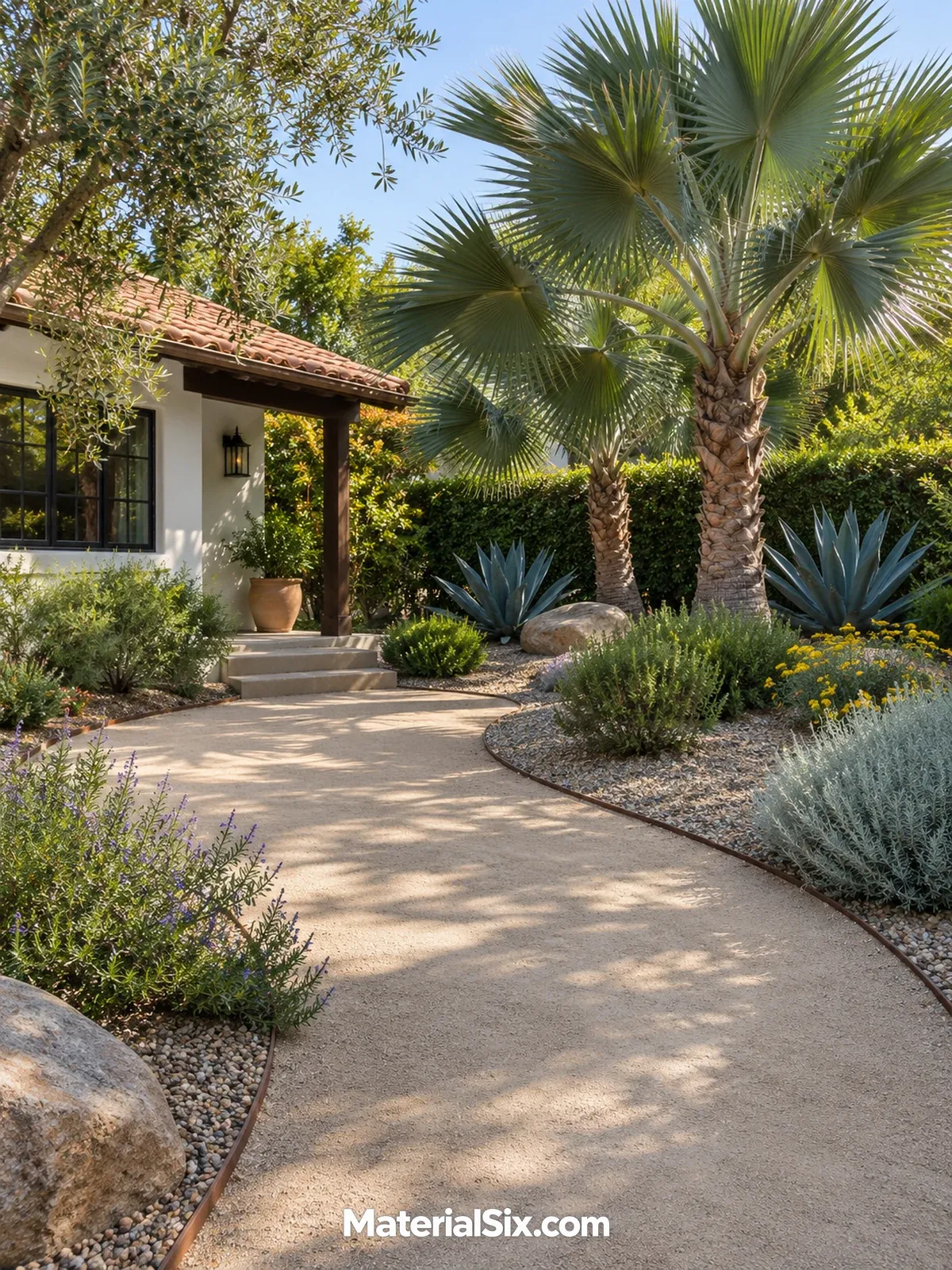
In a dry climate, you can borrow tropical shapes without building a garden around thirsty jungle plants. Fan palms, bold rosettes, and substantial shrub forms create an architectural, leafy impression. Gravel and a restrained palette suit the setting while making each silhouette more visible.
Choose locally suitable plants with compatible water needs, then design irrigation around those groups. Drought adaptation varies by species, and new plants still need appropriate establishment care. Keep sharp leaves well away from paths, seating, and play areas. This is a tropical-inspired approach rather than a rainforest planting scheme, making it more realistic for homeowners whose climate cannot support a moisture-loving border without considerable inputs.
28. Build a Seasonal Tropical Border in a Colder Region
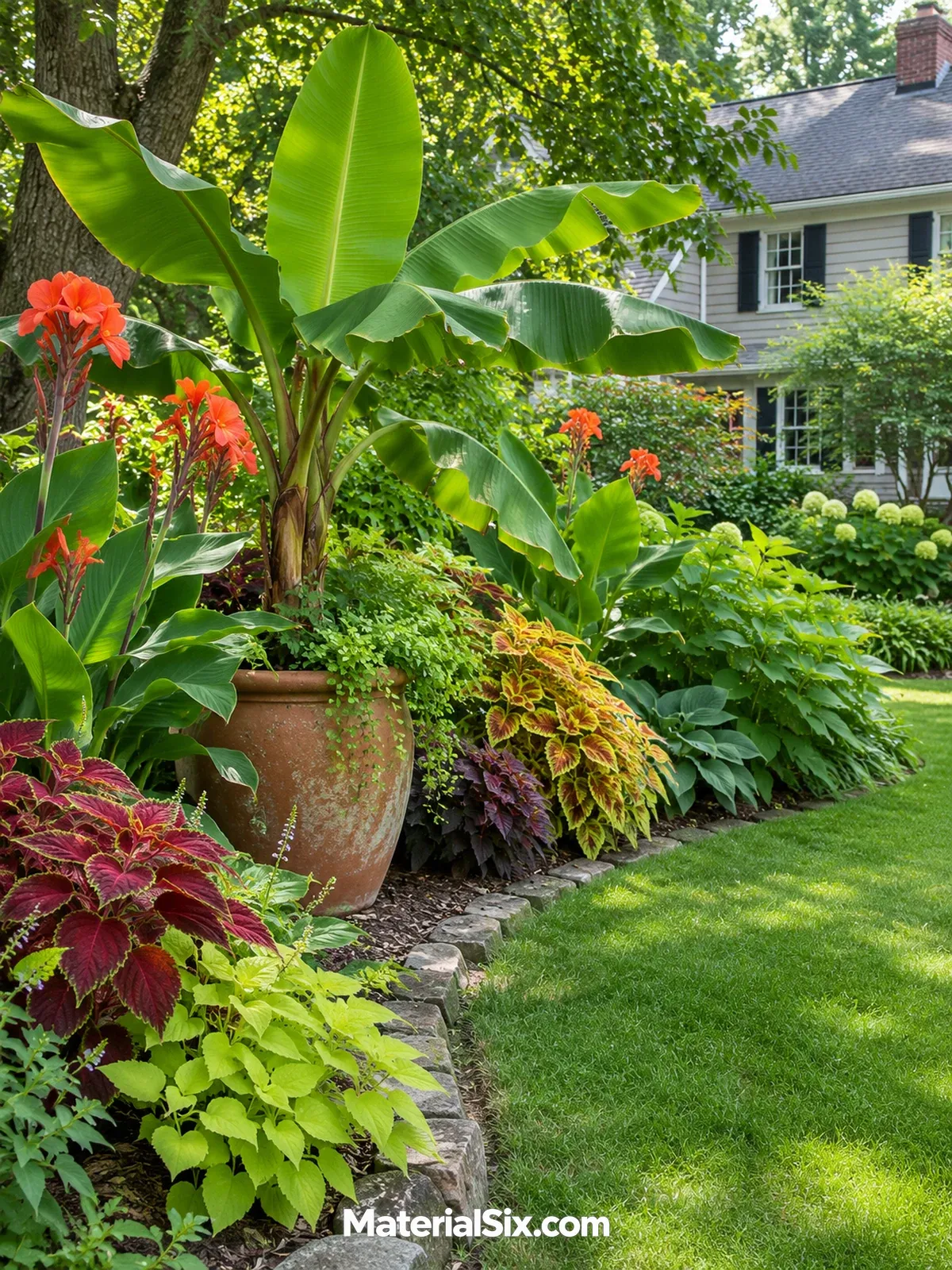
A cold winter does not rule out a lush summer garden, but it changes how you plan the plants. Use a few seasonal focal points, such as a container-grown banana or canna grouping, among longer-lasting beds. Colorful coleus can carry the lower layer while broad leaves provide the tropical scale.
Decide in advance which plants will be treated as annuals and which you can realistically overwinter. Storage methods differ by plant, and indoor space is often the limiting factor. Keep large containers accessible for moving, rather than burying them behind established shrubs. The surrounding landscape should still look considered when tender plants are removed or die back for the colder months.
29. Soften a Deck With Tropical Container Corners
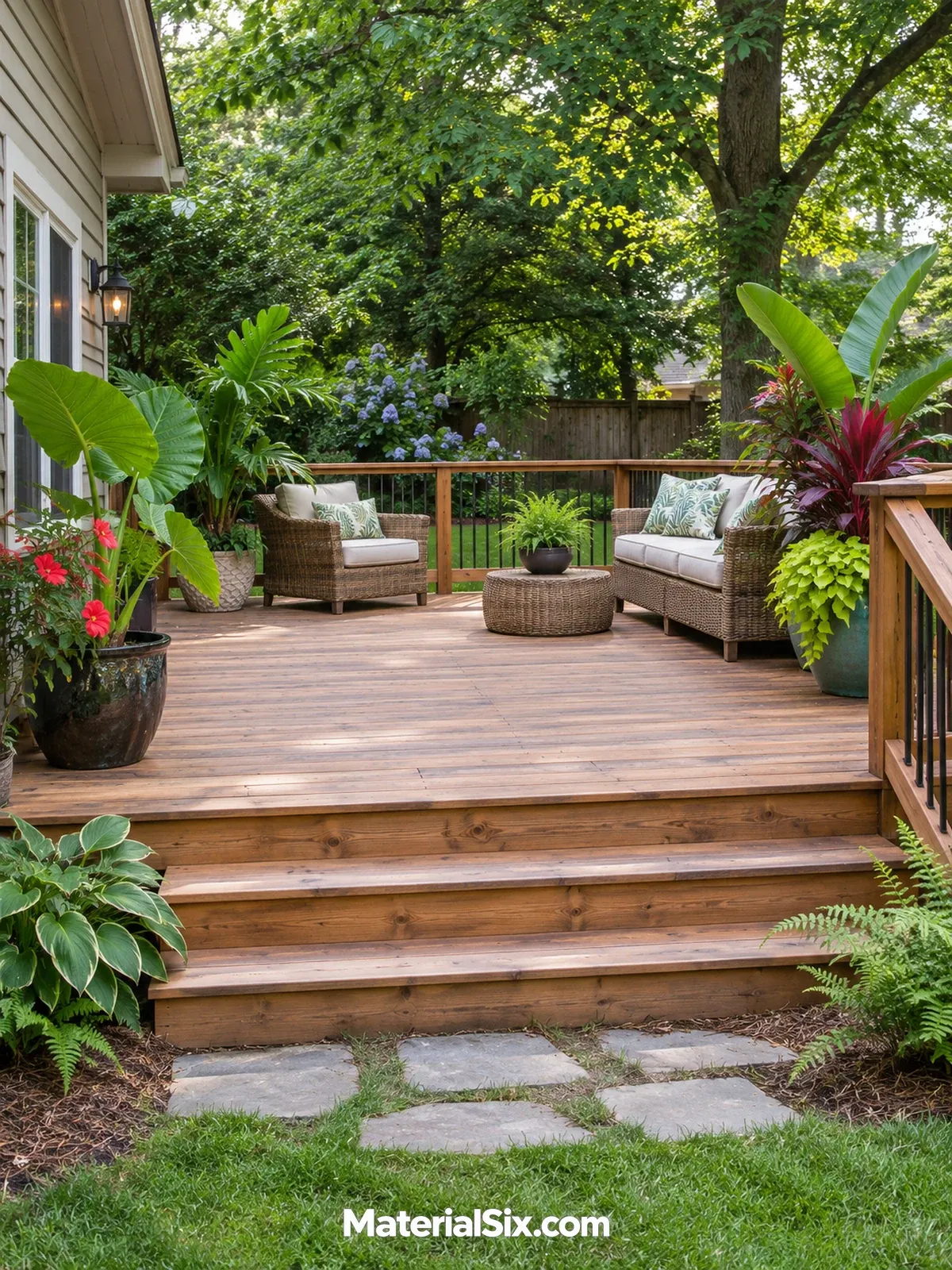
A deck can feel disconnected from the garden when its edges are completely bare. Grouped containers at selected corners create a transition between the horizontal boards and surrounding foliage. Keep the main lounge area open so the plants frame the view rather than crowding the furniture.
Choose container sizes and placements that the deck can accommodate, considering their weight when wet. Use suitable pot supports where needed to allow airflow and protect the surface, and check beneath them during maintenance. Never obstruct steps, required railings, or doorways. Repeating a leaf shape from the garden below helps the deck feel connected even when the actual plants must remain in movable pots.
30. Scale the Tropical Look to a Balcony
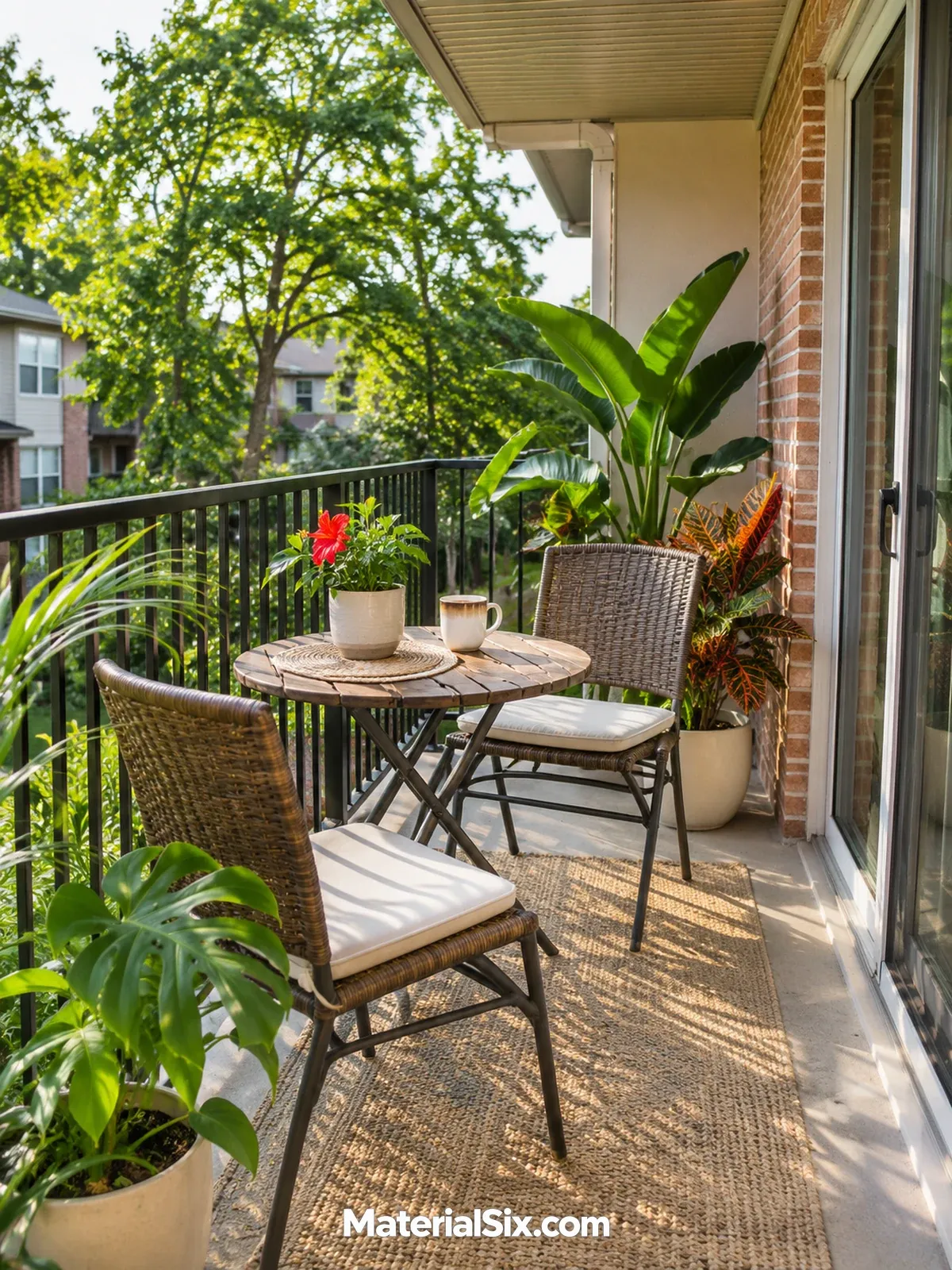
A balcony can capture the leafy feeling of a tropical garden with just a few well-chosen pots. Place taller foliage at one end, use a smaller plant near the seating, and leave enough open floor to move comfortably. A compact table keeps the setting useful for a morning drink rather than turning it entirely into plant storage.
Check building rules, weight limits, drainage arrangements, and wind exposure before adding large containers. Keep pots safely inside the railing and preserve a clear door swing. Select plants for the balcony’s actual sun rather than assuming it behaves like a sheltered backyard. Lightweight containers can help, but their stability still matters in an exposed location.
31. Layer a Gentle Slope With Planted Terraces
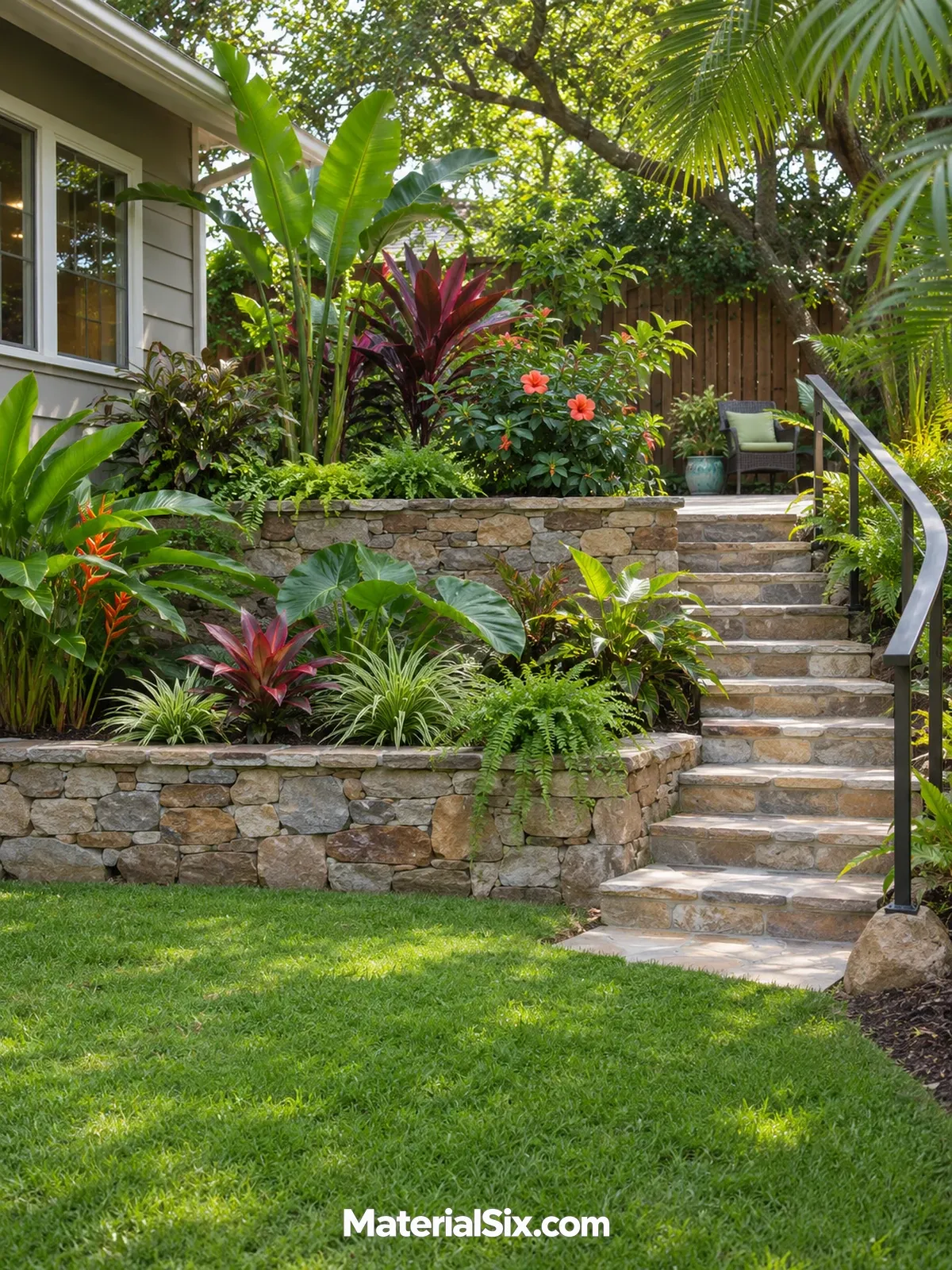
Terraced planting can turn a gentle slope into a sequence of leafy views. Low stone walls give each layer a clear outline, while tall and broad foliage helps connect the levels visually. Keep a separate route through the garden so maintenance and everyday access do not depend on walking across planted slopes.
Retaining walls, drainage, and steps need site-specific planning; treat this as a landscape concept rather than a construction shortcut. Local approvals and professional help may be appropriate even when the finished walls look modest. Choose plants for the light and moisture conditions at each level. A lower terrace may receive different runoff than a bed higher up the slope.
32. Reveal Leaf Shapes With Subtle Evening Lighting
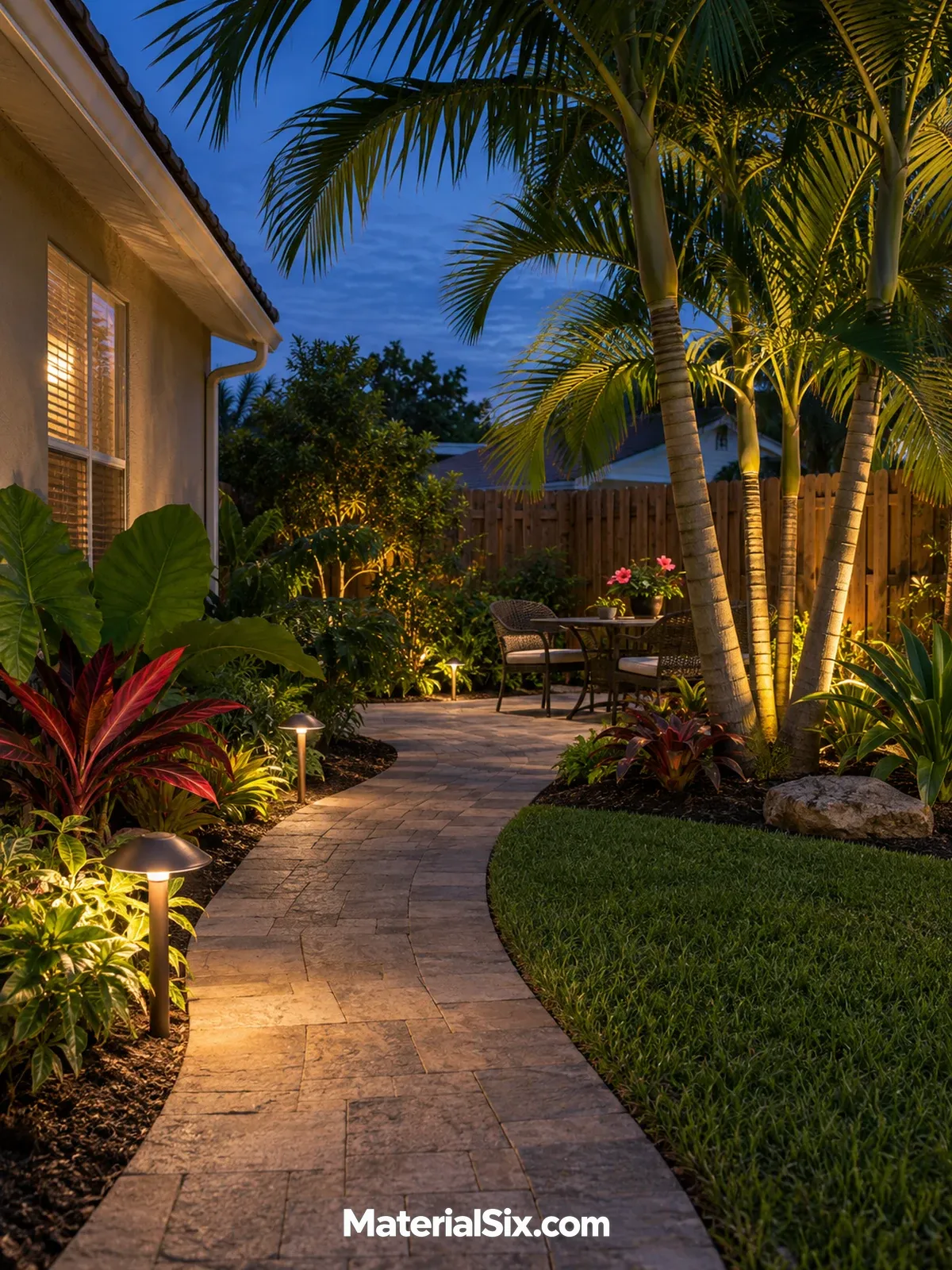
At dusk, a few carefully placed lights can reveal the structure of tropical foliage that disappears into darkness. Use gentle path lighting for movement and selective illumination on one or two plants. The contrast between lit leaves and darker background planting gives the garden depth without lighting every corner.
Aim fixtures away from neighbors’ windows and avoid glare at seated eye level. Choose outdoor-rated equipment and follow the applicable installation requirements, including professional electrical work where needed. Keep fittings accessible as foliage grows around them. Start with the route you use most often, then add a focal light only where it improves the view from your patio or indoor living space.
33. Surround an Outdoor Shower With Privacy Planting
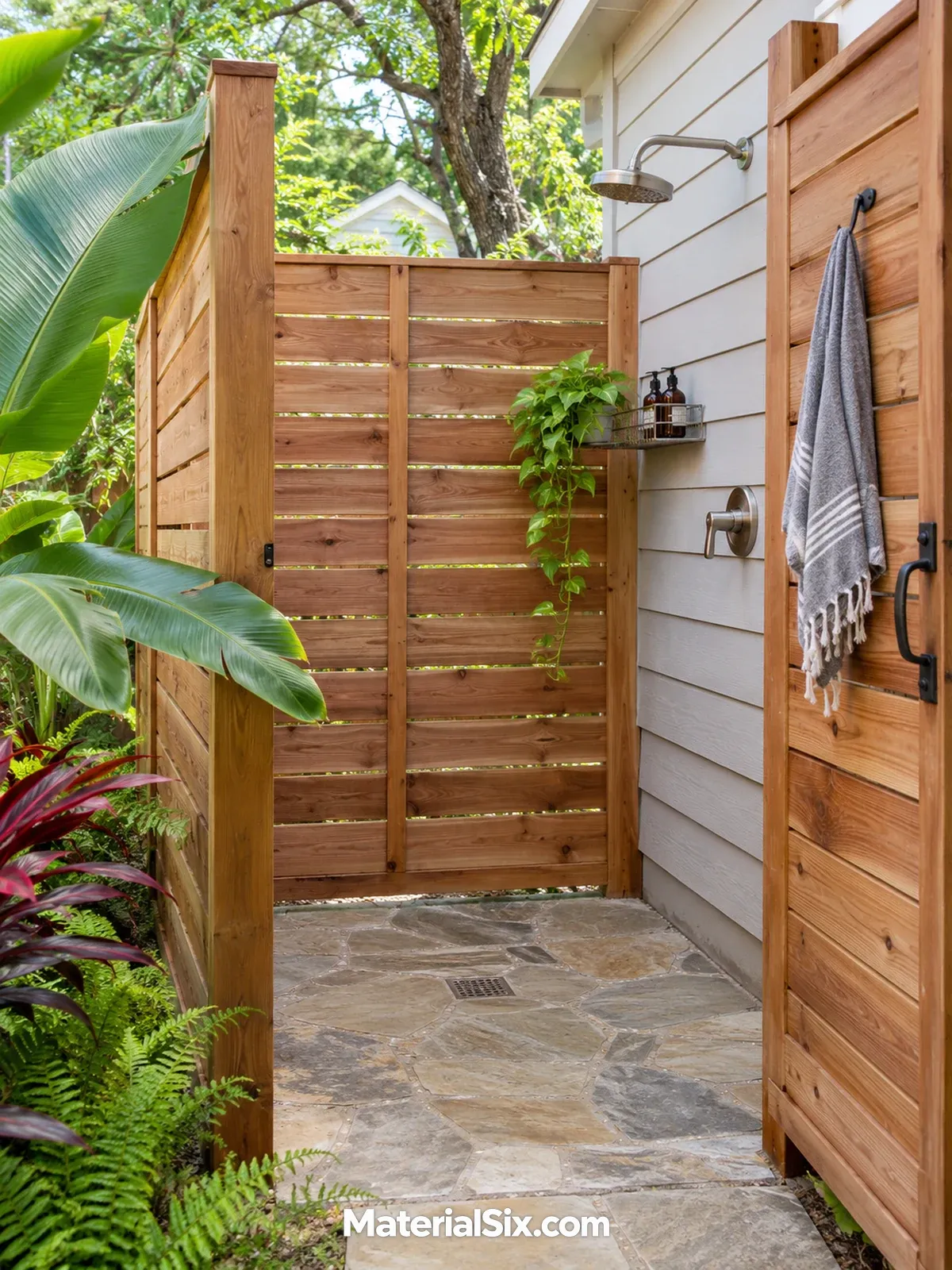
A screened outdoor shower can feel connected to the garden when broad leaves rise beyond the enclosure. Cedar panels provide the dependable privacy, and planting softens their outside edges. A simple stone surface and uncluttered fittings keep the feature proportionate to an ordinary residential backyard.
Plan plumbing, approved drainage, access, and privacy before choosing plants. Outdoor shower water should be handled according to local requirements, especially when soap is involved. Keep foliage away from the standing area so the surface is easier to clean and inspect. In cold regions, include appropriate winterization in the plan. Plants enhance the atmosphere, but they should not be the only barrier between the shower and neighboring views.
34. Create a Tropical-Inspired Edible Corner
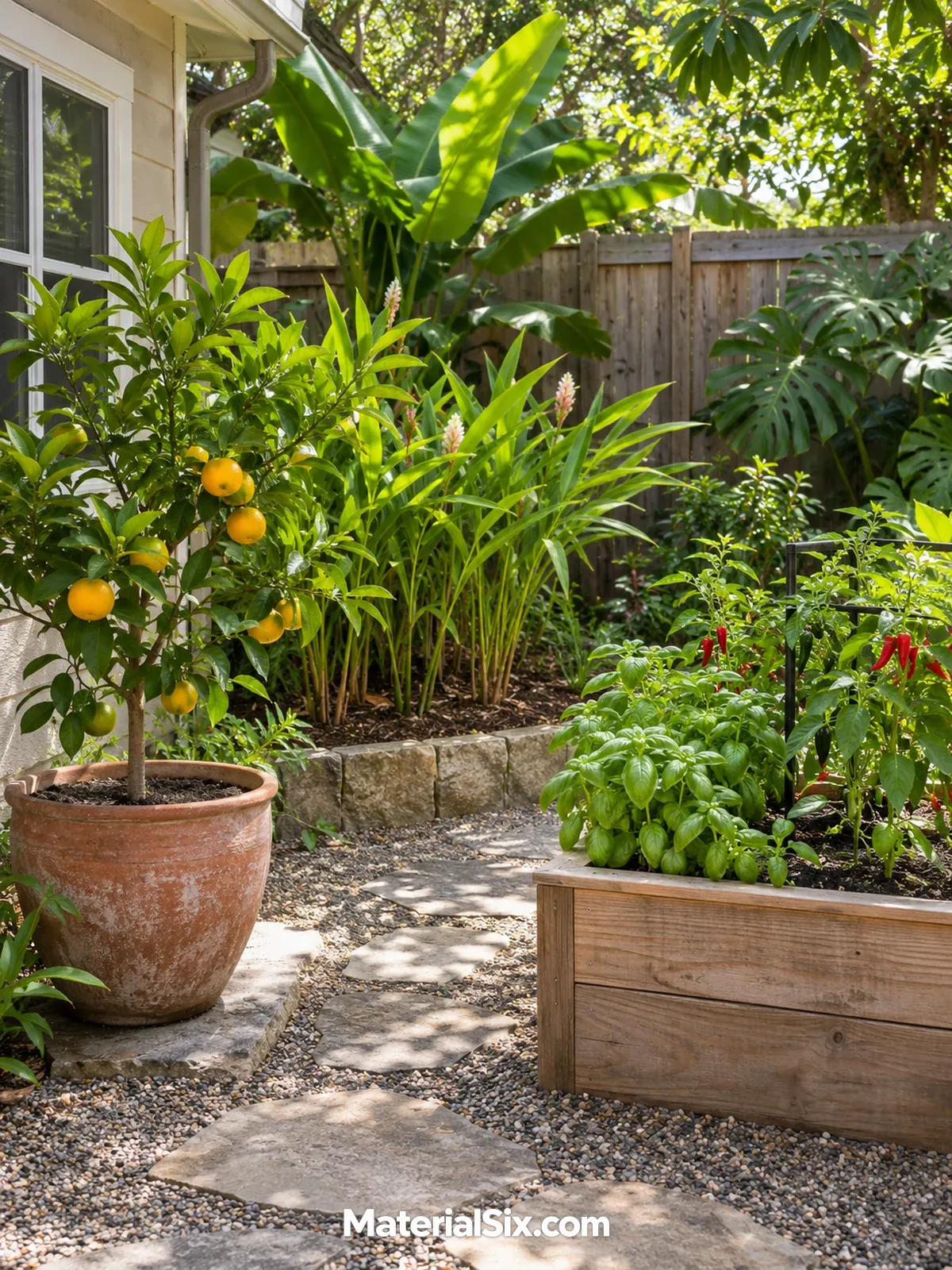
An edible corner can contribute to a tropical garden without looking like a separate utility area. A container citrus provides a small tree form, ginger brings broad foliage, and herbs or peppers fill a lower planter. Repeating the same pot finish ties the useful plants to the surrounding landscape.
Choose edible varieties suited to your climate and available light, and identify plants correctly before harvesting. Culinary ginger is different from many ornamentals sold under the ginger name. Keep thirsty and drier-growing plants in separate containers when their needs differ. Place the corner within easy reach of the kitchen, with enough access to inspect leaves, harvest produce, and water without disturbing neighboring plants.
35. Start With One Affordable Tropical Corner
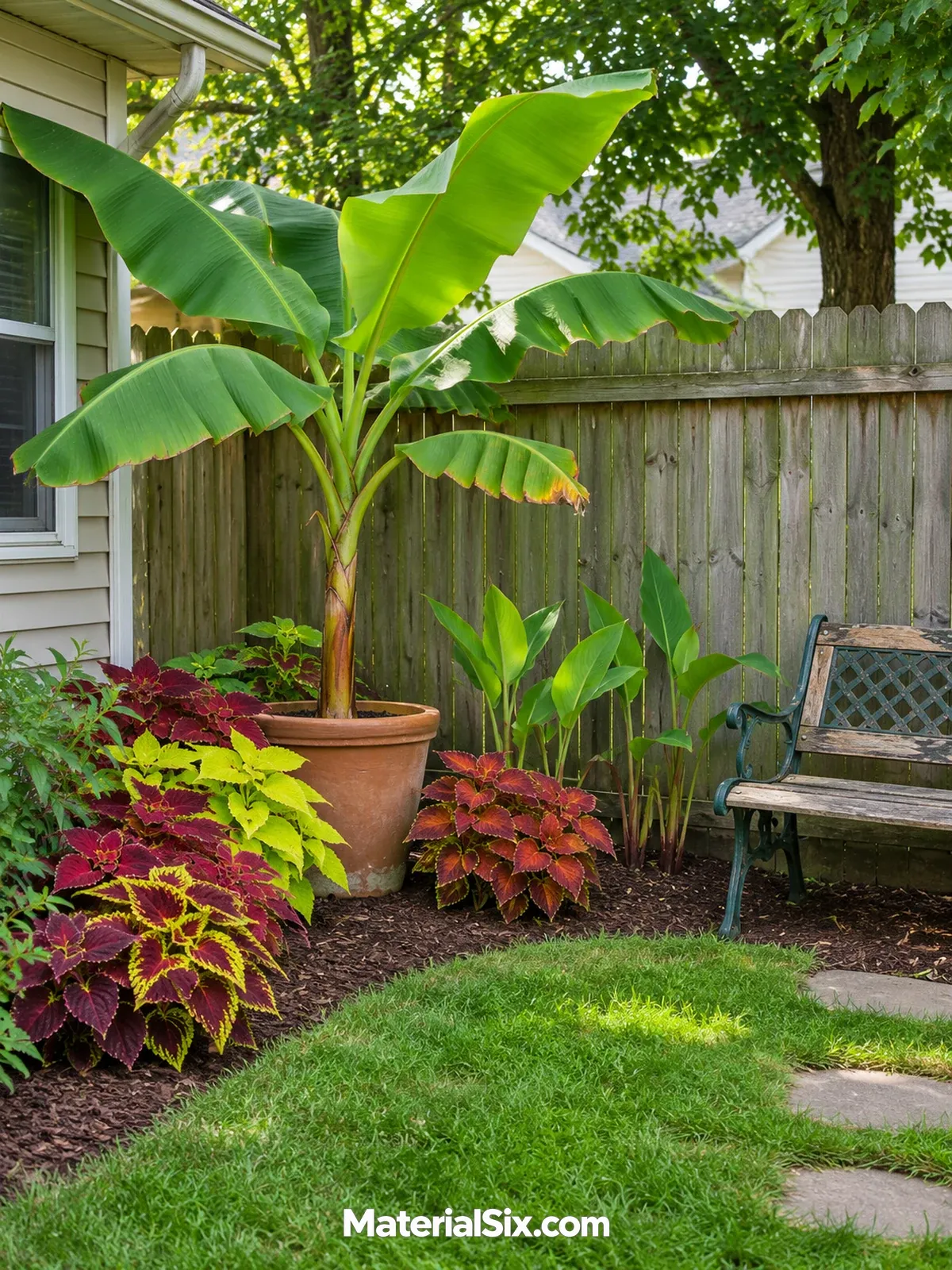
You do not need to redesign the whole yard to establish a tropical direction. Start with one focal plant in a container, add a few repeated foliage plants, and give the corner a clean mulch edge. A simple existing bench makes the space feel useful while the plants develop.
Choose the spot you see most often from the house or patio so the first phase has a noticeable effect. Buy for the growing conditions and mature size rather than collecting unrelated bargains. Leave space between young plants instead of filling every gap immediately. Once you understand the watering and seasonal care involved, extend the same palette into another bed or container group.
Choose Plants for Your Climate Before Combining Designs
Start with the part of the garden you use most, then pair one layout idea with one foliage treatment. A dining terrace might borrow the burgundy palette, while a narrow side yard could use the disciplined repetition of a modern tropical garden. Avoid squeezing several competing focal points into one small space.
Before shopping, record sun exposure, winter lows, drainage, wind, and the mature size each location can accommodate. Tropical appearance does not tell you a plant’s growing requirements. UF/IFAS emphasizes matching plants to site conditions, including temperature, light, soil, and water. Check local invasive-plant guidance as well, since a plant sold widely elsewhere may be unsuitable in your region.
For a manageable first phase, establish the walking surface and bed outline, choose a few structural plants, and fill with repeated lower foliage. Keep plants with similar watering needs together. If winters are cold, work out the indoor or dormant-storage plan for tender plants before expanding the collection. Different plants require different overwintering approaches.
FAQ
Can you create a tropical garden in a cold climate?
Yes, as a seasonal display. Container-grown tropicals, cannas, and colorful foliage can provide a lush summer effect. Check each plant’s cold tolerance and overwintering method; some need indoor growing space, while others may be stored dormant.
What makes a garden look tropical without many flowers?
Large leaves, contrasting foliage textures, layered heights, and repeated plant groups establish the look. A clear path or simple seating area gives that abundant planting a useful framework.
Are tropical gardens low maintenance?
Maintenance depends on the plants and climate. Watering containers, removing damaged leaves, managing growth, and protecting tender plants can take time. Locally suitable species and a restrained palette make the workload easier to predict.
How do you keep a small tropical garden from feeling cramped?
Concentrate foliage around the perimeter, preserve a clear central area, and choose plants by mature spread. One bold focal plant with supporting foliage usually reads more clearly than many competing specimens.
Can you mix tropical plants with native plants?
Yes, where their growing needs are compatible. Locally native plants with substantial leaves or strong textures can support the look. Select the actual species for your site, and check the invasive status of nonnative additions.
Start With the View You Want to Enjoy
Choose the design that improves a place you already use, whether that is a patio edge, the route to the gate, or a quiet backyard corner. Establish a clear layout first, then add a small group of compatible plants with contrasting leaves. A realistic climate plan and room for mature growth will help your tropical garden feel lush while remaining comfortable to live with.